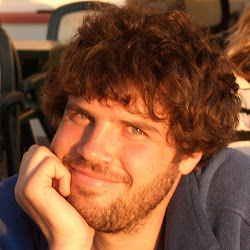
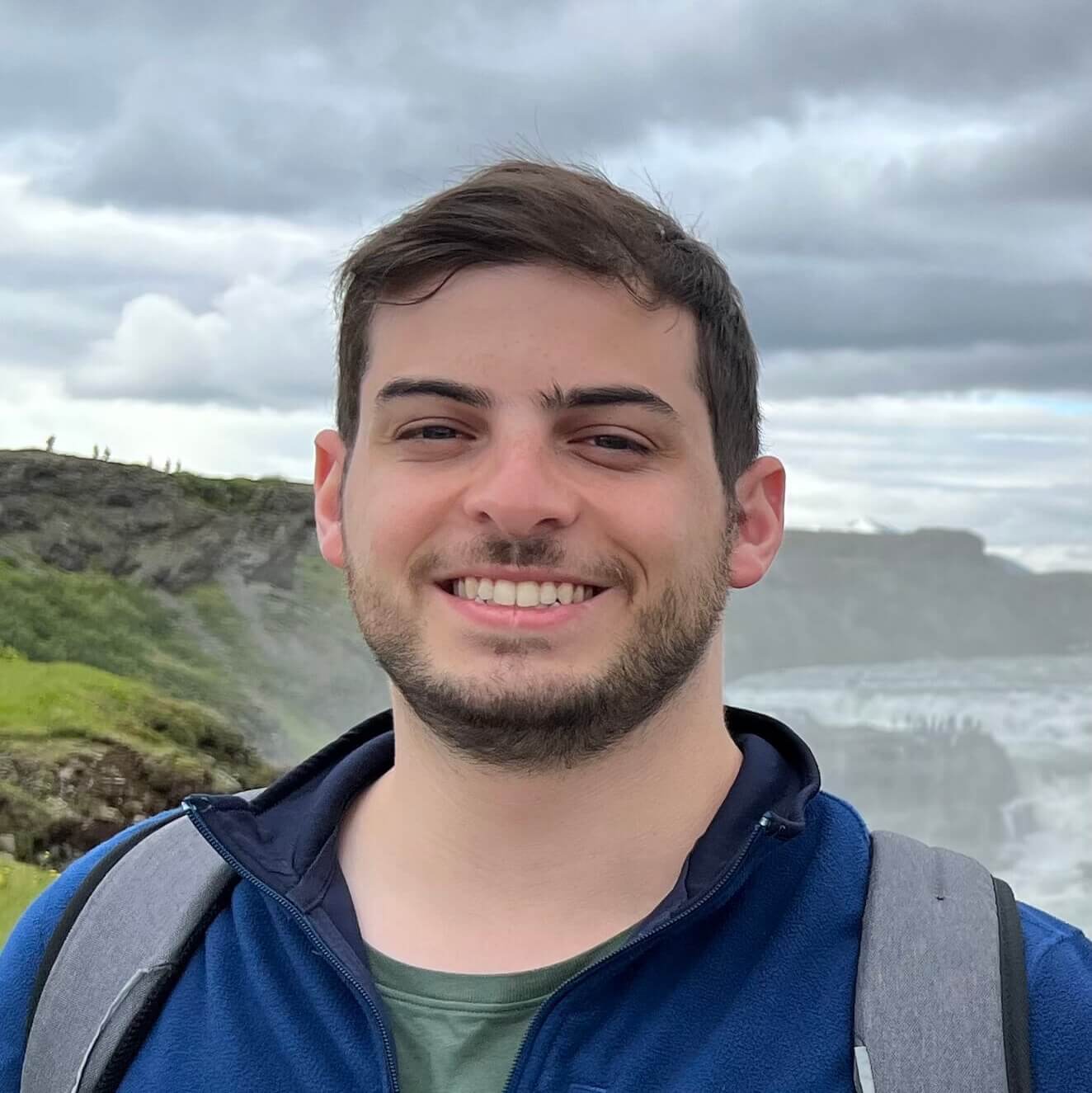
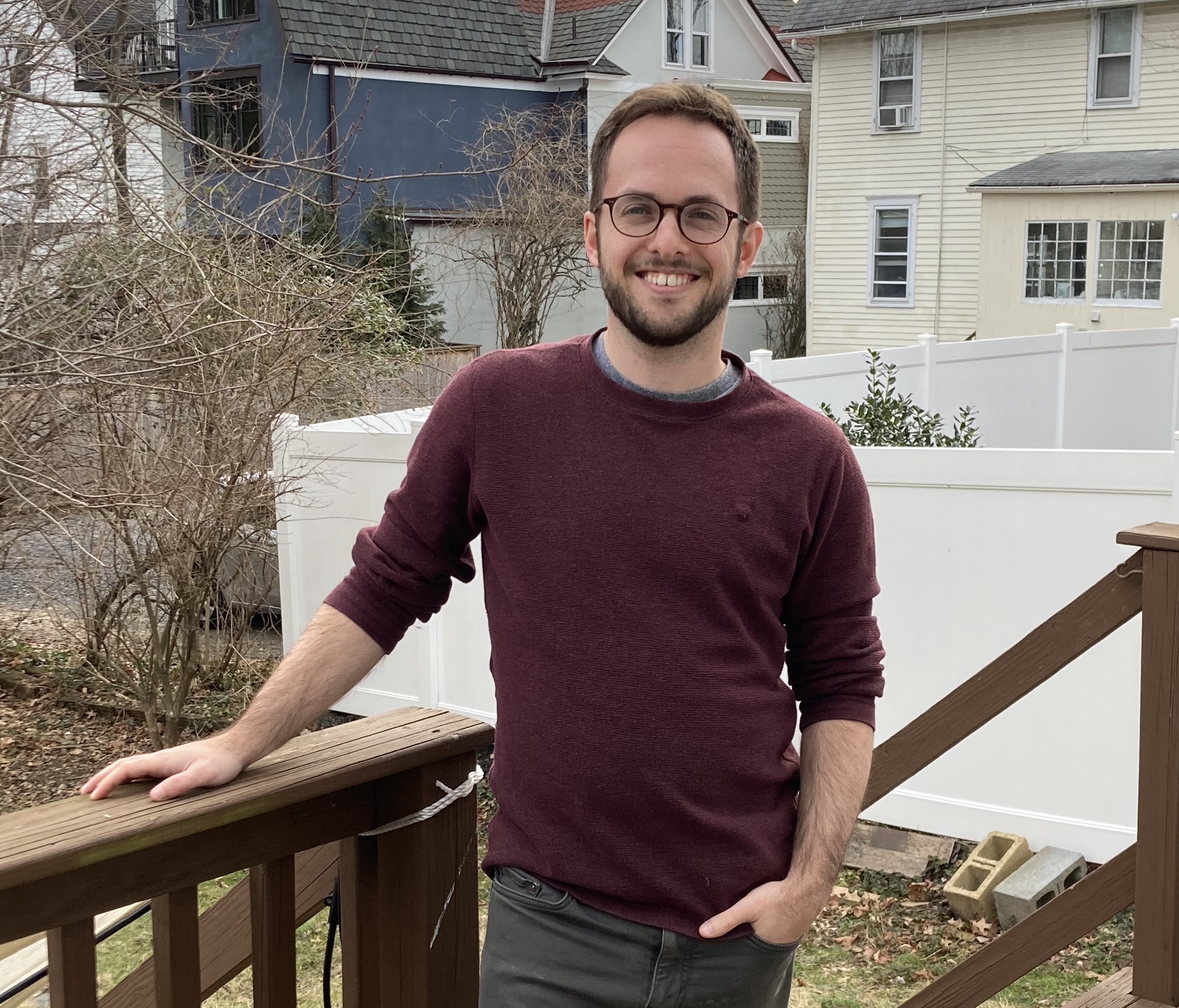
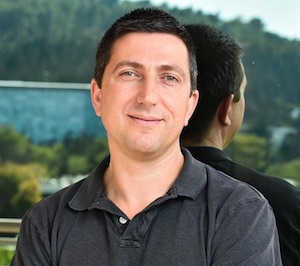
Prof. Yair Weiss is a faculty member at the School of Computer Science and Engineering, The Hebrew University of Jerusalem . He holds a PhD in Brain and Cognitive Sciences from MIT and an MSC in Applied Mathematics from Tel-Aviv University. Education: MSc in Applied Mathematics, Tel-Aviv University (1993) PhD in Brain and Cognitive Sciences, MIT (1998) His research focuses on Human and Machine Vision , Machine Learning , Bayesian Methods , and Neural Computation . Recent work explores adversarial examples, generative models, and robustness in neural networks. Recent publications highlight trends in: Understanding neural network representations Advancements in GANs and adversarial training Image restoration and translation techniques Perceptual distance modeling Bayesian approaches to computer vision Mathematical analysis of deep learning architectures
Aryeh Kontorovich is a Professor in the Computer Science Department at Ben-Gurion University. His research primarily focuses on theoretical machine learning, with expertise in probability, statistics, Markov chains, and metric spaces. His research interests span theoretical machine learning, with particular emphasis on: Probability theory and concentration inequalities Statistical learning theory Markov chains and mixing time estimation Metric space learning Kernel methods Sample compression schemes Professor Kontorovich's recent publications (2021-2025) demonstrate a continued focus on theoretical foundations of machine learning. His work shows strong trends in statistical estimation for Markov processes, distribution learning, metric space analysis, and sample compression. Many papers explore the intersection of probability theory and machine learning, particularly examining concentration inequalities, minimax optimality, and theoretical guarantees for learning algorithms. His research consistently bridges abstract mathematical theory with practical machine learning applications. Scientific awards and recognitions: Distinguished contribution award at MLG 2007 for "A Universal Kernel for Learning Regular Languages" Professor Kontorovich has advised numerous students and collaborated extensively with researchers in theoretical machine learning. His work spans both theoretical foundations and practical applications, with significant contributions to understanding the mathematical limits of learning algorithms. While specific grant information isn't provided in the source material, his extensive publication record in top venues suggests successful funding for his research programs. He maintains active collaborations with researchers worldwide, including prominent names like L. Gottlieb, D. Berend, and S. Hanneke.
Prof. Danny Dolev is a distinguished academic holding the Berthold Badler Chair in Computer Science at The Hebrew University of Jerusalem's Rachel and Selim Benin School of Computer Science and Engineering. He is an ACM Fellow and IEEE Fellow. His research focuses on distributed computing, fault-tolerant systems, algorithms, and secure protocols. He has held leadership roles, including Director of his school (1999–2002) and Chair of the Israeli National Committee for Information Technology (1994–1998). Education: B.Sc., The Hebrew University of Jerusalem, 1971 M.Sc., Weizmann Institute of Science, 1973 PhD., Weizmann Institute of Science, 1979 Research Interests: Danny Dolev's work spans distributed algorithms, Byzantine fault tolerance, consensus protocols, and hardware algorithms. His contributions include groundbreaking research on self-stabilizing systems, secure communication, and fault-tolerant clock synchronization. His HEX and Chronos protocols exemplify innovations in scalable synchronization and network security. Publications: His recent work emphasizes Byzantine agreement, asynchronous fault tolerance, and game-theoretic distributed systems. Key papers address optimal resilience in consensus algorithms and secure multi-party computation. Awards: ACM Fellow (2010) IEEE Fellow (2004) Grants & Leadership: Member of the Scientific Council, European Research Council (2010–2014) Chair of Israel's National Committee for Information Technology (1994–1998) Leadership roles at IBM Almaden Research Center (1987–1993) and Stanford University (1979–1981) Labs & Teams: His research group at Hebrew University focuses on distributed systems, with collaborations on projects like Steward (wide-area Byzantine replication) and Self-Stabilizing Circuits .
Omri Abend is an Associate Professor at The Hebrew University of Jerusalem, affiliated with the School of Computer Science and Engineering and serving as Chair of the Department of Cognitive and Brain Sciences. His research lies at the intersection of Computational Linguistics, Natural Language Processing, and Cognitive Science, with a focus on semantic representation and language acquisition modeling. His primary research interests include: Computational modeling of child language acquisition Semantic representation frameworks, particularly Universal Conceptual Cognitive Annotation (UCCA) Statistical learning and machine translation Unsupervised grammar learning and lexical relation induction Cross-lingual and cross-domain alignment in language models Evaluation methodologies for NLP systems His recent publications demonstrate a strong trend toward analyzing large language models (LLMs), exploring human-like patterns in AI, improving evaluation metrics, and applying NLP to humanitarian domains such as Holocaust testimony analysis. His work combines theoretical linguistic insights with practical machine learning applications. Scientific awards include: Outstanding Paper Award at ACL 2017 Area Chair Award for Best Paper in the Track at ACL 2023 He has supervised and collaborated with numerous researchers and students across projects in semantic parsing, machine translation, and cognitive modeling. His work has been supported by community-wide initiatives such as the MRP shared tasks, which he co-organized. He also leads research on ethical AI, open human feedback, and the computational analysis of historical narratives. Omri Abend leads several research teams focused on: The development and application of the UCCA framework for semantic annotation Cross-lingual and cross-domain knowledge representation in LLMs Computational modeling of language acquisition Evaluation and improvement of NLP systems Application of NLP to digital humanities and historical testimony analysis
Jonathan Kahana is a Researcher in the Computer Science department at the Hebrew University of Jerusalem . His research spans Machine Learning and Computer Vision , focusing on Weight Space Learning , Representation Learning , and Zero-Shot Model Search . He develops methods for probing neural network weights to extract information, including ProbeGen and Spectral DeTuning . His recent work includes mapping model weights into shared embedding spaces (ProbeX), recovering pre-fine-tuning weights of generative models, and improving zero-shot labeling with distribution priors. He contributes to open-source implementations, such as the ProbeGen GitHub repository. Research trends from his publications emphasize: Weight space analysis (ProbeGen, DSiRe) Model retrieval and classification (ProbeLog, Model Atlas) Disentanglement and invariance (Contrastive Objective, Red PANDA) Efficiency in probing (30-1,000x FLOPs reduction in ProbeGen) His work has been accepted at top-tier conferences including ICML , ICLR , and ECCV , with arXiv preprints covering topics like dataset size recovery and model tree analysis.
Prof. Roni Katzir is a faculty member in the Department of Linguistics at Tel Aviv University, affiliated with the School of Languages. He specializes in formal semantics, computational linguistics, and linguistic theory, with a focus on grammar induction, neural networks, and Minimum Description Length principles. His research integrates theoretical linguistics with cognitive science, exploring topics like large language models (LLMs), scalar implicatures, and phonological learning. He collaborates extensively with researchers such as Nur Lan, Emmanuel Chemla, and Danny Fox, contributing to venues like Linguistic Inquiry , Natural Language Semantics , and ACL conferences. Education details are not explicitly listed, but his work reflects advanced expertise in linguistics and computational methods. Research interests emphasize cognitive plausibility in grammar learning, communicative stability, and the application of computational models to linguistic theory. Publications span over two decades, with recent focus on LLMs' implications for linguistic cognition, neural network generalization, and MDL-based frameworks. His work bridges formal semantics, syntax, and phonology, addressing challenges in language learning and processing. Prof. Katzir's contributions include pioneering the use of Minimum Description Length in linguistic learning models and advancing understanding of logical operators' typological distribution. He maintains an active research lab and collaborates internationally, as evidenced by his co-authored works and conference presentations.
Ari Shnidman is an Associate Professor in Mathematics at the Hebrew University of Jerusalem. For the 2024/25 academic year, he is a member of the Institute for Advanced Study in Princeton. His research focuses on number theory, particularly arithmetic geometry, special values of L-functions, and arithmetic statistics. Research Interests: Shnidman investigates deep connections between algebraic curves, abelian varieties, and L-functions. His work spans Tate-Shafarevich groups, Ceresa cycles, Heegner cycles, and rank distribution in elliptic curves. Key methodologies include algebraic geometry, representation theory, and computational number theory. Publications: Recent papers explore Ceresa cycles, torsion in Tate-Shafarevich groups, and arithmetic of curves like Picard curves. Collaborative work dominates his output, with frequent co-authorship on papers involving elliptic curves, L-functions, and geometric invariants. Theoretical frameworks are often complemented by computational experiments. Funding: European Research Council Israel Science Foundation Academic Leadership: Shnidman co-organizes the HUJI-BGU Workshop in Arithmetic and leads seminars including: Lunch Seminar on Transcendental Number Theory (Spring 2024) Seminar on Honda-Tate Theory (Spring 2023) Fundamental Lemmas and Fourier Transform Seminar (Spring 2021)
Ran Gelles is an Associate Professor at the Faculty of Engineering, Bar-Ilan University. He received his B.Sc. (Summa Cum Laude) and M.Sc. from the Technion–Israel Institute of Technology in 2003 and 2009, respectively, and his Ph.D. from UCLA in 2014. After a postdoctoral research associate position at Princeton University (2014–2016), he joined Bar-Ilan University in 2016. His research focuses on resilient communication protocols and distributed systems. Education B.Sc., M.Sc. – Technion–Israel Institute of Technology Ph.D. – University of California, Los Angeles (UCLA) Visiting Positions CWI, Amsterdam (2011) AT&T, New Jersey (2012) Princeton University (2013) Paderborn University (2022–2023) CISPA – Helmholtz Center for Information Security (2023) His recent work includes a 2024 publication in Interactive Coding with Unbounded Noise at RANDOM 2024, reflecting his expertise in noise-tolerant communication and distributed systems. He is also co-advising Ph.D. student Agajan Sahedov. Notable affiliations include sabbatical stays at Paderborn University, CISPA, and the Max Planck Institute for Informatics (2022–2023). In February 2025, he joined the editorial board of Scientific Reports (Springer-Nature).
Idit Keidar is currently the Dean of the Viterbi Faculty of Electrical and Computer Engineering at the Technion - Israel Institute of Technology, where she also holds the Lord Leonard Wolfson Academic Chair. She received her BSc, MSc, and PhD (all summa cum laude) from the Hebrew University of Jerusalem in 1992, 1994, and 1998 respectively, with Danny Dolev as her PhD advisor. She completed her postdoctoral studies at MIT with Nancy Lynch. Her academic lineage includes notable figures such as Copernicus, Leibniz, Jacob Bernoulli, Euler, Lagrange, Laplace, and Poisson. Keidar's research focuses on fault-tolerant distributed and concurrent algorithms and systems, with particular interest in distributed storage theory and systems, concurrent data structures and transactions, and scalable Byzantine fault-tolerance. She approaches her work with the goal of finding theoretical foundations that can help explain and improve practical implementations. Her research has significant implications for large-scale distributed systems, cloud computing, and multi-core architectures. Keidar has made substantial contributions to the field through her editorial work as editor of the ACM SIGACT News Distributed Computing Column from 2007-2013 (previously co-editing with Sergio Rajsbaum from 2000-2007). Her publications span theoretical foundations, practical applications, and educational aspects of distributed computing. The trends in her work show a consistent focus on bridging theory and practice in distributed systems, with increasing attention to large-scale systems, transactional memory, and Byzantine fault tolerance as these areas have gained practical importance. Scientific Awards and Recognition: Lord Leonard Wolfson Academic Chair Editor of ACM SIGACT News Distributed Computing Column (2000-2013) Keidar has held significant leadership positions in the distributed computing community, serving as PC Chair for PPoPP 2019 and PODC 2018, Organizing Committee Chair for DISC 2013 in Jerusalem, and PC Co-Chair for LADIS 2021. She has been actively involved with the Networked Software Systems Laboratory at the Technion. Beyond her technical work, Keidar is also a creative writer, with a short story winning 2nd place in the Shirat Ha'Mada creative writing contest for scientists.
Oren Weimann is a Professor in the Department of Computer Science at the University of Haifa, Faculty of Natural Sciences. His research lies at the intersection of theoretical computer science, algorithm design, and data structures, with a strong focus on planar graphs, combinatorial pattern matching, and fine-grained complexity. He has published extensively in top-tier venues such as STOC, SODA, ICALP, PODC, and ESA. Education: Ph.D., Massachusetts Institute of Technology (MIT), 2005–2009. Advisor: Erik Demaine. Dissertation: "Accelerating Dynamic Programming" Postdoc, Weizmann Institute of Science, 2009–2011. Host: David Peleg M.Sc., University of Haifa, 2004–2005. Advisor: Gad Landau. Dissertation: "Using PQ trees for Comparative Genomics" B.A., Technion – Israel Institute of Technology, 1999–2002 Oren Weimann's research centers on the design and analysis of efficient algorithms, particularly for planar and structured graphs. His work explores fundamental problems such as shortest paths, distance oracles, fault tolerance, edit distance, and pattern matching. He investigates both upper and lower bounds, often pushing the limits of what is computationally feasible under fine-grained complexity assumptions. His contributions include optimal labeling schemes, compressed data structures, and breakthroughs in dynamic and distributed graph algorithms. His recent publications reveal a consistent trend in developing highly efficient algorithms for planar graphs, with a focus on distance computation, fault tolerance, and compression. Keywords across these works include planar graphs, dynamic programming, string matching, and conditional lower bounds, reflecting a deep integration of algorithmic techniques and complexity theory. He frequently collaborates with leading researchers such as Shay Mozes, Paweł Gawrychowski, and Philip Bille. Scientific Awards: Best Paper Award, CPM 2007 Best Paper Award, ICALP 2020 (mentioned in context of work) Oren Weimann has advised numerous PhD and Master’s students, including Yaseen Abd-Elhaleem, Nathan Wallheimer, Aviv Bar-natan, and Shon Feller, whose dissertations have led to publications in major conferences. He has also mentored several postdoctoral researchers such as Shay Golan, Itai Boneh, and Panagiotis Charalampopoulos. His work has been supported by competitive research grants, though specific grant titles are not listed in the text. He has served on the program committees of key conferences including SODA, ICALP, CPM, ESA, and SPIRE, demonstrating active leadership in the theoretical computer science community. He is associated with a vibrant research group focused on algorithms and data structures, likely involving collaboration with students and postdocs on projects related to graph algorithms, string processing, and complexity. While no formal lab name is mentioned, his collaborative output suggests a strong, productive research team at the University of Haifa.
Michael Elkin is a Professor in the Department of Computer Science at Ben-Gurion University of the Negev, Israel. His research focuses on Theoretical Computer Science, Discrete Mathematics, and Algorithms, with specializations in graph algorithms, distributed computing, and metric embeddings. He has held editorial roles, including Associate Editor of the Journal of Computer and System Sciences, and has contributed to numerous program committees for top conferences like FOCS and SODA. Elkin's research interests include low-distortion embeddings, streaming and dynamic graph algorithms, and approximation algorithms. His work bridges distributed and centralized algorithm design, with applications in network optimization and computational geometry. Recent trends in his publications emphasize efficient spanner constructions, symmetry-breaking in distributed systems, and algorithmic approaches to graph coloring and metric spaces. Elkin has advised multiple PhD and Master’s students, including Leonid Barenboim (winner of the 2015 Distributed Computing Doctoral Dissertation Award) and Shay Solomon. He has been awarded Best Paper and Best Student Paper awards at PODC conferences for groundbreaking contributions to distributed algorithms. Additionally, he leads a postdoctoral research group focusing on graph algorithms and metric embeddings, collaborating with Eden Chlamtac and Ofer Neiman. Teaching highlights include courses on Distributed Algorithms, Design of Algorithms, and Metric Graph Algorithms. His academic service includes organizing academic programs and mentoring early-career researchers in theoretical computer science.
Eran Yahav is a Professor in the Computer Science Department at the Technion, Israel Institute of Technology, and serves as CTO at Tabnine. His research bridges programming languages, software engineering, program analysis, and machine learning, focusing on program synthesis, verification, and code intelligence. Research Interests: His work spans program synthesis , abstract interpretation , verification of concurrent systems , binary analysis , and AI for code . He leads the PRIME project, which uses machine learning and static analysis to enable programming with millions of examples, improving code completion, search, and prediction. The recent publications reflect a strong trend toward integrating neural models with program analysis—using structured representations of code (e.g., AST paths) for property prediction, generating sequences from code (code2seq), learning distributed representations (code2vec), and interpreting neural networks via automata extraction. His work consistently appears in top-tier venues such as POPL, PLDI, ICSE, OOPSLA, and ICLR. Scientific Awards: Best paper award at ISSTA'07 Best paper award at ISSTA'06 Advising and Grants: He has advised numerous PhD and Master’s students, many of whom have published in premier conferences and now hold academic or industry positions. While specific grants are not mentioned, his sustained high-impact research and leadership in major projects (e.g., PRIME, Fender, SAFE) imply significant funding support. He has served on program committees for PLDI, POPL, CAV, OOPSLA, and VMCAI, reflecting his standing in the programming languages and verification communities. Labs and Teams: He leads a research group focused on program analysis and synthesis, with strong collaborations, particularly with Martin Vechev and others, on concurrency, synthesis, and machine learning for code. The group has developed influential tools such as PRIME, code2seq, code2vec, TRACY, and SAFE.
Shay Moran is an Associate Professor at the Faculty of Mathematics , Technion - Israel Institute of Technology, with affiliations to the Faculties of Computer Science and Data and Decision Sciences . They are also affiliated with Google Research in Tel Aviv . Shay's research interests center on mathematical problems inspired by learning theory and computer science , particularly in areas like machine learning theory, differential privacy, algorithmic stability, and online learning . Their work bridges abstract mathematics with practical algorithm design. Recent publications highlight trends in reductions between learning models, geometric interpretations of learning problems, and privacy-preserving algorithms . Key themes include sample compression, PAC learnability, boosting mechanisms, and adversarial robustness . Best Paper Runner-up , COLT 2021 Best Paper Award , COLT 2020 Final Award for Outstanding Paper in Machine Learning Shay has supervised numerous PhD and Master's students, including Vanessa Kosoy, Liza Nesterova, Hilla Schefler, Alexander Shlimovich, Tom Waknine , and Iska Tsubari . Former advisees include Idan Mehalel (PhD, co-advised with Yuval Filmus) and Zachary Chase (Postdoc) .
Zvi Lotker is a Lecturer in the Department of Communication Systems Engineering at Ben-Gurion University. His research focuses on computer networks, distributed systems, and mobile/wireless computing. Education: Ph.D. in Electrical Engineering (2003), Tel-Aviv University, Israel. Dissertation: Algorithms in Networks under Prof. Boaz Patt-Shamir. M.Sc. in Mathematics (1998), Tel Aviv University. Thesis: On the d distance between iid and Markov process under Prof. Meir Smordinsky. B.Sc. in Mathematics & Computer Science (1991), Ben-Gurion University. B.Sc. in Industrial Engineering (Information Systems track, 1991), Ben-Gurion University. No scientific awards, grants, or advised students are listed in the provided information.
Dr. Miri Adler is a Senior Lecturer (Assistant Professor) at the Alexander Silberman Institute of Life Sciences and the Faculty of Medicine at the Hebrew University of Jerusalem, and a visiting scientist at Yale University's Tananbaum Center. Her research focuses on uncovering universal principles of tissue organization and function, particularly in health and disease, with an emphasis on fibrosis, cell-cell communication circuits, and systems-level analysis of complex biological networks. She leads a multidisciplinary team combining theoretical models, computational methods, and experimental data to study tissue repair, homeostasis, and pathological processes like fibrosis. Education: Ph.D. in Physics (Weizmann Institute, 2019), M.Sc. in Physics (Weizmann Institute, 2013), B.Sc. in Physics (Technion, 2010). Previous positions include postdoctoral fellowships at the Broad Institute (MIT/Harvard) and Weizmann Institute, and a visiting scientist role at Yale. Research interests span network hyper-motifs, division of labor in tissues, fibrosis mechanisms, and fold-change detection in biological systems. Key contributions include identifying fibrosis subtypes (‘cold’ and ‘hot’) and developing theoretical frameworks to predict therapeutic targets. Her work integrates concepts from mathematics, computer science, and physics with biology. Scientific awards include the Alon Fellowship (2024), EMBO Excellence in Life Sciences Fellowship (2020), and the Lee A. Segel Prize in Theoretical Biology (2017). The lab actively seeks students and researchers in computational biology, systems biology, and mathematical modeling. Advising: Supervises graduate and undergraduate students in projects related to tissue dynamics, network analysis, and fibrosis modeling. Collaborates with experimental labs to validate theoretical predictions in heart, lung, and liver tissues. Current team includes postdocs, M.Sc. students, and undergraduate researchers. Labs & Teams: The Adler Lab at Hebrew University focuses on multidisciplinary approaches to tissue biology, with a particular emphasis on fibrosis and systems-level tissue organization. Collaborations span institutions including Yale University and the Broad Institute.