معرفی
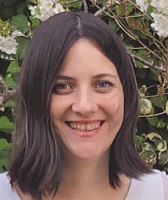
Dr. Miri Adler is a Senior Lecturer (Assistant Professor) at the Alexander Silberman Institute of Life Sciences and the Faculty of Medicine at the Hebrew University of Jerusalem, and a visiting scientist at Yale University's Tananbaum Center. Her research focuses on uncovering universal principles of tissue organization and function, particularly in health and disease, with an emphasis on fibrosis, cell-cell communication circuits, and systems-level analysis of complex biological networks. She leads a multidisciplinary team combining theoretical models, computational methods, and experimental data to study tissue repair, homeostasis, and pathological processes like fibrosis.
Education: Ph.D. in Physics (Weizmann Institute, 2019), M.Sc. in Physics (Weizmann Institute, 2013), B.Sc. in Physics (Technion, 2010). Previous positions include postdoctoral fellowships at the Broad Institute (MIT/Harvard) and Weizmann Institute, and a visiting scientist role at Yale.
Research interests span network hyper-motifs, division of labor in tissues, fibrosis mechanisms, and fold-change detection in biological systems. Key contributions include identifying fibrosis subtypes (‘cold’ and ‘hot’) and developing theoretical frameworks to predict therapeutic targets. Her work integrates concepts from mathematics, computer science, and physics with biology.
Scientific awards include the Alon Fellowship (2024), EMBO Excellence in Life Sciences Fellowship (2020), and the Lee A. Segel Prize in Theoretical Biology (2017). The lab actively seeks students and researchers in computational biology, systems biology, and mathematical modeling.
Advising: Supervises graduate and undergraduate students in projects related to tissue dynamics, network analysis, and fibrosis modeling. Collaborates with experimental labs to validate theoretical predictions in heart, lung, and liver tissues. Current team includes postdocs, M.Sc. students, and undergraduate researchers.
Labs & Teams: The Adler Lab at Hebrew University focuses on multidisciplinary approaches to tissue biology, with a particular emphasis on fibrosis and systems-level tissue organization. Collaborations span institutions including Yale University and the Broad Institute.