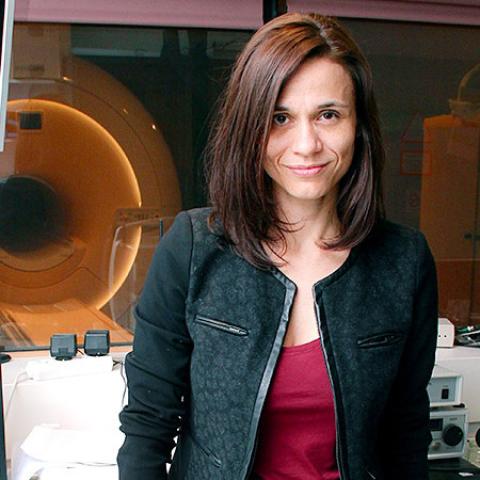
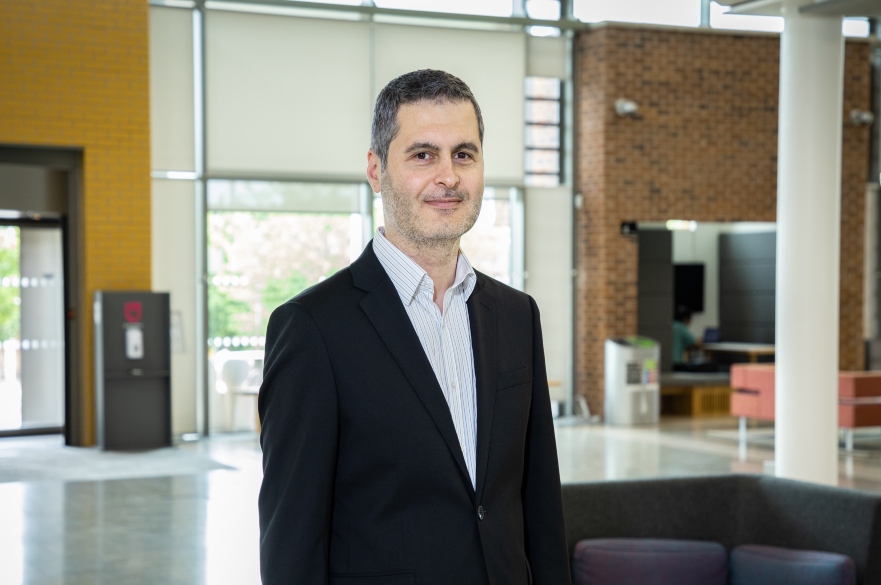
Dr. Marina Milošević is an Associate Professor at the Department of Computer and Software Engineering, Faculty of Technical Sciences in Čačak, University of Kragujevac. She specializes in medical image processing, particularly breast cancer detection using thermography and mammography, along with database systems and human-computer interaction. Her work bridges computer engineering with biomedical applications, focusing on practical implementations for healthcare improvement. Her educational background includes a Bachelor's degree in Computer Engineering from the Technical Faculty in Čačak (2010, GPA 9.47) and a PhD from the Faculty of Electronics, University of Niš (2016). She has received multiple awards for academic excellence and was a scholarship recipient from several prestigious institutions including the Fund for Young Talents and the Ministry of Education of Serbia. Dr. Milošević's research interests focus on medical image processing, particularly breast cancer detection using thermography and mammography. She has developed systems for remote mammogram processing and comfort level classification during patient transport. Her work also extends to database systems, geographic information systems, and human-computer interaction. She holds multiple professional certifications in database technologies from INTERGRAPH and ORACLE ACADEMY. Her publication record shows a strong trend toward interdisciplinary research combining computer engineering with medical applications. Recent work has expanded into transportation systems, earthquake detection using mobile phones, and agile software development methodologies. Her research consistently focuses on practical implementations with real-world applications, particularly in healthcare diagnostics and monitoring. Scholarship recipient of the Fund for Young Talents Scholarship recipient of the University of Kragujevac Scholarship recipient of the Ministry of Education of the Republic of Serbia Vuk Karadžić diploma for exceptional academic performance Dr. Milošević teaches across all academic levels, from Bachelor's courses in Fundamentals of Computer Engineering and Databases to PhD-level courses on Virtual Reality Applications in Medicine and Biomedical Image Processing. Her work on a patent for a random number generator based on Geiger-Muller counter technology demonstrates her innovative approach to solving engineering problems. She has been actively involved in adapting engineering education for remote learning during the pandemic. She leads research in the Computer Science Laboratory at the Faculty of Technical Sciences, focusing on medical image processing systems and database applications. Her recent work includes developing web-based systems for remote mammogram processing and analyzing vehicle vibration signals for comfort assessment. She collaborates with researchers across multiple institutions on interdisciplinary projects that bridge computer engineering with healthcare applications.