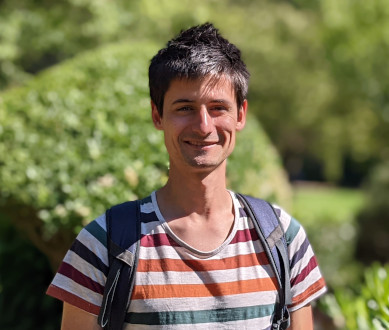
Prof. Dr. Matthias Weidlich is a faculty member at Humboldt University of Berlin within the Institute of Computer Science under the Faculty of Mathematics and Natural Sciences . His research focuses on Process Mining , Complex Event Processing , and Data Privacy with applications in Business Process Management and Scientific Workflows . Research Interests: Business Process Management and Process Mining Complex Event Processing and Stream Data Analysis Data Privacy and Security in Process Systems Scientific Workflow Systems and User Behavior Heterogeneous Network Embeddings Algorithm Design and Optimization Recent Publications (2023-2025) demonstrate expertise in: Efficient stream processing techniques Privacy-preserving process mining frameworks Scientific workflow analysis tools Graph neural network applications Multi-modal data integration Adaptive querying systems Contact: Office: Unter den Linden 6, 10099 Berlin Phone: 030 2093-41277 Email: matthias.weidlich@hu-berlin.de Web: hu.berlin/data
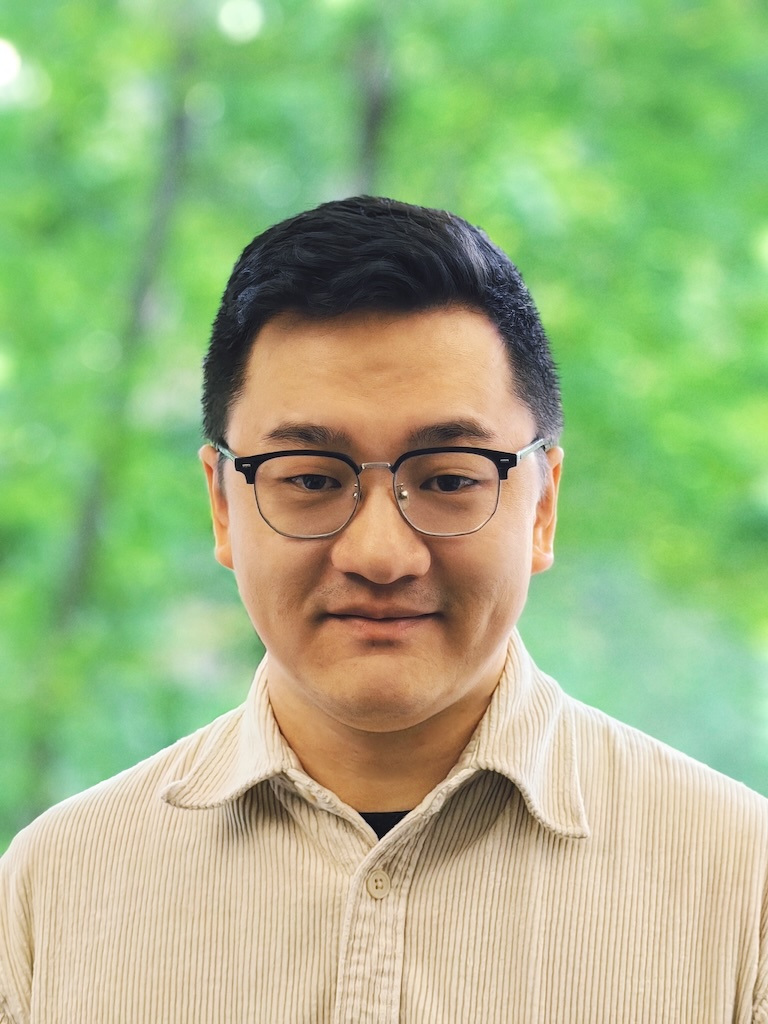
Prof. Gerhard Jäger holds the Chair of General Linguistics at the Faculty of Humanities, University of Tübingen . He serves as a Principal Investigator (PI) in the Clusters of Excellence Human Origins and Machine Learning for Science , and leads projects like Phylomilia (funded by Volkswagen Foundation) and CrossLingference (ERC Advanced Grant). His career spans multiple institutions, including Bielefeld University (2004-2009) and Stanford University (visiting scholar, 2004). Habilitation (2002) at Humboldt University Berlin with thesis on Anaphora and Type Logical Grammar PhD (1996) at Humboldt University Berlin on Dynamic Semantics His research bridges computational linguistics , phylogenetic analysis , and game theory , focusing on Bayesian models , language evolution , and cross-linguistic typology . Recent work explores phylogenetic inference from acoustic speech data and geographic influences on language trees . Key contributions include 15+ recent publications on topics spanning phylogenetic typology , cognate detection , and Bayesian language modeling . These works employ machine learning , statistical inference , and evolutionary game theory to analyze language change , typological variation , and linguistic stability . Honors include ERC Advanced Grant , Volkswagen Foundation funding , and DFG-Humanities Centre for Advanced Studies participation. He has taught courses in Computational Historical Linguistics , Phylogenetic Methods , and Bayesian Data Analysis across institutions like Tübingen, Bielefeld, and Stanford. He actively contributes to academic communities through workshop organization (e.g., Quantitative Theoretical Linguistics , Game Theory in Pragmatics ) and serves on the faculty council at Tübingen. His team collaborates with institutions like Max Planck Institute for Evolutionary Anthropology , University of Pennsylvania , and LMU Munich .
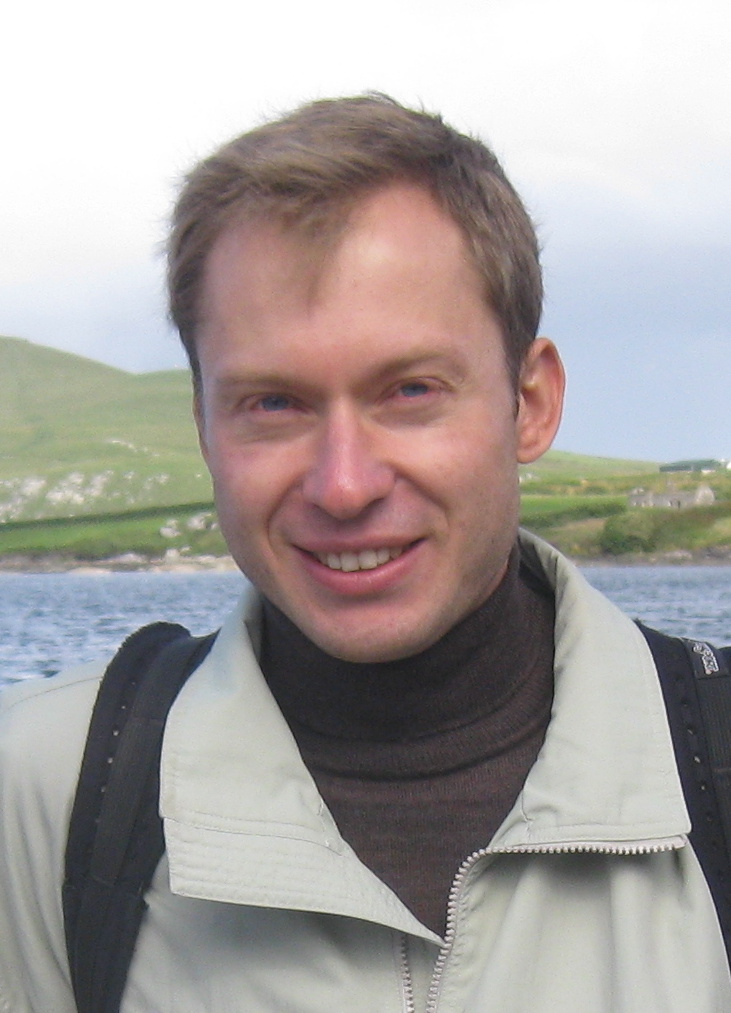
Holger Dette is a Professor and Chair Holder of Stochastics (specializing in Statistics) at the Faculty of Mathematics, Ruhr University Bochum. He leads the prominent Group Dette within the Institute of Statistics, overseeing a team of researchers, doctoral students, and administrative staff including Birgit Tormöhlen as team assistant. His research group is deeply integrated within the university's mathematical ecosystem, collaborating with other research groups across algebra, analysis, numerics, and topology. Dette's research spans mathematical statistics with strong applications in real-world problems. His primary interests include optimal experimental design, time series analysis, functional data, change point problems, nonparametric regression, biostatistics, special functions, goodness-of-fit tests, and random matrices . His work bridges theoretical statistics with practical applications, particularly evident in his collaborations with pharmaceutical giants Novartis and Bayer AG in biostatistics, as well as Quasol, a spin-off company from his statistics institute. His recent publications (2024-2025) reveal a research program increasingly focused on high-dimensional and functional data analysis, privacy-preserving statistics, and novel methodological approaches to longstanding statistical problems. Dette's work shows strong interdisciplinary connections, particularly with biomechanics (analyzing joint angles during fatigue phases) and data science (addressing challenges in the era of big data). His research group is actively involved in multiple DFG-funded projects including the newly established 'Small Data' collaborative research center (Sonderforschungsbereich 1597) and the Spatio-temporal Statistics for the Transition of Energy and Transport (Transregio 391). Dette has received significant recognition including the prestigious Humboldt Research Award . His paper 'With Great Power Come Great Side Channels: Statistical Timing Side-Channel Analyses with Bounded Type-1 Errors' achieved second place at the CSAW'24 Applied Research Competition MENA. His research group has also secured multiple significant funding awards from the German Research Foundation (DFG). As an advisor, Dette supervises numerous doctoral and master's students including Pascal Quanz, Marius Kroll, and Carina Graw. His group offers statistical consulting services for scientists and students across bachelor's, master's, and doctoral phases. The group maintains strong industrial partnerships, particularly in biostatistics applications, demonstrating Dette's commitment to translating theoretical statistics into practical solutions for real-world challenges.
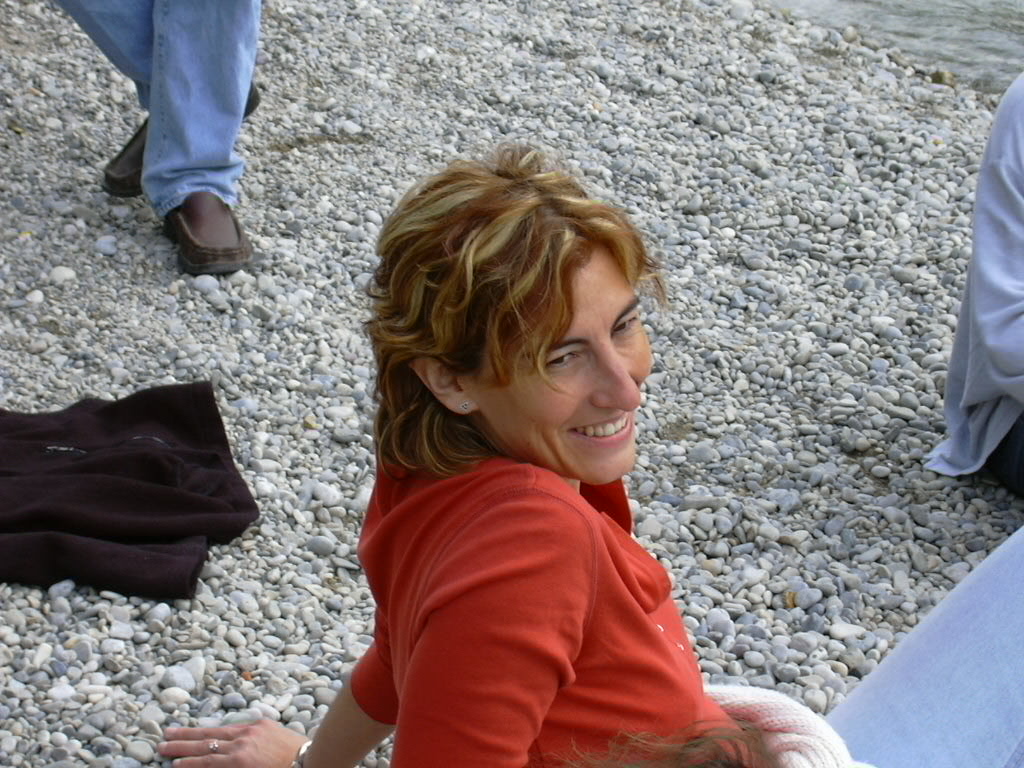
Mario Berta is a Professor of Physics at RWTH Aachen University’s Institute for Quantum Information, with an honorary Visiting Reader position at Imperial College London’s Department of Computing. His research focuses on mathematical aspects of quantum information science, including quantum communication theory, cryptography, and algorithms. He leads a group funded by the ERC Starting Grant QEntropy, exploring entropy’s role in quantum information. He actively recruits PhD/postdoc researchers and organizes workshops like the Mathematics of Quantum Information conference at RWTH Aachen and Beyond IID 13 in Munich. Education: PhD in Theoretical Physics from ETH Zurich. Prior roles include Senior Research Scientist at Amazon Web Services’ quantum computing division and Postdoctoral Researcher at Caltech’s IQIM. He has pioneered quantum Gibbs sampling algorithms for the Fermi-Hubbard model and contributed to quantum error correction and complexity theory. His work bridges theoretical foundations with practical implementations, emphasizing resource analysis and algorithm optimization. Research interests span quantum algorithms’ computational complexity, entanglement theory, and information-theoretic security. He explores topics like quantum channel coding, hypothesis testing, and distributed quantum protocols under communication constraints. His group’s activities include organizing international workshops and collaborations with institutions like ML4Q and EPSRC. Funding sources include the European Research Council, RWTH’s Exploratory Research Space, and the EPSRC. He advocates for open-access science, as seen in his German-language article Algorithmen für neue Hardware . His work aims to advance quantum technologies through rigorous mathematical frameworks and experimental feasibility analysis.
Prof. Dr. Angelika Braun is a full Professor of Phonetics at the University of Trier since October 2009, with a career spanning forensic phonetics, sociophonetics, and cross-cultural speech analysis. She previously held roles at the Bundeskriminalamt (Wiesbaden/Düsseldorf) and Philipps-Universität Marburg, where she habilitated in Phonetics and Speech Processing (2000). Her work bridges academic research with forensic practice. Research Focus: Her Sociophonetics (language and emotions, gender-specific speech) Forensic Phonetics (speaker identification, voice analysis) Contrastive and Hawaiian Phonetics Speech prosody and toxin effects (smoking, alcohol) Intercultural dubbing studies Academic Contributions: Over 15 recent articles explore voice quality, emotional speech, forensic age estimation, and cross-cultural dubbing effects. Key conferences include Interspeech, International Congress of Phonetic Sciences, and ISCA. Her work appears in journals like Forensic Linguistics and The Phonetician . Scientific Honors: Fellow of the American Academy of Forensic Sciences (AAFS) Founder Member and former Chairperson of the International Association for Forensic Phonetics (IAFP) Life-Member of the International Phonetic Association (IPA) Leadership roles in ISPhS and GAL Practical Impact: Developed the Almeida-Braun Transcription System for dialect analysis and contributed to forensic audio enhancement protocols (e.g., Rodney King case). Serves as reviewer for Language and Speech , Forensic Linguistics , and JIPA . Collaborates on longitudinal studies of vocal aging and speaker identification.
Dr. Patrick Reinard is an Assistant Professor in the Department III - Papyrology at the University of Trier. His research focuses on Papyrology, Epigraphy, and socio-economic history of Greco-Roman Egypt, with specific expertise in Jewish communities, economic strategies, and material culture analysis. Co-editor of Oeconomica and Muziris series Principal investigator in Roman economic behavior and documentary evidence Specializes in papyrus letters as economic data sources His recent publications analyze market dynamics, trust mechanisms, and sustainability in Roman trade. Collaborative work includes hyperspectral papyri imaging projects and digital pandemic-era pedagogy initiatives. He contributes extensively to academic conferences and editorial boards, with particular interest in Greco-Roman epistemology and its contemporary reception.
Marian Sauter is a researcher at Ulm University's Institute for Psychology in Germany, specializing in the intersection of psychology, human-computer interaction, and educational technology. Her work primarily focuses on eye-tracking methodologies and gaze analysis to improve online teaching and learning environments. She frequently collaborates with colleagues from the Institute of Media Informatics at Ulm University, indicating strong interdisciplinary connections between psychology and computer science departments. Her research interests center on understanding visual attention patterns in educational contexts, particularly how gaze behavior correlates with learning outcomes in digital environments. Dr. Sauter investigates how eye movement data can be visualized and utilized to optimize instructional design, with specific attention to gaze-laser pointer relationships, gaze synchronicity among students, and attention monitoring in virtual classrooms. Her work bridges cognitive psychology theories with practical applications for e-learning platforms and remote education systems. Analysis of her recent publications reveals a strong trajectory in applying eye-tracking technology to solve real-world educational challenges, particularly those emerging during and after the pandemic-driven shift to online learning. Her research spans both theoretical investigations of visual attention mechanisms and practical implementations for educational technology. The consistent focus on webcam-based eye-tracking demonstrates her commitment to developing accessible methods that don't require specialized hardware, making her research particularly relevant for widespread educational applications. Best Paper Award at ETRA '22 Symposium on Eye Tracking Research and Applications Berlin Health Award (2023) Dr. Sauter's collaborative approach is evident in her frequent co-authorship with Tobias Wagner from Ulm University's Institute of Media Informatics and Anke Huckauf from General Psychology. Her research appears to be supported by institutional resources at Ulm University, though specific external grants are not mentioned in the available information. She appears to be actively mentoring students given her involvement in educational psychology research and student-focused studies. Her work suggests involvement with research groups focused on human-computer interaction, educational technology, and cognitive psychology at Ulm University, though specific lab names are not provided in the available information. The interdisciplinary nature of her publications indicates collaboration across psychology and media informatics departments.
Rhenish Friedrich Wilhelm University of BonnGermany
Michel Pain is a CNRS Researcher at the Toulouse Mathematics Institute (Université de Toulouse). Previously, he held a Courant Instructor position at NYU's Courant Institute of Mathematical Sciences (2019-2021) and completed his PhD in probability theory at Sorbonne Université under Zhan Shi, focusing on branching Brownian motion. His research spans log-correlated fields , including branching Brownian motion/random walks, Derrida-Retaux models, and β-ensembles. He studies extremal statistics , stochastic structures , and phase transitions in hierarchical systems. Michel has published extensively on branching processes , weighted trees , and log-correlated random matrices , with recent work on supercritical phase overlaps (2025) and height asymptotics for weighted trees (2024). His supervised students include PhD candidate Louis Chataignier and several Bachelor/Master thesis authors. He currently teaches the Master 2 course Branching Processes with Pascal Maillard, having previously taught advanced probability at Université Toulouse III, complex analysis at NYU, and integration theory at ENS Paris.
G. Ulrich Nienhaus is a Professor at the Institute of Applied Physics , Karlsruhe Institute of Technology (KIT) , and leads a research group focused on Biophysics and Nanoscopy . His work integrates physics, biology, chemistry, and computational methods to develop advanced light microscopy techniques with high spatial and temporal resolution. Key research areas include fluorescent protein engineering , single-molecule spectroscopy , super-resolution microscopy , and nanoparticle-biomolecule interactions . His group investigates molecular processes in living cells , protein folding , ligand dynamics , and quantitative imaging for biomedical and material science applications. Scientific Contributions span decades, with recent work highlighting innovative STED microscopy methods, DNA origami-based distance rulers , and fluorescent nanocluster applications . Publications emphasize biomolecular dynamics , nanoparticle corona formation , and live-cell imaging tools .
Richard A. Davis is a Professor of Statistics at Columbia University and a Hans Fischer Senior Fellow at the Technical University of Munich's Institute for Advanced Study (TUM-IAS). He holds the Howard Levene Professorship in Statistics. His research focuses on applied probability, time series analysis, stochastic processes, and extreme value theory. Davis has contributed to nonlinear time series models, spatial modeling, and financial econometrics. He has held academic positions at Colorado State University and MIT, and has been recognized with awards including the Koopmans Prize, IBM Faculty Award, and fellowships from the Institute of Mathematical Statistics and American Statistical Association. His education includes a B.A. and Ph.D. in Mathematics from the University of California, San Diego. He co-authored influential textbooks like Time Series: Theory and Methods and has advised numerous papers on topics ranging from count time series to spatial extremes. Current research explores machine learning applications in time series and environmental risk modeling through collaborations like the STARMAP program.
Dominic Edelmann is a researcher at Heidelberg University, Germany, specializing in mathematical statistics and its applications in biostatistics and high-dimensional molecular data. His work bridges theoretical statistics and biomedical research, particularly in developing and applying distance-based dependence measures. Research Interests: His research centers on distance correlation , survival analysis for high-dimensional data , epigenetic data analysis , and machine learning . He investigates nonlinear relationships in complex datasets, with applications in oncology and molecular biology. The recent publications show a strong trend in extending distance correlation methods to survival and competing risks data, as well as time series and high-dimensional settings. His work combines rigorous mathematical foundations with practical applications in biomedicine. Scientific Funding: DFG Grant "dCortools: Distanzkorrelationsverfahren zur Erkennung Nichtlinearer Zusammenhänge in Hochdimensionalen Molekularen Daten" (2019–present) Academic Supervision: He has co-supervised Master’s theses on bias correction in distance correlation and regression models for bounded responses in DNA methylation studies, indicating active involvement in training the next generation of statisticians. He holds a Dr. rer. nat. in Mathematics from Heidelberg University (2015) and was a research assistant there during his doctoral studies. His work continues to be centered at Heidelberg University, contributing to both theoretical and applied statistical science.
Puze Liu is a Senior Research Scientist and Deputy Head at the System AI for Robot Learning (SAIROL) department of the German Research Center for Artificial Intelligence (DFKI) , with a secondary affiliation at the Intelligent Autonomous Systems group of the Technische Universität Darmstadt . He completed his Ph.D. at TU Darmstadt under Prof. Jan Peters , focusing on safe reinforcement learning for real-world robotics. Education: Ph.D., Intelligent Autonomous Systems, TU Darmstadt M.Sc., Computational Engineering Science, Technische Universitaet Berlin Research Interests include robotics , reinforcement learning , safe exploration , and human-robot collaboration , with a focus on deploying learned policies in dynamic environments. His work addresses safety in high-dimensional tasks through constraint manifolds and implicit neural representations. Publication Trends span safe reinforcement learning , robot air hockey , kinodynamic planning , and reactive motion generation . Notable contributions include ReDSDF for real-time collision avoidance and ATACOM for constraint manifold control. Scientific Awards Best Paper Award Finalist (CoRL 2021) Best Entertainment and Amusement Paper Award Finalist (IROS 2021) IROS Student Travel Award (2022) Supervision includes mentoring students on topics like safe policy search , air hockey planning , and robot dynamics estimation . He is part of the SAIROL and Intelligent Autonomous Systems teams.
Mike Thiv is a Researcher and Head of the Botany Department at the State Museum of Natural History Stuttgart . His work focuses on plant systematics, biogeography , and floristic mapping , with a particular emphasis on the Eritrean-Arabian region, the Mediterranean, and Macaronesia. He has contributed to understanding evolutionary patterns in laurel forests, island endemism, and glacial refugia dynamics. His academic journey includes a Habilitation at Heidelberg University (2015), a PhD on Gentianaceae phylogeny (2000), and a Diploma in Biology (1995). He has led third-party funded projects with grants totaling ~€800,000 and served as an associate editor for journals like Plant Systematics and Evolution . Research projects span molecular phytogeography of the Socotra Archipelago, decline of clubmoss in Baden-Württemberg, and floristic dynamics under global change. His publications address adaptive radiation, vicariant speciation, and taxonomic revisions across diverse plant families. Notable collaborations include work with M. Koch on Macaronesian Gesnouinia and Mediterranean Soleirolia woodiness evolution (2019), and with R. Linder on molecular phytogeography of Socotra plants (2001–2003). He has mentored no explicit advisees but contributes to interdisciplinary teams. Key trends in his publications include integrating molecular and morphological data for taxonomy, exploring biogeographic disjunctions, and analyzing conservation genetics. His work bridges historical botany with modern phylogenetic methods, emphasizing biodiversity in Mediterranean and island ecosystems.
Artem Sapozhnikov is a Professor at the Mathematisches Institut of Universität Leipzig, Germany. His research focuses on probability theory, particularly percolation, random walks, and random graphs. He maintains an active research program with numerous publications and supervises PhD students and postdocs. Professor Sapozhnikov teaches a range of mathematics courses for physicists, including Mathematics for Physicists 1-4, Probability Theory I & II, and specialized courses on percolation. His teaching spans both undergraduate and graduate levels, demonstrating his commitment to mathematical education. His research interests center around probability theory , with specific focus on: Percolation theory and phase transitions Random walks and their properties on various structures Random interlacements and Brownian motion Boolean models and geometric probability Models with long-range correlations His work bridges theoretical probability with applications in statistical physics. Analysis of his recent publications shows a strong focus on the properties of random interlacements, Brownian motion, and percolation models. His research examines connectivity properties, phase transitions, and geometric aspects of these stochastic processes. Recent work with Yingxin Mu has explored visibility windows and indistinguishability of components in various models. Earlier collaborations with Caio Alves, Deepan Basu, and Yinshan Chang investigated decoupling inequalities, crossing probabilities, and loop percolation. Professor Sapozhnikov has supervised several PhD students and postdocs, including: Deepan Basu (PhD 2013-2017) Caio Alves (postdoc 2016, 2017-2020) Yinshan Chang (postdoc 2013-2016) Lorenzo Taggi (PhD 2012-2015) Yingxin Mu (postdoc 2021-2023) He currently has open positions for PhD students through the IMPRS program.
Max Planck Institute for Extraterrestrial PhysicsGermany
Mara Salvato is a Senior Scientist at the Max Planck Institute for Extraterrestrial Physics (MPE) and the Origins Excellence Cluster in Garching, Germany, specializing in high-energy astrophysics with a focus on X-ray astronomy and active galactic nuclei (AGN). Her work bridges observational astronomy, cosmology, and data science through comprehensive multiwavelength surveys. Research Interests: Photometric redshifts for AGN, developing advanced methods to determine distances to active galaxies using multiwavelength data X-ray Surveys, particularly through missions like eROSITA, analyzing large-scale cosmic structures and AGN populations Environment of AGN and morphology of their host galaxies, studying how active nuclei relate to their galactic environments across cosmic time Multiwavelength survey integration, creating comprehensive catalogs that combine data from across the electromagnetic spectrum Dr. Salvato's research has significantly advanced our understanding of AGN populations and their evolution through innovative approaches to photometric redshift estimation and multiwavelength data analysis, with particular emphasis on the COSMOS field and eROSITA survey data. Scientific Awards: 2017/2018/2019/2022: Listed among the top 100 Highly Cited Researchers in Space Science (Clarivate Data, ex Thomson Reuters); one of the only 9 women in the list at that time 2023/2024/2025/2026: Listed among the top 3% scientists in Germany, Europe and World 2024: Ranked N.84 among the Best female scientists in the world 2023: Listed among the 100 women more successful women in Italy (Forbes Italia) Dr. Salvato leads significant contributions to major astronomical surveys and has developed influential methodologies for photometric redshift estimation specifically tailored for AGN populations. Her work on the COSMOS field and eROSITA survey has provided critical insights into the evolution of supermassive black holes and their host galaxies. She maintains active collaborations across international astronomical communities and contributes to major data archives that support the broader research community.