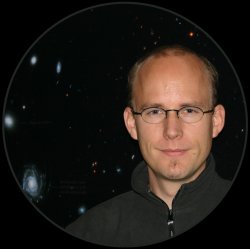
Mara Salvato
پژوهشگر · High-Energy Astrophysics
Max Planck Institute for Extraterrestrial Physicsمعرفی
Mara Salvato is a Senior Scientist at the Max Planck Institute for Extraterrestrial Physics (MPE) and the Origins Excellence Cluster in Garching, Germany, specializing in high-energy astrophysics with a focus on X-ray astronomy and active galactic nuclei (AGN). Her work bridges observational astronomy, cosmology, and data science through comprehensive multiwavelength surveys.
Research Interests:
- Photometric redshifts for AGN, developing advanced methods to determine distances to active galaxies using multiwavelength data
- X-ray Surveys, particularly through missions like eROSITA, analyzing large-scale cosmic structures and AGN populations
- Environment of AGN and morphology of their host galaxies, studying how active nuclei relate to their galactic environments across cosmic time
- Multiwavelength survey integration, creating comprehensive catalogs that combine data from across the electromagnetic spectrum
Dr. Salvato's research has significantly advanced our understanding of AGN populations and their evolution through innovative approaches to photometric redshift estimation and multiwavelength data analysis, with particular emphasis on the COSMOS field and eROSITA survey data.
Scientific Awards:
- 2017/2018/2019/2022: Listed among the top 100 Highly Cited Researchers in Space Science (Clarivate Data, ex Thomson Reuters); one of the only 9 women in the list at that time
- 2023/2024/2025/2026: Listed among the top 3% scientists in Germany, Europe and World
- 2024: Ranked N.84 among the Best female scientists in the world
- 2023: Listed among the 100 women more successful women in Italy (Forbes Italia)
Dr. Salvato leads significant contributions to major astronomical surveys and has developed influential methodologies for photometric redshift estimation specifically tailored for AGN populations. Her work on the COSMOS field and eROSITA survey has provided critical insights into the evolution of supermassive black holes and their host galaxies. She maintains active collaborations across international astronomical communities and contributes to major data archives that support the broader research community.