Dr. Adib Samin is an Associate Professor of Nuclear Engineering at the Air Force Institute of Technology (AFIT), specializing in computational materials science and radiation effects on materials. His research focuses on understanding the behavior of alloys under extreme conditions through atomistic simulations and first-principles calculations. He holds a PhD in Mechanical Engineering (The Ohio State University, 2014), an MS in Chemical Physics (2012), and a BS in Chemistry (Wayne State University, 2008). His research interests include materials degradation mechanisms, corrosion science, and the development of advanced alloy systems for nuclear and aerospace applications. He employs density functional theory (DFT), molecular dynamics, and machine learning techniques to study dislocation dynamics, oxygen adsorption, and radiation-induced defects in materials like tungsten, niobium-titanium alloys, and high-entropy alloys. Dr. Samin’s work has been published in journals such as Journal of Applied Physics , Corrosion Science , and ACS Langmuir , with a focus on oxidation thermodynamics, interstitial diffusion, and surface reactivity. He advises graduate students (e.g., L.A. Heaton, T.D. Doležal) on topics like alloy design and corrosion mechanisms. His contributions span interdisciplinary collaborations, addressing challenges in nuclear reactor materials, radiation-resistant magnets, and corrosion mitigation in extreme environments.
Dimitri Van Neck is a Full Professor (WE05) at Ghent University, Belgium, with his research base at Tech Lane Ghent Science Park (Technologiepark 46, 9052 Zwijnaarde). His academic career spans over three decades with continuous publication output from the 1980s through 2019 across leading physics and chemistry journals including Physical Review B, Journal of Chemical Physics, and Journal of Chemical Theory and Computation. Professor Van Neck's research program centers on theoretical frameworks for quantum many-body systems, with particular emphasis on density matrix theory, tensor network states, and integrable models. His work bridges fundamental theoretical physics with practical applications in quantum chemistry and materials science. Key methodological contributions include the development of three-legged tree tensor network states (T3NS), advanced density matrix embedding techniques, and novel approaches to Richardson-Gaudin integrable models. His research has evolved from nuclear physics in earlier career stages to contemporary focus areas in quantum information-inspired computational chemistry. Analysis of his recent publications (2015-2019) reveals three dominant research threads: (1) Advanced tensor network methodologies for quantum chemistry calculations, (2) Integrable models for topological superconductivity and quantum phase transitions, and (3) Materials science applications focusing on radiation effects in nuclear materials. His work demonstrates exceptional mathematical sophistication while maintaining practical relevance to experimental systems, particularly in understanding strongly correlated electron phenomena. Professor Van Neck maintains an extensive collaborative network across European research institutions, with frequent co-authorship patterns indicating stable research partnerships with S. De Baerdemacker, P. Claeys, P. Bultinck, P.W. Ayers, and S. Wouters. His group appears to develop computational tools like CheMPS2 (a spin-adapted implementation of density matrix renormalization group methods) and contributes to major conferences in quantum chemistry, theoretical physics, and computational materials science.
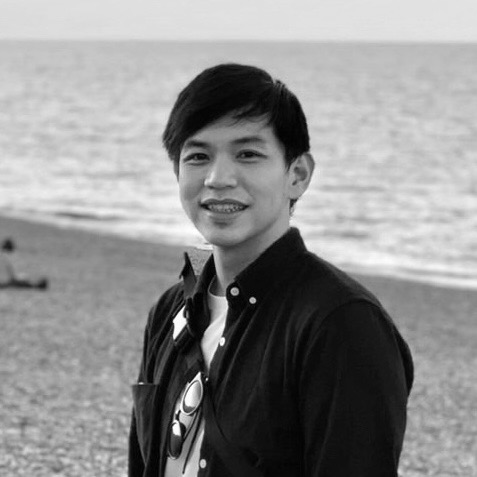
Dr. Po-Yen Tung is a Research Associate at the University of Cambridge's Department of Earth Sciences, jointly appointed with Materials Science and Metallurgy. He holds a PhD from the Max Planck Institute under Prof. Dirk Raabe and was a postdoc at Cambridge from 2021–2024, affiliated with Peterhouse College. His work bridges materials science and machine learning, focusing on accelerating materials discovery and microscopy analysis. Research Interests: Machine learning in materials characterization and alloy design High-entropy Invar alloy discovery Automated electron microscopy data analysis 3D microstructure segmentation Key Contributions: Developed SIGMA, an open-source tool for SEM-EDS analysis Discovered high-entropy Invar alloys using active learning frameworks Pioneered few-shot learning for 3D tomographic segmentation Publications highlight data-efficient material design, planetary science insights, and environmental magnetism studies. His work supports sustainable materials development and net-zero energy applications through AI-driven methods.
Dr. Yu Zhu is an Associate Professor at the Department of Polymer Science, School of Polymer Science and Polymer Engineering, University of Akron. He obtained his Ph.D. in Physical Chemistry from the University of Cologne, Germany (2007) and conducted postdoctoral research at Rice University under Professor James Tour (2008-2012). His academic career focuses on nanomaterials and polymer science applications in energy and electronics. Ph.D.: Physical Chemistry, University of Cologne (2007) Postdoc: Rice University (2008-2012) Research Interests: Controlled synthesis/assembly of graphene, carbon nanotubes, MOFs, and metal nanowires for energy storage (batteries, supercapacitors) and organic electronics (transistors, solar cells) . Specializes in polymer composites and nanomaterials for solid-state electrolytes, transparent conductors, and flexible electronics. Article Trends: Recent 2024-2021 publications highlight quantum materials (charge density waves, superconductivity), advanced microscopy techniques (Cryo STEM, strain mapping), and energy applications (redox flow batteries, Li-S cathodes). Keywords span ‘Quantum Physics’ , ‘Energy Storage’ , ‘Organic Electronics’ , and ‘Nanotechnology’ . Laboratory: Leads the Nano Research Group at the University of Akron, focusing on nanomaterial-polymer integration for next-generation energy and electronic systems.
Liang Qi serves as Associate Professor in the Department of Materials Science and Engineering at the University of Michigan's College of Engineering, where he leads computational research on mechanical and chemical properties of advanced materials. Education: Ph.D. in Materials Science and Engineering, University of Pennsylvania (2009) M.S. in Materials Science and Engineering, Ohio State University (2007) B.E. in Materials Science and Engineering, Tsinghua University (2003) Research Interests: Dr. Qi's work integrates first-principles calculations , atomistic simulations , multiscale modeling , and statistical machine learning to investigate deformation mechanisms, phase transformations, and microstructure-property relationships. His research spans titanium alloys, magnesium systems, high-entropy alloys, and semiconductor nanostructures, with emphasis on additive manufacturing processes and computational alloy design. The group develops predictive models for mechanical behavior under extreme conditions while bridging simulation with experimental validation. Analysis of recent publications reveals dominant trends in additive manufacturing of refractory alloys , grain boundary engineering in lightweight metals , and machine learning-accelerated materials discovery . Key focus areas include laser powder bed fusion processing, twinning mechanisms in hexagonal metals, and corrosion modeling in energy-relevant alloys, demonstrating strong alignment with Department of Energy and NSF priority research areas. Scientific Awards: TMS MPMD Young Leaders Professional Development Award (2021) National Science Foundation CAREER Award (2019) Dr. Qi's research is supported by competitive federal funding, notably the NSF CAREER award enabling computationally guided alloy design. His prior postdoctoral positions at MIT (Nuclear Science), University of Pennsylvania (Materials Science), and UC Berkeley (Materials Science) established foundations in multiscale modeling of structural materials. Current work integrates machine learning with physics-based simulations to accelerate development of next-generation structural alloys. His computational materials science group maintains active collaborations with experimental labs across the College of Engineering, particularly in the Center for新材料 Research, focusing on in-situ characterization of deformation mechanisms and additive manufacturing processes.
Prof. Dr. Hülya ÖZTÜRK is a Turkish physicist specializing in Condensed Matter Physics , Materials Physics , and Nanotechnology at Kırşehir Ahi Evran University since 2021. She has held academic positions at Gazi University and Ondokuz Mayıs University, with a career spanning computational materials science and experimental collaborations in biomedical research. Education: PhD in Physics (2001), Master’s (1997), and Bachelor’s (1993) from Ondokuz Mayıs University Research: Focuses on high-pressure structural phase transitions in materials like metal dioxides , transition metal carbides , and chalcogenides , using ab initio and molecular dynamics simulations. Her recent work includes investigating structural-electronic correlations in compounds such as SrFCl and PbTe. Collaborations span computational modeling with Cihan Kürkçü (49 joint projects) and biomedical studies with Ahmet Güven in pediatric surgery . She has published over 118 works and received the 2004 Gazi University Publication Award . As an advisor, she has guided 9 doctoral and master’s students in materials science.
Dmytro Orlov is a Professor in the Department of Industrial and Mechanical Sciences at Lund University's Faculty of Engineering (LTH), actively contributing to the Engineering Health and Circular Building Sector profile areas. His research bridges metallurgy, biomaterials engineering, and sustainable materials development. Research Focus: Prof. Orlov specializes in thermo-mechanical processing of metallic materials, with core expertise in deformation-based techniques for hierarchical material design. His group pioneers magnesium alloys for biomedical implants and lightweight mobility, multi-scale architected structures with controlled heterogeneity, and advanced characterization methods including in situ electron microscopy at large-scale facilities. Research directly supports UN Sustainable Development Goals through sustainable materials innovation. Publication Trends: Recent 2024-2025 publications reveal intense focus on magnesium surface science (oxidation mechanisms, core level shifts), deformation physics (geometric modeling, high-pressure torsion), and computational materials design. Cross-cutting themes include heterogeneity engineering, multi-scale structure-property relationships, and sustainable alloy development for biomedical applications. Awards: No specific scientific awards documented in provided materials. Supervision and Funding: Leads 13 projects including Biomaterials@LU (PI), SuRe-Mag (Vinnova-funded sustainable magnesium research), and Biomaterials 4.0 roadmap. Supervised 2 works including PhD projects on harmonic structure nickel. Manages significant infrastructure grants for TEM facility development and neutron polarization capabilities at ESS. Laboratory Leadership: Directs the Facility for TEM and site-specific sample preparation for hard materials, enabling atomic-to-macro scale characterization central to his group's research on metallic biomaterials and sustainable alloys.
Dmytro Orlov is a Professor at Lund University within the Mechanics, Materials and Component Design division of the Faculty of Engineering (LTH). He is actively involved in two profile areas: Circular Building Sector and Engineering Health . Research focuses on multi-scale materials engineering, particularly magnesium (Mg) alloys for biomedical and lightweight mobility applications. Expertise in thermo-mechanical processing, deformation techniques, and advanced characterization (electron microscopy, in situ methods). His recent work explores magnesium oxidation mechanisms, pseudopotential modeling, and plastic deformation geometry, contributing to sustainable materials and biomedical applications. He manages the TEM and Sample Preparation Facility and participates in interdisciplinary projects like Biomaterials@LU and SuRe-Mag .
Professor Michael Zaiser is a distinguished academic at Friedrich-Alexander-Universität Erlangen-Nürnberg (FAU), where he holds the Chair of Materials Simulation within the Department of Materials Science. Since 2012, he has led research in computational materials science, with prior appointments at the University of Edinburgh where he served as Professor of Mechanics of Materials (2008-2012), Reader (2005-2007), and Lecturer (2001-2005). He maintains significant international collaborations as a Visiting Professor at Imperial College London since 2014 and previously served as Adjunct Professor of Physics at Michigan Technological University (2006-2012). Professor Zaiser's research spans computational materials science with particular expertise in dislocation dynamics, plasticity, fracture mechanics, and hierarchical materials. His work bridges theoretical physics and practical materials engineering, developing innovative computational approaches to understand material behavior at multiple scales. His research group employs advanced simulation techniques including continuum dislocation dynamics, peridynamics, and phase field modeling to investigate fundamental mechanisms of material deformation and failure. Recent work has focused on disordered mechanical metamaterials, hierarchical structures, and the relationship between microstructure and mechanical properties. Analysis of Professor Zaiser's recent publications reveals a strong focus on multiscale modeling approaches that connect atomic-level phenomena with macroscopic material behavior. His work demonstrates increasing integration of machine learning techniques with traditional computational methods, particularly in predicting material failure. The research spans diverse material systems including metals, ceramics, foams, and composites, with consistent emphasis on understanding how microstructural features govern mechanical properties. A notable trend is the investigation of hierarchical and disordered structures to achieve superior mechanical performance. Professor Zaiser leads an active research group at FAU's Department of Materials Science, supervising numerous doctoral students and postdoctoral researchers. His work has been supported by various research grants enabling extensive computational resources and collaborative opportunities with international institutions. His research group maintains strong connections with the Max Planck Society, Fraunhofer Institutes, and Helmholtz Association, reflecting FAU's position as one of Germany's most research-intensive universities. The research laboratory under Professor Zaiser's leadership focuses on computational materials science, with particular emphasis on developing and applying advanced simulation methodologies. The group maintains close collaborations with experimental researchers to validate computational predictions and guide new experimental investigations. Recent work has increasingly incorporated machine learning approaches alongside traditional physics-based modeling to address complex materials challenges.
Amalia Luisa Fernando Saavedra is a researcher affiliated with the University Institute of Optoelectronic Systems and Microtechnology (ISOM) and the ISOM Semiconductor Devices Group at Universidad Politécnica de Madrid since 2015. She holds the academic rank of Assistant Professor in the Department of Electrical Engineering, Automatic Electronics and Applied Physics . Her professional activities focus on semiconductor physics and materials science. Member of ISOM (2022–present) Member of ISOM Semiconductor Devices Group (2015–present) Secretary at ISOM (2022–present) Member of Innovation Group "Guiding Paths. Protecting Diversity" (2025–present) Her research investigates GaN/InGaN pseudo-substrates using plasma-assisted molecular beam epitaxy (PAMBE). Key work includes: Controlling coalescence processes in nanocolumn arrays on semi-polar and non-polar GaN/sapphire substrates Analyzing crystallographic quality improvements in 2D films Studying indium incorporation in different crystal planes Investigating dislocation density and surface roughness reduction Research outputs demonstrate orientation-dependent material properties and novel insights into photoluminescence behavior during coalescence. Current projects focus on semiconductor device optimization and nanoscale material engineering for optoelectronic applications.
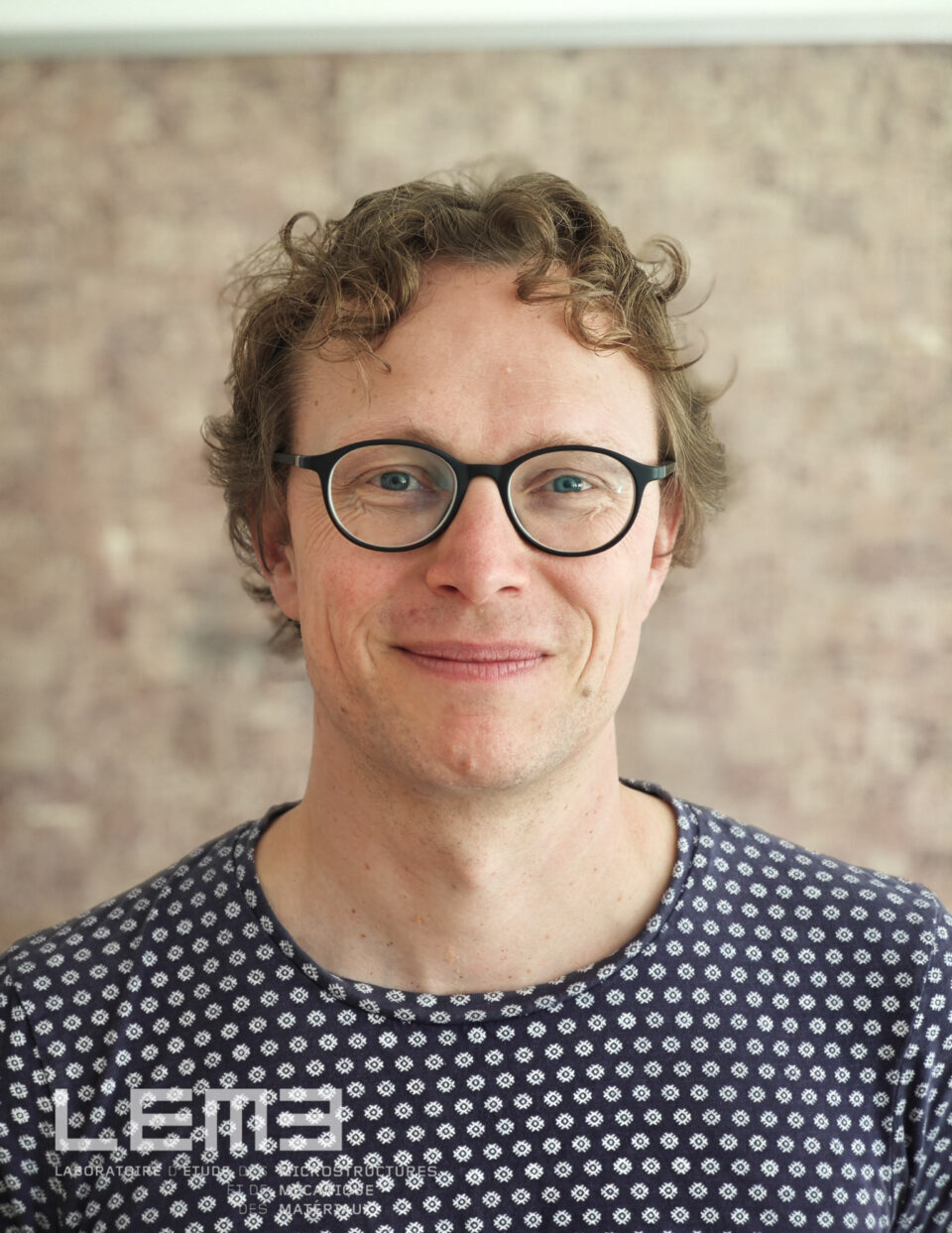
Julien Guenole is a CNRS Research Scientist (Chargé de recherche) at the LEM3 Laboratory (UMR CNRS 7239) in Metz, France, which is a joint research unit of the University of Lorraine, the National Centre for Scientific Research (CNRS), and Arts et Métiers ParisTech. He joined CNRS on January 1, 2020, after previously working at RWTH Aachen's Institute for Physical Metallurgy and Materials Physics (IMM). Guenole serves as Associate editor of Philosophical Magazine and was a Member of CoNRS (section 9) for 2024-2025. He is also Co-leader of Experimental and simulation challenges for the European COST MecaNano network. His research focuses on the plasticity of crystalline materials, complex crystals and their interfaces, multi-scale approaches, numerical nanomechanics, ion irradiation and induced defects . Guenole employs advanced computational methods including molecular dynamics, molecular statics, NEB calculations, and FFT-based approaches to bridge atomic-scale phenomena with continuum mechanics. Recent work includes developing generative machine learning approaches for microstructure design and predicting grain boundary segregation in magnesium alloys. His publication record shows consistent output in high-impact journals including Mechanics Research Communications, Communications Materials, Journal of Magnesium and Alloys, and Acta Materialia. His work frequently combines computational approaches with experimental validation, as seen in studies on metallic nanosponges and magnesium alloy plasticity. Associate editor of Philosophical Magazine Co-leader of Experimental and simulation challenges for European COST MecaNano network Member of CoNRS (section 9, 2024-2025) Supported by cluster IA ENACT (ANR - France 2030 funded project) As a supervisor, Guenole currently advises PhD student Badr LACHKAR on 'Generative Machine Learning for Microstructure Design: An Atomic-Scale-Informed Approach to Interfacial Engineering'. His lab provides opportunities for students to work at the cutting edge of computational materials science, with access to high-performance computing resources and connections to international research networks.
Dr. Liviu NEDELCU is a Scientific Researcher II at the National Institute of Materials Physics (NIMP) in Romania, where he has been working continuously since 2002. He earned his undergraduate degree from the Faculty of Physics - Section 'Materials Science and Technology' at University of Bucharest in 2002, followed by an MSc in 'Materials Physics' in 2004, and completed his PhD in Physics in 2011, all from the University of Bucharest. His research program centers on: Development of dielectric materials for microwave, millimeter wave, and terahertz applications Dielectric polarization and ferroelectric phase transitions Solid-state synthesis methods for electroceramics Advanced characterization techniques including XRD, SEM, and broadband dielectric measurements Microwave dielectrics, dielectric resonators, and tunable capacitors Dr. NEDELCU's publication record demonstrates consistent research excellence with 52 articles in Web of Science journals, an H-index of 15, and 530 citations (excluding self-citations). His recent work (2020-2025) shows a strategic expansion into biomedical applications of piezoelectric materials, terahertz characterization techniques, and sustainable materials development, reflecting his ability to bridge fundamental materials science with practical applications across multiple domains. His research achievements include: 1 awarded patent (RO 131868 B1) for 'Process for obtaining of Mg4Nb2O9 ceramics with low absorption in terahertz domain' Coordination of 1 international project and 6 national projects (4 as Principal Investigator) Active scientific reviewing for prestigious journals including Journal of Alloys and Compounds, Materials Science and Engineering B, and IEEE Access Dr. NEDELCU maintains professional profiles through UEFISCDI ID (U-1700-039C-8541), ORCID ID (0000-0002-0612-590X), and WoS ResearcherID (B-9882-2011), documenting his comprehensive scholarly contributions to materials science.