معرفی
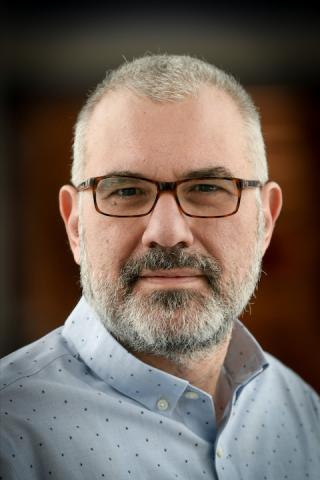
Liang Qi serves as Associate Professor in the Department of Materials Science and Engineering at the University of Michigan's College of Engineering, where he leads computational research on mechanical and chemical properties of advanced materials.
Education:
- Ph.D. in Materials Science and Engineering, University of Pennsylvania (2009)
- M.S. in Materials Science and Engineering, Ohio State University (2007)
- B.E. in Materials Science and Engineering, Tsinghua University (2003)
Research Interests: Dr. Qi's work integrates first-principles calculations, atomistic simulations, multiscale modeling, and statistical machine learning to investigate deformation mechanisms, phase transformations, and microstructure-property relationships. His research spans titanium alloys, magnesium systems, high-entropy alloys, and semiconductor nanostructures, with emphasis on additive manufacturing processes and computational alloy design. The group develops predictive models for mechanical behavior under extreme conditions while bridging simulation with experimental validation.
Analysis of recent publications reveals dominant trends in additive manufacturing of refractory alloys, grain boundary engineering in lightweight metals, and machine learning-accelerated materials discovery. Key focus areas include laser powder bed fusion processing, twinning mechanisms in hexagonal metals, and corrosion modeling in energy-relevant alloys, demonstrating strong alignment with Department of Energy and NSF priority research areas.
Scientific Awards:
- TMS MPMD Young Leaders Professional Development Award (2021)
- National Science Foundation CAREER Award (2019)
Dr. Qi's research is supported by competitive federal funding, notably the NSF CAREER award enabling computationally guided alloy design. His prior postdoctoral positions at MIT (Nuclear Science), University of Pennsylvania (Materials Science), and UC Berkeley (Materials Science) established foundations in multiscale modeling of structural materials. Current work integrates machine learning with physics-based simulations to accelerate development of next-generation structural alloys.
His computational materials science group maintains active collaborations with experimental labs across the College of Engineering, particularly in the Center for新材料 Research, focusing on in-situ characterization of deformation mechanisms and additive manufacturing processes.