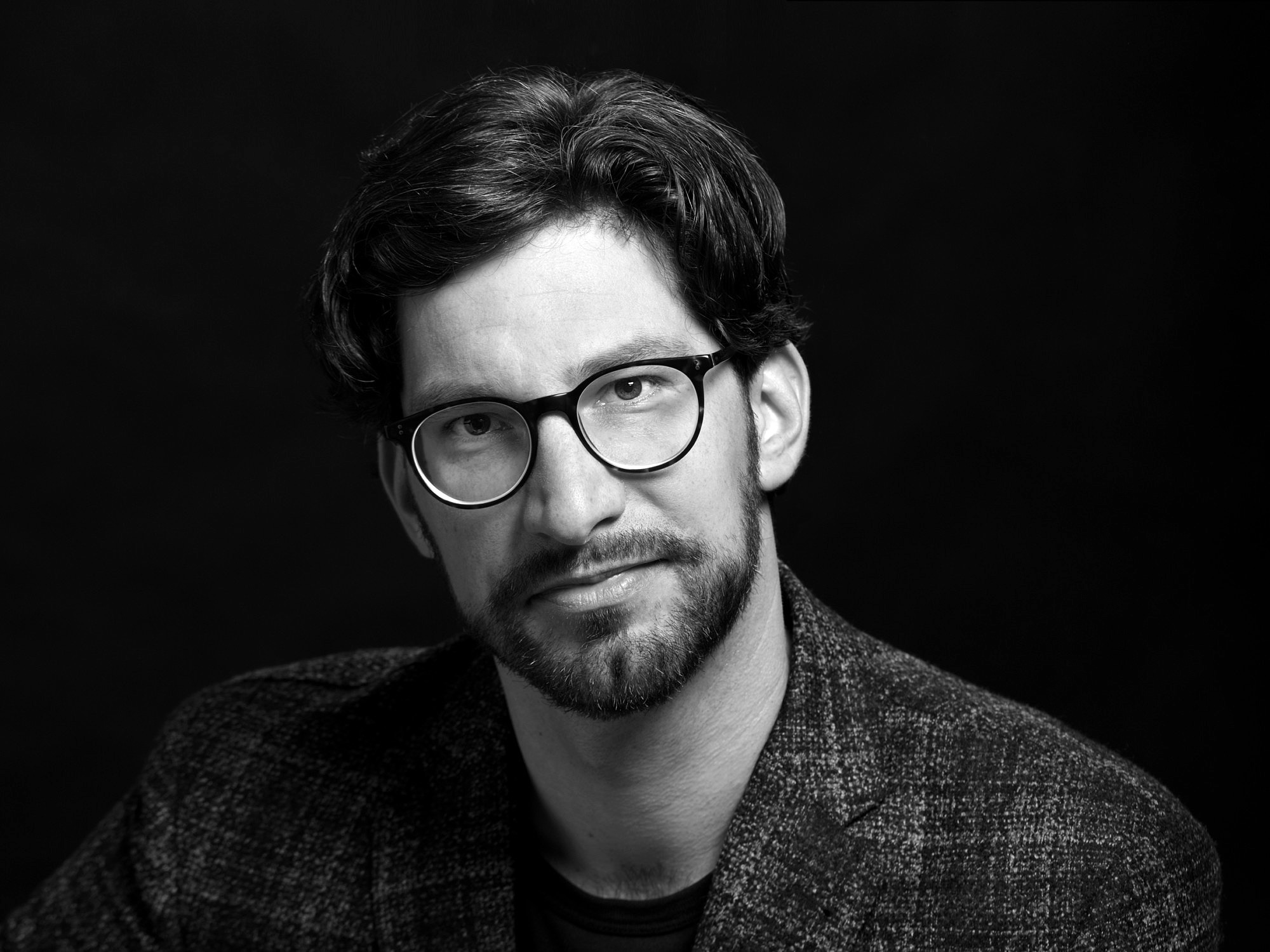
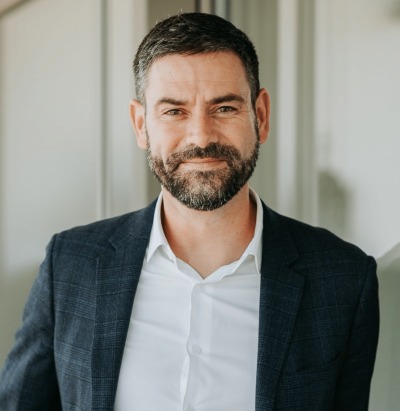
Prof. Dr. Sebastian Büttner is an Associate Professor at the Institute of Sociology within the Friedrich-Alexander University Erlangen-Nuremberg (FAU) and since September 2024, he serves as the scientific project manager of the Transfer Unit Science Communication at the Berlin-Brandenburg Academy of Sciences and Humanities (BBAW) . His academic career includes acting professorships at the University of Kassel, Freie Universität Berlin, and University of Duisburg-Essen. Research Interests : Sociological theory and cultural sociology Sociology of knowledge and science Political sociology of expertise and policy European integration and transnationalization Regionalization processes in Europe Academic Training : 2024: Außerplanmäßiger Professor at FAU 2017: Habilitation in Sociology at FAU 2010: Doctorate (Dr. rer. pol.) at BIGSSS 2004: Diploma in Sociology at University of Bamberg Collaborations and Projects : He is an associate editor of Culture, Practice & Europeanization , co-organizer of the German-French working group 'Governing European Mobilities', and member of the interdisciplinary group 'Conflict Management in Europe'. He led DFG-funded projects on EU professionalism and co-edited works on Europeanization and controversial expertise.
Ida Nafstad is an Associate Professor and Senior Lecturer at the Sociology of Law Department at Lund University. She holds a PhD in Criminology from the University of Oslo and has been affiliated with Lund University since 2013. Her research focuses on law and marginalization, postcolonialism, legal pluralism, and transformative justice. She coordinates the Master's Programme in Sociology of Law and leads a research project on the social construction of parallel societies in Swedish public discourse. Education: PhD in Criminology, University of Oslo (Law Faculty) Research Interests: Exclusion/integration dynamics in legal systems Legal pluralism and minority rights Postcolonial criminology Structural racism in policing Publications Trends: Recent work addresses structural racism in Swedish policing, abolitionist justice frameworks, and the discursive construction of parallel societies. Key themes include legal pluralism, marginalized group representation, and transformative justice models. Grants & Projects: EnJUSTICE: Transformative Environmental Justice (2025-2028) RePo: Reimagining Police and Public Safety (2021) Romer som offer i svenska brottmålsdomstolar (2016-2019)
Richard Walsh is Professor in the Department of English and Related Literature at the University of York, where he leads the Interdisciplinary Centre for Narrative Studies and founded the British and Irish Association for Narrative Studies. His research bridges literary theory, cognitive science, and complex systems, examining narrative as a fundamental mode of human cognition. His research focuses on three interconnected domains: The rhetorical theory of fictionality and its cultural manifestations Interdisciplinary approaches to narrative cognition and sensemaking Complexity science applications to narrative structures across media This work extends to innovative fiction, digital narratives, and cross-cultural storytelling. Analysis of Walsh's recent publications reveals strong emphasis on narrative cognition, interdisciplinary methodologies, and emerging topics in AI storytelling. Thematic clusters include: Foundational studies in fictionality and rhetorical frameworks Complexity theory applications to narrative dynamics Interdisciplinary intersections with cognitive science and digital media His scholarly recognition includes the distinguished Institute of Advanced Study Research Fellowship at Durham University (2016) Walsh directs multiple research groups including the Narrative and Complex Systems Group (NarCS) and supervises doctoral projects on narrative theory. He leads collaborative initiatives like the RIDERS project on emergent narrative and the Threshold Worlds project on dream cognition.
Professor David Sarpong is a leading academic in Strategy and Organisation at Aston Business School, part of Aston University's College of Business and Social Sciences. He currently serves as Head of the Marketing and Entrepreneurship Department and Director of Research for the Marketing and Strategy Subject Group. His research focuses on strategy-as-practice, relationalism, innovation management, and temporality in organizational processes. He holds adjunct roles at KNUST Business School and Bristol Business School, and is actively involved in professional organizations like EURAM and CABS. His work employs qualitative methods including ethnographic interviews and microstoria approaches. Professional Activities: He serves as Editor-in-Chief of the Journal of Strategy and Leadership, and on editorial boards for Technology Analysis & Strategic Management and European Management Journal. His external roles include UK Country Representative for EURAM and Board Membership at The Milestones Trust. He has held prior academic leadership positions at Brunel University London and visiting roles at HSE Moscow and University of KwaZulu-Natal. Research Interests: Prioritizes cross-level management problems using Heideggerian-Wittgensteinian frameworks. Key themes include second-order technology management, business tournament rituals, strategic foresight, and discursive practices in European cosmopolitan marketplaces. Methodologically innovative in combining narratives, digital datasets, and performative routines analysis. Collaborations: Active in global research networks with scholars across Africa, Europe, and Asia. Recent work addresses mining-industry partnerships, gender dynamics in extractive economies, and ethical dimensions of corporate governance. His research outputs number over 110 publications in top journals like Technovation and Journal of Business Research. Awards/Affiliations: Recognized through editorial leadership roles and visiting professorships. His research has policy implications for sustainable development, innovation ecosystems, and organizational resilience in global contexts.
Rachel Marion Scott is a Professor and Chair of the Department of Religion and Culture at Virginia Polytechnic Institute and State University, within the College of Liberal Arts and Human Sciences. She is also affiliated with ASPECT (Alliance of Social, Political, Ethical, and Cultural Thought), reflecting her interdisciplinary engagement with political and ethical theory in Islamic contexts. Her research centers on Islamic political thought, modern Islamic law, constitutional development in Muslim-majority countries, and personal status law. She has made significant contributions to understanding the interplay between religion and the nation-state, particularly in Egypt. Her scholarly work explores how religious authority is negotiated in constitutional frameworks, the evolution of Islamic legal thought, and the role of institutions like al-Azhar and the Muslim Brotherhood in shaping political discourse. Professor Scott’s publications reveal a sustained focus on the dynamics of Islamic law in modern governance, with a particular emphasis on Egypt’s constitutional history and legal reforms. Her work bridges religious studies, political science, and legal theory, addressing themes such as secularism, religious pluralism, citizenship, and hermeneutics. The articles show a trajectory from broader studies of political Islam to more nuanced analyses of constitutionalism, gender, and religious authority. She has authored two major monographs: The Challenge of Political Islam: Non-Muslims and the Egyptian State (Stanford University Press, 2010) and Recasting Islamic Law: Religion and the Nation State in Egyptian Constitution Making (Cornell University Press, 2021), both of which are central to contemporary scholarship on Islam and governance. While no formal list of awards is provided in the text, her publications with leading academic presses indicate recognition and scholarly impact in her field. Rachel M. Scott advises graduate students and contributes to academic mentorship through her leadership roles. As department chair, she oversees curriculum development, faculty collaboration, and interdisciplinary initiatives. There is no explicit mention of external grants, but her research output suggests engagement with funded scholarly projects or institutional support. She is affiliated with research initiatives related to Islamic studies, political thought, and constitutional law, particularly through her work with ASPECT and the Department of Religion and Culture. These affiliations support collaborative scholarship on ethics, cultural thought, and the role of religion in public life.
Dong Hoon Kim is an Associate Professor in the Cinema Studies department at the University of Oregon's College of Arts and Sciences . His work bridges media history and cultural studies, focusing on the ideological and visual frameworks of cinema in East Asia and beyond. Research Interests: His scholarship critically examines colonial cinema , socialist cinema , transnational media flows , and the intersection of media spectatorship with national identity. His studies span East Asian film, media, and popular culture, emphasizing historical and discursive formations. University of Oregon | Cinema Studies Email: donghoon@uoregon.edu Office Hours: Mondays 12-1:30p.m., Winter 25 Key Publications: Kim authored Eclipsed Cinema: The Film Culture of Colonial Korea (2017) and co-edited The Bloomsbury Handbook of North Korean Cinema (2025). His articles explore topics like socialist star-making in North Korea, transcolonial benshi practices, and the global impact of South Korea's Parasite . Teaching: Courses include Introduction to Korean Cinema , Studio Ghibli Animation , and seminars on Japanese New Wave cinema, transnational film genres, and violence in Korean cinema. He emphasizes interdisciplinary approaches to East Asian cultures.
Professor Ida Koivisto from the Faculty of Law at the University of Helsinki specializes in administrative law, constitutional law, and global administrative law. Her research focuses on transparency in digital governance, automated decision-making in public administration, and the intersection of law with digital technology. Key research themes: Digital transparency, legal automation, EU administrative law Active in multidisciplinary projects like DARE (Digital Administration Redesigned for Everyone) and AlgoT (Algorithmic Transparency) Recent publications explore ethical dimensions of AI in governance, legal personhood in digital systems, and paradoxes of transparency. Her work appears in journals like Artificial Intelligence, Humans and the Law and Critical Analysis of Law . International collaborations include academic visits to the University of Toronto, University of Hong Kong, and European University Institute. She contributes to policy through expert statements for Finland's Constitutional Law Committee and other public institutions.
Susan Scott is a Professor of Management and Artificial Intelligence at Imperial College London, holding a joint appointment with the Imperial College Business School and IX, the university’s AI initiative. She previously held academic roles at the London School of Economics and Political Science (LSE), including Professor of Information Systems and Innovation and Faculty Group Lead in the Department of Management. Her research spans Information Systems, Organization Theory, and Technology Management, with a focus on sociomateriality, digital transformation, and ethical innovation. Scott earned a PhD in Management (Information Systems) from the University of Cambridge, an MSc in Information Systems from LSE, and a BA in History and Politics from SOAS, University of London. Her work bridges theoretical and applied domains, addressing challenges in digital accountability, institutional displacement, and the societal impacts of emerging technologies. She has contributed to major initiatives like the SWIFT financial network analysis and explored ethical dimensions of AI and big tech. Her articles critically examine topics such as crowd-based accountability, digital undertows in industry standards, and the material-discursive practices shaping organizational practices. Though no awards are listed, her extensive publications reflect a commitment to rigorous qualitative and mixed-methods research, emphasizing phenomenon-focused theorizing in Information Systems. Scott’s research agenda integrates academic and practical insights, addressing future challenges like AI governance, digital responsibility, and the sociotechnical reconfigurations reshaping institutions and industries.
Eero Vaara serves as a Visiting Distinguished Professor in the Department of Management Studies at Aalto University, where his research centers on organizational and strategic change through discursive and narrative lenses. His work critically examines strategy processes, radical transformations like mergers and acquisitions, institutional legitimation, multinational corporation dynamics, and historical perspectives on management. His research interests encompass organizational change, strategic discourse, narrative analysis, institutional theory, and multinational corporate identity. Vaara investigates how language constructs organizational realities during crises, mergers, and cross-cultural interactions, with particular attention to power dynamics in identity politics and the role of historical narratives in strategic renewal. His scholarship bridges theoretical rigor with practical implications for managing complex change in global contexts. Recent publications (2020-2022) reveal consistent thematic focus across top management journals including Academy of Management Journal and Strategic Management Journal. Key trends include the interplay of language and social inequality during global crises like COVID-19, entrepreneurial phenomena in isolated economies such as North Korea, strategic ambiguity in organizational protection, and national identity construction within multinational corporations. His methodological innovations integrate critical discourse analysis with computational approaches like structural topic modeling. Scientific awards highlight his scholarly impact: Best Article Finalist 2023 (Academy of Management Discoveries) 2014 OMT Best Published Paper Award for advancing theoretical understanding of organizations While specific advising relationships and grant funding details aren't documented in the source material, Vaara's collaborative publications demonstrate extensive international research partnerships. His work with scholars across Europe and North America indicates active supervision of doctoral research and leadership in multinational research consortia, particularly in discourse-focused organizational studies. Though laboratory affiliations aren't specified, his methodological work suggests engagement with digital humanities research groups and discourse analysis laboratories, especially evident in publications combining computational text analysis with critical theoretical frameworks.
Adam Reed is an Associate Professor in Social Anthropology at the University of St Andrews, School of Philosophical, Anthropological & Film Studies. His research spans multiple interconnected fields including legal anthropology, urban studies, literary anthropology, and the anthropology of ethics. With extensive fieldwork experience in Papua New Guinea, the UK, and Australia, Reed has developed a distinctive approach to understanding social phenomena through ethnographic engagement with diverse communities. His research interests form five interconnected strands: Legal Anthropology focusing on cultures of incarceration in Papua New Guinea Anthropology of the City examining London through walking tour guides and digital journal keepers Anthropology and Literature studying literary societies and reading practices Anthropology of Ethics investigating animal welfare campaigning in Scotland Anthropology of Migration analyzing Papua New Guinean experiences in Western Australia Reed's recent publications reveal a strong trajectory toward ethical subjectivity and human-animal relationships, with numerous 2023-2025 works exploring moral dilemmas in animal protection, silence practices in zoos, and character theory. His work increasingly bridges anthropology with literary studies, philosophy, and environmental science, demonstrating interdisciplinary reach while maintaining ethnographic depth. His scientific recognition includes prestigious awards such as the Junior Research Fellowship at Clare College, Cambridge (1997), Emslie Horniman Award from the Royal Anthropological Institute (1994), and multiple early-career funding awards. Reed has led three major research projects including 'Listening to the Zoo' and 'Compatriot Sociality' focusing on Papua New Guinean migrants. As an active academic, Reed has supervised 9 postgraduate students, participated in 59 scholarly activities including conference organization and invited talks, and maintains strong engagement with both theoretical debates and practical applications of anthropological knowledge, particularly regarding sustainable development goals related to ethical practices and cultural understanding.
Florian Zemmin is a Professor at Freie Universität Berlin's Institute of Islamic Studies , serving as Co-Director of the Berlin Graduate School Muslim Cultures and Societies (BGSMCS). His research focuses on Islamic reformism , Middle Eastern conceptual history , and Arabic sociologies of religion within broader debates about modernity and secularity . Current affiliations: Freie Universität Berlin (since 2020) Previous affiliations: Universität Bern (2010-2020), Universität Leipzig (2015-2021) His research interests examine how Islamic traditions intersect with modern secular concepts through: Historical conceptual analysis in Arabic and Ottoman contexts Comparative secularisms beyond Western frameworks Postcolonial critiques of Eurocentric theory Sociological approaches to Islamic knowledge production Current projects include: Das soziokulturelle Leben soziologischer Konzepte – creating a critical lexicon of 60 sociological terms in Arabic Global Secularity: A Sourcebook – co-editing a 7-volume series on secular formations across regions Arabic Sociologies of Religion – challenging Eurocentric sociology through Arabic theoretical work Key publications address: Conceptual transfers in Islamic modernism Secularism in Islamic intellectual history Arabic sociology of religion Ottoman conceptual transformations Islamic responses to global social theory
Zhuo Ban is an Associate Professor in the School of Communication, Film, & Media Studies at the University of Cincinnati, conducting critical global research on Organizational Communication and Public Relations with focus areas including globalized supply chains, offshore labor politics, and corporate social responsibility discourses. Her work has been published in leading journals such as Organization and Management Communication Quarterly . Her educational background includes: PhD in Communication, Purdue University, 2012 MA in Communication, Tsinghua University, 2008 Dr. Ban's research critically interrogates three interconnected domains: Activism and Resistance through culture-centered reinvigoration of theoretical models; Globalization and Marginalization by challenging functional rationality in public relations scholarship; and US-China Offshoring Dynamics analyzing corporate constructions of China's business environment. She employs discourse analysis to examine power structures in contexts ranging from Chinese house churches to breastfeeding discourse in cyberspace. Her publication portfolio reveals consistent engagement with labor politics and discursive constructions of power, evidenced by recurring themes across 12 recent works including migrant labor discourse in China, fair wage negotiations, and Orientalist representations in U.S. news media. Key methodological approaches involve culture-centered analysis and critical discourse frameworks applied to corporate communications and identity formation in Chinese contexts. Dr. Ban actively contributes to academic governance through membership in the Research Working Group, LEAF team, Graduate Admission Committee, Educator Faculty Search Committee, and Diversity and Inclusion Committee. She also serves as reviewer for Communication, Culture and Critique , Environmental Communication , and Health Communication , while teaching undergraduate courses in PR Research and PR Campaigns alongside graduate seminars in Public Relations and Issue Management.
Wendy Laura Belcher is a Professor of African literature at Princeton University, holding a joint appointment in the Department of African American Studies and the Department of Comparative Literature. She specializes in early African literature, medieval studies, and postcolonial thought, with a focus on Ethiopian and Ghanaian intellectual traditions. Her work bridges global literary history and decolonial critique, emphasizing Africa’s role in shaping global cultural narratives. Belcher earned her PhD in English Literature from UCLA, alongside MA degrees in African Studies and Urban Planning, and a BA in English Literature from Mount Holyoke College. Her research includes groundbreaking translations of Ethiopian texts, such as The Life and Struggles of Our Mother Walatta Petros , and projects like the Princeton Ethiopian Miracles of Mary (PEMM) digital humanities initiative, supported by NEH grants. Her research interests span African literature’s global influence, early African philosophical texts, and the Kebra Nagast ’s impact on modern movements like Rastafarianism. She co-leads the Black Queen of Sheba project, exploring medieval African ideas in global culture. Belcher is also renowned for her best-selling guide Writing Your Journal Article in Twelve Weeks , aiding academics worldwide in publishing success. Belcher’s awards include the Fulbright Scholarship, SSEMW’s Best Scholarly Edition award, and the Paul Hair Award. Her work appears in journals like Eighteenth-Century Fiction and Research in African Literatures , with peer-reviewed chapters in volumes on African Christian biography and global medievalism. She collaborates with scholars like Michael Kleiner and Ralph Lee on translations and digital humanities projects. Her teaching and research challenge Eurocentric narratives, emphasizing Africa’s rich textual heritage and its contributions to global literature.
Sinfree Makoni is a Professor in the Department of Applied Linguistics and Director of the African Studies Program at Pennsylvania State University, with additional academic appointments as Extraordinary Professor at the University of the Western Cape and North-West University, and Visiting Professor at Nelson Mandela University. His career includes a postdoctoral fellowship at the University of Michigan's Centre for Afro-American Studies and a Carnegie Diaspora Fellowship at Laikipia University, Kenya. Education: Ph.D., Applied Linguistics, University of Edinburgh (1989) B.A. (Hons), English Linguistics, University of Ghana, Legon Makoni's research critically engages with decolonial frameworks in linguistics, focusing on: Language Policy/Planning : Colonial legacies and grassroots resistance in Africa Southern Epistemologies : Centering non-Western knowledge systems Discursive Power : Terrorism narratives, health communication, and human rights Language & Society : Aging, security, and music in postcolonial contexts His publications demonstrate consistent emphasis on deconstructing colonial linguistic hierarchies through monographs like Innovations and Challenges to Applied Linguistics from the Global South (2020) and edited volumes on decolonial pedagogy. Awards: Carnegie Diaspora Fellowship (Laikipia University) As architect of the African Studies Global Forum and co-editor of the Global Forum on Southern Epistemologies book series, he fosters Global South scholarly dialogue. He currently serves as Associate Editor for Applied Linguistics .
Christian Bréthaut is an Associate Professor at the Department of Geography and Environment and the Institute for Environmental Sciences of the University of Geneva. He serves as Director of the Environmental Governance and Territorial Development Hub and co-leads the UNESCO Chair on Hydropolitics with Géraldine Pflieger. Research focuses: Transboundary water governance, water-food-energy nexus, commons governance, multi-level governance, critical discourse analysis. Teaching: Innovation for Sustainable Development (Master), Geographies of the Metropolis (Bachelor), MOOCs on water governance. Current projects: DemoTape (transboundary policy protocols), Water4All Science-Policy Incubator grant. His recent publications examine discursive hydropolitics, legal personhood in river governance, and climate change impacts on transboundary river basins. Supervision includes PhD and Master’s students like Laura Turley, Lorenz Henggeler, and Hannah Louise Hilbert-Wolf. Key collaborations involve the Rhône River governance analysis, Geneva Water Hub , and contributions to UNESCO/IWRM frameworks.