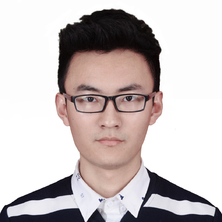
Bo Zhangمشاهده پروفایل
پژوهشگر ارشد
Dr. Bo Zhang serves as a Postdoctoral Research Fellow at the School of Mechanical & Mining Engineering, The University of Queensland, within the Faculty of Engineering, Architecture and Information Technology. His research focuses on computational modeling of hydraulic fracturing processes and proppant transport mechanics in unconventional energy reservoirs. His educational background includes: Masters (Research) in Mining Engineering from Chongqing University Doctor of Philosophy in Civil Geotechnical Engineering from Monash University Dr. Zhang's research spans petroleum engineering, geomechanics, and computational fluid dynamics with emphasis on hydraulic fracturing optimization. His work investigates proppant transport dynamics in shale and coalbed methane reservoirs using hybrid CFD-DEM modeling, stress-permeability relationships in fractured media, and fracture propagation mechanics. Key methodologies include stochastic fracture network modeling and supercritical CO 2 applications for enhanced recovery. Analysis of his 2019-2025 publications reveals a consistent research trajectory focused on improving hydrocarbon extraction efficiency through advanced fracture characterization. His work demonstrates increasing sophistication in multi-scale modeling, with recent studies addressing cross-scale proppant transport and secondary fracture dynamics. The research shows strong alignment with energy transition themes through CO 2 -based recovery techniques. No scientific awards were documented in the source materials. Dr. Zhang is explicitly available for research supervision, indicating active mentorship responsibilities. While specific grant details aren't provided, his publications suggest affiliation with UQ's Multiscale Energy Systems research theme. The absence of grant documentation prevents comprehensive assessment of funding sources. His work is contextually associated with UQ's Multiscale Energy Systems research group through thematic alignment with fracture network modeling and reservoir simulation, though explicit laboratory affiliations aren't specified in the source materials.