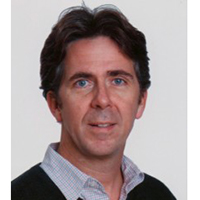
Nicholas Mattei is an Associate Professor of Computer Science at Tulane University and Co-Director of the Tulane Center for Community Engaged AI. He holds a Ph.D. from the University of Kentucky (2012) and researches artificial intelligence, machine learning, and decision-making systems. His work combines theory, data, and experiments to develop algorithms supporting individual and group decision-making. Dr. Mattei's research spans AI ethics, fairness in algorithms, computational social choice, and preference learning. He has published over 100 academic articles and received multiple grants from organizations including Google, IBM, and the National Science Foundation, including a 2024 NSF CAREER Award. He co-authored 'Computing and Technology Ethics: Engaging Through Science Fiction' from MIT Press. Prior to joining Tulane, he held research positions at IBM Research, Data61/CSIRO, and NASA Ames Research Center. His teaching portfolio includes courses on Discrete Mathematics, Data Science, Artificial Intelligence, and Multi-agent Systems.
Christopher Walters is a Professor at the Kenneth C. Griffin Department of Economics, University of Chicago, and previously served as an Assistant Professor at UC Berkeley (2013-2025). He is a Research Associate at the National Bureau of Economic Research, Research Fellow at IZA, and Faculty Affiliate at MIT's School Effectiveness and Inequality Initiative (SEII). PhD in Economics, MIT (2013) B.A. in Economics and Philosophy, University of Virginia (2008) Walters specializes in Labor Economics and the Economics of Education , focusing on school choice, early childhood interventions, and program evaluation. His work combines applied econometric methods with discrete choice modeling to analyze educational investments and labor market outcomes. Walters' recent publications examine class size effects, teacher quality impacts, and school finance policies, reflecting his interest in improving educational equity through rigorous empirical analysis. Research Fellow at IZA He collaborates with institutions like J-PAL North America and MIT Blueprint Labs, contributing to evidence-based policy design in education and labor economics.
Gregory D. Erhardt is an Associate Professor of Civil Engineering at the University of Kentucky and serves as Associate Director of the T-SCORE Center, a multi-university consortium advancing public transit strategies. He holds a PhD from University College London’s Centre for Advanced Spatial Analysis, with prior experience in transportation planning across public and private sectors. His research focuses on transportation forecasting, big data applications, and evidence-based policy decisions, particularly addressing the impacts of emerging mobility technologies like ride-hailing on urban systems. Erhardt’s work emphasizes improving forecast accuracy and advocating for gender equity in engineering. He has been recognized with awards such as the Transportation Research Board’s Certificate of Appreciation and the Chan Wui & Yunyin Rising Star Fellowship. Education: PhD (University College London), M.S. (Northwestern University), B.S. (Cornell University). His research integrates activity-based travel models with big data to evaluate infrastructure investments and mobility trends. Key projects include analyzing public transit ridership decline, ride-hailing effects on congestion, and TNC impacts on urban transportation systems. Current initiatives include developing multi-agent simulation frameworks for on-demand transit systems. As a Hans Fischer Senior Fellow at the TUM Institute for Advanced Study, he collaborates on travel behavior modeling. His advocacy for diversity includes leading 'Advocates and Allies' training to promote gender equity in engineering. Erhardt’s publications span journals like Transportation Research Part A and Science Advances , with a focus on policy-relevant transportation analytics.
Pietro Ortoleva is a Professor of Economics and Public Affairs at Princeton University , affiliated with the Department of Economics and the School of Public and International Affairs. His research spans Decision Theory , Behavioral Economics , Experimental Economics , and Political Economy , with a focus on understanding deviations from traditional economic models. Education: PhD in Economics, New York University (2009); BA in Economics, Università degli Studi di Torino (2004). Professional Roles: Coeditor of the American Economic Review (since 2021), former Editor of the Journal of Economic Theory (2018–2020), and editorial board member for multiple journals. His work investigates stochastic choice , ambiguity aversion , and reference-dependent preferences , often through incentivized experiments. Recent studies include the role of social norms in vaccine uptake , cautious utility models , and non-Bayesian belief updating . He has secured multiple National Science Foundation grants for projects on behavioral economics and decision-making under uncertainty. His 15 most recent publications reveal trends in behavioral decision theory , with emphasis on randomization preferences , time lotteries , cognitive biases , and political behavior . These studies frequently bridge economics, psychology, and public policy.
Anming Zhang serves as a Professor in the Operations and Logistics Division of UBC's Faculty of Commerce and Business Administration, holding the prestigious Vancouver International Airport Authority Professorship in Air Transportation. His academic foundation includes a B.Sc. from Shanghai Jiao-Tong University and M.Sc./Ph.D. degrees from the University of British Columbia. Education : B.Sc. (Shanghai Jiao-Tong University), M.Sc. & Ph.D. (University of British Columbia) His research focuses on Transport Economics and Policy , Air Cargo Logistics , and Industrial Organization , with particular expertise in air-rail competition dynamics, pandemic impacts on aviation, and infrastructure economics. Zhang employs advanced methodologies including spatial econometrics and complex network analysis to examine transportation systems. Analysis of his 2024-2025 publications reveals three dominant trends: (1) Resilience of global air networks against pandemics and geopolitical conflicts, (2) Economic implications of urban air mobility integration, and (3) Non-aeronautical revenue optimization in airport management. His work increasingly bridges transportation economics with environmental sustainability concerns. Zhang actively supervises graduate students in Transportation & Logistics MSc and PhD programs within Business Administration, teaching undergraduate courses including Logistics and Operations Management and Air Transportation. He maintains strong institutional ties through the Center for Transportation Studies and collaborates extensively with international researchers on aviation policy challenges.
Dr. Mylene Lagarde is an Associate Professor of Health Economics and Deputy Head of Department (Research) at the London School of Economics and Political Science (LSE), Department of Health Policy. Her research focuses on applied economic analysis of healthcare decisions in low- and middle-income countries (LMICs), particularly provider behavior, healthcare demand, and health policy evaluation. She has conducted studies on topics such as health worker incentives, user fee removal policies, and the impact of performance-based financing. She holds affiliations with J-PAL and the University of Witwatersrand, South Africa. Her work combines quantitative methods, randomized experiments, and policy analysis to inform global health interventions. Educated in France and with field experience in Cameroon, Lagarde’s academic career includes roles at the London School of Hygiene and Tropical Medicine before joining LSE in 2016. She teaches advanced health economics courses, including MPhil/PhD programs in Health Economics and Policy, and modules on randomized evaluations of health programs. Her research has explored provider behavior in Senegal, Zambia, South Africa, and other LMICs, addressing challenges like antibiotic overprescription, healthcare quality under workload pressures, and equitable access to services. Key areas of focus include the role of pro-social preferences in healthcare workforce distribution, the effectiveness of group incentives for preventive care, and the framing effects of health policies. She has contributed to understanding how financial and non-financial incentives shape healthcare provider performance and patient choices, with implications for improving health system efficiency and equity globally.
Dr Nicola Fearn is a Lecturer in the Discipline of Occupational Therapy at the Sydney School of Health Sciences, Faculty of Medicine and Health, The University of Sydney. Since joining in 2024, she has integrated 19 years of clinical experience in Australian and UK acute hospital, rehabilitation, and community settings with her research on cancer rehabilitation and lymphedema management. She maintains active clinical practice as an accredited lymphoedema therapist. Her educational background includes: Occupational Therapy qualification (2005) PhD in breast lymphoedema assessment, incidence, and risk factors following breast cancer treatment (2022) Dr Fearn's research program addresses critical gaps in cancer survivorship through four interconnected pillars: cancer rehabilitation focusing on long-term quality of life; lymphoedema management (particularly breast-related); neurological upper limb rehabilitation for stroke and brain injury; and implementation science to translate evidence into clinical practice. Her work consistently emphasizes patient-centered approaches and interdisciplinary collaboration. Analysis of her 11 publications since 2022 reveals dominant themes in constraint-induced movement therapy for stroke rehabilitation (60% of output) and breast lymphoedema quantification/management (30%), with strong methodological diversity spanning systematic reviews, qualitative studies, feasibility trials, and telehealth adaptations. Key trends include integration of behavior change frameworks (Theoretical Domains Framework, COM-B model) and growing emphasis on health equity for diverse populations. Dr Fearn actively supervises HDR students interested in cancer survivorship and evidence implementation, and has secured the 2024 FMH Start-up Scheme grant. Current projects include SURPASS (patient-centered survivorship care), DIVERSE (supportive care for diverse backgrounds), ReCITE (remote constraint-induced therapy), and telehealth validation studies for rehabilitation assessments. As a member of the Australasian Lymphology Association, she collaborates with St Vincent's Health Network teams across oncology, neurology, and rehabilitation services to develop clinically relevant interventions that address both physical and psychosocial aspects of survivorship and neurological recovery.
Dr. Joyce Delnoij is an Assistant Professor in the Department of Economics within the Faculty of Law, Economics and Governance at Utrecht University. She is affiliated with the Utrecht University School of Economics and conducts research under the university's Institutions for Open Societies (IOS) and Pathways to Sustainability (PtS) research themes. Her research focuses on experimental economics and behavioral game theory, with particular expertise in online marketplaces (including auctions and the sharing economy), sustainable decision making (particularly regarding protein and energy transitions), and interpersonal preferences (such as honesty, trust, and social norms). Her work combines theoretical game theory with empirical experimental methods to understand economic behavior in real-world contexts. Dr. Delnoij's publication record shows consistent high-quality output across leading economics and interdisciplinary journals. Her recent work demonstrates a clear trajectory from foundational auction theory toward more applied research on sustainability and social behavior. She has published in top journals including Proceedings of the National Academy of Sciences, Journal of Economic Behavior and Organization, and Economic Theory, with her research gaining significant attention as evidenced by citation metrics and media coverage. Her scholarly contributions span several interconnected domains: auction theory and market design, behavioral aspects of sharing economy platforms like Airbnb, sustainable consumption patterns, and social norm formation. This interdisciplinary approach positions her work at the intersection of economics, psychology, and policy-relevant research. Dr. Delnoij teaches courses in experimental economics and microeconomics, contributing to both undergraduate and graduate education at Utrecht University. Her research has been supported through various academic channels, though specific grant details are not provided in the available information.
Dr Philip Haywood is an Associate Professor of Practice in Health Systems and Financing at the Leeder Centre for Health Policy, Economics and Data, part of the Sydney School of Public Health and the Faculty of Medicine and Health at the University of Sydney. His career spans academia, clinical practice in emergency medicine, and policy development. He has advised governments globally on health system resilience, particularly during the pandemic, and focuses on funding reforms, equity, and virtual care. Research interests include health system resilience, funding policy, equity, and integrated care. He leads the Centre for Research Excellence on Value-Based Payments in Cancer Care and contributes to cancer patient population projections. Currently supervising one PhD student, David GOLDSBURY, his work emphasizes applied health economics and policy. Publications span health economics, policy, and system resilience, with recent focus on pandemic responses, healthcare costs, and equity. His research has informed global health policies and is disseminated through platforms like the OECD and ICCONIC (International Comparisons). Labs/teams include the Leeder Centre, where he collaborates on projects like the Victorian Healthy Homes Program and resilience testing frameworks. No scientific awards are explicitly listed, but his contributions to policy and research are widely recognized.
Dr. Darren Scott is a Professor in the School of Earth, Environment & Society at McMaster University, specializing in Geographic Information Science (GIScience) and teaching courses such as GIS Programming and Data Processing Using Python. He previously served as an Assistant Professor at the University of Louisville’s Department of Geography and Geosciences (1999–2002) and held a Visiting Research Professor position at the Swiss Federal Institute of Technology (Zurich) in 2008. His academic background includes a BA (Honors and Co-op) in Geography from Saint Mary’s University (1991), an MA from the University of Western Ontario (1994), and a PhD from McMaster University (2000). Dr. Scott’s research focuses on transportation systems, aging populations, GIScience innovations, and sustainable infrastructure. He has pioneered work in route choice modeling, transportation demand analysis, and the impact of demographic changes on mobility. In 2008, he established TransLAB, a research lab within his school, which explores advanced transportation topics using GPS and geospatial tools. His projects have been funded by major agencies like NSF, SSHRC, and NSERC, addressing issues ranging from electric vehicle adoption to flood resilience in emergency services. His teaching emphasizes Python programming and advanced GIS applications, reflecting his expertise in geospatial technologies. He has contributed to policy debates on urban sustainability, particularly regarding Canada’s Greenbelt legislation and telework trends during the pandemic. Despite no explicitly mentioned scientific awards, his extensive grant history and scholarly output highlight his impactful contributions to the field. Dr. Scott’s advising and grant activities center on interdisciplinary studies, including the McMaster Monitoring My Mobility Study (MacM3), which tracks mobility patterns of older adults. His work bridges transportation engineering, urban planning, and public health, often leveraging big data and GIS tools to analyze real-world scenarios in cities like Hamilton and Calgary.
Fred Feinberg is the Joseph and Sally Handleman Professor of Marketing and Professor of Statistics (by courtesy) at the University of Michigan, where he is also an Affiliated Faculty member of the Center for the Study of Complex Systems. His work integrates advanced Bayesian methods with large-scale marketing data to illuminate how people make choices under uncertainty. Education Ph.D., Sloan School of Management, Massachusetts Institute of Technology (1989) Doctoral program in Mathematics, Cornell University (1983–84) S.B. Mathematics & S.B. Philosophy, Massachusetts Institute of Technology (1983) Research Focus Feinberg’s scholarship centers on discrete choice models that leverage real-world decisions to infer latent attributes such as demographics, product appeal, and socioeconomic status. Methodologically, he employs Hierarchical Bayes (HB) models and cutting-edge MCMC algorithms to handle massive data sets, while theoretically he advances dyadic utility theory and optimal search under uncertainty. Applications span click-through behavior, menu-based choice, online dating preferences, spatial marketing, and consumer reactions to intangible or aesthetic product features. Recent empirical studies explore the wearout versus weariness effects of online advertising, the impact of data breaches on consumer behavior, and dynamic pricing for digital media subscriptions. Across these projects, Feinberg couples rigorous statistical innovation with actionable managerial insights, bridging marketing science, operations, and engineering. Scientific Awards & Leadership Joseph and Sally Handleman Endowed Professorship Past President, INFORMS Society for Marketing Science Departmental Editor, Production and Operations Management Former Co-Editor, Marketing Science Co-author (with T. Kinnear & J. Taylor) of the textbook Modern Marketing Research: Concepts, Methods, and Cases Grants & Collaborations While explicit grant lists are not provided, Feinberg’s prolific publication record in top-tier journals (e.g., Journal of Marketing Research , Marketing Science , Management Science ) and editorial board service imply sustained external funding and interdisciplinary partnerships, particularly with operations, engineering, and computer-science groups. Laboratories & Teams Feinberg is formally affiliated with the Center for the Study of Complex Systems (CSCS) at the University of Michigan, where he collaborates on network-based choice frameworks and large-scale behavioral data analytics. He maintains active ties to the Ross Marketing faculty and the Department of Statistics, fostering joint workshops and doctoral training initiatives.
Robert L. Hicks is a Professor of Economics and Marine Science at The College of William and Mary, holding joint appointments in the Department of Economics and the School of Marine Science. He is affiliated with the Environmental Science and Policy Program and the Thomas Jefferson Program in Public Policy. With a Ph.D. from the University of Maryland and a B.A. from North Carolina State University, Hicks has been a visiting professor at institutions in Germany and Spain, including the University of Bonn and the University of Hannover. His research focuses on environmental and natural resource economics, welfare economics, and econometrics, with notable contributions to fisheries management, eco-labeling, and recreational resource valuation. He has served on the editorial board of Marine Resource Economics and received grants from the National Science Foundation, U.S. Department of Commerce, and philanthropic organizations like the Bill and Melinda Gates Foundation. His awards include the Alumni Fellowship Award and the Plumeri Award for Faculty Excellence. Education: B.A., North Carolina State University Ph.D., University of Maryland Research Interests: Environmental economics emphasizes sustainable resource management, while his work in econometrics advances quantitative methods for policy analysis. Key areas include recreational fishing valuation, eco-labeling impacts, and spatial modeling in fisheries. His research bridges theoretical frameworks with practical applications in coastal and marine environments. Grants & Awards: Recipient of grants from NSF, U.S. Department of Commerce, William and Flora Hewlett Foundation, and Bill and Melinda Gates Foundation Alumni Fellowship Award Plumeri Award for Faculty Excellence Labs & Affiliations: Active in interdisciplinary collaborations, Hicks contributes to policy boards such as NOAA’s Science Advisory Board and aids in shaping environmental and marine policy through academic partnerships.
Dr Elisabeth Huynh is a Senior Research Fellow at the Australian National University's Centre of Epidemiology for Policy and Practice. She specializes in health economics, focusing on understanding health-related preferences, choice behavior, and economic evaluations in public policy and medical interventions. Education: PhD in Economics (Econometrics) and B.Com from the University of Sydney. Affiliations: Research Affiliate at the University of Sydney (2021-2026). Research Interests: Her work spans health economics, applied econometrics, and public policy, with specific contributions to discrete choice experiments, best-worst scaling, health workforce dynamics, healthy aging, nutrition interventions, and quality-of-life valuation. She investigates decision-making patterns in health care, including patient preferences, end-of-life care, and health service provider behavior. Publications: Her recent articles focus on pediatric quality-of-life metrics, pandemic preparedness modeling, dietary supplement choices during pregnancy, and workforce dynamics in health care. These studies employ advanced econometric methods and systematic reviews to inform policy decisions. Supervision: Elisabeth supervises PhD candidates exploring topics like child health valuation, chronic disease management, and maternal nutrition programs.
Roles & Affiliations: Professor of Applied Economics and Head of the Economics Division at Stirling Business School, University of Stirling. Member of the Stirling Behavioural Science Centre. Former member of the UK Food Standards Agency’s Social Science Research Committee (6 years). Active in interdisciplinary research on consumer behavior, decision-making, and preference elicitation. PhD in Economics (University of Manchester) MSc in Resource Economics (University of Massachusetts Amherst) Research Focus: Intersection of applied microeconomics, public health, and behavioral science. Specializes in consumer choice, decision-making processes, and methodological innovations like discrete choice experiments and best-worst scaling. Key themes include food safety perceptions, risk communication, trust in institutions, and health intervention design. Methodological contributions address preference heterogeneity, attribute non-attendance, and survey design rigor. Grants & Awards: Secured NIHR CLAHRC grants (2013-14), SIRE Early Career Engagement Grant, and Stirling Management School Seed Fund. Nominated for 2025 Teacher of the Year RATE Awards. Recognized for Best PechaKucha Presentation. Advising & Engagement: Supervises PhD students and research assistants. Serves as External Examiner for PhD theses. Collaborates with policymakers via the UK Food Standards Agency and public health initiatives. Leads projects on healthcare innovation prioritization and sustainable food systems. Labs & Networks: Core member of the Stirling Behavioural Science Centre. Engaged with interdisciplinary teams in health economics and global food security research. Active in the Scottish Institute for Research in Economics (SIRE).
Dubravko Radic serves as Professor of Service Management at the University of Leipzig's Faculty of Business and Economics since 2009, while simultaneously holding the position of Deputy Head of the Price and Service Management group at the Fraunhofer Center for International Management and Knowledge Economics IMW since 2013. His academic career spans multiple institutions including the University of Wuppertal where he completed his habilitation, and the University of Frankfurt am Main where he earned his doctorate in statistics and econometrics. Doctorate (Dr. rer. pol. summa cum laude): Johann Wolfgang Goethe-Universität Frankfurt a.M. (2004) Habilitation: Bergische Universität Wuppertal (2009) Diplom-Volkswirt: Johann Wolfgang Goethe-Universität Frankfurt a.M. (1999) Research Stay: University of California Davis (2008) Professor Radic's research centers on the intersection of empirical methods and business management, with particular emphasis on service pricing modeling, applied microeconometrics, and social interactions in service contexts. His work bridges theoretical econometric approaches with practical business applications, especially in the healthcare sector where he has led multiple Fraunhofer IMW projects including ASARob, NurMut, and ATMoSPHÄRE. His research methodology combines quantitative modeling with real-world case studies to address strategic and operational decisions in service organizations. His recent publications demonstrate a consistent focus on discrete choice modeling, game theory applications in marketing, and service innovation frameworks. The 2025 paper "Discrete Games in Marketing Research" presented at the Global Marketing Conference in Hong Kong exemplifies his approach of applying advanced econometric techniques to practical marketing problems, particularly in digital service contexts. His work shows an evolving trajectory from foundational service management concepts toward increasingly sophisticated modeling of strategic interactions in service markets. Professor Radic has extensive experience advising major corporations including Metro AG, Lilly Deutschland, IMS Health, Berlin Chemie, and Augustinum gGmbH. His practical projects at Fraunhofer IMW focus on translating academic research into actionable business solutions, particularly in healthcare digitization and service innovation. He has led the TRAIN@MINE project developing training tools for Vietnam's mining sector and contributed to studies on Big Data applications in health insurance. At the University of Leipzig, he leads research activities through the Institute for Service and Relationship Management, supervising multiple research projects that connect academic inquiry with industry applications. His team collaborates with international partners including the University of California Davis, University of Maryland, Northwestern University, and the Technion Israel Institute of Technology, creating a robust research ecosystem focused on service management innovation.