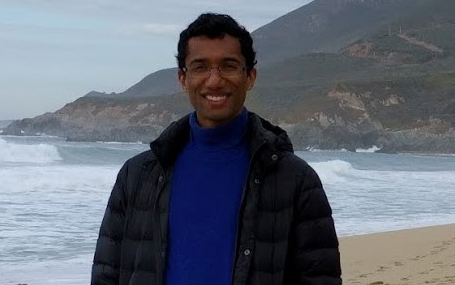
Jason Abaluck is a Professor of Economics at Yale School of Management, specializing in health economics and behavioral economics. His research focuses on consumer choice in health insurance markets, particularly Medicare Part D, and the effects of health interventions. Abaluck has led major research initiatives including a cluster randomized trial in Bangladesh involving 350,000 people to assess the impact of community masking on COVID-19 transmission. Abaluck's research interests span health economics, insurance markets, behavioral economics, and public health interventions. His work examines how consumers make decisions in complex health insurance markets, with a particular focus on Medicare Part D. He investigates choice inconsistencies, welfare implications, and potential policy solutions to improve decision-making. His research on mask-wearing during the pandemic demonstrated significant reductions in COVID transmission, particularly among vulnerable elderly populations. Analysis of Abaluck's publications reveals a consistent focus on healthcare decision-making across multiple contexts. His work spans theoretical modeling of consumer choice, empirical analysis of insurance markets, and field experiments testing public health interventions. Key themes include the impact of information on decision quality, the welfare consequences of choice inconsistencies, and the design of market structures to improve outcomes. Abaluck's scientific contributions have been recognized with several prestigious awards: 2023 Top 10 Clinical Research Award for his work on community masking during the pandemic 2017 NIHCM Honorable Mention for the Best Paper in Health Economics 2012 NIHCM Winner for the Best Paper in Health Economics Abaluck has secured significant research funding for projects including 'Differential Mortality in Medicare Advantage,' 'Mortality Effects of Health Insurance Networks and Providers,' and 'HEARTSPOT: Implementation and Rigorous Evaluation of a Machine Learning System to Aid Decision-Making in the Emergency Department.' His current work includes large-scale cluster randomized trials in multiple countries examining vaccination rates and the impact of trial representativeness on doctor treatment decisions. Abaluck leads collaborative research teams involving dozens of researchers from Yale, Stanford, Berkeley, and other institutions. His Bangladesh mask-wearing study, for example, involved coordination across multiple organizations and 600 villages. His work often bridges economics, public health, and clinical medicine, reflecting his interdisciplinary approach to solving complex healthcare problems.