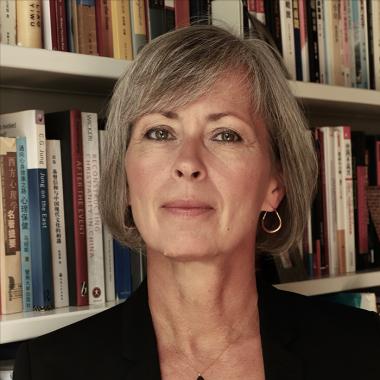
Gerda Wielander is a Professor of Chinese Studies at the University of Westminster's School of Humanities, serving as Director of the Contemporary China Centre and REF Lead for Modern Languages and Linguistics. She previously held leadership roles including Associate Head of the College of Liberal Arts and Sciences (2018-2024) and Head of the Department of Modern Languages and Cultures (2013-2018). Her research explores the intersection of personal/spiritual life with China's sociopolitical context, focusing on religious thought, happiness discourse, and public visual culture. She co-leads a project on Chinese soft power in Uzbekistan and advocates open-access publishing as editor of the cultural china series and British Journal of Chinese Studies .
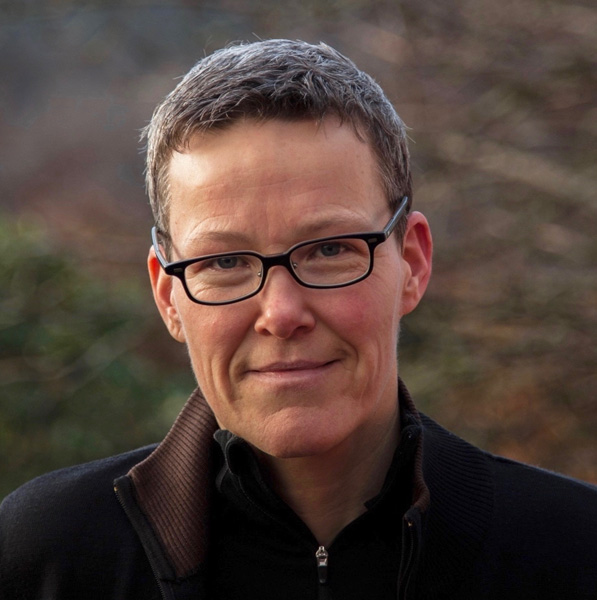
Ingunn Lunde is a full-time Professor of Russian at the Department of Foreign Languages , Faculty of Humanities , University of Bergen, Norway. She also holds a part-time (20%) Professor II position in Russian literature and culture at the University of Tromsø (2012–2019). Research Focus: Russian sociolinguistics, Slavic medieval culture, 19th–21st-century Russian literature, Byzantine hagiography, and digital media. Leadership: Head of the Research Group for Contemporary Russia at the University of Bergen. Projects: Principal Investigator for Landslide of the Norm (2005–2008) and The Future of Russian (2008–2013), funded by the Research Council of Norway. Publications: 85 works including 3 monographs, 56 articles, and 13 edited books. Notable works: Language on Display (2018), Fragmenter av fortid (2019), and Digital Russia (2014). Founding editor of the Slavica Bergensia book series (2000–present). Scientific Awards: Ugleprisen (2020) FUND-status (2019) Spurveugleprisen (2017) Fellowship at Wissenschaftskolleg zu Berlin (2014/15) Meltzer Prize for Young Researchers (2000) Outreach: Regular public speaker, media commentator, and contributor to the Great Norwegian Encyclopaedia on Russian literature.
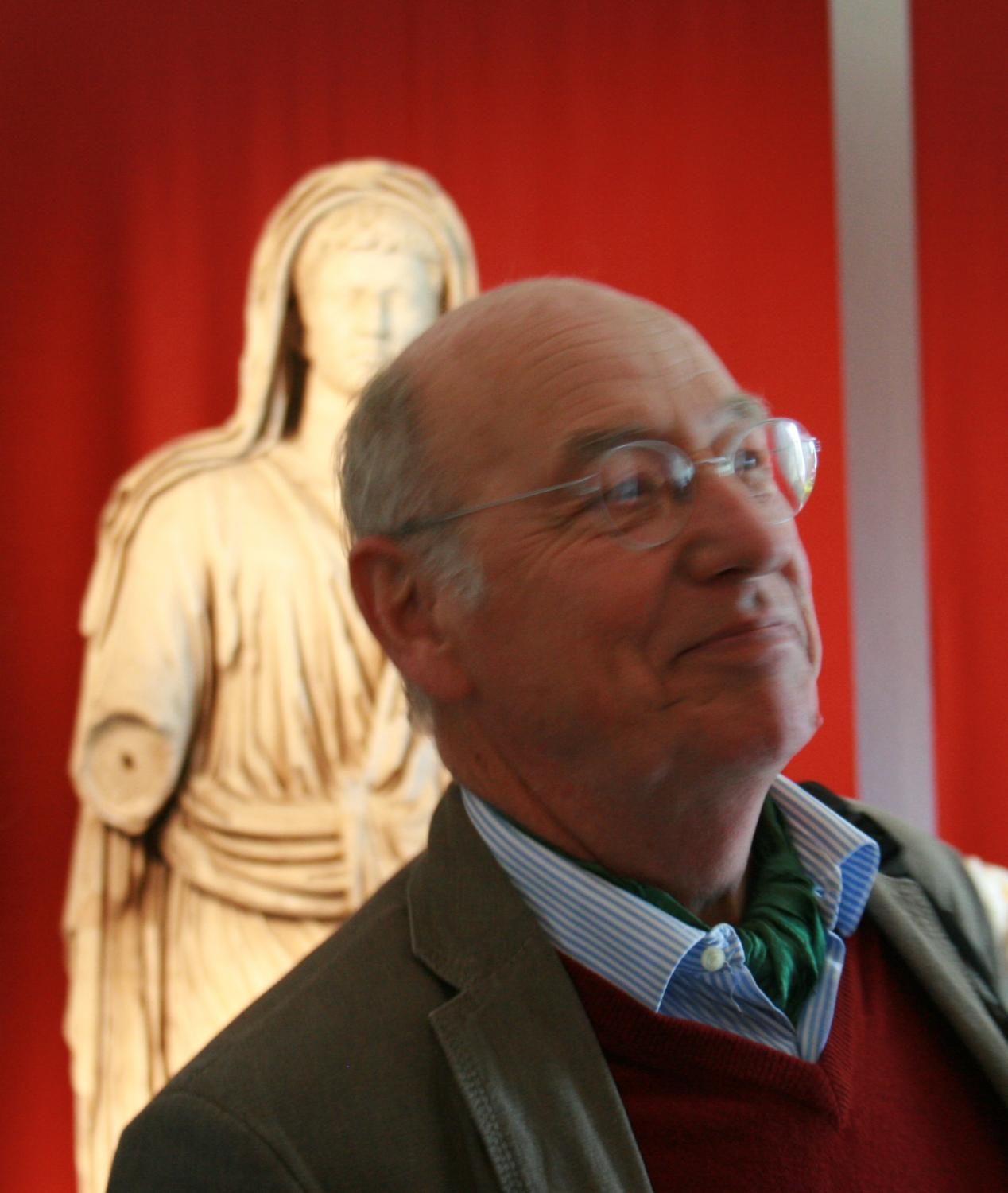
Paul Zanker is a renowned Professor of Storia dell’Arte Antica at the Scuola Normale Superiore di Pisa since 2001. Previously, he held prestigious roles such as Director of the German Archaeological Institute (DAI) in Rome (1996–2002), Sather Professor at UC Berkeley (1991), and Professor of Classical Archaeology at the University of Munich (1976–1996). His career spans over four decades of leadership in academic and archaeological institutions across Europe and North America. His scholarly focus lies in Hellenistic and Roman art, with a particular emphasis on Augustan-era imagery, Roman urbanism, and the socio-political dimensions of ancient art. Notable contributions include groundbreaking studies on Pompeii’s urban structure, Augustus’ visual propaganda, and the symbolic language of Roman sarcophagi. Zanker holds esteemed memberships in multiple academies: the Bavarian Academy of Sciences, British Academy, Academia Europaea, and the Danish Royal Academy of Sciences. These honors reflect his transformative impact on classical archaeology and art history. His research integrates archaeological evidence with historical context, exploring how art shaped and reflected ancient societies. While no specific grants or advising roles are documented, his prolific publication record (over 15 major works) underscores his dedication to advancing scholarly discourse on classical antiquity.
Maria LUSIANI is an Adjunct Professor at the Department of Management, Ca' Foscari University of Venice. Her research focuses on cultural management, strategic planning, accounting history, and nonprofit organizations. She teaches courses such as *Cultural Policies*, *Strategy Planning and Control Systems*, and *Management of Artistic and Cultural Organizations*. Her work combines historical analysis with contemporary organizational challenges, particularly in cultural heritage and nonprofit sectors. Recent publications explore topics like Venetian charitable accounting practices, hybrid institutional logics in historical social entities, and regional cultural observatories. She contributes to interdisciplinary projects through the Interconnected Nord-Est Innovation Ecosystem, emphasizing practical applications of research in cultural governance and policy. Lusiani's teaching spans undergraduate and graduate programs, including courses at the Collegio Internazionale and specialized master's tracks in cultural economics. Her office hours are held weekly via reservation, reflecting her commitment to academic engagement.
Kimberly Holst is a Clinical Professor of Law at the Sandra Day O'Connor College of Law, Arizona State University, where she teaches Legal Method and Writing and upper-level legal skills courses. She served as the Dean’s Fellow for Innovation (2023–2024) and holds leadership experience as Immediate Past President of the Legal Writing Institute and former Chair of key AALS sections. Her work bridges legal education, rhetoric, and media. Research Interests: Her scholarship centers on legal writing pedagogy , narrative and rhetoric in legal discourse , and the intersection of law with media and popular culture . She explores how storytelling shapes legal advocacy, how media influences public understanding of law, and how legal education can evolve with technology and societal change. Her recent publications reflect a strong focus on legal education innovation , AI and assessment , rhetorical timing (kairos) , and the disciplinary identity of legal writing . The articles span from foundational skills like predictive writing to advanced topics such as burden-shifting in evidence and international legal developments. Scientific Awards: Global Skills Award (2017) Rocky Mountain Legal Writing Award (2022) She actively mentors students through Independent Study (LAW 781) and supervises Teaching Assistants (LAW 735), contributing to the development of future legal professionals. Her research is widely disseminated through ASU’s Faculty Scholarship Repository and SSRN, and she presents regularly to domestic and international audiences on pedagogical techniques. Labs and Teams: While no formal lab is mentioned, Professor Holst is deeply involved in national academic communities, including the Legal Writing Institute and the Association of American Law Schools, where she contributes to shaping legal education policy and practice. She collaborates across disciplines, particularly at the intersection of law, communication, and media studies.
Dr Jade McGlynn is a Leverhulme Early Career Post-Doctoral Researcher in the Department of War Studies at King’s College London. She holds a DPhil in Russian Studies from the University of Oxford and previously lectured in Russian at Oxford. Her work focuses on memory politics, sociopolitical trends in post-Soviet states, and Russia’s military aggression in Ukraine. She conducts frequent fieldwork in eastern Ukraine and analyzes Russian propaganda narratives. Education: DPhil in Russian Studies (University of Oxford) MA by Research in Russian and East European Studies (University of Birmingham) BA/MA in Russian and Spanish (University of Oxford) Research Interests: McGlynn explores how historical memory shapes contemporary political dynamics, particularly in Russia and Ukraine. Her work examines: Putin’s regime ideology and its societal sustainability Russian occupation policies in Ukraine Media manipulation and propaganda strategies Identity construction through state-controlled historical narratives Key Contributions: Her 2023 book Memory Makers analyzes how Putin’s regime weaponizes history. McGlynn’s 2024 article Dissecting Putin’s Regime Ideology dissects Russia’s political discourse. She regularly publishes policy papers with institutions like CSIS, addressing urgent geopolitical issues. Labs/Teams: Affiliated with the Centre for Grand Strategy at King’s, which focuses on historical expertise in statecraft and foreign policy.
Dr Jennifer Clegg is an Adjunct Professor at the Living with a Disability Research Centre, La Trobe University. She is actively engaged in research on intellectual and developmental disabilities, with a critical focus on neoliberalism, policy, and social inclusion. Her research interests lie at the intersection of disability studies, critical social theory, and public policy. She investigates how neoliberal ideologies shape disability services, community participation, and the lived experiences of people with intellectual disabilities. Her work challenges individualistic frameworks and advocates for systemic change. The recent publications highlight a consistent thematic trajectory: a critique of market-driven reforms in disability services, an exploration of staff and family perspectives in care settings, and a philosophical examination of identity and inclusion. Her work spans journal articles, book chapters, and full-length books, often in collaboration with leading scholars in the field. Jennifer Clegg has not been mentioned as receiving any scientific awards in the provided text. She has contributed to academic leadership through editorial roles, including editorials for the Journal of Intellectual & Developmental Disability. While no formal advising or grant information is provided, her extensive collaborative work suggests active engagement in research teams and networks. Her research is conducted through the Living with a Disability Research Centre, a hub for critical disability scholarship at La Trobe University, where she contributes to shaping discourse on disability rights and policy reform.
Janet Fuller is a Professor of Language and Society at the University of Groningen’s Faculty of Arts, holding roles such as Chair of the Department of European Languages and Cultures and Interim Chief Diversity and Inclusion Officer. She specializes in sociolinguistics, discourse analysis, and multilingualism, with research focusing on language ideologies, migration discourses, and national belonging. Fuller earned her Ph.D. in Linguistics from the University of South Carolina (1997), an M.A. in American Studies from Freie Universität Berlin (1992), and a B.A. in Anthropology from Macalester College (1984). Her research explores language’s role in shaping identity and power dynamics, particularly in transnational and multicultural contexts. Recent work analyzes media discourses on migration in Europe, emphasizing how language constructs narratives around national belonging and exclusion. She has published extensively, including co-authoring Introduction to Sociolinguistics (8th ed., 2021) and Speaking Spanish in the US (2021). Her studies on linguistic landscapes investigate how public signage reflects societal multilingualism and transnational identities. Fuller’s articles frequently address migration, language policy, and education, such as examining multilingual psychotherapy practices and biodiversity communication at UN summits. She received awards for research contributions, including the Dean’s Appreciation Award and multiple grants supporting bilingualism studies. Her teaching spans sociolinguistics, discourse analysis, and gender studies, with a focus on critical methodologies. Her work bridges academia and public engagement, contributing to debates on diversity and inclusion. Ongoing projects include analyzing discourses of populism and language’s role in sustainability frameworks. She advises on language policies and has organized conferences on multilingualism and migration studies.
Dr. Jared Dmello is a Senior Lecturer in Criminology at the University of Adelaide, affiliated with the School of Social Sciences within the Faculty of Arts, Business, Law and Economics. He serves as Postgraduate Research Coordinator and Co-Lead of the Aboriginal and Torres Strait Islander Knowledges Workstream. His research focuses on illicit networks, violent extremism, and pedagogical innovation, with a $2 million externally funded portfolio. He testified before the Australian Senate on right-wing extremism and is a globally recognized expert featured in media like Rolling Stone and National Geographic . His research explores topics such as climate change’s impact on terrorism, LGBTQ+ victimization by extremist groups, and the role of social media in organized crime. He actively engages stakeholders to translate research into policy and operational strategies. Dr. Dmello holds editorial roles at journals like Crime & Delinquency and serves on international committees for criminology and extremism studies. Key areas of focus include: Global violent extremism prevention strategies Methodological innovations in criminology Climate-induced security challenges Historical and contemporary organized crime networks
Anita Heber is a full Professor and Director of Studies for the Advanced Level in Criminology at Stockholm University's Department of Criminology. She leads the Victimological Research Group, established in 2021. Her work focuses on victimology, organized crime, trafficking, and crime policy, with over two decades of teaching and research experience. Research Interests : Victimology, policing and desistance, masculinities and victimhood, migration-crime linkages, media representation of crime, and policy analysis. Current projects include Policing Gang Desistance (qualitative study of police-led programs) and Men as Victims (courtroom masculinity and victim credibility). Recent Contributions : 2024 articles in British Journal of Criminology and International Review of Victimology analyze victim credibility and sex trafficking narratives. Earlier work includes studies on drug networks and Swedish crime policy bills. Teaching : Supervises two PhD students and teaches victimology, criminological theory, and media-crime intersections. Courses include Victimology (7.5 ECTS) and Media and Crime (advanced level). Visiting Positions : Held fellowships at Monash University (2015), Oxford University (2009), and Keele University (2003).
M. Azizul Islam is a Professor in Sustainability Accounting & Transparency and holds the Chair in Accountancy at the University of Aberdeen Business School , where he also serves as Director of Research for the Accounting Discipline. He is a Chartered Accountant (CAANZ) and was awarded the Fellowship of the Academy of Social Sciences (FAcSS) in 2025 for his outstanding contributions to the social sciences. His research centers on sustainability accounting, transparency, and corporate accountability , with a focus on modern slavery disclosures, human rights in supply chains, climate change accounting, anti-bribery measures, and social audits . He investigates how transparency mechanisms can drive ethical corporate behavior, particularly in global fashion supply chains and developing economies like Bangladesh. His recent publications reveal a strong trend in analyzing modern slavery regulations, NGO activism, corporate disclosure practices, and the impact of global crises like Covid-19 on vulnerable workers. His work often employs critical and political perspectives, examining power dynamics, legitimacy, and institutional change in corporate reporting. Fellowship of the Academy of Social Sciences (FAcSS), 2025 Vice-Chancellor Excellence Award: Research Project of the Year, 2022 Vice-Chancellor Excellence Award: Research Impact, 2023 Scottish Fair-Trade Award, 2022 Finalist, Green Gown Award (2022, 2023) Finalist, Times Higher Education Awards – Project of the Year, 2023 School's Award for Excellence in Administration and Support, 2011 Dean's Award for Team Teaching Excellence, 2011 Islam has secured research funding from ACCA, CPA Australia, CAANZ, UKRI-AHRC, and GCRF-SFC , supporting projects on corporate accountability in global fashion chains. He has advised governments and NGOs, producing policy briefs for the UK and Bangladesh, and contributed to legislative reviews in New Zealand. He supervises postgraduate researchers and contributes to academic leadership as a member of the University Senate. He is affiliated with key research initiatives including the Africa-Asia Centre for Sustainability and leads projects such as Modern Slavery Transparency and Accountability Policy Projects , focusing on gender and unfair purchasing practices in global supply chains.
Dr. hab. Agata Seweryn, holding the title of Professor at the John Paul II Catholic University of Lublin (KUL), serves in the Department of Enlightenment Literature, Romanticism and Art Criticism within the Institute of Literary Studies at the Faculty of Humanities. Her academic career spans decades of dedicated scholarship focused on Polish literary traditions from the Enlightenment through Romanticism, with particular emphasis on the intersections between literature and music. Professor Seweryn's research interests form a cohesive interdisciplinary framework examining Polish Enlightenment literature, Romanticism, literary criticism, and the complex relationship between music and literature. Her work demonstrates particular expertise in Norwid studies and Chopin's cultural reception, revealing how musical elements permeate literary works and vice versa. She has made significant contributions to understanding how Polish Romantic poets engaged with musical forms and how composers interpreted literary works. Her scholarly output reveals consistent thematic threads connecting musicology with literary analysis, particularly in examining how Polish Romantic writers incorporated musical structures into their poetry and prose. This interdisciplinary approach has yielded important insights into figures like Norwid and Chopin, while also exploring broader questions about artistic synthesis in 19th-century Polish culture. Medal of the National Education Commission Rector's Award, 1st degree Individual Award, 3rd degree Professor Seweryn actively supervises doctoral and master's theses while participating in numerous research projects funded by the Ministry of Education and Science, including the National Program for the Development of Humanities. She serves on juries for national literature and language olympiads and contributes to academic discourse through conference organization, including co-hosting the nationwide conference '(Po)między: borderlands, crossroads, undefined places.' Her service extends to editorial roles for scholarly publications and review work for academic journals. Her academic activities include regular lectures for secondary schools across Poland and specialized courses on voice production and spoken language culture at the Seminary of Friars Minor Capuchin in Lublin, demonstrating her commitment to both scholarly research and practical language education.
Dr hab. Agata Małyska is a Professor at the Center for Polish Language and Culture for Poles Abroad and Foreigners (CJKP) at Maria Curie-Skłodowska University (UMCS), Lublin, Poland. She has served as Deputy Director of CJKP since 2000 and heads training programs for Polish-as-a-foreign-language teachers. Her work spans Polish language instruction, political discourse analysis, and intercultural communication. Academic Affiliation: Center for Polish Language and Culture for Poles Abroad and Foreigners (CJKP), UMCS Leadership Roles: Deputy Director of CJKP, Head of "Lato Polonijnego" courses Her research focuses on political and social discourse , with emphasis on ritualization , lexical evaluation , linguistic taboos , persuasion , and intercultural communication . She applies interdisciplinary methodologies combining linguistics, psychology, and sociology to analyze parliamentary speeches, media texts, and Polish language teaching strategies. Analysis of her publications reveals trends in political linguistics , Polish-as-a-foreign-language pedagogy , and intertextuality in marketing . Recurring themes include language taboo evolution , persuasive communication , and lexical dynamics in political contexts . Scientific Achievements : Co-editor of 70 Years of Contemporary Polish Organizer of international Polish language training programs Member of State Commission for Polish Language Certification (2024) As an educator, she trains teachers for Polish-as-a-foreign-language instruction in domestic institutions and abroad. Her organizational work includes coordinating internships for trainees and directing academic conferences on language and culture.
Professor Agnieszka Dziuba is a faculty member at the Department of Latin Philology, Institute of Literary Studies, within the Faculty of Humanities at John Paul II Catholic University of Lublin. Her research focuses on Classical Philology, Roman Rhetoric, and Neo-Latin Studies, with particular emphasis on the reception of Roman political figures and religious discourse in Renaissance Latin literature. Research Interests : Roman Republican politicians, Latin historiography, gender in antiquity, Cicero's rhetoric, and the interplay between classical sources and modern interpretations. Publications : Over two decades, she has published extensively on figures like Marcus Caelius Rufus and Marcin Kromer, analyzing rhetorical strategies, historical narratives, and the persistence of classical topoi in Polish-Latin texts. Scientific Awards : Recognized with the National Education Commission Medal (2011), Lanckoroński Foundation Scholarship (2012), and active involvement in academic reviews and proceedings. Students : Supervised doctoral research, including Barbara Popiel's work on Marcin Kromer's 'De origine et rebus gestis Polonorum'. Organizational Roles : Served as editor-in-chief for 'Roczniki Humanistyczne' (2016), member of the National Expert Team for Latin Olympiads, and organizer of academic conferences on antiquity and patronage.
Dana Schmalz is a legal scholar specializing in international law, refugee law, and legal philosophy. She currently serves as a Research Fellow at the Max Planck Institute for Comparative Public Law and International Law in Heidelberg, working in the department led by Armin von Bogdandy. Her academic career includes teaching positions at prestigious institutions including the University of Jena, Hertie School of Governance, and University of Bremen, where she has held substitute professorships in international and public law. Dana Schmalz's educational background includes: Promotion (summa cum laude) in law from Goethe University Frankfurt am Main (2017) LL.M. "Comparative Legal Thought" from Benjamin N. Cardozo School of Law, New York (2016) Studies in Philosophy at Johannes Gutenberg University Mainz and Heidelberg University (2009-2013) Studies in Law at University of Bonn, Johannes Gutenberg University Mainz, and University of Paris (2006-2011) Dana Schmalz's research focuses on the intersection of refugee and migration law with democratic theory, international human rights, and legal philosophy. Her work critically examines how legal frameworks address population movements, border control mechanisms, and the political rights of refugees. She explores the tension between state sovereignty and human rights obligations, particularly in the European context, while bringing philosophical perspectives to bear on practical legal challenges. Her scholarship often incorporates interdisciplinary approaches, connecting law with literature, political theory, and social sciences to provide nuanced analyses of migration governance. Her recent publications demonstrate a growing focus on demographic discourse and its influence on migration law, as well as continued engagement with foundational questions of refugee protection. Schmalz's work shows a consistent pattern of examining how legal concepts shape and are shaped by societal anxieties about population movements, with increasing attention to historical dimensions of international law's engagement with demographic concerns. Notable scientific awards and fellowships include: Return fellowship from the Alexander von Humboldt Foundation Feodor Lynen Research Fellowship from the Alexander von Humboldt Foundation for her project "International law and population growth: An analysis and theoretical inquiry" Senior fellowship at the Columbia Center for Contemporary Critical Thought Dana Schmalz actively contributes to academic mentorship as an external supervisor of master's theses at the University of Amsterdam since 2021. She has served in editorial roles for prominent legal journals including the International Journal of Constitutional Law (ICON) and Verfassungsblog. Her scholarly activities are supported by various research grants, particularly from the Alexander von Humboldt Foundation, which have enabled her to conduct research at institutions including Columbia Law School and the Centre Marc Bloch in Berlin. She has also been involved in collaborative research projects such as the "Internalizing borders" group at the Center for Interdisciplinary Research (ZiF) in Bielefeld. As a founding member and editorial board member of the Völkerrechtsblog (International Law Blog), Schmalz has helped create an important platform for scholarly exchange in international law. She also serves on the editorial boards of Kritische Justiz and the Zeitschrift für ausländisches öffentliches Recht und Völkerrecht (ZaöRV), contributing to the broader academic infrastructure in her field.