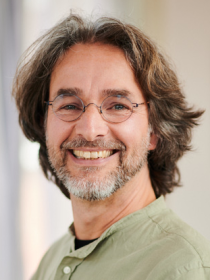
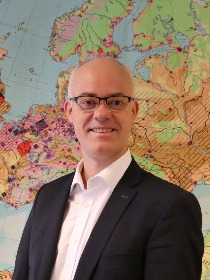
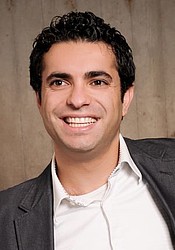
Dr. Tim Busker is a Postdoctoral Researcher at the Institute for Environmental Studies (IVM), Vrije Universiteit Amsterdam, specializing in flood and drought early-warning systems and impact-based forecasting. He holds a PhD from VU Amsterdam (2024) and advanced degrees in Earth Surface and Water (Utrecht University) and Earth & Economics (VU Amsterdam). Education: Bachelor’s (cum laude) in Earth & Economics, Vrije Universiteit Amsterdam (2012–2015) Master’s in Earth Surface and Water, Utrecht University (2015–2017) His research focuses on translating forecasts into actionable warnings for regions like East Africa and Europe. Key interests include: Flood and drought forecasting methodologies Impact-based early action frameworks GIS/remote sensing applications in water management Recent work emphasizes machine learning for food security crises and transboundary flood risk assessments in NW Europe. Projects include JCAR-ATRACE and Resilience nEtwork of Smart Innovative cLImate-adapative rOoftops (RESILIENT). Grants/Projects: 6 active/funded projects, including EU-funded CoastMove ERC (2020–2026) Awards: EGU OSPP Award (2023), IWA-ASPIRE Poster Prize (2019)
Dr. Assela Pathirana is a Professor at the IHE Delft Institute for Water Education, specializing in water infrastructure asset management (WIAM), climate resilience of Small Island Developing States (SIDS), and sustainable urban water systems. His work bridges academia, policy, and practice, focusing on digitalization, data-driven decision-making, and nature-based solutions. Key roles include Chief Technical Advisor for the Maldives’ water systems and leadership of a MOOC on SIDS climate adaptation. He holds a BSc (First Class Honours) from the University of Peradeniya and advanced degrees from the University of Tokyo, specializing in hydrology and water resources engineering. Education: Bachelor of Science in Civil Engineering (First Class Honours), University of Peradeniya, Sri Lanka Master’s and Doctoral Degrees in Civil Engineering (Hydrology and Water Resources), University of Tokyo, Japan Research Interests: Dr. Pathirana’s work emphasizes climate resilience, SIDS adaptation, urban flood risk management, and sustainable infrastructure. He develops decision-support tools for flood forecasting, evaluates land-use changes in Jakarta, and promotes equity in water rationing systems. His interdisciplinary approach integrates hydrological modeling, open-source software development, and policy analysis. Advising & Capacity Building: He leads training-of-trainers programs and capacity-building initiatives, enhancing postgraduate education in technical disciplines. His efforts focus on didactics and pedagogy, ensuring graduates gain both theoretical knowledge and practical expertise. Key Projects: Developed the WIAM curriculum at IHE Delft MOOC on SIDS climate adaptation and water security Consultancy for the Maldives’ Ministry of Environment and UNDP Labs & Collaborations: Engages in cross-disciplinary teams addressing urban water challenges, including sponge cities in China and flexible adaptation planning in Melbourne and Pune. His work with UNESCO-ICHARM and UNU underscores global water security and disaster risk reduction.
Nina Schwarz is Assistant Professor of human-environment interactions in cities at the Department of Urban and Regional Planning and Geo-Information Management, ITC—University of Twente. Holding a Diploma in Environmental Sciences (University of Lüneburg, 2003) and a PhD in Social and Economic Sciences (University of Kassel, 2007), she spent a decade as senior scientist at the Helmholtz Centre for Environmental Research – UFZ before joining ITC. Her interdisciplinary research integrates urban land-use science, ecosystem-service evaluation and advanced modelling techniques—especially agent-based models—to explore sustainable urban development under global change. Research interests revolve around three interconnected themes: (i) urban land-use change —understanding how residential, commercial and green-space dynamics co-evolve; (ii) urban ecosystem services —quantifying both supply and demand of services such as local climate regulation, recreation and biodiversity; and (iii) behavioural modelling —formalising human decision-making to simulate policy scenarios ranging from slum-upgrading to vineyard management. She actively links these themes to UN Sustainable Development Goals, notably SDG 11 (Sustainable Cities) and SDG 15 (Life on Land). Recent publications (2022-2025) reveal a methodological breadth spanning citizen-science impact assessment in Suriname, cooling effects of urban water bodies in Chinese mega-cities, European wine-growers’ adaptive behaviour, and methodological advances in upscaling and validating agent-based land-use models. Across these studies, Schwarz consistently combines empirical field data, geospatial analytics and participatory approaches to produce policy-relevant insights for cities in both the Global North and South. She has (co-)authored >80 peer-reviewed works, accumulating c. 5 900 citations and an h-index of 28 (Scopus). While specific honours are not itemised in the supplied text, her sustained citation impact and invited contributions to major conferences (e.g., iEMSs 2020, IAHR 2025) underscore scientific recognition. Schwarz frequently engages with societal stakeholders: her projects have generated open datasets on urban green-space monitoring in Paramaribo, e-learning modules for Latin-American universities, and interactive dashboards for sustainable water management. Within ITC she contributes to capacity-building programmes for emerging economies, supervises graduate researchers and maintains active collaborations across Europe, Latin America, Africa and Asia. No explicit lists of PhD students or personal grants are provided in the current corpus, but her leadership of externally funded projects (e.g., citizen-science evaluation, vineyard decision-making database) indicates ongoing acquisition of research funding.
Prof. Dick den Hertog is a Full Professor at Tilburg University's Department of Econometrics and Operations Research, part of the Tilburg School of Economics and Management (TiSEM). His research focuses on operations research methodologies with applications in humanitarian logistics, supply chain optimization, and robust decision-making under uncertainty. He collaborates with organizations like the UN World Food Programme to enhance operational efficiency in complex environments. Key research areas include robust optimization techniques, supply chain management in developing regions, and the integration of satellite data with machine learning for infrastructure analysis. His work addresses challenges such as food aid distribution, disaster response logistics, and predictive modeling for transportation systems in data-scarce areas. Notable projects include developing analytical tools for the WFP's supply chain planning and creating algorithms for weather-informed road speed prediction. He is affiliated with the Tilburg Sustainability Center and the Operations Research research group, contributing to both academic advancements and real-world impact through optimization solutions.
Prof. Edwin Woerdman is a Professor of Markets and Regulation at the University of Groningen's Faculty of Law. He specializes in energy and carbon market regulation, particularly emissions trading and tradable rights. He leads the LLM in Energy and Climate Law program, ranked among the world's top 10 energy masters. His research focuses on EU climate law, with over 100 publications, including Essential EU Climate Law and influential articles in top journals like Transnational Environmental Law . Education: PhD in Climate Law and Economics (University of Groningen, 2002, cum laude) MSc in Political Science (Radboud University Nijmegen, 1996) Research Interests: Market-based climate regulation, emissions trading systems (EU ETS), carbon pricing mechanisms, and the intersection of law and economics. His work contributes to UN Sustainable Development Goals related to climate action (SDG 13) and affordable clean energy (SDG 7). Key Roles: Academic Director of the LLM in Energy and Climate Law Board Member of the Groningen Centre of Energy Law and Sustainability (GCELS) Chair of the Programme Committee for the North Sea Energy Law Partnership Grants and Projects: Supervised numerous PhD projects on topics like maritime emissions trading, microgrids regulation, and hydrogen economy dynamics. Recent grants include studies on EU ETS expansion and hydrogen economy co-evolution. Labs and Teams: Active in the Groningen Centre of Energy Law and Sustainability (GCELS) and collaborates with institutions like the University of Twente and Delft University of Technology.
Jaap Zevenbergen is a Full Professor at the University of Twente's Faculty of ITC, specializing in Land Administration and Geo-Information Management. He holds a PhD from Delft University of Technology (2002) and degrees in Geodetic Engineering (Delft) and Law (Leiden University). His research focuses on international land governance, digital transformation of property institutions, and pro-poor land tools, with projects in Africa, Southeast Asia, and Eastern Europe. He has contributed to UN Habitat initiatives and World Bank programs, emphasizing sustainable development goals (SDGs 1, 11, 13). Key roles: Theme leader at TU Delft's OTB Institute (2003–2010), Portfolio Manager for MSc Land Administration at ITC. Teaching: MSc programs in Land Administration, GIMA, and International Land Management. Research interests include: Land Administration Domain Model (LADM) implementation, legal-technical integration in geo-ICT systems, and post-disaster/post-conflict land governance. He has authored/co-authored over 340 publications and edited books like Real Property Transactions . Notable achievement: Co-winner of the 2018 FIG-Survey Review Prize for land policy analysis. Current projects explore 3D cadastral systems, UAV applications in land registration, and ethical geospatial practices. He advises on land reforms in Greece and Egypt and collaborates with institutions like UN Habitat and the World Bank.
Prof. Suzanne J.M.H. Hulscher is a Full Professor in Water Systems at the University of Twente, specializing in fluvial and coastal morphodynamics. Her research focuses on flood risk management, sediment dynamics, and climate adaptation. She has contributed to over 845 publications and supervised 55 research projects, including Vera van Bergeijk's PhD work on overtopping flows. Key achievements include the Simon Stevin Meester award (2016) and multiple best paper awards. Her work addresses UN Sustainable Development Goals through studies on saltwater intrusion, dike breach modeling, and nature-based solutions. Research highlights include hydraulic model calibration, estuarine sand wave dynamics, and vegetation effects on hydrodynamics. She actively contributes to editorial roles (CivilEng Journal) and policy advisory bodies (Wetenschappelijke Raad). Her interdisciplinary efforts bridge engineering, ecology, and climate science. Research areas: Coastal morphology, river dynamics, environmental hydraulics Key collaborations: 4TU.Centre for Research Data, IAHR, Netherlands Academy of Engineering Grants: Not explicitly listed, but extensive publications imply significant funding Her lab focuses on combining field data with numerical modeling for real-world applications like flood dashboard development and machine learning-based prediction systems. Current projects explore climate change impacts on engineered estuaries and distributive justice in climate policy.
William Veerbeek is a Professor and co-founder of the Flood Resilience Chair Group at IHE Delft Institute for Water Education. His expertise spans urban climate adaptation, flood risk management, and disaster resilience in rapidly urbanizing regions. He has led impactful projects like the Dutch Knowledge for Climate programme, refining flood impact assessment tools through initiatives such as UFM-Dordrecht and Rotterdam-based studies. His work extends globally, focusing on megacities like Beijing, Dhaka, and Mumbai, where he develops long-term urban growth projections and disaster risk mitigation strategies. He has trained numerous cities in Southeast Asia on climate adaptation and is currently establishing a North Sea region city-to-city learning network on green-blue infrastructure. Dr. Veerbeek’s research emphasizes integrating climate adaptation into urban planning, with a focus on socio-economic equity and policy transferability. His projects often bridge academic research with practical implementation, emphasizing participatory approaches and nature-based solutions. Key contributions include frameworks for evaluating flood resilience strategies and methods for assessing urban vulnerability under climate change scenarios. His publications highlight innovations in flood modeling using UAV and satellite technologies, policy analysis across transnational delta systems, and co-creation of flood mitigation technologies with local communities. He advocates for flexible adaptation pathways that balance technical solutions with social equity considerations.
Prof. Johan Woltjer is a Professor of Urban Development and Planning at the University of Groningen, Netherlands, and serves as Dean of Graduate Studies. He previously held positions at the University of Westminster, University of Amsterdam, and University of Twente. His academic roles include Honorary Professor at the Institute of Technology Bandung (Indonesia) and Editor of the Q1 journal Cities . Woltjer’s research focuses on urban and regional development, sustainable cities, environmental governance, water resources, and infrastructure planning. He has led projects on climate resilience, port governance, and equitable transport infrastructure in Southeast Asia and Europe. His work bridges theory and practice, emphasizing international collaboration and policy evaluation. Key grants include the Global Challenges Research Fund (UK) and the Netherlands Organisation for Scientific Research (NWO). He advises institutions like the UK Research & Innovation Panel and the University of Reading. His teaching spans curriculum development, international urban studies, and policy evaluation. Woltjer’s research outputs address governance challenges in Global South cities, institutional design, and flood risk management. Research Interests : Urban sustainability, water governance, institutional design, climate resilience, spatial equity, and infrastructure development. He combines comparative methodologies with policy analysis to address global urban challenges, particularly in Asia and Europe. Recent work explores equity in transport infrastructure through geographical bundling and informal mechanisms in water management. Grants & Projects : Vulnerability Reduction Planning Frameworks (UNS Institute of Research) Sustainable Urban Infrastructure & Wellbeing (British Council) Metropoles and Future of Urban Indonesia (Royal Academy of Arts & Sciences) Awards & Roles : Honorary Professor (ITB), Editor of Cities , External Examiner (University of Reading).
Ina Horlings is a Professor at the Faculty of Spatial Sciences, University of Groningen, affiliated with the Urban and Regional Studies Institute. Her work focuses on sustainable development, spatial planning, and climate adaptation. She contributes to UN Sustainable Development Goals through her research on citizen engagement in urban green spaces, co-creation strategies, and transformative community practices. Her research explores intersections of environmental policy, urban planning, and social innovation. Notable topics include subnational climate leadership, stakeholder acceptance of floating developments, and resourceful resilience in communities. She has published extensively in peer-reviewed journals and books, with over 80 research outputs since 2015. Education: Ph.D. in Spatial Sciences (details not explicitly provided in text). Grants/Advising: Supervised 7 academic works and engaged in multiple funded projects addressing climate adaptation and urban sustainability. Horlings actively collaborates internationally, presenting at conferences and contributing to policy discussions. Her work emphasizes place-based approaches, cultural sustainability, and the role of leadership in driving environmental and social change.
Norman Kerle is a Professor at the Faculty of Geo-Information Science and Earth Observation (ITC) of the University of Twente, holding the chair of Geoinformatics for Disaster Risk Management within the Earth Systems Analysis department. He earned Masters degrees in geography from the University of Hamburg and Ohio State University, and a PhD in volcano remote sensing from the University of Cambridge (2002). His research spans volcanology, landslide detection, and quantitative geomorphology, with a focus on object-oriented remote sensing methods for disaster risk management. He leads the ITC Object-Based Image Analysis research group and coordinates EU-funded projects like RECONASS and INACHUS , emphasizing UAV-based structural damage mapping. Recent work includes post-disaster recovery assessment using remote sensing and macro-economic modeling. His scientific contributions include over 221 research outputs (peer-reviewed articles, book chapters, conference papers) and datasets such as Evaluating Resilience-Centered Development Interventions with Remote Sensing (2020). He has received the 2011 Lloyd's Science of Risk Prize (Natural Hazards) and served as Associate Editor for journals like Remote Sensing and Natural Hazards and Earth Systems Sciences . Prof. Kerle’s professional affiliations include the European Geosciences Union (EGU), American Geophysical Union (AGU), International Society for Photogrammetry and Remote Sensing (ISPRS), and Remote Sensing and Photogrammetry Society (RSPS). He has examined PhD theses and reviewed proposals for Horizon 2020, STEREO, and UNESCO.
Dr. Maria Pregnolato is an Assistant Professor in the Hydraulic Structures and Flood Risk department within the Civil Engineering and Geosciences faculty at Delft University of Technology. She also holds the position of Honorary Associate Professor at the University of Bristol. Her research focuses on infrastructure resilience and risk management from natural hazards, with particular expertise in flood impacts on transportation networks and structural systems. Dr. Pregnolato earned her PhD in Civil Engineering from Newcastle University in 2017, an MSc in Building Engineering and Architecture from the University of Pavia and Tongji University in 2012, and an MSc in Strategy, Leadership and Change from the University of Bristol in 2022. Her educational background reflects a strong foundation in both technical engineering and strategic leadership. Her research interests span infrastructure resilience, flood risk management, bridge engineering, structural health monitoring, and Digital Twins for civil infrastructure. A significant portion of her work explores the integration of digital technologies with traditional civil engineering practices, particularly in the context of climate change adaptation and natural hazard risk management. She has pioneered approaches to bridge scour management and developed novel frameworks for assessing flood impacts on critical infrastructure networks. Analysis of her recent publications (2019-2025) reveals a clear evolution in her research focus, with increasing emphasis on digital solutions for infrastructure resilience. Her work has expanded from traditional flood risk assessment to incorporate Digital Twins, sensor technologies, and nature-based solutions. The publications demonstrate strong international collaboration, with research spanning multiple continents and addressing both developed and developing world contexts. Dr. Pregnolato has received several prestigious awards recognizing her contributions to the field: EGU Outstanding Early Career Award (2021) EPSRC Fellowship (2018) EPSRC RISE Award (2018) Fellow of the Women in Engineering Society (2019) She actively supervises MSc students and has secured competitive research funding, including an EPSRC Fellowship to investigate extreme flooding impacts on bridges. Her research program integrates hydrodynamic modeling, structural analysis, and digital monitoring technologies to develop comprehensive risk management frameworks for critical infrastructure. Dr. Pregnolato maintains strong international collaborations, with visiting researcher positions at Politecnico di Milano (2022) and the University of Washington (2019), demonstrating her global impact in the field of civil infrastructure resilience.
Murat Tarakci is a Professor of Innovation Strategy at the Rotterdam School of Management (RSM) , part of Erasmus University Rotterdam . He holds the Chair of Innovation Strategy and is affiliated with the Department of Technology and Operations Management . His research focuses on how organizations adapt to environmental challenges, emphasizing innovation strategies that address societal grand challenges. He has been affiliated with RSM since 2008. Prof. Tarakci earned his PhD in Behavioral Strategy from Erasmus University in 2013, with a focus on strategic consensus, power dynamics, and networks. He advises executives and organizations on innovation and strategy, blending academic rigor with practical insights. Research Interests: His work spans innovation strategy, organizational behavior, digital transformation, and middle management dynamics. He explores how organizations structure themselves to innovate responsibly and tackle global issues. Recent studies include CEO political partisanship effects, digital disruption impacts, and humanitarian coordination challenges. Publications: His work appears in top journals like Academy of Management Journal , MIS Quarterly , and Strategic Management Journal . Notable articles include analyses of corporate misconduct, digital strategy frameworks, and middle management roles. He has authored over 27 academic articles and contributed to practitioner outlets like Harvard Business Review . Editorial Roles: He serves on editorial boards for journals including Academy of Management Journal , Journal of Management , and Journal of Management Studies . Advising & Teaching: Supervised PhD candidates such as Timo van Balen (2014-2019) and Magnus van Haaren (2022-present). Developed teaching cases on corporate innovation (e.g., Philips’ Lighting Up Shipping) and partnership models (e.g., Antibiotics Crisis). Lab/Teams: Engaged in interdisciplinary research through RSM’s strategic networks and ERIM (Erasmus Research Institute of Management), focusing on innovation ecosystems and organizational resilience.
Overview Jasper van Vliet is an Associate Professor in Land Use and Urban Development at the Vrije Universiteit Amsterdam's Faculty of Science, specializing in Environmental Geography. His research focuses on understanding land use change, urban development processes, and their impacts at global to local scales, with particular attention to food systems and human settlements' role in land use dynamics. He leads initiatives such as the VIDI-funded 'Guiding human settlements towards sustainable development' project and the RUGBIS project on urban densification's ecological impacts. Education PhD in Geo-Information Science, Wageningen University (2013) MSc in Geo-Information Science, Wageningen University (2006) Research Interests Dr. van Vliet's work integrates methodologies like spatial analysis, land use modeling, and case studies to address challenges in sustainable development. His current projects explore trade-offs between urbanization and biodiversity conservation, food security in Southeast Asia, and the spatial structuring of cities across regions. He emphasizes multi-scale approaches to bridge rural-urban divides and advance SDG-aligned policies. Key Contributions Recent publications highlight his focus on rural-urban biodiversity threats, Lao PDR's agricultural sustainability, and global urban land-use equity. He has pioneered studies on solar energy infrastructure siting in the EU and comparative urban spatial structures across continents. His work consistently bridges empirical analysis with policy-oriented solutions. Awards & Grants NWO Vidi Grant (2019) for sustainable human settlement research Teaching & Mentorship As program director for the Bachelor in Earth, Economics, and Sustainability, he teaches GIS, land use change, and urban development courses. He actively supervises student theses and collaborates with international teams on projects like the SDG food initiative in Laos and Myanmar. Labs & Collaborations His research involves partnerships with institutions like PBL Netherlands Environmental Assessment Agency, TU Delft, and the Athena Institute. Key projects include land-use modeling capacity building in the Mekong region and urban vulnerability assessments globally.
Caroline Margaux Gevaert serves as Associate Professor in the Department of Geo-information Processing at the University of Twente's Faculty of Geo-Information Science and Earth Observation (ITC), while also holding an appointment at the Digital Society Institute. Her academic career spans geospatial information systems, remote sensing, and the ethical applications of AI in geographical contexts. Dr. Gevaert earned her PhD in Informal Settlement Mapping with Unmanned Aerial Vehicles from the Faculty of Geo-Information Science and Earth Observation (ITC) in 2018, following Master's degrees in Geospatial Information Systems from Lund University (2014) and Remote Sensing from Universitat de Valencia (2013), and a Bachelor's in International Land and Water Management from Wageningen University & Research (2011). Her research focuses on the intersection of artificial intelligence and geospatial science, with particular emphasis on ethical dimensions of AI, algorithmic fairness in geo-intelligence workflows, and applications of machine learning for environmental monitoring. She has developed expertise in UAV applications for informal settlement mapping and flood vulnerability assessment, bridging technical innovation with societal impact. Analysis of her recent publications reveals a strong trend toward addressing ethical challenges in geospatial AI, with increasing focus on algorithmic fairness, explainable AI systems, and accountability frameworks. Her work demonstrates a consistent evolution from technical remote sensing applications toward socio-technical systems that consider both technological capabilities and societal implications. PhD Cum Laude (2018) Professor J.M. Tienstra Onderzoeksprijs 2020 Student Paper Competition Finalist (2017) Dr. Gevaert serves as Chair of De Jonge Akademie (2022-2027) and the International Society for Digital Earth (ISDE), while participating in the Frontier Technology Livestreaming Programme. Her external engagement includes consultancy for the World Bank and presentations on accountability in digital humanitarianism, demonstrating her commitment to applying geospatial intelligence for global development challenges. Her research activities center around geo-intelligence workflows, with particular focus on developing accountable and fair AI systems for spatial analysis. Current projects investigate causality frameworks for bias detection in flood vulnerability assessments and explainable workflows for ecological monitoring, positioning her at the forefront of ethical geospatial AI research.