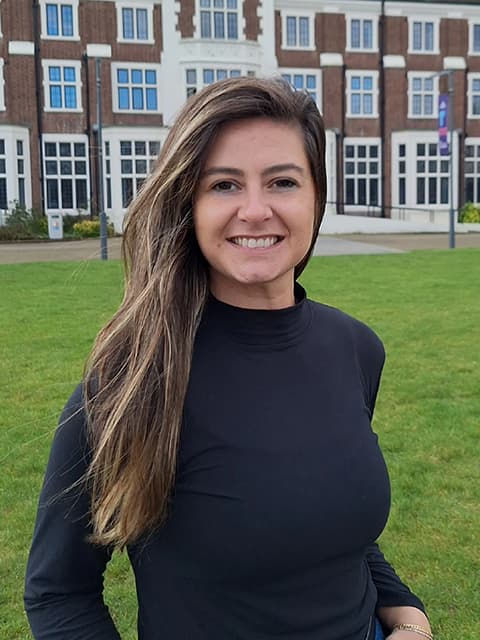
Sabrina Furtado is a Lecturer in Sport Management and Dean’s Associate Fellow at Loughborough University’s School of Sport, Exercise and Health Sciences. She holds a BSc, MSc, and PhD. Previously, she taught at the Federal University of Paraná and State University of Santa Catarina in Brazil, focusing on sport management, sports law, and entrepreneurship in the sports sector. Her research focuses on sports governance, strategic planning, and policy development in public and private sports entities. Key areas include Olympic and Paralympic federations, sports financing, and the impact of media representation on disability inclusion. She contributes to the Sport, Business and Society and Lifestyle for Health and Wellbeing research groups, as well as the Inteligência Esportiva Research Institute . Recent work analyzes governance structures in Santa Catarina municipalities, business intelligence applications in sports management, and modernization processes in Brazilian Olympic federations. Her publications span topics like Paralympic organizational roles, media stigma in disability sports reporting, and funding mechanisms for sports initiatives. No scientific awards are mentioned. Sabrina advises master’s students on sport management and policy but no grant details are provided. Her current projects aim to strengthen sports policies and enhance stakeholders’ engagement in the sport system.
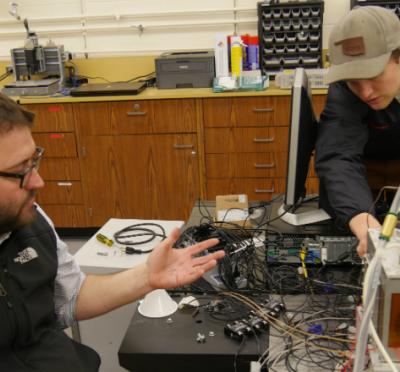
Joshua Gess is an Associate Professor in the Mechanical, Industrial, and Manufacturing Engineering department at Oregon State University's College of Engineering. He joined Oregon State in 2015 and serves as a co-principal investigator at the Enhanced Heat Transfer Laboratory, where he leads research in thermal management solutions for high-performance microelectronics. His educational background includes: PhD, Mechanical Engineering, Auburn University, 2015 MS, Mechanical Engineering, Auburn University, 2012 B.E., Mechanical Engineering, Vanderbilt University, 2005 Before academia, he worked as a mechanical engineer at SSOE Group (including consulting for Johns Manville) and Northrop Grumman where he focused on military communication equipment. Professor Gess specializes in advancing thermal management solutions for high-performance microelectronic equipment. His research spans multiple scales, examining single and two-phase heat transfer on the macro-scale with passive and active liquid immersion techniques, as well as on the micro and nano scale for complex embedded thermal management solutions. He combines fundamental heat transfer knowledge with novel experimental methods such as two-phase PIV and high-speed image capture to develop reliable and energy-efficient cooling solutions for demanding electronics systems. His publication record demonstrates a clear trajectory toward increasingly sophisticated thermal management solutions, with recent work focusing on additive manufacturing applications for cooling systems, semiconductor thermal management, and nuclear reactor cooling systems. His research has significant implications for data center energy efficiency, where even small improvements in cooling efficiency could save enormous amounts of energy that could be returned to the grid. Gess is deeply committed to mentoring graduate students, emphasizing the practical applications of engineering principles. He attributes his interest in engineering to childhood influences like the movie RoboCop and the TV series MacGyver, and finds the reality of engineering work just as gratifying as he'd imagined. He particularly values the moments when his graduate students "get it" and watching them grow with each new accomplishment. As a person with a disability himself, Gess is passionate about establishing more robust support systems for people with disabilities at Oregon State. He is working with the School of Public Health to start an adaptive sports program, with the goal of building infrastructure that allows anyone to feel welcome and pursue advanced degrees at the university.
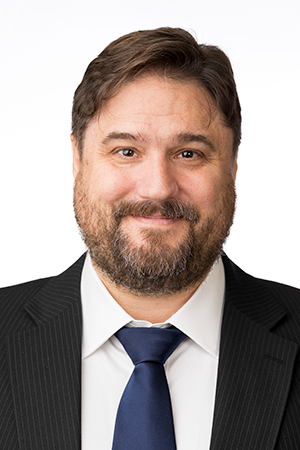
Jo Wood is Professor of Visual Analytics in the Department of Computer Science at City, University of London, where she has been employed since January 14, 2000. Her work bridges computer science, geographic information science, and human-computer interaction, focusing on innovative methods for visualizing complex spatial and behavioral data. Her research interests center on visual analytics , information visualization , and geovisualization , with applications in transportation, public health, crisis response, and citizen science. She investigates how interactive visual interfaces can support exploratory data analysis, decision-making, and storytelling, particularly through small multiples, faceted views, and sketch-based rendering techniques. The trends in her recent publications reflect a consistent focus on user-centered design , spatial data abstraction , and interactive exploration of multivariate datasets. Her work often integrates real-world behavioral data such as GPS tracks, cycling patterns, and crowd-sourced information to build meaningful visual narratives and support analytical reasoning. Throughout her career, Jo Wood has contributed significantly to the advancement of visual analytics through high-impact publications in top-tier venues such as IEEE Transactions on Visualization and Computer Graphics and Computer Graphics Forum. Her collaborations with researchers like Jason Dykes and Aidan Slingsby highlight her role in a vibrant research community. She has supervised numerous research projects and mentored students in visualization and geospatial analytics, though specific names are not listed in the provided text. Her work has been supported by various research grants, particularly in domains involving urban mobility, energy modeling, and crisis informatics, though grant details are not specified here. Jo Wood has also contributed to the design of visual analytics systems for applications including disease spread modeling, bicycle-hire scheme monitoring, and persuasive technology for health and leisure, demonstrating a strong commitment to impactful, interdisciplinary research.
Edward H. Kaplan is the William N. and Marie A. Beach Professor of Management Sciences at the Yale School of Management, Professor of Public Health at the Yale School of Medicine, and Professor of Engineering at the Yale School of Engineering and Applied Sciences. He holds secondary appointments in Chemical and Environmental Engineering, Health Policy & Management, the Institution for Social and Policy Studies, and Statistics. Education: PhD in Urban Studies, Massachusetts Institute of Technology (1984) SM in Mathematics, Massachusetts Institute of Technology (1982) SM in Operations Research and City Planning, Massachusetts Institute of Technology (1979) BA in Urban/Economic Geography, McGill University (1977) Kaplan is an expert in operations research, mathematical modeling, and statistics, focusing on public policy and management. His research spans counterterrorism, HIV prevention, bioterrorism, and public health modeling. He has developed models for suicide bomber detection, smallpox response logistics, needle exchange program effectiveness, and wastewater-based disease surveillance. His work has been recognized with numerous awards, including the Koopman Prize (2003, 2005), INFORMS President’s Award (2002), Charles C. Shepard Science Award (2009), and INFORMS Fellow (2005). He has also served as President of INFORMS (2016) and co-directs the Daniel Rose Technion-Yale Initiative in Homeland Security.
Jonathan Santo is a Professor of Psychology at the University of Nebraska at Omaha (UNO), where he serves as Director of the Graduate Developmental Psychology Program and as a faculty member in the Office of Latino/Latin-American Studies. His research explores peer relations, cultural differences in self-esteem, and classroom-level influences on child and adolescent development, with a focus on improving school environments and fostering positive social interactions. ORCA Faculty Fellow His research spans broad areas including Developmental Psychology , Social Support Systems , and Cross-Cultural Peer Dynamics , with specific attention to peer victimization , self-continuity , school climate , and developmental trajectories in Brazilian and Colombian youth . Recent publications analyze topics like hikikomori experiences , friendship security , and HPA axis dysregulation in adolescents. Scientific awards include the ORCA Faculty Fellow recognition. His work often involves longitudinal assessments of peer relationships cross-cultural comparisons (Brazil, Colombia, China, Nigeria, Singapore, U.S.) policy-focused blog posts on family separations and school interventions
Melissa Landers-Potts is an Interim Assistant Dean for Academic Programs and Principal Lecturer at the University of Georgia's College of Family and Consumer Sciences (Department of Human Development and Family Science). She focuses on active and universal design for teaching and learning, emphasizing inclusive excellence. Her roles include overseeing undergraduate programs, aligning with the college's 2025 Strategic Plan, and fostering teaching excellence. She earned a Ph.D. (1998), M.A. (1994), and B.A. (1990) in Sociology/Anthropology from the University of Georgia and Carleton College. Her research explores socioeconomic status, race/ethnicity, and technology's impact on human development, with a focus on marginalized populations. She designs inclusive curricula and integrates service-learning, partnering with private-sector mental health companies for global adolescent mentorship programs. Recent studies include effects of economic stress on children, racism/classism, and technology's role in military youth well-being. Recipient of numerous awards, including the UGA Teaching Excellence Award (2022), she mentors faculty in active learning and service-learning initiatives. She chairs multiple committees (e.g., College Curriculum, Scholarships) and advises Phi Upsilon Omicron. Her outreach emphasizes experiential learning and inclusive educational practices.
Dr. Abby Haynes is a Research Fellow at the Sydney School of Public Health, University of Sydney, affiliated with the Institute for Musculoskeletal Health and Faculty of Medicine and Health. Her work focuses on physical activity for healthy ageing and people with disability, employing qualitative research, systems thinking, and realist evaluation. Key research themes include: Healthy Ageing Disability and Physical Activity Implementation Science Knowledge Mobilisation Her recent publications analyze: Inclusive sports programs for children with disability Fall prevention in acute hospitals Telehealth physiotherapy for aged care Realist evaluations of yoga and dance interventions Systems thinking in public health policy These emphasize public health, gerontology, and health equity approaches. Grants include MRFF-funded projects on traumatic brain injury rehabilitation (2024), fall prevention (2023), and aged care mobility (2022).
Dr. Jose Pino Ortega is an Associate Professor in the Department of Physical Activity and Sport at University of Murcia's Faculty of Sports Sciences. As Research Director of the Chair of Education, Activity and Cancer, he specializes in sports performance analysis and applied sports technology. His research focuses on developing and validating tracking systems for athlete monitoring across various sports. Recent publications examine performance indicators in paralympic football, wearable sensor validation for beach volleyball, and physiological demands in extreme sports.
Dr. Daniel Read is a Senior Lecturer at the Institute for Sport Business , Loughborough University London. His interdisciplinary research addresses critical integrity issues in sport through qualitative and quantitative methodologies, focusing on athlete welfare, governance, sponsorship, fan behavior, and digital media. PhD in Sport Business (Loughborough University London) MRes in Psychology BSc in Sports Science and Physiology Dan's current projects examine: Athlete welfare (care-seeking behavior, medicine misuse, education) Commercial innovation vs. sporting tradition Digital divide impacts on sport access 21st-century sport governance He collaborates with organizations such as the World Anti-Doping Agency , FIFA , World Rugby , and the Professional Footballers’ Association . His teaching expertise spans research methods, data analytics, sport integrity, and digital media, alongside PhD supervision.
Lauren Rivera is the Peter G. Peterson Chair in Corporate Ethics and Professor of Management & Organizations at Northwestern University’s Kellogg School of Management , with a courtesy appointment as Professor of Sociology at the Weinberg College of Arts & Sciences . Her research focuses on how merit definitions in organizations perpetuate social inequalities, including studies on hiring bias, gender disparities, and elite labor markets. PhD, Sociology (Harvard University, 2009) AM, Sociology (Harvard University, 2006) BA, Sociology and Psychology (Yale University, 2000) Her work spans disciplines such as hiring discrimination , gender equity , and disability studies , often employing qualitative and mixed methods . Recent articles examine racial bias mitigation , disability exclusion in education, and gendered promotion regimes in law firms. She has authored the best-selling book Pedigree: How Elite Students Get Elite Jobs and contributed to media outlets like the New York Times and Harvard Business Review . Scientific awards include the Granovetter Award , Max Weber Book Prize , and multiple Kellogg Teaching Awards . Her editorial roles include positions at the American Sociological Review and Princeton University Press Series in Cultural Sociology.
Chelsey R. Carter is an Assistant Professor of Public Health in the Department of Social and Behavioral Sciences at Yale School of Public Health with a secondary appointment in the Department of Anthropology. A Black feminist anthropologist of medicine, public health, and race from St. Louis, Missouri, Dr. Carter's interdisciplinary work bridges public health, anthropology, and critical race studies to address health inequities, particularly focusing on neurodegenerative diseases like ALS in Black communities. Dr. Carter received her BA in Anthropology from Emory University (2012), followed by an MPH and PhD from Washington University in St. Louis (2021), and completed a Presidential Postdoctoral Fellowship at Princeton University (2022). Her educational background reflects her commitment to both anthropological theory and public health practice. Her research examines the relationship between social determinants of health (particularly anti-Black racism, socioeconomic status, and gender) and neurodegenerative diseases such as amyotrophic lateral sclerosis (ALS) and motor neuron diseases. Dr. Carter employs ethnographic research and qualitative methodologies to investigate how embodied inequality impacts diagnosis, treatment, and engagement in clinical trials for Black individuals with ALS. She also leads research on precision medicine and genomic research in Black communities through The Black Genome Project and studies caregiving among persons impacted by ALS. Her scholarship has been funded by the National Science Foundation, the Andrew Mellon Foundation, and the Wenner Gren Foundation. Analysis of Dr. Carter's recent publication trends reveals a strong focus on health equity, particularly examining how systemic racism manifests in medical settings and contributes to health disparities. Her work spans multiple domains including neurodegenerative diseases, HIV/AIDS care, genomics, and mental health, with consistent attention to intersectional approaches that consider race, gender, and socioeconomic status. A notable pattern in her scholarship is the use of qualitative and mixed methods to center the lived experiences of marginalized communities, challenging dominant biomedical paradigms through a Black feminist lens. Principal's Development Fund Visiting Scholar (2024) Distinguished Teaching Award from Yale School of Public Health (2023) Funding from the National Science Foundation Support from the Andrew Mellon Foundation Wenner Gren Foundation grant Dr. Carter actively mentors students and has developed innovative teaching approaches, including her course 'Biomedical Justice: Public Health Critiques and Praxis,' which encourages students to bring their full selves into the classroom. Her research has been supported by significant grants that enable community-engaged work addressing health disparities. She emphasizes the importance of community partnerships in her research, ensuring that academic work serves and is accountable to the communities being studied. Dr. Carter is Founder and Director of The LEITH (Lived Experiences Igniting Transformations in Health) Lab, which addresses Black invisibility and misdiagnosis for rare neurodegenerative and genetic diseases. The lab brings together persons and caregivers impacted by rare diseases, researchers, clinical providers, educators, students, and activists to develop more humanizing and critical approaches in the rare neurodegenerative field. The LEITH Lab's vision centers on advancing anti-racist research, fostering awareness through education, creating palliative networks for support, and developing a pipeline of health equity scholars.
Michael Cottingham is an Associate Professor of Sport Administration in the Department of Health and Human Performance at the University of Houston's College of Liberal Arts and Social Sciences. He serves as the Director of Adaptive Athletics at UH, leading a comprehensive disability sport program and research lab that has produced over 50 publications and secured more than $1.3 million in external funding. Dr. Cottingham teaches senior-level undergraduate classes and is involved in the Sport Administration graduate program. B.A. in Political Science, Minor in Sociology at The University of Arizona, 2002 M.S. in Recreation Administration at The University of Southern Mississippi, 2008 Ph.D. in Human Performance concentration Sport Management at The University of Southern Mississippi, 2012 Dr. Cottingham's research focuses on disability sport, particularly examining perceptions of athletes with disabilities, spectatorship and sponsorship in disability sport, and broader topics in sport consumer behavior. His work explores promotional strategies in sport and how these apply specifically to disability contexts. He has conducted extensive research on wheelchair rugby, power soccer, and wheelchair tennis, examining consumer motivations, marketing approaches, and the experiences of athletes and spectators in these sports. Analysis of Dr. Cottingham's recent publications reveals a strong emphasis on disability sport consumer behavior across multiple disciplines including sports marketing, psychology, rehabilitation science, and sociology. His research spans both theoretical frameworks and practical applications, with particular attention to how disability sport programming impacts Latinx populations with mobility impairments. The publications demonstrate interdisciplinary collaboration with researchers in community health, rehabilitation, and sport management fields. As Director of Adaptive Athletics at UH, Dr. Cottingham oversees a program that hosts large-scale disability sport events including the annual Cougar Open wheelchair tennis tournament. The program partners with The Institute for Research and Rehabilitation and runs the Community Healthcare Worker Model Study, which examines the impact of disability sport programming on Latinx with mobility impairments. Through Adaptive Athletics, Dr. Cottingham has developed programs for wheelchair rugby and adaptive tennis, with plans to expand to power soccer and wheelchair basketball. The program has received funding from the National Institute on Disability, Independent Living, and Rehabilitation Research (NIDILRR) and has established partnerships with organizations including Houston Parks and Recreation, United States Quad Rugby Association, United States Tennis Association, Halliburton Charitable Foundation, and One Step Closer Foundation.
Dr. Ara J. Schmitt is a Professor of School Psychology and Associate Dean for Research and Faculty Advancement at Duquesne University's School of Education. He holds a Ph.D. from Illinois State University (2001) and a B.S. from the University of Illinois at Urbana-Champaign (1996). His research focuses on neuropsychological assessment, evidence-based interventions for learning disabilities, school-based chronic illness management, and bullying dynamics. Dr. Schmitt has authored numerous peer-reviewed articles, book chapters, and textbooks, including Patterns of Learning Disorders (2006) and Theory and Cases in School-Based Consultation (2020). Education: Ph.D., School Psychology, Illinois State University (2001); B.S., Psychology, University of Illinois (1996) Professional Roles: Associate Dean for Research, School Psychology Program Director, Adjunct Faculty Collaborator His research interests emphasize applied interventions in schools, including neurocognitive assessments, concussion management, and bullying prevention. He has pioneered studies on Taped Problems Intervention adaptations for remote learning and explored cognitive predictors of bullying behavior in adolescents. Recent work addresses socially responsive evaluation practices in health psychology and disparities in concussion awareness among athletes and parents. Dr. Schmitt has advised over 20 graduate students and contributed to national initiatives like the CCTC 2020 guidelines for health psychology training. His work bridges clinical practice and education, particularly in supporting students with chronic illnesses and neurodiverse needs.
Kerstin Nilsson is a Professor of Public Health Sciences at Kristianstad University , Faculty of Health Sciences, and holds associate professorships in Public Health Epidemiology at Lund University and Work Science at the Swedish University of Agricultural Sciences (SLU). Her research focuses on creating healthy workplaces , sustainable working lives , and person-centered healthcare practices . Key Research Areas: Aging workforce, salutogenesis, nature-assisted rehabilitation, pandemic response in healthcare, and sustainable work environments. Leadership: Developer of the SwAge model for sustainable working life across ages. Scientific Contributions: Over 188 publications, with recent projects analyzing nurses' mental health during the pandemic, workplace relationships in healthcare, and nature-based interventions. Collaborates with international networks like the EU COST Action 'DIGI-net' and the Pufendorf Advanced Study Group. Awards: No explicit awards listed, but recognized through leadership roles and interdisciplinary research. Students: Supervises doctoral candidates like Cicilia Nagel and Sophie Schön Persson, focusing on person-centered care and staff well-being. External Affiliation: Associate Professor at Lund University (2007–present) and SLU (until 2007).
Karen Hayes is a Lecturer in Occupational Therapy at the School of Allied Health, Exercise and Sports Sciences, Charles Sturt University. With over two decades of clinical experience, she focuses on rural health equity, workforce development, and spatial justice in non-urban healthcare systems. Education: BaAppSc(Occupational Therapy)(Hons), University of Western Sydney; MHlthSc(Education), University of Sydney; GCertAppHlthBPsych, University of Newcastle Research: Rural occupational therapy services, spatial justice, workforce maldistribution, disaster resilience, and interprofessional education Awards: Senior Fellow Higher Education Academy (2024), Change One Thing Award (2023), Best Oral Presentation (2022), Best Presentation (2024) Her recent research examines the persistent shortage of occupational therapists in rural areas, spatial analysis of healthcare access, and simulation-based training for rural practice readiness. She advocates for systemic policy reforms to address geographic disparities in care provision. Key collaborations include work with institutions like the University of Western Sydney and active engagement in rural health conferences and policy groups. Her teaching philosophy emphasizes hands-on learning, critical thinking, and cultural awareness to prepare students for rural practice challenges.