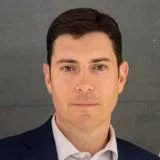
Li Shu is a Professor at the University of Toronto in the Department of Mechanical & Industrial Engineering . She directs the Collaborative Specialization in Psychology and Engineering (PsychEng) , integrating psychology research into engineering design processes. Education: Graduate studies completed at Massachusetts Institute of Technology (MIT). Research Areas: Focuses on creativity in conceptual design and design for pro-environmental behavior , leveraging insights from cognitive neuroscience and social psychology. Leadership: Fellow of the International Academy for Production Engineering (CIRP) and held leadership roles in the American Society of Mechanical Engineers (ASME). Awards: Recipient of the CIRP Taylor Medal and multiple best paper awards.
Dr. Timothy Welsh is a full-time Professor in the Action & Attention Lab at the University of Toronto's Faculty of Kinesiology & Physical Education , where he also serves as Associate Dean, Research since 2023. With cross-appointments from the Faculty of Physical Education and Health, his work bridges cognitive neuroscience and motor behavior research. Academic Background Ph.D. in Human Biodynamics (McMaster University, 2002) M.Sc. in Human Biodynamics (McMaster University, 1999) B.P.H.E. in Physical and Health Education (University of Toronto, 1997) Dr. Welsh's research explores neural mechanisms of goal-directed actions across typical and neurodiverse populations. His lab investigates joint action dynamics , self-objectification effects on motor performance , and cross-reality sensorimotor adaptation , with significant focus on autism and developmental coordination disorder. Recent publications (2024-2025) reveal systematic differences in motor imagery between autistic and non-autistic adults , gender-specific learning patterns , and cross-modal sensory integration challenges in mixed reality environments . These studies demonstrate his lab's expertise in combining behavioral experimentation , EEG analysis , and computational tool development like TAT-HUM. Scientific Recognition Franklin Henry Young Scientist Award Early Distinguished Career Award (NASSP) Outstanding Graduate Supervision Award As principal investigator on 15 active grants (2015-2027), including projects on digital health platforms for concussion rehabilitation and AI-assisted VR learning modules , Welsh's work impacts both basic science and applied interventions. His lab trains students at all levels through KPE 362 (undergraduate) and KIN 5514 (graduate) courses.
Dr Lowri Angharad Hughes is a Senior Lecturer and academic leader at Bangor University, serving as Head of Policy and Development and Associate Pro Vice-Chancellor at Canolfan Bedwyr within the College of Arts, Humanities & Social Sciences. She is actively engaged in research and policy development focused on Welsh language and cultural identity. Institution: Bangor University School: College of Arts, Humanities & Social Sciences Department: Canolfan Bedwyr Role: Head of Policy and Development / Associate Pro Vice-Chancellor Her research centers on Welsh language development, confidence building in Welsh speakers, and national cultural identity. She has contributed extensively to policy-oriented reports aimed at strengthening Welsh language use in education and community settings. Her work bridges academic research and practical implementation in linguistic empowerment. The analysis of her publications reveals a consistent focus on sociolinguistic resilience, educational policy in Welsh-medium contexts, and cultural narratives in Wales. Her works emphasize confidence-building frameworks and commissioned reports for national learning centers, reflecting a strong applied research orientation. No scientific awards were mentioned in the provided text. Dr Hughes leads impactful projects such as 'Rhoi ARFer ar waith - 2024-2025', demonstrating ongoing research leadership. While no direct mention of student supervision or grants is provided, her role in national-level educational initiatives underscores her influence in shaping language policy and academic strategy. She is affiliated with Canolfan Bedwyr, a key center for Welsh language research and development, contributing to national efforts in language revitalization and educational support.
Dr. Yang Xing is a Senior Lecturer in Applied Artificial Intelligence for Engineering at Cranfield University's Centre for Autonomous and Cyberphysical Systems, where he also directs the HUMAX Lab focused on human-centered autonomous vehicle validation. He holds a PhD from Cranfield University (2018) and an MSc with Distinction in Control Systems from the University of Sheffield (2014). Previously, he was a Research Associate at the University of Oxford (2020-2021) and Research Fellow at Nanyang Technological University (2019-2020). His research centers on human-autonomy collaboration frameworks with four key pillars: Cognitive autonomous systems using trustworthy AI Computer vision for human behavior/intention modeling Multimodal foundation models for autonomous driving Deep learning for sustainable transportation systems His recent publications (2022-2025) demonstrate strong trends in AI-driven transportation research : 40% focus on trajectory prediction and behavior modeling, 30% on computer vision applications, 20% on human-AI collaboration frameworks, and 10% on energy optimization. Key thematic evolutions include increased use of transformer architectures, graph neural networks for interaction modeling, and simulation-to-real transfer learning. Awards and Honors: IEEE Outstanding Associate Editor Award (TNNLS 2023-2024) Best Paper Award, China National Intelligence Technology Conference 2019 IEEE Outstanding Service Award, Smart World Congress 2023 Best Workshop Paper, IEEE IV 2018 He currently advises PhD student Isa Ismail and has secured funding from the Royal Society, EPSRC, DSTL, SAAB, QinetiQ, and Thales. As lab director of HUMAX, he leads projects on human-AI teaming for autonomous systems.
David Sears is an Associate Professor of Interdisciplinary Arts at Texas Tech University , affiliated with the J.T. & Margaret Talkington College of Visual & Performing Arts . He co-directs the Performing Arts Research Laboratory (PeARL) and coordinates the Bachelor of Arts in Interdisciplinary Arts Studies. Prior to TTU, he earned a PhD in Music Theory from the Schulich School of Music at McGill University (2016) and completed a postdoc at Johannes Kepler University (2017). Dr. Sears' research focuses on the structural parallels between music and language , particularly in tonal harmony, using behavioral and computational methods. His work also spans popular music analysis (e.g., 80s pop synthesizers, Billboard Hot 100 trends), music and emotion , DIY communities on platforms like Pinterest, and film/video game music (e.g., jump scares, autism spectrum emotion recognition). His publications appear in venues like Music Perception , Psychology of Music , and Quarterly Journal of Experimental Psychology . PeARL, where he is a director, employs methods from psychophysics , cognitive psychology, and music informatics to study music, theatre, dance, and visual arts. Current projects include modeling musical expectation , analyzing horror film soundtracks , and exploring DIY online communities . As a pedagogue, Dr. Sears teaches graduate seminars in the Fine Arts Doctoral Program and undergraduate/graduate music theory courses. His lab's recent graduates include Hannah Percival (2024) and Sylvia Weintraub (2024), with ongoing advising of PhD candidates like Elizabeth Acosta and Devin Guerrero.
William Riebsame Travis is an Associate Professor in the Department of Geography at the University of Colorado, where he also serves as Director of the North Central Climate Adaptation Science Center (CIRES/USGS). He holds a Ph.D. from Clark University (1981) and leads research initiatives through Earth Lab's Adaptation Science program and Western Water Assessment. Research Focus: His work explores three interconnected themes: Extremes, Risk and Disasters : Investigating disaster theory, warning system failures, and societal responses to low-probability/high-consequence events Forecast-Informed Decision Making : Developing quantitative models integrating probabilistic weather/climate forecasts for sectors like ranching and infrastructure management Climate Adaptation Science : Creating frameworks for climate-sensitive resource management through risk analysis and decision modeling His publications demonstrate consistent focus on climate extremes, risk analysis methodologies, and human-environment interactions. Recent work emphasizes accelerating environmental risks (wildfires, droughts) and adaptation decision-making under uncertainty. Advising & Leadership: Directs graduate research (including current advisee Luca Anna Palasti) and secures funding from NOAA, NSF, USGS, and CU's Earth Lab. Leads collaborative projects through the North Central Climate Adaptation Science Center and maintains the scholarly archive of geographer Robert W. Kates.
Joanna Blahopoulou serves as an Assistant Professor in the Department of Psychology at the University of the Balearic Islands. She holds a PhD in Organizational Psychology and a BA in Psychology from Ludwig-Maximilian-Universität in Munich, Germany. Her academic appointment includes teaching responsibilities across multiple degree programs including Psychology, Social Work, and Education. Her research interests span several interconnected domains within social and organizational psychology. Dr. Blahopoulou has established herself as a leading researcher in sexual harassment prevention, work-life balance, telework dynamics, and the emerging impact of artificial intelligence on educational settings. Her work frequently addresses gender-related issues in workplace and educational contexts. Analysis of her publication record reveals a clear trajectory of research focused on contemporary workplace challenges, with a significant emphasis on pandemic-era adaptations and the evolving landscape of sexual harassment prevention. Her recent work has increasingly incorporated artificial intelligence applications in educational contexts, particularly examining ChatGPT's impact on academic integrity and learning processes. Dr. Blahopoulou actively participates in two major research groups: Estudios de Género (Gender Studies) and I+RhETOS (Psychosocial Research in Work, Human Resources and Education). These affiliations reflect her interdisciplinary approach that bridges psychological theory with practical workplace applications. As an educator, she teaches Work Psychology, Social Psychology of Groups and Organizations, and Creation and Direction of Work Teams across undergraduate and master's programs. She also contributes to continuing education through FUEIB (Fundación Universidad Empresa de las Islas Baleares), offering specialized certificates on team leadership and gender-based violence prevention.
Estelle Sohier is an Associate Professor in the Department of Geography and Environment at the University of Geneva since January 2020. She holds a doctorate in History from the University of Paris 1 Panthéon-Sorbonne and the 'Orientale' University of Naples. At the University of Geneva, she directs the Certificate in Visual Studies and co-directs the Bachelor's degree in Geography and Environment. She is also an exhibition curator and an associate researcher at the Institut des Mondes africains. Her educational background includes: Doctorate in History from University of Paris 1 Panthéon-Sorbonne Doctorate from 'Orientale' University of Naples Dr. Sohier's research sits at the intersection of geography and cultural history, focusing on the history of photography and its uses during the colonial period, visual culture, and geographical imagination. She has notably studied the work of Geneva photographer and publisher Fred Boissonnas across Switzerland, Greece, Egypt, and the Mediterranean region. Her research has been supported by several projects funded by the Swiss National Science Foundation (SNSF), including 'Spatial Devices of the World Spectacle. Geneva, 1895-1914' and 'Ulysses. Reimagining the Mediterranean, from Myth to Photography.' She has conducted extensive research in France, Italy, and Ethiopia. Her scholarly output demonstrates consistent focus on visual representation, with publications spanning from her 2011 work 'Portraits controversés d'un prince éthiopien' through her 2022 bilingual publication on Fred Boissonnas. Her research trajectory shows increasing emphasis on Mediterranean visual culture, particularly through the lens of historical photography. Dr. Sohier has curated significant exhibitions including 'Fred Boissonnas and the Mediterranean: A Photographic Odyssey' at the Musée Rath in Geneva (2020-2021) and the Thessaloniki Museum of Photography in Greece (2022-2023), demonstrating the public-facing dimension of her scholarly work. She has organized the annual conference series 'Social Issues, Spatial Issues' from 2015 to 2021, with evolving themes reflecting contemporary scholarly concerns from 'Spaces, Bodies, and Powers' to 'Thinking (in) a Damaged World: Societies, Space, and Living Beings, New Approaches.'
Yvette VANDEN BEMDEN is a full Professor in the Department of Art History at the Faculty of Philosophy and Arts, Université de Namur, specializing in stained glass conservation and Belgian cultural heritage. Her research spans medieval to contemporary art with interdisciplinary approaches bridging material science and visual culture. Her primary research interests focus on Stained Glass Conservation (particularly 19th-20th century Belgian works), Visual Arts and Disability Studies , and Art Gallery Curation methodologies . She employs scientific techniques like PIXE-PIGE for material analysis while examining social representations in visual media. Her work integrates historical context with modern conservation challenges. Her publication trends reveal deep specialization in stained glass material analysis (2005 Nuclear Instruments paper) alongside interdisciplinary explorations of art's societal role, notably in disability representation (2008 Art & Handicap) and wartime imagery (2006 Images de guerre). The research consistently centers on Belgian artistic heritage with methodological diversity spanning physics-based analysis to cultural theory. Professor VANDEN BEMDEN has supervised 4 graduate works and led 10 significant research projects since 1968, including long-term studies on Enghien Castle stained glass (ENGHIEN project) and interdisciplinary investigations into art display stakes. Her collaborative projects frequently bridge humanities and scientific departments. She directs research through the university's cultural heritage labs, notably collaborating with physics departments on material analysis projects. Her teams integrate art historians, conservators, and scientists for comprehensive artifact studies, with recent focus on elemental composition mapping of historical glass pieces.
Shichun Ling is a Faculty member at the School of Criminal Justice and Criminalistics, California State University, Los Angeles. She holds a Ph.D. in Criminology from the University of Pennsylvania and a B.A. in Psychology and Social Behavior from the University of California – Irvine. Ph.D., Criminology – University of Pennsylvania B.A., Psychology and Social Behavior – University of California, Irvine Her research bridges biopsychosocial, neurocriminology, and developmental criminology to study antisocial behavior, psychopathy, and callous-unemotional traits. She examines autonomic functioning, brain structure/function, and societal perceptions of criminal justice. Recent publications explore resting heart rate interactions with empathy, HPA axis responsivity, and neurointerventions in offenders. Her work has been featured in PBS NOVA and The Future is Fantastic. 17 peer-reviewed articles (11 first-authored) 3 book chapters (2 first-authored) She teaches courses including Biopsychosocial Criminology, Statistics in Criminal Justice, and Theories in Criminal Justice. Office: Room 250, Hertzberg-Davis Forensic Science Center.
Gerald Steiner is a full professor of organizational communication and innovation, dean of the Faculty of Business and Globalization, and chair of the Department for Knowledge and Communication Management at Danube University Krems in Austria. He is also a member of the Associate Faculty at the Complexity Science Hub Vienna since 2018, reflecting his deep engagement with systems and complexity science. His academic journey includes a PhD in management studies and social sciences from the University of Graz and a BSc in mechanical engineering, with training at UC Berkeley, UCLA, and the University of Oklahoma. His education includes: PhD in Management Studies and Social Sciences (Organizational and Innovation Management), University of Graz Bachelor of Science in Mechanical Engineering, Austria Training at UC Berkeley, UCLA, and University of Oklahoma at Norman Gerald Steiner's research is rooted in systemic and sustainability management, guided by a complexity science framework. His work explores sustainability-oriented innovation systems, knowledge integration, transdisciplinarity, and stakeholder collaboration. He investigates competences for solving complex problems and sustainable entrepreneurship, with recent focus on sustainable resource management, particularly the phosphorus supply chain and phosphate rock mining. His research emphasizes collaborative, science-practice co-creation and digital transformation in innovation systems. The recent publications reflect a strong interdisciplinary trend, bridging sustainability science, public health, mineral economics, and digital entrepreneurship. Articles frequently address systemic challenges during crises (e.g., COVID-19), transdisciplinary modeling, and resource security. Keywords span environmental science, behavioral science, policy, and systems thinking, indicating a holistic, integrative research approach. Scientific awards are not explicitly listed in the provided text. Gerald Steiner actively mentors students and early-career researchers, as evidenced by co-authorships with individuals such as L. Satalkina, L. Zenk, and J. Weitzer. He co-directs the PhD program in migration studies, indicating leadership in graduate education. While specific grants are not mentioned, his involvement in transdisciplinary labs and high-impact publications suggests successful funding acquisition. His work often involves international collaboration, especially with institutions in the D-A-CH region and the United States. He has co-founded four transdisciplinary labs at Danube University Krems: the Transdisciplinarity Laboratory Sustainable Digital Environments, the Transdisciplinary Laboratory for Sustainable Mineral Resources, GovLab Austria, and the Biodiversity Hub. These labs serve as platforms for integrating science, policy, and practice in sustainability transitions.
Joanna Cohen, PhD, MHSc, is the Bloomberg Professor of Disease Prevention and Chair of the Department of Health, Behavior and Society at the Johns Hopkins Bloomberg School of Public Health . She directs the Institute for Global Tobacco Control and has led tobacco policy research for over 30 years, focusing on tobacco control, public health policy, and policy evaluation. Her work examines tobacco industry strategies, health communication, and behavioral interventions to reduce tobacco use. Education: PhD in Health Policy (University of North Carolina, 1999), MHSc in Community Health (University of Toronto, 1992) Research Trends: Her recent work includes studies on electronic nicotine delivery systems (ENDS), tobacco pricing, warning labels, flavor chemicals, and global policy implementation. Key collaborations span the U.S., Vietnam, Mexico, and Bangladesh. 2025: ENDS dependence, bidi pack perception 2024: Tobacco taxation, PMI funding models 2023: Menthol regulation Scientific Awards: Recipient of multiple teaching and mentoring awards, including the 2004 Robin Badgley Award and 2000 APHA Mentor of the Year. Projects: Leads the Bloomberg Initiative to Reduce Tobacco Use, the VAPER Study, and Tobacco Pack Surveillance System (TPackSS), with a focus on reducing inequalities in tobacco control.
David V. Gioe is a Visiting Professor of Intelligence and International Security at King’s College London’s Department of War Studies, affiliated with the Faculty of Social Science & Public Policy. He also holds a British Academy Global Professor title. Previously, he served as Associate Professor of History at the U.S. Military Academy at West Point and as History Fellow for the Army Cyber Institute. His academic credentials include a PhD from the University of Cambridge, MA from Georgetown University, and a graduate certificate in Strategic Studies from the U.S. Naval War College. Research focuses on intelligence’s role in international affairs, cyber security, Anglo-American intelligence liaison, and historical analysis of intelligence operations. Notable works include co-authored books like *The CIA and the Pursuit of American Security* (2020) and edited volumes on the Cuban Missile Crisis. His analysis frequently addresses contemporary issues like disinformation campaigns and cybersecurity challenges. Awards include Fellowship in the Royal Historical Society. He directs the Cambridge Security Initiative and co-convenes its International Security and Intelligence program. Publications span peer-reviewed journals (*Intelligence and National Security*, *Political Science Quarterly*) and media outlets (*The Washington Post*, *Foreign Policy*).
Julien Barrier is a Senior Lecturer in Sociology at the École Normale Supérieure de Lyon (ENS de Lyon). He specializes in the sociology of public action, academic labor markets, and science-industry relations. His research focuses on institutional transformations in higher education, policy analysis, and the dynamics of academic work. Barrier holds a PhD in Sociology from Sciences Po Paris (2010) and has held postdoctoral fellowships at prestigious institutions like the Center for Sociology of Organizations. His current roles include co-directing the Master of Social Sciences at ENS de Lyon and leading the 'Knowledge Policies' interdisciplinary project within UMR Triangle. His work explores how managerial logics intersect with professional autonomy in academia, the evolution of research funding regimes, and the increasing application-oriented direction of public research. Key contributions include studies on university mergers, academic career fragmentation, and science-industry partnerships. Barrier’s research has been published in top journals like Revue française de sociologie and Gouvernement et action publique. He actively participates in policy discussions as a member of the Education Laboratory steering committee and the RESUP research network. Recent projects include a visiting scholar position at Northwestern University (2023-2024) and leadership in ANR-funded studies on organizational changes in public administration. His current supervision includes Hannah Gautrais’ thesis on climate scientists’ roles in activism. Barrier’s work bridges theoretical sociology with empirical policy analysis, offering critical insights into contemporary academic and institutional challenges.
Brenda Bowen is a Professor in the Department of Geology & Geophysics at the University of Utah, where she also serves as Chair of Atmospheric Sciences. She previously directed the Global Change and Sustainability Center from 2015 to 2024, reflecting her leadership in interdisciplinary environmental research. Her academic home is within the College of Mines and Earth Sciences. She earned a PhD from the University of Utah, an MS from the University of California, Santa Cruz, and a BS from the same institution. Her research focuses on sedimentology, geochemistry, and environmental change, aiming to understand landscape evolution across geological and human timescales. She employs field observations, remote sensing, and advanced laboratory techniques to study systems like the Bonneville Salt Flats and Great Salt Lake. Her work emphasizes interdisciplinary collaboration, integrating natural and social sciences to address sustainability challenges in water and energy. She actively promotes applied research in partnership with communities, government, and industry. Her recent publications reveal a strong trend in studying evaporite systems, hydrological dynamics, microbial ecology, and human-environment interactions using remote sensing, geochemical analysis, and social science methods. She explores both natural processes and anthropogenic impacts, such as mining and climate change, on fragile saline landscapes. Fellow of the Geological Society of America (2023) Outstanding Faculty Research Award, Department of Geology and Geophysics (2022) Outstanding Teaching Award, College of Mines and Earth Sciences (2021) Top Researcher Honoree, University of Utah (2017) Career Services Award, University of Utah (2016) Dr. Bowen mentors graduate students through thesis research and leads major externally funded projects, including an NSF ENGINES grant for sustainability innovation in the Southwest. She is deeply involved in institutional change, workforce development, and public engagement. Her work with the Wasatch Environmental Observatory highlights her commitment to long-term environmental monitoring and education. She also explores innovative science communication through art-science collaborations, such as the 'Evaporated' exhibition.