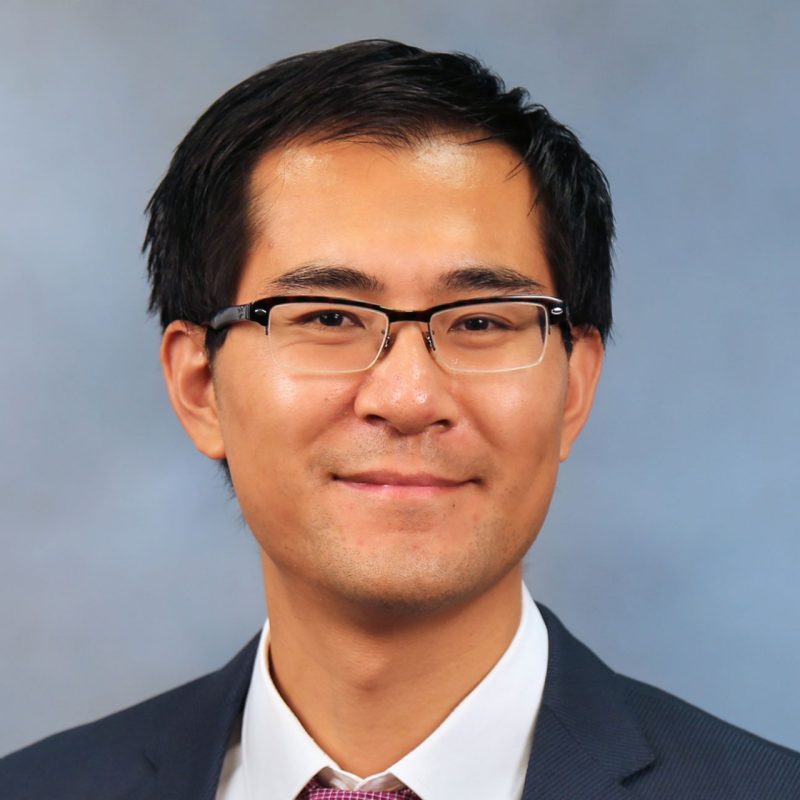
Chen Wei is an Associate Professor in the Department of Materials Design and Innovation at the University of Buffalo's School of Engineering and Applied Sciences. His research focuses on data-driven and physics-based modeling of material systems, computational design of multi-principal element materials, and materials informatics for accelerated discovery. Recent research highlights include: Discovery of intrinsic temperature-dependent elastic anisotropy in NbTaTiV high entropy alloys (Science Advances 2022) Development of interpretable AI frameworks for multiscale materials design (NSF-funded 2019-2025) Creation of open thermodynamic databases with over 1200 metallic phase entries (Scientific Data 2017) Scientific Awards: NSF CAREER Award (2020) for high-entropy alloy research Notable collaborations include University of Tennessee (Prof. Peter Liaw), National Chiao Tung University (Prof. Yi-Chia Chou), and institutions like University of Colorado Boulder, Ohio State University, and Columbia University through NSF grants.
Daniel Lathrop is a Professor of Physics and Geology at the University of Maryland (UMD), and a Fellow of the American Physical Society. He joined UMD in 1997 following postdoctoral roles at Yale and faculty positions at Emory University. His research spans nonlinear dynamics, quantum science, and geophysical fluid dynamics. Lathrop directs the Nonlinear Dynamics Laboratory, focusing on experiments simulating Earth’s core (e.g., the 3-meter liquid sodium spherical Couette experiment) and superfluid helium phenomena. Education: B.A. in Physics (UC Berkeley, 1987), Ph.D. in Physics (University of Texas at Austin, 1991). Research emphasizes turbulent flows in rotating systems, magnetic field generation (dynamo effects), and quantum fluid behavior. His lab integrates machine learning for prediction of magnetic field evolution and turbulence dynamics. Collaborations include developing UAV-based geophysical sensors for landmine detection and advancing stochastic computing hardware using magnetic tunnel junctions. Awards include the NSF Presidential Early Career Award (1997), APS Stanley Corrsin Award (2012), and UMD Distinguished Scholar-Teacher designation. He served as Director of the Institute for Research in Electronics and Applied Physics (2006–2012). Advising: Supervised numerous graduate students in experimental physics and geophysics. Active in interdisciplinary projects combining fluid dynamics, quantum science, and machine learning. Labs/Teams: Nonlinear Dynamics Laboratory, Quantum Materials Center, and Institute for Research in Electronics & Applied Physics (IREAP). Research themes include planetary magnetic field modeling, turbulence in extreme conditions, and novel computing hardware inspired by physical systems.
Mariia Zhuldybina is a Professor in the Department of Electrical Engineering at École de technologie supérieure (ÉTS), Montreal. She leads research in metamaterials, terahertz technology, printed electronics, and smart textiles. Her work focuses on sustainable manufacturing, non-destructive testing, and eco-design principles. Education: M.Sc.A. in Physics from Moscow Institute of Physics and Technology, Ph.D. in Electrical Engineering from ÉTS. She directs the LACIME laboratory’s research on functional materials and microsystem fabrication. Research interests include terahertz spectroscopy for quality control, environmental impact assessment of electronic materials, and wearable sensor integration. Her recent projects address 6G communication surfaces, circular economy practices in IoT, and bio-based conductive inks. Advising: Supervises 10+ graduate students across PhD, M.Sc. and project courses. Notable supervisees include Niranjan Namdev Jadhav (6G intelligent surfaces), André-Louis Morneau (6G frequency selectors), and Marie-Jade Lucier (smart textile integration). Labs/Teams: Core member of LACIME – Communications and Microelectronic Integration Laboratory. Collaborates on interdisciplinary projects combining photonics, materials science, and environmental engineering.
Vincenzo Galdi is a Full Professor at the Department of Engineering , University of Sannio , Italy. His research focuses on Electromagnetics , Metamaterials , and Wave Propagation in complex structures. He leads the Fields & Waves Lab , contributing to advancements in photonic time crystals, reconfigurable intelligent surfaces, and electromagnetic chaos. Scientific activities include collaborations with international groups (e.g., Southeast University, Peking University) and publications in journals like Nature Communications , Advanced Functional Materials , and Physical Review Applied . Recent work explores space-time modulation , chaotic secure communication , and non-Hermitian optics . 2025 : Invited talk at META 2025 on space-time modulation 2025 : IEEE-APS/URSI presentations on aperiodic photonic crystals and RIS optimization 2025 : Paper in AdFM on RIS diagnostics
Andrei C. Şerban serves as a Lecturer at the Lucian Blaga University of Sibiu , affiliated with the Faculty of Letters and Arts , specifically within the Department of Theatre Arts . His academic work bridges theatre studies with literary and cultural analysis, focusing on intermediality, medieval symbolism, and contemporary European drama. He has contributed extensively to understanding the intersections of poetry, drama, and visual aesthetics, particularly in Romanian and Francophone contexts. Şerban's research interests span the reception of classical texts in modern theatre , political allegory , and transnational cultural dialogues . His publications frequently analyze adaptations of Shakespeare, Dante, Ibsen, and Molière, while also exploring feminist and postcolonial theatre trends. He has curated anthologies of contemporary poetry and drama, emphasizing experimental forms and cross-cultural influences. His recent academic output highlights the integration of medieval imagery in modern performance , interdisciplinary approaches to theatrical space , and critical interpretations of European cinema . While no formal awards or students are mentioned in the provided materials, his editorial work on Francophone and African theatre underscores his commitment to global cultural exchange. Şerban also contributes to documenting major theatre festivals and avant-garde movements.
Richard Holden is Scientia Professor of Economics at UNSW Business School, Director of the Manos Institute for Cognitive Economics, and President Emeritus of the Academy of the Social Sciences in Australia. Previously, he held faculty positions at the University of Chicago and the Massachusetts Institute of Technology. He received both his AM and PhD in economics from Harvard University, establishing a strong foundation for his distinguished academic career. Professor Holden's research focuses on contract theory, organizational economics, law and economics, and political economy. His work spans topics including network capital, political districting, the boundary of the firm, incentives in organizations, mechanism design, voting rules, and blockchain applications. His interdisciplinary approach bridges economics with law, political science, and technology studies, making significant contributions to multiple fields. His scholarly impact is evident through publications in top-tier journals such as the Quarterly Journal of Economics, American Economic Review, Journal of Political Economy, Review of Economic Studies, and Nature. As editor of the Journal of Law and Economics, he influences the direction of research at the intersection of these disciplines. His work has been featured in major media outlets including The New York Times, The Financial Times, The Economist, and The New Republic. Fellow of the Econometric Society Fellow of the Academy of the Social Sciences in Australia Fellow of the Royal Society of NSW Distinguished Fellow of the Luohan Academy Senior Academic Fellow at the e61 Institute Professor Holden maintains an active public presence as a regular columnist for the Australian Financial Review and frequent media commentator on economic issues. He has served as Visiting Professor at MIT Department of Economics, MIT Sloan School of Management, Harvard Economics Department, University of Chicago Law School, and Columbia Law School, demonstrating his international academic influence. His leadership extends to directing the Manos Institute for Cognitive Economics, which focuses on the intersection of cognitive science and economic decision-making.
Rubén Arcos is a Professor at the University Rey Juan Carlos (URJC) in Madrid, Spain, where he serves as Director of International Programs and leads research in the Ciberimaginario group on Digital Culture and Communication. He holds a visiting role at the College of Europe (Bruges) in the EU International Relations department. Key Affiliations: Chair of Intelligence Studies Section, International Studies Association (ISA) Co-founder of the International Online Intelligence Hub (IntelHub) Member of NATO STO Research Task Groups (SAS-189, SAS-ET-FG, SAS-114) Editorial Board Member, International Journal of Intelligence and Counterintelligence Research Focus: Hybrid Threats, Disinformation, Strategic Communication, EU Security Policy, Intelligence Analysis, and Digital Culture. His work bridges academia and practice through projects like the EU-HYBNET network and the DOMINOES Erasmus+. Recent publications explore disinformation's impact on democracies and climate policy. Recent Projects: Co-PI of EU-HYBNET (Pan-European Hybrid Threat Network) Lead of the MOOC Strategic Communication to Counter Security Threats (ITU Prize Winner) Contributor to NATO/STO initiatives on predictive intelligence and uncertainty communication Awards: 2023 ITU WSIS Prize for Digital Innovation in Security Education NATO SAS Excellence Award for Project SAS-114 Academic Leadership: Directed Spain's first MA in Intelligence Analysis (2010–2018) Co-organized major conferences like StratComES and NATO's Hybrid Threat workshop Teaches courses on strategic communication, intelligence analysis, and EU security across 15+ countries
Professor Angeliki Alexiou is a faculty member at the Department of Digital Systems, ICT School, University of Piraeus. She holds a PhD in Electrical Engineering from Imperial College London (2000) and a Diploma from the National Technical University of Athens (1994). Prior to academia, she worked at Bell Labs (2000–2009), where she contributed to projects like BLAST and FITNESS, earning a Bell Labs President’s Gold Award (2002). She leads the Wireless World Research Forum’s Radio Communication Technologies and High Frequencies groups. Her research focuses on 6G systems, MIMO, mmWave/THz communication, ultra-dense networks, RIS technologies, and machine learning applications. She coordinates EU projects like H2020 TERRANOVA and manages ARIADNE. Recent work emphasizes beamforming innovations, RIS-driven networks, and THz security challenges. Education: PhD in Electrical Engineering, Imperial College London, 2000 Electrical & Computer Engineering Diploma, NTUA, 1994 Affiliations: IEEE Member Technical Chamber of Greece Publications span 20+ years with over 100 articles on THz systems, RIS performance, and 6G architectures. Her work bridges theoretical models and practical implementations in high-frequency wireless communication.
Prof. Dr. Jörg Matysik is a Full Professor and Institute Head at the Institute of Analytical Chemistry , University of Leipzig , where he holds the chair for Molecular Spectroscopy and leads the postgraduate Aufbau-Studium "Analytik & Spektroskopie" . He has been a permanent faculty member since 2013 and previously served as an assistant professor at Leiden Institute of Chemistry from 2000 to 2012. Full Professor of Analytical Chemistry, University of Leipzig (2013–present) Director, Magnetic Resonance Center Leipzig (MRZ) (2015–2018) Chair, Fachgruppe Magnetic Resonance, German Chemical Society (since 2021) Chair, COST Action TD1103 "Hyperpolarization" (2012–2015) Associate Editor, Applied Magnetic Resonance His educational background includes a Diplom in Chemistry from Universität-Gesamthochschule Essen (1992), followed by a PhD (Dr. rer. nat.) from the same institution in 1995, based on research at the Max-Planck-Institut für Strahlenchemie on FT-NIR Raman spectroscopy of phytochrome chromophores. He conducted postdoctoral work in Japan with Prof. T. Kitagawa on heme proteins and in the Netherlands with Prof. H. de Groot on MAS NMR of membrane proteins. Matysik's research lies at the intersection of magnetic resonance , photochemistry , and spin chemistry . His group pioneers the study of the solid-state photo-CIDNP effect , one of the few groups worldwide doing so, to generate and utilize hyperpolarization in photosynthetic systems and flavoproteins. The overarching goal is to enhance the efficiency of spin-based technologies by manipulating non-Boltzmann spin order. His work extends to hyperpolarized xenon, photoreceptor mechanisms, and polymer reactivity. His recent publications reveal a strong focus on hyperpolarization mechanisms , NMR of biological systems , and enzyme-substrate interactions . The work combines advanced NMR methodologies with biochemical and materials systems, particularly in photosynthesis and biodegradation. Keywords across publications include photo-CIDNP, flavoproteins, magic-angle spinning, and metabolic profiling, indicating a consistent trajectory in developing and applying magnetic resonance for functional and dynamic studies. His scientific recognition includes the Jonge Chemici Award (2001) and the Vidi Award (2003) . He is also a member of the International Spin-Chemistry Committee and serves in editorial and leadership roles, reflecting broad community impact. Jonge Chemici Award (2001) Vidi Award (2003) As an academic advisor and research leader, Matysik leads a research group focused on cutting-edge magnetic resonance techniques. He has secured significant collaborative funding through EU COST actions and likely national grants (implied by long-term positions and infrastructure). He mentors students and researchers in spectroscopy and analytical chemistry, and organizes advanced training through summer schools on NMR theory and professional postgraduate programs. His leadership in the MRZ and COST networks underscores his role in building research infrastructure and international collaboration. Matysik leads the Magnetic Resonance Center Leipzig (MRZ) and the Matysik Research Group at the Institute of Analytical Chemistry. His team integrates expertise in spectroscopy, biochemistry, and materials science, focusing on spin dynamics in natural and synthetic systems. The group is uniquely positioned as the only one globally studying solid-state photo-CIDNP in photosynthetic systems, indicating a niche and high-impact research direction.
Guto Pryderi Puw is a Reader in Music Composition at Bangor University, actively serving as Head of Composition since 2015. His career spans academic roles, creative residencies (BBC National Orchestra of Wales), and artistic direction of the Bangor Music Festival. Academic Affiliation: School of Music, Bangor University Teaching Focus: Composition, Orchestration, Contemporary Opera Research interests center on Music Composition , Orchestration , and Opera/Theatrical Music , with specific emphasis on Welsh composers like John Metcalf and Ligeti-inspired techniques. His 15 most recent works reveal trends in experimental orchestration, theatrical integration, and cultural identity exploration. Scientific Recognition: Sir Geraint Evans Award (2013) British Composer Awards Listeners' Award (2007) Mentoring PhD students Sa Do Kim and Zach Reading, Puw contributes to music education and innovation through classroom composition workshops and community engagement initiatives like the Bangor Music Festival.
Xianming Dai is an Associate Professor in the Department of Mechanical Engineering at the Erik Jonsson School of Engineering and Computer Science, The University of Texas at Dallas. He also holds an affiliated faculty position in Bioengineering. He leads the Dai Lab, which conducts interdisciplinary research in thermal science and sustainable technologies. Post-Doc: Mechanical Engineering, The Pennsylvania State University, 2016 PhD: Mechanical Engineering, University of South Carolina, 2013 M.S.: Thermal Engineering, Huazhong University of Science and Technology, 2009 B.S.: Thermal Energy and Power Engineering, Chongqing University, 2007 Dr. Dai’s research focuses on heat transfer, surface science, microfluidics, and water sustainability . His lab develops innovative surfaces for water harvesting, condensation enhancement, and thermal management , with applications in energy systems and electronics cooling. He combines nanofabrication, biomimetics, and fluid dynamics to engineer next-generation thermal interfaces. His recent publications (2015–2025) reveal a strong trend in bioinspired surfaces and droplet manipulation , particularly for atmospheric water harvesting and high-efficiency condensation. Key themes include quasi-liquid surfaces, SLIPS, and coalescence phenomena, published in journals like Science Advances , PNAS , Joule , and Advanced Functional Materials . Dr. Dai has received several prestigious awards, including: DARPA Young Faculty Award (2023) National Science Foundation CAREER Award (2021) Army Research Office Young Investigator Award (2019) UT Dallas Jonsson School Assistant Professor Research Award (2022) Outstanding Early Career Award (2021) JALA Top Ten Breakthrough Award (2016) Fellow, Eugene McDermott Distinguished Professor (2025) He actively advises PhD students and leads significant research initiatives, including a $3M Department of Energy award for energy sustainability and a $500K DARPA Director’s Fellowship. He was appointed Associate Editor of the journal Droplet in 2025. His lab, the Dai Lab, fosters interdisciplinary collaboration and recruits students from diverse backgrounds. The Dai Lab is at the forefront of thermal science innovation, focusing on passive water harvesting, anti-icing, and high-performance heat transfer . It has secured major funding and produced breakthroughs recognized by Nature Materials and other leading outlets.
Patricia M. Herman is a Senior Behavioral and Social Scientist at the RAND Corporation and a Professor of Policy Analysis at the RAND School of Public Policy. She co-directs the RAND REACH Center, focusing on complementary and integrative health. Her research spans health economics, innovative care models, and chronic pain management, with a focus on cost-effectiveness analyses for therapies like yoga and mindfulness-based stress reduction. Education: N.D. from Bastyr University; Ph.D. from the University of Arizona. Research Interests: Chronic pain management, integrative medicine, healthcare policy, and cost-effectiveness evaluation. She has authored three books and conducted workshops on economic evaluation methods. Her work addresses disparities in healthcare access and advocates for whole-person health models. Awards: Stephen E. Straus Distinguished Lecture (2023) and invited speaker at 2018 National Academies Workshop. She has pioneered studies on complementary therapies for veterans and low-income populations. Grants/Advising: Involved in projects like the RAND REACH Center and the Integrative Medicine Primary Care Trial. Works on improving behavioral health in primary care and measuring chronic pain impacts. Labs/Teams: Leads the RAND REACH Center, collaborating with institutions to advance integrative health research. Engages in multidisciplinary teams for policy analysis and clinical trials.
Zhenhua Tian is an Assistant Professor in the Department of Mechanical Engineering at Virginia Tech's College of Engineering, where he leads innovative research in acoustics, smart materials, and biomedical applications. His work integrates principles from mechanical engineering, materials science, and biomedical technology to develop next-generation tools for cell manipulation, nondestructive evaluation, and functional material design. Education: PhD, Mechanical Engineering, University of South Carolina (2015) BS, School of Energy Power and Mechanical Engineering, North China Electric Power University, Beijing (2008) Dr. Tian's research focuses on the development and application of acoustic technologies in diverse domains. His core interests include acoustic tweezers for cell and nanoparticle manipulation, acoustofluidics for bioparticle analysis and gene delivery, acoustic metamaterials with tailored mechanical and piezoelectric properties, and ultrasonic phased arrays for structural health monitoring and medical imaging. These areas reflect a strong interdisciplinary approach bridging robotics, biomaterials, vibration, and imaging sciences. The trends in his publication record reveal a consistent focus on leveraging acoustic and ultrasonic phenomena for precision engineering and biomedical innovation. His work spans from fundamental wave-material interactions to applied systems in bioprinting, targeted therapy, and nondestructive testing, with increasing emphasis on integration with smart materials and real-time control. Scientific Awards: National Science Foundation CAREER Award (2024) Dean's Award for Excellence: Outstanding New Assistant Professor, College of Engineering, Virginia Tech (2024) Dr. Tian has been actively building his research program through competitive grants, including the prestigious NSF CAREER award, which supports early-career faculty with high potential. While specific grant details are not listed, his recognition indicates strong funding success and institutional support. He advises students in mechanical engineering and related disciplines, mentoring the next generation of engineers in acoustics and functional materials. Though student names are not provided, his lab environment fosters innovation in cutting-edge experimental and computational techniques. He leads the Acoustics and Functional Materials Laboratory , a research group dedicated to advancing the science and engineering of acoustic systems and smart materials. The lab develops experimental platforms for manipulating biological and synthetic materials using ultrasound, designs novel metamaterials with programmable properties, and pioneers new methods in structural health monitoring and biomedical diagnostics.
Chang Liu is a Professor of Biomedical Engineering and Molecular Biology and Biochemistry at the University of California, Irvine (UCI), with a joint appointment in the Samueli School of Engineering. His research focuses on directed evolution, protein engineering, synthetic biology, and genetic systems. He leads the Liu Lab, which develops innovative methods for in vivo hypermutation, orthogonal replication systems, and high-throughput screening to advance protein design and genetic engineering. Key research interests include the evolution of enzymes and antibodies, molecular recording systems, and applications of synthetic biology in drug development and biotechnology. His work bridges fundamental science and applied engineering, addressing challenges in biomedicine and industrial biotechnology. Notable contributions include the development of the OrthoRep system for continuous evolution and advancements in antibody engineering using yeast surface display. Liu’s research has been published in top-tier journals, with a focus on scalable evolutionary methods and synthetic genetic tools.
Prof. Dr. Jan C. Schuhr is a Professor and Chair of Criminal Law and Criminal Procedure Law, Medical Law, and Legal Philosophy at Heidelberg University's Faculty of Law. He leads the Institute for German, European and International Criminal Law and Criminal Procedure Law, and co-directs the IMGB Institute for Medical Law. His academic career includes habilitation (2015), roles as acting professor (2015–2017), and directorships since 2017. He holds a doctorate from Friedrich-Alexander University of Erlangen-Nuremberg (2005) and has been a practicing lawyer (part-time, 2005–2017). Research focuses on legal certainty, medical criminal law, AI ethics in law, and legal philosophy. Notable awards include the Doctoral Prize (2006) and Staedtler Prize (2005). He co-authored major textbooks like Criminal Law, Special Part 2: Property Crimes and edited volumes on legal theory and digital law. His recent work addresses automation, robotics, and ethical dilemmas in law. Prof. Schuhr advises doctoral students like Philipp Weng and contributes to the Digital Law Doctoral Program. His teaching spans criminal law, medical law, and legal philosophy seminars. Key roles include Dean of Studies (2018–2024) and Research Council member.