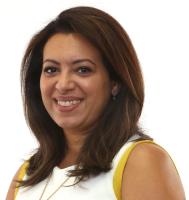
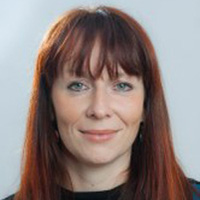
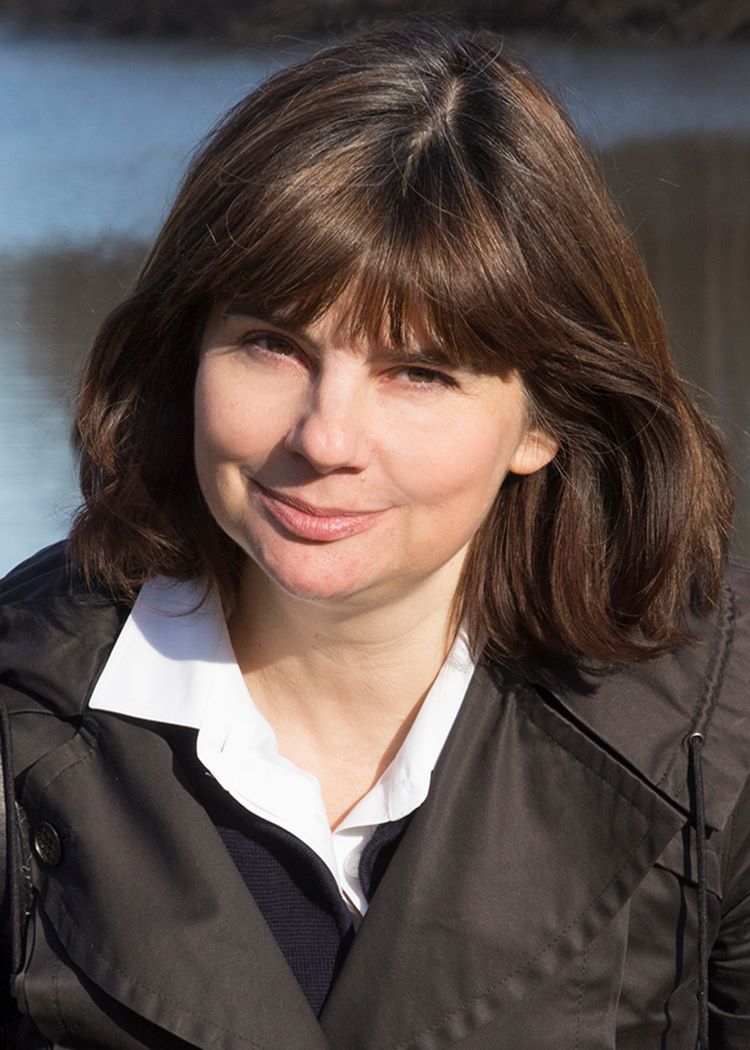
Saussan Khalil is a Senior Lecturer in Arabic at the University of Cambridge's Faculty of Asian and Middle Eastern Studies. She holds a PhD in Arabic sociolinguistics (University of Leeds), an MA in Teaching Arabic as a Foreign Language (Leeds), a postgraduate Certificate in Teaching Arabic (SOAS, London), and a BA in English Literature (Alexandria University). She is a member of the Chartered Institute of Linguists (CIOL), BRISMES, and UNA UK. Her research focuses on Arabic language and sociolinguistics, internet linguistics, and foreign language pedagogy. She teaches Arabic at the undergraduate level and leads Kalamna CIC, a social enterprise offering Arabic classes to children in Cambridge. Key publications include Arabic Writing in the Digital Age (2022) and contributions to International Journal of Bilingual Education and Language Resources and Evaluation . Her work bridges theoretical linguistics with practical teaching innovations, particularly in leveraging digital tools and corpus-based methods. She advises PhD student Silvia Lodi on technology-supported vocabulary teaching in Arabic. Current research explores sociolinguistic shifts in Arabic online communication.
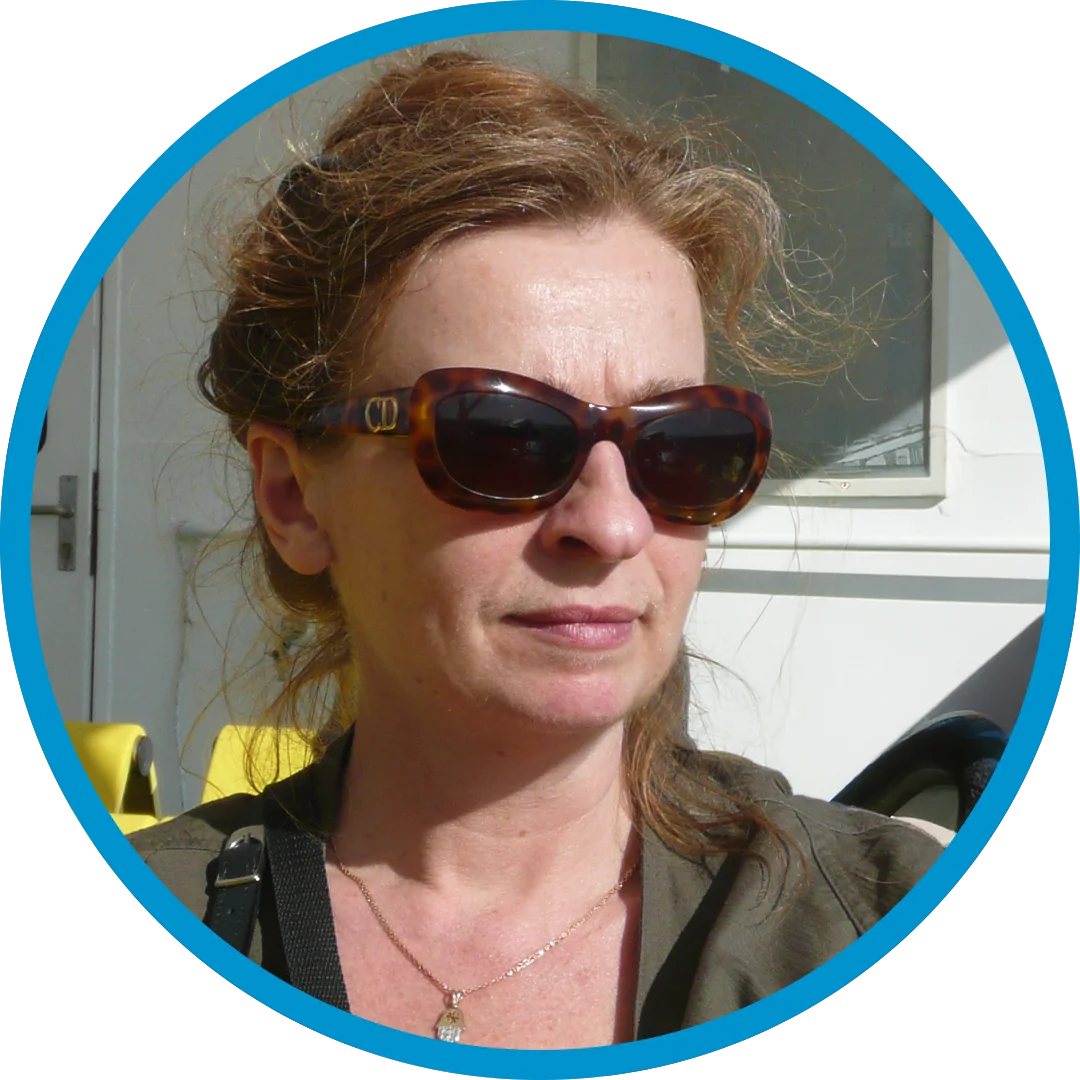
Rosa Pennisi is a researcher and contract faculty member specializing in Arabic language and literature at the Department of Humanities, University of Catania. She holds a PhD in Studies on Asia and Africa from Ca' Foscari University of Venice, co-tutored with Aix-Marseille University, and has conducted postdoctoral research at CNRS/IREMAM. Her academic roles include teaching Modern Standard Arabic, Arabic language, and Arabic literature courses at both undergraduate and graduate levels. PhD in Studies on Asia and Africa, Ca' Foscari University of Venice (2020) Master’s in Literary and Editorial Translation from Arabic, Scuola Superiore per Mediatori Linguistici di Vicenza (2022) Laurea Magistrale in European and Extra-European Languages and Cultures, University of Catania (2014) Laurea Triennale in Comparative Studies, University of Catania (2010) Her research centers on Arabic sociolinguistics, with a focus on diglossia, stylistic and syntactic variation in Moroccan digital press, the emergence of written Dārija, and popular Arabic literature. She investigates how formal and informal Arabic coexist and evolve in contemporary media, particularly through projects like the Zakoura Dictionary and publications such as Goud and Hot Maroc. Her work bridges linguistic analysis with cultural and media studies. The recent articles reflect a consistent research trajectory on mixed Arabic, media linguistics, and sociolinguistic variation in North Africa, with a strong emphasis on Moroccan contexts. Her publications span journals in sociolinguistics, Arabic studies, and literature, often analyzing digital discourse and language ideologies. She has actively participated in numerous national and international conferences (AIDA, ASAI, SESAMO, AIMA) and has organized academic events, including workshops on language and social space in the Arab world and seminars on popular Arabic literature. Her involvement in the ANR-funded LiPoL project highlights her collaborative research in interdisciplinary settings. Rosa Pennisi has supervised student theses on topics such as linguistic practices of Arabic-speaking communities in migration contexts and the representation of Palestinian prisoners in Arabophone media. She has also served as a tutor in Arabic language instruction at both Ca' Foscari and Aix-Marseille University, demonstrating her commitment to pedagogy. She is a member of the International Research Network Afroasiatic Languages and Linguistics and has contributed to editorial and organizational roles in academic events, reflecting her active engagement in the scholarly community.
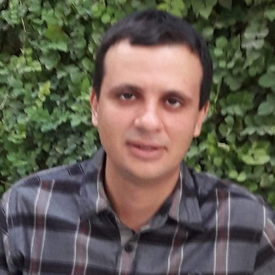
Prof. Saad Mohamed Saad Helal is a faculty member at the Philology and Translation Department of Pablo de Olavide University. His work bridges Arabic and Spanish linguistics, focusing on translation theory and intercultural communication. PhD (1998), Complutense University of Madrid: Contrastive study of the segmental phonemes of Spanish and Arabic Research group: ILA (Applied Linguistics Research) Doctoral Program: Philological, Translation and Cultural Studies His research spans Arabic language studies , applied linguistics , and comparative linguistics , emphasizing the cognitive, social, and cultural dimensions of translation. Key topics include: Deixis and spatial references in Arabic/Spanish Translation of political and social mobilization discourse Diglossia in Arabic literary texts Machine translation of idioms Medieval scientific translation practices Intercultural mediation in public services Email: smohsaa@upo.es
Dr. Abdelaadim Bidaoui is an Associate Professor of Arabic and French in the Department of Modern Languages and Classics at Ball State University’s College of Sciences and Humanities. He earned his Ph.D. in Linguistics from the University of Illinois at Urbana-Champaign. Research Focus: Sociolinguistics, Pragmatics, Second Language Acquisition Teaching Philosophy: Student-centered, communicative approach emphasizing language use and interaction Additional Role: Honors College course developer focusing on Arabic language, culture, and identity Dr. Bidaoui’s research explores discourse markers in Arabic dialects, motivation in second language acquisition, and sociocultural factors in language use. His publications span journals like The International Journal of Arabic Linguistics and edited handbooks such as The Routledge Handbook of Arabic and Identity . Recent projects analyze causality and elaboration markers across Maghrebi and Egyptian Arabic dialects, sociocultural influences on Arabic language perception, and the interplay of innate psychological needs with language learning outcomes. His work bridges theoretical linguistics and pedagogical applications. Dr. Bidaoui’s Honors College course emphasizes cross-cultural awareness by comparing Western and Arab cultural practices. He integrates communicative teaching methods with discovery-based scholarship and service-oriented mentorship.
Professor Jolanta Sujecka is a distinguished scholar at the University of Warsaw's Faculty of Artes Liberales, specializing in Balkan identity studies and Slavic humanities. With a Professor of Humanities title since 2018, she maintains active affiliations with the Institute of Slavic Studies of the Polish Academy of Sciences and serves on multiple academic councils. Her research focuses on Balkan identity formations , particularly examining Jewish identity in Southeastern Europe, memory studies, and the conceptual frameworks of Slavia Orthodoxa. Through extensive fieldwork and archival research, she has pioneered interdisciplinary approaches connecting cultural anthropology, historical linguistics, and comparative literature to unravel complex Balkan identity narratives. Professor Sujecka's scholarly output demonstrates consistent thematic focus on territorial conceptualizations, linguistic identity markers, and memory spaces across the Balkans. Her recent publications reveal growing emphasis on comparative studies of national 'we' constructions and multilingualism dynamics within Southeastern Europe's complex ethno-linguistic landscape. Blaže Koneski Gold Medal - Macedonian Academy of Sciences and Arts (2018) She has successfully supervised seven doctoral students to distinction, three of whom published monographs based on their dissertations. Professor Sujecka regularly organizes international conferences on Balkan Jewish studies and conceptualizations of the Balkans, maintaining strong collaborative networks with institutions across Europe. Her work with the Polish Commission of Balkan Culture and History has significantly shaped contemporary Balkanology discourse.
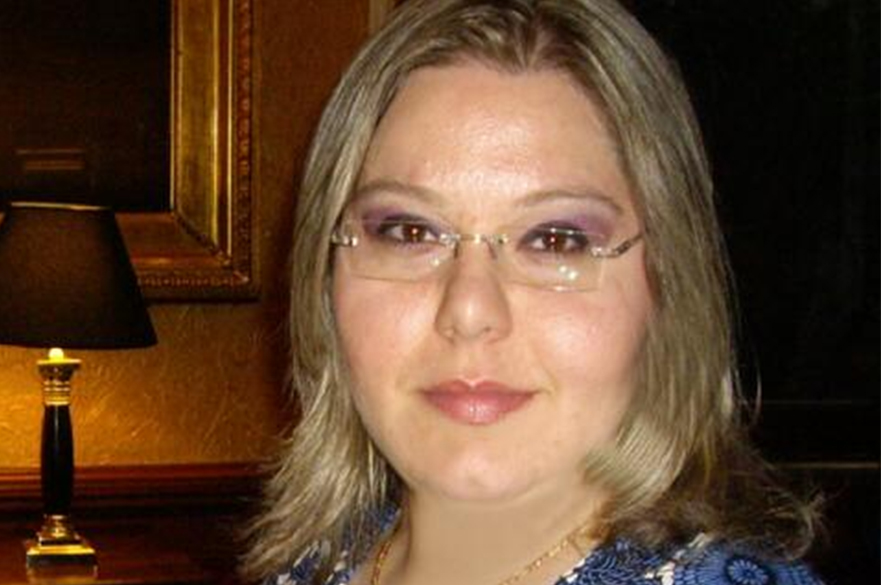
Dr Jumana Ghannam is a Senior Lecturer at the Nottingham Institute of Languages and Intercultural Communication within Nottingham Trent University's School of Social Sciences. With over 25 years of experience in higher education, she specializes in language acquisition, learning strategies, materials design, and teaching practice, integrating linguistic and psychological theories into her pedagogy. Academic qualifications: BA (Hons) in English Language and Literature, MA in ELTD from The University of Nottingham, PhD from Nottingham Trent University Certifications: CELTA (University of Cambridge), University of South Carolina Business Teacher Trainer Her research focuses on enhancing learner autonomy and motivation through grammar strategies, intercultural communication, diglossia, and CEFR framework application in Arabic language teaching. She has led the University Language Programme (ULP) and supervised BA/MA TESOL dissertations. Notable contributions include a British Academy grant (2024-2026) for promoting gender equality in academic publishing and the 2019-2020 FUN project with Nottingham City Council. Recent publications explore autonomous learning, grammar strategies, and inclusive assessment frameworks. Scientific recognition: Fellow of the Higher Education Academy; NTU Vice-Chancellor’s Outstanding Collaboration and Partnership Team Award
Omar Velázquez-Mendoza serves as Professor of Hispanic Linguistics and Associate Chair in the Department of Spanish, Italian & Portuguese at the University of Virginia, where his research centers on the historical evolution of Iberian Romance languages and advanced literacy acquisition in Spanish across first and second language contexts. His expertise particularly encompasses medieval Iberian notarial documents and syntactic transformations from Late Latin through the thirteenth century. His educational foundation includes: Ph.D., Hispanic Linguistics, University of California, Davis Graduate Certificate, Second Language Acquisition, University of California, Davis Diplôme d'Études en Langue Française, French Ministry of Education M.A., Hispanic Linguistics, University of California, Davis B.A., Spanish; French Minor, California State University, Stanislaus Professor Velázquez-Mendoza's research traverses historical linguistics with emphasis on syntactic change in Iberian Romance—including verb-object ordering, direct object marking, and analogy-driven language evolution—while simultaneously investigating advanced literacy development through systemic functional linguistics. His dual focus bridges medieval writing practices and contemporary language acquisition, revealing connections between historical language change and modern literacy challenges. Analysis of his publication trajectory (2025-2010) demonstrates sustained scholarly output in premier venues like Zeitschrift für romanische Philologie and Bulletin of Hispanic Studies, consistently exploring syntactic evolution in Iberian Romance with particular attention to word order patterns, prepositional direct objects, and sociolinguistic contexts of medieval notarial documents. His work frequently integrates historical syntax with sociolinguistic frameworks to examine language change mechanisms. His scientific recognition includes: Excellence in Teaching—Department of Spanish & Portuguese, University of California (Davis) (2010) He maintains substantial research support through University of Virginia funding mechanisms: Research Support in the Arts, Humanities and Social Sciences (awarded 2024, 2023, 2022, 2018, 2015, 2013) Summer Research Stipend (awarded 2021, 2017) Professor Velázquez-Mendoza contributes to major collaborative initiatives as assistant researcher for Madrid's Consejo Superior de Investigaciones Científicas (CSIC) and the US-Mexico bi-national Corpus del Lenguaje Académico en Español (CLAE) project, advancing cross-border research in Spanish linguistics while maintaining regular office hours in New Cabell Hall.
Jacob Høigilt is a Professor of Middle East Studies at the University of Oslo, affiliated with the Center for Islamic and Middle Eastern Studies (IKOS). He holds a PhD in Arabic and Islamic Studies from the University of Oslo (2008). His academic work focuses on language, ideology, and cultural dynamics in the Arab world, particularly in Egypt, Palestine, Lebanon, and Tunisia. Current research includes conspiracy theories in Arabic public discourse and the cultural history of the Arabic language, employing digital methods and plain-text analysis. He has served as a senior researcher at the Peace Research Institute Oslo (PRIO) and Fafo Institute for Applied International Studies. Active in academic administration, he is Deputy Director of the Humit Center for Digital Development in the Humanities. Teaching responsibilities include courses on Middle East theory, Islamist movements, Arabic language, and regional geopolitics. His research themes span media studies, political Islam, humanitarian aid critique, and language policy. Notable works include co-authored books on hybrid media dynamics in Lebanon/Tunisia and a 2024 analysis of Hasan al-Banna's writings. Recent publications address conspiracy terminology evolution and journalistic practices in transitional democracies. Publications highlight interdisciplinary approaches, blending political science with cultural and linguistic analysis. He maintains active research collaborations, most recently with the late Kjetil Selvik (NUPI), and regularly contributes to Nordic Middle East studies journals like Babylon and Journal of Arabic and Islamic Studies .
Akram Zouaoui is Assistant Teaching Professor of Writing Studies, Rhetoric, and Composition at Syracuse University's College of Arts and Sciences. His research examines intercultural communication challenges in technical contexts. Research interests include: Multilingual technical translation Diglossia in Arab world communication Linguistic accessibility in digital spaces Ethical dimensions of professional communication Awarded the Stuart Brown Teaching Excellence Award (2021) and Elizabeth Jean Wichert Scholarship (2020) for his scholarly contributions.
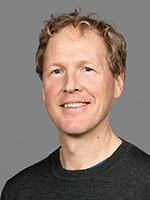
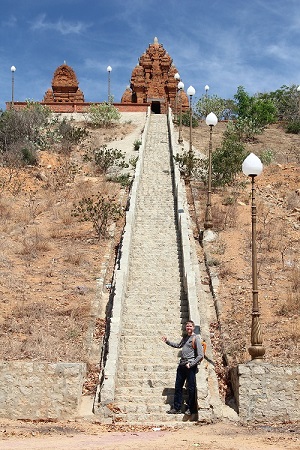
Kenneth Baclawski Jr. is a linguistics researcher at the University of California, Berkeley specializing in syntax-discourse interfaces, language variation, and fieldwork on Eastern Cham (an Austronesian language of Vietnam). His work integrates experimental methods with sociolinguistic analysis across diverse contexts including Internet slang and New England dialectology. Education PhD in Linguistics, University of California, Berkeley (dissertation advised by Peter Jenks) Research Focus His central contribution is the concept of “discourse connectedness” (DC), demonstrating how syntactic movement operations (e.g., in Eastern Cham) encode discourse relations like Explanation. Research spans Eastern Cham documentation (contrastive topic, clause-final particles), language contact effects under Vietnamese bilingualism, and corpus-based analysis of Internet phenomena like the “because-Noun” construction. Dialectology work examines century-long shifts in New England English through historical recordings and contemporary fieldwork. Publication Trends Publications (2012-2018) reveal interdisciplinary integration of theoretical syntax with sociolinguistics and historical linguistics. Key patterns include fieldwork-driven analysis of understudied Southeast Asian languages, corpus investigations of rapid language change (online/offline), and methodological triangulation using experimental, historical, and variationist approaches. Eastern Cham syntax forms the core theoretical contribution, while New England dialectology and Internet linguistics demonstrate applied sociolinguistic frameworks.
Dr Esther-Miriam Wagner is an Affiliate Lecturer in the Faculty of Asian and Middle Eastern Studies at the University of Cambridge and serves as Executive Director of the Woolf Institute. She holds a PhD from Cambridge (2007) on mediaeval Judaeo-Arabic letters and has held roles including Senior Research Fellow at the Woolf Institute and Research Associate at the Taylor-Schechter Genizah Research Unit (part-time). Her research focuses on sociolinguistics, historical linguistics of Judaeo-Arabic and Yiddish, scribal practices, and Jewish-Muslim relations in Egypt and Muslim Spain. She has authored/co-authored works such as A Handbook and Reader of Ottoman Arabic (2021) and Scribes as Agents of Language Change (2013). Her work bridges academic and public engagement, including lectures at the Hay on Wye Festival and contributions to TV/radio programs like BBC3's The Essay . Education: Magistra Artium (Semitic Philology, Islamic Studies, Indo-European Studies) from Friedrich-Schiller-University Jena (2001), PhD (Cambridge, 2007). Professional roles include Editor-in-Chief of A l-Masāq and Vice-President of the Society for the Medieval Mediterranean. Key research areas: Genizah manuscripts, multilingualism in medieval Mediterranean contexts, and language contact phenomena. Research interests emphasize epistolary practices, scribal agency, and linguistic diversity in Jewish communities. She has organized conferences on topics like 'Ottoman Arabic' and 'Merchants of Innovation,' and her work often intersects with interdisciplinary studies of medieval Mediterranean cultures.
Natalia Rakhlin is an Associate Professor in the Department of Linguistics at Wayne State University, within the College of Liberal Arts and Sciences. She holds a Ph.D. in Linguistics from the University of Connecticut and completed postdoctoral training at the Yale Medical School Child Study Center. Her research focuses on child language acquisition, developmental language disorders, and the intersection of language and cognitive development in diverse populations. She investigates linguistic diversity, particularly Arabic language acquisition in heritage bilinguals and contexts of diglossia, as well as language disorders in children from culturally and linguistically marginalized groups. Her work emphasizes practical applications, such as developing reliable assessment tools for language disorders in multilingual populations. She actively contributes to theoretical debates on language structure and its role in cognitive development. Courses taught include child language acquisition, language disorders, and studies on global language systems through courses like Eng 6720 and Lin 5360 . Rakhlin’s research bridges clinical and theoretical linguistics, aiming to improve diagnostic practices for language impairments while advancing understanding of language as a cognitive system. Her studies on Arabic diglossia and diaspora populations highlight the impact of sociolinguistic environments on developmental trajectories.
Delia COTÂRLEA is an Associate Professor at the Department of Literature and Cultural Studies within the Faculty of Letters at the University of Technical Education in Brașov (UNITBV). Her research focuses on contemporary German literature, minority literature, and interdisciplinary cultural studies with a particular emphasis on dictatorship-era literary analysis and Romanian cultural spaces. She holds a prominent position in German-Romanian literary scholarship with monographs and edited volumes exploring transnational cultural themes. Her academic work bridges literary analysis with sociocultural contexts, examining topics like gender representation in educational materials, language contact phenomena in multilingual environments, and the role of physical spaces in cultural identity formation. Recent publications investigate Carpathian mountain regions' sociocultural significance and historical leisure spaces. COTÂRLEA's research outputs span monographs, edited volumes, and peer-reviewed journal articles demonstrating expertise in both traditional literary criticism and modern interdisciplinary methodologies. She contributes actively to academic discourse through collaborative research projects and international conference participation. No specific grants or awards are listed in the provided materials.
Immaculate TEMPEST is a Full Professor of Sociolinguistics of Italian and Italian Linguistics at the University of Salento, affiliated with the Department of Humanities. She holds a permanent academic position since 2001 and has served in multiple leadership roles including Teaching Delegate for the Department of Humanistic Studies (2021–present) and President Commissioner for the ASN (2019–2021). Her research focuses on sociolinguistics, dialectology, and linguistic education, with notable contributions to Italian language variation, emotion in discourse, and pandemic-era healthcare communication. Prof. Tempesta has authored over 200 publications, including monographs such as Oltre la lingua. Parole nuove nell'italiano contemporaneo (2021) and Formare a scuola (2020). She actively participates in international collaborations, delivering lectures at universities in Berlin, Stockholm, Paris, and beyond. Awards include the Cassano Prize (2007) and Miggiano Prize (2010) for linguistic research. Her academic service includes roles in university governance, such as membership in the Academic Senate (2012–2020) and leadership in interdisciplinary initiatives like the GEO Center for Youth Studies. She advises Erasmus students and contributes to editorial boards of journals like Cross-Media Languages .
Emanuele Miola is an Associate Professor at the University of Bologna, affiliated with the Department of Classical Philology and Italian Studies. He directs the Second Cycle Degree in Data, Methods, and Theoretical Models for Linguistics. His research focuses on historical and general linguistics, sociolinguistics, and the study of Italian dialects, particularly Piedmontese and Lombard. He has published widely on topics such as grammaticalization processes, language policy, orthography of non-standard varieties, and digital linguistics. His academic work integrates theoretical linguistics with empirical research on language variation, including studies of Italian dialects' morphosyntax, sociolinguistic dynamics, and language contact phenomena. He has contributed to the documentation of minority languages and the analysis of language use in digital environments, such as Wikipedia and social media platforms. Recent research trends include investigations into the restandardization of Italian, the grammaticalization of connectives, and the sociolinguistic implications of online language practices. Miola's work bridges traditional linguistic analysis with modern digital methodologies, emphasizing the role of technology in language documentation and education. He is actively involved in academic outreach through initiatives like the Piedmontese language laboratory at the University of Turin and contributes to public discourse on language policy and heritage language preservation. His teaching focuses on advanced linguistic theory and applied methodologies for analyzing language variation.