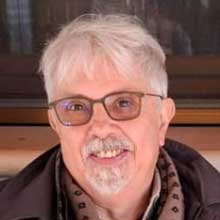
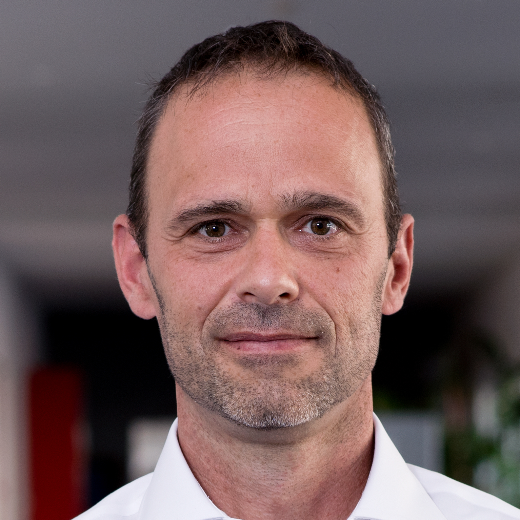
Vittorio Solina is a Researcher at the Department of Mechanical, Energy and Management Engineering (DIMEG) of the University of Calabria, specializing in industrial systems simulation and digital twin technologies. His work spans Industry 4.0/5.0 applications, supply chain optimization, and human-robot collaboration. Affiliation: University of Calabria Academic Role: Researcher (Legge 240/10) Research Focus: Digital twins, simulation modeling, sustainable manufacturing His research emphasizes advanced simulation tools for decision support, including applications in Industry 4.0 , Smart Manufacturing , and Agri-Food Supply Chains . Recent work explores adaptive simulation optimization for Industry 5.0 and 5G-enabled robotics. Key publication trends include: (1) Digital twin integration for supply chain resilience (2024-2025), (2) Simulation automation methodologies (2025), and (3) Human-robot collaboration frameworks (2024).
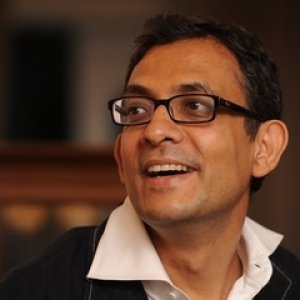
Abhijit Banerjee is the Ford Foundation International Professor of Economics at MIT and Director of the Abdul Latif Jameel Poverty Action Lab (J-PAL). A 2019 Nobel laureate in Economic Sciences, his research focuses on development economics, political economy, and poverty alleviation. He co-authored influential books like Poor Economics and Good Economics for Hard Times , emphasizing evidence-based policies and randomized controlled trials. Banerjee’s work addresses global challenges such as education, health, and social welfare, with notable contributions to microfinance, public health interventions, and anti-poverty programs. He holds leadership roles in global initiatives like the Global Education Evidence Advisory Panel and has advised governments worldwide. His research spans topics from police resource allocation in India to the impact of information during crises like demonetization and the pandemic. Education: Bachelor’s in Statistics, Presidency College, Kolkata M.A. in Economics, Jawaharlal Nehru University PhD in Economics, Harvard University Key Contributions: Co-founder of J-PAL, promoting evidence-based poverty reduction strategies. Pioneer in using randomized controlled trials (RCTs) for policy evaluation. Research on microfinance, education reforms, and health interventions in developing countries. Awards: Nobel Prize in Economics (2019), Infosys Prize in Social Sciences (2009), Member of the National Academy of Sciences (2020). Grants/Advisory Roles: Collaborations with institutions like the World Bank, UN, and governments on poverty, health, and education policies. Labs/Teams: J-PAL global network, Abdul Latif Jameel Poverty Action Lab.
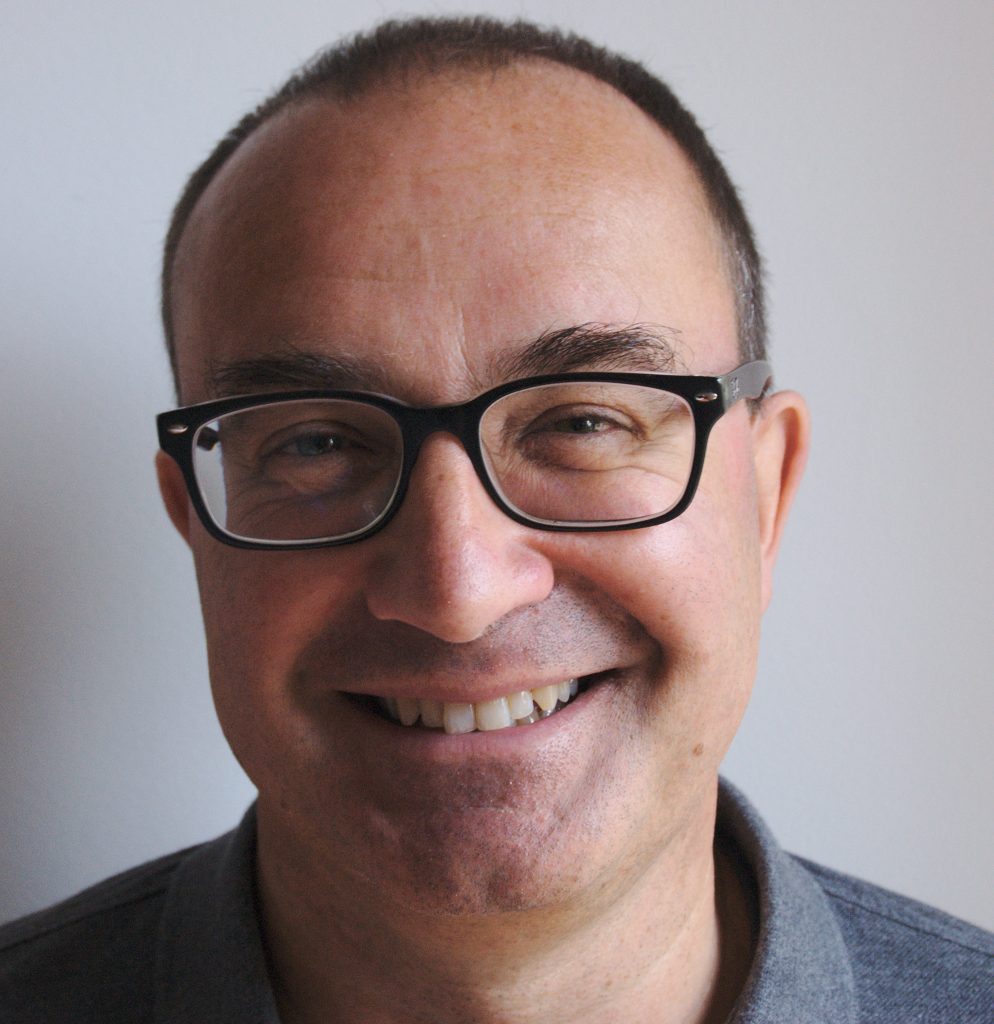
Federico ZANETTIN is a Full Professor in the Department of Comparative Linguistic and Cultural Studies at Ca' Foscari University of Venice. His research focuses on translation studies with particular emphasis on corpus linguistics, graphic narrative translation, and journalistic translation. He maintains an active presence in the academic community through editorial work and research collaborations. Professor ZANETTIN's research interests span multiple areas of translation studies. He is particularly known for his work on corpus linguistics and its applications to translation analysis, with a focus on creating and using linguistic databases. His research on the translation of graphic narratives examines the verbal and visual aspects of translating comics and graphic novels across cultures. Additionally, he investigates journalistic translation , analyzing how information is translated and disseminated across media platforms. His scholarly work demonstrates consistent productivity, with numerous publications that explore the intersection of translation, culture, and media. Professor ZANETTIN's research shows particular strength in analyzing adaptation processes across linguistic, cultural, and modal boundaries, both synchronically and diachronically. Professor ZANETTIN serves on several important editorial boards: Co-editor of inTRAlinea Member of the international advisory board for The Translator Member of the international advisory board for Translang Member of the international advisory board for Entreculturas Member of the publications committee for Transletters. International Journal of Translators and Interpreters Member of the scientific committee for the Book series Interactio He is also frequently called upon as a referee for prestigious research projects, including those funded by The British Academy (UK), MIUR (Ministry of Education, University and Research), Italy, CSIC (Consejo Superior de Investigaciones Científicas), Spain, NRC (National Research Council), Canada, National and Kapodistrian University of Athens, Greece, and SNSF (Swiss National Science Foundation). Professor ZANETTIN teaches courses in English language and translation at both undergraduate and graduate levels, focusing on European, American, and postcolonial languages and literatures. His teaching reflects his research expertise in translation studies and cross-cultural communication.
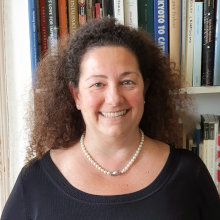
Dr. Silvia VESCO is an Associate Professor in the Department of Asian and North African Studies at Ca' Foscari University of Venice, where she specializes in Japanese art history, particularly Edo-period visual culture, ukiyo-e prints, illustrated books, and the works of Katsushika Hokusai. She is actively involved in research, teaching, and cultural curation, with a strong focus on Italian collections of Japanese art and cross-cultural artistic dialogues between Japan and the West. Education: PhD in History of Indian and East Asian Art, Ca' Foscari University of Venice (1999) Master in Art & Archaeology, SOAS, University of London (1995) Degree in Oriental Languages and Literatures, University of Venice (1993, with honors) Her research interests encompass Japanese aesthetics, museum studies, and the global reception of Japanese art. She has led major digitization projects for the Museum of Oriental Art in Venice and contributed to the development of its new museological framework. Her scholarly work reveals a consistent focus on Hokusai, Edo-period print culture, and the philosophical dimensions of Japanese visual forms. The recent publications highlight a deep engagement with Hokusai’s pedagogical works, the aesthetics of emptiness, and contemporary reflections on nature in post-Fukushima Japan. Her interdisciplinary approach bridges art history, cultural studies, and museum practice. Scientific Recognition: Finalist, Premio Nazionale per la divulgazione scientifica 'Giancarlo Dosi' (2020) Japan Foundation Fellowship (1997) Postgraduate scholarship from the University of Venice (1994) She has supervised numerous MA theses, served on PhD committees, and mentored students in Japanese art history. Her research has been supported by grants from the Japan Foundation and institutional collaborations with museums and cultural centers. She is a referee for VQR, Edizioni Ca' Foscari, and international journals, and serves on the scientific committees of several academic and museum publications. Labs and Teams: Scientific Committee, Museum of Oriental Art, Ca' Pesaro, Venice Scientific Committee, Edizioni Ca' Foscari Coordinator, Scientific Committee for Ca' Foscari Japanese Studies, Arts and Literature Member of the editorial board of 'Venezia Arti' and 'Quaderni del Polo museale del Veneto'
Daniela Iorio is an Associate Professor at the Department of Economics, University of Bologna, and holds a part-time professorship at the European University Institute’s School of Transnational Governance. She specializes in Political Economy, Health Economics, and Public Economics. Her work addresses topics like voting behavior, eating disorders, reproductive health, and parental investments. She earned a Ph.D. in Economics from the University of Pennsylvania and has held positions at institutions including USC, Universitat Autònoma de Barcelona, and the Barcelona Graduate School of Economics. Her research focuses on health policy, behavioral economics, and political institutions. Notable contributions include analyzing the link between eating disorders and addictive behaviors, evaluating IVF success disparities, and developing parenting measurement tools through digital interventions. She has been awarded the 2016 Oliver E. Williamson Prize and the Rita Levi Montalcini grant. Iorio teaches advanced courses on political economy and health economics at the PhD and master’s levels. She directs the Health Economics, Management and Policy master’s program at Bologna and has advised over a dozen graduate students. Her grants include a €758k MIUR project on child development and parental engagement. She serves as an Associate Editor for the European Economic Review and referees for top journals like the American Economic Review .
Michaela Bürger-Koftis serves as Associate Professor in the Department of Modern Languages and Cultures at the University of Genoa's School of Humanities. Her teaching portfolio includes advanced courses such as German Literature and Culture III , German Linguistics (LM) , and Cultures of German-speaking Countries across undergraduate and master's programs focused on teaching, publishing, and intercultural communication. Her research investigates polyphonic structures in multilingual literature, with emphasis on German-Russian linguistic intersections and autobiographical narratives. Key projects explore lyrical diary forms and creative writing through the lens of polyphony, examining how multilingual expression shapes narrative identity and literary innovation in contemporary works. Recent publications demonstrate consistent focus on the Polyphony research initiative, revealing evolving methodologies in multilingual creativity and writing. This work establishes frameworks for analyzing cross-linguistic literary production while documenting the project's development from 2018-2023. No scientific awards are documented in available sources. While specific student advisees remain unlisted, Bürger-Koftis contributes to academic governance as a member of the School of Humanities Library Board. Her collaborative research with institutions like Catania University demonstrates institutional partnership development within multilingual literary studies. The Polyphony project functions as an interdisciplinary research hub with dedicated web infrastructure, facilitating scholarly exchange on multilingual writing practices and serving as a model for digital humanities collaboration in literary studies.
Michele Zorzi is a Professor of Telecommunications at the School of Engineering, University of Padova, Italy, where he has held a faculty position since 2003. He leads the SIGNET (Signal processing and Networking) Research Group, focusing on cutting-edge wireless networking challenges including mmWave communications and underwater networks. His extensive publication record exceeds 600 papers in top-tier journals and conferences, reflecting significant contributions to the field through both theoretical and experimental work. He received his Laurea Degree (1990) and Ph.D. (1994) in Electrical Engineering from the University of Padova. Prior academic appointments include Politecnico di Milano (1993-1996), University of California San Diego (1995-1998), and University of Ferrara (1998-2003), where he progressed from Associate Professor to full Professor. His educational trajectory demonstrates deep roots in Italian academia with international exposure. Professor Zorzi's research spans wireless communications and networking, with current emphases on mmWave networking for vehicular systems, underwater acoustic/optical communications, non-terrestrial networks, and AI-driven networking solutions. His group conducts experimental validations including at-sea trials for underwater systems and testbeds for vehicular networks. Key projects include PRATA for predictive QoS in autonomous driving and IoT-based environmental monitoring of the Venice Lagoon, demonstrating practical applications of theoretical work. Analysis of his 2022-2025 publications reveals strong trends in applying artificial intelligence to networking challenges across diverse environments. There is significant emphasis on vehicular networks (predictive QoS, teleoperated driving), underwater systems (acoustic/optical communications, AUV swarms), and satellite networks (Starlink integration, NTN security). Experimental validation in real-world scenarios like the Venice Lagoon monitoring project and underwater sea trials characterizes his applied research approach. His scientific accolades include: IEEE Fellow (2007) IEEE Communications Society Best Tutorial Paper Award (2008, 2019) Stephen O. Rice Best Paper Award (2018) Multiple best paper awards at IEEE conferences (2005-2020) As principal investigator for numerous European and US research projects plus 20+ industry-funded initiatives, Professor Zorzi has mentored over 35 PhD students and post-docs. Graduates now hold prominent positions at institutions including Stanford, UCSD, CTTC, and Huawei. His SIGNET group maintains active international collaborations and contributes to open-source networking tools via GitHub, demonstrating commitment to community engagement. The SIGNET Research Group, housed within the Department of Information Engineering, operates specialized experimental facilities for mmWave and underwater communications. Current initiatives include AI-based predictive QoS frameworks for vehicular networks, underwater optical communication systems using ultraviolet light, and large-scale IoT deployments for environmental monitoring. The group's GitHub presence indicates strong open-science practices, while recent sea trials confirm hands-on experimental capabilities beyond theoretical work.
Matteo Sonza Reorda is a Full Professor at the Polytechnic University of Turin, affiliated with the Department of Automatic Control and Computer Science (DAUIN). He holds roles such as Partnership Agreement Coordinator with SMAT and has served as Vice-Rector for Research (2021–2024). His research focuses on fault tolerance, hardware reliability, and AI acceleration, with contributions to GPU/CNN reliability, self-test libraries, and defect-oriented testing. Education: M.S. in Electronics Engineering, Politecnico di Torino (1986) Ph.D. in Computer Engineering, Politecnico di Torino (1990) Research Interests: His work spans automatic test equipment, circuit reliability, GPU fault tolerance, neural network hardening, and embedded systems safety . He leads the Electronic CAD & Reliability Group and collaborates with institutions like the ISI Foundation and the National Research Council (CNR). Publications & Impact: With over 180 publications, his recent work emphasizes AI accelerator reliability, fault injection techniques, and safety-critical systems. Key trends include GPU resilience for CNNs, self-test library optimization, and radiation fault modeling in neural networks. Awards & Recognition: IEEE Fellow (2016–) Multiple best-paper awards at IEEE conferences (DDECS, DATE, etc.) Grants & Collaborations: Coordinator of EU projects (RESCUE, TUTORIAL) Partnerships with EDF, Marelli Europe, and SMAT Lead on National HPC/Quantum Computing Spoke 1 (2022–2025) Labs/Teams: Leads the CAD Group and collaborates with the French-Italian LIA LAFISI lab on hardware-software integration.
Francesca Simeoni is Associate Professor of Management at the University of Verona , Department of Business Administration, a position she has held since 2005 after serving as Assistant Professor. She earned her Ph.D. from the University of Naples “Parthenope” in 2003. Her research agenda centres on sustainable management practices , tourism destination governance , SME competitiveness , fair-trade business models , and service quality in public utilities . She leads or participates in nationally funded projects such as “Measuring the economic impact of cultural events: Tocatì – International Festival of Street Games” and “Graphic category in Confartigianato – Verona: profile and needs of services.” Since 2017 she is scientific coordinator of the Altromercato Campus public-engagement event and lecturer in the Kids University workshop “From the idea, passing through the project, to the enterprise.” She teaches extensively across bachelor’s and master’s programmes in tourism, business and languages, delivering courses including Principles of Management and Digital and Interactive Marketing . Francesca serves on multiple scientific committees for professional-development masters and specialisation courses within the university and is a member of the Department Board and the School of Economics and Management Council.
Andrea Bonfiglio is an Associate Professor at the Department of Naval, Electrical, Electronic and Telecommunication Engineering (DITEN) within the School of Engineering at the University of Genoa. His work focuses on power systems, smart grids, and renewable energy integration with a particular emphasis on innovative control strategies and energy storage solutions. Teaching areas: Electrical Systems, Industrial Measurements, Energy Security Key research themes: Smart distribution networks, synthetic inertia, microgrid control, vehicle-to-grid technologies, battery energy storage Recent work explores virtual energy partitioning, load flow optimization, and inertia allocation in transmission networks Contact: a.bonfiglio@unige.it His publications highlight advanced control methodologies using machine learning and sliding mode control for both transmission and distribution networks, with applications to renewable integration and grid stability challenges.
Francesco Pilati is an Associate Professor at the Department of Industrial Engineering, University of Trento, where he serves as local coordinator for the scientific field ING-IND/17 (Industrial Plants and Logistic Systems). He chairs the research group on Industrial Plants, Production Systems, and Logistics, and teaches courses in Industrial Plants and Design of Digital Production and Assembly Systems. As coordinator of the Master's program in Management and Industrial Systems Engineering and University Coordinator for the EIT double degree in Zero-Defect Manufacture, Pilati bridges academic leadership with advanced manufacturing research. He has also served as Invited Lecturer at universities in Vienna and Göttingen. His research focuses on integrating environmental sustainability with technical-economic criteria through multi-objective optimization and impact assessment. Key areas include: Distribution networks and warehousing systems Manufacturing and assembly line design Hybrid energy production systems Digitization of manual production processes using depth cameras Recent publications highlight applications of Industry 4.0 technologies to pandemic safety, logistics optimization, and smart manufacturing. Pilati has received significant recognition including the Philip Morris Italia Empowering Research Award (2016) and Autostrade per l'Italia academic recognition. His editorial contributions include guest editing special issues on Digital Twins and Smart Factories in Q1 journals.
Giuseppe Carlo Marano is a Full Professor at the Department of Structural, Building and Geotechnical Engineering at Politecnico di Torino. He is also a component of the SISCON Interdepartmental Center for Infrastructure Safety. With expertise in civil and structural engineering, his work focuses on machine learning applications, seismic risk reduction, and sustainable structural optimization. Education Graduated cum laude in Structural Engineering from Polytechnic University of Bari PhD in Structural Engineering from University of Florence (2000) Research Interests Marano's research spans structural optimization, seismic engineering, and machine learning applications in civil infrastructure. He develops advanced computational models for: Seismic retrofitting of existing structures Optimization of steel and masonry structures Recycled materials in concrete production AI-driven structural health monitoring Multiobjective design methodologies Publication Trends His recent work emphasizes: Machine learning for concrete mix design and damage assessment Optimization of gridshells and arch structures Seismic isolation systems and vibration control Sustainable construction practices with recycled materials Multiobjective genetic algorithms for structural design Scientific Recognitions National Scientific Qualification - First Band (2013, MIUR Italy) Certificate of Appreciation for Outstanding Lecture (2012, China) Academic Contributions As an educator, he teaches: Consolidamento Strutturale (Structural Consolidation) Dinamica delle Vibrazioni Random (Random Vibration Dynamics) Progettazione Generativa (Generative Design) He also leads Challenge@PoliTo initiatives and contributes to national infrastructure safety regulations. Research Projects ADAPT4CE - Adaptive Digital Systems for Circular Economy (2025-2028) AI-ENVISERS - AI for Seismic Retrofit Environmental Impact (2023-2025) ADDOPTML - Additive Manufacturing Optimization (2021-2025)
Maria Eugenia Bartoloni is a Full Professor of European Union Law at Sapienza University of Rome, Department of Legal and Economic Studies. She is also a member of the doctoral program faculty for "Internationalization of Legal Systems and Fundamental Rights" at Università della Campania "L. Vanvitelli" and previously served as its Master's Degree Course President. She coordinates the journal Il Diritto dell’Unione europea and serves on editorial boards for multiple EU law publications. Education: PhD in International and EU Law from Macerata University (2004), Law Degree (1999) from Macerata University. Research Interests: Focus on EU constitutional law, international legal norms coordination, fundamental rights application, judicial protection limits, and EU foreign/security policy. Her recent work explores the EU's unique legal frameworks for maritime concessions, the Charter of Fundamental Rights' scope, and the evolving legal dimensions of EU international relations. She has participated in numerous national and international research projects. Scientific Awards Marie Curie Fellow (2015) Principal Investigator for SELECT Project – "StrEnghten Lay and honorary judges European CompeTencies" (JUST-AG-2020 / JUST-JTRA-EJTR-AG-2020)
Rita Cucchiara is a Full Professor at the Department of Engineering 'Enzo Ferrari' of the University of Modena and Reggio Emilia. She leads the AImageLab research laboratory, part of the Artificial Intelligence Research and Innovation Center (AIRI) in Modena. Her research focuses on Computer Vision, Pattern Recognition, Machine Learning, and Multimedia, with applications in video surveillance, medical imaging, human-centered AI, and generative models. She is actively involved in interdisciplinary projects like ELIAS (European Lighthouse for AI Sustainability) and ELSA (European Lighthouse on Secure AI). Her recent roles include being elected Rector of the University of Modena and Reggio Emilia in 2025. She has organized and participated in major AI events, including workshops at NeurIPS, CVPR, and ECCV, and has contributed to advancements in multimodal models, deepfake detection, and trustworthy AI. Education details are not explicitly provided, but her extensive academic and research experience at the University of Modena underscores her expertise. She collaborates with institutions like NVIDIA, CINECA, and industry partners such as Digital Design and NVIDIA's AI Technology Center. AImageLab's projects include developing systems for medical imaging, ethical AI, and generative adversarial networks (GANs) for design surfaces. She co-organizes initiatives like the ELLIS Summer School on Large-Scale AI and contributes to policy discussions on AI ethics and societal impact. Her work spans from foundational research (e.g., vision transformers, continual learning) to applied projects (e.g., DDGan system for surface printing). Key grants and collaborations include the FAIR project and PNRR-M4C2 initiatives. She advises students and researchers in AI, with 7 PhD positions funded under national programs. Her leadership roles in AIRI and AImageLab highlight her commitment to bridging academia and industry, fostering innovation in AI-driven solutions for sustainability and healthcare.
Oswald Lanz is a tenured full professor at the Faculty of Engineering of the Free University of Bozen-Bolzano , leading the Visual Computing Lab . He holds a Ph.D. in Computer Science and a Mathematics degree from the University of Trento. Prior to his current role, he was a researcher and head of research at FBK Trento. He is an endowed professor collaborating with Covision Lab , an AI hub in Bressanone, and coordinates the board of professors for the PhD in Computer Science program since 2025. His research focuses on Computer Vision, Deep Learning, and Video Analytics , with applications in sports technology, medical imaging, and industrial automation. Key achievements include the Amazon AWS Machine Learning Research Award (2020) , ACM Multimedia Best Paper (2015) , and Best Student Paper at ICIAP (2007) . He co-organized the ELLIS-VISMAC Winter School (2025) and chaired ICIAP 2019 . His work spans novel view synthesis, action recognition, and anomaly detection, supported by patents in video tracking and detection. He teaches courses like Deep Learning and Artificial Intelligence in undergraduate and graduate programs. Recent projects such as 5VREAL integrate 5G, edge computing, and AI for sports analysis. His collaborations bridge academia and industry, exemplified by his role in Covision Lab and multidisciplinary initiatives like DSS4LCO for food supply chains. Lanz’s publications emphasize spatiotemporal modeling, neural architecture search, and hybrid machine vision systems.