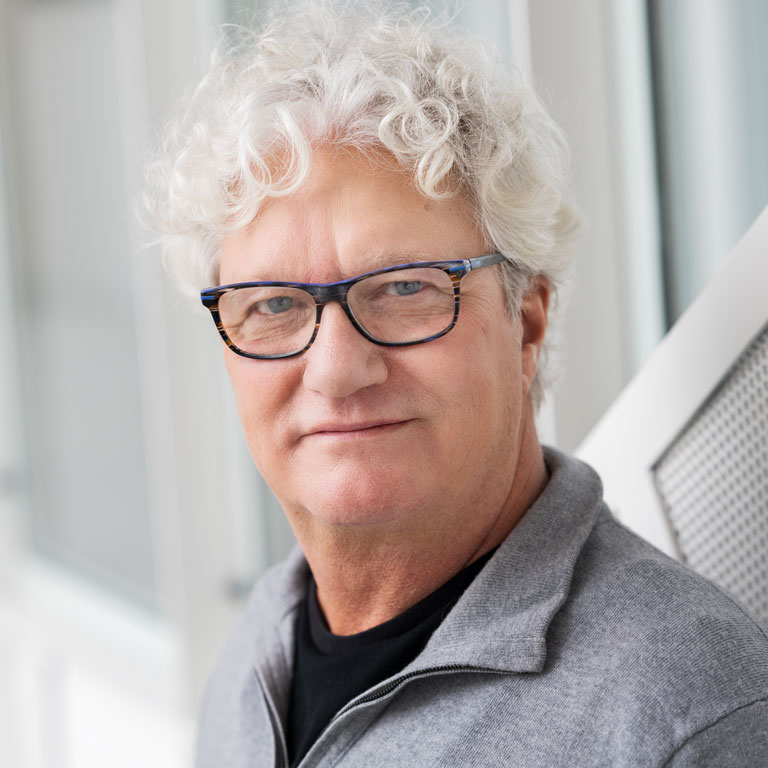
Christian Lévesque is a Professor at the Department of Human Resources Management, HEC Montréal, and Co-director of the Interuniversity Research Centre on Globalization and Work (CRIMT). His expertise spans Labour Relations, Conflict Management, Unionism, and Public Policies in Industrial Relations. He holds a Master’s and Ph.D. from Université de Montréal and Laval University respectively. Research interests focus on digital transformation in work environments, regional governance dynamics, and union strategies. Recent work examines unions’ use of digital technologies, algorithmic management, and cross-border labour policies. He has advised one PhD (Sara Perez-Lauzon) and one MSc student (Jessica Dumouchel). Teaching includes courses on industrial relations theories and comparative HR systems. His publications reflect interdisciplinary engagement with AI ethics in workplaces, regional industrial clusters, and institutional experimentation in global labour contexts. Prominent collaborations include co-editing Trade Unions and Regions: Better Work, Experimentation, and Regional Governance (2022). Current research explores better work frameworks via human-centered AI and regional governance innovations.
Dr. Chutima Boonthum-Denecke is a Professor in the Department of Computer Science at Hampton University's School of Science. She joined Hampton University in 2006 as an Assistant Professor and now serves as Director of the Information Assurance and Cyber Security Center (IAC@HU). She leads the NSF CyberCorps Scholarship for Service program and has contributed to NSF initiatives like ARTSI and STARS Alliances. Her educational background includes a Ph.D. in Computer Science from Old Dominion University (2007), an MS in Applied Computer Science from Illinois State University (2000), and a BS in Computer Science from Srinakharinwirot University (1997). Dr. Boonthum-Denecke's research integrates artificial intelligence, natural language processing, and cybersecurity. Key interests include: Developing intelligent tutoring systems and educational games Secure coding practices for software engineering NLP applications in information retrieval and assessment tools Cyber-physical security for IoT and robotics Her recent publications (2016-2021) focus on machine learning applications in cybersecurity, including sentiment analysis for threat detection, blockchain-enhanced IoT security, and vulnerability assessments of emerging technologies. Collaborative work with students frequently addresses privacy ethics in AI assistants, RFID implants, and cloud systems. She mentors students through the IAC@HU lab, resulting in award-winning conference presentations on cybersecurity topics. As Principal Investigator of NSF CyberCorps, she oversees scholarship programs that bridge academic research with national security needs.
Mustafa A. Mustafa is a Senior Lecturer (Associate Professor) in the Department of Computer Science at The University of Manchester, where he leads the Trusted Digital Systems Cluster as part of the university-wide Centre for Digital Trust and Society. His academic journey spans prestigious institutions including The University of Manchester, where he completed his PhD, and KU Leuven in Belgium, where he served as a post-doctoral research fellow. Dr. Mustafa earned his educational qualifications through an impressive academic path: a B.Sc. in communications from the Technical University of Varna, Bulgaria (2007), an M.Sc. in communications and signal processing from Newcastle University, UK (2010), and a Ph.D. in computer science from The University of Manchester, UK (2015). His doctoral research focused on "Smart Grid Security: Protecting Users' Privacy in Smart Grid Applications," laying the foundation for his subsequent research career. Dr. Mustafa's research expertise centers on information security, data privacy, and applied cryptography with particular focus on smart grid systems, smart city applications, e-health, and IoT. His work addresses critical challenges in securing peer-to-peer electricity trading markets, smart metering infrastructure, electric vehicle charging systems, and health data management. He has developed innovative solutions for keyless car sharing systems, frictionless authentication mechanisms, and privacy-preserving protocols for data collection and distribution. His scholarly contributions demonstrate a consistent trajectory toward increasingly sophisticated privacy-preserving techniques applied across multiple domains. Recent work shows a growing integration of artificial intelligence and machine learning approaches with traditional cryptographic methods, particularly in federated learning systems and large language model verification. His research bridges theoretical cryptography with practical implementations in energy systems and healthcare applications. Dr. Mustafa's scientific achievements have been recognized with several prestigious awards: Winner of the Student Video Competition at IEEE SmartGridComm 2017 for "Secure and Privacy-friendly Local Electricity Trading" Best Paper Award at SECURWARE 2017 Distinguished Achievement Award as Postgraduate Research Student of the Year nominee by the School of Computer Science of The University of Manchester (2015) Dame Kathleen Ollerenshaw Research Fellowship (2018-2023) As an academic supervisor, Dr. Mustafa has mentored numerous graduate students through their PhD and Master's research, with a particular focus on privacy and security challenges in emerging technologies. His current supervision portfolio includes research on privacy-friendly multi-agent systems for smart grids, security for IoT in e-health, vulnerability detection in IoT cryptography, and bot detection systems. He has secured significant research funding through multiple competitive grants including EnnCore: End-to-End Conceptual Guarding of Neural Architectures (EPSRC, 2020-2024), SCorCH: Secure Code for Capability Hardware (EPSRC, 2019-2023), and SNIPPET: Secure and Privacy-friendly Peer-to-peer Electricity Trading (FWO-SBO project, 2019-2023). Dr. Mustafa leads the Trusted Digital Systems Cluster within the Centre for Digital Trust and Society at The University of Manchester. His research group comprises PhD students, postdoctoral researchers, and collaborators working on cutting-edge security and privacy solutions. The team maintains strong international collaborations, particularly with KU Leuven in Belgium, and contributes to standards development as evidenced by Dr. Mustafa's role as an expert in the IEC/SYC/WG 3 "IEC Smart Energy Roadmap."
Rameshwar Dubey is a Full Professor of Operations Management at Montpellier Business School (France), Visiting Professor at Liverpool John Moores University (UK), and Adjunct Professor at Indian Institute of Management Jammu (India). He holds editorial roles across multiple journals, including Senior Associate Editor of the International Journal of Logistics Management and Associate Editorships at Journal of Humanitarian Logistics & Supply Chain Management, International Journal of Information Management, and others. His research focuses on supply chain resilience, humanitarian operations, sustainable practices, and digital transformation in crisis scenarios. He has been recognized as a top 1% cited scholar in Web of Science and among the top 200 in SCOPUS for Business Management and Operations Research. Dr. Dubey’s academic contributions include over 75 journal reviews, supervision of seven PhD and five DBA students, and examination of 37 theses globally. His work emphasizes applications in healthcare logistics, disaster relief, and emerging technologies like AI and IoT in supply chains. He has taught at institutions including the University of Leeds, UNESP Brazil, and Southern University of Science and Technology China. Awards: Outstanding Reviewer Awards (IJPE, JBR, JCP), Best Reviewer Awards (JHLSCM 2014/2016, MD 2018), and a 2019 Lifetime Achievement Title for contributions to supply chain science. Teaching: Logistics, Operations Management, Analytics, Research Methodology, and Data Science. Labs/Teams: Editorial leadership in over seven international journals, active participation in global SCOR and B2B risk frameworks.
Ivon Arroyo is a Professor in the Department of Teacher Education & Curriculum Studies (TECS) at the University of Massachusetts Amherst. Her research focuses on integrating novel technologies into math and computational thinking education, emphasizing affective and metacognitive states. She develops intelligent tutoring systems, such as COVES, which personalize learning in real-time and utilize facial expression recognition to enhance engagement. Her work on WearableLearning explores embodied, physically active multiplayer games for K-12 classrooms, leveraging mobile devices and wearable technologies to create immersive learning experiences. Dr. Arroyo holds an Ed.D. (2003) and M.S. (2000) from UMass Amherst and a B.S. from Universidad Blas Pascal in Argentina (1995). She has been recognized with multiple awards, including Best Paper Awards at the 2009 International Conference on Artificial Intelligence in Education and the 2010 Educational Data Mining Conference, a Fulbright Fellowship (1996), and a 1994 undergraduate prize for computer vision research. Her research interests span interdisciplinary areas such as Learning Sciences , Computer Science , Data Science , and Psychology . She prioritizes culturally responsive pedagogical agents and cross-cultural studies in educational technology, particularly in Argentina, India, and the U.S. Her projects often address challenges in developing countries, including localization of tutoring systems to Spanish. Advising and grants are central to her work, with grants like the NSF CAREER Award (2020) supporting embodied math classrooms. She collaborates on teacher dashboard frameworks and explores ethical AI integration in education. Her labs focus on creating tools that merge computational innovation with theoretical learning science principles, emphasizing real-world applications like the WearableLearning Cloud Platform.
Mark Thouin is a Clinical Professor of Information Systems and Associate Dean for Graduate Programs - Academic Operations at The University of Texas at Dallas (UT Dallas), Jindal School of Management. He holds an MBA from George Mason University and a PhD from Texas Tech University. His research focuses on IT business value, experiential learning, and postsecondary leadership, with notable contributions to information systems curriculum development and agile methodologies. He teaches courses like Business Analytics with SAS and Agile Project Management. His awards include the Outstanding Undergraduate Teaching Award from UT Dallas Jindal School of Management and AITP Region 3 Star Performer of the Year. His recent articles emphasize competency models in information systems education, experiential learning simulations for agile methodologies, and curriculum standards through collaborations like ACM/AIS IS2020 initiatives. Education: PhD, Texas Tech University, 2007 MBA, George Mason University, 2004 BS, Virginia Tech, 1992 Professional Organizations: Association for Information Systems (AIS) Society for Information Management Association for Computing Machinery His work bridges academic curriculum design with industry needs, particularly through competency-based frameworks and experiential learning approaches. He has contributed to global standards for information systems graduate programs (MSIS 2016) and undergraduate curriculum guidelines (IS2020).
Lei Lei is an Associate Professor at the University of Guelph, specializing in Computer Engineering. Her research focuses on Machine Learning/Deep Reinforcement Learning, Internet of Things (IoT)/Internet of Vehicles (IoV), Mobile Edge Computing, and Smart Grid Optimization. She explores cutting-edge applications in energy-efficient systems, autonomous vehicles, and intelligent transportation networks. Her work integrates advanced AI techniques with real-world challenges in communication and control systems. Key research areas include optimizing electric vehicle charging schedules using hierarchical deep reinforcement learning and enhancing vehicular networks through 6G communication protocols. She has pioneered methods for joint communication-control systems, securing federated learning models, and developing robust resource allocation strategies in IoT and edge computing environments. Lei Lei’s publications emphasize interdisciplinary solutions, bridging computer science, electrical engineering, and transportation systems. Her recent work addresses challenges in smart grid security, multitimescale control systems, and the application of AI tools like ChatGPT in connected vehicles. She is affiliated with the AI Affiliated Faculty at the University of Guelph, reflecting her contributions to artificial intelligence research.
Masuma Shahid is an Assistant Professor and Lecturer at the Erasmus School of Law, specializing in International and European Union Law, with a dedicated research focus on LGBTQ+ rights, AI and human rights, and privacy law. She is affiliated with the International and European Union Law (IEUR) department and actively contributes to academic and public discourse on equality and digital governance. Assistant Professor, Erasmus School of Law Lecturer, International and European Union Law (IEUR) Co-Coordinator, LGBTQI+ Working Group, Berkeley Center on Comparative Equality and Anti-Discrimination Law Member, Diversity Platform, Erasmus School of Law Her research centers on the intersection of LGBTQ+ rights and artificial intelligence, queer data, equal marriage rights, European internal market law, competition law, and international human rights law. She employs critical legal theory to examine how legal systems address marginalization and digital discrimination. Her recent scholarly work includes a doctoral thesis on equal marriage rights litigation in major courts, publications on AI’s impact on LGBTQ+ communities, and authoritative textbooks on EU law. The articles reflect a strong trend in using comparative legal analysis to advocate for inclusive legal frameworks, particularly in digital and human rights contexts. She has been recognized through invitations to speak at academic forums and contribute to public debates on LGBTQ+ rights and AI ethics. Her media contributions highlight her role as a public intellectual in advancing legal inclusivity. Invited speaker on Queer Legal Theory and AI governance Expert commentator on LGBTQ+ rights in Dutch media Contributor to discussions on constitutional reforms for LGBTQIA+ and disabled persons Masuma Shahid advises on legal research and contributes to collaborative academic initiatives, particularly through her role at the Berkeley Center. While no formal grants are listed, her extensive publication and speaking record indicate active research funding and institutional support. She is involved in shaping policy discourse through academic and public engagement. She is a key figure in the LGBTQI+ Working Group at the Berkeley Center on Comparative Equality and Anti-Discrimination Law, contributing to an international network focused on anti-discrimination law and equality. Her work bridges academia, policy, and social justice advocacy.
Yong-Bin Kang is a Senior Data Science Research Fellow at the ARC Centre of Excellence for Automated Decision Making and Society (ADM+S) at Swinburne University of Technology, affiliated with the School of Social Sciences, Media, Film and Education. He holds a PhD in AI from Monash University and leads numerous transdisciplinary research projects applying artificial intelligence to address complex societal challenges. Education: PhD in Faculty of IT, Monash University, Australia Dr. Kang's research focuses on Responsible AI and Society, with specific interests in developing Societal-AI platforms that integrate social data with ethical principles. His work spans healthcare, humanitech, education, financial planning, environmental health, and justice domains. He investigates how AI can enhance decision-making processes while promoting societal well-being, with particular attention to ethical implementation and human-centered approaches. His expertise encompasses AI, natural language processing, machine learning, and decision-making optimization. Analysis of Dr. Kang's recent publications reveals a strong trajectory toward socially responsible AI applications across diverse domains. His work consistently bridges technical AI capabilities with social implications, particularly focusing on ethical frameworks, community-centered design, and addressing societal inequalities through technology. The publications demonstrate increasing collaboration across disciplines including criminology, environmental science, mental health, and education. Dr. Kang is actively involved in significant research funding initiatives, with multiple ongoing projects that address critical societal challenges through AI. His supervision availability includes Doctorate (PhD) candidates, indicating his commitment to mentoring the next generation of researchers in AI and data science fields. Current Flagship Areas: Digital Capability Innovative Society Manufacturing Futures Sustainable Development Goals: Good Health and Well Being (SDG 3) Industry, Innovation and Infrastructure (SDG 9) Affordable and Clean Energy (SDG 7)
Björn Eskofier is a Principal Investigator for the Translational Digital Health Group at AI for Health and leads the research group at Helmholtz Zentrum Munich. He is Professor at Friedrich-Alexander-University Erlangen-Nuremberg (FAU), where he founded the Machine Learning and Data Analytics (MaD) Lab in 2013 and established the Department of Artificial Intelligence in Biomedical Engineering (AIBE). Education: PhD in Biomechanics (University of Calgary, 2006-2013), MSc in Electrical Engineering (FAU, 2006). His research focuses on building a Digital Health Ecosystem through multidisciplinary collaboration, emphasizing Machine Learning, Data Analytics, Biomechanics , and AI-driven clinical translation. Recent publications highlight his work in federated health data systems, predictive disease modeling, and digital symptom monitoring. He is an active academic leader , serving as Area Editor for IEEE journals, General Chair of BHI 2023, and co-director of the EmpkinS initiative. His awards include the Unipreneurs award (2023), multiple best paper prizes, and recognition as a Heisenberg Professor (DFG, 2017-2022).
Professor Ewa Luger serves as Professor and Chair of Human-Data Interaction at the University of Edinburgh, co-Programme Director of AHRC’s Bridging Responsible AI Divides (BRAID), and codirector of the EPSRC Responsible NLP Centre for Doctoral Training. She actively bridges academia, policy, and industry through roles in the DCMS college of experts and Centre for Artificial Intelligence (Future of Privacy Forum). Her educational background spans: BA (Hons) in International Relations & Politics MA in International Relations PhD in Computer Science Luger’s research investigates social, ethical, and interactional dimensions of AI systems, with emphasis on policy design, user consent, and exclusion frameworks. She pioneers work on responsible AI implementation across critical domains including voice interfaces, journalism, public service media, and accounting institutions. Her specific research trajectories include: Responsible AI governance and ethical deployment Human-Data Interaction paradigms Intelligibility of AI for expert/non-expert users Security/safety of cloud/edge systems AI adoption readiness in professional contexts Language model applications in real-world settings Her scholarly recognition includes: Alan Turing Institute Fellowship Fellowship at Corpus Christi College, University of Cambridge Luger has secured over £40 million in research funding since 2016 through EPSRC, ESRC, AHRC, and DataLab grants. Current leadership roles span the AHRC BRAID programme, EPSRC Fixing the Future project, UKRI Digital Twinning Network, and Responsible NLP CDT. She founded the annual 'Conversations' workshop on chatbot research in 2015, fostering global academic-industry collaboration. Her interdisciplinary work operates through dynamic project teams including the Network Plus in Human Data Interaction, DCODE EU consortium, and BBC-focused PubVIA initiative, integrating computer science, social sciences, and humanities perspectives to address AI’s societal challenges.
Markus Vincze is an Associate Professor at the Institute of Automation and Control Engineering (ACIN) at Vienna University of Technology (TU Wien). He founded the Vision for Robotics (V4R) group in 1996 to advance robotic perception, particularly in real-world environments and homes. His work focuses on cognitive computer vision techniques for robotics. Education: Diplom in Mechanical Engineering (1988) and PhD (1993) from TU Wien; M.Sc. (1990) from Rensselaer Polytechnic Institute. V4R coordinates EU projects like ActIPret, robots@home, HOBBIT, and national initiatives like vision@home. Markus has edited a book on Robust Vision with Gregory Hager and authored 62 peer-reviewed journal articles and over 400 reviewed publications. His recent research explores zero-shot 6D pose estimation, sim-to-real transfer, and transparent object detection. Markus has served as program chair for ICRA 2013 and organized HRI 2017 in Vienna. He has advised numerous students and secured grants from the Austrian Academy of Sciences for work at HelpMate Robotics and Yale's Vision Laboratory. The V4R group leads innovations in robotic vision, including frameworks for synthetic data generation (Unrealgensyn), depth completion (CAGT), and educational robotics applications for sustainability. Their work spans household robotics (RH3), agricultural robotics (EdgeSoil), and human-robot collaboration.
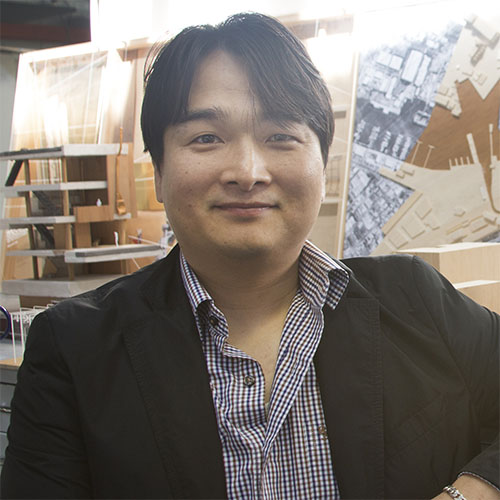
JuHyun Lee is an Associate Professor of Architecture and Computational Design in the School of Built Environment at the Faculty of Arts, Design and Architecture (ADA), University of New South Wales (UNSW) Sydney, where they also hold the prestigious title of Scientia Academic. With a professional background in architecture and construction (1998-2002), they have held academic positions across Australia including a five-year post-doctoral fellowship at the University of Newcastle (2012-2017) and a senior research fellowship at the University of South Australia (2018), following earlier research and teaching roles in South Korea (2003-2011). Lee specializes in architectural design computing, design cognition, and urban complexity, integrating computational methods, cognitive science, and architectural theory to advance architectural intelligence and human-centered design. Their research spans architectural visualization, analysis and design methods, algorithm/protocol design, and data visualization with computational approaches. They have established a strong research program examining the intersection of language, culture, and design cognition, particularly focusing on cross-cultural design communication between Australia and Korea. Lee's recent publications demonstrate a clear trajectory toward increasingly sophisticated integration of computational methods with architectural design theory, particularly in the areas of shape grammar, space syntax, and machine learning applications. Their work shows consistent focus on practical applications of computational design methods to real-world architectural problems, with growing emphasis on cross-cultural collaboration and intelligent design systems. The research portfolio reveals a deepening engagement with AI and machine learning techniques applied to architectural design assessment and generation. Scientia Academic at UNSW Sydney Associate Fellow of the Higher Education Academy (AFHEA, 2020) As an educator, Lee develops cutting-edge courses in computational design and Building Information Modeling (BIM), integrating experiential learning and industry engagement. They have secured over $11 million in research funding, including multiple ARC Discovery Projects and an Australia-Korea Foundation grant. Lee co-directs the Advanced Architectural Analytics Laboratory (A 3 LAB), leading interdisciplinary research on design automation, spatial analysis, and machine learning applications in architecture, while also leading cross-cultural initiatives like the Australia-Korea Architects' Network (AKAN). Lee supervises multiple HDR students working on culturally sustainable urban design, socio-spatial patterns in public housing, and computational layout generation. Their research has significant implications for improving design communication across cultural boundaries and developing more coherent, clear, and accessible built environments through computational design approaches.
Professor Chun-Hung Chen is a distinguished academic at George Mason University ’s Volgenau School of Engineering , where he holds the rank of Professor in the Department of Systems Engineering and Operations Research . He has also held professorships at National Taiwan University and visiting roles at institutions like University of Pennsylvania and Microsoft Research Asia . Education: PhD in Decision and Control, Harvard University (1994) MS in Electrical Engineering, National Taiwan University (1989) BS in Control Engineering, National Chiao-Tung University (1987) Research Interests focus on Stochastic Simulation Optimization , particularly his pioneering Optimal Computing Budget Allocation (OCBA) methodology. OCBA enhances simulation efficiency by dynamically allocating computational resources to critical design alternatives, reducing computation time by orders of magnitude. Applications span air transportation , healthcare , power grids , and semiconductor manufacturing . His 15 most recent articles (2022–2025) explore intersections of simulation optimization , artificial intelligence , reinforcement learning , and personalized medicine , emphasizing computational efficiency and stochastic systems in domains like microgrids and organ transplant logistics . Scientific Awards include: IEEE Fellow (2015) K.D. Tocher Medal (2017) Best Paper Awards at IEEE CASE (2019), LOGMS (2019), and IEEE ICC (2021) Harvard’s Eliahu I. Jury Award (1994) Advisory roles include editorial leadership in IIE Transactions , Journal of Simulation , and IEEE Transactions series. He has coordinated graduate programs at George Mason (2006–11, 2015–19) and led conferences like INFORMS International Meeting (2025) and Harvard Control Workshop (2024). His work is funded by organizations such as the National Science Foundation , National Institutes of Health , and Department of Energy , with applications in healthcare logistics and microgrid control .
Cecilia R. Aragon is a Professor in the Department of Human Centered Design & Engineering at the University of Washington, where she also serves as an Adjunct Professor in Computer Science & Engineering, Electrical and Computer Engineering, and the Information School. She is additionally a Senior Data Science Fellow at the eScience Institute. Aragon directs the Human-Centered Data Science Lab and has made significant contributions at the intersection of human-computer interaction and data science. Her research interests focus on human-centered data science, human-centered artificial intelligence, human-centered machine learning, human-computer interaction (HCI), computer-supported cooperative work (CSCW), visual analytics, aviation and astronautics sociotechnical systems, and emotion in informal text communication. Aragon's work bridges technical and social aspects of data science, particularly examining how humans interact with and gain insight from large datasets through both quantitative and qualitative methods. Aragon's recent publications demonstrate a strong focus on understanding online communities, sentiment analysis, distributed mentoring systems, and the ethical implications of AI. Her work spans multiple disciplines including social computing, data visualization, and astrophysics data analysis, showing her interdisciplinary approach to human-centered data science. Presidential Early Career Award for Scientists and Engineers (PECASE) 2008 Fulbright Fellowship 2017-18 HCDE Faculty Innovator in Research Award, University of Washington, 2015 Distinguished Alumni Award, Computer Science, University of California, Berkeley, 2013 Top 25 Women of the Year, Hispanic Business Magazine, 2009 Aragon has secured over $28 million in research funding from organizations including the National Science Foundation, National Institute of Standards and Technology, Department of Energy, Gordon and Betty Moore Foundation, Alfred P. Sloan Foundation, Washington Research Foundation, and industry partners like Microsoft and Intel. Her educational background includes a Ph.D. in Computer Science from UC Berkeley (2004), an M.S. in Computer Science from UC Berkeley, and a B.S. with Honors in Mathematics from Caltech. She leads the Human-Centered Data Science Lab and is affiliated with the eScience Institute, the Nearby Supernova Factory, and various research groups focused on data-intensive scientific collaborations. Her work on collaborative visual analytics systems like Sunfall has had significant impact in both academic and applied settings.