David Welsh is a Professor in the Department of Management and Entrepreneurship at Arizona State University's W. P. Carey School of Business, specializing in workplace ethics, unethical behavior, and organizational dynamics. His research has been published in top-tier journals and featured in mainstream media. Ph.D. in Management (University of Arizona, 2014) J.D. (University of Utah, 2010) B.S. in Management (Southern Utah University, 2007) His research focuses on behavioral ethics , ethical decision-making , and self-regulation , examining how performance goals, leadership styles, and social influences affect workplace morality. Recent work explores prosocial behaviors like voice and organizational citizenship alongside unethical transgressions. Welsh's articles reveal trends linking ethical leadership to dual outcomes of organizational effectiveness and unintended deviance, goal-setting to depletion and unethicality, and social dynamics to peer-driven moral behavior. His studies often employ field experiments and experience sampling methodology. Ascendant Scholar award (Western Academy of Management, 2019) W. P. Carey Dean's Mid-Career Research award (2022) Outstanding Practical Implications for Management Paper award (2021) Professional MBA Faculty Excellence award (2022) At ASU, Welsh mentors doctoral students, serves on PhD committees, and manages the Management Department Behavioral Lab. He is an Associate Editor at Personnel Psychology and teaches graduate courses on research, ethics, and dissertation advising.
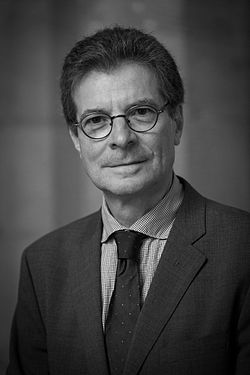
Antoine Compagnon is a Professor of French Literature at Collège de France since 2006 and the Blanche W. Knopf Professor of French and Comparative Literature at Columbia University since 1985. He holds a Doctorate from Paris Diderot University and studied at École Polytechnique and École nationale des Ponts et Chaussées. Research Interests : Compagnon specializes in French literature , comparative literature , and literary theory , with a focus on modernity, postmodernism, and canonical figures like Proust, Montaigne, and Baudelaire. His work explores auto-biographical forms, rhetorical traditions, and the cultural impact of French literature. Publications Trends : His recent books analyze intersections between 17th-century philosophy and modern criticism , emphasizing autobiographical literature and digital humanities . He frequently examines French cultural identity , literary pedagogy , and the paradoxes of modernity . Scientific Awards : Fellow of the Thiers Foundation (1975-1978) Guggenheim Fellow (1988) Fellow of the American Academy of Arts and Sciences (1997) Fellow of Academia Europaea (2006) Corresponding Fellow of the British Academy (2009) Honorary Degrees from King's College London (2010), HEC Paris (2012), and University of Liège (2013) Claude Lévi-Strauss Prize (2011) Additional Contributions : He curated a Proust manuscript exhibition at the Morgan Library (2013) and produced popular radio series like Un été avec Montaigne (2012) and Un été avec Pascal (2020).
Christina Fawcett is an Instructor in the Department of English at the University of Winnipeg. She is an active member of the Centre for Research in Young People’s Texts and Cultures (CRYTC) and the Centre for Research in Cultural Studies (CRiCS), and holds editorial roles for Jeunesse: Young People’s Texts and Cultures as a former Book Reviews Editor and current Advisory Board member. She also participates in the Canadian Games Studies Association (CGSA/ACÉJ). Her research explores interdisciplinary intersections of narrative, ethics, and popular culture, with emphases on: Monster Theory and representations of transgression Video game analyses of gender, justice, and ludic mechanics Genre fiction (fantasy, sci-fi, horror) in legal/cultural contexts Young people’s media and digital cultures She co-leads the SSHRC-funded project "Contemporary Cozy Media," examining comfort aesthetics in fantasy, mystery, and games. Fawcett’s recent publications (2020–2025) predominantly dissect video game narratives ( Bioshock Infinite , Spiderman , Resident Evil 7 ) through frameworks of criminology, ethics, and monstrosity. Her work consistently bridges game design with cultural critique, emphasizing themes of justice, identity, and speculative futures. In teaching, she covers popular literature genres (fantasy, sci-fi, horror, mystery) and media studies.
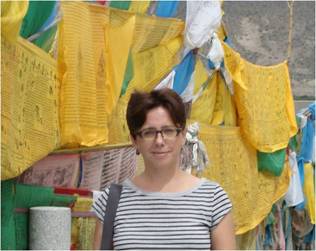
Joanna Grela is a Professor at the Department of Comparative Civilization Studies within the Faculty of Philosophy at Jagiellonian University (UJ) in Kraków, Poland. She holds habilitation in cultural studies (2016, SWPS University, Warsaw), a doctorate in religious studies (2004, Jagiellonian University), and is a certified Tibetologist (2000, INALCO, Paris). Her academic credentials also include an MA in philosophy (1996, Jagiellonian University) and postgraduate studies in gender (2009, Jagiellonian University). Her educational background includes: 2004: PhD in Humanities in religious studies, Jagiellonian University 2000: Diplôme Unilingue de Langue et Civilization Orientales de Tibétain, Institut National des Langues et Civilizations Orientales (INALCO), Paris 1996: Master of Philosophy, Jagiellonian University 2009: Postgraduate studies in gender, Jagiellonian University Professor Grela's research focuses on Tibetan, Himalayan, and Mongolian cultures, with particular emphasis on pre-Buddhist cults and their contemporary representations in popular culture, societal transformations, Tibetan ethnic and cultural identity, cultural stereotypes, and the comparative anthropology of Buddhism. Her work bridges religious studies, cultural anthropology, and Tibetan studies, examining both historical traditions and their modern adaptations. She has made significant contributions to understanding how traditional Buddhist practices interact with contemporary social contexts, digital technologies, and global cultural flows. Her scholarly output reveals consistent engagement with Tibetan religious culture, Buddhist textual traditions, and the adaptation of Buddhist practices in modern contexts. She has extensively explored the relationship between pre-Buddhist traditions and contemporary religious practices, the role of deities in Tibetan Buddhism, and the transformation of Buddhist thought in different cultural settings including Thailand and Poland. Her more recent work addresses how Buddhism is adapting to digital environments and contemporary social challenges. Her notable achievements include: 2017: Pro Arte Docendi Award from the Rector of Jagiellonian University Multiple teaching awards (2011/12, 2012/13, 2014/15) Membership in the International Association of Buddhist Universities (IABU) Collaboration with the Centre d'Etudes Himalayennes CNRS Professor Grela has led significant research projects including 'The impact of secularization and schooling on socio-religious relations between ritual specialists and the lay community in the Rebkong region' (2018-2020) and 'The Common Buddhist Text Project' (2009-2016). Her work demonstrates a strong commitment to both scholarly research and teaching excellence, with numerous publications spanning academic journals, edited volumes, and encyclopedia entries. She maintains active international collaboration and has presented her research at conferences across Europe and Asia.
Mia Consalvo is a Professor and Canada Research Chair in Game Studies & Design at Concordia University. She serves as Graduate Program Director in Communication Studies and directs the Concordia Centre for Technoculture, Art and Games. Her research focuses on game studies, qualitative methods, new media, and popular culture. Education: BA in Communications, Lyndon State College MA in Communications, University of Washington PhD in Mass Communications, University of Iowa Her recent work analyzes livestreaming platforms like Twitch, socio-economic class in gaming, feminist approaches to game studies, and the intersection of mental health with game environments. She has published extensively on game design, player culture, and digital labor. Scientific Awards: Canada Research Chair in Game Studies & Design She supervises thesis projects in Media Studies (MA) and Communication (PhD) programs, emphasizing collaborative research and critical analysis of games as cultural artifacts.
Dr. Isaias Fanlo serves as University Lecturer in Modern Iberian Literary and Cultural Studies within the Spanish & Portuguese Department of the Faculty of Modern and Medieval Languages and Linguistics at the University of Cambridge. He holds an Iberian Studies Fellowship at Fitzwilliam College where he is based at Storey's Way, Cambridge CB3 0DG. His research specializes in contemporary Iberian cultures with emphases on: Queer theory applied to theatrical and performative events in Spain Intersections of race, class, citizenship and HIV status in urban spaces Catalan and Spanish literatures from the 19th century to present Toponormativity and resistance against gentrification Archival studies of HIV/AIDS through performance Analysis of his 15 most recent publications reveals dominant trends in spatial politics and queer resistance, with 60% focusing on theatrical responses to urban gentrification and normative space usage. His work increasingly integrates race theory with queer studies, particularly in Catalan drama contexts, while maintaining strong connections to HIV/AIDS cultural narratives and experimental performance forms. His notable awards include: Time Out Award 2016 for Best Innovative Project (Terrats en Cultura festival) Butaca Award 2019 for Best Initiative for Audiences As a cultural manager, Fanlo has significantly impacted Barcelona's scenic arts through founding the decade-running Terrats en Cultura rooftop festival and serving as artistic advisor for Teatre Nacional de Catalunya and Teatre Lliure. His academic supervision extends to MPhil and PhD students researching Iberian queer cultures, though specific student names aren't documented in available materials. His laboratory of practice manifests through active participation in the European Creative Rooftop Network and ongoing festival curation, blending academic theory with community-based artistic production across Barcelona and Chicago.
Shannon Bell is a Professor in Political Science at York University, working as a performance philosopher who integrates digital video technology with political theory. Her research examines intersections of cyberpolitics, aesthetics, and power through projects like 'Shooting Theory', which visualizes philosophical concepts through film. She has authored books including 'Fast Feminism' and 'Reading, Writing and Rewriting the Prostitute Body'. Current SSHRC-funded projects explore bioart and robotic art extremes, with residencies at Symbiotica (UWA) and international exhibitions. She teaches courses on modern political thought, technopolitics, and aesthetics. Educational background includes a PhD in Political Science from York University. Professional leadership includes directing the Resource Centre for Public Sociology.
Trine Mygind Korsby is an Assistant Professor at the Department of Anthropology, University of Copenhagen, Faculty of Social Sciences. Her research is centered on the anthropology of transnational crime, with a focus on human trafficking, sex work, pimping, and criminal livelihoods. She conducts long-term ethnographic fieldwork in Romania, Italy, Portugal, and Denmark. Her primary research interests include: Anthropology of the body, desire, and labor Morality, perpetration, and ethnographic unease Skills and social relationships in criminal economies Collaborative concept-work and experimental research methods Her recent publications (2023–2025) reflect a deep engagement with the lived realities of traffickers and victims, the ambiguities of fieldwork in criminal settings, and the moral complexities of perpetration. Themes such as agency, visibility, time, and freedom recur across her work, particularly in urban and transnational contexts. She has received significant recognition, including: Marie Skłodowska-Curie Global Fellowship (2022) Elite Research Travel Grant from the Danish Ministry of Higher Education and Science (2013) Individual Postdoc Grant from the Independent Research Fund Denmark (2015) Korsby is affiliated with the Centre for Global Criminology and was a visiting scholar at UC Berkeley (2013) and a postdoc at Stanford University (2016–2018). In 2023–2024, she was selected for the UCPH Forward program for research leadership. Her current project, TRAFFICKER, explores the social relationships of convicted human traffickers and their integration of legal and illegal work, with a research stay at CUNY Graduate Center (2024–2025). She has co-edited a special issue on transnational street economies in Migration & Society (2023) and has contributed to public discourse through media appearances and articles challenging simplistic narratives about traffickers and victims.
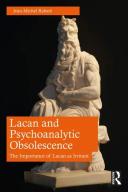
Jean-Michel Rabaté is a Professor of English and Comparative Literature at the University of Pennsylvania , where he has taught since 1992. He is affiliated with the School of Arts & Sciences and the Department of English, with a focus on modernist literature, psychoanalysis, and critical theory. Co-founder and Senior Curator, Slought Foundation Managing Editor, Journal of Modern Literature His research spans 20th-century modernism, Joyce studies, Lacanian and Freudian psychoanalysis, and intersections between literature and philosophy. Recent publications explore Lacan's role as an 'irritant' in psychoanalysis, knots in post-Lacanian theory, and laughter's philosophical significance. Scientific Awards include: 2011 Lindback Award for Distinguished Teaching 2004 Alan Filreis Teaching Award 2003 CGS and LPS Awards for Distinguished Teaching Rabaté has advised numerous doctoral students on topics ranging from modernist utopias to biotopias. He has served as past president of the Samuel Beckett Society and as a Fellow of the American Academy of Arts and Sciences since 2008.
Kimberly B. Rogers is an Associate Professor of Sociology at Dartmouth College , where she has been employed since 2015. She is affiliated with the Quantitative Social Science Program and the Neukom Institute for Computational Science . Her research focuses on how inequalities are produced, maintained, and resisted through behavior and emotion dynamics in social interactions , with particular attention to status and power hierarchies , occupational inequality , and mental health outcomes . She teaches courses such as Introductory Sociology , Research Methods , and Status and Power in Social Interaction , integrating computational tools into her pedagogy. PhD in Sociology, Duke University (2013) MA in Sociology, Duke University (2008) MA in Psychology, Wake Forest University (2005) BA in Psychology, Randolph-Macon Woman's College (2003) Rogers' research spans three key areas: cultural consensus in identity sentiments , behavioral/emotional responses to inequality , and computational modeling of social processes . Her work reveals how micro-social mechanisms perpetuate or disrupt status hierarchies across contexts like occupational roles , racialized interactions , and digital collaboration . Recent publications examine technological co-diffusion , pandemic-induced identity shifts , and gendered occupational perceptions . Her scholarly output follows trends in computational social science and cross-cultural emotion analysis . She employs Bayesian affect control theory to model dynamic identity processes and uncertainty in interactions , while her 2025 work on violence against women demonstrates applications of general strain theory to contemporary social issues. Senior Faculty Grant (2023-24) , Dartmouth College Wilson Fellowship (2021-22) , Dartmouth College Outstanding Article Award (2017) , American Sociological Association Seed Funding Grant (2016-17) , Dartmouth Provost Doctoral Dissertation Grant (2010-11) , National Science Foundation Rogers has received multiple grants for collaborative projects like THEMIS.COG , examining identity and sentiment modeling in groups . She mentors students through engaged scholarship and social impact practicums , though specific advisees aren't listed. Her 2019-2020 involvement with Campus Compact and 2016 DCSI teaching grant highlight her commitment to community-engaged pedagogy .
Darshana Sreedhar Mini is an Assistant Professor in the Department of Communication Arts at the University of Wisconsin–Madison, where she teaches and conducts research at the intersection of feminist media, gender & sexuality studies, transnational media, migrant media, and South Asian screen cultures. She is also the Director for Media and Gender Justice at the 4W Initiative and holds affiliations with the Center for Southeast Asian Studies, Gender and Women’s Studies, Center for Visual Cultures, Center for South Asia, and the Havens Wright Center for Social Justice. Ph.D., Division of Cinema and Media Studies, University of Southern California M.Phil., Center for Studies in Social Sciences, Calcutta (CSSSC), India Dr. Mini’s research centers on Global Media Cultures, Transnational Cinemas and Migration, South Asian Cinema, and Feminist Media. Her work critically examines soft-porn cinema in India, media publics, censorship, labor in the entertainment sector, and migrant media practices. Her first book, Rated A: Soft-Porn Cinema and Mediations of Desire in India (UC Press, 2024), is a groundbreaking study that combines archival and ethnographic methods to explore the social and cultural impact of Malayalam soft-porn from the 1970s to the 2000s. Her second book project, Telegeographies of Indian Migration , investigates media flows between South Asia and Southeast Asia, focusing on colonial-era labor migration and its lasting effects on identity and community formation. Her recent publications span a diverse range of topics including South Asian pornographies, digital intimacy, anti-caste activism, #MeToo and intersectional feminism, transnational empathy in cinema, and media infrastructures. These works reflect a strong trend toward interdisciplinary, feminist, and decolonial scholarship that challenges dominant canons in film and media studies. Edward Cameron Dimock, Jr. Prize in the Indian Humanities, AIIS, 2024 Early Career Award, NCA, 2024 Race, Ethnicity and Indigeneity Fellow, IRH, UW-Madison, 2024 Byerly Award for Feminist Political Economy, ICA, 2023 First Book Award, The Center for Humanities, UW-Madison, 2022 SCMS Student Writing Award, 2017 Dr. Mini has been actively involved in academic service and leadership, including directing the Media and Gender Justice initiative, co-organizing seminars on migrant media, and contributing to feminist and anti-caste scholarship. Her research has been supported by prestigious grants from the Social Science Research Council (SSRC), American Institute of Indian Studies (AIIS), National Endowment for the Humanities (NEH), and the University of Wisconsin–Madison. She also leads a significant grant-funded project as Principal Investigator for the 'South Asian Film and Media Collection' at UW-Madison. She is a key member of several collaborative research environments, including the Center for Visual Cultures and Performance Studies (CVCPS), the Wisconsin Center for Film and Theatre Research (WCFTR), and the 4W Initiative, where she directs programming on media and gender justice. These affiliations reflect her commitment to interdisciplinary, socially engaged scholarship and the creation of inclusive academic communities.
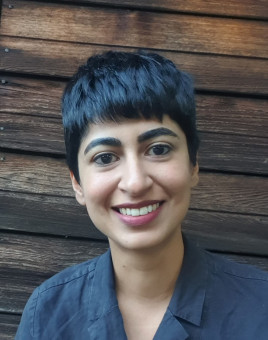
Sidra Kamran is an Assistant Professor of Sociology at Lewis & Clark College, Portland, Oregon. She holds a PhD from The New School for Social Research (2022) and a BA from Lahore University of Management Sciences (2011). Her research focuses on intersections of work, gender, sexuality, and class in Pakistan, particularly in beauty and retail sectors. She explores how marginalized women navigate public spaces in a context of low female labor participation. Current projects include a book on service economy labor and digital practices on TikTok. Her work has been funded by ACLS, Wenner-Gren Foundation, and others. Teaching specialties include global gender studies, qualitative methods, and South Asian sociology. Courses taught address topics like gender in South Asia, labor dynamics, and feminist theory. She emphasizes critical analysis of social norms and structures in her pedagogy. Research highlights include analysis of 'digital purdah' on TikTok and spatial practices of urban workers. Awards include the 2021 Cheryl Allyn Miller Award Honorable Mention. Her interdisciplinary approach combines ethnography with digital media studies.
Shuaishuai Wang is a Lecturer in Digital Media and Culture at the University of Manchester, specializing in platform studies, critical algorithm studies, and queer media. His research explores queer communities' digital presence across platforms like Douyin, TikTok, and Blued, with a focus on algorithmic governance, data-driven social media operations, and geopolitical-economic contexts. He holds a PhD in Media Studies from the University of Amsterdam and previously served as Assistant Professor at Xi’an Jiaotong-Liverpool University and Lecturer at the University of Amsterdam. Shuaishuai leads two university-funded projects: 'Douyin Data Economies' (100,000 CNY) and 'Algorithmic Configurations of Sexuality' (30,000 Euros). His work appears in journals like Big Data & Society , Television & New Media , and Social Media + Society , and he contributes to media outlets including The Conversation and Sixth Tone. His research interests emphasize the interplay between algorithms, queer identities, and platform economies. Recent studies analyze Douyin's shift to e-commerce, LGBTQ+ visibility challenges in algorithmic systems, and the political dimensions of TikTok. He has also examined business models of LGBTQ platforms and the impact of censorship on digital queer spaces. Key grants include projects investigating data economies and algorithmic configurations of sexuality, reflecting his commitment to understanding technology's societal implications. Collaborations span global institutions, with notable work on misinformation, playful political performances, and transgressive digital cultures.
Fatima Aziz is an Assistant Professor in the Department of Communication, Media and Culture at The American University of Paris (AUP) . She is affiliated with the Center for Media, Communication & Global Change (MCGC) since 2024 and the Centre de Recherches sur les Arts et le Langage (CRAL/EHESS) since 2023. Prior to her current role, she was a member of the editorial committee for the French blog Culture Visuelle (2010–2014) and affiliated with the Association of Internet Researchers (AoIR) in 2014–2015. Education: PhD in Visual Cultures, École des Hautes Études en Sciences Sociales, Paris (2023) Master of Arts (Master Recherche) in Information and Communication Sciences, Université Paris-Ouest Nanterre-La Défense, Paris (2008) Research Interests: Aziz’s work focuses on Visual Generative Media , Text-to-Image models , and Algorithmic identity , with a critical lens on how digital platforms mediate identity and social interaction. Her research includes studies on fame, influence, and privacy in social media, such as Facebook , Instagram , and TikTok . She explores the intersections of visual culture, digital anthropology, and ethical frameworks for online data usage. Teaching & Research Contributions: Aziz has taught courses such as Global Digital Cultures , Visual Culture, Theory & Communication , and Topics: Digital Anthropology , reflecting her expertise in media and digital studies. Her conference presentations include discussions on the Visual Culture of War , Algorithmic Mediation , and Participatory Politics in Digital Spaces . Advising & Grants: No specific advising or grant information is explicitly listed in the texts. However, she is involved in research labs and centers, contributing to initiatives like the Civic Media Lab and the MCGC . Labs/Teams: Faculty affiliate at the MCGC (since 2024) and CRAL/EHESS (since 2023). Active in the Civic Media Lab through graduate seminars and workshops on digital ethnography and media ethics.
Dr. Priyanka Singh is a Lecturer in Film Studies at the School of Languages, Cultures and Societies, University of Leeds, within the Faculty of Arts, Humanities and Cultures. Her work centers on Indian cinema and emerging cinematic traditions from South Asia and the Middle East, with a strong interdisciplinary focus on feminism, post-colonialism, psychoanalysis, and subalternity. Her academic background includes a PhD in Film Studies from the University for the Creative Arts (2022) and an MSc in Digital Film Technologies and Production Techniques from the University of Bedfordshire. She is actively engaged in curriculum re-definition initiatives that promote Equality, Diversity, and Inclusion in higher education. Dr. Singh's research explores women's authorship, marginalized narratives, and the psychosocial dimensions of cinema. Her interests span identity politics, decolonisation, documentary ethics, and queer cinema. She employs transdisciplinary methods, integrating Western and Indian feminist theories with psychoanalysis and religious ideologies. Her recent publications and conference presentations reveal a consistent focus on female desire, resistance to patriarchy, and the de-westernization of cinematic genres. She has contributed to discussions on eco-feminism, Dalit women’s representation, and the role of myth in feminist horror. Her forthcoming monograph Female Desire in Contemporary Bollywood (Routledge, 2024) is a significant contribution to the field. Dr. Singh is a member of several academic organizations, including BAFTSS, Visible Evidence, and the British Association for South Asian Studies, where she serves as Council Member and Co-Editor of a special edition of New Cinemas: Journal of Contemporary Films . Supervises undergraduate and postgraduate research projects in areas such as queer cinema, women’s representation, and practice-based video essays Actively involved in organizing international seminars and conferences on cinema and social justice Collaborates with student education leadership to align curriculum development with EDI goals She is affiliated with the Centre for World Cinemas and Digital Cultures and the Leeds Arts and Humanities Research Institute, contributing to a vibrant research community focused on global cinematic practices.