معرفی
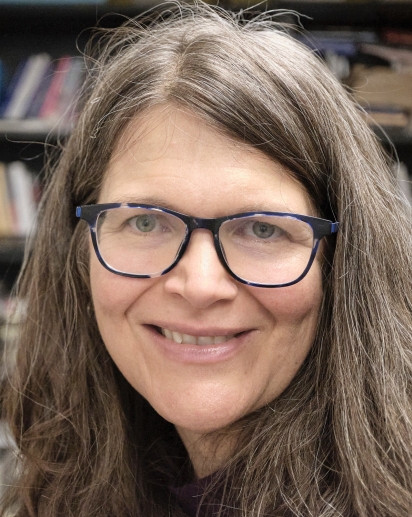
Kimberly B. Rogers is an Associate Professor of Sociology at Dartmouth College, where she has been employed since 2015. She is affiliated with the Quantitative Social Science Program and the Neukom Institute for Computational Science. Her research focuses on how inequalities are produced, maintained, and resisted through behavior and emotion dynamics in social interactions, with particular attention to status and power hierarchies, occupational inequality, and mental health outcomes. She teaches courses such as Introductory Sociology, Research Methods, and Status and Power in Social Interaction, integrating computational tools into her pedagogy.
- PhD in Sociology, Duke University (2013)
- MA in Sociology, Duke University (2008)
- MA in Psychology, Wake Forest University (2005)
- BA in Psychology, Randolph-Macon Woman's College (2003)
Rogers' research spans three key areas: cultural consensus in identity sentiments, behavioral/emotional responses to inequality, and computational modeling of social processes. Her work reveals how micro-social mechanisms perpetuate or disrupt status hierarchies across contexts like occupational roles, racialized interactions, and digital collaboration. Recent publications examine technological co-diffusion, pandemic-induced identity shifts, and gendered occupational perceptions.
Her scholarly output follows trends in computational social science and cross-cultural emotion analysis. She employs Bayesian affect control theory to model dynamic identity processes and uncertainty in interactions, while her 2025 work on violence against women demonstrates applications of general strain theory to contemporary social issues.
- Senior Faculty Grant (2023-24), Dartmouth College
- Wilson Fellowship (2021-22), Dartmouth College
- Outstanding Article Award (2017), American Sociological Association
- Seed Funding Grant (2016-17), Dartmouth Provost
- Doctoral Dissertation Grant (2010-11), National Science Foundation
Rogers has received multiple grants for collaborative projects like THEMIS.COG, examining identity and sentiment modeling in groups. She mentors students through engaged scholarship and social impact practicums, though specific advisees aren't listed. Her 2019-2020 involvement with Campus Compact and 2016 DCSI teaching grant highlight her commitment to community-engaged pedagogy.