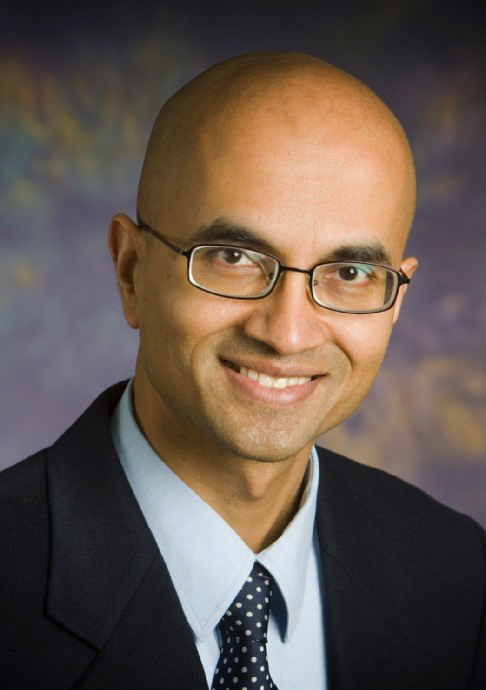
Ming Hu is a Professor and University of Toronto Distinguished Professor of Business Operations and Analytics at Rotman School of Management, University of Toronto. He serves as Area Coordinator for the Operations Management & Statistics Area and holds editorial leadership roles including Editor-in-Chief of Naval Research Logistics and Associate Editor for multiple top journals. MS in Applied Mathematics, Brown University (2003) PhD in Operations Research, Columbia University (2009) His research focuses on sharing economy , social operations , and platform economics , examining how operational decisions can maximize societal benefit. Key areas include crowdfunding , two-sided markets , crowdsourcing , and group buying , with applications to DEI , sustainability , and AI-empowered operations . Recent work analyzes spatial operations in delivery systems, algorithmic fairness , and climate change adaptation in agricultural supply chains. His publications span top journals like Management Science and Operations Research , covering topics from blockchain traceability to quantum-inspired optimization . Scientific recognitions include: Wickham Skinner Early-Career Research Award (2016) Best Operations Management Paper in Management Science (2017) 2018 Poets & Quants Best 40 Under 40 MBA Professors As an Amazon Scholar (2022–) and Chair of Chain Analytics Institute (2023–), he bridges academic research with industry applications in AI-driven logistics and sustainable operations.
University of Illinois Urbana-ChampaignUnited States
Naresh R. Shanbhag is the Jack Kilby Professor in the Department of Electrical and Computer Engineering and the Coordinated Science Laboratory at the University of Illinois at Urbana-Champaign. He serves as Director of the Systems on Nanoscale Information fabriCs (SONIC) Center and held the D.J. Gandhi Distinguished Visiting Professorship at IIT Mumbai from 2015-2020. Previously, he was a visiting faculty member at National Taiwan University (2007) and Stanford University (2014). Dr. Shanbhag received his doctorate from the University of Minnesota (1993) in Electrical Engineering. From 1993 to 1995, he worked at AT&T Bell Laboratories as the lead chip architect for AT&T's 51.84 Mb/s transceiver chips over twisted-pair wiring for Asynchronous Transfer Mode (ATM)-LAN and very high-speed digital subscriber line (VDSL) chip-sets. His research focuses on the design of energy-efficient machine learning, communications, and signal processing systems on resource-constrained embedded platforms. He explores fundamental trade-offs between energy efficiency, latency and accuracy of decision-making systems implemented in nanoscale technologies, with applications to computer vision, biomedicine, automatic target recognition, and imaging. His work spans four primary focus areas: Resource-efficient Machine Learning for the Edge, In-memory Computing (IMC), Energy-efficient High Data Rate Communications, and Shannon-inspired Statistical Error Compensation (SEC). Analysis of his recent publications reveals a strong emphasis on in-memory computing architectures (SRAM, MRAM, RRAM) for machine learning acceleration. His work consistently addresses energy-accuracy trade-offs, with increasing attention to security aspects of hardware implementations and applications to MIMO signal processing and edge AI systems. His research demonstrates a progression from theoretical foundations to practical silicon implementations. 2024 Semiconductor Research Corporation Innovation Award 2018 Semiconductor Industry Association/Semiconductor Research Corporation University Researcher Award 2018 IEEE International Symposium on Circuits and Systems Best Paper Award 2006 IEEE Fellow 1996 National Science Foundation CAREER Award Professor Shanbhag has mentored over 50 graduate students who now work at leading technology companies including Qualcomm, Amazon, Nvidia, Intel, and Apple. His research has been generously supported by the National Science Foundation, DARPA, AFRL, Semiconductor Research Corporation, Texas Instruments, Sandia National Laboratories, and industry partners including IBM, GlobalFoundries, and Intel Corporation. He led the Alternative Computational Models research theme (2006-2012) and was the founding Director of the SONIC Center (2013-2017), a 5-year multi-university center funded by DARPA and SRC. Currently, he leads research themes in the SRC and DARPA funded JUMP 2.0 Program's Center for Co-Design of Cognitive Systems and the Center for Ubiquitous Connectivity, and in the NSF IUCRC Center for Advanced Semiconductor Chips with Accelerated Performance (ASAP). As Director of the Systems on Nanoscale Information fabriCs (SONIC) Center, Professor Shanbhag leads a multidisciplinary team exploring novel computing paradigms for the nanoscale era. His group has benchmarked an extensive collection of in-memory computing and digital accelerator IC designs, maintaining a publicly available IMC benchmarking repository of metrics extracted from published IC prototypes. His research philosophy integrates concepts from information theory, statistical signal processing, detection and estimation, VLSI architectures, and digital and analog integrated circuits to develop energy-efficient systems from algorithms to silicon implementations.
Professor Michael C.L. CHAU serves as Professor and Deputy Area Head of Innovation and Information Management at The University of Hong Kong's Faculty of Business and Economics. He also holds the position of Associate Director at the HKU HKJC Centre for Suicide Research and Prevention, and serves on the HKU Senate and Court. His academic journey includes a Ph.D. in Management Information Systems from the University of Arizona and a B.Sc. in Computer Science (Information Systems) from the University of Hong Kong. Dr. Chau's research spans business analytics, artificial intelligence, web mining, fintech, smart health, and security informatics. His work focuses on applying data/text/web mining techniques to business, education, and social domains. He leads the Artificial Intelligence Research Group at HKU Business School, which has secured significant funding from the Hong Kong Research Grants Council, Food and Health Bureau, and other agencies for projects including 'The Invisible Hand in Crowdfunding' and 'Factors Moderating the Predictive Power of Social Media Sentiment on Stock Returns'. His publication portfolio includes over 150 articles in premier journals like MIS Quarterly, JMIS, and IEEE Transactions, with recent work exploring large language models, hate speech detection, and disaster-related social media analysis. His research demonstrates strong interdisciplinary connections across computer science, information systems, and business applications. INFORMS ISS Design Science Award (2020) IEEE ITSS Leadership Award in Intelligence and Security Informatics (2020) AIS Sandra Slaughter Service Award (2016) HKU Outstanding Young Researcher Award (2014) Faculty Research Postgraduate Supervision Award (2020 & 2025) Cited over 9,400 times (h-index = 47) Dr. Chau actively mentors doctoral students and has supervised numerous PhD graduates who now hold academic positions at institutions including Fudan University, Xi'an Jiaotong-Liverpool University, and the University of Maryland. His research grants portfolio demonstrates sustained funding success across diverse areas including blockchain, mental health applications, and social media analytics. The Artificial Intelligence Research Group he leads maintains strong industry connections through projects with Hong Kong Red Cross and the Hospital Authority.
Geert Deconinck is a full professor at KU Leuven , leading the Electrical Energy Systems and Applications (ELECTA) research group within the Department of Electrical Engineering (ESAT). He also serves as scientific leader of the EnergyVille research center's algorithms domain, focusing on smart electrical networks and thermal systems. M.Sc. and Ph.D. from KU Leuven Head of ELECTA since 2012 (10 professors, 8 postdocs, 70+ PhDs) Over 8 million EUR research budget in last 5 years 44 completed PhDs and 10 current advisees IEEE Transactions editorial board member His research spans smart grid architectures , distributed control , and cyber-physical security , with recent focus on EV-grid integration , renewable energy democratization , and multi-carrier energy systems . Current projects include: Smart Charging - E-Mobility meets Renewable Energy Early Detection and Defense Systems for Smart Grids Open-source P2P energy sharing platforms Microgrid control strategies for PV-battery systems Awarded IET Fellow and IEEE Senior Member status, his work combines machine learning with power systems engineering through both theoretical modeling and experimental validation . He has contributed over 575 publications with 9800+ Google Scholar citations.
Yusupova Guzel Fatehovna is an Associate Professor at the Department of Applied Economics within the Faculty of Economic Sciences at the National Research University Higher School of Economics (HSE), where she has been working since 1998 with 28 years of scientific and teaching experience. She also serves as a Senior Research Fellow at the Institute for Enterprise and Market Analysis, specifically in the Laboratory of Competition and Antimonopoly Policy. Her research interests focus on Industrial Organization, Competition Policy, Antitrust Economics, Digital Markets, Market Analysis, and Economics of Network Effects, with particular attention to Russian industrial markets. Her professional expertise stems from her Candidate of Economic Sciences degree (2007) in Economics and Management of the National Economy, with a dissertation on "Boundaries of Russian markets and competition," and her Associate Professor title awarded in 2013. Dr. Yusupova's publication record shows a consistent focus on competition policy and market analysis, with her most recent work examining AI applications in cartel detection, digital platform competition, and the nuances of antitrust enforcement in specialized markets. Her research demonstrates progression from foundational industrial organization topics to increasingly complex digital market challenges. Honorary certificate of the Ministry of Science and Higher Education of the Russian Federation (November 2022) Gratitude of HSE (March 2022) Gratitude of the Faculty of Economic Sciences HSE (January 2021) Winner of the Competition for the best Russian-language scientific works of HSE employees - 2021 Multiple academic bonuses for publications and contributions to HSE reputation (2010-2024) As an educator, Dr. Yusupova teaches graduate and undergraduate courses including Analysis of Industry Markets and Competition Policy, Introduction to the Economy of Digital Platforms, and Theory of Industrial Markets. Her teaching reflects her research expertise, bridging theoretical industrial organization concepts with practical antitrust applications. She has participated in numerous international conferences and research projects focused on competition policy effectiveness, with particular emphasis on Russian market contexts and transition economy challenges.
Hanna Halaburda is an Associate Professor of Technology, Operations, and Statistics at the Leonard N. Stern School of Business, New York University, where she joined in 2019. Her research lies at the intersection of economics, technology, and digital platforms, with a strong focus on blockchain, cryptocurrencies, and platform competition. She has published extensively in top academic journals and co-authored the seminal book Beyond Bitcoin: The Economics of Digital Currencies . PhD in Economics, Northwestern University MA in Economics, Warsaw School of Economics MA in Philosophy, Warsaw University Her research interests center on the economic implications of digital transformation. She investigates how blockchain technology reshapes trust, governance, and competition in digital markets. Her work explores token design, consensus mechanisms, smart contracts, and the strategic use of decentralization in platforms. She also studies platform competition under network effects, consumer choice, and omnichannel marketing. A recurring theme is how digital technologies alter traditional economic forces and business models. The most recent articles show a strong trend toward analyzing the governance, security, and economic design of blockchain systems. Her work combines rigorous theoretical modeling with empirical insights, often applying game theory and industrial organization frameworks. Topics include permissioned vs. permissionless blockchains, the role of cryptographic tokens in coordination, and the macroeconomic implications of digital currencies. She also contributes to debates on Web3, AI, and the future of digital platforms. Scientific awards and recognitions include: ISR Best Paper Published in 2022 Runner-Up Lead article in RAND Journal of Economics Best Paper Award at Tokenomics 2023 Best Paper Award at WISE 2023 Best Paper Finalist at WISE 2022 and WISE 2021 Hanna Halaburda has advised and collaborated with numerous researchers and institutions. Her co-authors include leading scholars from Harvard, NYU, and international universities. She has received research recognition through best paper awards and invitations to contribute to high-impact journals and policy discussions. Her work has been supported by academic and policy institutions, including the Bank of Canada, where she previously served as a senior economist. She frequently publishes in both academic and practitioner outlets, including Harvard Business Review and Nature Human Behavior , indicating strong translational impact. She is actively involved in research teams focused on digital assets, blockchain governance, and platform economics. While no formal lab is mentioned, her extensive list of working papers and collaborations suggests leadership in a dynamic research group at NYU Stern. Her recent work on DAOs, public crypto mining firms, and CBDCs indicates ongoing, forward-looking research programs with real-world policy and business implications.
Cyrille Artho is an Associate Professor in the Division of Theoretical Computer Science at KTH Royal Institute of Technology, actively contributing to research in formal methods, software testing, and cybersecurity. His work spans model checking, smart contract security, and concurrent systems verification, with significant contributions to tools like Java Pathfinder and Modbat. PhD from ETH Zurich (2005) with dissertation on multi-threading fault detection Teaches Software Safety and Security, Software Engineering Fundamentals, and supervises degree projects His research focuses on developing formal techniques for safety-critical systems, particularly in blockchain security and distributed applications. Recent work emphasizes smart contract verification, anomaly detection in microservices, and trusted execution environments for secure cloud analytics. The 15 most recent publications reveal a strong trend toward blockchain security (6 articles), formal verification of distributed systems (5), and novel testing methodologies (4), with increasing integration of machine learning for vulnerability detection. As chair of the FTSCS workshop series and contributor to major conferences like ASE and ICST, Artho has significantly shaped the formal methods community. His leadership in organizing workshops demonstrates commitment to advancing safety-critical systems research. Principal investigator for C3.ai DTI Cyber Safety Cage for Networks project Develops Modbat framework for model-based API testing Active in Digital Futures research initiative at KTH
Ruben Verborgh is a Professor of Decentralized Web Technology at the Ghent University – imec and a Visiting Fellow at the Oxford Martin School (University of Oxford). He leads the Internet Technology and Data Science Lab (IDLab) and co-founded the Solid platform with Tim Berners-Lee to re-decentralize the Web. His research focuses on Linked Data Fragments , a paradigm for Web-scale query execution, and explores decentralized data governance , user-controlled data ownership , and rule-based Web agents for policy enforcement. He has co-authored two books on Linked Data and contributed to over 250 publications. Recent articles highlight trends in decentralized data ecosystems , including ODRL policy interoperability , event notification systems , and personal data vaults . His work bridges Linked Data , hypermedia APIs , and privacy-preserving technologies . Verborgh collaborates with institutions like MIT, Oxford, and the European Commission, and advises companies through Inrupt . His labs ( IDLab , Solid Ecosystem ) focus on sustainable data-driven societies.
Thierry Warin is a Full Professor of Data Science for International Business at HEC Montréal, directing the Department of International Business. He holds the Professorship in Data Science for International Business and is a Principal Investigator at CIRANO, leading the World Economy theme. His roles include affiliations with Harvard Business School’s Microeconomics of Competitiveness program and the International Trade and Finance Association presidency (2020-2022). Education: PhD from ESSEC Business School (France, 2000). Professional development includes the Harvard Business Analytics Program (2018-2020) and GIS training at Harvard. Research Interests: Data science applications in global economic transformations, including network theory, natural language processing, and computational methods. Focus areas: algorithmic collusion, platform economies, and metadata-driven analyses. He develops open-source tools like the statcanR package and advocates for reproducible research. Articles Trends: Recent work explores AI regulation, algorithmic competition, climate transition plans, and central bank speech analysis. Methodologies span structural topic modeling, social media analytics, and entropy-based frameworks. Awards: Honored with the Highly Commended Paper Award (2017-2018) and Emerald Literati Award (2018) for reverse innovation research. Recognized for contributions to computational social science and regulatory frameworks. Advising & Grants: Supervised 16 master’s projects since 2019, focusing on data science applications in global business challenges. Active in interdisciplinary initiatives like the St. Lawrence–Great Lakes corridor data hub. Labs & Philanthropy: Founded quantum simulations and leads Ed’Haîti , an NGO addressing education in Haiti. Collaborates on Science des données au féminin en Afrique , empowering 200 African women with data science skills.
Wilfred Amaldoss is the Thomas A. Finch Jr. Professor of Marketing at Duke University's Fuqua School of Business. He holds a Ph.D. in Marketing from the Wharton School (University of Pennsylvania) and an MBA from the Indian Institute of Management, Ahmedabad. Previously, he taught at Purdue University's Krannert Graduate School of Management. His research focuses on strategic behavior in pricing, advertising, and competitive dynamics. Notable areas include pricing strategies for prototypical products, the impact of social influence on branding, and sponsored search advertising mechanisms. He has published in top journals like Journal of Marketing Research and Management Science . Amaldoss has received multiple awards, including the Frank M. Bass Award (2001) for exceptional Ph.D.-derived research and the John C. Little Award for outstanding marketing papers. His teaching excellence is recognized through awards such as the Duke MBA Excellence in Teaching Award (2008, 2009, 2019) and the Salgo Noren Outstanding Teacher Award (2000–2001). He serves as an Associate Editor for Management Science and Journal of Marketing Research , and has been honored with the Distinguished Service Award by Management Science (2009–2011). His work bridges theoretical contributions with practical insights into consumer behavior and strategic business decisions.
Melissa A. Schilling is the Herzog Family Professor of Management at New York University Stern School of Business, where she is also Deputy Chair of the Management & Organizations Department and Director of the Innovation Initiative at the Fubon Center for Technology, Business and Innovation. She joined NYU Stern in 2001 and is a leading scholar in innovation and strategic management. Ph.D., Strategic Management, University of Washington, 1997 B.S., Business Administration, University of Colorado at Boulder, 1990 Melissa Schilling's research centers on innovation in high-technology industries, including smartphones, biotechnology, pharmaceuticals, and renewable energy. She explores platform ecosystems, network externalities, technological standards, and the cognitive and social traits of breakthrough innovators. Her work integrates strategic management with organizational behavior and technological evolution. She is particularly known for her studies on how firms can accelerate innovation adoption and create value in complex ecosystems. Her recent publications reveal a strong trend in digital transformation, platform competition, and the cognitive foundations of visionary leadership. She analyzes how firms manage innovation in platform-based markets and how breakthrough ideas emerge from outlier thinking. Her articles frequently appear in top journals such as Strategic Management Journal , Organization Science , and Management Science . Scientific Awards and Recognitions: National Science Foundation CAREER Award 2022 Sumantra Ghoshal Award for Rigour and Relevance in Management 2018 Leadership in Technology Management, PICMET Best Paper in Management Science and Organization Science, 2012 Broderick Prize for Excellence in Research, Boston University Melissa Schilling has advised numerous doctoral students and contributed to major research initiatives, including a National Academy of Sciences committee on electric vehicle deployment. She has secured grants from the NSF and Kauffman Foundation. She is a senior editor at Strategy Science and serves on the editorial boards of several leading management journals. She also leads the Innovation Initiative at the Fubon Center, fostering industry-academia collaboration in tech innovation. She is actively involved in research labs and innovation centers at NYU Stern, particularly those focused on technology ecosystems and digital transformation. Her leadership in the Fubon Center drives interdisciplinary research on how businesses can leverage technological change for competitive advantage.
J.P. Eggers is the Interim Dean and Professor of Management and Organizations at New York University’s Leonard N. Stern School of Business, where he also holds the Catherine & Peter Kellner Professorship of Entrepreneurship. He has been a faculty member since 2008 and served as Vice Dean for MBA and Graduate Programs from 2018 to 2024, leading major innovations in MBA education including the Andre Koo Technology and Entrepreneurship MBA program and the Online-Modular Option for the Langone Part-time MBA. His educational background includes a Ph.D. in Management from the Wharton School at the University of Pennsylvania, an M.B.A. from Goizueta Business School at Emory University, and a B.A. in History from Amherst College. Eggers’ research centers on technological change, decision-making under uncertainty, and new product development. He investigates how firms and executives navigate innovation, make strategic choices amid ambiguity, and respond to technological disruptions. His work spans industries such as video games, mutual funds, flat panel displays, and platform markets, focusing on topics like organizational learning, radical invention, and portfolio expansion strategies. The trends in his recent publications reveal a strong focus on strategic adaptation in evolving industries, emphasizing firm experience, resource constraints, and behavioral factors in innovation. His work frequently appears in top-tier journals such as Strategic Management Journal , Organization Science , and Academy of Management Journal . Poets & Quants Top 40 Professors Under 40 (2011) NYU Stern MBA Program Professor of the Year (2010) Emerald Management Review Citation of Excellence (2010) Business Policy Division of Academy of Management Finalist for Outstanding Dissertation Award (2009) Technology Division of Academy of Management Finalist for Outstanding Dissertation Award (2009) Eggers has a strong record of advising Ph.D. students and securing research support. His leadership roles in academic programs reflect his commitment to experiential learning, innovation in curriculum design, and expanding access to MBA education for working professionals. He has also launched initiatives like SternWorks and the Executive in Residence program to broaden career pathways for MBA students. He is actively involved in research centers and initiatives at Stern, particularly those related to technology, entrepreneurship, and behavioral strategy, though specific lab affiliations are not detailed in the provided text.
James D. Herbsleb is a Professor at Carnegie Mellon University in the Software and Societal Systems Department under the School of Computer Science . He served as Department Head from 2019-2024 and holds a PhD in Psychology and an MS in Computer Science. Education PhD in Psychology MS in Computer Science Research interests focus on the intersection of software engineering , computer-supported cooperative work , and socio-technical systems . Key areas include global software teams, open source ecosystems, and the limits of modularity in complex projects. His work explores decision networks , interface translucence , and scientific software sharing through NSF-funded initiatives. Recent publications examine API management in ecosystems like Eclipse and Node.js, coordination theory in distributed teams, and transparency in open source practices. Awards include the ACM Outstanding Research Award (2016) and Alan Newell Award (2014) . Scientific Awards ACM Outstanding Research Award (2016) Alan Newell Award for Research Excellence (2014) Most Influential Paper Award (ICSE 2010) Best Paper Award (Academy of Management 2010) Best Paper Award (CSCW 2006) Students advised include Patrick Wagstrom (COS PhD), Anita Sarma (postdoc), Uri Dekel (SE PhD), and current PhD candidates like Ben Towne. Research is supported by NSF, Sloan Foundation, and industry partners including Google and IBM.
Professor Roland Broemel holds the Chair of Public Law, Economic and Currency Law, Financial Markets Regulation and Legal Theory at the Faculty of Law, Goethe University Frankfurt, and is Deputy Managing Director at the Institute for Monetary and Financial Stability (IMFS) since December 2021. His work bridges legal theory, financial regulation, and digital transformation. Research Interests: Broemel's scholarship centers on market regulation in digitalized sectors—particularly currency, telecommunications, energy, and media. A key cross-cutting theme is the legal dimension of digitalization and algorithm-based applications. He also contributes to Basic Law theory and legal methodology, exploring how legal systems adapt to societal shifts. His recent work emphasizes digital euro, AI governance, and platform regulation. Publication Trends: His recent publications reflect a strong focus on the legal implications of digital transformation in finance and public law. Themes include central bank digital currency, algorithmic regulation, and interdisciplinary legal responses to climate and digital transitions. He frequently publishes in top German and international law journals and handbooks, often in collaboration with economists and legal scholars. Scientific Awards: Doctorate Award 1st Class, University of Hamburg Law Department Hamburg Teaching Prize 2010, Department for Science and Research Advising and Grants: Broemel actively supervises student research through inquiry-based learning formats and leads externally funded initiatives such as the School Project: Digital Euro. He has received support from the Studienstiftung des deutschen Volkes during his early career and continues to secure institutional funding for interdisciplinary research at IMFS. Labs and Teams: As Deputy Managing Director of IMFS, Broemel is embedded in a multidisciplinary research environment focused on monetary and financial stability. He collaborates closely with economists like Volker Wieland and Alexander Meyer-Gohde, contributing a legal perspective to policy-oriented research. His team includes research assistants and doctoral candidates working on digital regulation, financial law, and legal theory.
Fred Feinberg is the Joseph and Sally Handleman Professor of Marketing and Professor of Statistics (by courtesy) at the University of Michigan, where he is also an Affiliated Faculty member of the Center for the Study of Complex Systems. His work integrates advanced Bayesian methods with large-scale marketing data to illuminate how people make choices under uncertainty. Education Ph.D., Sloan School of Management, Massachusetts Institute of Technology (1989) Doctoral program in Mathematics, Cornell University (1983–84) S.B. Mathematics & S.B. Philosophy, Massachusetts Institute of Technology (1983) Research Focus Feinberg’s scholarship centers on discrete choice models that leverage real-world decisions to infer latent attributes such as demographics, product appeal, and socioeconomic status. Methodologically, he employs Hierarchical Bayes (HB) models and cutting-edge MCMC algorithms to handle massive data sets, while theoretically he advances dyadic utility theory and optimal search under uncertainty. Applications span click-through behavior, menu-based choice, online dating preferences, spatial marketing, and consumer reactions to intangible or aesthetic product features. Recent empirical studies explore the wearout versus weariness effects of online advertising, the impact of data breaches on consumer behavior, and dynamic pricing for digital media subscriptions. Across these projects, Feinberg couples rigorous statistical innovation with actionable managerial insights, bridging marketing science, operations, and engineering. Scientific Awards & Leadership Joseph and Sally Handleman Endowed Professorship Past President, INFORMS Society for Marketing Science Departmental Editor, Production and Operations Management Former Co-Editor, Marketing Science Co-author (with T. Kinnear & J. Taylor) of the textbook Modern Marketing Research: Concepts, Methods, and Cases Grants & Collaborations While explicit grant lists are not provided, Feinberg’s prolific publication record in top-tier journals (e.g., Journal of Marketing Research , Marketing Science , Management Science ) and editorial board service imply sustained external funding and interdisciplinary partnerships, particularly with operations, engineering, and computer-science groups. Laboratories & Teams Feinberg is formally affiliated with the Center for the Study of Complex Systems (CSCS) at the University of Michigan, where he collaborates on network-based choice frameworks and large-scale behavioral data analytics. He maintains active ties to the Ross Marketing faculty and the Department of Statistics, fostering joint workshops and doctoral training initiatives.