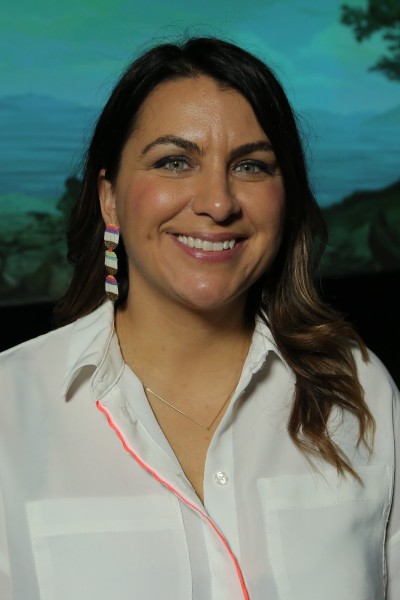
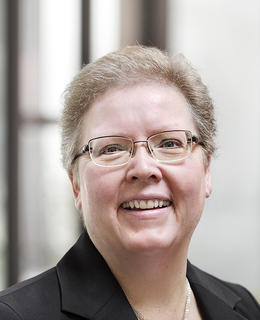
Maria Halbinger is an Associate Professor at the Zicklin School of Business , affiliated with the Lawrence N. Field Department of Entrepreneurship and Innovation at Baruch College, City University of New York (CUNY). Her academic career focuses on innovation, entrepreneurship, and creativity within collaborative environments. European Master of Business Science, University of Birmingham, UK (2003) Diplom in Business Administration, University of Regensburg, Germany (2005) PhD in Economics and Management with a focus on Entrepreneurship, Copenhagen Business School, Denmark (2014) Her research explores how user innovation communities, social identity, and pre-innovation experiences influence entrepreneurial success. She investigates topics such as reciprocity in collaborative platforms, the impact of competition on user-generated content, and the role of makerspaces in supporting entrepreneurial ventures. Maria's publications highlight trends in user-driven innovation , community dynamics , and technology adoption across platforms like 3D printing ecosystems. Her work spans interdisciplinary subfields including collaborative design, open innovation, and hacker-maker culture.
Dr. Kylie Budge is a Senior Research Fellow (Urban Living and Society) and Adjunct Researcher at Western Sydney University's Institute for Culture and Society. Her research focuses on intersections of technology, culture, and society, with emphases on digital/material cultures of art/design, cultural institutions, and social media engagement. She holds a PhD from the University of Melbourne (2014) and a Master of Arts in Education from Macquarie University (1998). Her work critically examines how creative producers, audiences, and social media shape urban spaces and cultural narratives. Key themes include visual culture's role in identity construction via platforms like Instagram, and the evolving role of museums in digital engagement. She previously worked in Australia and Japan within universities and the GLAM sector (Galleries, Libraries, Archives, Museums). Publications span journals like Australian Geographer , Continuum , and Curator: The Museum Journal , reflecting interdisciplinary engagement with cultural geography, media studies, and art education. Research highlights include analyzing 'makerspaces' as urban innovation hubs and the agency of museum objects in digital contexts. Dr. Budge serves on the Advisory Board of the Australasian Consortium of Humanities Research Centres, reflecting her commitment to advancing cultural research networks.
Dr. Julie Nagam is a Professor in the Department of History at the University of Winnipeg holding the Canada Research Chair in Collaboration, Public Art, Interactive + Digital Media. She directs the Aabijijiwan New Media Lab and co-directs the Kishaadigeh Collaborative Research Centre, which occupies over 4000 square feet housing specialized digital media labs (sound, projection, VR, animation, video) and collaborative spaces for workshops, intergenerational gatherings, and dialogue. Her research centers on revealing the ontology of land as a carrier of memory, knowledge, and living histories through Indigenous contemporary art, digital/new media, public art, and critical curatorial theory. She leads the multi-million-dollar SSHRC Partnership Grant The Space Between Us (2021-2028), fostering international collaborations in public art and digital technologies, and pioneered the first virtual Nuit Blanche Toronto (2020-2022) featuring 175+ BIPOC artists, AR/VR works, and a 15-year archive. Her scientific recognition includes: Canada Research Chair in Collaboration, Public Art, Interactive + Digital Media Concordia University and Massey University (NZ) Scholar in Residence (2018/19) Terra Foundation Visiting Scholar at the University of Sydney (AUS) Through SSHRC funding, she mentors students attending international events like Nuit Blanche Paris and Venice Biennale. Her labs serve as hubs for digital makerspaces, place-based knowledge exchange, and intergenerational engagement, supporting international artistic collaborations and community-centered digital production.
Brooke Coley is an Assistant Professor in Engineering at The Polytechnic School of Arizona State University . She is also affiliated with the Engineering Education Systems and Design department and serves as an Affiliate Faculty Member in the Mary Lou Fulton College for Teaching and Learning Innovation . Ph.D., Bioengineering, University of Pittsburgh B.S., Chemical Engineering, University of Maryland Research Interests include Engineering Education , Social Justice in STEM , Educational Technology , and Biomechanics . Her work focuses on virtual reality for empathy development, hidden populations in engineering, and inclusive pedagogies . She co-leads NSF-funded studies on diversity in makerspaces and identity formation for underrepresented students. Recent Publications highlight themes of anti-Blackness in STEM , equity in engineering education , and inclusive pedagogical tools . Her 2025 articles explore collaborative innovation , advisor support systems , and intersectional leadership in STEM. Scientific Awards include the Apprentice Faculty Grant from ASEE and the AAAS Science and Technology Policy Fellowship . She advocates for inclusion in research, teaching, and service and mentors the National Society of Black Engineers at ASU. Lab and Teams include NSF-funded studies on makerspaces and community college pathways . She co-facilitates international workshops on inclusive maker pedagogies and collaborates with global institutions to redefine engineering cultures .
Maggie Cao is the David G. Frey Associate Professor of Art History at the University of North Carolina at Chapel Hill. She specializes in 18th-19th century American art within global contexts, focusing on intersections of art with technology, natural science, and economics. Her work includes two monographs: The End of Landscape in Nineteenth-Century America (2018) and Painting US Empire (2025). B.A. and Ph.D. in Art History from Harvard University (2006, 2014) Postdoctoral work at Columbia University’s Society of Fellows Her research examines globalization and artistic responses to modernity, including ecological temporality through Arctic photographs, geological time in etchings, and nonhuman time in art materials. Selected publications and projects span trompe l’oeil still lifes, media theory, and cultural artifacts linked to colonial systems. She has received prestigious fellowships from the National Humanities Center, Terra Foundation, Smithsonian, and Getty Research Institute. Undergraduate courses: Introduction to American Art, Art and Money, Making Material Histories (Makerspace) Graduate courses: Art and Environments, Media and Materiality
Dr. Rob Rouse is a Lecturer at the School of Education, University of Queensland , with expertise in maker education and integrated STEM learning environments . Previously, he taught chemistry at a New York City performing arts secondary school through the New York City Teaching Fellows and served as former Director of the Southern Methodist University (SMU) Maker Education Project , co-founded with SMU's School of Engineering. PhD in Learning, Teaching, and Diversity from Vanderbilt University's Peabody College Current research focuses on supporting teachers to utilize school makerspaces for innovative, hands-on instruction Collaborates with informal STEM organizations to provide professional development for educators His work explores inclusive makerspace design , mobile instructional spaces , and K-12 teacher training . Publications emphasize systematic reviews of makerspace research , best practices for mobile STEM spaces , and culturally relevant maker pedagogy . While no specific scientific awards are listed, his projects like the MakerTruck mobile makerspace demonstrate practical impact. Dr. Rouse supervises PhD research on topics including maker pedagogy , differentiated science learning , and gender dynamics in STEM education . He actively partners with teams at institutions like the International Symposium on Academic Makerspaces and Australian Technology Education Research Conference .
Liz Chesworth is a Senior Lecturer in Early Childhood Education at the School of Education, University of Sheffield . A Senior Fellow of the Higher Education Academy (SFHEA), her work bridges research, teaching, and professional practice. BA (Hons), PGCE, PhD Her research focuses on contemporary play cultures , dynamic curriculum approaches , and children’s participation in research . She explores power dynamics in peer cultures and digital play’s impact on well-being, with funded projects like the Lego Foundation's Responsible Innovation in Technology for Children and EU Horizon 2020’s MakEY makerspace initiative. Her work has received international recognition through keynotes and consultancy. Recent publications emphasize participatory methods, cross-cultural family engagement, and technology integration in early years. She co-edits journals and serves on editorial boards, while leading the full-time Masters in Early Childhood Education and teaching in the White Rose Doctoral Training Programme . Senior Fellow of the Higher Education Academy (SFHEA) Liz collaborates with institutions such as The Froebel Trust and contributes to policy debates on inclusive practices.
A.S. Richterich is an Associate Professor in Digital Cultures at Maastricht University’s Faculty of Arts and Social Sciences (FASoS), Department of Literature & Art. Their research focuses on social practices involving digital technology, particularly in hacker/maker communities and feminist technocultural spaces. They hold a PhD in Digital Media Studies from the University of Siegen (2012) and conducted postdoctoral research at the University of Sussex as a Marie Skłodowska-Curie Fellow (2019-2021). Key areas of expertise include hacker/makerspace dynamics, digital literacy, feminist technology activism, and ethnographic methods. Richterich has published widely in journals such as *Information, Communication & Society* and *Learning, Media, & Technology*, examining topics like data solidarity, design thinking critiques, and gendered participation in tech communities. Recent projects include investigating feminist automation ethics and the socio-political implications of hackathons. They received the Marie Skłodowska-Curie Fellowship (2019-2021) for research on experiential learning in maker cultures. Current work explores marginalized groups’ engagement with digital technologies, including women-only developer communities and feminist hackerspaces.
Anu Kajamaa, PhD, is an Adjunct Professor and Principal Investigator in the Faculty of Educational Sciences at the University of Helsinki, Finland. She also holds positions as an Honorary Professor at the University of Exeter's College of Social Sciences and International Studies (UK) and as a Visiting Associate Professor at Aalto University in both the School of Business (Department of Management Studies) and the School of Arts, Design and Architecture (Department of Media). She serves as Co-Leader of the Learning, Culture and Interventions (LECI) expert group and Vice Director of the Doctoral Program of School, Education, Society and Culture (SEDUCE). Dr. Kajamaa's research focuses on collective learning, creativity, organization and management, continuous learning, and change through interprofessional working and formative interventions. She is an expert in sociocultural- and practice-based theories, qualitative research methods, and participatory intervention techniques, particularly cultural historical activity theory and the Change Laboratory method. Her work spans multiple contexts including primary schools, teacher education, prisons, health and social care, and entrepreneurship hubs. Her recent publications demonstrate a strong trend toward educational innovation through makerspaces and the integration of technology in learning environments. The research shows increasing focus on AI-mediated learning processes, relational expertise development, and collaborative innovation practices across educational settings. Her work consistently applies sociocultural theoretical frameworks to examine how learning occurs in complex, real-world contexts. 2023: The Royal Society of Medicine and Center for the Advancement of Interprofessional Education Practitioners Award, UK 2022: Early Career Award, American Educational Research Association (AERA) 2021: The Clinical Teacher Journal Impact Award 2020: Editor's Choice Award (BERA and BJET) 2015: The Adult Educator of the Year, University of Helsinki Dr. Kajamaa has secured significant research funding including an EU HORIZON 2020-MSCA-RISE project on collaborative working between correctional and mental health services, an Erasmus+ KA205 Strategic Partnerships project on media literacy, and an Academy of Finland-funded project on makerspaces. She coordinates the Nordic Research Network on Digitalising Childhoods and is a member of the Playful Learning Center ecosystem. As one of the founders of the European Centre of Excellence in Qualitative Study and Inquiry in Training and Education, she has established herself as a leader in qualitative educational research methodology. Her international research collaborations span institutions including University College London, McGill University, Columbia University, and the University of Oulu. She has been a visiting researcher at numerous institutions worldwide including UC Berkeley, ESSEC Business School, and the University of Exeter. Her work with the Playful Learning Center and the Nordic-Baltic ISCAR network demonstrates her commitment to advancing educational research through international collaboration.
Verena Fuchsberger-Staufer is an Associate Professor at the University of Salzburg's Department of Artificial Intelligence and Human Interfaces. Her work focuses on Human-Computer Interaction (HCI), exploring interdisciplinary design, collaborative technologies, and digital craftsmanship. She has led multiple research projects, including FEM*mad (2021-2025) and retangent (2019-2022), examining maker culture and remote tangible engagements.
Dr. Paul Hill is a tenured Extension Professor at Utah State University's College of Agriculture and Applied Sciences, serving as the Washington County Director and founder of the Remote Online Initiative (ROI) established in 2018. His work focuses on connecting rural communities to remote work and e-commerce opportunities through innovative Extension programming that has expanded across all Utah counties and ten additional states. His educational background includes: PhD in Career and Technical Education (Distributed operations, leadership, diffusion of innovations) from Utah State University (2021) MBA in Leadership (Statistics, Marketing) from Southern Utah University (2011) BS in Business Administration (Leadership, Statistics, Marketing) from Utah Tech University (2009) Dr. Hill's research centers on remote work adoption as a modern workplace practice, with significant contributions to community, workforce, and economic development in rural areas. His work bridges leadership theory with practical applications for remote workforce development, creating measurable impacts on rural economic prosperity. His research demonstrates how technology adoption can transform traditional rural economies through remote work opportunities and e-commerce platforms. His publication record shows a clear progression from foundational work in STEM education and 4-H programming to increasingly sophisticated research on remote work adoption and its socioeconomic impacts. Recent publications focus on cutting-edge topics including generative AI applications in Extension, remote work satisfaction metrics, and evaluation frameworks for professional development events. His work consistently addresses practical challenges in rural community development through evidence-based approaches. Dr. Hill's scientific recognition includes: Utah Governor's Medal for Science and Technology (2015) Forty Under Forty Award from Utah Business Magazine (2021) Numerous national awards from seven different national associations totaling over 20 honors Multiple National Winners from the National Association of Community Development Extension Professionals As founder of the Rural Online Initiative, Dr. Hill has secured state and federal funding that has measurably increased incomes and improved quality of life for rural residents. His programming has received recognition for innovation, creativity, and community impact, with particular strength in developing practical solutions for rural workforce challenges. He has led numerous teams that have earned awards across multiple categories including educational technology, community development, and program innovation. Dr. Hill directs the Rural Online Initiative, which has become a model for rural workforce development across multiple states. His work integrates community asset mapping with technology adoption strategies to create sustainable economic pathways for rural communities. The initiative has evolved from local programming to a multi-state effort demonstrating significant impact on rural economic development through remote work opportunities.
Dr. Kerstin Raudonat is a researcher at the Institute of Computer Science, Faculty of Mathematics and Natural Sciences, Humboldt University of Berlin. She has been working at the 'Computer Science and Society' chair since September 2022, focusing on the intersection of technology, gender, and society. Her research spans multiple domains including human-computer interaction, media education, and digital game culture, with particular emphasis on creating more inclusive technological environments. Dr. Raudonat's research interests center on gender equity in technology development, examining how societal biases manifest in IT systems and how to break cycles of discrimination in software design. Her work explores the complex relationships between technology and social structures, with special attention to how digital environments can be designed to promote diversity and inclusion. She investigates these issues through multiple lenses including practice theory, cyberfeminism, and participatory design methodologies, seeking practical approaches to make technology development more socially responsible. Her recent publications reveal a consistent trajectory examining gender dynamics in technology, with increasing focus on AI systems and their societal impacts. The research shows evolution from analyzing gaming cultures and communication patterns to addressing systemic biases in contemporary AI technologies. Her work demonstrates strong interdisciplinary connections between computer science, sociology, gender studies, and media education, reflecting a comprehensive approach to understanding technology's role in society. Dr. Raudonat has been actively involved in multiple significant research projects funded by the German Federal Ministry of Education and Research, including: KIRA (2021-2024): Developing AI-based matching for vocational training with gender sensitivity considerations IT&me (2017-2020): Creating multimedia knowledge resources for women in IT fields Gender-UseIT (2013-2014): Establishing a network for interdisciplinary research on gender perspectives in human-computer interaction VIT3A : International virtual teaching and collaboration initiatives Her research has been conducted in collaboration with multiple institutions including Fraunhofer IAO, Hochschule Heilbronn, and Vietnamese-German University, demonstrating strong national and international research partnerships. Dr. Raudonat's work contributes significantly to understanding how technology can be developed in more socially responsible ways that promote equity and inclusion.
Dr. Jennifer Lock serves as Vice Dean and Professor at the Werklund School of Education, University of Calgary. She specializes in Educational Technology with a focus on e-learning, online learning communities, and technology integration in education. Her research explores distance education, leadership in educational innovation, and makerspaces in STEM pedagogy. Dr. Lock has held roles including Coordinator of Distance Education at Aurora College and has taught across undergraduate and graduate programs at Werklund. Education: Doctor of Philosophy (Educational Technology), University of Calgary, 2004 Master of Education (Thesis), University of Saskatchewan, 1992 Bachelor of Education and Bachelor of Arts, University of Saskatchewan, 1984/1989 Research Interests: E-learning, technology integration, leadership in educational technology, scholarship of teaching and learning, and experiential learning through makerspaces. Her work emphasizes culturally responsive pedagogy, online collaboration, and assessment frameworks for skill development. Awards: Izaak Walton Killam Graduate Supervision Award (2019) U Calgary Teaching Award for Educational Leadership (2015) U Make a Difference Award (2016) Multiple excellence in supervision and teaching awards from 2012–2018 Advising & Grants: Supervised numerous graduate students (not listed explicitly). Active in curriculum development and educational leadership initiatives. Collaborated on projects funded by institutions including the Werklund School of Education and University of Calgary. Labs/Teams: Involved with the Werklund School’s educational technology teams and the International Maker Education Network. Leads projects on immersive education and design thinking in teacher training.
Prof. Nicola Marsden is a Research Professor of Socioinformatics at Heilbronn University's Faculty of Computer Science. She leads the Socioinformatics Lab and holds roles such as spokesperson for the Research Unit on Social, Behavioral, and Economic Sciences in the Baden-Württemberg Graduate School. Her expertise spans Gender and IT, Design Science, and participatory processes. She has served as dean, gender equality officer, and consultant in tech management. Education: PhD from Saarland University (2001), Diplom in Psychology (1994). Research focuses on gender equity in tech, human-centered design, and autonomous systems. She leads projects like MAKEitREAL (makerspaces for girls) and GEWINN (gender equality in informatics). Over 200 publications address HCI, AI ethics, and inclusive tech design. Active in committees like BW-CAR and the Gi's Participation Group. Key initiatives include feminist living labs, co-design for AI fairness, and virtual reality gender stereotypes. Advises startups like Edkimo and serves on international boards for gender equity in tech. Her work bridges academia and industry, emphasizing ethical innovation and societal impact.
Professor Justin Marshall is a Professor at Northumbria University’s School of Design, specializing in digital craft and interdisciplinary research. He holds a PhD in architectural ceramics and digital technologies, and has pioneered work in integrating digital tools into craft practices, co-founding the ‘Autonomatic’ research group. His research emphasizes a ‘Digital Craft Ethos’ to explore ethical and aesthetic dimensions of technology use in craft. Education: PhD in architectural ceramics and digital technologies (2000), BA and MA in fine art, ceramics, design, and craft. Qualifications include an Associate Fellowship of the Higher Education Academy (AFHEA). Research Interests: Craft ethics in digital making Interdisciplinary collaboration (e.g., with computer scientists, social scientists) IoT ethics and ‘healthy’ internet development (hiCraft project) Community-centered design and public engagement Grants and Projects: Principal Investigator for the AHRC-funded ‘hiCraft: Crafting a Healthier Internet’ project (2024–), exploring IoT trust and transparency via craft practices. Previously led the RCUK Digital Economy ‘Bespoke’ project (2011–2014), focusing on community innovation through bespoke devices. Exhibitions and Awards: Exhibited nationally/internationally (e.g., ‘LabCraft’ UK touring show, Design Museum Barcelona). Awards include Fellow of the RSA and AHRC Peer Review College membership (2012–2018). Labs/Teams: Leads the hiCraft project team and collaborates with diverse disciplines across Northumbria and global partners.