Anna Falk Delgado is an Associate Professor (Docent) in Radiology at Karolinska Institutet, affiliated with the Department of Clinical Neuroscience. She leads the Clinical Brain Imaging Methods research group and focuses on advanced neuroimaging techniques. University Medical Degree, Karolinska Institutet, 2009 Docent, Karolinska Institutet, 2021 Affiliated to Research, Department of Clinical Neuroscience, 2024-2027 Her research spans Neurology , Neurosciences , and Radiology and Medical Imaging , with expertise in PET/MR , Cone-Beam CT , Brain Tumor Imaging , and Stroke Radiology . She pioneered ultra-fast multi-contrast MRI protocols and dual-layer CT angiography for stroke evaluation. Recent publications emphasize technical innovations in hybrid imaging, stroke triage optimization, and pediatric neuroimaging safety. Her work integrates machine learning , radiation reduction , and clinical translation of imaging technologies.
Eva Gustafsson is a Researcher at the Department of Business Administration and Textile Management within the Faculty of Textiles, Engineering and Business at University of Borås. She serves as main supervisor for doctoral students including Ida Hermansson and Josefine Nystrom, demonstrating her active role in academic mentoring and research supervision. Her research primarily focuses on sustainable fashion retail systems, textile management, and circular economy practices, with particular emphasis on reuse-based business models. Gustafsson's work examines the complexities of fashion waste management, institutional logics in sustainable retail, and consumer behavior related to clothing consumption and disposal. She frequently collaborates with researchers like Lars Hedegård on studies centered around the ReTuna recycling mall in Sweden, using frameworks like Actor-Network Theory to analyze sustainable fashion retail systems. Her publication portfolio reveals a consistent research trajectory examining sustainable fashion retail practices, with particular attention to the challenges and contradictions inherent in reuse-based business models. Her work spans from early research on gender representation in digital retail spaces to more recent investigations of textile waste management and sustainable fashion systems, showing an evolution toward environmental sustainability topics. Notable scientific contributions include her work on institutional logics in sustainable fashion retail, which analyzes how multiple competing logics affect management practices in reuse-based fashion retail environments. Her research demonstrates how sustainable fashion retail involves complex interplays between shopping mall logic, reuse logic, and work integration logic, creating managerial challenges that require balancing multiple perspectives. Supervised doctoral students: Ida Hermansson, Josefine Nystrom Gustafsson maintains an active research program with publications spanning from 2004 to 2020, demonstrating ongoing scholarly engagement in her field. Her work bridges theoretical frameworks with practical retail applications, contributing valuable insights to both academic literature and sustainable retail practices.
Jenny Madestam is an Associate Professor of Political Science and Lecturer in Public Administration at Södertörn University's Academy of Public Administration, Department of Social Sciences. She has been affiliated with Södertörn University since spring 2015 after previously working at Stockholm University where she completed her doctoral studies. Academic Position: Associate Professor of Political Science Institutional Affiliation: Södertörn University, Academy of Public Administration Department: Department of Social Sciences Contact: jenny.madestam@sh.se Dr. Madestam defended her doctoral thesis in 2009 at Stockholm University on leadership ideals in the Social Democrats and the People's Party. Her educational background reflects a strong foundation in political science with a specialization in Swedish party politics and leadership structures. Madestam's research program spans several interconnected areas within political science and public administration. Her primary focus is on political leadership, examining leadership ideals, recruitment processes, and gender dynamics within Swedish political parties. She has expanded her research to include the intersection of politics and social media, analyzing how politicians construct leadership identities online. More recently, she has developed a significant research stream on police training and diversity attitudes, investigating how institutional training affects perspectives on diversity within law enforcement. The analysis of Madestam's publication record reveals consistent scholarly engagement with leadership dynamics across multiple institutional contexts. Her work demonstrates a methodological range from qualitative case studies of party leadership to quantitative analyses of social media strategies and diversity training outcomes. The predominant themes across her publications include leadership structures, institutional governance, and the evolving nature of political representation in contemporary Sweden. Madestam has secured competitive research funding for her projects, including a current study on police training and diversity attitudes funded by the Swedish Research Council. Previously, she conducted research on leadership recruitment in Swedish parties funded by the Anna Ahlström and Ellen Terserius Foundation, which resulted in her 2014 book How to be Elected? Her scholarly contributions extend to collaborative projects examining shared leadership structures in educational settings and the impact of institutional frameworks on leadership practices. Madestam actively participates in interdisciplinary research, as evidenced by her contribution to the 2020 edited volume Religion, Migration and Police Work , where she authored a chapter on working with prejudices in the police.
Pelle Snickars is a Professor of Digital Cultures at Lund University's Department of Arts and Cultural Sciences within the Faculty of Humanities. His research sits at the intersection of media studies, media history, and digital humanities, with a particular focus on digital cultural heritage and the historical dimensions of digital media. Snickars has established himself as a leading scholar in Scandinavian media studies with significant contributions to understanding the evolution of media technologies and their societal impacts. His research interests span digital cultures, media history, digital humanities, cultural heritage, and digital archives. Snickars approaches these fields with both contemporary and historical perspectives, examining how digital technologies transform cultural heritage practices while also investigating the historical precedents for today's digital media landscape. His work often bridges theoretical frameworks with practical applications in digital archiving and cultural preservation. The trajectory of Snickars' recent publications reveals a growing emphasis on computational methods in media history research. His work increasingly incorporates digital tools for analyzing large historical datasets, as evidenced by projects like the Swedish Parliament Corpus and the Video Reuse Detector. While maintaining strong foundations in traditional media history, his research demonstrates a clear evolution toward methodologically innovative approaches that combine historical scholarship with digital analysis techniques. Snickars currently leads multiple significant research initiatives including the 'Modern Times 1936' project (funded by Riksbankens jubileumsfond) which uses digital methods to explore historical media materials in new ways, and he coordinates the national DIGARV research program (funded by the Swedish Research Council) focused on digitization and accessibility of cultural heritage collections. His work bridges academic research with practical applications in cultural heritage institutions. His laboratory and team work primarily through the Lund University research environment, collaborating with the Lund Centre for the History of Knowledge (LUCK) and other interdisciplinary research groups. These collaborations create a vibrant research ecosystem where media historians, computer scientists, and cultural heritage professionals work together to develop new approaches to digital cultural heritage.
Ida Bergvall is a Senior lecturer at the Department of Pedagogy, Didactics and Educational Sociology at Uppsala University. Her academic work focuses on the intersection of mathematics education, linguistic analysis, and multimodal communication in educational contexts. Dr. Bergvall's research primarily investigates mathematical subject language and its impact on diverse student populations. Her work examines: How linguistic features in mathematics tests affect different student groups The multimodal nature of mathematical communication (text, symbols, images) Information density in mathematical materials Differences between language use in mathematics and science The role of dynamic elements in digital teaching platforms Collaborative problem-solving approaches in mathematics education Her publication history reveals an evolving research trajectory from foundational linguistic analysis of mathematics education toward contemporary investigations of digital learning environments. Bergvall consistently applies social semiotic perspectives to understand how multiple modes of communication function together in mathematical education. Recent work demonstrates increasing focus on dynamic elements in digital teaching platforms and their influence on students' reading behavior and comprehension processes. While specific grant information isn't detailed in the provided materials, her research appears to focus on collaborative projects examining mathematical language, particularly through the lens of TIMSS (Trends in International Mathematics and Science Study) data analysis and contemporary digital learning environments.
Cresantus Biamba is a Senior Lecturer at the University of Gävle, specializing in Educational Science. His research bridges education theory with technological advancements, focusing on teacher training, sustainability in education, and inclusive pedagogy. Researcher at University of Gävle (Education, Educational Science) Research interests include: Education for Sustainable Development (ESD) in global contexts Teacher education reform and policy analysis Inclusive classroom practices in the Global South Technological integration in educational systems Curriculum development for post-pandemic resilience Publication trends reveal interdisciplinary work combining AI, cloud computing, and IoT applications with educational challenges, particularly in African institutions. His articles address security optimization, healthcare technology, and sustainability frameworks. Academic activities involve collaborations with researchers in cybersecurity, AI, and energy systems, though specific grants or mentoring roles are not explicitly documented here.
Nafiseh Mousavi is a Senior Lecturer at Lund University's Department of Arts and Cultural Sciences within the Faculty of Humanities and Theology. With a PhD in Comparative Literature specializing in Intermedial Studies (2021), she brings expertise in literature, languages, and anthropology to her academic work. Her institutional affiliation includes active participation in intermedial studies, publishing studies, fashion studies, film studies, and digital cultures. Her research operates under the umbrella framework of "media, difference, interaction," focusing on zones where politics of difference are amplified in artistic and daily communication. Mousavi has a particular interest in autobiographical narratives, documentary media, and activist authorships, examining diverse media forms including comics, literary fiction, social media, and film. Her work spans intermedial processes in intercultural contexts, migratory authorships, neurodivergence across media, memory activism, and feminist comics. Analysis of her publication record reveals strong engagement with cultural memory, particularly examining Iranian contexts through the lens of neurodiversity, imprisonment narratives, and activist memory work. Her research demonstrates a consistent focus on how marginalized communities use various media forms to articulate experiences of difference and create counter-narratives. Research Fellow (2025) Mousavi actively contributes to academic discourse through teaching courses such as Digital Cultures: Project Work, Digital Cultures: Project Management, and Fashion Studies. She participates in the Aesthetic Studies Reading Group as a researcher and regularly presents at conferences on topics related to documentary filmmaking, memory work, and intermedial interventions in urban contexts.
Måns Magnusson is an Associate Professor at the Department of Statistics, Uppsala University, with affiliations at the Institute for Analytical Sociology (Linköping University) and the Institute for Future Studies. His work bridges Bayesian statistics, probabilistic machine learning, and textual analysis, focusing on model evaluation, diagnostics, and inference algorithms. He contributes to computational social science and digital humanities through text-as-data methods. Research Themes: Bayesian inference, probabilistic machine learning, statistical inference from textual data Key Applications: Sociology, political science, law, education statistics, public health Current Projects: Improving probabilistic programming generalizability (Swedish Research Council grant), SWERIK research infrastructure (Riksbankens jubileumsfond) His recent publications emphasize text mining, model comparison, and legal data challenges. He has developed tools for national ID number validation, hate crime estimation, and parliamentary corpus construction. Notable awards include the Cramér Prize (2018), Statistician of the Year (2023), and membership in the Swedish Young Academy (2023) and ELLIS (2024). Scientific Contributions: Botten Ada Bayesian election model, 'loo' package for cross-validation Collaborative Work: AI4Research sabbatical (2024), Riksbankens jubileumsfond funding Industry Background: Statistician roles at Swedish Agency for Education, Crime Prevention, and Public Health
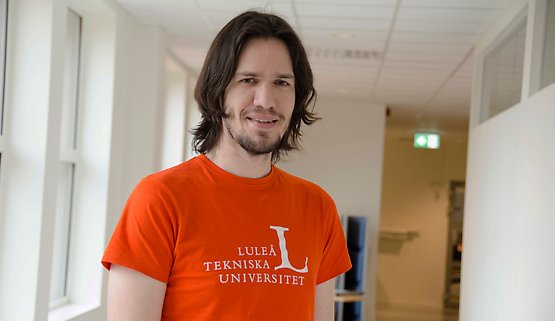
Dr. Hui Han is a Senior Lecturer at Luleå University of Technology (LTU) in Sweden, working within the Machine Learning Group with a Wallenberg AI, Autonomous Systems and Software Program (WASP) professorship. She is affiliated with the Department of Computer Science, Electrical and Space Engineering, specifically within the Embedded Intelligent Systems LAB. Her office is located in Luleå at room A3424. Dr. Han earned her Ph.D. in Industrial Engineering from the Technical University of Madrid (UPM), Spain. Following her doctoral studies, she completed postdoctoral research at the Data Science department of Fraunhofer IESE in Germany and later served as a postdoctoral fellow in the Department of Computer Science at the Norwegian University of Science and Technology (NTNU), Norway. Dr. Han's research focuses on data science with specific expertise in Edge AI and TinyML (Tiny Machine Learning). She leads research efforts in developing sustainable modeling for Sustainable Supply Chain Management, particularly in reverse logistics and circular economy. Her work also encompasses social commerce and Industry 4.0 applications. As the first author, she has published 17 papers including 10 journal papers, 4 conference papers, and 3 magazine papers, accumulating over 1,000 citations according to Google Scholar. Her publications appear in high-impact journals such as Technological Forecasting & Social Change (IF 13.3), Expert Systems with Applications (IF 8.5), and Education and Information Technologies (IF 5.5). Dr. Han's teaching portfolio includes Management Information Systems, Project in Industrial AI, and TinyML. She has created an introductory TinyML course available on her YouTube channel. Her research spans multiple interdisciplinary areas including Industry 4.0, IoT, Cloud Computing, Big Data Analytics, Cyber-Physical Systems, Multicriteria decision support systems (particularly Fuzzy TOPSIS), Complex Relationships Analysis (PLS-SEM), Data Science, TinyML, Edge AI, Random Forest techniques, Information Systems, Social commerce, E-commerce, Sustainable Supply Chain Management, Reverse logistics, Closed-loop Supply Chains, Circle Economy, and Healthcare applications. Her Embedded ML for Health Project demonstrates practical applications of TinyML in healthcare, using Arduino Nano 33 BLE Sense and OV7675 Camera for melanoma detection through image processing and machine learning algorithms. This project showcases her ability to apply theoretical research to real-world healthcare challenges.
Björn Johansson is a Professor at Chalmers University of Technology, specializing in Production Systems. His research focuses on sustainability aspects of manufacturing through virtual tools, aiming to minimize environmental, social, and economic impacts. Key methodologies include flow simulation, dynamic environmental assessments, 3D visualization, and layout optimization. Primary research areas: Sustainable Manufacturing, Digital Twins, Environmental Impact Assessment Collaborations: Mélanie Despeisse, Henrik Söderlund, and others in automotive, battery production, and maritime industries His work emphasizes integrating digital technologies (e.g., VR, IoT) with sustainable practices, addressing challenges in supply chain resilience, human-robot collaboration, and circular economy models. Recent studies explore VR training environments, 5G-enabled manufacturing, and extended reality (XR) frameworks. Current projects involve 44 initiatives across battery systems, servitization, and digitalization for sustainability. Publications span 179 articles, including topics like digital twin implementation, ergonomic VR assessments, and hybrid simulation models for environmental analysis.
Marcus Liwicki is a Chair Professor at Luleå University of Technology (LTU) and Senior Assistant Professor at the University of Fribourg, where he leads research in Machine Learning at the Department of Systems and Space Engineering. He serves on LTU's Vice-Chancellor's Council for Artificial Intelligence. Education: MS in Computer Science (Free University of Berlin, 2004) PhD (University of Bern, 2007) Habilitation (Kaiserslautern University of Technology, 2011) His research focuses on core machine learning (pattern recognition, neural networks) and applied AI in document analysis, quantum computing, and human-computer interaction. Recent publications demonstrate strong emphasis on generative AI models, multi-task learning optimization, and AI applications in physics/health domains. Awards: ICDAR Young Investigator Award (2015) for pattern recognition research He leads the Machine Learning Group at LTU's EISLAB, supervising multiple courses including Advanced Deep Learning, Neural Networks, and AI fundamentals.
Seyed Jalaleddin Mousavirad (Jalal) serves as a Postdoctoral researcher at Mid Sweden University in Sundsvall, Sweden, within the Department of Computer and Electrical Engineering (DET) and affiliated with the STC Research Centre. His research focuses on advancing AI-driven solutions for sustainable technologies and complex optimization problems. He earned his PhD in Computer Engineering specializing in Artificial Intelligence from the University of Kashan, Iran. Previous academic appointments include Assistant Professor at Hakim Sabzevari University (Iran), instructor roles at the University of Tehran (2018-2019) and Azad University (2019-2020), and a Research Fellow position at the University of Beira Interior (Portugal) where he contributed to the European GreenStamp project on sustainable Android applications. Dr. Mousavirad's research spans Image Processing and Computer Vision, Machine Learning, Evolutionary Computation, and Applied Artificial Intelligence, with significant contributions in pattern recognition, metaheuristic algorithms, and neural network optimization. His work demonstrates strong interdisciplinary applications in healthcare diagnostics, power systems, and medical imaging. Recent publications reveal a pronounced trend toward federated learning frameworks for privacy-preserving medical analysis, adversarial robustness in diffusion models, and hybrid optimization techniques for ECG classification and brain tumor detection. This reflects a strategic focus on translating AI innovations into practical healthcare and sustainability solutions. He actively contributes to the academic community as a guest editor for journals including Computational Intelligence and Neuroscience, Entropy, and Mathematical Biosciences and Engineering. His editorial leadership extends to organizing special sessions at IEEE CEC and EvoApplications conferences. Dr. Mousavirad maintains extensive peer-review commitments across 50+ prestigious venues including IEEE Transactions on Evolutionary Computation and IEEE Transactions on Cybernetics. His collaborative research includes international engagements at Xi'an Jiaotong-Liverpool University (China) and current work within Mid Sweden University's STC Research Centre on energy-aware computing and neural network optimization.
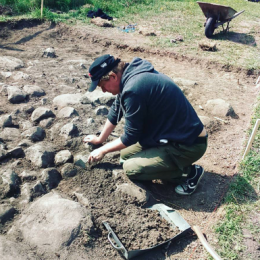
Fredrik Fahlander (born 1965) is a Professor of Archaeology at Stockholm University's Department of Archaeology and Classical Studies, where he maintains his office in Room 321 of the Wallenberglaboratoriet at Lilla Frescativägen 7. He received his doctoral degree in 2003 from the University of Gothenburg and began a postdoctoral fellowship at Stockholm University in 2009, securing a permanent position there in 2013. Fahlander's research employs a symmetrical approach focusing on detailed analyses of social processes that incorporate both human and non-human actors. His methodology is relational and non-representational, working from the bottom-up alongside specific archaeological materials and socio-material settings. He has developed innovative approaches to studying Bronze Age rock art as petrofacts with potential agency to affect events, examining displacements in stylistic variability, alterations, re-cuts, superimpositions, and breaking against praxis. Current Research Focus: Material agency, ontological approaches, experimental archaeology Major Projects: Material images: Visual modes of material articulation in south Scandinavian rock art (funded by Riksbankens jubileumsfond); Digital images for research and the public Methodologies: Advanced photogrammetry, 3D analysis, experimental reconstruction, symmetrical archaeology His recent publications reveal a consistent focus on Bronze Age Scandinavian rock art, particularly examining visual modes, material articulation, and the agency of imagery. Fahlander's work bridges theoretical depth with practical documentation methods, creating a unique approach to understanding prehistoric visual culture. His research increasingly incorporates digital documentation techniques while maintaining strong theoretical foundations in material culture studies and posthumanist approaches. Fahlander is actively involved with the Stockholm Experimental Archaeology Research Group, which serves as a support and interest network for researchers conducting archaeological experiments. He also maintains connections with mikroarkeologi.se and Academia.edu for broader scholarly engagement.
Lena Eskilsson is a Senior Lecturer in the Department of Service Studies at Lund University's School of Economics and Management. She also serves as Deputy Vice-Chancellor in University Management and is an Affiliated Researcher at the Centre for Retail Research at Lund University. Her academic career spans multiple roles in research, teaching, and university administration. Her research focuses on human geography and economic geography with specialization in place development and urban marketing. Her main research interests include urban planning, transport geography, and mediatized tourism. She has contributed significantly to research related to UN Sustainable Development Goals, particularly in social sciences domains. Lena's research output demonstrates strong thematic consistency across her publications, primarily focusing on the intersection of tourism, media, and urban development. Her work shows increasing emphasis on sustainable urban tourism development, with a particular focus on addressing challenges posed by over-tourism in contemporary urban environments. Lena leads the major research project 'Rethinking urban tourism development: Dealing with sustainability in the age of over-tourism,' funded by Formas (2019-2023). She has been actively involved in multiple research projects including the ongoing 'Urban Arena' initiative and several completed projects related to tourism development and information dissemination. Her academic activities include participation in conferences and organization of public lectures, particularly on topics related to sustainable urban tourism and the university's role in future city development. She has contributed to collaborative research efforts across multiple disciplines, demonstrating engagement with both theoretical and practical aspects of urban development.
Arianit Kurti is a full professor of informatics at Linnaeus University, where he serves as Head of both the Informatics Department and the Computer Science and Media Technology Department. With over 20 years of international academic experience across Sweden, Kosovo, and North Macedonia, Prof. Kurti brings extensive expertise in digital technologies and sustainable innovation. He previously held research leadership positions at RISE Research Institutes of Sweden. Prof. Kurti's research focuses on data-driven approaches for business innovation to achieve sustainable digitalization. His work spans multiple domains including forestry (Forest 4.0), furniture industry digital transformation (APPEND, STELLA), education technology (Edutain, IGNITE), and social inclusion (STEFORA). He leads the Data-driven Business Innovation research group and is active in the Interaction Design Research Group, DISA research center, and LNU Systems Community. His recent publications reveal a strong emphasis on practical applications of AI, IoT, and data analytics across diverse sectors. The research trajectory shows progression from mobile learning and context-aware systems in early career to current focus on sustainable digitalization, business model innovation, and domain-specific applications in forestry and manufacturing. Key themes include human-centered technology design, data ecosystems, and bridging academic research with real-world industry challenges. Prof. Kurti has secured approximately €8.5 million in research funding from prestigious sources including EU EACEA, EU H2020, Swedish Knowledge Foundation, Vinnova, Wallenberg Foundation, and FORMAS. He currently leads two major EU Horizon projects focused on AI and IoT technologies for forestry management. He has published over 70 peer-reviewed works spanning journals, conferences, and books, with recent output showing strong international collaboration patterns. His research groups maintain active partnerships with industry and academic institutions across Europe, with particular strength in Scandinavian countries and the Balkans.



.jpg)