معرفی
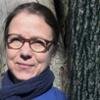
Fredrik Fahlander (born 1965) is a Professor of Archaeology at Stockholm University's Department of Archaeology and Classical Studies, where he maintains his office in Room 321 of the Wallenberglaboratoriet at Lilla Frescativägen 7. He received his doctoral degree in 2003 from the University of Gothenburg and began a postdoctoral fellowship at Stockholm University in 2009, securing a permanent position there in 2013.
Fahlander's research employs a symmetrical approach focusing on detailed analyses of social processes that incorporate both human and non-human actors. His methodology is relational and non-representational, working from the bottom-up alongside specific archaeological materials and socio-material settings. He has developed innovative approaches to studying Bronze Age rock art as petrofacts with potential agency to affect events, examining displacements in stylistic variability, alterations, re-cuts, superimpositions, and breaking against praxis.
- Current Research Focus: Material agency, ontological approaches, experimental archaeology
- Major Projects: Material images: Visual modes of material articulation in south Scandinavian rock art (funded by Riksbankens jubileumsfond); Digital images for research and the public
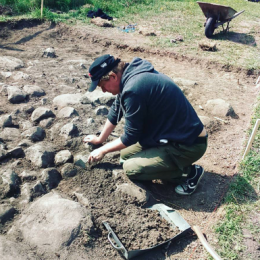
- Methodologies: Advanced photogrammetry, 3D analysis, experimental reconstruction, symmetrical archaeology
His recent publications reveal a consistent focus on Bronze Age Scandinavian rock art, particularly examining visual modes, material articulation, and the agency of imagery. Fahlander's work bridges theoretical depth with practical documentation methods, creating a unique approach to understanding prehistoric visual culture. His research increasingly incorporates digital documentation techniques while maintaining strong theoretical foundations in material culture studies and posthumanist approaches.
Fahlander is actively involved with the Stockholm Experimental Archaeology Research Group, which serves as a support and interest network for researchers conducting archaeological experiments. He also maintains connections with mikroarkeologi.se and Academia.edu for broader scholarly engagement.