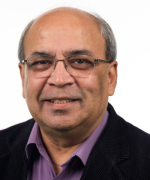
Ashok Goel is a Professor of Computer Science and Human-Centered Computing at Georgia Institute of Technology and Chief Scientist at Georgia Tech’s Center for 21st Century Universities (C21U). He also serves as Executive Director of the NSF-funded National AI Institute for Adult Learning and Online Education (AI-ALOE). His research spans cognitive systems, artificial intelligence, and education, with a focus on computational design, creativity, and AI-driven educational technologies. Professor, School of Interactive Computing, Georgia Tech Chief Scientist, Center for 21st Century Universities Executive Director, NSF’s National AI Institute for Adult Learning and Online Education Goel’s research explores the intersection of AI and cognitive science, particularly in computational design, creativity, and biologically inspired design. His recent work emphasizes AI in education, including virtual teaching assistants like Jill Watson (powered by ChatGPT) and frameworks for scalable, human-centric AI-augmented learning. He investigates explainable AI, multimodal educational systems, and bidirectional feedback mechanisms to enhance personalized learning experiences. Award highlights include: AAAI’s Outstanding AI Educator Award Fellow of AAAI and Cognitive Science Society University System of Georgia Regent’s Award for Scholarship of Teaching and Learning Goel leads the Design Intelligence Laboratory at Georgia Tech, mentoring a team of graduate and undergraduate researchers. His contributions to AI education include pioneering Georgia Tech’s Online Master of Science in Computer Science (OMSCS) program and developing blended learning frameworks. He also co-founded the AI-based educational startup Beyond Question (LLC) in 2020.
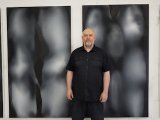
Michael Evans is a Senior Lecturer in Painting and Programme Leader for Fine Art Painting and Drawing at the University of Northampton, where he has been teaching since 1996. He holds a BA (Hons) in Fine Art from Coventry University and completed a practice-based PhD in 2012 on contemporary abstract painting and spiritual experience. He is an active artist and scholar, supervising PhD students and contributing to journals and edited volumes. Bachelor of Arts (Hons) in Fine Art, Coventry University (1984–1987) PhD in Fine Art (Practice-Based), University of Northampton (awarded 2012) Michael Evans' research is deeply rooted in the intersection of abstract painting, spirituality, and contemporary philosophical inquiry. His work explores apophatic modes of thought, the numinous, and transcendental abstraction within a secular context, while also examining how digital technologies influence contemporary painting practices. He investigates how painting can evoke spiritual or transcendent experiences even in non-religious settings, drawing on traditions of negative theology and Jungian psychology. His recent scholarly and artistic output demonstrates a consistent engagement with themes of emptiness, selfhood, otherness, and the metaphysical dimensions of artistic practice. Publications and exhibitions reflect a trajectory focused on the experiential and contemplative aspects of art, particularly how abstraction can serve as a conduit for spiritual or psychological insight. His work often bridges theory and practice, emphasizing process-based approaches and reflective inquiry. Michael Evans has contributed to significant publications such as the International Journal of Religion and Spirituality in Society and the International Journal of Jungian Studies , as well as edited volumes like Contemplations of the Spiritual in Art and Digital, Painting . His exhibitions, including at the Royal College of Art and Northampton Museum & Art Gallery, highlight his commitment to public engagement and artistic innovation. Contributing author to Contemplations of the Spiritual in Art and Photography Published in International Journal of Religion and Spirituality in Society Published in International Journal of Jungian Studies Exhibitions at Royal College of Art, Northampton Museum & Art Gallery, and North East Wales Institute Michael Evans supervises PhD candidates in Fine Art, including Francis Blore, Nour Zantah, and Natasha Toms, whose projects explore drawing, violence in art, and Baroque imagery. He has not received any explicitly mentioned grants, but his sustained research activity and public exhibitions indicate ongoing institutional and academic support. His leadership in the Fine Art programme underscores his role in shaping contemporary art education. He is actively involved in curatorial and collaborative projects, such as the Material Matters exhibition at Northampton Museum and Art Gallery and the Viewfinder digital art project. These initiatives reflect his engagement with interdisciplinary practices, digital media, and community outreach, positioning him at the forefront of contemporary art discourse.
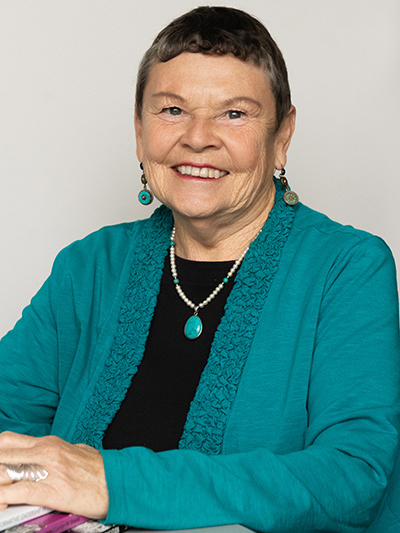
Carolyn M. Shields, Ph.D., is Professor of Educational Leadership and Policy Studies in the College of Education at Wayne State University, Detroit. A scholar-activist with over three decades of experience, her work centres on transformative leadership for social justice, equity, and democratic education in both K-12 and higher-education contexts. Education B.A. French & English, Queen’s University (1968) M.A. French, Queen’s University (1970) Ph.D. Educational Administration, University of Saskatchewan (1991) Certificate in Problem-based Learning, PBL Training Institute, Palo Alto (1993) Additional certifications in assessment, creative education, special education, and administrative leadership. Research Focus Dr. Shields’ scholarship interrogates how leaders can create inclusive, democratic environments that foster academic excellence while redressing inequity. Her research spans cross-cultural leadership, transformative leadership theory, Indigenous education (notably with Navajo schools), structural reform such as year-round schooling, and international comparative studies on equity policy and practice. Publications & Thought Leadership Across more than 100 refereed works—including seven books—she has advanced transformative leadership as a vehicle for systemic change. Recent titles explore practical implementation of equity-focused leadership and allyship in schools, positioning her at the forefront of socially-just educational administration discourse. Awards & Recognition Honorary Doctorate, Laval University (2017) Liebman Book Award (2000) Fellow, Commonwealth Council for Educational Administration and Management (2004) Distinguished Service Award, Canadian Association for Studies in Educational Administration (2009) Teaching for Social Justice Award, AERA SIG (2010) Grants, Advising & Service Dr. Shields has secured over one million dollars in external funding and has supervised numerous master’s and doctoral students, many of them international. She has served as Dean of the College of Education at Wayne State, department head at both University of Illinois and UBC, board member for UCEA and CASEA, and advisor to ministries and school systems in Canada, the U.S., China, New Zealand, and France. Labs, Centres & Community Engagement She founded the School Leadership Centre at UBC and the non-profit “Books to Schools,” which ships print materials to under-resourced schools worldwide. Continuous community engagement includes leadership institutes, keynote addresses on five continents, and ongoing consultation with districts serving marginalized populations.
Dr Dusan Radunovic is an Associate Professor and Director of Studies (Russian) at the University of Durham's School of Modern Languages and Cultures. His research focuses on Critical Theory (Bakhtin, Formalism, Shpet's Circle), Russian, Georgian and Eastern European cinemas, and transnationalism studies. He leads the World Cinema and Cosmopolitics research group. Research Interests - Critical Theory (with focus on Bakhtin, Russian Formalism) - Soviet and post-Soviet cinema (Georgian, Russian, Eastern European) - Transnational cinema and national identity formations - Film semiotics and aesthetics Recent Scholarship Trends His 2024 work explores decolonial aesthetics in Georgian cinema and Eisenstein's Battleship Potemkin's evolving interpretation. Recent articles analyze post-Soviet transnational cinema, memory in documentary film, and the avant-garde's cultural impact. He frequently publishes in Slavic and East European Journal , Cinema Journal , and Apparatus . Student Supervision George Bocean (PhD) Ran Wei (PhD) Stepan Kachalin (PhD) Labs/Teams - World Cinema and Cosmopolitics research group
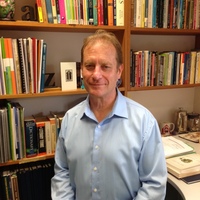
Don Carter is an Associate Professor in the School of International Studies and Education at the University of Technology Sydney (UTS), Faculty of Arts and Social Sciences. He holds a PhD from the University of Sydney and has a distinguished career spanning academic, policy, and classroom roles in English education. His educational background includes a PhD from the University of Sydney, a Master of Education (Honours) from the University of Wollongong, a Master of Education from the University of Sydney, a Diploma in Education from the University of New South Wales, and a Bachelor of Arts from the same institution. Dr Carter's research is centered on English education, with a strong focus on writing pedagogies, curriculum design and history, standardized testing (especially NAPLAN), spelling instruction, and the influence of Romanticism on educational practices. He investigates how curriculum is developed and implemented, particularly the general capabilities in primary schools and the impact of high-stakes testing on teachers and students. His work often applies theoretical frameworks, such as Biesta’s three functions of education, to analyze policy documents like the Melbourne Declaration. His recent publications reveal a strong trend in curriculum evaluation, teacher education, and educational policy. His research spans from practical classroom pedagogy to high-level policy analysis, with a consistent emphasis on teacher voice, workload, and professional identity. He frequently collaborates with colleagues like Jackie Manuel and Jennifer Yoo, and his work has significant impact in Australia and internationally, particularly in the areas of outcomes-based education in Indonesia and teacher shortages in NSW. Scientific Awards: No specific awards are mentioned in the provided text. Dr Carter has successfully supervised research students and secured competitive grants, including funding from the Australian Teacher Education Association and the Australia-Korea Foundation. His funded projects cover topics such as career change student teachers, the K-2 Literacy and Numeracy Action Plan evaluation, and best practices in online arts learning post-pandemic. He is an active member of the academic community, serving as a peer reviewer for journals like Australian Journal of Language and Literacy and Educational Philosophy and Theory . He is also a sought-after media commentator, appearing on ABC and in major print publications to discuss contemporary educational issues. He leads and contributes to significant research projects and collaborative initiatives within the UTS School of International Studies and Education, focusing on teacher development, curriculum innovation, and educational equity.
Shannon Leddy is an Associate Professor in the Department of Curriculum & Pedagogy at the University of British Columbia . Her work focuses on Indigenous education, art education, and decolonizing practices within teacher training programs. She previously served as a Faculty Associate at Simon Fraser University 's Faculty of Education, where she co-developed sustainability-focused teacher education modules. Research Interests span Indigenous education, decolonial literacy, relational ethics, and the role of contemporary Aboriginal art in disrupting colonial narratives. She integrates slow pedagogies and Indigenous principles to address sustainability and environmental learning, emphasizing place-based, experiential approaches. Publications reveal a focus on anti-colonial art education, Indigenous environmental education, and the use of humor as a culturally relevant pedagogy. Her recent work explores métissage and sister scholarship as tools for decolonizing academia, while earlier research includes the SEEDs (Sustainability Education in an Environment of Diversity) program, which aimed to reorient teacher education toward ecological competencies. No scientific awards or formal honors are explicitly mentioned in the provided texts.
Nick Caddick is a Professor of Political Sociology and Deputy Director of the Veterans and Families Institute (VFI) at Anglia Ruskin University , affiliated with the Faculty of Health, Medicine and Social Care . His work bridges critical military studies , narrative theory , and veteran transition . BSc, MSc, and PhD in Sport and Exercise Sciences/Psychology from Loughborough and Gloucestershire Universities Senior Lecturer in Military and Veteran Health Research Member of the Safe and Inclusive Communities research theme Editorial Board, Critical Military Studies Research Interests focus on: Narrative in Global Politics : Examines storytelling’s role in shaping post-war identities and societal perceptions Combat Veteran Wellbeing : Explores trauma, embodiment, and recovery through sport/environment Veteran Transition : Investigates cultural competence in civilian reintegration, supported by AHRC grants Qualitative Methodologies : Specializes in narrative analysis and socio-narratology Recent Publications span veteran narratives, PTSD studies, and military-civilian transition, with grants totaling over £1 million from AHRC and Forces in Mind Trust. His 2023-2025 Ruskin Module explores storytelling’s transformative power.
Konstantinos Alexakos is a Professor and Program Coordinator for General Science (GSCI) and Science Education (covering biology, chemistry, physics and earth science for grades K-12) at the School of Education, Brooklyn College, City University of New York (CUNY). He also holds a professorship in The Ph.D. Program in Urban Education at the Graduate Center, CUNY. His academic work focuses on science education, teacher development, and the integration of mindfulness practices in educational settings. His educational background includes: B.S. in Physics from The City College of New York - CUNY (1989) M.A. in Education in Physics and General Science from New York University (2000) M.Phil. in Science Education from Columbia University (2004) Ph.D. in Science Education from Teachers College, Columbia University (2005) Alexakos's research interests span multiple interconnected domains within science education. He has made significant contributions to understanding mindfulness and wellness in educational contexts , particularly how contemplative practices can enhance teaching and learning environments. His work explores emotional dimensions of science education , examining how teachers and students navigate emotional landscapes in classrooms. He has pioneered research on cogenerative dialogue and coteaching as mechanisms for improving educational practice. His scholarship also addresses diversity, equity, and inclusion in science education, with particular attention to race, gender, and cultural considerations. Alexakos investigates teacher identity formation and the challenges science educators face in urban settings, while also developing frameworks for authentic inquiry that empower teachers as researchers. His recent work increasingly focuses on holistic approaches to education that integrate physical, emotional, and intellectual dimensions of learning. Analysis of his recent publications (2017-2022) reveals a clear trajectory toward integrating contemplative practices with science education. His scholarship demonstrates a consistent focus on teacher development through authentic inquiry, with increasing emphasis on wellness, mindfulness, and emotional dimensions of teaching and learning. The publications show a progression from theoretical frameworks to practical applications of heuristics and contemplative practices in educational settings. His collaborative work with Kenneth Tobin forms a substantial portion of his output, indicating a productive research partnership focused on transforming educational practices. The publications span multiple formats including books, book chapters, and journal articles, demonstrating versatility in scholarly communication. His scientific awards and recognitions include: Brooklyn College Student Technology Fee Award for "Science Lab Probes" ($12,000) PSC-CUNY Research Award (PSCREG-38-335) for "Self and Science Teacher Attrition" ($6,000; 2007-08) PSC-CUNY Research Award (PSCOOC-37-30) for "The Science Teacher, Subjective Constructs of Science Teaching, and the 'Organic Link'" ($5,990; 2006-07) Alexakos has been actively involved in mentoring students through various teaching practicums and research activities. His courses include Natural Science for Early Childhood & Childhood Education, General Science for Child & Elementary School, Physical Science for Childhood Teachers, and multiple student teaching practicum courses. He has developed the master of arts in teaching (MAT) in science education program at Brooklyn College that infuses research and practice in science teaching in urban settings. His grant activities include research projects on teacher attrition, the science teacher as the organic link, and wellness practices in educational contexts. He has also secured funding for technology implementation in science education through the Student Technology Fee Award. While not explicitly mentioned as leading a specific laboratory, Alexakos is deeply involved with the Urban Science Education Research Seminar at the CUNY Graduate Center, where he has presented and organized numerous sessions. He has collaborated extensively with colleagues including Kenneth Tobin, Maria Powietrzynska, and Leah Pride on research related to emotions, mindfulness, and wellness in educational settings. His work with the Association of Greek American Professional Women (AGAPW) on "Inspiring Women in Science, Technology, Engineering, and Mathematics (STEM)" demonstrates his commitment to supporting underrepresented groups in STEM fields.
Angela Beggan is a Senior Lecturer at the School of Health and Life Sciences, Liverpool John Moores University. Her academic work centers on Physical Activity and Health, Narrative Inquiry, and Behaviour Change, with a focus on Postqualitative Inquiry and Human-centred Design. University: Liverpool John Moores University School: School of Health and Life Sciences Academic Rank: Senior Lecturer Her research interests span Qualitative Research Methods , Co-Production , and Ageing and Physical Activity . She actively contributes to the United Nations Sustainable Development Goals (SDGs) through her work. Recent publications (2025) include explorations of Compostable Interventions , Posthuman Walking Rhythms , and Stress in Professional Cycling . Her 2024 article on Birdsong in Physical Activity Interventions highlights innovative methodological approaches. Angela’s academic activities include invited talks , peer-review , and examination roles in postgraduate research. She has served on the Board of Directors for South Lanarkshire Leisure and Culture since 2005, demonstrating long-term community engagement.
Aslaug Kristiansen is a professor of education at the University of Agder (UiA), with a doctorate from the University of Oslo (2003). She has been employed at UiA since 1989, after her first temporary position at what was then Kristiansand Teacher Training College. Her academic background includes a Cand. Paed. degree and research assistant work at the Norwegian Teachers' Academy in Bergen. She has studied Martin Buber's philosophy at The Hebrew University in Jerusalem and the Pädagogisches Institut der Universität Freiburg with Professor Maurice Friedman. University of Oslo - Cand. Paed. and Ph.D. Norwegian Teachers' Academy in Bergen - Research Assistant Research Council of Norway - Recipient of recruitment grant Research Interests: Aslaug Kristiansen specializes in values and ethics in educational work, professional theory, democracy, dialogue, and peace pedagogy. Her research explores the role of teachers, trust, ethics and values, silence and dialogue in professional collaborative relationships. She has coordinated the "Democratic Mobilization" initiative at UiA since 2015, which has led to various collaborative projects, including with the ARKIVET Peace and Human Rights Centre in Kristiansand. Publication Trends: Her recent publications focus on democratic education, hate speech among students, and teacher motivation. She has published extensively on Martin Buber's philosophy and its application to modern pedagogical practice, emphasizing interpersonal relationships, dialogue, and ethical considerations in teaching. Her work also addresses post-war educational approaches and the prevention of extremism through educational initiatives. Scientific Contributions: Aslaug Kristiansen has made significant contributions to educational philosophy and practice, particularly in the areas of teacher-student relationships and ethical dimensions in education. She has coordinated major academic initiatives and has been instrumental in advancing dialogical approaches to education. Her publications appear in prominent educational journals and edited volumes, reflecting her influence in the field. Advising and Grants: She has coordinated the "Democratic Mobilization" initiative at the Department of Education since 2015 and has received a recruitment grant from the Research Council of Norway. Her work has led to numerous collaborative projects and has influenced educational practices in Norway and internationally through comparative studies. Research Groups: Aslaug is active in the research group "Professions and professionals in cooperation" and the Democratic Mobilization initiative at UiA. She collaborates with ARKIVET Peace and Human Rights Centre and participates in international research projects including the VALIDE international project on value-based democracy education.
Raphael Vella is a Professor and Art Coordinator at the University of Malta's Department of Arts, Open Communities and Adult Education within the Faculty of Education. His practice spans contemporary art, socially engaged art, and curatorial work, with a focus on Mediterranean pedagogies and the politics of time in art and education. He founded the Valletta International Visual Arts (VIVA) festival and the Curatorial School, and has curated numerous exhibitions internationally. His research explores the intersection of art, ethics, and education, with a particular interest in participatory arts projects and critical pedagogies. Vella's publications include Conducting Participatory Arts Projects: A Practical Toolkit (2021), Art Education: Conflicts and Connections (2020), and Mediterranean Art and Education (2013). His work has been exhibited in solo shows at Valletta Contemporary (2023), Art Gallery of Burlington (2017), and Modern Art Oxford (2007), among others.
Dr. Marina G. Ogden is an Affiliate Researcher at the School of Modern Languages and Cultures within the University of Glasgow , specializing in the intersection of Russian religious thought and European philosophical traditions. Primary affiliation: University of Glasgow (College of Social Sciences) Academic rank: Researcher Email: Marina.Ogden@glasgow.ac.uk Research Focus: Her scholarly work centers on Lev Shestov 's philosophical interpretations of Russian and European literature, particularly Dostoevsky and Nietzsche. Key themes include: Christian existentialism Apophatic theology Dialogical hermeneutics Psychological dimensions of absurdity Death/rebirth narratives in religious thought Publication Trends (2015-2023): Consistent exploration of Shestov's engagement with Dostoevsky's existential themes, Freudian psychoanalysis, and Nietzschean tragedy. Recent work emphasizes paradoxical knowledge structures and trauma-memory dynamics in religious-philosophical contexts. Academic Context: Contributes to interdisciplinary dialogue between religious studies, literary theory, and existentialist philosophy through detailed textual analysis and comparative studies.
Eeva Anttila is a Professor in Dance Pedagogy at the Theatre Academy of University of the Arts Helsinki, Finland, where she leads the MA program for dance pedagogy. She earned her Doctor of Arts degree in Dance from the Theatre Academy in 2003. Her research focuses on dialogical and critical dance pedagogy, embodied learning, and practice-based artistic research methods. Her education includes: Doctor of Arts in Dance (2003), Theatre Academy, Finland Anttila's research examines embodied knowledge through interdisciplinary approaches. She investigates how movement-based pedagogies facilitate transformative learning experiences across educational contexts, with particular focus on: Critical dialogical frameworks in arts education Embodiment as epistemological foundation Cross-disciplinary applications in language acquisition and physical education Social justice dimensions of artistic practices Her publications demonstrate consistent focus on arts integration in education, with recent trends exploring: Post-pandemic pedagogical adaptations Multisensory language learning approaches Interdisciplinary curriculum development Social-emotional dimensions of embodied practices Anttila leads significant research initiatives including: ELLA project (Embodied Language Learning through Arts) funded by KONE Foundation ARTSEQUAL research project (2015-2021) as Arts@School team leader 'The entire school dances!' national development project (2009-2013) She maintains active leadership roles in: Dance and the Child International (Chair 2009-2012) Observatory of Arts and Cultural Education, Finland (Founding member) Board of Uniarts (2015-2021)
Dr. Natasa Lackovic is a Senior Lecturer in the Department of Educational Research at Lancaster University's School of Social Sciences . As a philosopher of media, communication, and technology in education, she specializes in visual and multimodal approaches to higher education. Co-Director, Social Futures Centre Senior Fellow of Higher Education Academy (SFHEA) Co-Editor, Video Journal of Educational Pedagogy Member, International Association of Semiotic Studies Research Associate, University of Belgrade Her research bridges dualisms like 'image-concept' and 'mind-body' through inquiry graphics , relational HE , and postdigital semiotics . She examines embodiment, materiality, and digital representation in education, emphasizing social justice and interdisciplinarity. Key article themes include: Postdigital literacies and digital culture Relational pedagogy and sociomaterial approaches Visual semiotics in critical thinking Decolonial and emancipatory educational frameworks Algorithmic ethics in pedagogy Environmental sustainability through multimodal methods Scientific contributions: Authored two seminal monographs Developed inquiry graphics as pedagogical/research method Coordinated Graphic Novels and Comics Research Network Over 20 PhD theses supervised
JORGE SACIDO ROMERO is a Professor at the University of Santiago de Compostela, affiliated with the Department of English and German Philology within the Faculty of Philology. His primary research focuses on English Philology and Discourse and Identity studies, anchored in the Humanities Research Institute (iHUS). He holds a PhD from the University of Santiago de Compostela, awarded in 2003 for his thesis on identity in Joseph Conrad’s early Marlow narratives. His work intersects literary analysis, postcolonial studies, psychoanalysis, and gender studies, with a particular emphasis on intertextuality and cultural critique. Research interests include the analysis of narrative voice, liminality in diasporic literature, and the application of psychoanalytic theory to literary texts. His contributions span modernist and contemporary British literature, with notable explorations of authors like Janice Galloway, Roald Dahl, and Terry Eagleton. Recent studies address themes such as national identity in postcolonial fiction and the acoustic dimensions of narrative. His publications reflect a commitment to interdisciplinary approaches, blending literary criticism with cultural, political, and philosophical inquiries. Key contributions include examinations of gender dynamics in short fiction, the spectral elements in Conrad’s works, and the ideological underpinnings of modernist narratives. Despite prolific output, no formal awards are explicitly mentioned in the provided texts. Jorge Sacido’s academic trajectory includes directing doctoral research, with his thesis supervised by Dr. Jose Manuel Barbeito Varela, and maintaining active participation in research groups such as DI-1924. His engagement with both classical and contemporary texts underscores his role as a bridge between historical literary analysis and modern critical frameworks.