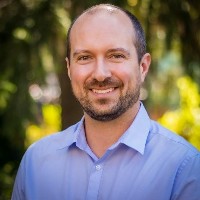
David D. Vachon is an Associate Professor in the Department of Psychology at McGill University. His research focuses on individual differences in deviance across the lifespan, emphasizing the role of personality in externalizing disorders and the absence of internal controls like empathy and constraint. He explores clinical psychology, social/personality dynamics, and developmental science. Research Interests: His work spans Personality etiology of psychopathy, antisocial personality disorder, and narcissism Deviant behaviors (substance use, aggression, crime) as natural outcomes without internal controls Developmental psychopathology and its intersection with race/criminal status Publications: His articles analyze empathy-aggression relationships, psychopathy prevalence, and DSM-5 critiques, reflecting themes of behavioral prediction and forensic psychology. Advising & Grants: No formal advisees or grant details listed. His work is supported by collaborative research networks in clinical and developmental psychology.
Professor Cati Connell is an Associate Professor of Sociology at Boston University and former Director of the BU Women’s, Gender, and Sexuality Studies Program. She holds a PhD in Sociology from the University of Texas at Austin (2010). Her research focuses on LGBTQ+ rights, military inclusion, gender dynamics, and workplace experiences. Key themes include queer identity formation, policy impacts on marginalized communities, and the intersection of labor practices with gender and sexuality. Education: PhD in Sociology from the University of Texas at Austin, 2010 Her research interests center on military integration post-DADT repeal, generational solidarities in LGBTQ+ communities, and the evolving meanings of self-identification terms like “lesbian.” She explores how institutions shape queer narratives, analyzing topics such as homonormativity, gendered compromises, and aesthetic labor in retail environments. Her work combines qualitative methodologies with theoretical frameworks like Bourdieu’s sociology of the body. In her recent publications (2015–2024), Connell examines the paradoxes of queer visibility in professional spaces, the tensions between civil rights and institutional policies, and digital platforms’ role in fostering LGBTQ+ solidarity. Her analysis often critiques how equality reforms can inadvertently reinforce exclusionary norms. Scientific awards: No awards explicitly mentioned in the provided texts. Advising and grants: While no specific advisees or grants are listed, Connell’s research trajectory suggests active mentorship in LGBTQ+ studies and sociology. Her work likely involves collaborative projects, though funding details remain undocumented. Labs/teams: Affiliated with Boston University’s Sociology Department and previously led the Women’s, Gender, and Sexuality Studies Program. No specific lab or team affiliations are noted in the texts, but her interdisciplinary focus implies potential collaborations across gender studies, queer theory, and military sociology initiatives.
Ross Haenfler is Professor of Sociology at Grinnell College, teaching courses on Social Movements, Deviance and Social Control, Sociological Theory, Men and Masculinities, and introductory sociology. His work bridges subcultures, music scenes, and social change, with a focus on lifestyle movements. Books: Subcultures: The Basics , Goths, Gamers, and Grrrls , Straight Edge , and The Better World Handbook Research trends show sustained engagement with subcultural theory, lifestyle movements, and intersections of music, gender, and activism. Articles span 2006-2025, covering topics from hardcore punk to digital subcultures and aging in youth scenes. Ross actively mentors students in qualitative methods, social movements, and youth subcultures. He chairs Mid-Iowa Community Action (MICA) and has been featured in documentaries on online misogyny and straight edge culture.
Theo Kindynis is a Senior Lecturer in Criminology at the Department of Sociology and Criminology, City St George's, University of London, where he joined in March 2024. Previously, he taught at Goldsmiths, University of London, and the University of Roehampton. His academic affiliations reflect a strong commitment to critical, ethnographic, and spatially informed criminological inquiry. PhD in Criminology, University of Greenwich, United Kingdom MPhil in Criminological Research, University of Cambridge, United Kingdom BA Hons in Sociology, University of Kent, United Kingdom Fellowship of the Higher Education Academy, Higher Education Academy, United Kingdom Theo Kindynis’s research centers on the intersections of urban space, lawbreaking, and social control. He is a leading expert on deviant subcultures, particularly graffiti writing and urban exploration, having conducted long-term ethnographic fieldwork in London. His work bridges empirical investigation with theoretical innovation, most notably through co-pioneering the concept of "ghost criminology" —a framework that examines the haunting aftereffects of crime, violence, and punishment. His methodological contributions include publishing legal, ethical, and practical guidance for criminological ethnographers researching criminalized groups, especially in digital and high-surveillance environments. His recent publications reveal a sustained engagement with spatial criminology, subcultural practices, and the ethics of ethnographic research. Themes across his work include the policing of urban aesthetics, the affective engineering of consumer spaces, the spectral presence of past violence, and the information security challenges faced by researchers in sensitive fields. His scholarly output combines theoretical rigor with grounded empirical insight, frequently published in top journals such as The British Journal of Criminology and Crime, Media, Culture . Theo Kindynis has contributed to public discourse as an expert commentator on graffiti and urban exploration, appearing in media outlets including the BBC Evening News and The Guardian. His work on information security for ethnographers addresses a critical gap in methodological literature, drawing from journalism, activism, and digital rights advocacy. Co-authored the foundational book Ghost Criminology: The Afterlife of Crime and Punishment (NYU Press, 2022) Pioneered methodological guidance on protecting ethnographic data from state and non-state threats Developed innovative approaches to anonymization and data protection in high-risk research Advocates for ethical rigor in researching criminalized populations As a supervisor, Theo welcomes doctoral proposals on urban space, deviant subcultures, and ethnographic methods. He is actively involved in shaping the future of criminological theory and methodology, particularly in relation to digital surveillance, researcher safety, and the cultural afterlives of crime. Theo Kindynis is affiliated with research teams exploring the intersections of space, crime, and memory. His ongoing projects continue to develop the framework of ghost criminology, while expanding into issues of algorithmic surveillance, border control, and the digital footprints of academic research. His work is increasingly relevant in an era of automated state profiling and data-driven social control.
Ryan Broll is an Associate Professor in the Department of Sociology and Anthropology at the University of Guelph , within the College of Social & Applied Human Sciences . He holds a PhD in Sociology from Western University (2014). His research focuses on bullying/cyberbullying prevention, resilience in youth, policing practices, and dark fandoms. Prior roles include teaching at St. Jerome's University (University of Waterloo) and research at the Centre for Addiction and Mental Health. Education: PhD in Sociology, Western University (2014) His research interests emphasize: Resilience in bullying victims Social control of vulnerable populations (e.g., policing youth/homeless individuals) Cybercrime dynamics Public policy implications of sociological findings He currently supervises graduate students in Criminal Justice/Public Policy programs. Grants & Projects: Co-Investigator for Building Bridges: Youth Education on Homelessness (2025) Prior evaluations of healthy relationships programs for youth Notable Achievements: Authored/co-authored over 15 peer-reviewed articles and a book on violence recovery Active in interdisciplinary collaborations across criminology, education, and public health
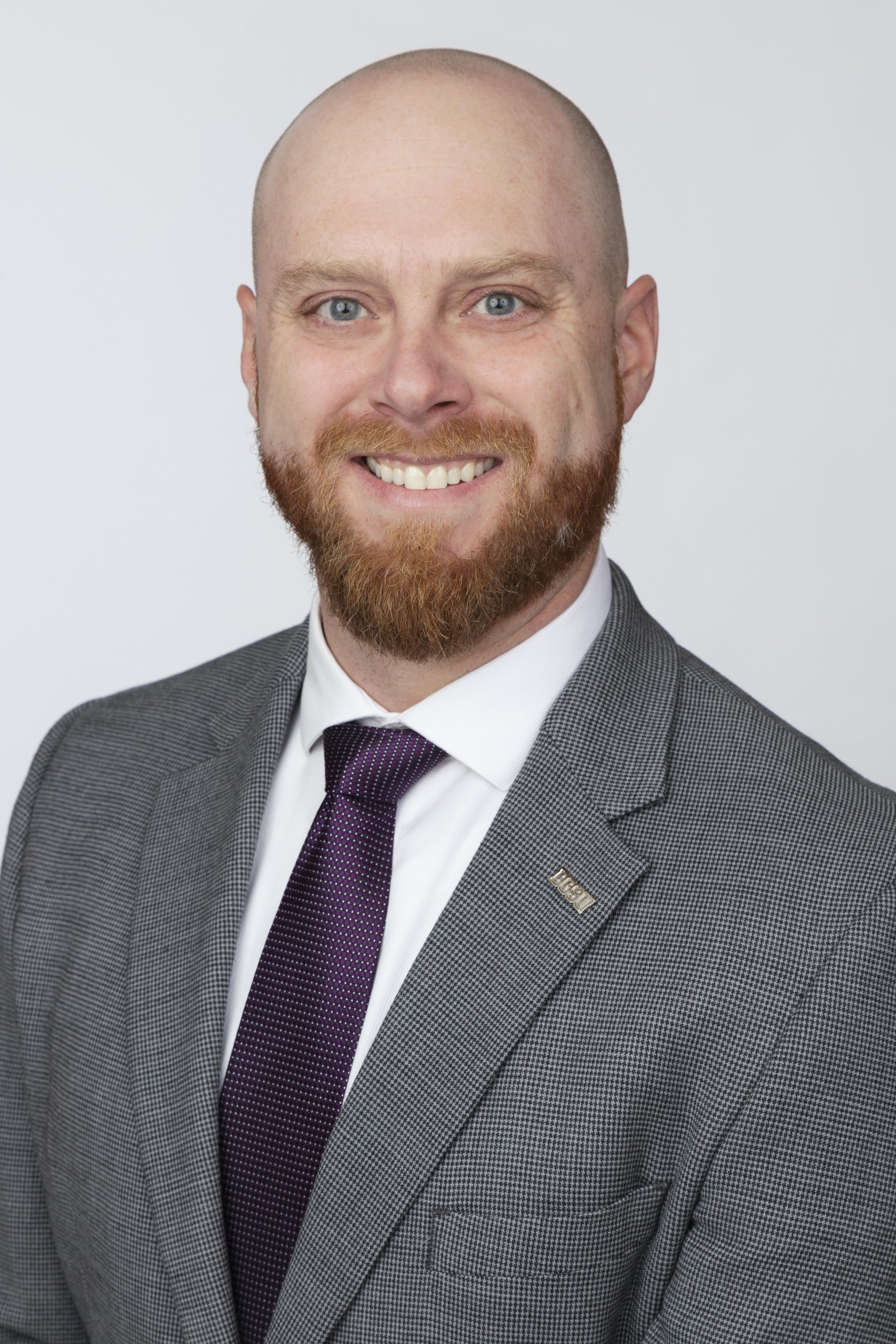
John H. Boman is an Associate Professor of Sociology at Bowling Green State University's College of Arts and Sciences. He earned his Ph.D. from the University of Florida in 2013. His research examines peer influences on antisocial behavior, crime across the life-course, and criminological theory. Specific interests include social learning processes, self-control dynamics, and contextual factors in deviant behavior. Analysis of recent publications shows a focus on opioid crisis impacts, prison reentry challenges, youth offending patterns, and methodological innovations in criminology. His work frequently employs longitudinal data and advanced statistical modeling to explore behavioral outcomes.
Wally Wojciechowski is an Assistant Professor at the Michigan State University School of Criminal Justice , specializing in life-course criminology and quantitative methodology. His research examines the interplay between mental health, substance use, and violence across developmental stages. PhD in Criminal Justice, 2018, University of Florida MA in Criminal Justice, 2016, University of Florida BA in Criminal Justice, 2012, Central Michigan University Dr. Wojciechowski’s work integrates mental health , substance use , and violence with a focus on adolescent development . His methodological expertise includes longitudinal analysis , mediation processes , and program evaluation , particularly in Michigan and Florida interventions. His recent publications analyze antisocial personality disorder , self-control , and dual systems modeling in predicting polydrug use and offending behaviors . These studies span journals like Journal of Forensic Sciences and Drug and Alcohol Dependence . Dr. Wojciechowski has contributed to understanding age-graded differences in behavioral patterns and has designed evaluation frameworks for promotive programs . No scientific awards are listed in the provided data.
Prof. Birgit Menzel is a Professor of Social Sciences at the Department of Public Management, Hamburg University of Applied Sciences. She serves as Prodekanin für Studium und Lehre (Deputy Dean for Teaching and Learning) at the Faculty of Economics and Social Sciences and is the Praktikumsbeauftragte (Internship Coordinator) for her department. Her academic career spans roles at multiple institutions, including the University of Oldenburg and the Hamburg School of Policing. Education: She holds a Magistra Artium in Sociology and Pedagogy from the University of Oldenburg (1991), with earlier studies in Special Education and German Literature. Her doctoral thesis (1998) focused on deviance theory. Research interests include social control, deviant behavior, criminological theory, and organizational management. She has published extensively on topics like sexual violence, constructivist theories of deviance, and hybrid learning formats in higher education. Recent work emphasizes interdisciplinary approaches to criminology and educational innovation. Publications trends show strong focus on sociology of crime, gender-based violence, and academic pedagogy. She contributes to journals like Kriminologisches Journal and holds editorial roles in key criminology publications. Her professional memberships include the GiwK (interdisciplinary criminology society). She actively engages in academic networks, organizing conferences on topics like 'Krimmigration' (2021) and 'Criminology of the Visual' (2018). Teaching focuses on social sciences with emphasis on personnel management and organizational sociology.
Robert J Johnson is a Professor in the Department of Sociology & Criminology at the University of Miami's College of Arts and Sciences . His research focuses on the intersection of sociology, criminology, and mental health, particularly examining the impacts of war trauma, discrimination, and religious struggles on psychological distress and interpersonal violence. Key Research Areas: Conflict trauma, mental health resilience, ethnic identity, religious coping, deviant behavior Recent Work: Studies on intimate partner violence in Ukraine, decision-making during wartime, depression among displaced populations, and the role of social support in mitigating conflict-related stress.
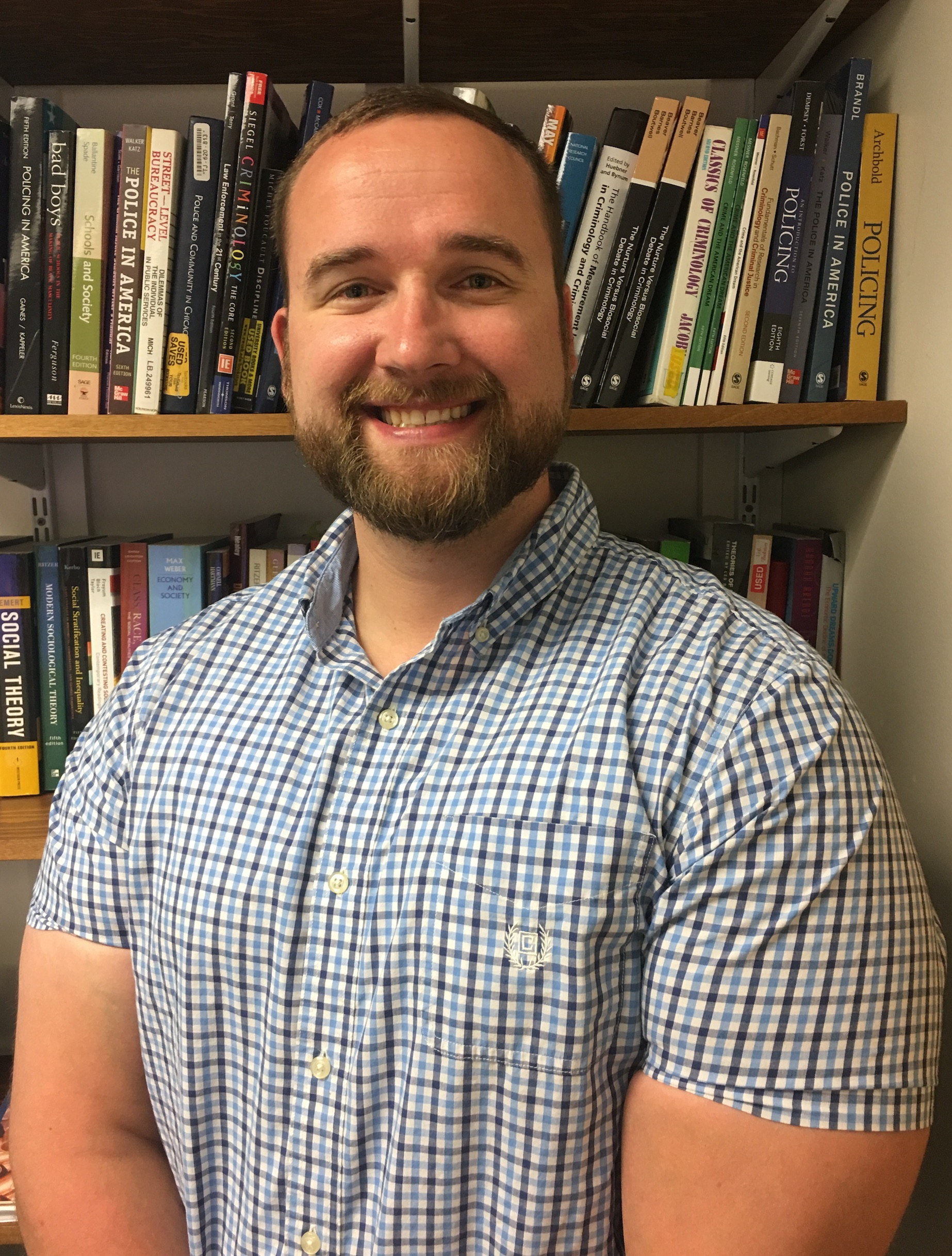
Thomas J. Mowen is an Associate Professor of Sociology at Bowling Green State University (BGSU), within the College of Arts and Sciences. His research focuses on the effects of punishment and policing on youth and families, with a particular emphasis on the school-to-prison pipeline, incarceration impacts, and life-course criminology. He holds a PhD in Sociology from the University of Delaware, complemented by a MA and BS in Sociology from the University of Louisville. Dr. Mowen’s work explores the interplay between criminal justice systems and societal structures, including how school security measures and discipline policies disproportionately affect marginalized communities. His studies also investigate reentry experiences, family dynamics post-incarceration, and the role of social support in reducing recidivism. He employs both quantitative and mixed-methods approaches, frequently analyzing longitudinal datasets like the National Longitudinal Survey of Youth (NLSY) and Add Health data. His research highlights critical issues such as the medicalization of pain leading to criminalization, the protective and criminogenic roles of peers during reentry, and the mental health consequences of violent victimization post-release. He also examines societal behaviors during crises, such as pandemic-driven changes in college students’ lifestyles. Though no specific awards or grants are listed, his publications reflect a commitment to addressing systemic inequities in criminal justice and education systems. His work bridges sociological theory with applied research, offering insights into policy reforms to mitigate the collateral consequences of punitive measures.
Prof. Namkje Koudenburg is an Associate Professor of Psychology at the University of Groningen's Faculty of Behavioural and Social Sciences. Her research focuses on group processes, communication dynamics, and social change, particularly exploring how conversational interactions shape solidarity and regulate norms. She holds a PhD in Psychology (cum laude, 2014) and has held visiting positions at Princeton University and the University of Melbourne. Key research areas include polarization, online disagreement, and the social consequences of mediated communication. She leads projects such as the Interreg North Sea Region 'Speak Up' initiative on constructive dialogue and the 'Deviant Causes Social Change' study on norm evolution. Her work has been recognized with awards including the KNAW Early Career Award (2020) and the European Association of Social Psychology's Jos Jaspars Award (2017). Teaching responsibilities include Group Dynamics for third-year psychology students and supervising PhD candidates in topics like moralization in polarized contexts and online social regulation. She co-edits Acta Psychologica and serves on the editorial board of the Journal of Personality and Social Psychology . Notable publications span topics such as conversational flow’s role in solidarity, the depolarizing effects of diplomatic skills online, and the 'sound of silence' in norm erosion prevention. Her work bridges social psychological theory with real-world applications in climate activism and health interventions.
Charles Lanfear is an Assistant Professor at the Institute of Criminology , University of Cambridge. He holds a PhD in Sociology (2021) and MA in Sociology (2017) from the University of Washington, along with MPP (2013) and BA in Sociology (2010) from Oregon State University. His research focuses on community structures and crime , firearm violence , social control mechanisms , and urban sociology . He employs causal inference , demographic analysis , and computational social science to explore these topics. He also specializes in quantitative methods and reproducible research practices , with open-access course materials and replication files available via his public website and GitHub profile . His publications address critical issues including gun violence across life stages , sharing economy impacts on urban crime , collective efficacy , and social control of homelessness . These works span journals like Criminology , Science Advances , JAMA Network Open , and Annual Review of Criminology . His scientific awards include: Research Fellowship, Nuffield College, University of Oxford (2021–2022) Excellence in Teaching Award, University of Washington (2020) Distinguished Master’s Thesis Award - Social Sciences, University of Washington (2018) Best Graduate Instructor, University of Washington (2018–2019) He actively contributes to academic service via roles such as MPhil Director and Admissions Committee Member at the University of Cambridge, and has served on editorial and faculty search committees at the University of Washington. He also supervises Natalia Cabrera-Morales , a PhD student at the Institute of Criminology.
Wesley Helms is an Associate Professor of Strategic Management and a Goodman Social Innovation Research Scholar at the Goodman School of Business, Brock University. His research focuses on organizational behavior, stigma studies, institutional theory, and strategic management. He explores topics such as workplace stigma, deviance, social control mechanisms, and the impact of stigma on organizations and markets. Key research interests include the dynamics of stigma disclosure in organizations, the economic consequences of stigma, and the application of social control theories in digital contexts. Helms has contributed to understanding how organizations navigate stigma through managerial strategies and institutional frameworks. His work often bridges organizational theory with practical implications for management and policy. Recent publications highlight his exploration of disability stigma in workplaces, the social control of deviant behavior, and the role of stigma in shaping organizational outcomes. His scholarship also extends to strategic advantages derived from community practices and the ethical dimensions of social enterprises. Helms’ research has been published in high-impact journals, reflecting his commitment to advancing knowledge in organizational studies and strategic management. He currently holds affiliations within the Goodman School of Business, contributing to both academic and applied initiatives in social innovation.
Dr Katherine Harrison serves as Course Director for BA (Hons) Media and English within the School of Humanities and Social Sciences at Leeds Beckett University, where she has taught visual culture and media studies since 2017. Her academic leadership extends to undergraduate dissertation coordination and module development including the innovative 'Space Media' course. Harrison's research centers on visual culture with specialized focus on spatial representations across multiple contexts: outer space media, domestic environments, welfare stigma, and craft practices. Her work intersects gender studies, sociology, and cultural geography, employing innovative methodologies like 'knit 'n' natter' focus groups that challenge traditional research paradigms. Notable projects include Fulbright-Smithsonian research at the National Air and Space Museum archives and Leverhulme/British Academy-funded analysis of welfare television. Her publication trajectory reveals evolving research interests from early work on mid-20th century photographic icons (nuclear imagery, Earth views) through feminist craft studies to contemporary analyses of pandemic leisure and spatial stigma. Recent outputs demonstrate strong interdisciplinary engagement across leisure studies, fat studies, and visual sociology, with significant contributions to understanding how media constructs spatial hierarchies and social stigma. Key awards: Fulbright-Smithsonian Scholar Award (2021-22) for space imagery research Leverhulme/British Academy grant for welfare television analysis AHRC funding for doctoral research on iconic photography Harrison actively supervises PhD candidates in visual culture, gender studies, and space representation while contributing to undergraduate and postgraduate media courses. Her current research on the 'new space age' bridges academic inquiry with practical curriculum development, exemplified by the 'Space Media' module derived from National Air and Space Museum archives research. She collaborates extensively with scholars like Jayne Raisborough and Lisa Taylor on spatial stigma projects.
Phillip Neil Quisenberry is a Professor of Sociology and serves as Chair of the Division of Social Sciences at McKendree University. His academic leadership spans theoretical criminology and empirical research on deviant behavior within contemporary social contexts. His educational credentials include: Ph.D. from the University of Kentucky M.A. from the University of South Florida B.A. from Western Kentucky University Dr. Quisenberry's research centers on hate crimes , juvenile delinquency , deviance , and criminological theory , with particular emphasis on testing the General Theory of Crime across diverse behavioral contexts. His work critically examines how communication styles influence violence and substance abuse, while his environmental criminology studies investigate the physical structure-crime relationship through broken windows theory frameworks. This dual focus bridges micro-level behavioral analysis with macro-level community dynamics. His publication record from 2003-2015 demonstrates consistent theoretical innovation, connecting classical criminological frameworks to modern phenomena like distracted driving and campus substance use. The research portfolio reveals three dominant trajectories: rigorous testing of self-control theory, analysis of speech-violence-substance use intersections, and environmental criminology applications to urban planning. These threads collectively advance understanding of crime causation while maintaining practical relevance for criminal justice policy. Dr. Quisenberry actively supports academic discourse as a member of the American Society of Criminology and Midwest Sociological Society , providing peer review services for the Journal of Contemporary Ethnography , Roxbury Publishing, and Sage Publishing. His institutional commitment extends to advising the Spectrum Alliance student organization and Alpha Kappa Delta sociology honor society, fostering both scholarly development and campus community engagement.