
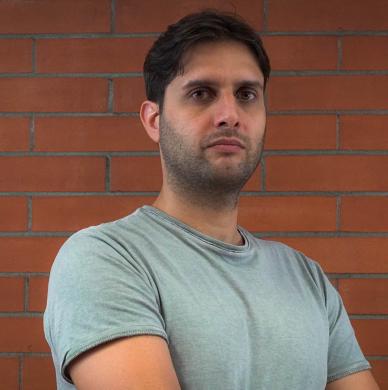
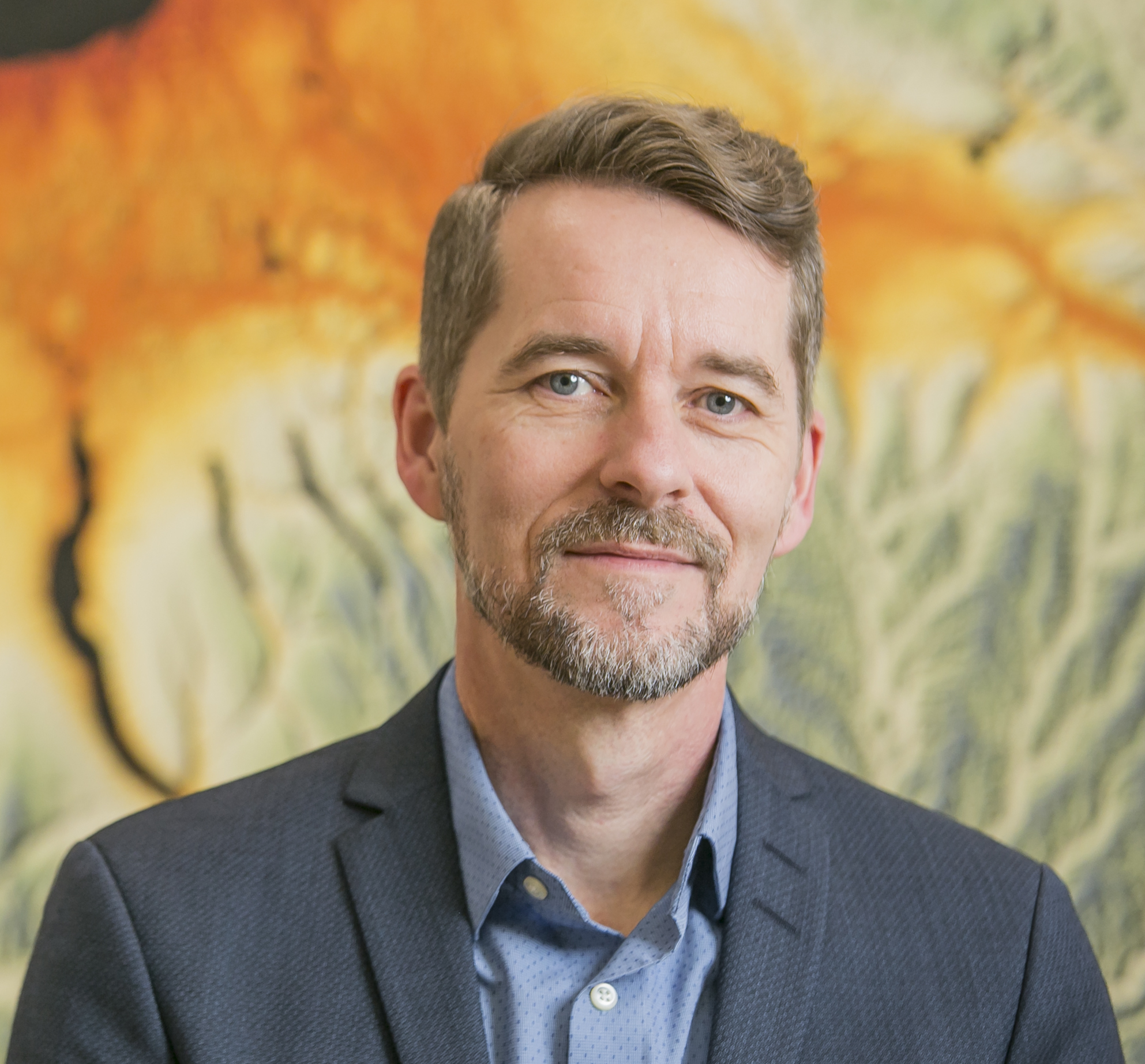
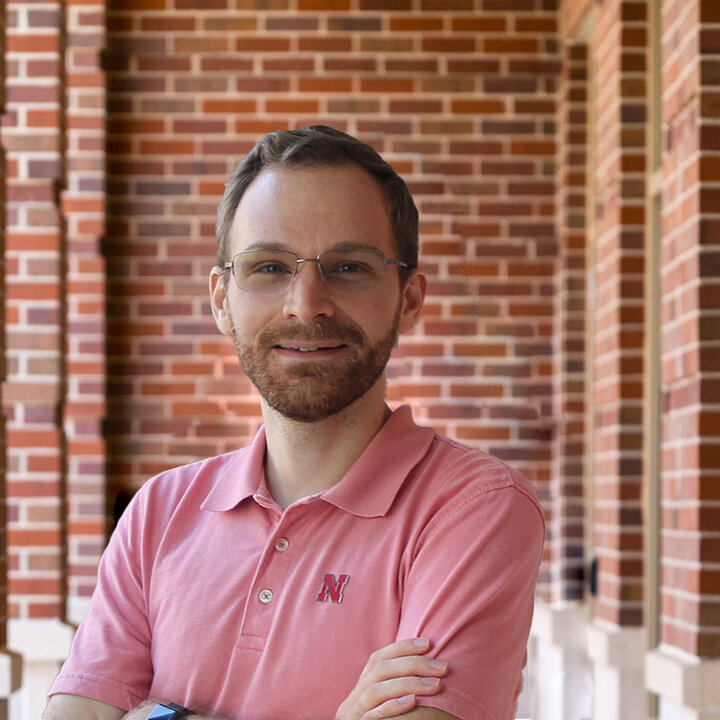
Alexandr Lucas is a Teaching Professor in Robotics at the University of Sheffield's School of Computer Science. He joined in September 2019 and holds roles including Deputy Admissions Tutor (General Engineering) and IPE Tutor. His research focuses on developmental neuro-robotics, cognitive assessment via human-robot interaction, and educational robotics applications. He contributes to courses like COM1005 (Machines and Intelligence) and COM3528 (Cognitive and Biomimetic Robotics), developing teaching materials for MiRo robots and simulators. Publications include work on cognitive skill assessment using cloud computing and robotic systems, visual finger-counting for neuro-robotics learning, and public perception analysis of robots in urban environments. He co-founded the SERAI Network CIC and maintains active roles in robotics education and outreach. Lucas has created extensive teaching resources, including guides for MiRoCloud simulation platforms and visual coding tools (MiRoCODE). His work emphasizes practical robotics education and bridging theory with hands-on experiments in undergraduate and postgraduate programs.
Greg Bryant is a Professor and Chair in the Department of Communication at the University of California, Los Angeles (UCLA). His research focuses on cognitive science, vocal communication, and social behavior, integrating acoustic analyses, perception experiments, and cross-cultural field studies. Key research areas include evolutionary psychology, nonverbal communication, verbal irony, music perception, and infant-directed speech. His recent publications explore volitional laughter, vocal features in social judgments, and the cultural evolution of music. Media coverage of his work highlights topics such as animal laughter, affiliation detection in colaughter, real vs. fake laughter perception, and vocal changes during ovulation. He teaches courses like the Evolution of Interpersonal Communication and Communication Theory.
Tricia Skoler is a Professor of Developmental Psychology at the School of Arts and Sciences, Hunter College (CUNY). Her research focuses on developmental trajectories, neuroscience, autism, and infant social cognition. She holds a PhD from Emory University and leads a lab emphasizing interdisciplinary approaches, requiring prospective students to read Doing Developmental Research (Guilford Press). She is currently accepting students for Spring 2025 courses (201 and 395). Her work spans neuroscience, architectural design, biophilia, and health psychology, integrating methodologies like EEG and statistical physics to study gaze processing, joint attention, and social-cognitive development in infants and children with ASD. Key contributions include understanding neural correlates of eye gaze in early infancy and contextual influences on social skills. Publications highlight themes such as gaze-following deficits in autism, the role of social cues in learning, and developmental neuroscience. Her research bridges basic science and applied contexts, including biophilic design and nutrition education. Lab inquiries must follow guidelines in Chapter 1 of her book. No explicit awards are listed, but her extensive publication record reflects recognition in developmental and cognitive neuroscience.
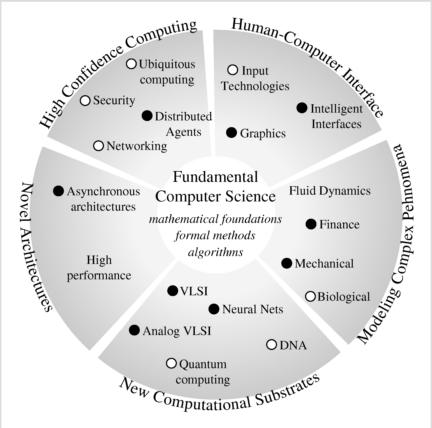
Alan H. Barr is a Professor of Computer Science at the California Institute of Technology (Caltech), affiliated with the Division of Engineering and Applied Science and the Computation & Neural Systems (CNS) department. He is a founding member of the Caltech Computer Graphics Group and a leader in developing mathematically rigorous methods for computer graphics and predictive modeling. His research focuses on enhancing computational modeling accuracy through approaches like interval analysis and constraint-based systems. Notable contributions include deformable models, quaternion interpolation, and cellular simulation frameworks. He has advised over 20 graduate students, many of whom became industry leaders at Pixar, Microsoft Research, and academic institutions like NYU and Brown University. Awards include the ACM SIGGRAPH Achievement Award (1988) and ACM Fellow (1995). Research Interests: Predictive modeling with error bounds Scientific visualization and MRI data analysis Biophysical systems simulation (e.g., cellular organelles) Self-assembling robotic structures for space colonization Mathematically robust computer graphics techniques Key Collaborations: Caltech Biological Imaging Center (Beckman Institute) JPL (Jet Propulsion Laboratory) New computational substrates research (quantum/DNA computing) Recent Work: Expanding into computational biology, medical imaging optimization, and high-confidence systems for managing complex computational interactions. Active in interdisciplinary projects across Caltech divisions.
Prof. Dr. J. Ellers is a Full Professor at the Faculty of Science, Vrije Universiteit Amsterdam , and a member of the Amsterdam Institute for Life and Environment . His research focuses on understanding how an individual’s phenotype is shaped by interactions between genes, genome, and environment , employing molecular, physiological, and experimental tools within an evolutionary framework. Ellers contributes to the Netherlands Society of Evolutionary Biology (NLSEB) as a co-founder and serves as Vice-Chair of the Dutch Biology Council , advocating for biology research and education in the Netherlands. Research Interests: Ellers explores the intersection of evolutionary biology, ecology, and environmental science , with key themes in phenotypic plasticity, urbanization effects on species, trait-based ecology, and adaptive signaling . His work spans soil fauna dynamics, invasive species impacts, and metabolic adaptations , emphasizing interdisciplinary approaches to link mechanisms with ecological and evolutionary outcomes. Recent Publications highlight trends in urban ecology, climate change impacts, and trait evolution . Notable studies examine how noise and light pollution alter animal communication , high-sugar diets affect microbiomes , and robot morphologies reflect biological systems . His research also addresses data interoperability through initiatives like ShareTrait and global soil arthropod assessments . Scientific Contributions: Ellers advocates for open-access publishing and interdisciplinary climate change experiments. His leadership in the Dutch Biology Council and co-founding of NLSEB reflect sustained commitment to scientific policy and community engagement. Supervised 23 PhD theses and teaching courses like Ecosystem Services and Scientific Advocacy underscore his mentorship and educational impact.
Sean Wilson is a Researcher at the Georgia Institute of Technology , affiliated with the College of Engineering and the School of Electrical and Computer Engineering . He serves as the Collaborative Autonomy Branch Chief at the Georgia Tech Research Institute (GTRI) and Director of the Robotarium Lab (https://www.robotarium.gatech.edu/), which provides free remote access to robotic hardware for algorithm testing. Educational Background: B.A. in Physics and Mathematics from State University of New York at Geneseo (2012) M.S. and Ph.D. in Mechanical Engineering from Arizona State University (2017) Dr. Wilson's research focuses on remotely-accessible robotic hardware , collaborative autonomy , and control of multi-agent and swarm robotic systems . His recent publications emphasize distributed control, swarm robotics, and bio-inspired robotic behaviors. The Robotarium Lab he directs enables global access to robotics testbeds for control research. Research Themes (2014-2023): Remote-access robotics (5), swarm coordination (7), bio-inspired algorithms (3), barrier functions (2), multi-robot systems (9), and control theory (4). Sean operates from the Robotarium Lab (Office Location: CCRF B11-3133D) as part of Georgia Tech's Institute for Robotics and Intelligent Machines (IRI) core faculty. His work bridges robotics infrastructure development with theoretical control research.
Sangwoo Kim is a Tenure Track Assistant Professor at the Swiss Federal Institute of Technology Lausanne (EPFL) in the Institute of Mechanical Engineering. He leads the Mechanics of Soft and Biological Matter Laboratory (MESOBIO), focusing on the interplay between mechanics, physics, and biology in living systems. His research spans soft matter physics, developmental biology, and mechanical engineering. 2023–Present: Tenure Track Assistant Professor, EPFL School of Engineering Postdoctoral Fellow, UC Santa Barbara Mechanical Engineering Ph.D. in Theoretical and Applied Mechanics, University of Illinois at Urbana-Champaign Kim’s research investigates fundamental properties of biological and soft materials, including: Tissue morphogenesis and embryonic development Mechanical behavior of amorphous and active matter Non-equilibrium dynamics in cellular systems Phase transitions in biological tissues Stress and osmotic pressure quantification His recent publications reveal a focus on: Biological jamming and fluidization Zebrafish axis elongation mechanics Energy landscapes of cellular matter Active matter modeling Statistical mechanics of soft materials Developmental force transmission Kim supervises PhD students and teaches courses in structural mechanics at EPFL, emphasizing problem-solving in engineering design.
Andreas Holzinger is a Professor at Graz University of Technology, with additional affiliations at Medical University Graz and University of Natural Resources and Life Sciences Vienna in Austria. He is recognized as an IFIP Fellow (2021) for his significant contributions to information processing and computer science. His work spans multiple institutions across Europe, with notable collaborations extending to the University of Alberta in Canada. Professor Holzinger's research focuses on Human-Centered AI, Explainable AI (XAI), and their practical applications across diverse domains. His work bridges theoretical AI advancements with real-world implementations in healthcare, forestry, and human-robot interaction. He has pioneered approaches in counterfactual explanations, graph neural networks, and human-in-the-loop systems that emphasize transparency and trustworthiness in AI decision-making processes. His recent publications demonstrate a strong trend toward integrating large language models with traditional AI systems while maintaining explainability. Holzinger's work consistently emphasizes the human element in AI systems, ensuring that technological advancements serve human needs rather than obscuring decision processes. His research in medical AI, smart forestry, and agricultural applications shows a commitment to solving practical problems with human-centered technological solutions. Scientific Awards: IFIP Fellow (2021) Professor Holzinger has been instrumental in establishing design guidelines for explainable AI systems, particularly through his work on post-hoc versus ante-hoc explanations. His research on Kandinsky Patterns has provided valuable experimental frameworks for pattern analysis and machine intelligence. He has secured significant research funding for projects bridging AI with practical applications in healthcare and environmental monitoring. His leadership extends to the organization of major conferences and workshops, including the CD-MAKE conference series, where he has fostered interdisciplinary collaboration between AI researchers and domain experts. His work on the CLARUS platform demonstrates practical implementations of interactive explainable AI for medical applications.
Luis Merino Cabañas is a Professor at the Universidad Pablo de Olavide , affiliated with the Deporte e Informática department and leading the SRL Service Robotics Laboratory . His research focuses on robotics, systems engineering, and automation, with a specialization in human-robot interaction and path planning. Education : PhD in Systems Engineering from the Universidad de Sevilla (2007), where his thesis explored cooperative perception techniques for multiple unmanned aerial vehicles in forest fire detection. Research Trends : Recent work (2023–2025) emphasizes 3D path planning, sensor fusion (LiDAR, radar, inertial systems), neural distance fields for safe navigation, and socially aware robotics. His studies integrate AI, genetic programming, and multi-modal perception for applications in construction, healthcare, and GNSS-denied environments. Labs & Teams : He leads the SRL Service Robotics Laboratory , contributing to projects like the Skyeye team and BIM2ROS integration for construction robotics.
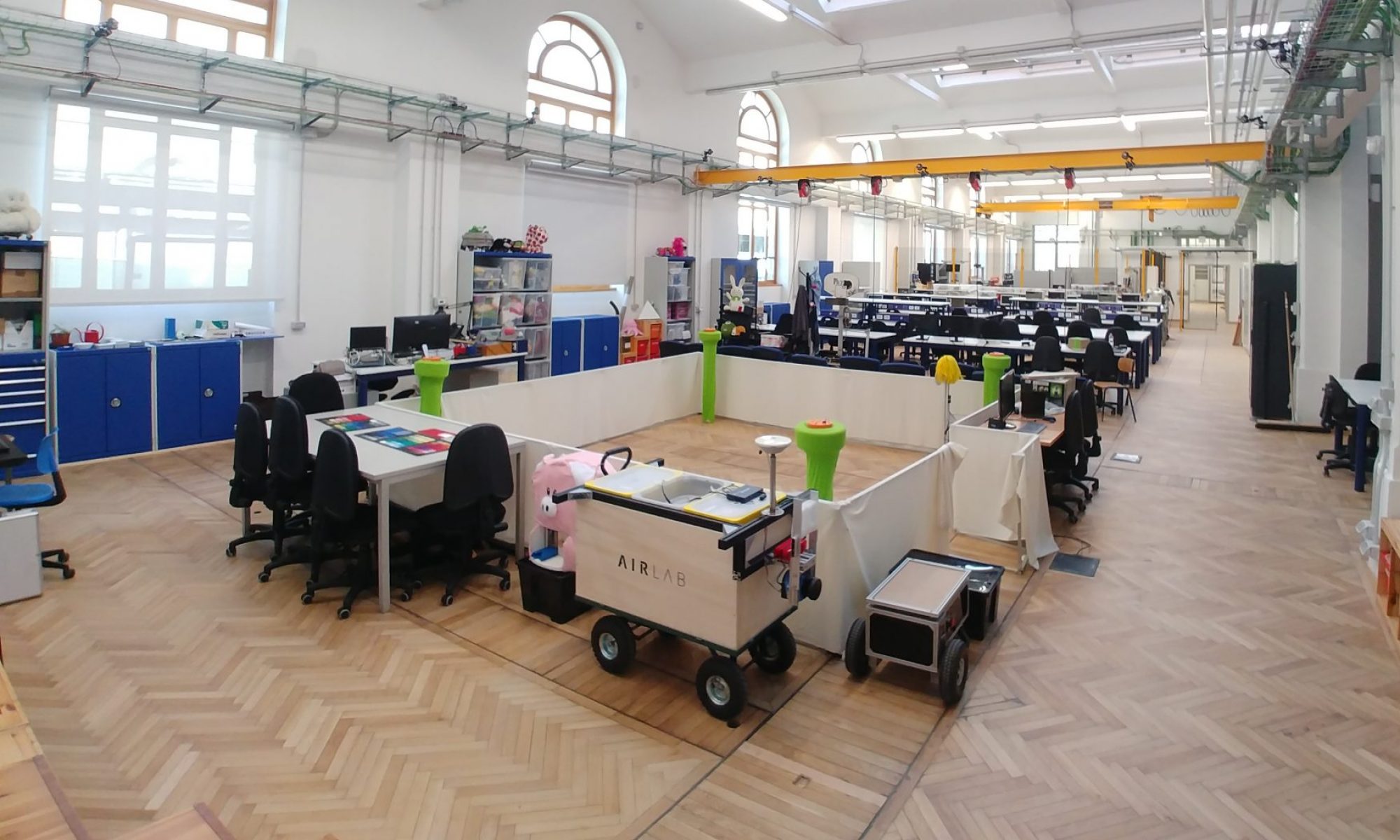
Andrea Bonarini is a Professor at the Department of Electronics, Information, and Bioengineering (DEIB) within the School of Industrial and Information Engineering at Politecnico di Milano. His research focuses on Artificial Intelligence , Robotics , and Human-Robot Interaction , particularly in assistive technologies for children with disabilities and autism therapy. Key Research Areas: Reinforcement Learning, Social Robotics, Affective Computing, Accessibility in Robot Design Notable Projects: Development of frameworks like Mushroomrl and datasets like POLIMI-ITW-S for robotics research His recent publications highlight advancements in playful robotics for neurodevelopmental disorders, emotion projection in non-bio-inspired robots, and safety experiments for small social robots interacting with children. He also contributes to ethical, social, and psychological challenges in robotics applications.
Donato Romano serves as Associate Professor at The BioRobotics Institute of Scuola Superiore Sant'Anna, Italy, where he coordinates the Bio-Robotic Ecosystems Lab and co-founded the spin-off company HUBILIFE srl. His interdisciplinary work bridges robotics, biology, and AI to develop biohybrid systems for biodiversity preservation, sustainable environmental management, and life support in extreme scenarios including space exploration. With over 90 publications and an H-index of 27 (Scopus, March 2025), he has established significant academic leadership through editorial roles across 12+ international journals. Romano's educational foundation includes advanced degrees with honors: an M.Sc. in Agriculture Science and Technologies (2014) and a PhD in BioRobotics (2018), both from Scuola Superiore Sant'Anna. His academic journey includes visiting scholar positions at Khalifa University and substantial industry-academia collaboration through HUBILIFE srl, which commercializes bioinspired devices for human daily life improvement. His research program focuses on bioinspired and biomimetic robotics with particular emphasis on animal-robot interaction, biohybrid systems, and natural intelligence. Key projects address critical global challenges: SENSORBEES develops biohybrid environmental surveillance for ecological monitoring; REGOLIFE investigates lunar soil-terrestrial organism interactions for space agriculture; and OCEAN ROBOCTO explores marine ecosystem solutions. This work demonstrates a strategic progression from fundamental behavioral studies toward applied ecological and extraterrestrial systems. Analysis of his recent publications reveals strong trends in AI-driven behavioral analysis, with deep learning increasingly applied to entomological studies and pest management. The research spans agricultural applications (precision monitoring traps, larval detection systems), ecological conservation (biodiversity surveillance), and extreme-environment adaptation (lunar regolith studies). A distinctive feature is the consistent integration of biohybrid approaches where living organisms and robotic systems create synergistic capabilities exceeding either component alone. Romano's scientific recognition includes election as Junior Fellow of the Italian Academy of Engineering and Technology (2025), the Lucani fuori dal Comune award (2024), and multiple best-thesis prizes. His editorial leadership spans high-impact journals including IEEE Transactions on Medical Robotics and Bionics and Pest Management Science, where he serves as Associate Editor. As principal investigator, Romano coordinates major international projects totaling over €15M in funding: HORIZON-EIC's SENSORBEES (2024-2029), ASI's REGOLIFE (2024-2027), National Geographic's OCEAN ROBOCTO (2024-2026), and PRIN's COSMIC (2023-2025). His teaching portfolio includes PhD courses in Biosystems for Biorobotics and M.Sc. instruction in Bionics Engineering at Scuola Superiore Sant'Anna and University of Pisa. The Bio-Robotic Ecosystems Lab under Romano's direction pioneers biohybrid technologies where living organisms and robotic systems create integrated solutions. Current initiatives include SENSORBEES' environmental monitoring swarms, REGOLIFE's moonworm colonization systems, and HUBILIFE's commercial vector-control devices. The lab maintains active collaborations with space agencies, agricultural institutes, and conservation organizations, positioning biohybrid systems as next-generation tools for planetary-scale challenges.
P. Murali Doraiswamy, MBBS, FRCP , is Professor of Psychiatry and Professor in Medicine at Duke University School of Medicine, Director of the Neurocognitive Disorders Program, Senior Fellow at the Duke Center for the Study of Aging and Human Development, and holds affiliate faculty appointments with the Duke Center for Applied Genomics & Precision Medicine, the Duke Microbiome Center, and the Duke Initiative for Science & Society. He is a Faculty Network Member of the Duke Institute for Brain Sciences and has advised major agencies including NIH, FDA, WHO, and the World Economic Forum. Research Focus Dr. Doraiswamy leads a multidisciplinary program that integrates advanced neuroimaging, multi-omics, digital therapeutics, and artificial intelligence to understand, predict, and prevent Alzheimer’s disease and related neurodegenerative disorders. His work spans: Development and validation of blood, CSF, imaging, and digital biomarkers for early detection and staging. Clinical trials of novel pharmacological, lifestyle, and digital interventions in mild cognitive impairment (MCI) and Alzheimer’s dementia. Systems-biology approaches combining genomics, metabolomics, lipidomics, and microbiome data to uncover mechanisms of resilience and risk. Policy translation and global mental health initiatives aimed at reducing disparities and improving brain health worldwide. Publications & Impact With more than 400 peer-reviewed publications and continuous federal and industry funding, his research has shaped current diagnostic algorithms and therapeutic pipelines. Recent work (2023-2025) demonstrates accelerated adoption of deep-learning MRI models for amyloid/tau staging, AI-guided companion robots to combat loneliness, and precision nutrition trials leveraging microbiome signatures. Scientific Leadership & Recognition He has chaired the World Economic Forum’s Global Agenda Council on Brain Research and co-chaired innovation advisory councils for large social-impact funds. His findings have been featured by BBC, The New York Times, Scientific American, TIME, NPR, CBS Evening News, Oprah, The Dr Oz Show , and acclaimed documentaries such as (Dis)Honesty: The Truth about Lies and Mysteries of the Brain . Advocacy & Societal Engagement Beyond the laboratory, Dr. Doraiswamy is a leading advocate for increased public and private investment in brain and behavioral research. He serves on multiple charitable boards and co-authored the popular book The Alzheimer’s Action Plan , translating cutting-edge science into practical guidance for patients and families.
Nick Cheney is an Associate Professor in the Department of Computer Science at the University of Vermont, leading the UVM Neurobotics Lab. He also serves as Graduate Program Director and is affiliated with the Vermont Complex Systems Center, an interdisciplinary hub for data-rich complex systems research. PhD in Computational Biology and Biological Statistics from Cornell University Advised by Hod Lipson and Steve Strogatz His research focuses on bio-inspired machine learning algorithms, particularly in evolutionary computation, deep learning, and reinforcement learning. Key applications span robotics, healthcare diagnostics, and environmental science. The lab's interdisciplinary work has been recognized with prestigious awards including the NSF CAREER Award and SIGEVO Impact Award . Recent publications highlight advancements in morphological computation, continual learning, and cross-domain applications of machine learning. His team develops algorithms for soft robots, medical diagnostics using wearable sensors, and sustainable agriculture systems, often publishing in venues like the Nature Scientific Reports , GECCO , and Soft Robotics . Scientific Awards : NSF CAREER Award SIGEVO Impact Award The lab actively mentors graduate students in Complex Systems and Data Science, with alumni securing positions at institutions like Harvard, UC Berkeley, and Medidata. Collaborative grants with biomedical and environmental researchers demonstrate the lab's commitment to societal impact through machine learning applications.
Morten H. Christiansen is the William R. Kenan, Jr. Professor of Psychology at Cornell University and holds a concurrent position as Professor of Cognitive Science at Aarhus University's School of Communication and Culture and the Interacting Minds Centre. His research focuses on the interplay between biological and environmental factors in language evolution, acquisition, and processing. Key methodologies include computational modeling, neuroimaging, and experimental psychology. He is an elected member of Denmark’s and Norway’s Royal Academies of Sciences and a Fellow of the Association for Psychological Science and Cognitive Science Society. His work spans over 250 papers and four edited volumes, with his monograph The Language Game (2022) proposing a novel theory of language emergence through improvisation. Research interests emphasize multiword chunking, statistical learning, and individual differences in language processing. Current projects explore Danish language challenges, computational models of cultural evolution, and the impact of large language models (LLMs) on human cognition. Christiansen directs the Cognitive Science of Language Lab, teaches undergraduate and graduate courses (e.g., PSYCH 2150: Psychology of Language), and collaborates internationally on projects like the Danish Gigaword Corpus. His recent work highlights language as an emergent system shaped by interactive and ecological pressures.
Seth Polsley is an Assistant Professor in the Jeffrey S. Raikes School of Computer Science and Management at the University of Nebraska-Lincoln. His academic home resides in the School of Computing, where he bridges intelligent systems design with human-computer interaction to enhance educational and universal computing experiences. BS in Computer Engineering (2014) - University of Kansas MS (2017) & PhD (2023) in Computer Engineering - Texas A&M University His research explores: Intelligent tutoring systems Brain-computer interfaces Accessible educational technologies Machine learning for child development assessment Sketch recognition in STEM learning Recent publications demonstrate expertise in tactile learning interfaces, sketch-based developmental assessment, and equitable AI systems. Key disciplines span Human-Computer Interaction, Machine Learning, and Educational Technology. Scientific recognition includes: James Blackiston Memorial Graduate Fellowship Sigma Xi Research Award With professional experience at Lexmark International and MIT Lincoln Lab, Polsley combines practical engineering with educational innovation. His work on sketch-based tools and wearable systems addresses both technical and societal challenges in computing.