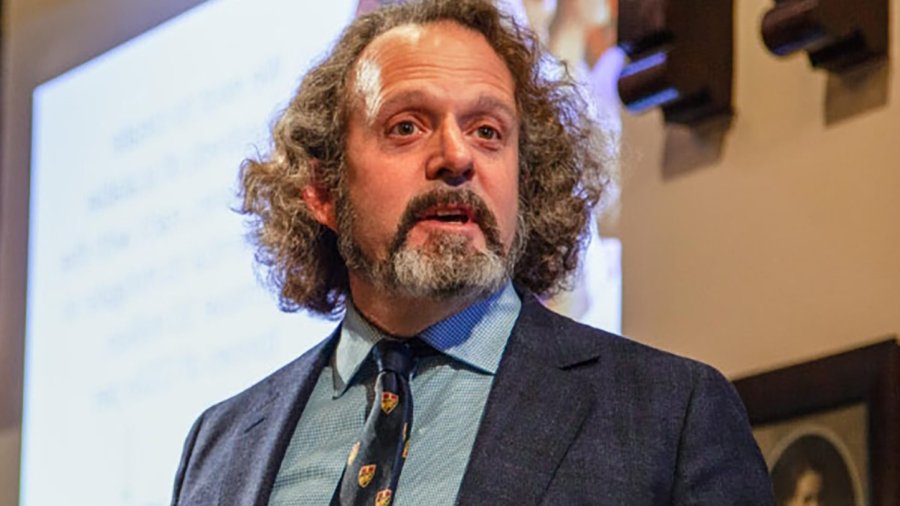
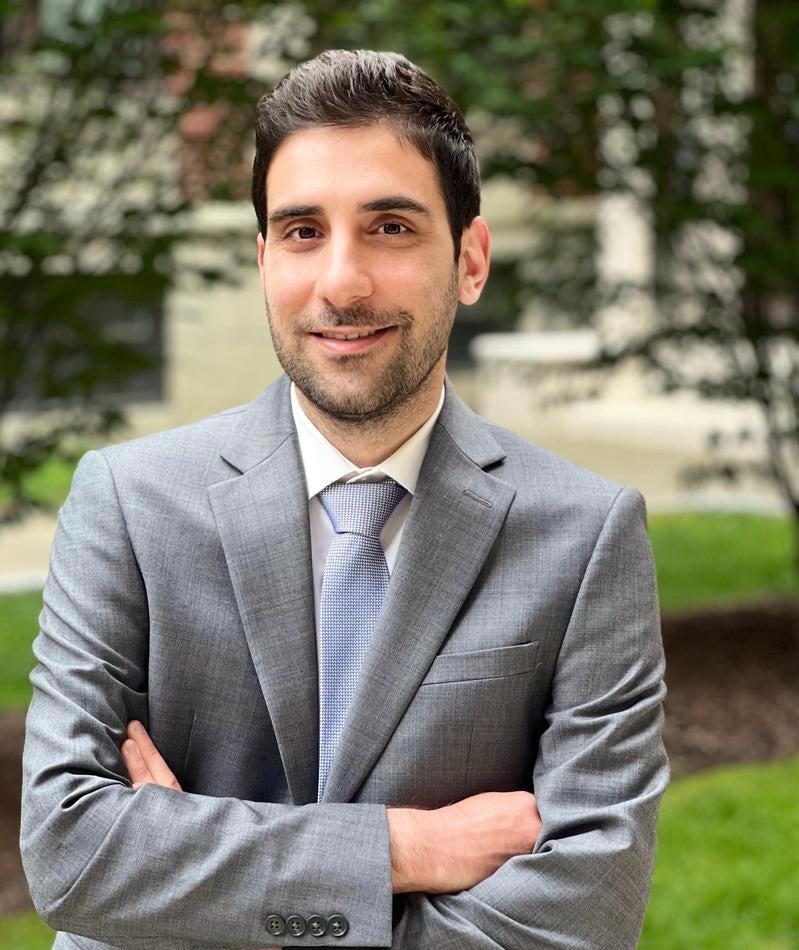
Dr. Stirling Howieson is a Senior Lecturer in the Department of Architecture at the University of Strathclyde. His research focuses on two key areas: (1) housing and health, including asthma epidemiology, indoor air quality, and energy-efficient building design, and (2) solar energy applications such as biochar production, solar desalination, and off-grid energy solutions. He leads projects like the Sunstore Powerpan, which won the 2019 Geneva Grand Prix, and collaborates on initiatives in sub-Saharan Africa. Education: PhD in Housing and Health, University of Strathclyde (2003) MPhil in Thermal Standards, University of Strathclyde (1985) Bachelor of Architecture, Heriot-Watt University (1979) Research Interests: His work addresses the interplay between indoor environmental conditions and public health, leveraging solar technology for sustainable solutions. Key topics include asthma prevention through ventilation optimization, hygroscopic materials for energy-efficient buildings, and solar-driven biochar systems for waste management. Awards: Grand Prix and Gold Medal (Geneva Invention Exposition, 2019) Scottish Edge (2016) Advising & Grants: Supervises PhD projects on solar energy and low-carbon design. Secured grants like Innovate UK’s Energy Catalyst 8 for off-grid solar solutions. Active in measuring socio-economic impacts of solar appliances in South Africa. Labs/Teams: Engages in interdisciplinary teams developing solar thermo-electric systems and sustainable building technologies.
Chris Coleridge serves as Management Practice Associate Professor at Cambridge Judge Business School, University of Cambridge, and holds a Fellowship at Wolfson College. He specializes in entrepreneurship and strategic management education, with particular emphasis on climate-related innovation and net zero entrepreneurship. He founded Cambridge's first Master's degree in Entrepreneurship and currently chairs Wolfson College's Entrepreneurship Hub. His academic credentials include: MBA from London Business School MSc in Organisational and Social Psychology from London School of Economics PhD in Management (focusing on business model innovation) from London School of Economics Research centers on top management team dynamics within startups and scaleups, examining how entrepreneurial networks drive collaborative innovation and ecosystem development . His work bridges theoretical frameworks with practical climate-tech applications, particularly through venture building processes and strategic scaling decisions for sustainability-focused enterprises. Recent publications (2020-2024) reveal consistent focus on corporate governance structures in high-technology ventures, with recurring analysis of board leadership efficacy, CEO duality implications, and heterogeneity impacts on competitive strategy. The research integrates agency/stewardship theories to explain governance dynamics in climate innovation contexts. Professional recognition includes: Five teaching awards during tenure at University College London Through active industry engagement, Coleridge translates academic research into climate solutions via Carbon13 (a climate venture builder) and Faster Climate Impact (an ecosystem integrator for climate tech). His advisory work focuses on strategic scaling of climate startups, mergers and acquisitions in sustainability sectors, and net zero business model innovation. He leads Wolfson College's Entrepreneurship Hub and contributes to global sustainability initiatives including the Business Schools for Climate Leadership consortium's Global PhD Course. Current efforts prioritize building 'climate powerhouses' through acquisition-driven integration of climate technology firms.
Dr. Farzana Aman Tanima is a Senior Lecturer at the University of Sydney Business School’s Accounting, Governance, and Regulation department. She previously held roles at the University of Wollongong (2017–2023). Her research focuses on critical and dialogic accounting, social justice, and challenging neoliberal frameworks through participatory approaches. Born in Bangladesh, she earned her PhD in 2015 from Victoria University of Wellington, New Zealand, with a thesis on dialogic accounting practices for marginalized women. Education: PhD in Accounting, Victoria University of Wellington, 2015 Undergraduate Honours Degree, Victoria University of Wellington Research Interests: Dr. Tanima’s work centers on dialogic accounting to democratize accounting practices, with focus on NGOs, microfinance, Indigenous education, and race. She employs participatory action research and autoethnography to address systemic inequalities. Key areas include: Accounting’s role in empowerment and development Decolonizing accounting education through Jindaola Critical race theory and counter-accounting Awards: 2024 Mary Parker Follet Award (AAAJ Journal) 2020 VC OCTAL Teaching Award 2015 AFAANZ Best PhD Award Teaching & Mentorship: She leads pedagogical initiatives embedding Indigenous perspectives into curricula and fosters dialogic learning. Supervised two completed PhDs, with co-authored publications. Active in mentoring early-career researchers through invited talks and workshops. Labs/Teams: Part of the Alternative Accounting Research Network and editorial boards for CPA Journal and Financial Accountability & Management . Co-leads special issues on critical dialogics and publicness in accounting.
Nick Bansback is an Honorary Visiting Professor in the School of Population and Public Health at the University of British Columbia (primary affiliation) and affiliated with NUS Saw Swee Hock School of Public Health. His research focuses on maximizing healthcare value through economic evaluation, patient preference measurement, and decision analysis. He holds a PhD in Health Economics and Decision Sciences (University of Sheffield, 2010), an MSc in Health Economics (2004), and a BSc in Mathematics (2001). Key research areas include health technology assessment, patient-reported outcomes, and cost-effectiveness analysis of treatments for chronic conditions like rheumatoid arthritis and multiple sclerosis. He has pioneered methods for incorporating patient preferences into healthcare decisions, including developing decision aids and discrete-choice experiments. His work has been recognized with awards such as the UBC Killam Research Award (2020) and the Canadian Agency for Drugs and Technology in Health Rising Star Award (2016). He has contributed to over 30 peer-reviewed publications, emphasizing practical applications of health economics to improve healthcare resource allocation and patient-centered care. Prof. Bansback’s career spans postdoctoral research at UBC, health economics roles at the Centre for Health Evaluation and Outcomes Sciences, and early research at the University of Sheffield. His interdisciplinary approach bridges clinical practice, policy, and quantitative methods to address complex healthcare challenges.
Maureen Meadows is a Professor of Strategic Management at Coventry University's Research Centre for Business in Society. Her work focuses on strategic decision-making, big data applications, privacy in business models, and M&A dynamics. She previously held leadership roles at the Open University and Warwick Business School, where she contributed to strategic management education and research. Education: PhD in Open University (2016) MSc in Management Science from University of Warwick (1987) Bachelor of Arts in Mathematics (Oxford University, 1986) Research Interests: Strategic management tools (e.g., scenario planning), customer data analytics, privacy implications of data sharing, and post-merger integration. She has co-led projects on surveillance society blurring and privacy in the digital economy, funded by Leverhulme and EPSRC. Key Projects: Leverhulme-funded 'Taking Liberties?' (surveillance society) EPSRC-funded 'Monetize Me?' (privacy and quantified self) Co-designing digital strategies for museums and education sectors Grants & Collaborations: Multiple internally-funded projects on board assurance frameworks, creative accounting, and hybrid business models in museums. Active in international conferences and professional bodies like BAM Council. Awards: While no specific prizes are listed, her h-index of 24 and 1,891 citations reflect significant scholarly impact.
Mohammad Mohammadi Amiri serves as an Assistant Professor in the Department of Computer Science at Rensselaer Polytechnic Institute (RPI), appointed in Fall 2023. His research focuses on advancing artificial intelligence through strategic data utilization, with emphasis on large language models, data valuation, federated learning, and deep learning. Previously, he held postdoctoral appointments at Princeton University and MIT Media Lab, building on his strong educational foundation from Imperial College London, University of Tehran, and Iran University of Science and Technology. Education: Ph.D. in Electrical and Electronic Engineering, Imperial College London (2019) - Best Ph.D. Thesis Award recipient M.Sc. in Electrical and Computer Engineering, University of Tehran (2014) - Ranked 1st among all M.Sc. students B.Sc. in Electrical Engineering, Iran University of Science and Technology (2011) - Ranked 1st among all B.Sc. students Dr. Amiri's research centers on optimizing artificial intelligence systems through innovative data strategies. His work addresses critical challenges in large language models including efficiency, memory usage, alignment, and reasoning capabilities. In data valuation, he develops principled methods to quantify data worth for fair trading platforms. His federated learning research tackles privacy concerns, heterogeneous data distribution, and communication overhead in decentralized environments. The deep learning component explores theoretical foundations to improve model interpretability and robustness. Analysis of his recent publications reveals a strong focus on making AI systems more efficient and accessible, with particular emphasis on large language model optimization, federated learning advancements, and data valuation frameworks. His work bridges theoretical foundations with practical applications in wireless communications and distributed computing environments. Scientific Awards: IEEE Communications Society Young Author Best Paper Award (2022) Best PhD Thesis Award from IEEE Information Theory Chapter of UK and Ireland (2019) Eryl Cadwallader Davies Prize for Outstanding PhD Thesis (2019) EEE Departmental Scholarship at Imperial College London (2015-2019) Ranked 1st among M.Sc. students at University of Tehran (2014) Ranked 1st among B.Sc. students at Iran University of Science and Technology (2011) Dr. Amiri actively mentors graduate students, currently supervising five Ph.D. candidates and one M.Sc. student working on efficient LLM fine-tuning, inference, and storage. His research has attracted significant attention, evidenced by numerous keynote invitations at prestigious institutions including Bell Labs, MIT, King's College London, and various IEEE conferences. He serves on program committees for major conferences including IEEE Globecom and ICC, demonstrating his growing influence in the academic community. His research group operates at the intersection of machine learning and wireless communications, developing innovative solutions for resource-constrained environments while addressing fundamental theoretical challenges in AI systems. Current projects focus on making advanced AI more scalable and accessible through efficiency improvements in model training and inference.
Dr. Muhammad Imran is a Reader and Lecturer in Mechanical, Biomedical & Design Engineering at Aston University, UK. He is affiliated with the Energy and Bioproducts Research Institute (EBRI) and the College of Engineering and Physical Sciences. His research focuses on energy efficiency, waste heat recovery, and low-temperature power cycles such as Organic Rankine Cycle (ORC) and Supercritical CO₂ systems. He has contributed to the commercialization of ORC systems and collaborates internationally on hybrid energy systems, solar-thermal integration, and district heating networks. Dr. Imran holds a PhD in Energy System Engineering (2016), MSc in Thermal Power Engineering (2012), and BEng in Mechanical Engineering (2009). He has held academic roles at institutions in Pakistan, South Korea, and Denmark, including a Marie Curie Fellowship at the Technical University of Denmark. His awards include the Marie Curie Fellowship (EU), Innovation Award (South Asia Triple Helix), and multiple Research Excellence Awards from South Korea. He leads funded projects on hybrid energy systems for agriculture, waste heat recovery in industries, and sustainable energy solutions in developing countries. His editorial roles include associate editorships in Frontiers in Thermal Engineering and Resources, Environment and Sustainability . He supervises PhD students in renewable energy and low-temperature thermodynamic systems, with ongoing projects on solid-state heat pumps and advanced ORC control strategies. Dr. Imran’s work bridges engineering, data science, and environmental science to address energy challenges. Notable collaborations include projects in Ethiopia, Kenya, Nigeria, and Sudan, focusing on off-grid cold storage, smart irrigation, and biomass energy systems. His research outputs include over 130 peer-reviewed articles, patents, and contributions to international conferences.
Ian Wilson is the Deputy Director of the Centre for Regional Economic and Social Research (CRESR) and a Professor of Policy Research and Evaluation at Sheffield Hallam University. He holds BA and MSc degrees, with over 20 years of expertise in applied policy research and evaluation, securing £15M+ in research funding. His work spans housing policy, urban regeneration, and social welfare, collaborating with government agencies like DLUHC, DWP, and Welsh Government. Education: BA, MSc (institutions unspecified) Roles: Deputy Director (CRESR), Professor of Policy Research and Evaluation Affiliations: Social and Economic Research Institute, College of Social Sciences and Arts Research Focus: Wilson's work centers on measuring policy impacts, housing affordability, and place-based interventions addressing social inequities. He pioneered methods like shadow pricing for regeneration outcomes and developed frameworks for valuing policy effects on communities. His expertise includes econometric analysis, cost-benefit evaluation, and innovative solutions for complex societal challenges. Grants & Projects: Key projects include evaluations of the Affordable Homes Programme (£10M agreement with DLUHC), Warm Home Prescription project, and Community Renewal’s Lifting Neighbourhoods Together initiative. He has led over 100 research outputs, including studies on housing benefit reforms, urban regeneration, and third-sector subcontractor roles in EU programs. Labs/Teams: Core affiliations with CRESR and the Social and Economic Research Institute, collaborating with interdisciplinary teams on national and international projects.
Geoff Pleiss is an Assistant Professor in the Department of Statistics at the University of British Columbia (UBC), affiliated with CAIDA's AIM-SI cluster. He is also a Canada CIFAR AI Chair and faculty member at the Vector Institute. His research bridges deep learning and probabilistic modeling, focusing on uncertainty quantification, Bayesian optimization, Gaussian processes, and ensemble methods. Pleiss earned his PhD in Computer Science from Cornell University (2020), followed by a postdoc at Columbia University. He holds multiple awards, including the AISTATS Top Reviewer and NeurIPS recognitions. His work emphasizes scalable algorithms and open-source contributions, such as the GPyTorch library. Pleiss advises students in Computer Science and Statistics, including Donney Fan (PhD), Tim G. Zhou (MSc), and others. He teaches advanced courses like STAT 547U (Deep Learning Theory) and STAT 520P (Bayesian Optimization). Grants include NSERC Discovery and New Frontiers in Research funding. Pleiss collaborates on interdisciplinary projects, such as astrophysical discovery via machine learning, and actively participates in academic service and outreach. Education: PhD in Computer Science, Cornell University (2020) MSc in Computer Science, Cornell University (2018) BSc in Engineering (Computing with Applied Mathematics), Olin College (2013) Key Research Themes: Uncertainty-aware decision-making with neural networks Scalable Gaussian processes and Bayesian optimization Ensemble methods and their theoretical limitations Recent Grants: NSERC Discovery Grant (2024) New Frontiers in Research Fund (2025, co-PI) His publications span foundational theory to applied machine learning, with over 14,500 citations. He actively mentors students through research internships and advises on open-source software development. Pleiss frequently presents at top conferences and collaborates with industry partners like Microsoft and ASAPP.
Christopher O'Donnell is a Professor of Econometrics at the University of Queensland's School of Economics. He holds a PhD from the University of Sydney and has held academic leadership roles including Director of the Centre for Efficiency and Productivity Analysis. His research focuses on productivity and efficiency analysis, econometric methods, and their applications in agriculture, public policy, and environmental economics. Education: PhD (University of Sydney), MCom (University of New South Wales), BAgEc (Hons) (University of New England). Research interests include economic and statistical methods for measuring productivity changes, stochastic frontier analysis, and metafrontier frameworks. He has authored/co-authored three books and over 80 journal articles, with notable contributions in the American Journal of Agricultural Economics , Journal of Econometrics , and European Journal of Operational Research . Scientific awards include being a Distinguished Fellow of the Australian Agricultural and Resource Economics Society. His work has been applied in sectors like healthcare, fisheries, and public utilities through collaborations with organizations such as the World Bank and Asian Productivity Organization. Key projects include measuring agricultural productivity in China, analyzing hospital efficiency, and evaluating climate impacts on farming. Grants include studies on productivity measurement in Australian universities and Northern Grains Region farms. Labs/Teams: Former Director of the Centre for Efficiency and Productivity Analysis, collaborating with global institutions on productivity benchmarking and policy analysis.
Dr. Alireza Nili is a Senior Lecturer in Service Science at QUT's School of Information Systems within the Faculty of Science. His expertise spans digitization of customer-centric services, AI/chatbots, IoT/IIoT, and sustainable technologies. He holds a PhD from Victoria University of Wellington and has coordinated large-scale courses like IT Systems Design (IFB103), achieving top teaching scores. Nili's research focuses on service ecosystems, trust in digital services, and public/retail sector innovations. He has secured over $1.4M in industry grants for projects involving Cisco, Amazon, and Services Australia. His awards include the 2023 Educator of the Year and multiple top conference paper recognitions. Nili supervises PhD students at Level 3 mentoring status and contributes to major conferences as track chair/associate editor. Research highlights include frameworks for chatbot governance, IOT in agriculture, and AI ethics. His work appears in IEEE Software , Communications of the ACM , and MIT Sloan Management Review . Current projects address consumer trust in AI technologies and spatial data systems. Nili's interdisciplinary approach combines design science with empirical methodologies to bridge theory and practice in digital service innovation.
Dr. Thijs Broekhuizen is an Associate Professor at the University of Groningen's Faculty of Economics and Business, specializing in Innovation Management & Strategy. He currently serves as Scientific Director of the University of Groningen Business School, Coordinator of the Northern-Netherlands Innovation Monitor, and Programme Director of the Executive MBA. His research focuses on digital transformation, value creation in innovation, and digital business models, with interdisciplinary insights bridging strategy, innovation, and digitalization. Education: PhD in Marketing (University of Groningen, 2006) MSc in Marketing (University of Groningen, 2001) Research Interests: Broekhuizen explores value appropriation in technology-driven contexts, digital business models, and strategic responses to disruptive technologies. His work emphasizes SMEs' digital transformation challenges, organizational identity during technological change, and AI-driven innovation management. Key areas include digital platforms, motion picture industries, and social media dynamics. Grants & Projects: TALENT4S3 (€165K, Interreg 2024-2028) SIRM (€189K, Interreg 2023-2027) NWO-funded studies on construction industry profitability and online customer journeys Awards: Best Paper Award at ISoF 2021 Best Short Paper Award Nomination 2021 Teaching & Leadership: Broekhuizen teaches strategy and digitalization in executive programs and has led the MScBA and EMBA initiatives. His educational roles include Programme Director of the Executive MBA (Energy Transition, Health, Sustainable Business Models tracks) and member of the Groningen Digital Business Centre. Labs/Teams: He coordinates the Northern-Netherlands Innovation Monitor (surveying 10,000+ SMEs) and collaborates with the Groningen Digital Business Centre to advance digital strategy research.
Preet Singh is a Professor and Associate Chair for Graduate Studies in the School of Materials Science and Engineering at Georgia Tech, with affiliations to the College of Engineering. His research focuses on corrosion science, electrochemistry, and environmental degradation of materials, particularly metals and alloys. Prior to joining Georgia Tech in 2003, he was a faculty member at the Institute of Paper Science and Technology (IPST), where he investigated corrosion issues in the pulp and paper industry. Professor Singh's work explores fundamental mechanisms of material degradation in industrial environments, aiming to develop mitigation strategies against environment-induced failures. Key research areas include corrosion fatigue, hydrogen embrittlement, stress corrosion cracking, and oxidation behavior. His group employs experimental approaches to study material reliability under varying chemical and mechanical conditions. Recent publications demonstrate interdisciplinary collaboration across oncology, agriculture, and energy systems, reflecting broad applications of materials science principles. Research trends show increased focus on biomedical materials and sustainable technologies alongside core corrosion studies. Professor Singh advises graduate students including Abdullah Alzubail, Yousif Al Rabie, Sai Shreeya, Yara, and Sean Li. He directs the Corrosion and Materials Reliability Laboratory (CMCRL), which partners with industry to solve practical engineering challenges related to material performance.
Grace Wu is an Assistant Professor in the Environmental Studies Program at the University of California, Santa Barbara. She holds a Ph.D. in Energy and Resources from UC Berkeley, an M.S. from the same program, an M.Phil. in Zoology from the University of Cambridge, and a B.A. in Biology from Pomona College. Prior to UCSB, she was a Smith Conservation Fellow at The Nature Conservancy and a UC President’s Postdoctoral Fellow at UC Davis’ John Muir Institute of the Environment. Her research focuses on sustainable land use, climate change mitigation, and renewable energy planning. She employs spatial science to analyze trade-offs between low-carbon energy development and biodiversity conservation, co-founding the MapRE initiative and developing the RE Zoning GIS tool. Her work emphasizes low-impact pathways for energy systems, particularly in Southern Africa and the U.S., while collaborating with global initiatives like the FABLE consortium to model food, energy, and land-use dynamics. Grace has been recognized as a Smith Conservation Fellow and UC President’s Postdoctoral Fellow. Her research bridges policy, science, and technology, aiming to harmonize climate goals with conservation and social equity. She teaches courses such as ENV S 25 and ENV S 145 at UCSB and leads the Spatial Climate Solutions Lab.
Pamela A. Morris-Perez is a Professor of Applied Psychology at the NYU Steinhardt School of Culture, Education, and Human Development and an Affiliated Professor at the NYU School of Global Public Health. She is an elected member of the National Academy of Education. Her research bridges developmental psychology, suicidology, education, and policy, with over $75M in research funding. She holds a BA from Columbia University and a PhD in Developmental Psychology from Cornell University. Her research focuses on early childhood interventions, adolescent suicide prevention (through ARCADIA), and policy impacts. Notable projects include a $5M IES-funded NYC Universal Pre-K initiative and a $10M NIH trial on parenting interventions. She has also led institutional roles as Vice Dean/Interim Dean of NYU Steinhardt, overseeing significant research growth and diversity initiatives. Research Themes: Suicidology, early childhood development, policy evaluation, pediatric health interventions. Key Projects: ARCADIA suicide prevention, NYC Pre-K expansion, pediatric primary care interventions. Her articles highlight interdisciplinary approaches to child development and policy, with recent work emphasizing adolescent mental health and pandemic impacts on early childhood programs. Awards include the National Academy of Education membership and a 2017 Best Paper Award. Leadership Achievements: 44% increase in research expenditures, tripling of faculty of color hires, pandemic response coordination. Grants & Funding: William T. Grant Foundation, NIMH, NIH, IES. Morris-Perez collaborates across academia and public agencies to translate research into scalable interventions, particularly in under-resourced communities.