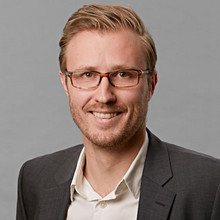
Armin Falk is a Professor of Economics at the University of Bonn, leading the BonnEconLab since 2004 and co-founding the briq Institute on Behavior & Inequality. He holds affiliations with the IZA, DIW, CEPR, and Max-Planck-Institut. His research focuses on behavioral economics, exploring how social preferences like fairness and trust influence decision-making, and investigates early childhood development's role in inequality. Falk has received prestigious awards, including the Leibniz Prize and Yrjö Jahnsson Award. His work combines lab experiments, field studies, and representative data analysis. Education includes a PhD in Economics from the University of Zurich after studies in Economics, Philosophy, and History at the University of Cologne. Key research highlights include global climate action support studies (Nature Climate Change, 2024), socioeconomic disparities in child development (JPE, 2021), and global economic preferences surveys (QJE, 2018). He co-authored the book *Warum es so schwer ist, ein guter Mensch zu sein* to popularize behavioral economics. Awards include recognition for contributions to behavioral and development economics. Mentoring programs like *Balu und Du* aim to reduce educational inequality. His work bridges academic research with public discourse through media contributions and policy engagement.
Jaan Masso is an Associate Professor at the University of Tartu, Estonia, where he has been affiliated with the Faculty of Economics and Business Administration since at least 2001. He currently serves as Chair of the department, Head of the Chair of Economic Modelling, and Programme Manager of the Master's programme in Quantitative Economics. His research focuses on applied econometrics, economic development, foreign direct investment, and labor economics, with particular emphasis on Estonia and the Baltic region as catching-up economies. He has published 146 scholarly works with over 23,000 reads and 1,745 citations, demonstrating significant scholarly impact in his field. Masso's research interests span multiple interconnected areas including foreign direct investment effects , productivity analysis , gender wage gap studies , innovation economics , and labor market dynamics . His work often employs rigorous econometric methods to analyze firm-level and regional economic data, particularly from Estonia and other Baltic states. His recent publications (2023-2025) show consistent scholarly productivity across multiple journals, with particular focus on foreign ownership effects, gender pay gaps in academia, FinTech sector development, and innovative methods for measuring firm innovativeness through web data analysis. His scientific contributions demonstrate expertise in analyzing economic transitions in small open economies, with methodological strengths in econometric analysis of firm-level data and innovative approaches to measuring economic phenomena.
Matthias Parey is a Professor in the Department of Economics at the University of Surrey. He holds additional roles as a Research Fellow at the Institute for Fiscal Studies (IFS) and the Institute for the Study of Labor (IZA), a Researcher at the ESRC Research Centre on Micro-Social Change (MiSoC), and a Research Associate at ZEW. His research spans Labour economics Economics of education Micro-econometrics Inequality Economics of innovation . His recent publications analyze high-skilled migration selection, trade shocks, cannabis market size estimation, and gasoline demand elasticity. He has contributed to journals like Review of Economics and Statistics , Economica , and Journal of the European Economic Association . Scientific awards include fellowships at IFS and IZA. His work on trade shocks examines gender-specific labor supply responses to Chinese import competition, while his cannabis market research introduces a forensic economics approach using legal inputs. Earlier studies focus on maternal education impacts on child development and the long-term labor market effects of Erasmus student exchanges.
Professor Dr. Michael Woywode is a full professor and holds the Chair of SME Research and Entrepreneurship at the University of Mannheim , within the Business School . His research and teaching are embedded in the Institute for SME Research and Entrepreneurship (ifm Mannheim) , a central research institute of the university, and the Mannheim Center for Entrepreneurship and Innovation (MCEI) , which offers entrepreneurship courses university-wide. Research Interests: Family Firms: Succession planning, leadership transitions, and post-succession innovation. Entrepreneurship: Founder behavior, startup ecosystems, and entrepreneurial decision-making. Digitalization in SMEs: Competitiveness, digital transformation, and innovation in small and medium-sized enterprises. Self-Employment & Labor Markets: New forms of self-employment and their societal implications. Teaching: Prof. Woywode teaches across Bachelor’s, Master’s, and Doctoral levels, offering courses such as Strategic and International Management , Introduction to Entrepreneurship , and Managing the Family Business . Research Output: His recent publications span high-impact journals including Organization Science , Family Business Review , and Journal of Small Business Management , with a clear focus on entrepreneurship, family business, and institutional theory. Team & Collaboration: He leads a multidisciplinary team including postdocs, PhD candidates, and research associates, working closely with the MCEI and ifm Mannheim to foster entrepreneurship research and education.
Prof. Dr. Johannes Sauer is a Professor at the Technical University of Munich (TUM), holding dual affiliations with the TUM School of Management and the TUM School of Life Sciences . His academic focus is on production and resource economics, with expertise in agricultural sustainability, policy evaluation, and circular economy strategies in Asia-Pacific and Latin America. Education: Bachelor’s/Master’s in Agricultural Economics from Universities of Tübingen, Hamburg, and Imperial College London. Doctorate (summa cum laude) in Agricultural Economics from the University of Bonn (2004). Research Interests: Prof. Sauer’s work spans productivity and resilience in agricultural systems, adoption of sustainable technologies, water resource valuation, and bioeconomic trends. He emphasizes smart technologies and circular economy applications in developing regions. His research employs econometric methods to analyze policy impacts and environmental-economic trade-offs. Key Trends in Publications: Recent articles highlight climate-smart agriculture, ICT adoption in rural China, and agroforestry’s role in reducing ecological-economic trade-offs. He explores behavioral drivers of policy participation and innovative tools like the IoFarm decision support system. Awards: 2021 Honorary Professorship at ANU OECD Fellow Awards (2010, 2016) Best Paper Awards (2008–2015) Consulting & Roles: OECD and Asian Development Bank consultant, ESRC Peer Review College member, and liaison lecturer for the German National Academic Foundation. He advises on agri-environmental policies and international development. Labs/Teams: Active in collaborative projects such as PONDERFUL Framework and IPM Popilia , focusing on nexus research and pest management strategies.
Hakan Özkan is a Privatdozent and Research Associate at the Institute of Arabic and Islamic Studies, Department of Middle Eastern Studies, University of Münster, where he has been working since 2007 in various capacities. He was awarded his Venia Legendi (Habilitation) in November 2019 for Arabic and Islamic Studies with his thesis 'History of Eastern Zajal – Dialectal Arabic Verse Poetry from the East of the Arab World.' His academic background includes a Franco-German doctorate completed in 2006 from Université de Provence and University of Cologne, supervised by Claude Audebert and Monika Gronke, with external reviewers including Wolfhart P. Heinrichs from Harvard University. His educational background includes: 2019: Venia Legendi for Arabic and Islamic Studies, University of Münster 2002-2006: Franco-German Doctorate in Arabic Studies and Narratology (Université de Provence and University of Cologne) 1995-2000: Master of Arts in Islamic Studies, Oriental Languages and Literatures (University of Cologne) 2000-2001: Course program in Modern Standard Arabic and Syrian-Lebanese dialect at Institut Français d'Etudes Arabes de Damas Özkan's research focuses on premodern Arabic dialect poetry, particularly zajal and muwashshaḥ forms, narratology, prosimeter literature, socio-literary history, and diachronic dialectology. His interdisciplinary approach bridges linguistic analysis with literary criticism, examining how dialectal forms evolved within Arabic literary traditions across different historical periods and geographical regions. He has conducted extensive field research in Arab countries including Syria, Egypt, Lebanon, Tunisia, and Morocco, with particular emphasis on the historical development of poetic forms from the Mamluk through Ottoman periods. His publication history demonstrates consistent scholarly contributions to Arabic literary studies, with his 2020 monograph 'History of Eastern Zajal' representing a landmark study in the field. His recent work has expanded to include analyses of religious poetry praising the Prophet Muhammad in zajal form, wine poetry in Arabic literary traditions, and the integration of dialects into Arabic language teaching methodologies. His scholarly output spans monographs, critical editions, encyclopedia entries, journal articles, and book chapters across multiple languages including German, English, French, and Turkish. Among his academic recognitions: 2018: Second place on shortlist for W2 Professorship for Arabic Language and Translation Science, University of Leipzig 2008: Offered Junior Professorship at American University in Cairo (declined) 2007: Second place on shortlist for maître de conférence position at University of Nancy 2007: Official Qualification from National University Council (CNU) for positions as maître de conférence at French universities Özkan has served on numerous academic committees, including appointment committees for professorships in Sinology and Arabic and Islamic Studies at the University of Münster. He has been a juror for the Sheikh Hamad Award for Translation and International Understanding in Doha and has served on the steering committee for the 'Translation for Dialogue' program of the Anna Lindh Foundation. His editorial work includes reviewing for Mamluk Studies Review, Die Welt des Islams, and Middle Eastern Literatures since 2012. His scholarly activities extend to linguistic fieldwork on Pontic Greek dialects in Turkey and organizing significant academic conferences including 'The Race Course of Literature – An-Nawāǧī and His Contemporaries' in 2018 at the University of Münster. His multilingual capabilities (Arabic, Turkish, German, French, English, Persian, Ottoman Turkish, and knowledge of Modern Greek) enable his comparative work across multiple linguistic and cultural traditions in the Mediterranean region.
Detlef F. Sprinz is a Senior Scientist at the Potsdam Institute for Climate Impact Research (PIK) and a Professor at the Faculty of Economics and Social Sciences of the University of Potsdam, Germany. During 2024-2025, he leads the project "AMaReNa - A Market for the Restoration of Nature" , focusing on carbon removals. His academic background includes a Ph.D. and M.A. in Political Science from the University of Michigan and an M.A. in Economics from the University of the Saarland. Research Interests: Climate policy at multiple levels, long-term policy design, evaluation of international/national institutions, European/international environmental policy, and modeling political decisions for sustainability. Notable Projects: Tandem Fellowship (2020-2022) for interdisciplinary course development, Visiting Researcher at University of Lund (2022-2023), and coordination of research at the Käte Hamburger Kolleg (2017). Publications emphasize climate cooperation under the Paris Agreement, effectiveness of environmental regimes, and predictive modeling for climate negotiations. His work spans empirical analyses of acid rain regulation, Kyoto Protocol implementation challenges, and bioenergy accounting errors. Scientific Awards & Memberships: Tandem Fellowship (German Stifterverband) Member, European Academy Co-founder, Ecologic Institute Teaching includes courses on global climate governance, political decision modeling, and environmental policy at the University of Michigan, Yale, University of Oslo, and University of Potsdam. He has contributed to IPCC’s Sixth Assessment Report as a Lead Author. Advisory Roles: Chairmanship of the European Environment Agency’s Scientific Committee (2009-2012), Senior Research Fellow at CICERO (2011-2013), and consultancy for governments, corporations, and think tanks.
Sarah Pink is a leading Professor at Monash University , holding a joint appointment across the Faculty of Art, Design and Architecture and the Faculty of Information Technology . She serves as Director of the FUTURES Hub and Emerging Technologies Research Lab , focusing on human futures in digital and net zero transitions. PhD in Social Anthropology, University of Kent Honorary Doctorates from Malmö and Halmstad Universities Fellow, Academy of the Social Sciences in Australia Her research spans design anthropology, emerging technologies, automated decision making, and future mobilities . Recent work examines: AI ethics in clean energy Smart homes for seniors Automated mobility futures Selected 2025 article trends show focus on technological ethics, urban data systems, and human-machine interaction across 6 subfields including automated decision making and sensory design. Major awards: CIOB Award for Best International Paper (2016) Asia Pacific Eldercare Innovation Gold (2021) Good Design Awards (2023) As research director for Monash Grid Innovation Hub and Human-Centred Computing , she leads projects funded by Australian Research Council, EU, and national research councils across five countries. Her lab engages 20 active projects and 20+ industry partners globally.
Prof. Dr. Dr. Fabian Jintae Froese is a Chair Professor of Human Resource Management and Asian Business at the University of Goettingen (since 2012) and holds a Joint Appointment Professor position in International Business at Yonsei University (since 2019). Previously, he served as Assistant Professor at Korea University (2007-2012) and was a Visiting Professor at Keio University (2020-2021). His research focuses on international business, expatriate management, and cross-cultural organizational behavior. Ph.D. in International Studies/Sociology, Waseda University (2009) Dr. oec. in International Management, University of St. Gallen (2007) Diplom-Kaufmann in Business, University of Mannheim (2004) Froese's research explores global talent management challenges in Asian multinational enterprises, expatriate cultural intelligence , and knowledge transfer mechanisms in international contexts. His recent publications analyze the intersection of merit-based rewards with demographics and the impact of embeddedness fit on repatriation success. His work appears in leading journals such as Journal of International Business Studies and Human Resource Management Review . Key themes in his publications include expatriate management, knowledge transfer, cross-cultural adaptation, and HRM in MNCs. Editorial Roles: Editor-in-Chief of Asian Business & Management (since 2018), Associate Editor of International Journal of Human Resource Management (since 2019), etc. Professional Leadership: Chair of Academy of International Business Western Europe chapter (since 2019), President of Association of Japanese Business Studies (since 2019)
Prof. Dr. Yanjun Ren is a Professor at the College of Economics and Management, Northwest A&F University (NWAFU), China, and has been an IAMO Visiting Research Fellow since May 2024. Prior to his IAMO role, he conducted research at Christian-Albrechts-Universität in Kiel, Germany, from 2012 to 2019. PhD in Agricultural Economics focusing on Food Consumption, Income Inequality, and Health-related Issues in China Former Research Assistant/Associate at Kiel University’s Chair of Agricultural Market Analysis (2012–2019) Dr. Ren’s research spans food chains, consumer behavior, and applied econometrics. His work explores how socioeconomic factors, digital transformation, and policy interventions shape food consumption, nutritional outcomes, and environmental sustainability in China and Central Asia. Key themes include food waste reduction, carbon labeling, internet use in rural economies, and intergenerational health behaviors. His 15 most recent articles (2023–2025) emphasize digital agriculture, sustainable consumption, and health economics. Topics include carbon-labeled products, television/media’s role in nutrition, contract farming sustainability, and the socioeconomic determinants of dietary choices. His methodology integrates econometric modeling, eye-tracking experiments, and spatiotemporal analysis. Email: ren@iamo.de
Boris Murmann is Professor at Stanford University, specializing in integrated circuit design, mixed-signal computing, and energy-efficient AI hardware. His research advances neural interface technologies, analog design automation, and tinyML systems. Recent work develops ultra-low-power neural recording ICs for brain-computer interfaces, RRAM-based memory systems, and open-source semiconductor design frameworks. Publications demonstrate innovations in compressive sensing for neural data, hardware-algorithm co-design, and reinforcement learning for analog circuit synthesis. Significant contributions include Medusa (TinyML processor), EMBER (RRAM macro), and methodologies for coarsely-quantized computer vision and analog design automation.
Cornelia Betsch serves as Director of the Institute for Planetary Health Behaviour (IPB) at the University of Erfurt, where she holds a professorship in Health Communication within the Faculty of Philosophy. She is responsible for the Master's program in Health Communication through the Department of Media and Communication Studies and leads the Health Communication Working Group at the Bernhard Nocht Institute for Tropical Medicine in Hamburg as an external position. Her interdisciplinary work bridges behavioral science, psychology, and public health to address critical global challenges. Habilitation (2006), University of Erfurt: 'The role of risk perception and risk communication in prevention decisions – the example of vaccination decisions' PhD (Dr. phil., summa cum laude, 2006), University of Heidelberg: 'Preference for intuition and deliberation– measurement and consequences of affect- and cognition based decision making' Diplom in Psychology (2002), University of Heidelberg Betsch's research focuses on understanding health and planetary health behaviors, particularly examining vaccination behavior, prudent antibiotic use, and climate-friendly actions. Her work extends globally, with investigations in various African countries on vaccination and antibiotic practices. She pioneered the influential COVID-19 Snapshot Monitoring (COSMO) and subsequently developed the Planetary Health Action Survey (PACE), large-scale studies that regularly track public knowledge, risk perception, protective behaviors, and trust during crises. Her research emphasizes applying behavioral and cultural insights to design effective policy frameworks and explanatory communication that promotes positive health behaviors. The 15 most recent articles showcase Betsch's research evolution toward integrating behavioral science with planetary health, climate action, and vaccine communication. Her work increasingly examines the psychological foundations of climate behavior while maintaining her established expertise in vaccine hesitancy and antimicrobial resistance. Recent publications demonstrate methodological diversity, including systematic reviews, meta-analyses, survey experiments, and large-scale monitoring datasets that bridge academic research with practical policy applications. German Psychology Prize (2021) Thuringian Research Prize (2022) Betsch has secured research funding from independent research organizations, ministries, and foundations to support her work on health communication and planetary health behavior. She serves as a scientific advisor to multiple organizations including the WHO Technical Advisory Group on Behavioral and Cultural Insights, Science Media Center Germany, and Museum für Naturkunde Berlin. At the Bernhard Nocht Institute for Tropical Medicine, she established the WHO Collaborating Center for Behavioral Research in Global Health, demonstrating her commitment to translating research into global health practice. Her engagement extends to policy advising, having served on the Corona Expert Council of the Federal Chancellery during the pandemic. As Director of the Institute for Planetary Health Behaviour, Betsch leads an interdisciplinary team applying social and behavioral science perspectives to planetary health and the climate crisis. The institute serves as a hub for research, education, and science communication at the intersection of human health and environmental sustainability. Her work through the IPB emphasizes Open Science principles and aims to understand the comprehensive factors influencing climate-friendly behavior to identify effective intervention points for policy development.
Dr. Maryegli Fuss is a Scientific Associate at the Institute for Technology Assessment and Systems Analysis (ITAS), Karlsruhe Institute of Technology (KIT) in Germany. She heads the 'Energy-X Nexus' working group within the 'Sociotechnical Energy Futures' research group and serves as academic mentor for the doctoral program Climate, Resources and Circular Economy (KLIREC) . She also contributes to ITAS's 'New Work' initiative and provides scientific advice for German-Indian university collaborations (TU9 network). Education: PhD in Philosophy (Sustainability), KIT (2022) MSc in Material Flow Management, Trier University of Applied Sciences (2012) BSc in Agro-industrial Chemistry, Federal Institution of Goiás, Brazil (2010) Research Focus: Her transdisciplinary work integrates sustainability science, systems analysis, and industrial ecology. Primary domains include: (1) Circular economy implementation in waste management systems, (2) Energy-resource nexus (Water-Waste-Energy-Food), (3) Supply chain risks for critical materials in renewable energy, and (4) Life cycle assessment of low-carbon transitions. Methodologies feature material flow analysis, stakeholder interviews, and socio-technical system modeling. Publications: Her research output emphasizes sustainable waste management in Global South contexts (especially Brazil), critical material supply chains for energy transitions, and environmental assessment frameworks. Recurring themes include circular economy implementation challenges, transdisciplinary approaches, and policy design for resource security. Leadership: Coordinates international research partnerships (e.g., Chile/Indonesia water-energy nexus projects) and leads doctoral mentoring initiatives focused on climate-resource systems.
Sir Paul Collier is a distinguished Professor of Economics and Public Policy at the Blavatnik School of Government, University of Oxford, where he also directs the Centre for the Study of African Economies. He serves as the Oxford Academic Director of the International Growth Centre, a collaboration between the London School of Economics and Oxford University. Professor Collier has established himself as a leading authority on development economics, particularly focusing on African economies, poverty reduction, and the political economy of development. His academic journey includes significant public service, having served as Director of the World Bank Research Development Department from 1998 to 2003. He currently advises the International Monetary Fund Strategy and Policy Department and writes regularly for major publications including The Independent and The New York Times. His extensive contributions to economic thought have been recognized with numerous prestigious awards. Professor Collier's research interests span a wide range of critical development issues. He has made significant contributions to understanding the "bottom billion" - the poorest populations in the world - and has developed innovative approaches to addressing regional inequality, natural resource management, and the political barriers to development. His work consistently bridges academic rigor with practical policy applications, making complex economic theories accessible to policymakers and the general public alike. His publications reveal a consistent focus on practical solutions to development challenges. Recent works have examined urbanization in developing countries, the relationship between elections and economic performance, infrastructure investment in Africa, and the cultural foundations of economic success or failure. His research demonstrates how institutional design, cultural factors, and appropriate policy frameworks can enable neglected regions to "spiral up" toward prosperity. A.SK Social Science Award (2013) Arthur Ross Prize (for The Bottom Billion) Handesblatt Prize (for The Future of Capitalism) Adam Smith Prize by Glasgow's Philosophical Society (2023) Global Citizenship Award by Belgium's cooperative movement (2018) Professor Collier is actively engaged in advising governments on practical approaches to regional renewal. His recent work emphasizes the importance of local agency, collective learning, and moral leadership in addressing the challenges faced by neglected communities in both developed and developing countries. He challenges conventional economic orthodoxies that prioritize market forces alone and advocates for more nuanced, context-specific policy approaches that recognize the complex interplay of economic, social, and political factors in development processes.
Prof. Dr. Michael Gielnik is a Professor of Psychology, specializing in Entrepreneurship at Leuphana University of Lüneburg's Institute for Management & Organization (IMO), within the Faculty of Management and Technology. His research focuses on action-oriented entrepreneurship training, sustainable entrepreneurial behavior, and entrepreneurship in developing countries. He holds a PhD from Leuphana University (2010) and a Diplom in Psychology from Justus Liebig University Giessen (2005). His work has been published in journals such as the Journal of Applied Psychology and Entrepreneurship Theory & Practice . Key research interests include entrepreneurial processes, training methodologies, and cross-cultural entrepreneurship. He leads the STEP Entrepreneurship Training Program and collaborates internationally on initiatives like the DAAD-funded International Joint Master’s in Work and Organizational Psychology. Awards include the 2024 Impact Award (shared), 2014 FGF Sustainable Entrepreneurship Research Award, and recognition for his 2011 doctoral dissertation. He has held visiting fellowships at institutions like the National University of Singapore and the University of Sydney. Teaching focuses on entrepreneurship, business psychology, and innovation management. He advises on projects addressing social innovation, circular economy (e.g., MEHRCE), and inclusive workplaces. Active in academic governance, he serves on editorial boards, including as Field Editor for Journal of Business Venturing .