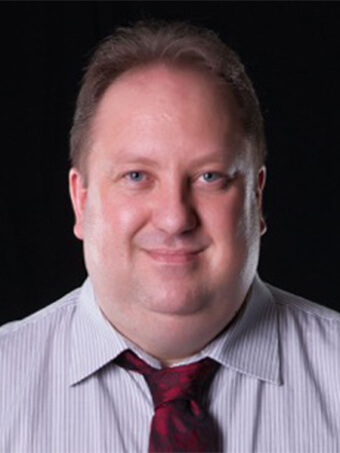
Andrew A. Bettiol is an Associate Professor and Deputy Head (Resources & Exec/Admin Staff) at the National University of Singapore (NUS), affiliated with the Centre for Ion Beam Applications (CIBA). He holds a PhD from the University of Melbourne (1999). His research focuses on advanced ion beam technologies for quantum materials and biomedicine, including quantum defect engineering in diamond and 2D materials, radiobiology studies using proton beams, and novel detector systems. Key research areas include creating spin defects in materials like hBN and SiC for quantum sensing, developing single-proton dosimetry for targeted cellular studies, and optimizing proton beam applications in medicine and materials science. His work bridges fundamental physics with applied technologies, such as diamond-based photon emitters and proton therapy improvements. Notable contributions include high-resolution ion beam microscopy of whole cells, single-proton counting scintillators, and defect-engineered quantum systems. His research emphasizes interdisciplinary approaches in quantum technologies and biomedical imaging. Dr. Bettiol leads projects at CIBA, collaborating on quantum communication, radiation biology, and accelerator-driven materials innovations. His studies span from nanoscale defect characterization to large-scale biomedical and industrial applications.
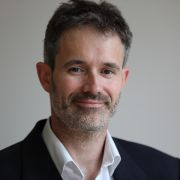
Miles J Padgett is a Royal Society Research Professor and holds the Kelvin Chair of Natural Philosophy at the University of Glasgow's School of Physics and Astronomy. He leads QuantIC, the UK's quantum imaging center, and served as Interim Executive Chair of the EPSRC (2023) and Vice-Principal for Research at Glasgow (2014–2019). His research focuses on quantum optics, optical tweezers, and imaging technologies, with notable contributions to orbital angular momentum and quantum-enhanced imaging. Padgett’s work bridges fundamental physics and applied technologies, including endoscopes, microscopes, and methane detection systems. He has received prestigious awards like the Royal Society’s Rumford Medal (2019) and European Physical Society’s Quantum Electronics Prize (2021). His lab and collaborations emphasize interdisciplinary innovation, with over 468 publications and industry partnerships through QuantIC. Key roles include Chair of the UK Physics Panel for REF 2021, EPSRC Council member, and SPIE Board Director. His research culture advocacy at Glasgow elevated the university’s REF performance to upper quartile in the Russell Group. Ongoing projects explore quantum imaging, photon-efficient systems, and real-time sensing with cutting-edge optical techniques.
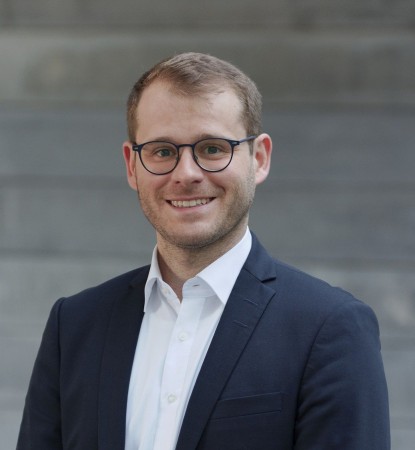
Professor Jon Willmott is a faculty member at the University of Sheffield's School of Electrical and Electronic Engineering, holding the title of Professor of Metrology. He leads the Sensor Systems Research Group within the Advanced Detector Centre, focusing on developing novel semiconductor-based detectors for thermal imaging and optoelectronic applications. Willmott earned his MPhys (1999) and PhD (2003) in Physics from the University of Southampton. After postdoctoral research in liquid crystals at Cambridge and a decade in industry designing thermal instruments, he joined Sheffield in 2015 with an EPSRC Established Career Fellowship. His research spans temperature measurement science (metrology), scientific instrumentation, and optical imaging, with applications in medical imaging, volcanology, and additive manufacturing. Key projects include hyperspectral imaging systems, combustion dynamics, and low-cost environmental sensors. Willmott's group emphasizes instrument innovation to enable previously unattainable scientific measurements. Professional roles include EEE PGR Admissions Tutor and Royal Society Industry Fellow. His work integrates interdisciplinary collaborations, such as volcanic monitoring at Masaya Volcano and thermal wound imaging for surgical site infection detection. Education: PhD in Physics, University of Southampton, 2003 MPhys in Physics, University of Southampton, 1999 Awards: EPSRC Established Career Fellowship (2015) Labs: Advanced Detector Centre, Sensor Systems Research Group
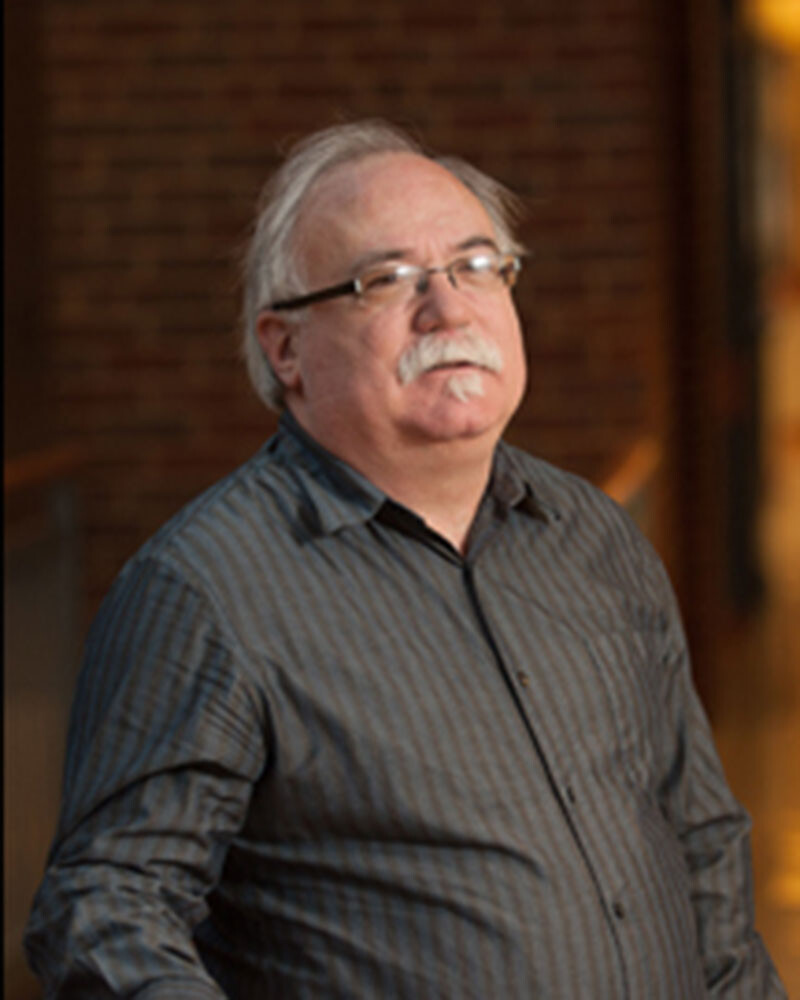
Chunnong Zhao is an Associate Professor at the School of Physics, Maths and Computing at The University of Western Australia. His research focuses on experimental gravitational wave physics and precision measurement technologies, particularly addressing high-optical power effects in laser interferometers. He pioneered work on parametric instability mitigation, which was critical for the Advanced LIGO project. His innovations include opto-acoustic parametric amplifiers and optomechanical filters, enabling ultra-sensitive gravitational wave detection. Current projects involve developing optomechanical negative dispersion technology to improve detector sensitivity at high frequencies. Research Interests: Gravitational wave detection technology Optomechanical systems and quantum optomechanics Parametric instability control in interferometers Optical cavity stabilization techniques Laser interferometry applications Binary neutron star merger signal analysis Grants & Projects: Tilt sensors for 6D seismology Australian Partnership in Advanced LIGO+ Quantum Australia Centre Renewable Microgrid Pilot for Gravitational Wave Facilities Led collaborations on Advanced LIGO's parametric instability suppression and developed novel optomechanical devices for next-generation detectors. Current research explores quantum-limited optomechanical sensors and negative dispersion applications in gravitational wave astronomy.
Enno Giese is a Professor at the Institute for Applied Physics, focusing on theoretical quantum optics and cutting-edge applications in atom interferometry. His research explores gravitational physics, quantum sensing, and nonlinear optics, with a particular emphasis on precision measurements and quantum technologies. Key projects include the development of entanglement-enhanced atomic sensors for microgravity environments and the study of relativistic effects in atom interferometry. His work spans topics such as gravitational wave detection, quantum imaging beyond the standard quantum limit, and the quantum regime of free-electron lasers. Recent studies include the application of synthetic quantum holography and the optimization of higher-order atomic diffraction techniques. Giese collaborates on space-based experiments, such as the Cold Atom Lab on the International Space Station, to advance gravitational physics and quantum metrology in microgravity. His publications reflect a deep engagement with foundational questions in quantum mechanics, including angular momentum conservation at the single-photon level and the interface between gravity and quantum systems. While no awards are explicitly listed, his contributions to theoretical quantum optics have likely impacted the field significantly.
D. Mitchell Wilkes is an Associate Professor in the Department of Electrical Engineering and Computer Science at Vanderbilt University's School of Engineering. His research focuses on digital signal processing, image processing, and robotics, with applications in medical imaging, manufacturing automation, and cognitive systems. He holds a Ph.D. in Electrical Engineering from Georgia Institute of Technology (1987), an M.S. from the same institution (1984), and a B.S. from Florida Atlantic University (1981). Education: Ph.D., Electrical Engineering, Georgia Tech, 1987 M.S., Electrical Engineering, Georgia Tech, 1984 B.S., Electrical Engineering, Florida Atlantic University, 1981 Research: His work spans signal modeling, sonar systems, and robotics, with notable contributions to friction stir welding automation and neuromorphic decision-making in robots. Over 40 peer-reviewed articles highlight interdisciplinary applications in computer vision, medical imaging, and autonomous systems. Grants & Patents: He secured NSF funding for adaptive robotics control systems and holds patents in welding process control. His lab collaborations include Vanderbilt's Intelligent Systems Center and interdisciplinary medical engineering projects. Labs/Teams: Active in the Intelligent Robotics Lab and collaborates with biomedical and manufacturing teams, advancing human-robot interaction and industrial automation.
Nien-hui Ge is a Professor in the Department of Chemistry at the University of California, Irvine (UCI). His research focuses on Analytical Chemical Biology, Physical Chemistry, Chemical Physics, Polymer Science, Materials Science, and Nanoscience. He leads studies in vibrational spectroscopy, nonlinear optical imaging, and nanomaterial characterization. Research interests include ultrafast molecular dynamics, quantum dot superlattices, photoelectrochemical systems, and peptide-membrane interactions. His work bridges theoretical models and experimental techniques, particularly using advanced spectroscopic methods like two-dimensional infrared (2D IR) and sum-frequency generation microscopy. Recent articles highlight innovations in noise reduction for optical spectroscopy, surface termination effects in photoelectrochemical materials, and molecular imaging of biological systems. His contributions span energy materials, smart polymers, and nanoscale structure-property relationships. No scientific awards or grants are explicitly mentioned in the provided text. Students and collaborations are not detailed here.
Professor Stephane Willocq is a faculty member in the Department of Physics at the University of Massachusetts Amherst. He holds a Ph.D. from Tufts University (1992) and specializes in Experimental Particle Physics, focusing on high-energy collider experiments, particularly with the ATLAS detector at CERN's LHC. His research interests include searches for new physics beyond the Standard Model, Higgs boson studies, supersymmetry, and dark matter candidates. Willocq is deeply involved in the ATLAS collaboration, contributing to analyses of LHC data from Run 2 and beyond. His work encompasses precision measurements of top quark properties, W/Z boson physics, and novel signatures of exotic particles. He has pioneered studies on photonuclear processes in ultra-peripheral collisions and developed advanced data analysis techniques using machine learning. His recent publications (2024–2025) highlight searches for new scalar particles, vector-like leptons, and long-lived neutral particles, alongside constraints on Higgs boson properties and off-shell behavior. Willocq also contributes to ATLAS computing infrastructure, including cloud resource evaluation and detector calibration improvements.
Prof. Volkmar Schulz is a Professor at RWTH Aachen University, holding the Chair of Imaging and Computer Vision. He also serves as Principal Scientist at Fraunhofer MEVIS and is CEO/CTO of Hyperion Hybrid Imaging Systems GmbH. His career includes positions at Philips Research Laboratories and Draeger Medical. His research specializes in advanced medical imaging technologies, particularly Positron Emission Tomography (PET) and Magnetic Particle Imaging (MPI), with focus areas in detector design, image reconstruction, and system optimization. Recent work explores time-of-flight detection, depth-of-interaction measurement, and hardware innovations for improved imaging performance. Publications demonstrate his leadership in developing novel ASICs for PET systems, optimizing MPI hardware configurations, and applying machine learning for detector calibration. His work bridges fundamental physics with clinical applications in cancer diagnosis and treatment monitoring. He leads research teams at RWTH Aachen and Fraunhofer MEVIS, focusing on translating imaging innovations into clinical practice through industry collaborations.
Joel Karp is a Professor of Radiologic Physics in Radiology and holds a secondary appointment in Physics and Astronomy at the University of Pennsylvania. He leads the PET Imaging/Cyclotron Facility and directs the Nuclear Medicine Core in the Medical School's Small Animal Imaging Facility. His work focuses on advancing PET technology, including time-of-flight imaging, detector design, and 3D reconstruction algorithms. He has pioneered the Philips Gemini TF scanner and developed novel scintillator-based instruments. Dr. Karp has been instrumental in establishing imaging standards like the NEMA NU-2 protocol and has contributed to multi-center trial accuracy initiatives. Education: PhD in Nuclear Physics from MIT (1980) Affiliations: Penn Medicine, IEEE Nuclear Medical Imaging Sciences Council, SNM, and ACRIN PET Core Lab. His research interests span PET/SPECT instrumentation, quantitative imaging, and clinical translation. He has received the Ed Hoffman Memorial Award (2007) and led national committees, including the NAS Nuclear Medicine Science Committee. Dr. Karp's lab collaborates extensively on preclinical imaging, deep learning denoising, and low-dose protocols, advancing both clinical and research imaging capabilities. Notable contributions include the PennPET Explorer total-body PET system and collaborations on dedicated breast-PET/DBT systems. His work bridges physics, engineering, and medicine to enhance diagnostic precision and reduce radiation exposure.
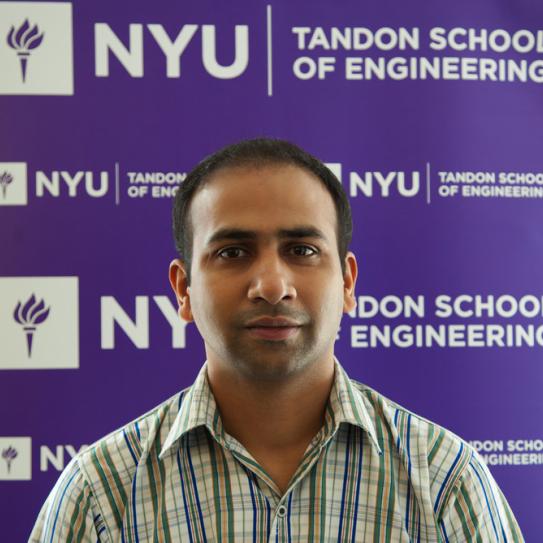
Ayaskanta Sahu is an Associate Professor in the Department of Chemical and Biomolecular Engineering at the NYU Tandon School of Engineering, where he also serves as Undergraduate Studies Director. He leads the Hybrid Nanomaterials Lab, focusing on nanostructured hybrid materials for optoelectronics and thermoelectric energy conversion. His research emphasizes controlling energy transport in hybrid systems, interfacial doping of semiconductor nanocrystals, and sustainable nanomaterials design. Education: B.Tech. in Chemical Engineering from Indian Institute of Technology Roorkee (2007), Ph.D. in Chemical Engineering from the University of Minnesota (2012). Prior to NYU, he held roles at ETH Zurich (Visiting Scientist, 2011–2013), Lawrence Berkeley National Laboratory (Materials Postdoctoral Fellow, 2013–2016), and the University of Minnesota (Research/Teaching Assistant, 2007–2012). Research Interests: Hybrid Organic/Inorganic Nanostructures, Thermoelectric Devices, Quantum Dots, Energy Transport Phenomena, and Nanocrystal Synthesis. His work spans colloidal nanocrystal doping, thermoelectric thin films, and infrared photodetectors. Awards: DARPA Young Faculty Award (2021). His research has produced 50+ peer-reviewed articles, including high-impact publications in Adv. Mater. , Nano Lett. , and J. Am. Chem. Soc. Grants and Collaborations: Focuses on DARPA-funded projects for mid-infrared sensing and sustainable energy materials. His lab actively explores nanomaterials for next-generation optoelectronic and thermoelectric applications.
Professor Mustapha Yagoub is a distinguished faculty member in the School of Electrical Engineering and Computer Science at the University of Ottawa, where he has been serving since 2001. With over 300 publications to his name, he specializes in RF/microwave engineering, neural networks applications, and RFID systems. His research bridges theoretical advances with practical industrial applications in wireless communications and microwave circuit design. Education: Dipl.-Ing. in Electronics, École Nationale Polytechnique, Algiers, Algeria (1979) Magister in Telecommunications, École Nationale Polytechnique, Algiers, Algeria (1987) Ph.D., Institut National Polytechnique, Toulouse, France (1994) Professor Yagoub's research spans several interconnected domains within electrical engineering, with particular emphasis on microwave circuit design and wireless communication systems. His work integrates neural network techniques with traditional microwave engineering approaches, creating innovative solutions for complex RF problems. He has made significant contributions to RFID technology, particularly for specialized applications like underground mining environments. His expertise in applied electromagnetics has led to numerous advances in antenna design and microwave component modeling. Analysis of Professor Yagoub's recent publications reveals a strong focus on practical microwave circuit design, with particular attention to low-noise amplifiers, RF parameter extraction techniques, and efficient circuit implementations for wireless communications. His work demonstrates consistent integration of electromagnetic theory with circuit design principles, often applying novel computational approaches to solve challenging problems in microwave engineering. Many publications address specific industry needs in wireless communications, RFID systems, and energy-efficient circuit design. Professional Affiliations: Senior Member, IEEE Microwave Theory and Techniques Society Professional Engineer, Ontario, Canada Member, Ordre des ingénieurs du Québec, Canada Professor Yagoub has supervised numerous graduate students through their research in microwave engineering and wireless communications. His extensive publication record suggests substantial research funding throughout his career, supporting work in microwave circuit design, neural network applications in RF systems, and RFID technology development. His collaborations with researchers across multiple institutions and countries have contributed to the international recognition of his work in microwave engineering. While specific laboratory details aren't provided in the available information, Professor Yagoub's research focus suggests he leads or has led laboratory facilities for microwave circuit design, RF measurement, and wireless communication systems testing. His work on neural network applications in microwave engineering indicates a computational research component alongside experimental work.
Professor Evgueni Goudzovski is a leading particle physicist at the University of Birmingham, UK, specializing in kaon decays and searches for physics beyond the Standard Model. He holds the position of Professor of Particle Physics and leads the NA62 experiment at CERN, focusing on rare kaon decays and hidden sector physics. His research includes investigations into lepton flavor violation, heavy neutral leptons, and axion-like particles. Education: PhD in Experimental Particle Physics (2006, JINR, Dubna) and MSc in Applied Physics and Mathematics (2002, MIPT, Moscow). Research Interests: Flavour physics, rare kaon decays, dark sector particles, neutrino physics, and precision measurements. He has pioneered studies using the NA62 and NA48/2 experiments, contributing to breakthroughs in understanding CKM matrix elements and lepton universality. Key Contributions: Led the discovery of tagged neutrino detection in NA62, established NA62-UK as spokesperson, and secured ERC funding for lepton flavour violation studies. His NA62 results include first observations of K⁺→π⁺νν and constraints on dark photon production. Grants & Leadership: Principal Investigator on ERC Starting Grant (2014), Birmingham Fellow (2012), and Royal Society Research Fellow (2012–2022). Serves as NA62-UK spokesperson and convener of NA62's Rare Decays Working Group. Labs/Teams: Birmingham NA62 group, NA62 collaboration, HIKE initiative, and KOTO-II project. Active in international efforts like Snowmass and European particle strategy updates.
Prof. Andrei Barychev is an Associate Professor at the University of Groningen's Faculty of Science and Engineering, affiliated with the Kapteyn Astronomical Institute. His research focuses on astronomical instrumentation for far-infrared/submillimeter waves and terahertz technology. He contributes to projects like the ALMA observatory, the Cherenkov Telescope Array, and the Millimetron space observatory. He teaches courses on detection techniques and mathematics for astronomy students. His work includes developing superconducting mixers, terahertz receivers, and advanced optical systems. He also holds a co-owner position in Dutch Terahertz Inspection Services B.V., linking academic research to industrial applications. Research Interests : Instrumentation for submillimeter and terahertz astronomy, superconducting detectors, radio telescope technology, and space observatory design. His recent projects emphasize high-resolution spectrometers and next-generation telescope arrays. Publications : Recent work addresses ALMA upgrades, AMT optics design, and Millimetron instrumentation. His contributions span technical innovations in receiver performance, antenna systems, and observatory infrastructure. Affiliations : Kapteyn Astronomical Institute, University of Groningen. Collaborations include international projects like CTAO and Millimetron.
Oksana Kavatsyuk is an Assistant Professor at University College Groningen, part of the University of Groningen. She holds a position in the Department of Mathematics and Natural Sciences and serves as Director of Academic Staff. Her research spans Nuclear Physics, Astroparticle Physics, and Science Education. Kavatsyuk earned her PhD in Nuclear Physics from the National Taras Shevchenko University of Kyiv (2005) and has held postdoctoral positions at GSI (Germany) and KVI-CART (Netherlands), focusing on detector development for particle therapy and neutrino telescopes. Education: PhD in Nuclear Physics (2005), National Taras Shevchenko University of Kyiv Postdoctoral Research: GSI (2005-2008), KVI-CART (2011-2016) Research Interests: Neutrino detection (KM3NeT collaboration) Proton therapy imaging and dosimetry Gas-phase biomolecules and radiation effects Inclusive STEM education practices Her work includes pioneering studies on proton beam verification systems, detector modules for cubic-km neutrino telescopes, and radiation-induced phenomena in biomolecules. She leads educational initiatives on gender-inclusive STEM teaching and innovative classroom practices. Notable contributions include: Development of KM3NeT optical modules for deep-sea neutrino detection Pioneering proton beam imaging techniques using fluorescent methods Advancing understanding of electron detachment processes in DNA