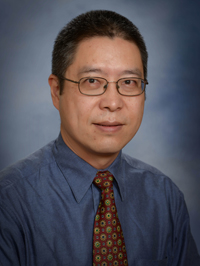
Dr. Alireza Nili is a Senior Lecturer in Service Science at QUT's School of Information Systems within the Faculty of Science. His expertise spans digitization of customer-centric services, AI/chatbots, IoT/IIoT, and sustainable technologies. He holds a PhD from Victoria University of Wellington and has coordinated large-scale courses like IT Systems Design (IFB103), achieving top teaching scores. Nili's research focuses on service ecosystems, trust in digital services, and public/retail sector innovations. He has secured over $1.4M in industry grants for projects involving Cisco, Amazon, and Services Australia. His awards include the 2023 Educator of the Year and multiple top conference paper recognitions. Nili supervises PhD students at Level 3 mentoring status and contributes to major conferences as track chair/associate editor. Research highlights include frameworks for chatbot governance, IOT in agriculture, and AI ethics. His work appears in IEEE Software , Communications of the ACM , and MIT Sloan Management Review . Current projects address consumer trust in AI technologies and spatial data systems. Nili's interdisciplinary approach combines design science with empirical methodologies to bridge theory and practice in digital service innovation.
Professor Fabio Milani is a faculty member in the Department of Economics at the University of California, Irvine (UCI), where he also serves as Director of Graduate Studies for the Economics Ph.D. Program. He holds a Laurea in Economics from Bocconi University (2000) and a Ph.D. in Economics from Princeton University (2006). His research focuses on Macroeconomics, Monetary Economics, International Macroeconomics, and Time Series Econometrics, with an emphasis on deviations from rational expectations and the impact of learning behavior on macroeconomic fluctuations. Professor Milani’s work explores how psychological factors and heterogeneous expectations drive economic outcomes, including business cycles and inflation dynamics. He has extensively analyzed the role of sentiment, news shocks, and adaptive learning in macroeconomic models. His teaching spans Ph.D. courses like Macroeconomic Theory and Advanced Macroeconomics, as well as undergraduate courses on Financial Markets and the Macroeconomy. He advises numerous Ph.D. students, many of whom hold academic and policy roles globally. His publications span over 30 articles in top journals, including the Economic Journal , Journal of Economic Dynamics and Control , and Journal of Monetary Economics . Recent research includes studies on inflation tolerance, heterogeneous expectations, and the implications of learning models for monetary policy design. While no scientific awards are explicitly listed, his contributions reflect significant scholarly impact in macroeconomic theory and policy analysis.
Professor Christhina Candido is Director of the Sustainable and Healthy Environments (SHE) Lab at the University of Melbourne's Melbourne School of Design. As a WELL Faculty member, she collaborates with GBCA, NABERS, and IWBI on building performance standards. Her research examines the intersection of building design, occupant experience, and environmental performance, with focus areas including: Post-occupancy evaluation methodologies Indoor environmental quality metrics Climate-responsive design in tropical/subtropical regions Wellbeing-certified workplaces Recent work analyzes post-pandemic work patterns, biophilic design effectiveness, and adoption challenges of WELL Building Standards. Her projects provide evidence-based frameworks for creating sustainable, healthy built environments.
Jiang Hu is a Professor in the Department of Electrical and Computer Engineering at Texas A&M University, holding the Eric D. Rubin '06 Endowed Professorship. He also serves as Co-Director of Graduate Programs and is affiliated with the Computer Science & Engineering department. His research focuses on VLSI design automation, machine learning applications, and hardware security. He has held roles as editor for IEEE Transactions on CAD and ACM Transactions on Design Automation, and chaired the 2012 ACM International Symposium on Physical Design. Education: B.S. in Optical Engineering (Zhejiang University, 1990), M.S. in Physics (1997), and Ph.D. in Electrical Engineering (University of Minnesota, 2001). He worked at IBM Microelectronics before joining Texas A&M in 2002. Research interests include energy-efficient VLSI circuits, on-chip communication fabrics, analog layout automation, and AI-driven EDA. Recent work emphasizes machine learning for design closure, privacy-preserving frameworks, and systolic array-based architectures. Awards: IEEE Fellow (2016) Humboldt Research Fellowship (2012) Multiple best paper awards at DAC, ICCAD, and ASPDAC Advising and grants: Leads initiatives like the SLICE project, NSF workshops on ML-EDA infrastructure, and serves as Editor-in-Chief of ACM TODAES since 2024. His work bridges academic research and industry applications in EDA and semiconductor design. Labs/Teams: Active contributor to open-source tools like ALIGN for analog layout generation and collaborations on machine learning for EDA commons.
Pamela A. Morris-Perez is a Professor of Applied Psychology at the NYU Steinhardt School of Culture, Education, and Human Development and an Affiliated Professor at the NYU School of Global Public Health. She is an elected member of the National Academy of Education. Her research bridges developmental psychology, suicidology, education, and policy, with over $75M in research funding. She holds a BA from Columbia University and a PhD in Developmental Psychology from Cornell University. Her research focuses on early childhood interventions, adolescent suicide prevention (through ARCADIA), and policy impacts. Notable projects include a $5M IES-funded NYC Universal Pre-K initiative and a $10M NIH trial on parenting interventions. She has also led institutional roles as Vice Dean/Interim Dean of NYU Steinhardt, overseeing significant research growth and diversity initiatives. Research Themes: Suicidology, early childhood development, policy evaluation, pediatric health interventions. Key Projects: ARCADIA suicide prevention, NYC Pre-K expansion, pediatric primary care interventions. Her articles highlight interdisciplinary approaches to child development and policy, with recent work emphasizing adolescent mental health and pandemic impacts on early childhood programs. Awards include the National Academy of Education membership and a 2017 Best Paper Award. Leadership Achievements: 44% increase in research expenditures, tripling of faculty of color hires, pandemic response coordination. Grants & Funding: William T. Grant Foundation, NIMH, NIH, IES. Morris-Perez collaborates across academia and public agencies to translate research into scalable interventions, particularly in under-resourced communities.
Aleksandar Kostic is a Lecturer in the Department of Architecture and Built Environment at South East Technological University (SETU), where he also serves as Lead Researcher. He holds a PhD from University College Dublin, awarded in 2022, and is actively contributing to the academic and professional architecture community. PhD in Design Theory, University College Dublin (2022) His research lies at the intersection of philosophy and architectural design, with a strong focus on design theory, epistemology, ethics, and aesthetics. He explores fundamental questions such as aporia (intellectual impasses) in design, the influence of Platonic philosophy, and the ethical responsibilities of architects. His work emphasizes critical thinking and philosophical inquiry in architectural practice and education. The trends in his publications reveal a consistent engagement with philosophical concepts applied to architectural problems. From examining 'aporetic' design challenges to analyzing Plato’s views on expertise, his research bridges abstract thought and practical design. Recent works continue this trajectory, addressing ethical values, non-material aspects of design, and the role of contradiction in innovation. Nomination for MIES EU Award for Architecture (2009) Aleksandar Kostic advises PhD students and is actively involved in research dissemination through publications, peer-review, and conference organization. He serves on the steering committee of the All Ireland Architecture Research Group and is a member of the Centre for Platonic Studies at Trinity College Dublin and the Royal Institute of the Architects of Ireland. His peer-review activities include journals such as She JI and Building Material . He is a key member of the Architecture Research Group at SETU and collaborates across disciplines, particularly with philosophy. His upcoming activity includes organizing the 'Ethics in Architecture' conference in 2025, highlighting his leadership in integrating ethical discourse into architectural research.
Konstantinos Kalogeropoulos is an Assistant Professor at the Department of Biotechnology and Biomedicine, Technical University of Denmark (DTU), leading research at the Cell Diversity Lab. His work bridges proteomics, computational biology, and snake venom research. Current projects: "The Proteomic Landscape during Influenza Infection" (2022-2025) Supervisor for PhD projects on protease network rewiring in psoriasis and wound exudate degradomics Research interests include: Proteomic analysis of inflammatory diseases Snake venom toxin structure prediction Extracellular matrix biomechanics De novo peptide sequencing algorithms Computational modeling of protease networks Recent article trends demonstrate his work in • Database-free proteomics (InstaNovo/InstaNexus) • Snake venom pathophysiology (V-ToCs clustering) • Inflammatory disease biomarkers (psoriasis, impaired healing) • Extracellular matrix mechanics (fibronectin tension, gut inflammation) Advising: Supervises PhD students Polhaus, C. J. M. and Haack, A. M., focusing on protease networks and wound healing.
Carolina Matos is a Professor at City, University of London's School of Communication & Creativity, specializing in media studies, gender politics, and communications research with a particular focus on Brazil and Latin America. Her scholarly work bridges academic inquiry with practical advocacy, especially in the areas of sexual and reproductive health rights (SRHR), feminist media studies, and democratic processes in the Global South. Dr. Matos's research interests span several interconnected domains: Gender politics and feminist media studies, with particular attention to Brazilian and Latin American contexts Sexual and reproductive health and rights (SRHR) communications and advocacy across global contexts Media democratization and public service broadcasting in Brazil and Latin America Digital activism and online networks for social change and gender equality Health communication in the age of misinformation, particularly regarding women's health in politically polarized environments Journalism's role in democratic processes and political transitions Her recent publications (2021-2025) demonstrate a clear trajectory toward examining how marginalized communities, particularly women in the Global South, navigate complex media landscapes around reproductive health. Her methodology frequently employs focus group research designed to empower participants while gathering insights on media consumption and interpretation. She has conducted significant research in partnership with NGOs like Reprolatina in Brazil and Open Arms in Florida, examining how disadvantaged communities process health communications in contexts of political polarization and misinformation. Dr. Matos has made substantial theoretical contributions through both foundational and recent works: Her book "Globalization, gender politics and the media" (2016) examines changing media representations in relation to feminist movements globally Her seminal work "Journalism and Political Democracy in Brazil" (2009) analyzes media's critical role in Brazil's democratization process following the military dictatorship She has conducted extensive comparative research on how NGOs communicate about SRHR across the Global North and South Her research on "New Brazilian feminism and online networks" (2017) documents the emergence of digital feminist activism in Brazil Her methodological approach consistently combines rigorous academic frameworks with practical applications, often utilizing mixed methods including content analysis, discourse analysis, and participatory research techniques designed to center marginalized voices while advancing scholarly understanding of media, gender, and power dynamics.
Dr. Edoardo Gallo is a University Associate Professor at the Faculty of Economics, University of Cambridge, and a member of Magdalene College. His research focuses on Experimental Economics , Networks , and Behavioural Economics . Harvard University: A.B. in Physics and Mathematics University of Oxford: M.Phil. and D.Phil. in Economics Gallo's research explores how network structures influence economic behavior, cooperation, and decision-making. His work spans topics like cybercrime disruption , social exclusion , COVID-19 behavioral responses , and unethical behavior in rivalry . Gallo's recent publications (2020-2025) analyze networked social dynamics , including cooperation mechanisms , monetary exclusion , and pandemic-induced behavioral changes . His experiments often employ interactive online platforms like UbiquityLab. Unicredit Foundation Best PhD Thesis Award CRASSH Early Career Fellowship Gallo supervises PhD students such as Rebecca Heath and Christian Höhne , with interests in online social networks and network cognition . He has received grants from the International Foundation for Research in Experimental Economics and the Isaac Newton Trust .
Eyal Aharoni is a Professor in the Department of Philosophy at Georgia State University's College of Arts & Sciences. He holds a Ph.D. in Psychology from the University of California, Santa Barbara (2009) and bachelor's degrees in psychology and religious studies from the same institution. Dr. Aharoni's research program bridges psychology, neuroscience, and legal studies with particular focus on: Risk models for antisocial behavior Application of neuroscience to legal contexts (neurolaw) Impact of emotion and cognitive bias on criminal, moral, legal, and political decision making Psychopathy and criminal justice outcomes His scholarly work demonstrates a consistent interdisciplinary approach to understanding the psychological and neurobiological underpinnings of criminal behavior and legal decision-making. Through experimental, longitudinal, and neuroimaging methodologies, Aharoni investigates how cognitive, behavioral, evolutionary, and neurobiological factors influence criminal justice outcomes and potential reforms. Dr. Aharoni maintains an active research laboratory and welcomes PhD students in psychology, with potential funding opportunities in neuroethics. His current research interests include ethical implications of neuroscience technologies and associated issues in cognitive neuroscience, moral psychology, legal psychology, and forensic psychology. His professional experience includes: Research Associate at the RAND Corporation Postdoctoral fellowship at The MIND Research Network for Neurodiagnostic Discovery and the University of New Mexico Psychology Research positions at the Research Center for Virtual Environments and Behavior Research positions at the Institute for Social, Behavioral, and Economic Research
Neil Gandal serves as the Applied Distinguished Professor of Cyber Studies at the School of Cyber Studies, University of Tulsa, and concurrently holds the Henry Kaufman Professorship in International Capital Markets at Tel Aviv University's Berglas School of Economics. His academic career bridges cybersecurity economics and digital market analysis across these dual institutional affiliations. His educational credentials include: Ph.D. in Economics from the University of California, Berkeley (1989) M.A. in Statistics from the University of Wisconsin, Madison (1981) B.A. in Economics and B.S. in Mathematics from Miami University of Ohio (1979) Professor Gandal specializes in the economic dimensions of digital ecosystems, with particular emphasis on cyber security valuation, cryptocurrency market dynamics, and software industry competition. His empirical research employs advanced econometric methods to quantify risks and incentives in technology-driven markets, generating over 9,000 Google Scholar citations. This work establishes foundational frameworks for understanding how economic forces shape cybersecurity investments and digital innovation trajectories. His distinguished recognitions include: CEPR Research Fellowship for contributions to economic policy research Historic appointment as Honorary Editor of the International Journal of Industrial Organization Keynote invitations at premier economics conferences in Europe Fellowship designation by the International Journal of Industrial Organization As former Managing Editor (2005-2012) of the International Journal of Industrial Organization, Gandal shaped empirical research standards in industrial organization economics. His editorial leadership established methodological benchmarks for analyzing digital markets, though specific grant funding details and student mentorship records remain unreported in available materials. No laboratory or research team affiliations are documented in current institutional profiles.
Ruth Fong is a Teaching Professor at the Department of Computer Science, Princeton University , where she teaches foundational and advanced AI/ML courses (COS324, COS126) while leading the Looking Glass Lab in explainable AI research. She collaborates closely with the Visual AI Lab and Professor Olga Russakovsky . Education: PhD in Visual Geometry Group, University of Oxford (advised by Andrea Vedaldi , funded by Rhodes Trust and Open Philanthropy ) MSc in Neuroscience, University of Oxford (with Rafal Bogacz , Ben Willmore , and Nicol Harper ) AB in Computer Science, Harvard University (with David Cox and Walter Scheirer ) Research Focus: Pioneering Explainable AI and ML Fairness , with emphasis on post-hoc model understanding, interpretable-by-design architectures, and human-AI interaction frameworks. Her work spans computer vision, self-supervised learning, and neuroscience-inspired methodologies. Publication Trends: Recent papers (2023-2025) analyze interactive explanations , concept salience , and gender artifacts in vision datasets . Earlier work (2017-2020) established foundational techniques in extremal perturbations , backpropagation saliency , and neural network interpretability . Scientific Awards: Princeton Engineering Council Teaching Award (2025) Keller Center Summer Course Development Grant (2025) CHI Honorable Mention Paper Award (2023) Open Philanthropy AI Fellowship (2018) Rhodes Scholarship (2015) Advising: Directly mentored 10 Princeton undergraduates on IW/senior theses projects spanning generative AI , medical imaging fairness , and interactive visualization tools . Grants include Princeton SEAS and Open Philanthropy funding for the Looking Glass Lab. Lab & Team: Leads the Looking Glass Lab with 6 graduate/postgraduate members including Rawand Aziz , Matthew Barrett , and Ben Wachspress . Collaborates with faculty across Princeton and Oxford.
Minsu Kim is a CIFAR AI Safety Post-doc Fellow at KAIST and Mila, collaborating with Prof. Yoshua Bengio, Prof. Sungjin Ahn, and Prof. Sungsoo Ahn. His work bridges System 2 Deep Learning, Bayesian posterior inference, and combinatorial optimization. Ph.D., Industrial Engineering, KAIST (2025) M.S., Electrical Engineering, KAIST (2022) B.S., Mathematics and Computer Science (Dual Degree), KAIST (2020) Kim's research focuses on enabling AI systems to measure uncertainty, represent causality, and perform sequential reasoning for safety-guaranteed planning. His methodology integrates GFlowNets and diffusion models with off-policy amortized inference, targeting applications in scientific discovery , hardware design optimization , and large language model alignment . Recent work explores Bayesian posterior inference through GFlowNets, aiming to unify deep learning with probabilistic reasoning. His 15 most recent publications (2025–2024) reveal a trend of combining combinatorial optimization with generative models for tasks like molecular graph discovery, vehicle routing, and neural architecture search. He also investigates diffusion samplers for Bayesian inverse problems and symmetry-based neural methods (Sym-NCO) to enhance sample efficiency. Jang Yeong Sil Fellowship (2025) KAIST Presidential Best Ph.D. Thesis Award (2025) Qualcomm Innovation Fellowship (2023) DesignCon Best Paper Awards (2021–2022) Kim's collaborations span KAIST's Industrial Engineering department and Mila's AI research groups. He actively contributes to academic peer review for top conferences (NeurIPS, ICML, ICLR) and journals (IEEE TNNLS, TPAMI), emphasizing the intersection of AI safety , uncertainty quantification , and systemic reasoning .
Miguel Ángel Bernal Merino serves as a Part-Time Lecturer in the Department of Modern Philology, Translation and Interpretation at the University of Las Palmas de Gran Canaria. Concurrently, he acts as convener of the MA in Translation at the University of Roehampton in London, managing its Specialised Translation, Audiovisual Translation, and Intercultural Communication pathways since 2005. His academic profile bridges theoretical research and industry application in localization disciplines. PhD in The Localisation of Video Games, Imperial College London MSc in The Localisation of Multimedia Interactive Entertainment Software, Imperial College London Certificate in Software Localisation, University of Limerick CELTA, University of Cambridge MPhil in Lip-Synched Dubbing, Universidad de Alicante MA in Hispanic Literature, University of Rhode Island BA in English & Spanish Linguistics, Universidad de Alicante Bernal Merino's research pioneers the expansion of Translation Studies into interactive media domains. His work on video game localization examines interactivity, cultural adaptation, glocalisation, and playability, while his audiovisual translation research investigates creativity in lip-synched dubbing, subtitling, and audiodescription. He extends these frameworks into gaming-based language learning through haptic environments and multisensory reinforcement, exploring physiological aspects of multilingual cognition and polysemiotic neural networks. This multidisciplinary approach fundamentally challenges traditional boundaries in translation theory. His publication trajectory reveals evolving industry-academia integration, shifting from foundational game localization frameworks (2008-2015) toward user-centered research and educational applications (2018-2024). Recent work emphasizes measurable business impacts through quality localization, regional market adaptations, and crowd-sourced methodologies, demonstrating consistent influence on professional standards across gaming and translation sectors. Fellow of the Higher Education Academy Bernal Merino supervises doctoral research on mobile game localization, transmedia fan experiences, and historical game content translation while developing industry-academia pipelines through projects like AHRC's Media Across Borders. His funded initiatives—including Maximising ROI through Quality Game Localisation and Video Games for Language Learning—bridge theoretical innovation with commercial implementation, focusing on glocalisation strategies, interactivity metrics, and playability optimization. These collaborations connect European universities, gaming studios, and localization service providers. As chair of the IGDA Localization SIG and member of GIR Discourse, Communication and Society, he directs international forums for game localization discourse. His work with Routes into Languages promotes audiovisual media in language education, while REF-readiness collaborations enhance research excellence across European institutions through his professional network spanning industry conferences like GDC Summit and Game Global.
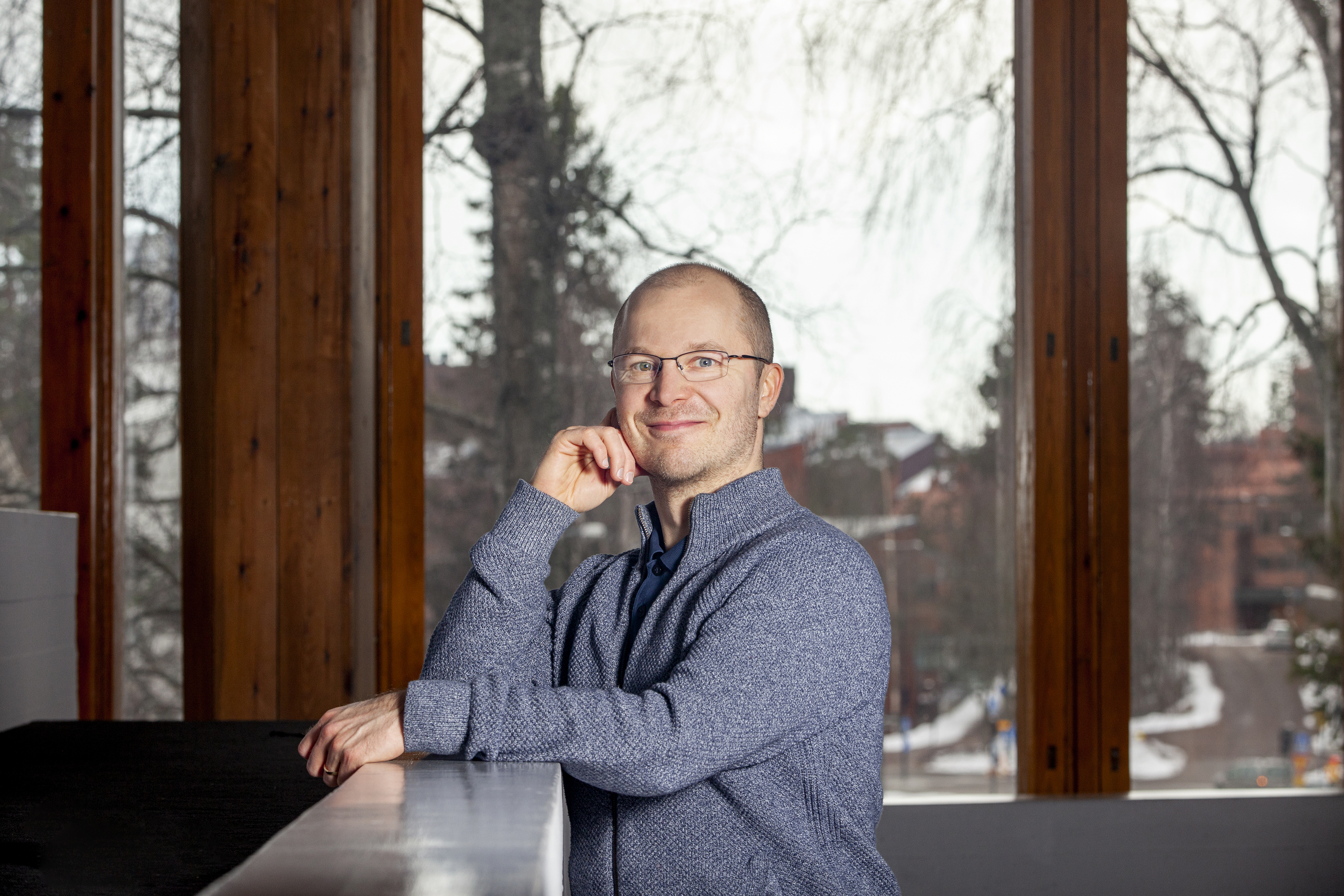
Pekka Marttinen is a tenured Associate Professor of Machine Learning at Aalto University, Department of Computer Science, and leads the Machine Learning for Health (Aalto-ML4H) group within the Helsinki Institute for Information Technology HIIT. Education: M.Sc. in Applied Mathematics, University of Helsinki (2004) Ph.D. in Statistics, University of Helsinki (2008) Title of Docent in Information and Computer Science, Aalto University (2015) Research Focus: His methodological work spans large language models, reinforcement learning, deep learning, probabilistic machine learning, and causal inference . These techniques are applied to critical domains of healthcare, bioinformatics, statistical genetics, epidemiology, and personalized medicine . The group develops novel algorithms, theoretical guarantees, and open-source software that enable data-driven discovery and decision-making in medicine and biology. Publication Trends: Across 2022-2024 the lab has concentrated on (i) rigorous causal reasoning over temporal clinical data, (ii) principled uncertainty quantification in LLMs, (iii) representation learning for neural network comparison, and (iv) translational projects that turn raw EHRs into actionable clinical insights. Earlier work integrated high-dimensional genomics with metabolomics and mapped evolutionary forces in bacterial pathogens. Scientific Awards & Recognition: While no specific awards are listed, his sustained publication record in top-tier venues (NeurIPS, ICML, AISTATS, Nature Genetics, PLOS CB) and his role as responsible professor of the Machine-Learning, Data-Science and AI major signify significant peer recognition. Advising & Grants: Prof. Marttinen currently mentors 8 PhD students as primary supervisor and an additional 7 PhD students as co-supervisor. He has already graduated 8 PhDs since 2014. The group is supported through competitive funding including the Finnish Center for Artificial Intelligence (FCAI) doctoral program. Labs & Teams: He directs the Machine Learning for Health (Aalto-ML4H) research group, comprising postdocs Hans Moen, Ti John, Alexander Nikitin, Negar Safinianaini, Linli Zhang, Zhiyuan Li, and the above-mentioned PhD cohort.