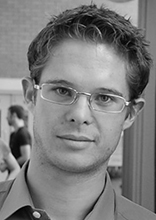
Pauline Lemaigre-Gaffier is a Lecturer in Modern History at the University of Versailles Saint-Quentin-en-Yvelines (UVSQ), affiliated with the Institute of Cultural and International Studies (IECI) and the Department of History. She co-leads the VoCriPat project (2023–present) and participates in the DIM PAMIR committee (2022–present) and ANR ACADEC project (2022–present). Her research focuses on European court societies (festivals, ceremonies, urban interactions) Cultural history (material culture, documentary writings) Political history (public finance, administrative practices) Economic history (privileges and businesses) Heritage sciences Her 15 most recent publications explore topics like archival practices in early modern Europe French court administration of the arts economic networks of privileged enterprises royal household logistics spanning 2015–2024, with upcoming works on economic history and heritage sciences in 2025. She has received the Benabou Prize (2012) and was a Thiers Foundation scholarship holder (2009–2010) . Her career includes editorial roles at Entre-Temps (2021–2023) and educational management for the 'Music, Performance, and Heritage' degree (2014–2016). She collaborates with institutions like the Centre de recherche du Château de Versailles and the Heritage Sciences Foundation.
Dr. Alastair Key serves as Director of Studies in Archaeology and Official Fellow in Archaeology at Queens' College, University of Cambridge. His research bridges Paleolithic archaeology, stone tool technology, and hominin behavioral evolution through experimental and computational approaches. Director of Studies and Official Fellow at Queens' College, Cambridge Specializes in Paleolithic stone tool analysis, Acheulean technology, and hominin adaptation Conducts experimental archaeology and computational modelling to assess tool functionality Key's research focuses on Acheulean handaxe production , lithic microwear patterns , and ergonomic constraints in prehistoric tool use . He has extensively published on topics including glacial-stage hominin occupations , Oldowan toolmakers , and machine learning applications to archaeological analysis . His recent publications (2025-2023) span diverse subfields: Acheulean chronology , hominin tool use biomechanics , experimental projectile testing , and computational morphometric methods . The work often integrates multidisciplinary datasets and open-source analytical tools to address fundamental questions about human technological evolution. Current research directions include stone tool sharpness quantification , handaxe social signaling potential , and cross-species tool use comparisons through primate studies.
David De Roure is Professor of e-Research at the University of Oxford and Academic Director of both the Digital Scholarship initiative and the Laboratory for AI Security Research. He is also an Honorary Research Professor at the Royal Northern College of Music (RNCM), where he serves as Technical Director of the Centre for Practice & Research in Science & Music (PRiSM). His work bridges computer science, digital humanities, cybersecurity, and music through his distinctive interdisciplinary approach. De Roure received his PhD in 1990 supervised by David W Barron and Peter Henderson, with research in Lisp and distributed systems. Prior to joining Oxford in 2010, he was Professor of Computer Science at the University of Southampton and Director of the Centre for Pervasive Computing in the Environment. His career spans multiple institutions and research domains, reflecting his commitment to interdisciplinary work. De Roure's research focuses on new methods of digital scholarship, innovation in knowledge infrastructure, cybersecurity, and computational approaches to music. His work uniquely combines humanities (digital musicology), social sciences (social machines and web science), engineering (Internet of Things), and computer science (distributed systems, AI). A key theme is empowering human creativity through technology rather than replacing humans with AI. He emphasizes co-creation between humans and machines, particularly in music composition where he explores how algorithms can generate fragments for human assembly. His recent publications reveal a strong focus on AI security in IoT systems, digital scholarship methods, and the intersection of music with computational approaches. There's a clear trajectory from foundational work in social machines and web science toward current applications in cybersecurity and music-AI co-creation. His publications consistently bridge technical domains with humanistic inquiry, demonstrating his commitment to interdisciplinary scholarship that addresses real-world challenges. Fellow of the British Computer Society (FBCS) Fellow of the Institute of Mathematics and its Applications (FIMA) Fellow of the Royal Society of Arts (FRSA) Chartered IT Professional (CITP) Turing Fellow at The Alan Turing Institute (2018-2024) De Roure has co-founded three major interdisciplinary initiatives: PETRAS National Centre of Excellence for IoT Systems Cybersecurity (the world's largest socio-technical research center focused on IoT security), the Software Sustainability Institute (dedicated to improving research software), and PRiSM at RNCM. He was Director of the Oxford e-Research Centre from 2012-17 and has led numerous research projects including SOCIAM (The Theory and Practice of Social Machines), FAST (Fusing Audio and Semantic Technologies), and Transforming Musicology. The Laboratory for AI Security Research, which he directs, took its first PhD students in 2024. At Oxford, De Roure chairs the Digital Research Cluster at Wolfson College and oversees the Laboratory for AI Security Research. The PRiSM team at RNCM has produced numerous musical works and performances, including six premieres in New York in 2024. He has been involved in designing gesture recognition software used in many performances and has collaborated on public engagement projects including the Science Together project which released a Hip Hop album. His current work includes exploring Chladni Plates for new musical instrument design and developing algorithmically enhanced instruments.
Paul Dodds is Professor of Energy Systems at University College London's Bartlett School of Environment, Energy & Resources, where he holds joint appointments at the UCL Energy Institute and the Institute for Sustainable Resources. He serves as the Faculty Graduate Tutor for the Bartlett Faculty of the Built Environment, overseeing all doctoral research programs. His academic progression at UCL has been steady, moving from Research Associate (2011-2014) to Senior Research Associate (2014-2015), Lecturer (2015-2016), Senior Lecturer (2016-2018), Associate Professor (2018-2020), and finally to Professor. His educational background includes a PhD from the University of Leeds (2010) focused on climate change and agriculture in Senegal, where he developed a new crop model for adaptation research and created detailed meteorological datasets for West Africa. He also holds a Master of Natural Science (Honours) from the University of Nottingham (2000). Dodds specializes in energy systems modelling with particular expertise in hydrogen and bioenergy systems, and the importance of energy storage. His research examines the interactions between society and the environment, with a focus on energy and food systems. He has developed the UK TIMES energy systems model, which has replaced the UK MARKAL model and is now co-developed with the UK Department of Business, Energy and Industrial Strategy (BEIS). This model has provided underpinning evidence for the UK's Clean Growth Strategy and Net Zero Strategy. His methodological contributions include formalizing a theoretical approach to analyzing the evolution of energy system models using 'model archaeology'. Analysis of his recent publications reveals a strong focus on hydrogen energy systems, with multiple papers examining hydrogen trade pathways, integration methods, and environmental impacts. His work increasingly addresses the geopolitical dimensions of energy transition, as seen in studies about Russian gas pivots to Asia and global energy scenarios. He maintains expertise in energy system modeling techniques while expanding into practical applications for policy development, particularly regarding the UK's net-zero transition. Dodds has supervised 15 PhD students at UCL, with eight under his primary supervision. His professional activities include serving as the UK Alternate Delegate to IEA Hydrogen since 2017, acting as a PhD External Examiner at the University of Edinburgh, and participating in the EPSRC Peer Review College. He has contributed to multiple government initiatives, including the UKERC Future of the Gas Networks workshop and representing the UK Government at IEA ETSAP meetings. He teaches an undergraduate module on 'Energy and Environmental Systems Modelling' and guest lectures on several MSc courses. His research group focuses on energy system modeling, with particular emphasis on the UK TIMES model development and application. His work often involves collaboration with government bodies, particularly BEIS, and he has coordinated significant projects like seven reports on overshoot pathways for the UK Government.
Catherine Polling is an NIHR Clinical Lecturer in General Psychiatry at King’s College London (KCL), affiliated with the Institute of Psychiatry, Psychology & Neuroscience (IoPPN) and the Health Inequalities Research Group . Her work focuses on mental health inequities, self-harm epidemiology, and mixed-methods research, particularly in urban and marginalized communities. Education: MBBS from University College London, MSc in Epidemiology from the London School of Hygiene and Tropical Medicine, PhD from KCL's Department of Psychological Medicine Research Interests: Catherine investigates health disparities in mental health services using advanced statistical methods (multi-level modeling, Bayesian disease mapping) and GIS-based data visualization. Her clinical work with the South London and Maudsley NHS Foundation Trust complements her academic focus on systemic racism and mental health outcomes. Teaching & Engagement: She lectures on urban mental health for KCL’s Urban Informatics MSc and co-leads training on racism in mental health services. She also facilitates reflective practice groups accredited by the Balint Society and contributes to curriculum reform via the Maudsley Cultural Psychiatry Group. Scientific Awards: NIHR Clinical Lecturer Fellowship Wellcome Training Fellowship Research Trends: Her publications emphasize self-harm risk factors, pandemic impacts on healthcare workers, ethnic disparities in mental health services, and the intersection of urban environments with mental health outcomes. She integrates large-scale clinical datasets, qualitative interviews, and spatial analysis to address systemic inequities.
Charles J. Taylor is Professor of Chemistry and Chair of the Chemistry Department at Pomona College, where he has served since 2002. An analytical chemist specializing in instrumental techniques for volatile organic compound (VOC) analysis, his work bridges medical diagnostics, environmental monitoring, and chemical sensing applications. His educational background includes: Ph.D. from University of Minnesota Bachelor of Arts from Macalester College Taylor's research focuses on developing rapid diagnostic methods through VOC analysis, leveraging microhotplate arrays, Raman spectroscopy, and polymer-carbon composites. His work spans biological systems (nematode chemotaxis, wine fermentation flavor compounds) and environmental applications (trace element profiling in coffee beans). Students in his lab gain hands-on experience with advanced analytical instrumentation and multivariate data analysis. Analysis of his publications reveals consistent themes in chemical sensing materials development, with strong emphasis on microsensor arrays, NASA-collaborative electronic nose projects, and applications in medical/environmental diagnostics. His work demonstrates interdisciplinary integration of materials science, analytical chemistry, and data analysis. His scientific achievements have been recognized with: NASA Board Award for Copolymers for Sensors (2013) NASA Board Award for SO 2 Detection (2012) Provisional U.S. Patent #60/861-617 (2007) Multiple NASA Tech Brief Awards (2007) Taylor actively mentors undergraduate researchers, with students co-authoring publications on diverse projects from medical diagnostics to environmental trace analysis. His teaching includes Advanced Analytical Chemistry, Environmental Chemistry, and General Chemistry, emphasizing practical laboratory experience. Research funding has supported instrumentation development and NASA-collaborative sensor projects. His laboratory focuses on chemical sensing materials development, particularly microhotplate-based sensor arrays and VOC analysis systems, with ongoing collaborations with NASA's Jet Propulsion Laboratory for electronic nose applications and environmental monitoring solutions.
Harald Rohracher is a Professor at the Department of Theme (TEMA) , Linköping University , affiliated with the Theme Technology and Social Change (THEME) . His research focuses on sociotechnical transitions for climate-neutral cities , examining energy systems, digitalization, and governance strategies. Grants: Formas, Horizon Europe, Vinnova Labs: STRIPE (Sociotechnical Research on Infrastructures, Politics, and Environment), Biogas Solutions Research Center Students: Adam Svensson, Stella Huang, Gavin Nilsson Lewis, Giorgi Kankia Rohracher investigates how households , social movements , and policy frameworks interact in transformative processes. His recent work explores smart grid politics , decentralized energy systems , and urban food digitalization , emphasizing power dynamics and governance experiments. He leads projects on transdisciplinary education for climate governance, positive energy districts , and collective experimentation across Sweden and Spain. His scientific grants highlight institutional support for sustainability research, while his research teams bridge academic, governmental, and civil society actors.
Yan Gu is an Associate Professor of Mechanical Engineering at Purdue University, located in West Lafayette, Indiana. He is affiliated with the School of Mechanical Engineering within the College of Engineering. His research focuses on legged locomotion, humanoid and quadrupedal robots, wearable robotics, hybrid dynamical systems, control systems, state estimation, and dynamics. He leads the TRACE Lab and has been recognized with prestigious awards including the NSF CAREER Award (2021) and multiple teaching accolades. Gu holds a Ph.D. from Purdue University (2017) and a B.S. from Zhejiang University, China (2011). His work emphasizes robust control strategies for legged robots in dynamic environments, including adaptive ankle torque control, time-varying foot-placement algorithms, and state estimation techniques for non-inertial surfaces. His recent publications explore multimodal datasets in animal-robot interaction and the stabilization of quadrupedal locomotion on accelerating platforms. His research has been supported through grants such as the NSF CAREER Award, and his contributions span both theoretical advancements in hybrid control systems and practical applications in wearable robotics and exoskeleton design. Gu’s TRACE Lab serves as a hub for innovative robotics research, addressing challenges in robot-environment interaction and dynamic stability.
Nina Balcan is the Cadence Design Systems Professor of Computer Science at Carnegie Mellon University's School of Computer Science, with affiliations in both the Machine Learning Department (MLD) and Computer Science Department (CSD). She maintains her office in Gates Hillman Center (GHC) 8205 and is a prominent figure in theoretical machine learning and algorithmic game theory. Her research spans multiple critical areas in computer science, with a strong focus on the theoretical foundations of machine learning, algorithm design and analysis, and computational approaches to game theory and economics. Balcan has made significant contributions to developing principled algorithms for deep learning, learning with limited supervision, representation learning, and life-long learning. Her work uniquely bridges theoretical computer science with practical applications, particularly in the analysis of complex objects and processes, including algorithmic learning and multi-agent systems. Analysis of her recent publications reveals a strong trend toward data-driven algorithm design, with particular emphasis on learning to optimize combinatorial algorithms, revenue-maximizing mechanisms, and robust learning frameworks. Her work consistently demonstrates how theoretical guarantees can inform practical algorithm development across diverse domains from optimization to economics. Major Awards and Honors: ACM Fellow AAAI Fellow Simons Investigator 2019 ACM Grace Murray Hopper Award (awarded to the outstanding young computer professional of the year) Winner of Outstanding Student Paper Award at UAI 2024 Winner of Exemplary Artificial Intelligence Track Paper Award at ACM EC 2019 Runner Up Best Paper Award at COLT 2012 Professor Balcan has served as Program Committee Co-chair for major conferences including NeurIPS 2020, ICML 2016, and COLT 2014, demonstrating her leadership in the machine learning community. Her teaching portfolio at CMU includes foundational courses such as 10-701 Machine Learning, 10-315 Machine Learning, and 10-715 Advanced Introduction to Machine Learning, where she has mentored numerous students in both theoretical and applied aspects of the field. Her research group focuses on developing theoretically sound yet practically applicable machine learning algorithms, with particular attention to algorithm configuration, data-driven optimization, and learning in strategic environments. Current projects involve learning to improve combinatorial algorithms, designing revenue-maximizing mechanisms, and developing robust learning frameworks that can operate effectively in challenging environments.
AI Xin is a Lecturer in the School of Computing at the National University of Singapore (NUS), specializing in Artificial Intelligence and Data Science. She teaches courses such as machine learning, deep learning, and data mining, including advanced modules like CS4225 and CS5425. Education: Ph.D. in Electrical and Computer Engineering from NUS; B.Eng. from Xidian University, China. Her research spans Game Theoretical Modelling , Optimization Methods , Algorithm Design , and Wireless Networks . She has contributed to multi-agent systems, algorithmic game theory, and wireless community networks, focusing on robust and distributed solutions. Her recent publications highlight trends in game theory for wireless networks , distributed coverage algorithms , and optimization for network efficiency , with a strong emphasis on theoretical and practical applications in AI and networking. Scientific Awards: Teaching Excellence Award (NUS, 2024). She has taught courses on Big Data Systems for Data Science and Computational Thinking , bridging academic rigor with industry relevance through her prior experience in risk management, supply chain, and sales at BHP Billiton Marketing Asia.
Prof. Michel Clement is a Professor of Marketing & Media at the University of Hamburg Business School, holding the Chair for Marketing & Media since 2006. He previously held academic positions at the University of Passau (2005/2006) and Christian-Albrechts-University Kiel (2002–2005). His research focuses on entertainment media product management, new technologies, and donor/customer management. He has held significant administrative roles including Academic Senate Member (2013–present), Faculty Council Member (2014–present), and Director of the Research Center Media and Communication (2008–present). Education: PhD in Marketing from Christian-Albrechts-University Kiel (mentor: Prof. Sönke Albers), with a Master's in Business Administration focusing on Marketing, Innovation Management, and Psychology. Pre-academic career included management roles at Bertelsmann mediaSystems and Bertelsmann eCommerce Group, where he founded Snoopstar.com GmbH as Vice President. Research interests span digital media economics, prosocial behavior in healthcare donations, platform business models, and consumer decision-making in entertainment industries. He has contributed to understanding blood/plasma donation retention strategies, smart speaker impacts on media consumption, and pandemic-related behavioral changes. Leadership roles include supervisory board memberships at MADSACK Mediengruppe (2018–present), Studierendenwerk Hamburg (2017–present), and Universität Hamburg Marketing GmbH (2015–present). He has directed major initiatives like the Hamburg Graduate School for Media and Communication (2009–2016) and co-developed international MBA programs with Fudan University (2006–2008). Grants and collaborations include state-funded excellence initiatives and industry partnerships. His work integrates academic research with practical applications in media technology scouting, venture consulting, and digital platform governance.
Professor George Siemens is a leading academic in the field of learning analytics and AI-driven education, serving as Professor and Director of the Centre for Change and Complexity in Learning at UniSA Education Futures, University of South Australia. His work focuses on advancing educational practices through data analytics, artificial intelligence, and understanding online learning dynamics. His research spans MOOCs, social and emotional learning analytics, and the ethical integration of AI in education. Notable contributions include the development of frameworks like the MOOC Replication Framework (MORF) and the DAIR infrastructure for educational AI research. Key publications include studies on student agency in AI environments, practicum effectiveness in teacher education, and synthetic data fairness in learning analytics. He collaborates internationally, with affiliations previously including the University of Texas Arlington. As a Research Degree Supervisor, he guides students in transformative educational technology research. His work emphasizes actionable intelligence for educators and scalable solutions for lifelong learning in the digital age.
Dr. Ralph Evins is an Associate Professor and Director of the Graduate Program in the Department of Civil Engineering at the University of Victoria. He holds affiliations with the Urban Energy Systems laboratory at Empa and ETH Zurich in Switzerland. His expertise spans building energy simulation, energy system optimization, and machine intelligence applications in sustainable design. Evins holds an MEng from Imperial College London and an EngD from the University of Bristol. His research focuses on computational problem-solving in energy systems, including surrogate modeling, optimization algorithms, and machine learning. He develops tools like the Holistic Urban Energy Simulation (HUES) platform and BESOS software framework to bridge building, district, and city-scale energy analysis. His work emphasizes holistic systems thinking, integrating energy hubs, thermal modeling, and digital twin technologies. Recent articles explore surrogate model refinement, inverse modeling for building characterization, and decarbonization strategies. He collaborates with industry to translate academic innovations into practical solutions. Evins advises students in energy systems and leads projects on net-zero building design, retrofit prioritization, and smart grid integration. His research addresses challenges in climate adaptation, energy efficiency, and sustainable urban development through interdisciplinary approaches.
L. Paige Fields is a Professor of Finance at the University of Kansas School of Business, where she joined in 2017 as Dean and Henry D. Price Professor of Business. Her academic career spans institutions including Trinity University (Dean, 2012-2015), Texas A&M University (1994-2012), University of Arizona (1991-1994), and University of Kentucky. Education : Ph.D. in Business Administration (Finance) from University of South Carolina, M.S. and B.S. in Finance from Louisiana State University. Her research focuses on corporate governance, banking, insurance, and capital structure. She has published extensively in top journals like the Journal of Finance and Journal of Money, Credit, and Banking , with recent work on earnings management, bank loan dynamics, and governance mechanisms. Fields has served as Associate Editor at the Journal of Financial Research and received over 20 teaching and academic awards, including national recognition from the Academy of Finance (2010). She has held leadership roles such as Department Chair at Trinity University and multiple teaching innovation grants at Texas A&M’s Mays Business School.
Catherine Guastavino is a Professor at McGill University's School of Information Studies (within the Faculty of Arts) and an Associate Member at the Schulich School of Music. She also contributes to the Centre for Interdisciplinary Research in Music Media and Technology (CIRMMT). Her roles include leading research projects and supervising graduate students in music technology and related fields. She holds a PhD in Psychoacoustics from Université Pierre et Marie Curie (Paris VI), an MSc from IRCAM (France), and a BSc in Mathematics from McGill University. Her research focuses on auditory perception, soundscape analysis, human-computer interaction, and urban acoustics. Notable projects include the 'Sounds in the City' partnership addressing urban noise policy and the development of immersive soundscape simulation tools. She leads or co-leads grants from SSHRC, NSERC, and MITACS, emphasizing interdisciplinary approaches to sound in urban environments. Guastavino's work bridges academic research with practical applications, such as designing sound installations for public spaces and improving acoustic environments in transportation and performance venues. She collaborates with city planners, musicians, and engineers, reflecting her commitment to making cities sound better through evidence-based strategies. Key Projects: SSHRC Partnership Grant for urban soundscape management (2018-2023) NSERC Discovery Grant on auditory localization (2019-2024) MITACS projects on Montreal festival soundscapes and noise policy Labs & Partnerships: Multimodal Interaction Laboratory (MIL) Collaborations with Ville de Montréal and Quartier des Spectacles Education: PhD: Psychoacoustics (Paris VI) MSc: Computer Science & Music Technology (IRCAM) BSc: Mathematics (McGill) Her teaching includes courses like Music Information Retrieval, integrating computational methods with artistic and scientific applications.