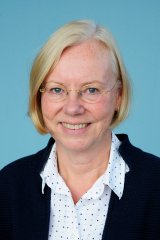
Dr. Ruud Hortensius is a tenured Associate Professor at the Department of Social, Health and Organisational Psychology , Faculty of Social and Behavioural Sciences, Utrecht University . He is a social neuroscientist and interdisciplinary researcher combining psychology, AI, and social neuroscience to study human-AI interaction dynamics. Education: PhD in Affective & Social Neuroscience (Cum Laude), Tilburg University (2016) MSc in Neuroscience & Cognition, Utrecht University (2011) BSc in Psychology (Cum Laude) with Cognitive Neuroscience major, Utrecht University (2008) Research Focus: Investigates social cognition during long-term human-AI interactions, particularly within family contexts. Develops innovative neurocognition-at-home methods and mobile labs to study real-world social dynamics with AI. His work spans empathy, emotion perception, reward systems, and social dynamics. Selected Grants & Awards: ERC Starting Grant (2023) NWO NGF AiNed XS Europe Grant (2024) Association for Psychological Science Rising Star (2023) Labs & Collaborations: Leads the Human+ lab, collaborating with Utrecht's Relationship Lab , Human-centered AI Focus Area , Human-AI Alliance , and Embodied AI Initiative . Coordinates the AI Helpdesk public engagement platform and initiated an artist-in-residency project with Merel Bekking.
Marianne Verdel is an Assistant Professor at the Department of Pharmacoepidemiology & Clinical Pharmacology , Faculty of Science, Utrecht University. Her career spans academic, educational, and research roles, including serving as educational manager (2007–2013), program coordinator for the Master’s in Pharmacy (2013–2023), and tutor for Master’s students. She is also secretary of the Master of Pharmacy admissions committee and a member of the Examination Appeals Board. Pharmacy Degree, Utrecht University (1994) PhD in Pharmacoepidemiology & Clinical Pharmacology (2010) Marianne’s research focuses on drug safety , pharmacoepidemiology , and mechanism-based drug exposure classification . Key themes include serotonergic drugs and bleeding risks, sulfonamide allergy mechanisms, drug-induced photosensitivity, and nephrotoxic/ototoxic reactions. Her work often bridges molecular characteristics with clinical outcomes. Her publications highlight trends in adverse drug reactions , drug risk assessment , and educational innovations . Examples include systematic reviews on statins and hemorrhage, studies on antidepressants and fractures, and contributions to curriculum design for pharmaceutical sciences. As an educator, she holds a senior qualification in education (2017) and has taught writing skills and courses like Pharmacy in Practice and Chronic Diseases . She also contributes to curriculum revisions and serves on academic committees.
Max Hinne is an assistant professor at the Department of Artificial Intelligence, Radboud University, Nijmegen, The Netherlands, where he leads the Uncertainty in Complex Systems research group. His work bridges artificial intelligence, neuroscience, and statistics through advanced Bayesian methodologies. Dr. Hinne's research focuses on Bayesian modeling of brain networks using neuroimaging data. His primary interests include: Bayesian nonparametric models, particularly Gaussian processes Structural and functional brain connectivity analysis Predictive modeling of neural systems Causal inference frameworks Uncertainty quantification in complex systems Development of computational tools for neuroscience His approach emphasizes how probabilistic methods can address uncertainty in complex biological systems while providing interpretable models of brain function. Analysis of Dr. Hinne's publication trajectory reveals a consistent focus on Bayesian methods applied to increasingly diverse domains. Starting with foundational work in brain connectomics, his research has expanded to include applications in developmental psychology, medical genetics, and educational technology. His most recent work demonstrates sophisticated integration of nonparametric Bayesian methods with domain-specific challenges, particularly in handling uncertainty in complex, high-dimensional data across multiple scientific fields. Dr. Hinne actively mentors students and invites master's thesis projects focused on Bayesian nonparametric methods for neuroimaging data. He has developed several software tools including the Bayesian Connectomics Toolbox (BaCon), latent space modeling code, and GP CaKe for causal inference. His research group maintains strong connections with the Donders Institute for Brain, Cognition and Behaviour, facilitating interdisciplinary collaborations between statisticians, neuroscientists, and domain experts.
Lennart Blanken is a part-time Assistant Professor at the Mechanical Engineering Department of Eindhoven University of Technology (TU/e) and a researcher at Sioux Technologies (Mechatronics department) since 2019. His work bridges academia and industry, focusing on semiconductor and printing technologies. Education: MSc in Mechanical Engineering (cum laude) from TU/e, 2015 PhD in Mechanical Engineering from TU/e, 2019 His research specializes in advanced feedforward control, learning control, repetitive control, and system identification for mechatronic systems. Recent publications highlight frequency-domain methods, multirate systems, and kernel-based learning approaches to improve tracking performance in industrial applications. Advising & Ancillary Roles: Trainer at High Tech Institute. Grants & Collaborations: Funded by NWO (VIDI program 15698), ECSEL Joint Undertaking (IMOCO4.E), Horizon 2020, and JSPS-NWO programs (JPJSBP220234403, 040.040.060).
Pascale Le Blanc is a Full Professor of Workplace Innovation and Sustainable Employability at Eindhoven University of Technology (TU/e), affiliated with the Human Performance Management Group and EAISI Foundational. Her research bridges organizational psychology with technological innovation, focusing on human factors in technology adoption and sustainable employability. PhD in Psychology (Utrecht University, 1994) MSc in Psychology (Tilburg University) Her work addresses: Dynamic and contextual employability development Human-centric design of emerging technologies Robotization impacts on logistics work environments Leadership in organizational change Stress prevention through workplace interventions Recent publications highlight themes like: Integrating psychological theory with interdisciplinary insights Multilevel perspectives on human-technology collaboration Strategic HR input in socio-technical systems She contributes to journals as Associate Editor (European Journal of Work and Organizational Psychology) and Editorial Board Member (Scandinavian Journal of Work and Organizational Psychology).
Sergio De Sousa Lopes Figueiredo is an Assistant Professor at the Chair of Architectural History and Theory within the Department of the Built Environment at Eindhoven University of Technology (TU/e). His work bridges research and education in architectural institutions, museums, and exhibitions, focusing on how architecture communicates with the public. Education: PhD in Architectural History and Theory, UCLA (2014) MSc in Architecture, Academy of Architecture, Amsterdam MSc in Architecture and Urbanism, Technical University of Lisbon Research Interests center on architectural institutions, exhibitions as scholarly outputs, and the democratization of architectural culture. He leads the Curatorial Research Collective, which integrates exhibitions into academic research, examining their role in public perception and architectural discourse over the past 30 years. His current project, The Taxonomy of Architectural Exhibitions , analyzes curatorial methods and their societal impact. Recent Publications highlight themes like gender equality in architecture, post-custodial archive practices, and the evolution of architectural exhibitions. His 2016 book The NAi Effect remains a seminal work on cultural institutions in architecture. Scientific Awards include the Visiting Professor of History and Theory of Urbanism (2023) and recognition as a Fulbright Scholar during his doctorate. He actively contributes to public engagement , organizing conferences like Smartness? Between Discourse and Practice and participating in events such as the Dutch Design Week. His media appearances, including Designing Cities for All and Robots That Build, with Humans , underscore his commitment to accessible architectural discourse.
Mariia Efremova serves as a Project Development Officer at the Center for Care & Cure Technology (C3Te) within the Department of Electrical Engineering at Eindhoven University of Technology (TU/e), where she bridges research, clinical practice, and industry through strategic project development and funding acquisition. Her academic foundation includes: B.Sc. in Materials Science (2013), Lomonosov Moscow State University M.Sc. in Chemistry (2015), Lomonosov Moscow State University Ph.D. in Bionanotechnology (2018), Lomonosov Moscow State University Efremova's research integrates nanotechnology with biomedical applications, specializing in magnetic nanoparticles for cancer therapy and diagnostics. Her work spans the synthesis and characterization of nanomaterials, development of targeted drug delivery systems, and innovative approaches to magnetic hyperthermia. She has pioneered techniques for magnetomechanical manipulation of cellular processes, creating novel therapeutic pathways for oncology applications. Her interdisciplinary methodology combines materials science, physics, and biomedical engineering to translate fundamental discoveries into clinical solutions. Her recent publications reveal a sophisticated evolution toward multifunctional nanoplatforms that integrate diagnostic and therapeutic capabilities. Current work focuses on precision control of magnetic nanoparticles for cell membrane manipulation, advanced spin current detection methods, and genetically engineered nanocapsules with dual imaging/therapeutic functions. These efforts demonstrate increasing sophistication in nanoscale control and biological interface design. Efremova's research excellence has been recognized through prestigious awards: Marie Skłodowska-Curie Eurotech Postdoctoral Fellowship (2022-2024) FEBS Long-Term Fellowship (2019) Humboldt Research Fellowship (2019-2021) EuroTechPostdoc2 Fellowship (2022) With 33 peer-reviewed publications (h-index: 12), she actively contributes to research advancement both as a co-investigator and as a reviewer for ACS Applied Materials & Interfaces and Metals. Her project development role strategically connects fundamental research with industry applications, accelerating the translation of nanotechnology discoveries into healthcare solutions. Affiliated with the Physics of Nanostructures group and NanoLab@TU/e, Efremova leverages advanced facilities for nanomaterial characterization and application development. Her work within the Center for Care & Cure Technology fosters cross-disciplinary collaborations that integrate engineering, physics, and medical sciences to address complex healthcare challenges.
K.I. Aardal is a Professor at the Faculty of Electrical Engineering, Mathematics and Computer Science at Delft University of Technology, specializing in the Department of Discrete Mathematics and Optimization. Their research focuses on algorithms, optimization, integer programming, and combinatorial optimization, with significant contributions to operational research and mathematical programming. Recent work explores project scheduling , dynamic resource allocation , and lattice reformulations for integer programming. These studies integrate machine learning techniques with traditional optimization methods, emphasizing exact solutions and algorithm efficiency . Scientific Awards: INFORMS Fellow (2019) K.I. Aardal has supervised 10 formal advisees and serves as Editor for journals such as INFORMS Journal on Computing , RAIRO - Operations Research , and Mathematical Programming , contributing extensively to editorial activity since 2014.
D.L. Schott serves as a Professor in the Department of Mechanical Engineering, Transport Engineering and Logistics at Delft University of Technology, specializing in computational modeling of granular systems and transport infrastructure. His research integrates Discrete Element Method (DEM) simulations with emerging AI techniques to solve complex engineering challenges in offshore energy, material handling, and maritime operations. His primary research focuses on particle-scale mechanics in industrial and marine environments, with significant contributions to scour protection systems for offshore wind foundations, hopper discharge dynamics, and metamaterial design. Recent work demonstrates a strategic shift toward AI-enhanced simulation frameworks, particularly using transfer learning for multi-component segregation modeling and dual-regime approaches for time consolidation phenomena. This reflects growing industry demand for computationally efficient solutions in bulk material processing and offshore construction. Professor Schott maintains active industry collaborations, evidenced by 19 datasets on hopper discharge mechanics and press coverage of innovative grab unloader designs with Nemag. His 12 supervised student projects and 26 recent activities—including 22 conference presentations in 2025—highlight sustained engagement in geotechnical and transport engineering communities. Current research trajectories emphasize resilient maritime systems and AI-driven optimization of industrial material flows.
Anouk Waeijen-van Diepen is a PhD candidate at the Biomedical Diagnostics Lab within the Signal Processing Systems group at Eindhoven University of Technology (TU/e), focusing on integrating machine learning with mechanical ventilation systems. Her work aims to address patient-ventilator asynchrony through advanced algorithms and simulated clinical data . Education : MSc in Electrical Engineering (2017, TU/e) BSc in Bioinformatics/Biostatistics (2014, TU/e) Pre-Master in Electrical Engineering (2015, TU/e) Her research spans biomedical signal processing , machine learning applications in healthcare, and ventilator system optimization . She specializes in asynchrony detection using clinical and simulated data , with a focus on intensive care unit (ICU) environments. Key trends in her publications include adversarial learning for waveform generation, model-based approaches for patient effort estimation, and automated detection algorithms validated through peer-reviewed journals like Computer Methods and Programs in Biomedicine and Heliyon . She has contributed to IEEE symposia and European Signal Processing Conferences . Projects include: STW Zero 15-06 P2 (2017–2024): Autonomous Acoustic Systems Smart Monitoring (2015–2020): Real-time healthcare data analysis
Iris R. Wierstra is a researcher specializing in humanist chaplaincy and spiritual care in healthcare settings. She holds a Drs in Humanist Chaplaincy Studies and is currently affiliated with the University of Humanistic Studies and Tilburg University's School of Catholic Theology, where she conducts research on meaning-making in healthcare and spiritual care interventions. Education: Research Master's degree in Social and Cultural Sciences, Radboud University Nijmegen Drs in Humanist Chaplaincy Studies for a Plural Society Research Interests: Her work centers on integrating spiritual care into healthcare systems, particularly focusing on palliative care settings. She explores how meaning-making and worldview considerations can be systematically incorporated into healthcare delivery, with special attention to interfaith collaboration and the professional identity of healthcare chaplains. Her research employs participatory action research methodologies to develop and test interventions that enhance spiritual wellbeing among patients and clarify the role of spiritual caregivers in healthcare organizations. Recent Research Trends: Her recent publications demonstrate a consistent focus on evaluating spiritual care interventions in palliative settings, examining chaplains' professional identities, and fostering interfaith collaboration in healthcare. The longitudinal study approach and mixed-methods designs characterize her methodological preferences. Professional Activities: Beyond research, she has presented on healthcare chaplaincy identity and participated in organizing conferences related to participatory research for health and social wellbeing.
Prof. Caspar Chorus serves as a full Professor in the Faculty of Industrial Design Engineering at Delft University of Technology, specializing in transportation behavior and decision modeling. His research bridges engineering, behavioral science, and public policy through interdisciplinary collaborations across Europe. His research interests focus on transportation behavior , decision-making processes , and public sector applications of AI . Chorus employs advanced methodologies including choice experiments, mobility diaries, and machine learning to understand how individuals make travel decisions and respond to transportation information systems. His work has significant implications for sustainable mobility planning and transportation infrastructure development. His recent publications demonstrate a clear trajectory from foundational transportation behavior research toward integrating artificial intelligence in public sector decision-making. The 2023-2025 publications show increasing interdisciplinary scope, connecting transportation science with machine learning safety, gender studies, and participatory value evaluation methods. Eric Pas Prize: International Association of Travel Behavior Research (2009) IEEE Intelligent Transportation Systems society Best PhD Dissertation Award (2008) BIVEC-GIBET PhD award (2007) Honorable mention for best Transportation Science and Logistics paper Award (2007) Chorus maintains active external collaborations through board positions at Stichting Robohouse (2023-2027), TU Delft - The Green Village (2023-2027), and the Association of Former Members of Delft Student Corps (2024-2026). His research has secured funding from transportation research organizations and has been applied in practical contexts including NS (Dutch Railways) information systems.
Daniëlle Cattel is an Assistant Professor at the Erasmus School of Health Policy & Management , affiliated with the Health Systems and Insurance (HSI) department at Erasmus University Rotterdam . Educational Background: Bachelor's degree in Health Sciences (cum laude) Master's degree in Health Economics, Policy, and Law Research Interests: Daniëlle specializes in the design, implementation, and effects of alternative payment models for healthcare providers, with a focus on risk adjustment , value-based payment (VBP) incentives, and consumer cost-sharing models. Her dissertation explored financial incentive design to enhance value in healthcare. Publications: Her recent work includes systematic reviews and realist evaluations on payment models in Dutch healthcare, covering topics like patient risk profiling , population-based payment systems , and provider payment frameworks . Articles highlight interdisciplinary applications of health economics , policy analysis , and mixed-methods evaluation .
Marcella Bovio is a Researcher in the Department of Plant Breeding at Wageningen University and Research, specializing in plant-insect interactions and resistance breeding. She completed her PhD in March 2024 with the thesis "In defence of beauty: exploiting natural variation in thrips resistance in Chrysanthemum" and currently leads the active project "GREAT Chrysant: Genetics of REsistance Against Thrips in Chrysanthemum" (2024-2027) as Principal Investigator. Her educational background includes a PhD from Wageningen University (2024) under promotor Prof. J. van Loon and co-promotors Dr. L. Caarls, Dr. R. Voorrips, and Prof. B. Vosman. The research focused on leveraging natural variation in Chrysanthemum wild relatives for thrips resistance breeding. Dr. Bovio's research centers on thrips resistance mechanisms in Chrysanthemum, integrating entomology and plant breeding to develop sustainable crop protection. Key areas include intraspecific and interspecific variation in thrips virulence, trichome-mediated resistance, quantitative trait locus analysis, and utilization of wild relatives like Solanum galapagense. Her work bridges fundamental genetics with practical breeding applications to reduce pesticide dependency. Recent publications demonstrate a clear trajectory in understanding thrips-Chrysanthemum interactions, emphasizing natural variation and resistance mechanisms. The 2025 article in Entomologia Experimentalis et Applicata reveals species-specific thrips performance differences, while the 2023 Journal of Insect Behavior paper advances trapping methodologies for Western Flower Thrips monitoring. No scientific awards are documented in the provided materials. Dr. Bovio's research is funded through two major projects: the completed PhD project "Resistance mechanisms against thrips in Chrysanthemum and its relatives" (2019-2024) and the current GREAT Chrysant project (2024-2027). She actively disseminates findings through conference presentations including "Identifying thrips resistance in wild accessions of Chrysanthemum" (2022-2024). She collaborates with an interdisciplinary team including Dr. M. Macel (chemical ecology), Dr. A. Post (breeding), Dr. M. Strijker (entomology), and her former promotor Prof. J. van Loon. Current work focuses on genetic mapping of resistance traits and translating findings into commercial Chrysanthemum breeding programs through the GREAT Chrysant initiative.
Anders Bouwer is a Lecturer in HBO-ICT Game Development and a Researcher in the Lectoraat Civic Interaction Design at the Faculty of Digital Media and Creative Industries (FDMCI), Amsterdam University of Applied Sciences. His work spans from 2003 to 2025, focusing on digital education and game-based pedagogy. Primary Affiliation: Lecturer, HBO-ICT Game Development Research Role: Researcher, Lectoraat Civic Interaction Design Active Years: 2003–2025 Research Interests: Anders specializes in integrating digital games and interactive technologies into education, particularly in science, mathematics, and teacher training. His work emphasizes hands-on/minds-on learning, procedural content generation, and STEAM education. Advising and Collaborations: He supervises student theses and collaborates on projects like the Function Dungeon game and Smart Education Lab. His research outputs include reports, conference papers, and web publications. Labs and Teams: Bouwer contributes to the Civic Interaction Design lectorate and the Smart Education Lab, focusing on applied research in educational technology and game design.