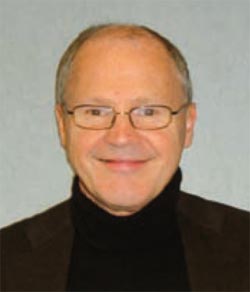
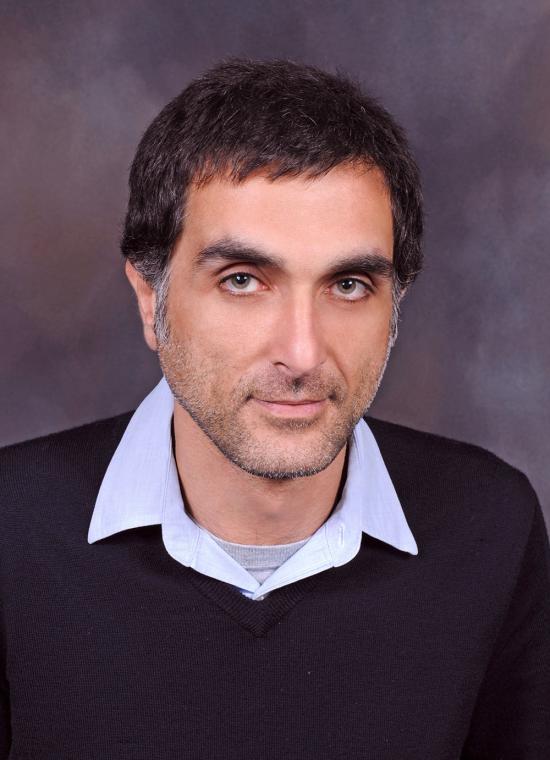
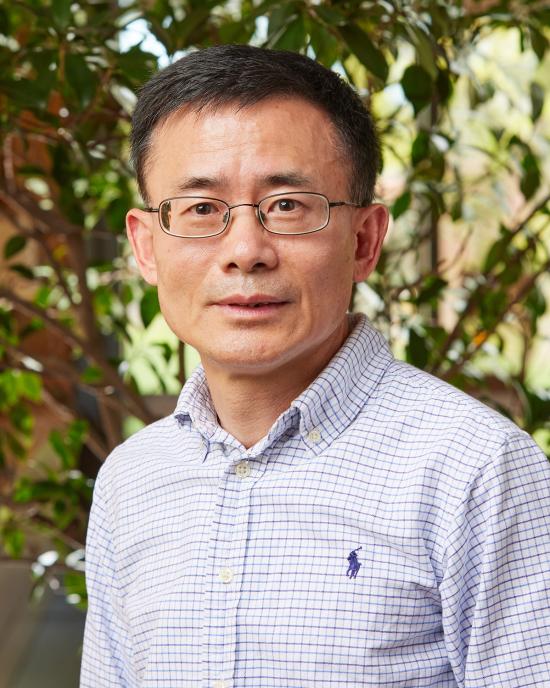
Graeme William Walter is the Disney Professor of Archaeology at the University of Cambridge and Director of the McDonald Institute for Archaeological Research. He also serves as a Professorial Fellow at St John's College, Cambridge. Previously, he held roles such as Pro-Vice-Chancellor (Resources) at the University of Leicester and Head of the School of Archaeological Studies there. His academic journey began with a BA in Classics and Archaeology from the University of Cambridge (1965-1969), followed by PhD research at St John's College, Cambridge (1969-1972). Research Interests: European and North African prehistory Origins and spread of agriculture Landscape archaeology Pastoralism and desertification processes Human dispersals and behavioral evolution Awards and Honors: 2005 Dan David Prize (Past Dimension) 2000 James R. Wiseman Book Award 1999 Fellow of the British Academy 1979 Fellow of the Society of Antiquaries of London Grants and Projects: Recipient of major grants including a €2.5M European Research Council Advanced Grant (2009-2014) for North African prehistory studies and a Leverhulme Trust grant (2014-2016) investigating resilience of Neanderthals and modern humans to climate change in SW Asia. Leadership and Affiliations: Directed the British School at Rome (1984–1988) Key figure in archaeological institutions like the McDonald Institute
John McDonagh is an Associate Professor in Global Development and the Environment at the School of Global Development, University of East Anglia. His academic journey began with a BSc in Botany (University of Bristol, 1987), followed by an MSc in Tropical Soil Fertility Management (Imperial College, 1988) and a PhD in Tropical Agronomy (University of London, 1993). He joined UEA in 1997 and is a member of the Tyndall Centre for Climate Change Research. His research focuses on tropical soil management, sustainable farming systems, and land degradation assessment across Africa, Asia, and Latin America. Notable projects include GEF-funded ecosystem carbon assessment tools and DFID-supported biochar studies in Ghana and China. He has also contributed to FAO’s LADA project on dryland degradation. McDonagh has extensive field experience in Thailand, Madagascar, Tanzania, and Namibia, blending scientific research with community-based approaches. His interdisciplinary work addresses the nexus of agriculture, environment, and livelihoods, aligning with UN SDGs related to climate action and zero hunger.
Jerry Zee is Assistant Professor of Anthropology and the High Meadows Environmental Institute at Princeton University. His research examines environmental emergence through political, meteorological, and geopolitical lenses, with focus on China's ecological transformations and transpacific entanglements. Publications analyze dust governance, aerosol politics, and racialized ecologies, employing interdisciplinary approaches from feminist STS and environmental humanities. Current work investigates planetary-scale infrastructural projects and necrotic politics.
Arash Khazeni is Professor of History, Chair of the History Department, and Coordinator of Middle Eastern Studies at Pomona College, where he has been a faculty member since 2010. He holds a Ph.D. in History from Yale University and specializes in the imperial, environmental, and borderland histories of the modern Middle East, South Asia, and the Indian Ocean. Ph.D., Yale University M.A., Yale University B.A., University of Wisconsin, Madison His research explores the margins of empires and the interconnected histories of the Indo-Persian world, blending environmental history with world-historical perspectives. He investigates how societies on the periphery—such as tribal communities and pastoralists—interacted with imperial structures and shaped transregional exchanges. His approach is influenced by E.P. Thompson’s 'history from below' and engages with postcolonial and Marxist frameworks. His publications reveal a consistent focus on global trade, cultural mobility, and human-environment interactions, particularly in arid and frontier zones. Themes such as the turquoise trade, equestrian pastoralism, and Indo-Persian travel writing demonstrate his interdisciplinary reach across economic, cultural, and environmental history. Recipient of the Middle East Studies Association Houshang Pourshariati Book Award Balzan Keddie Fellowship, UCLA Huntington Library, Andrew W. Mellon Foundation Short Term Research Fellowship Khazeni advises on interdisciplinary scholarship and has co-edited thematic volumes on trade in the Persianate world. His academic leadership includes directing the Middle Eastern Studies program and teaching courses on Gunpowder Empires, Environmental Histories, and the Indian Ocean World. He has no known active grants listed, but his fellowships reflect sustained research support. He is deeply involved in shaping curricula that connect global regions and historical methodologies. His work is associated with intellectual communities focused on world history and environmental humanities, though no formal lab or research team is mentioned.
Carmen Meinert holds the Chair for Central Asian Religions and serves as Deputy Director of the Center for Religious Studies (CERES) at Ruhr University Bochum. She is Principal Investigator of the ERC-funded BuddhistRoad project and coordinates the Climate and Culture publication series. Her academic foundation includes research and studies at universities in Bonn, Hamburg, Beijing, Chengdu, Vienna, and the Institute of Advanced Study in the Humanities, Essen. Research Focus: Meinert's scholarship centers on the transfer of Buddhism across Central Asia, with emphasis on Tantric rituals, manuscript traditions (Dunhuang/Kharakhoto), and religious syncretism. Key themes include: Medieval religious networks and sacred space formation Buddhist-Daoist/Tibetan-Chinese doctrinal exchanges Ritual adaptation and esoteric practices Buddhism's intersections with art, violence, and human rights Cultural dimensions of climate change Publications: Her extensive corpus examines Buddhist transmission along Silk Road networks, with recent works analyzing Tantric ritual texts, sacred geography under Tangut rule, and cross-cultural religious encounters. Publications demonstrate consistent focus on manuscript evidence and comparative frameworks. Awards & Fellowships: Käte Hamburger Kolleg Visiting Research Fellowship Research Leadership: Meinert directs multiple initiatives: ERC project BuddhistRoad (dynamics of religious transfer) CRC 1475 'Metaphors of Religion' Subproject A03 (ritual-textual networks) Climate and Culture publication series (6 volumes) She previously led projects on Dzogchen tradition development and rNying ma codification. Current work integrates Central Asian religious studies within global comparative frameworks.
Dr. Jonathan T. Overpeck is the Samuel A. Graham Dean of the School for Environment and Sustainability (SEAS) at the University of Michigan, where he also holds the William B. Stapp Collegiate Professorship of Environmental Education. He is a Professor of both Climate and Space Sciences and Engineering, and Earth and Environmental Sciences, with a career spanning climate-vegetation interactions, abrupt climate change, monsoon dynamics, drought hydroclimate, sea level rise research, and interdisciplinary climate assessment. Overpeck has published over 230 works cited 60,000+ times, emphasizing public education, university-community partnerships for climate solutions, and environmental justice initiatives. PhD in Geological Sciences, Brown University MSc in Geological Sciences, Brown University BA in Geology (Honors), Hamilton College His research spans climate-biosphere interactions , climate variability and abrupt change , monsoon dynamics , drought and hydroclimate , sea level rise , climate law , and climate adaptation . Overpeck pioneered studies on megadrought terminology, temperature-driven drought intensification, and the aridification of North America. His work with the NOAA Paleoclimate Program and World Data Center for Paleoclimatology established foundational understanding of climate dynamics through annually-laminated sediment analysis in the Cariaco Basin. Overpeck's 2020-2024 research includes climate aridification , hydroclimate scaling mismatches , and temperature-precipitation interactions , with recent focus on Antarctic heatwaves, Mississippi River Basin changes, and corporate climate accountability. His article trends show concentration in climate attribution , hydrological extremes , paleoclimate modeling , and climate policy analysis . Scientific Honors: 2024 U.S. National Academy of Sciences 2015 American Geophysical Union Fellow 2009 AAAS Fellow 2007 Nobel Peace Prize contributor (IPCC) 2005 Guggenheim Fellowship Multiple U.S. Department of Commerce awards Overpeck has led or participated in significant climate adaptation projects , including NSF grants totaling $5.1M+ for Southwest Hydroclimatic Extremes (2017-2020), Amazon Drought Impacts (2014-2018), and Quantifying Drought Risk (2013-2018). He serves on the Colorado River Research Group (2014-present) and advises Climate Communication (2011-present). Current initiatives include Great Lakes University positioning, Michigan's climate resilience planning, and the Audacious Water podcast series examining Mississippi River Basin transformations. Overpeck actively contributes to climate policy discourse , advocating for science-informed decision-making and stakeholder collaboration across government, military, and corporate sectors.
Xuhui Lee is the Sara Shallenberger Brown Professor of Climate Science at Yale University's School of the Environment. He maintains offices at Kroon Hall (195 Prospect Street) and laboratory facilities at the Class of 1954 Environmental Science Center (21 Sachem Street, Room 300) in New Haven, Connecticut. Professor Lee is an active researcher and educator specializing in the interactions between the terrestrial biosphere, atmosphere, and anthropogenic drivers, with particular expertise in boundary-layer meteorology and climate science. He is currently on leave for the Fall 2025 semester but continues to accept doctoral students. Professor Lee received his B.S.C. and M.S.C. from Nanjing Institute of Meteorology in China, followed by a Ph.D. from the University of British Columbia. His academic journey has positioned him as a leading expert in climate science, particularly in the areas of land-atmosphere interactions and urban climate systems. Professor Lee's research focuses on boundary-layer meteorology, micrometeorological instrumentation, remote sensing, and carbon cycle science. His work examines biophysical effects of land use on the climate system, greenhouse gas fluxes in terrestrial environments (including forests, cropland, and lakes), isotopic tracers in carbon dioxide and water vapor cycling, and urban climate adaptation and mitigation strategies. His lab employs diverse methodologies including field observations (eddy covariance, optical isotope instruments, and greenhouse gas analyzers), mathematical models (land surface models, large-eddy simulation, WRF, and earth system models), and environmental remote sensing (satellites and drones). The Lee Lab investigates phenomena across multiple scales from micro (urban greenspaces) to global (land wet-bulb temperature, historical deforestation). Analysis of Professor Lee's recent publications reveals a strong focus on urban climate systems, greenhouse gas emissions, and land-atmosphere interactions. His 2024-2025 work demonstrates increasing application of advanced remote sensing technologies and machine learning approaches to climate problems, with significant attention to urban heat islands, methane and CO2 emissions monitoring, and the impacts of land use change on climate systems. His research shows a clear trajectory toward more sophisticated integration of observational data with modeling approaches to address critical climate challenges. Sara Shallenberger Brown Professor of Climate Science (named professorship) Professor Lee actively mentors doctoral students and has established the Lee Lab as a hub for climate research at Yale. His lab group conducts field observations, mathematical modeling, and remote sensing analysis to advance understanding of climate systems. The lab's research infrastructure supports investigations from micro-scale urban environments to global climate patterns, with particular emphasis on urban heat mitigation and greenhouse gas monitoring. The Lee Lab at Yale, located in Room 300 of the Class of 1954 Environmental Science Center, serves as the primary research facility for Professor Lee's team. The lab deploys an array of research methodologies including field observations with eddy covariance systems and optical isotope instruments, mathematical modeling using land surface models and earth system models, and environmental remote sensing with satellites and drones. The lab's research spans multiple spatial scales from micro (urban greenspaces) to global (land wet-bulb temperature patterns), addressing critical questions about climate change impacts and mitigation strategies.
Joonas Maristo is a University Lecturer at the University of Helsinki , affiliated with the Faculty of Theology and its Study of Religions department. His academic career spans theology, Islamic studies, and Persian literature, with a focus on religious identities, historical narratives, and cross-cultural interactions in the Middle East and Late Antiquity. Academic rank: Lecturer Primary research areas: Islamic theology, Persian poetry, comparative religious studies Maristo’s research output includes 14 publications (2011–2025), with recent books analyzing Hafezin’s poetry (2025) and Sharia law’s evolution (2023). His 15 most recent articles (2011–2025) explore topics like Hadith criticism, Sufi mysticism, and environmental themes in Arabic literature. As an active scholar, he contributes to media discussions on Middle Eastern politics (2025 appearances on Yle news) and participates in international conferences like EABS International Meeting (2017) and Symposia Iranica (2017, 2015). His work bridges academic rigor with public engagement through lectures and festival talks.
Professor Robert S.G. Fletcher holds dual roles as Professor of History and Kinder Professor of British History at the University of Missouri , and serves as an Honorary Professorial Fellow in the Department of History at the University of Warwick (2015-2020). His academic career spans institutions including the University of Exeter, Nuffield College (Oxford), and Princeton University. Specializing in British imperial history , global history , and nomadic societies , his research examines the intersections of empire-building, desert administration, and maritime frontiers. Recent work (2024-2025) extends to interdisciplinary collaborations with museums like the Royal Museums Greenwich , focusing on colonial expeditions, locust control campaigns, and maritime cultural heritage. His scholarship appears in leading journals including Past and Present , The English Historical Review , and Journal of Historical Geography . Publications include the award-winning monographs British Imperialism and 'The Tribal Question' (OUP, 2015) and The Ghost of Namamugi (AUP, 2019). As Principal Investigator, he led the AHRC-funded Inlands: Empires, Contested Interiors (2024) and Science in Culture projects on desert locust campaigns. Major Awards Arts and Humanities Research Council (AHRC) Leadership Fellowship (2015-2018) AHRC Science in Culture award (2018) Key Collaborations Co-edited Connected Empires, Connected Worlds with Benjamin Mountford and Simon Potter (Routledge, 2022) Contributed to The Oxford Handbook of the Ends of Empire (2018)
Professor Jason Evans is a leading climate scientist at the University of New South Wales (UNSW), serving as Chief Investigator at the Climate Change Research Centre. He completed his undergraduate degrees in physics and mathematics at Newcastle University in 1996 and earned his PhD in Environmental Management from the Australian National University in 2001. After six years as a postdoctoral and research fellow at Yale University, he returned to Australia in 2007 to join UNSW's Climate Change Research Centre. Education: Bachelor's degrees in Physics and Mathematics, Newcastle University (1996) PhD in Environmental Management, Australian National University (2001) Research Interests: Professor Evans specializes in regional climate dynamics, focusing on land-atmosphere interactions and the water cycle in the context of climate change. His research integrates advanced modeling tools with extensive observational datasets, particularly emphasizing satellite-based remote sensing and earth observations . His work addresses critical questions about regional climate change impacts, including urban climate dynamics, extreme weather events, drought mechanisms, and renewable energy implications under changing climate conditions. His research spans multiple interconnected domains: from developing novel approaches for moisture source identification using Lagrangian methods , to investigating flash drought prediction using deep learning techniques , and evaluating the performance of high-resolution climate simulations across diverse geographical regions including Australia, Alaska, and Saudi Arabia. Scientific Recognition: Lead Author, IPCC Special Report on Climate Change, Desertification, Land Degradation, Sustainable Land Management, Food Security, and Greenhouse Gas Fluxes in Terrestrial Ecosystems Member, Science Advisory Team for CORDEX (World Climate Research Programme) Editor, Journal of Climate (2016-2022) Fellow, Modelling and Simulation Society of Australia and New Zealand (2020) Biennial Medal, Modelling and Simulation Society of Australia and New Zealand (2021) Fellow, Royal Society of New South Wales (2021) Research Impact and Contributions: Professor Evans has made significant contributions to understanding regional climate change through his extensive publication record of over 50 articles since 2021. His work has advanced knowledge in areas including urban climate dynamics , drought mechanisms and prediction , extreme weather events , and renewable energy impacts under climate change . His research has informed climate policy through his role as a Lead Author for the IPCC and his involvement with international climate research initiatives like CORDEX.
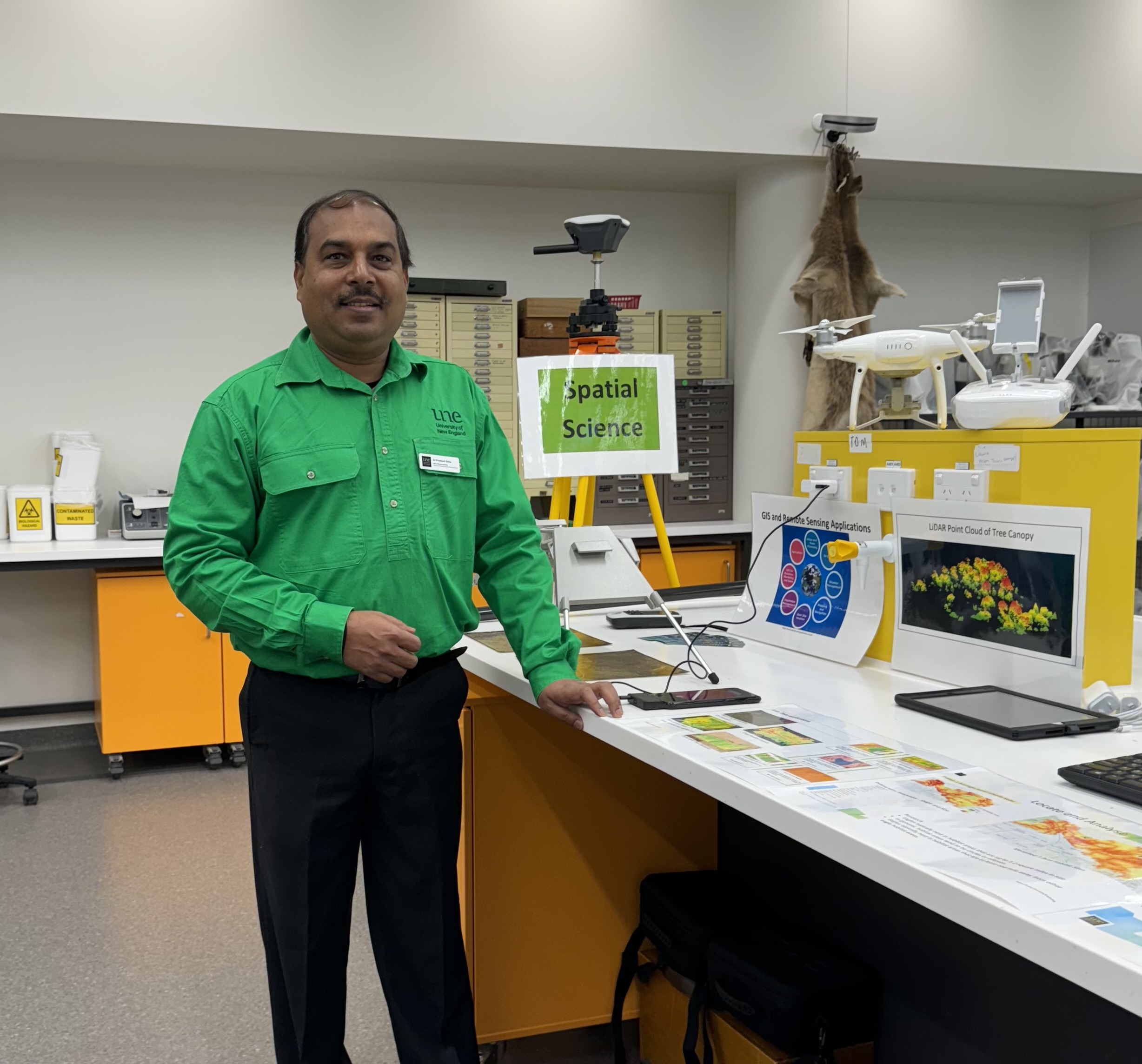
Dr. Priyakant Sinha is a Senior Lecturer in Spatial Science at the University of New England's School of Environmental and Rural Science, with over 20 years of research experience in remote sensing and geospatial science. He specializes in applying remote sensing technologies to agriculture, environmental monitoring, and natural resource management. His research focuses on: Advanced agricultural remote sensing and precision agriculture Time-series crop monitoring and yield prediction UAV/Drone-based 3D imaging for farm management Vegetation species mapping and change detection Hyperspectral and LiDAR data analysis Dr. Sinha teaches courses in GIS, spatial analysis, precision agriculture, and remote sensing applications. He has successfully supervised multiple PhD students in areas ranging from flood hazard mapping to drought monitoring using earth observation data. Technical expertise includes advanced digital image processing, GIS analysis and modeling, and specialized software including ENVI, ArcGIS, QGIS, and Pix4D. He develops innovative methods for temporal change analysis using machine learning and Google Earth Engine.
Emily T. Yeh serves as Professor of Geography at the University of Colorado within the College of Arts and Sciences, holding Faculty Affiliate status with the Center for Asian Studies, CNAIS, and C3BC. A 2024 Guggenheim Fellow and past-president of the American Association of Geographers (2021-2022), she is recognized as a College of Arts and Sciences Professor of Distinction for her transformative work in human geography. Her educational foundation includes a Ph.D. from the University of California, Berkeley (2003), establishing her scholarly trajectory in critical geographical inquiry. Professor Yeh's research interrogates power dynamics within nature-society relationships through ethnographic methodologies , with seminal contributions to political ecology and cultural geography . Her work centers on Tibetan Plateau environmental transformations, examining natural resource conflicts, pastoralist livelihoods, and state-led development. Recent expansions address weather modification in anthropogenic climate contexts and decarbonization politics in Indonesia, revealing her evolving engagement with planetary-scale environmental challenges. This trajectory demonstrates consistent methodological rigor while adapting to emergent global ecological crises. Analysis of her 15 most recent publications reveals a decisive pivot toward climate intervention technologies and energy transition justice since 2022, while maintaining deep regional expertise in Asian contexts. The geographical scope has broadened from Tibet/China to include Indonesia, reflecting growing attention to Global South climate politics. Her scientific recognition includes: Guggenheim Fellowship (2024) Phi Beta Kappa Visiting Scholar (2023-2024) Professor Yeh actively mentors graduate researchers including Drolma Gadou, Tsering Lhamo, Emma Loizeaux, and Tenzin Yangkey. Her research program is substantially supported by National Science Foundation funding for interdisciplinary projects on Tibetan Plateau rangeland dynamics and climate vulnerability, alongside her foundational CAREER award for transnational environmentalism research. Current work integrates capoeira philosophy with environmental justice frameworks, reflecting embodied scholarly practice. She contributes to interdisciplinary knowledge production through the Center for Asian Studies and C3BC, fostering collaborative approaches to environmental challenges that bridge geographical scales from local Tibetan communities to global climate governance structures.
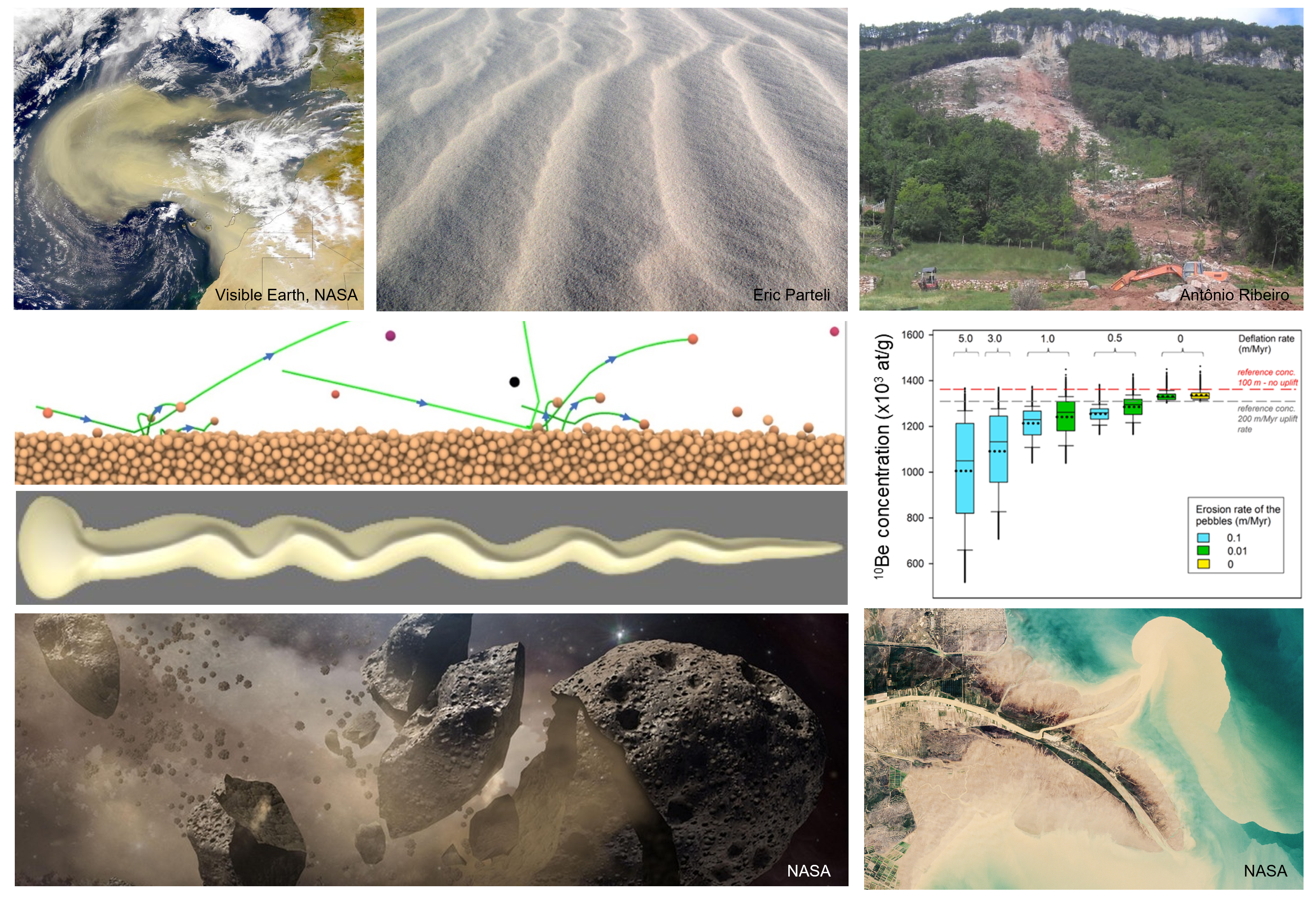
Dr. Eric Parteli is a Heisenberg Group Leader at the Faculty of Physics, University of Duisburg-Essen , with affiliations to the University of Cologne (Computational Geosciences) and The University of Alabama . He leads research on Earth surface particulate materials and their dynamics under wind, fluvial processes, and gravitational forces. Current and former students include PhD candidates, Master/Bachelor candidates, and research assistants like Cong Jiang , Maria Determann , Mateusz Kryger , and Joel Jankowiak . His group develops computational tools to model particle interactions and feedbacks with geomorphology, biosphere, and atmosphere across scales, with applications in climate science, planetary geophysics, and natural hazard risk assessment. Key research themes include aeolian processes , hydrological modeling , granular material behavior , and coupled Earth surface systems . No scientific awards are explicitly mentioned in the provided texts. His lab operates from Room MG 364 at the University of Duisburg-Essen and collaborates with the Computational Geosciences department at the University of Cologne. Recent publications highlight anomalous scaling in sand transport , angle of repose modeling , and regional hydrological systems in arid environments.
Richard Harper is a Professor at Murdoch University, affiliated with the Food Futures Institute and the School of Agricultural Sciences within the College of Environmental and Life Sciences. His research focuses on soil, water, and biodiversity management, with emphasis on carbon mitigation, soil water repellency, and ecohydrology. He has held roles including lead author on the 2014 IPCC report and chair of IUFRO’s Forests and Water Taskforce. Harper holds a B.Sc. Agric. (Hons) and Ph.D. (Agriculture) from the University of Western Australia. His current research includes 4 PhD and 2 MSc students, collaborating nationally and internationally. Awards include Murdoch University’s 2021 Excellence in Research Award for sustained achievement. Key research themes involve leveraging carbon markets for landscape restoration, managing soil water repellency in agricultural/forested systems, and exploring bioenergy solutions. His work bridges science and policy, addressing climate mitigation through reforestation, mangrove restoration, and forest hydrology. He teaches soil science, climate mitigation, and hydrology courses at Murdoch. Publications span over three decades, with recent focus on remote sensing for forest monitoring, mangrove carbon projects, and soil carbon dynamics. Grants and collaborations include government and international bodies, reflecting his role in translating research into actionable policy and practice.
Johanna Turnbull is a Lecturer in Biological Sciences at the University of Wollongong, affiliated with the School of Earth, Atmospheric and Life Sciences (SEALS). Her research focuses on plant ecophysiology, particularly stress biology, photosynthesis, and climate change impacts on Antarctic mosses. She employs advanced techniques like ELISAs, spectrophotometric assays, and remote sensing to monitor plant health and stress markers. Turnbull has been involved in long-term Antarctic moss monitoring since 2000, contributing to projects like the State of the Environment Indicator 72. Her teaching philosophy emphasizes student-centered approaches, including blended learning, formative feedback, and active learning strategies in large cohorts. She has developed courses using case studies, flipped lectures, and peer assessment. Turnbull has secured funding for interdisciplinary projects, such as ECO-ANTARCTICA (Antarctic observing systems) and Drones@UOW (UAV-based ecological monitoring). She collaborates widely, appearing in media (e.g., The Conversation) and publishing influential work on Antarctic vegetation dynamics and climate change impacts. Turnbull’s research spans 20+ peer-reviewed articles, with notable contributions to understanding moss desiccation tolerance, Antarctic ecosystem resilience, and the application of remote sensing in polar environments. Her work bridges plant physiology, ecology, and technology, addressing critical questions about life in extreme environments and climate-driven ecological shifts.