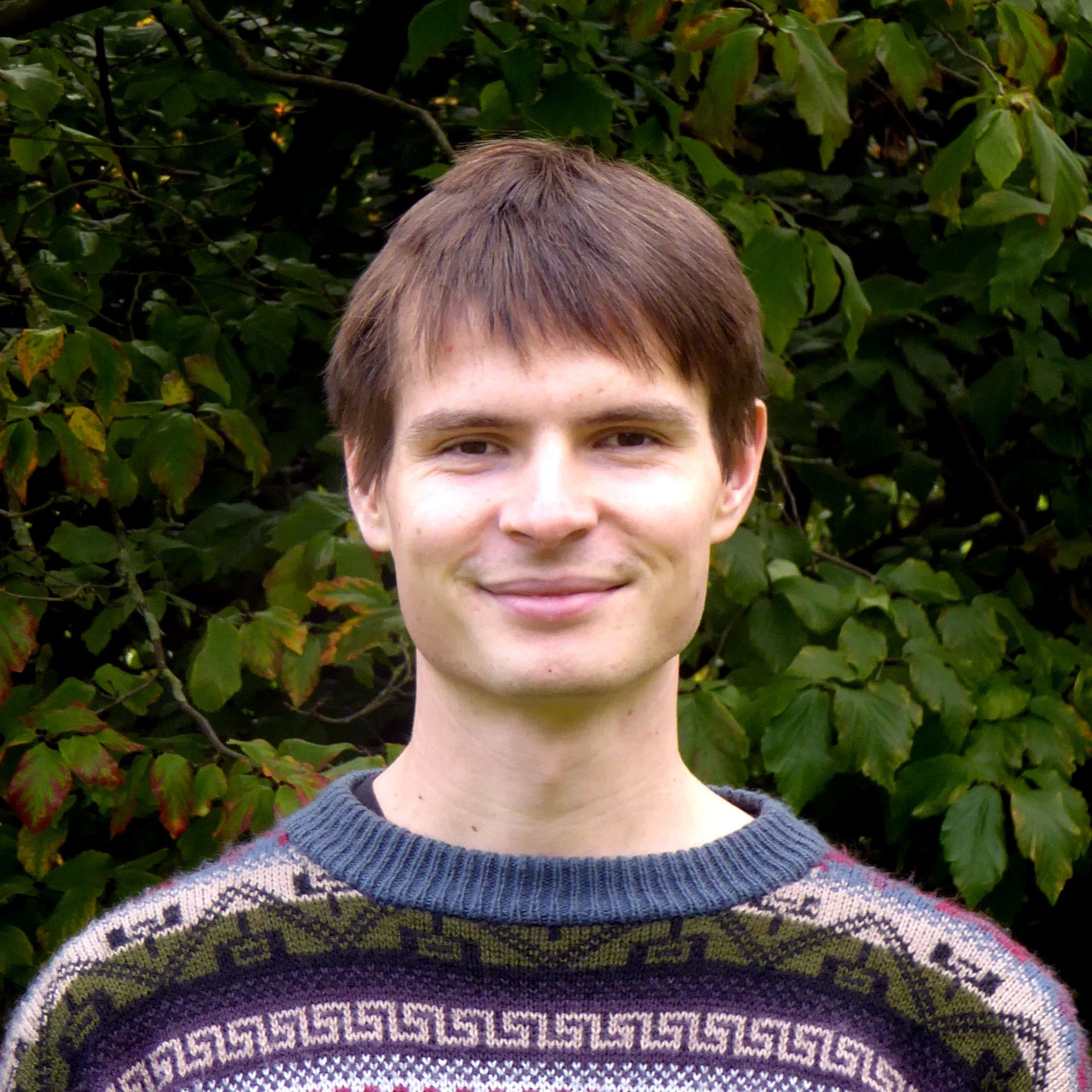
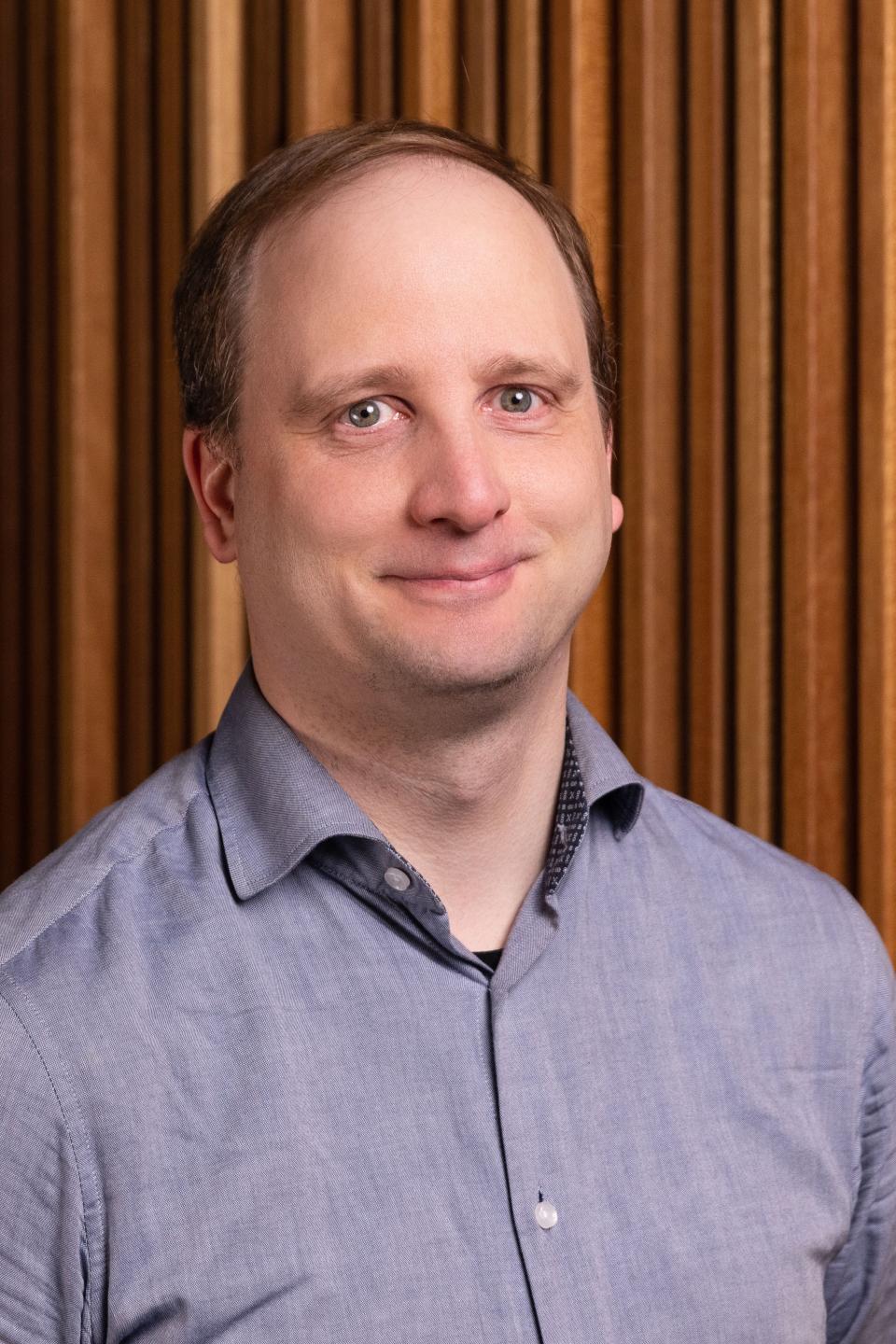
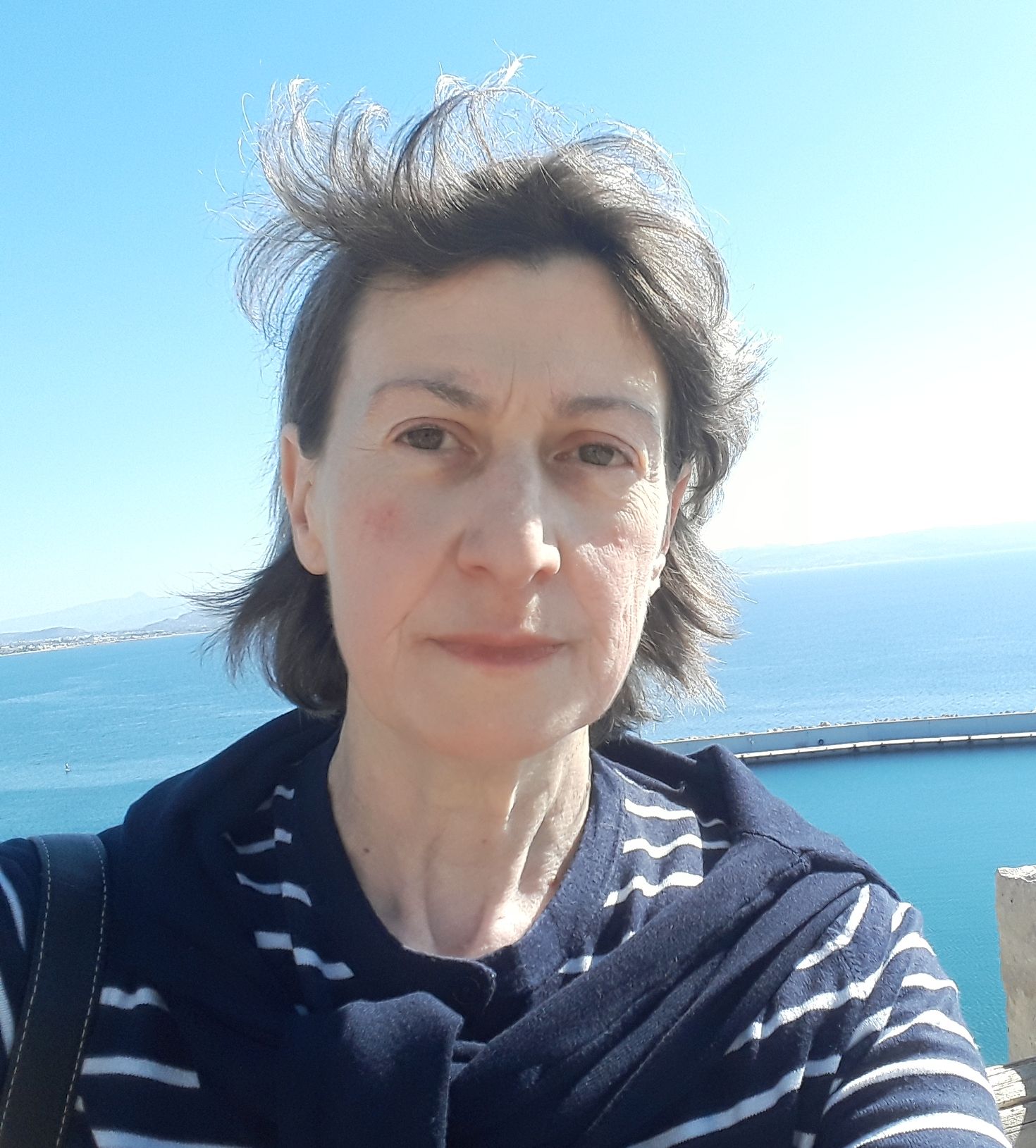
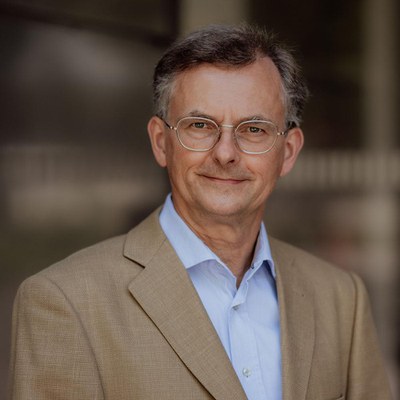
Dr. Tim Seppelt is a postdoctoral researcher at the IT University of Copenhagen , working under the mentorship of Prof. Radu Curticapean. Previously, he earned his PhD from RWTH Aachen University with supervisors Prof. Martin Grohe and Prof. Michael Schaub. His research focuses on theoretical computer science, specifically homomorphism indistinguishability , a framework connecting graph isomorphism, quantum information, and logical equivalences. Current Role: Postdoc in Theoretical Computer Science, ITU Education: PhD in Computer Science, RWTH Aachen University Tim's work addresses algorithmic meta-theorems for homomorphism indistinguishability over minor-closed and treewidth-bounded graph classes. He has extended Lovász-type results to CMSO2 logic, resolved complexity conjectures for the Lasserre hierarchy, and classified quantum group-induced indistinguishability relations. His research spans quantum computing , graph algorithms , and descriptive complexity , often intersecting with applications in machine learning and finite model theory. Recent publications include a 2025 paper on quantum group-driven homomorphism indistinguishability and a 2024 journal article on logical equivalences and forbidden minors. He presented at workshops like the Graph Learning Meets TCS (Simons Institute, 2025) and delivered tutorials on finite model theory at Finite and Algorithmic Model Theory 2025 (Les Houches, France).
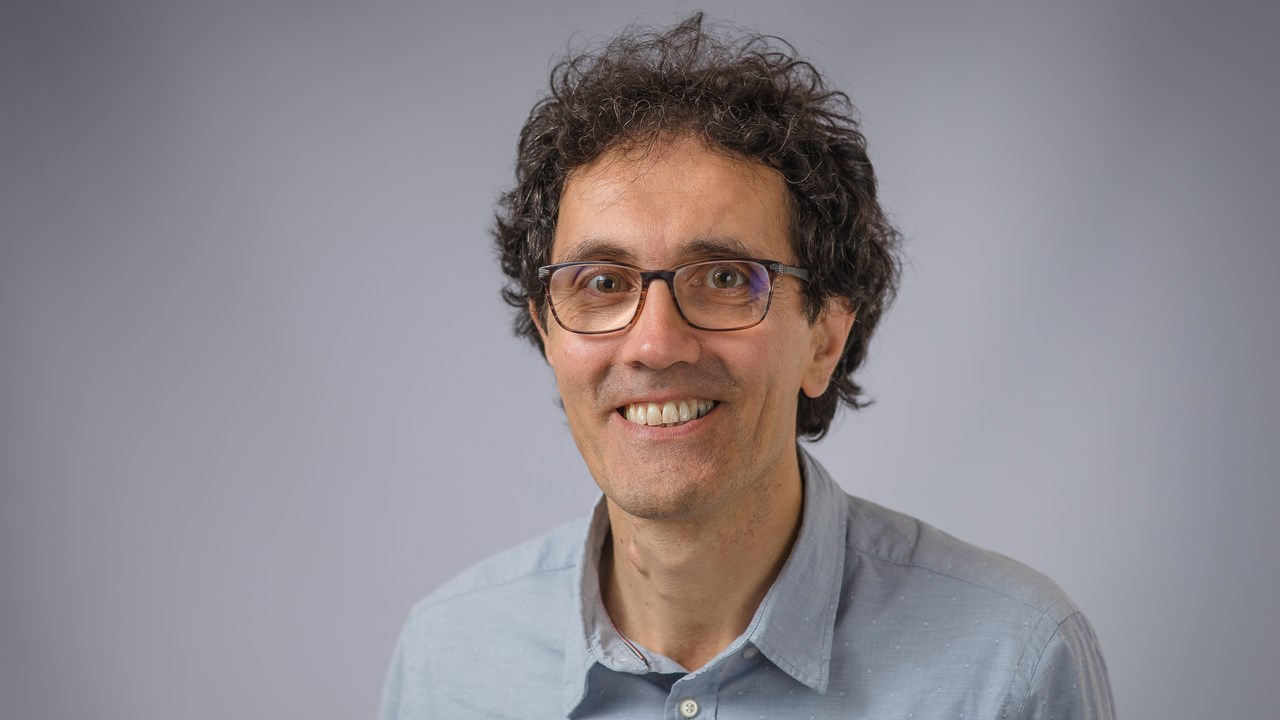
Diego Calvanese is a Visiting Professor at Umeå University's Department of Computing Science and holds a full professorship at the Free University of Bozen-Bolzano, Italy. His research focuses on AI for data management, including virtual knowledge graphs (VKG), ontology-based data access (OBDA), and formal methods like description logics. He is part-time at Umeå, balancing roles with his primary position in Italy. Calvanese has received prestigious awards including the AAAI Classic Paper Award (2021), EurAI Fellow (2015), and ACM Fellow (2019). He supervises three doctoral students at Umeå and has authored over 350 publications, with an h-index of 71. His work emphasizes data integration, geospatial systems, and ethical AI applications. Key Roles: Associate Programme Chair (IJCAI 2025), Programme Chair (IJCAI-ECAI 2026), Head of AI for Data Management Research Group Research Interests: Knowledge representation, graph data management, explainable AI, and telemonitoring systems like reCOVeryaID. His research group develops tools like Ontop, a VKG system enabling seamless data access across heterogeneous sources. Current projects include geospatial data integration and temporal OBDA frameworks. Calvanese has served on over 150 program committees and editorial boards, including Artificial Intelligence and JAIR. His work bridges technical advancements with societal impacts, addressing AI's role in healthcare, climate, and democracy.
Cameron Freer is a Research Scientist in the MIT Probabilistic Computing Project , with prior roles including Instructor in Pure Mathematics at MIT, Postdoctoral Fellow at CSAIL, and Project Associate Professor at Keio University. His work bridges probabilistic computing, logic, and theoretical computer science. Education PhD in Mathematics, Harvard University, 2008 (Thesis: Models with High Scott Rank ) Research Interests Freer's research explores the deep interplay between randomness and computation , focusing on: Foundations of probabilistic programming languages and systems Efficient samplers for discrete and continuous distributions Mathematics of random structures like graphons and exchangeable processes Computability in measure theory and probabilistic inference Publications Overview His recent work (2020–2024) advances probabilistic programming systems (e.g., GenSQL), theoretical frameworks for random graphs via Markov categories, and computable approaches to PAC learning. Earlier contributions include exact sampling algorithms, computable exchangeability, and algorithmic barriers in conditional probability. Academic Service Steering Committee Member, LAFI (formerly PPS) workshop series (2017–2025) Program Committee Chair/Co-chair, PPS 2017–2018 Session Chair, POPL 2017 (PPS track) Industry & Visiting Roles Chief Scientist, Remine (2017–2018) Research Scientist, Gamalon Labs (2013–2016) Lyric Labs Visiting Fellow, Analog Devices (2013–2014) Project Associate Professor, Keio University (2021–2024) Labs & Collaborations Freer collaborates extensively with the MIT Probabilistic Computing Project, Harvard Logic Group, and international partners in Oxford, CMU, and Keio University. His work integrates theoretical insights with practical systems in AI and probabilistic inference.
Clément Pit-Claudel is an assistant professor at École Polytechnique Fédérale de Lausanne (EPFL), where he heads the SYSTEMF lab in the School of Computer and Communication Sciences. His research focuses on programming languages, compilers, and formal verification, with broader interests spanning systems engineering, hardware design languages, security, performance engineering, and type theory. Education: Undergraduate studies at École Polytechnique PhD at MIT with Adam Chlipala, specializing in proof-producing compilers Pit-Claudel's research program is organized around three main axes: extensible compilation (teaching compilers domain-specific optimization tricks), hardware design languages and verification (creating ways to describe and verify hardware), and tooling for proof assistants (to support verification efforts and lower entry barriers). His work bridges theoretical foundations with practical applications, as evidenced by algorithms from his Elk project being merged into V8 (and hence Chrome and Node.js). Scientific Awards: Distinguished artifact, Untangling Mechanized Proofs, ACM SIGPLAN International Conference on Software Language Engineering (2020) William A. Martin Memorial Thesis Award for Outstanding Thesis in CS, MIT (2016) Frederick C. Hennie III Teaching Award in Recognition of Outstanding Contributions to Departmental Teaching, MIT (2016) Pit-Claudel has extensive experience mentoring students through MIT's Undergraduate Research Opportunities Program and currently teaches Software Construction to approximately 400 undergraduate students and Interactive Theorem Proving at the graduate level. He's deeply committed to educational excellence, having developed innovative teaching methods including continuous assessment through oral examinations and designing assignments that lead students to build concrete artifacts they can be proud of. The SYSTEMF lab, created in January 2023, focuses on building "small, fast, and completely verified components for critical systems, at reasonable cost." The lab's philosophy of "full assurance, without compromise" combines machine-checked proofs of correctness, hardware-software co-design, low-level compiler engineering, and new tools for interactive theorem proving.
Daria Stepanova is a researcher at the Institute of Information Systems , Technische Universität Wien. Her work focuses on Answer-Set Programming (ASP), inconsistency resolution in hybrid knowledge bases, and optimization algorithms for scheduling and scene generation. Education: PhD (Dr.techn.) in Technical Sciences, MSc in Computer Science. Research Interests: Answer-Set Programming for scheduling and optimization Inconsistency handling in Description Logic Programs Hybrid reasoning systems combining logic and semantic methods Applications of automated reasoning in manufacturing and gaming Publications highlight trends in ASP-driven scheduling, inconsistency repair techniques, and semantic scene generation using contextual reasoning and algebraic measures. Labs & Teams: Active member of the Network Lab at TU Wien Collaborator on projects like ALASPO and Angry-HEX
Peng Fu is an Assistant Professor in the Department of Computer Science and Engineering at the Molinaroli College of Engineering and Computing, University of South Carolina. His academic career focuses on the theoretical foundations of programming languages with particular emphasis on quantum computing applications. Dr. Fu received his educational training from prestigious institutions: Ph.D. in Computer Science from University of Iowa (2014) B.Eng. in Computer Science from Huazhong University of Science and Technology (2009) Dr. Fu's research program centers around type theories, quantum programming languages, and their categorical semantics . His work bridges the gap between theoretical computer science and practical quantum computing applications. He develops formal systems that enable reliable quantum circuit programming through strong type systems and categorical models. His research has significant implications for the future of quantum software development, where correctness and reliability are paramount due to the fragile nature of quantum states. An analysis of Dr. Fu's publication record reveals a consistent trajectory toward increasingly sophisticated quantum programming frameworks. Starting with foundational work on lambda encodings and type theory, he has progressively focused on quantum-specific challenges. His recent papers on Proto-Quipper variants demonstrate innovative approaches to quantum circuit programming with features like dynamic lifting, reversing, and control structures. The research shows strong integration of category theory with practical programming language design, creating bridges between abstract mathematical structures and executable quantum code. Dr. Fu actively mentors the next generation of computer scientists, currently seeking Ph.D. students to join his research group. His teaching portfolio includes advanced courses such as CSCE 790: Quantum Programming Languages (Spring 2025) and CSCE 544: Functional Programming (Fall 2024), where he introduces students to cutting-edge concepts in programming language theory and quantum computing. His commitment to education extends to developing comprehensive course materials and providing guidance to graduate students pursuing research in quantum programming languages. Dr. Fu maintains an active presence in the quantum computing research community, regularly presenting at major conferences including the International Conference on Quantum Physics and Logic (QPL), ACM SIGPLAN Symposium on Principles of Programming Languages (POPL), and specialized quantum computing workshops. His work contributes to the growing ecosystem of quantum programming tools and methodologies that will be essential for practical quantum computing applications.
M.H.M. Winands is a Professor in Machine Reasoning and Chair of the Department of Advanced Computing Sciences at Maastricht University's Faculty of Science and Engineering. He received his PhD in Artificial Intelligence from Maastricht University in 2004. His research focuses on heuristic search algorithms, Monte-Carlo Tree Search (MCTS), and artificial intelligence in games, with significant contributions to General Game Playing and adaptive search methods. Winands leads research on: Monte-Carlo Tree Search variants and hybridization Online learning of search-control knowledge Game-solving algorithms (Proof-Number Search) Self-adaptive AI systems for games His work has been applied to diverse domains including board games (Lines of Action, Clobber), video games (StarCraft, Ms. Pac-Man), and structural engineering. Analysis of his publications shows strong emphasis on: Enhancing MCTS robustness through parameter randomization Developing hybrid algorithms combining MCTS with classical search Creating adaptive systems for general game playing Hardware acceleration of game AI components Awards include: ChessBase Best-Publication Award (2004, 2008) Multiple Computer Olympiad wins for game-playing programs He has supervised 3 PhD students and 22 MSc students, with research supported by NWO grants (GoGeneral, Go4Nature). Leads the DKE Games and AI group and serves as Editor-in-Chief of the ICGA Journal.
Isambo Karali is an Assistant Professor in the Department of Informatics and Telecommunications at the National and Kapodistrian University of Athens, a position she has held since November 2007. Prior to this, she served as a Lecturer at the same department from September 1999 to November 2007. Her academic career spans over three decades with significant contributions to knowledge representation, uncertainty reasoning, and semantic web technologies. Dr. Karali's educational background includes: PhD in Informatics (1995) from the University of Athens MSc in Computer Science (1988) from University College, University of London Bachelor of Mathematics (1986) from the Department of Mathematics, University of Athens Dr. Karali's research focuses on Knowledge Representation and Reasoning with Uncertainty, Artificial Intelligence, Logic Programming, and Object-Oriented Programming. She has made significant contributions to applying Dempster-Shafer theory for handling uncertainty in Semantic Web applications. Her work bridges theoretical foundations of logic programming with practical applications in knowledge representation, particularly in distributed and heterogeneous environments. She has supervised numerous PhD and master's theses in these areas. Her recent publications demonstrate a strong trend toward integrating uncertainty reasoning with Semantic Web technologies, particularly using Dempster-Shafer theory and fuzzy logic. Her work addresses challenges in managing imprecise and uncertain information in large-scale knowledge systems, with applications in recommendation systems, news analysis, and semantic search. The interdisciplinary nature of her research connects artificial intelligence, knowledge representation, and web technologies to solve complex information management problems. Dr. Karali has been actively involved in research funding and collaboration: Principal Investigator for "Handling uncertainty in data intensive applications on a distributed computing environment (cloud computing)" under the "Thalis" Program Scientific Responsible for "Artificial Intelligence and Logic Programming Techniques for Knowledge on the World Wide Web" at the National and Kapodistrian University of Athens Scientific Responsible for "Semantic Web and Logic Programming - Application to Guided Search" at the National and Kapodistrian University of Athens Participant in multiple EU research projects including MISSION, COSMOS, ADDSIA, PARACHUTE, APPLAUSE, and EDS As an educator, Dr. Karali has taught core undergraduate courses including Object-Oriented Programming and Logic Programming, as well as graduate courses on Knowledge Technologies and Artificial Intelligence. She has supervised numerous PhD and master's students, with a focus on uncertainty reasoning, semantic web technologies, and logic programming applications. Her mentorship extends to student competitions, including guiding the Department's team in the Microsoft ImagineCup 2009. Dr. Karali has also contributed to the academic community through service activities, including membership on program committees for conferences like IEEE ICTAI, reviewer for prestigious journals, and organizational roles in academic events. From 2000 to 2012, she was responsible for the Department's website, contributing to its architecture design and system development.
Professor Martin Schoeberl is affiliated with the Department of Applied Mathematics and Computer Science at the Technical University of Denmark (DTU). His research focuses on real-time systems, worst-case execution time analysis, and embedded systems engineering. He is actively involved in projects such as Rigoletto, aiming to develop high-performance automotive processors using RISC-V architecture. Research Interests: Schoeberl's work spans time-predictable processors, network-on-chip architectures, and hardware-software co-design for cyber-physical systems. He explores methodologies to ensure deterministic behavior in multicore environments and develops tools for WCET analysis. His contributions include advancements in compiler optimizations for neural networks and temporal semantics in embedded systems. Advising & Grants: Schoeberl supervises PhD students such as E. Khodadad (on rigorous design of time-predictable systems) and A. Cerioli (on compiler optimizations for neural networks). He leads or participates in funded projects including Rigoletto (2025-2028) and Multi-Core Architecture for L1 Deterministic Processing (2022-2025). These projects aim to enhance real-time capabilities in embedded systems and automotive computing platforms. Labs & Teams: As part of the Embedded Systems Engineering group at DTU, Schoeberl collaborates on hardware generators using Chisel and designs reactor-oriented architectures for cyber-physical systems. His work integrates reconfigurable logic and synchronous models to create efficient, time-predictable solutions.
Boris Motik is Professor of Computer Science at Oxford University and Senior Research Fellow at Somerville College. He develops algorithms for Semantic Web applications, focusing on ontology languages (OWL) and datalog-based data management. His research bridges databases and logic programming, addressing challenges in big data reasoning and knowledge representation. Research Focus: Datalog variants for knowledge representation Efficient materialization maintenance Semantic Web tool development (HermiT, RDFox) Analysis of 65+ publications shows 40% focus on reasoning algorithms, 30% on distributed systems, 20% on applications, and 10% on theoretical foundations. Recent work emphasizes scalable graph querying. Awards & Industry Projects: Roger Needham Award (2013) Cor Baayen Award (2007) Industry collaborations with Oracle, Samsung, EDF Founded Oxford Semantic Technologies startup
Prof. Dr. Gunnar Teege is a faculty member at the Institute for Computer Engineering within the Faculty of Computer Science at Bundeswehr University Munich. His career spans over two decades, focusing on distributed systems, virtualization, and formal verification of operating system components. He has led numerous research projects, including collaborations with institutions like the Runder Tisch GIS eV and the Bavarian State Office for Surveying and Geoinformation. Education: Diploma in Computer Science from Technical University of Munich (1985), Doctorate in Computer Science from TUM (1991) Affiliations: Member of GI (Gesellschaft für Informatik) and ACM (Association for Computing Machinery) Research interests include formal verification of software components for secure systems, virtualization frameworks, distributed systems, military communications, geospatial data interoperability via OpenGIS standards, computer-supported cooperative work (CSCW), and E-Learning platforms. His work often bridges theoretical and applied domains, particularly in defense IT systems and education technology. He has contributed to projects like Targeteam (XML-based adaptable teaching materials), HoBIT (high-security embedded systems), and MiKscHA (microkernel applications for high-security environments). His publications emphasize modularity, tailorability, and security in software design. Teaching activities at Bundeswehr University Munich include courses on operating systems, distributed systems, virtualization, and cybersecurity. Previously, he taught problem-based learning in computer science at TU Munich and developed virtual lectures for the Virtual University of Bavaria (vhb) from 2001–2005.
Xiaoxing Ma is a Professor at the State Key Laboratory for Novel Software Technology , Nanjing University , focusing on Software Engineering , Self-adaptive Software Systems , and Software Engineering for Machine Learning . His recent work bridges neuro-symbolic reasoning and formal verification. Key research areas: Software Engineering, Self-adaptive Systems, Neuro-symbolic AI Awards: China National Awards (2006, 2011), MOE Award (2010), CVIC SE Award (2009) His 2023-2024 publications emphasize: Formal semantics for hardware description languages (Verilog) Neuro-symbolic frameworks for mathematical reasoning Dynamic update verification and CRDT model checking LLM-driven API migration and traceability recovery He serves as Program Co-Chair for SEAMS 2024 and contributes to major software engineering conferences (ICSE, ASE, FSE, PLDI).
Fabio Mogavero is an Associate Professor in Theoretical Computer Science at the Department of Electrical Engineering and Information Technology, Università degli Studi di Napoli Federico II. His research spans formal specification, verification, and synthesis of systems, with a strong focus on logics, automata, games, and database theory. Ph.D. in Computer Science, Università degli Studi di Napoli Federico II, 2011 M.Eng. in Computer Science Engineering, Università degli Studi di Napoli Federico II, 2007 B.Eng. in Computer Science Engineering, Università degli Studi di Napoli Federico II, 2005 His primary research interests include formal verification, temporal and strategic logics, automata over infinite structures, decidability, and database theory—particularly bag semantics. He has made significant contributions to the theory of parity and mean-payoff games, strategy logic, and SHACL/RDF validation. His recent work explores fragments of first-order and monadic second-order logic, and he actively publishes in top venues such as LICS, ICALP, and IJCAI. The most recent articles highlight a sustained focus on logical characterizations (e.g., automata-theoretic models for temporal logics), game-solving algorithms, and foundational database theory, especially around SHACL and multiset semantics. His work bridges theoretical computer science with practical formal methods. Scientific Awards and Recognition: Erdös number at most 3 (via Erdös → J.H. Spencer → M.Y. Vardi → F. Mogavero) Fabio Mogavero has served on the program committees of major conferences including IJCAI, AAMAS, ECAI, and LICS. He has co-edited proceedings for the Strategic Reasoning (SR) and OVERLAY workshops. He has collaborated with leading researchers such as Moshe Y. Vardi, Orna Kupferman, and Michael Benedikt. He has held postdoctoral and teaching positions at the University of Oxford and Università di Verona. He is actively involved in the theoretical computer science community through conference organization and editorial work. He maintains research collaborations across Europe and the U.S. and continues to contribute to foundational and applied aspects of logic in computer science.
Nadine Cullot is a Professor in Data Science at the Université de Bourgogne, affiliated with the College of Science and Technology and the Department of Computer Science, Electronics, and Mechanics. Her work spans Semantic Web technologies, data analysis, and ontology-driven applications. Research Themes: Knowledge modeling using ontologies, logical reasoning, semantic contextualization of data analysis results, and AI techniques for fraud detection. Projects: Co-leads the i-site Cocktail project (2019-2023) focused on Twitter discourse analysis in the food domain, developing ontologies for semantic enrichment. Publications focus on data lakes, fraud detection in interbank systems, and social network polarization. She co-supervises theses on AI-driven anomaly detection and data lake automation. Teaching: Courses in Java programming, advanced algorithms, NoSQL databases, and Semantic Web technologies (OWL, SPARQL, SWRL) at undergraduate and Master's levels. Administrative Roles: Deputy Director of the Department of Computer Science, Electronics, and Mechanics; responsible for the Master in Computer Science program.
Radu Mateescu is a Research Director at Inria Grenoble - Rhône-Alpes where he heads the CONVECS research team. He has been with Inria since 1998, previously working as a researcher in the VASY project-team. His research focuses on formal methods, particularly model checking and verification of concurrent systems. Mateescu holds a PhD in Computer Science from INPG (Institut National Polytechnique de Grenoble) with a thesis on "Verification of the temporal properties of parallel programs". His educational background includes a graduate engineer diploma from the POLITEHNICA University of Bucharest in Automatic Control and Computers. He has been instrumental in developing several formal verification tools including XTL, CAESAR_SOLVE, EVALUATOR, and BISIMULATOR. His research interests span formal specification and verification of temporal properties of concurrent systems, temporal logics extended with data-handling primitives, on-the-fly model checking, equivalence checking, diagnostic generation, partial order reduction, and massively parallel verification. He served as chairman of the FMICS (Formal Methods for Industrial Critical Systems) Working Group of ERCIM from 2011 to 2014. Mateescu has published extensively in formal methods, with recent work focusing on applications in autonomous vehicles, IoT systems, and hardware verification. His publications show a consistent trend toward applying formal verification techniques to increasingly complex real-world systems, particularly in safety-critical domains. Test-of-Time Tool Award at ETAPS'2023 Inria - Académie des Sciences - Dassault Systèmes Innovation Prize Information Technology Award from Fondation Rhône-Alpes Futur Mateescu has taught courses at ENSIMAG (Grenoble), ESIREM (Dijon), and the University of Savoie. He has contributed to major research projects involving industrial applications of formal methods, particularly through the CADP toolbox which has been used to verify numerous critical systems including the IEEE-1394 FireWire protocol, Bull's cluster file system, and autonomous vehicle systems. His work bridges theoretical formal methods with practical industrial applications.