معرفی
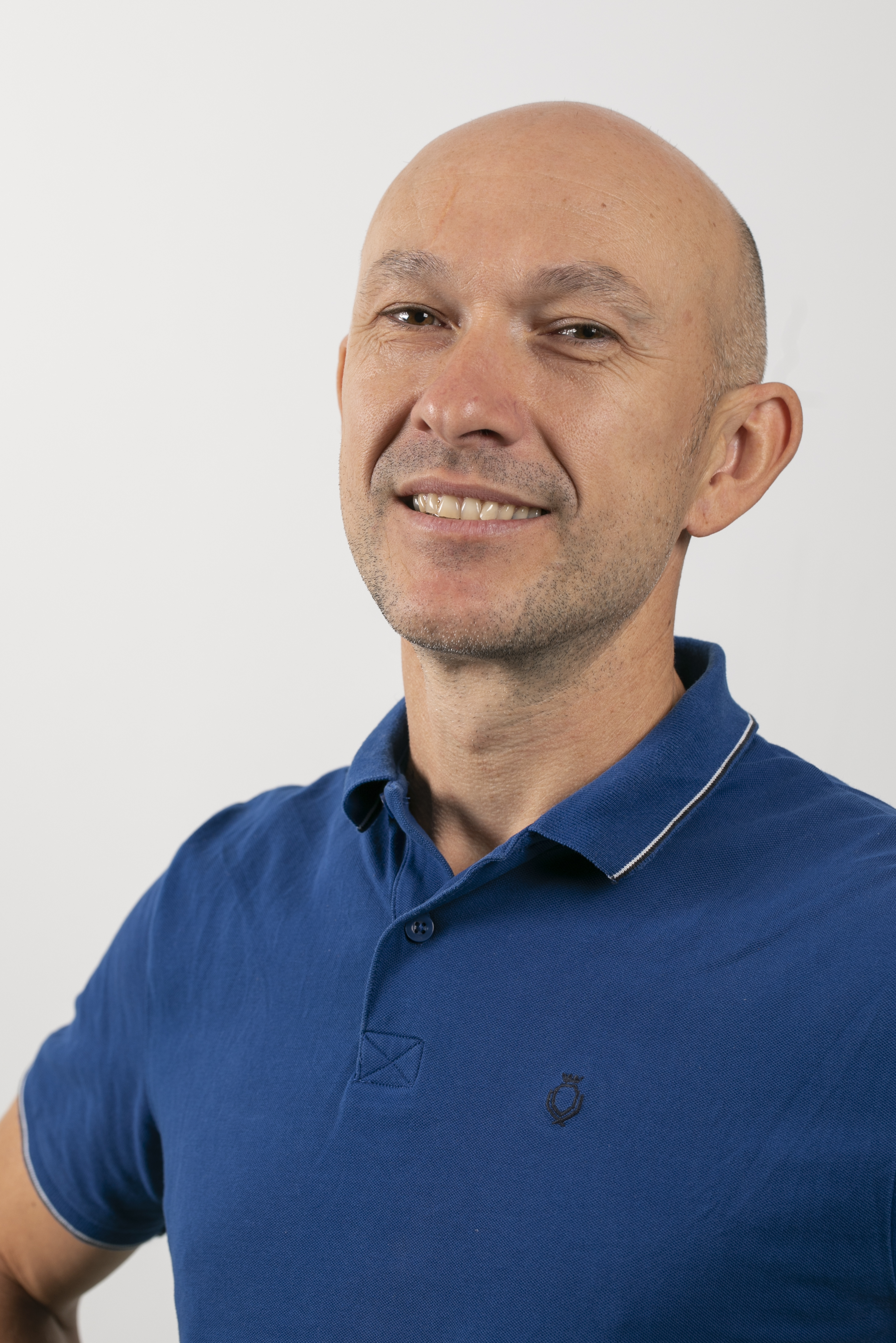
Radu Mateescu is a Research Director at Inria Grenoble - Rhône-Alpes where he heads the CONVECS research team. He has been with Inria since 1998, previously working as a researcher in the VASY project-team. His research focuses on formal methods, particularly model checking and verification of concurrent systems.
Mateescu holds a PhD in Computer Science from INPG (Institut National Polytechnique de Grenoble) with a thesis on "Verification of the temporal properties of parallel programs". His educational background includes a graduate engineer diploma from the POLITEHNICA University of Bucharest in Automatic Control and Computers. He has been instrumental in developing several formal verification tools including XTL, CAESAR_SOLVE, EVALUATOR, and BISIMULATOR.
His research interests span formal specification and verification of temporal properties of concurrent systems, temporal logics extended with data-handling primitives, on-the-fly model checking, equivalence checking, diagnostic generation, partial order reduction, and massively parallel verification. He served as chairman of the FMICS (Formal Methods for Industrial Critical Systems) Working Group of ERCIM from 2011 to 2014.
Mateescu has published extensively in formal methods, with recent work focusing on applications in autonomous vehicles, IoT systems, and hardware verification. His publications show a consistent trend toward applying formal verification techniques to increasingly complex real-world systems, particularly in safety-critical domains.
- Test-of-Time Tool Award at ETAPS'2023
- Inria - Académie des Sciences - Dassault Systèmes Innovation Prize
- Information Technology Award from Fondation Rhône-Alpes Futur
Mateescu has taught courses at ENSIMAG (Grenoble), ESIREM (Dijon), and the University of Savoie. He has contributed to major research projects involving industrial applications of formal methods, particularly through the CADP toolbox which has been used to verify numerous critical systems including the IEEE-1394 FireWire protocol, Bull's cluster file system, and autonomous vehicle systems. His work bridges theoretical formal methods with practical industrial applications.