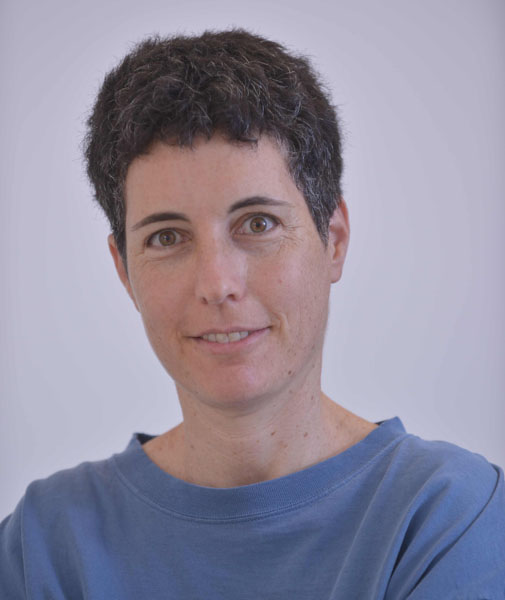
Fabio Mogavero
دانشیار · Theoretical Computer Science
Max Planck Institute for Software Systemsمعرفی
Fabio Mogavero is an Associate Professor in Theoretical Computer Science at the Department of Electrical Engineering and Information Technology, Università degli Studi di Napoli Federico II. His research spans formal specification, verification, and synthesis of systems, with a strong focus on logics, automata, games, and database theory.
- Ph.D. in Computer Science, Università degli Studi di Napoli Federico II, 2011
- M.Eng. in Computer Science Engineering, Università degli Studi di Napoli Federico II, 2007
- B.Eng. in Computer Science Engineering, Università degli Studi di Napoli Federico II, 2005
His primary research interests include formal verification, temporal and strategic logics, automata over infinite structures, decidability, and database theory—particularly bag semantics. He has made significant contributions to the theory of parity and mean-payoff games, strategy logic, and SHACL/RDF validation. His recent work explores fragments of first-order and monadic second-order logic, and he actively publishes in top venues such as LICS, ICALP, and IJCAI.
The most recent articles highlight a sustained focus on logical characterizations (e.g., automata-theoretic models for temporal logics), game-solving algorithms, and foundational database theory, especially around SHACL and multiset semantics. His work bridges theoretical computer science with practical formal methods.
Scientific Awards and Recognition:
- Erdös number at most 3 (via Erdös → J.H. Spencer → M.Y. Vardi → F. Mogavero)
Fabio Mogavero has served on the program committees of major conferences including IJCAI, AAMAS, ECAI, and LICS. He has co-edited proceedings for the Strategic Reasoning (SR) and OVERLAY workshops. He has collaborated with leading researchers such as Moshe Y. Vardi, Orna Kupferman, and Michael Benedikt. He has held postdoctoral and teaching positions at the University of Oxford and Università di Verona. He is actively involved in the theoretical computer science community through conference organization and editorial work.
He maintains research collaborations across Europe and the U.S. and continues to contribute to foundational and applied aspects of logic in computer science.
حوزههای پژوهشی