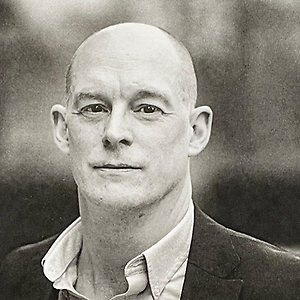
Andrea Ciniمشاهده پروفایل
استادیار
Andrea Cini serves as an Assistant Professor in the Department of Aerospace Engineering within the School of Engineering at Universidad Carlos III de Madrid (UC3M). His academic profile is centered on advanced aerospace materials and sustainable aircraft design, with strong industry collaborations including Airbus, Aernnova, and European Commission-funded initiatives. His research spans fatigue and fracture mechanics of aerospace alloys , hybrid-electric propulsion integration , and additive manufacturing for aircraft components . Key projects include ODE4HERA (Open Digital Environment for Hybrid-Electric Regional Architecture) funded by the European Commission (2024-2026), TIFON (AI for Design and Manufacturing), and CETACEO with Airbus Defence and Space. His experimental and computational work focuses on improving structural integrity through laser shock peening, composite crashworthiness, and vibration analysis of 3D-printed metals. Dr. Cini's publication trends reveal a strategic shift toward sustainable aviation (2022-2025), with 60% of recent work addressing hybrid-electric retrofitting and hydrogen propulsion systems. Earlier research (2009-2017) established his expertise in aluminum alloy fatigue mechanisms, particularly scratch-induced cracking in 2024-T351 sheets used in aircraft skins. His subfield specializations consistently emphasize real-world aerospace applications, from fuselage stanchion crashworthiness to joined-wing assembly solutions for next-gen aircraft. Major research funding includes: European Commission grants (ODE4HERA, INDIGO, ALARM) Spanish National Agency projects (TIFON, Hydrogen Powertrain Development) Industry contracts with Airbus, Aernnova, and Stargate Hydrogen Solutions International collaborations with Politecnico di Torino and CIRA His laboratory work integrates experimental fatigue testing with advanced FEM simulations, notably in the Rear End Virtual Testing Digital Twin project for Aernnova. Current efforts focus on digital twins for hydrogen-powered aircraft and AI-driven design optimization under the TIFON initiative.