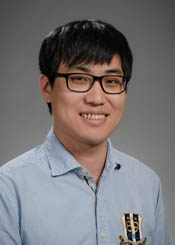
Qiang Cui is a Professor of Computational Chemistry at Boston University, specializing in developing and applying advanced computational methods to study complex biomolecular systems. His research focuses on understanding mechanisms of enzymes, biomolecular machines, and bio-material interactions through multi-scale simulations, including quantum mechanical/molecular mechanical (QM/MM) approaches and coarse-grained models. Education: B.S., Chemical Physics, University of Science & Technology of China (1993) Ph.D., Physical Chemistry, Emory University (1997) Postdoctoral Associate, Harvard University (1998-2001) Research Interests: Development of novel computational techniques for simulating complex systems Study of energy transduction in molecular machines (e.g., myosin, DNA repair enzymes) Investigation of biomaterial interfaces and nanotechnology applications Protein allostery and mutational effects using machine learning Labs/Teams: The Cui Group at Boston University advances computational methodologies and collaborates on projects spanning biophysics, material science, and molecular biology.
Philip Romero, Ph.D., is an Associate Professor in the Department of Biomedical Engineering at Duke University. He earned his doctorate from the California Institute of Technology in 2012 and leads the Romero Lab, which relocated to Duke in 2023. His research focuses on developing computational and experimental methods for protein engineering, with applications spanning therapeutics, biocatalysis, and synthetic biology. Research Interests: Romero's work integrates machine learning, microfluidics, and high-throughput experimentation to study protein fitness landscapes. Key areas include: Self-driving laboratories for autonomous protein optimization Neural network models for predicting protein functions Therapeutic enzyme engineering (ACE2, caspases, lysins) Microfluidic platforms for deep mutational scanning His recent publications demonstrate a strong emphasis on machine learning-guided protein design, with 80% of post-2022 publications involving AI/ML methods. Therapeutic applications against infectious diseases (particularly SARS-CoV-2) and microbiome engineering represent emerging directions. Lab & Advising: The Romero Lab develops novel technologies for protein engineering, including custom gene library assembly platforms and droplet microfluidics systems. Romero mentors graduate students (e.g., Nishit, who recently defended a thesis on transcription factor engineering) and has collaborated with researchers across computational biology, metabolic engineering, and virology.
Collin K. Kieffer is an Assistant Professor of Microbiology at the University of Illinois Urbana-Champaign, affiliated with the School of Molecular & Cellular Biology, Carl R. Woese Institute for Genomic Biology, and Grainger College of Engineering. His research focuses on HIV pathogenesis using advanced imaging techniques, including multiscale tissue imaging to study viral dissemination and latent reservoirs in humanized animal models and human patient samples. He holds a B.S. in Bacteriology and Genetics from the University of Wisconsin-Madison, a Ph.D. in Biochemistry from the University of Utah, and completed postdoctoral training in Oncology at the University of Utah and in Biology and Biological Engineering at Caltech. Research Interests : Dr. Kieffer’s work integrates cutting-edge imaging methods such as tissue clearing, electron microscopy, and light-sheet fluorescence microscopy to visualize HIV infection dynamics. His lab investigates mechanisms of HIV spread, reservoir persistence under antiretroviral therapy, and evaluates treatment efficacy. Recent projects explore viral interactions with immune cells in tissues, engineering anti-viral red blood cells, and SARS-CoV-2 spike protein biology. Labs & Affiliations : The Kieffer Lab leads interdisciplinary research at the intersection of virology and imaging, collaborating with institutions such as the Carl R. Woese Institute for Genomic Biology. His work bridges basic science and translational medicine, aiming to develop therapeutic strategies against HIV and other viral pathogens.
Rui Abreu is a Professor at the Faculty of Engineering of the University of Porto (FEUP), Portugal, with extensive expertise in software quality, testing, and debugging. Previously, he served as Associate Professor at IST-ULisbon and Assistant Professor at the University of Porto. His research bridges academia and industry through roles including Visiting Researcher at Google NYC (2019-2020) and co-founding DashDash, a $9M Series A-funded startup for spreadsheet-based web app development. His educational background includes a Ph.D. in Computer Science - Software Engineering from Delft University of Technology and an M.Sc. in Computer and Systems Engineering from the University of Minho. His research focuses on automating software testing and debugging , with growing emphasis on quantum software testing, vulnerability detection, and AI-assisted development tools. Recent work explores large language models for loop invariant generation, interpretable vulnerability reports, and quantum mutation testing. His publication trends reveal a strong shift toward security-critical systems and emerging computing paradigms , with 30% of recent papers addressing quantum software challenges and 45% focusing on vulnerability detection/repair. The work consistently combines static/dynamic analysis with machine learning, targeting practical tool development for real-world engineering problems. 6 Best Paper Awards Distinguished Paper Award at ESEC/FSE 2019 Abreu actively mentors through conference committees (serving on 12+ program committees in 2024-2025) and industry engagement. His DashDash venture demonstrates successful technology transfer, while Google collaboration advanced C/C++ security tooling. Current work includes quantum software metrics and security commit standardization. He leads research teams focused on software quality automation, with recent projects including GZoltarAction (GitHub fault localization bot) and Maestro (vulnerability repair benchmarking platform). Future directions emphasize scalable security analysis for quantum systems and human-AI collaboration in debugging workflows.
Amelie Stein is an Associate Professor at the Department of Biology, University of Copenhagen, specializing in Bioinformatics and RNA Biology. Her research focuses on protein stability, molecular mechanisms of disease variants, and computational methods for protein design. She is affiliated with the UCPH Quantum Hub, reflecting interdisciplinary interests in biological systems. Her work integrates bioinformatics tools, mutational scanning, and structural biology to understand protein degradation pathways and their relevance to human diseases such as Lynch syndrome and metabolic disorders. Key research areas include analyzing protein variants using deep learning models (e.g., SSEmb), developing web-based tools like MutationExplorer for 3D visualization, and characterizing disease-linked mutations in proteins such as Parkin and MLH1. Her publications highlight breakthroughs in rapid protein stability predictions, degon mapping, and the interplay between protein toxicity and degradation. No scientific awards are explicitly mentioned in the provided texts. Stein’s research also explores the application of computational approaches to biotechnology and therapeutic development, emphasizing translational applications of her findings. Her lab, linked to the SCARB research group (https://www1.bio.ku.dk/english/research/scarb/), focuses on structural and computational biology, with ongoing projects involving protein quality control networks and enzyme variant analysis. Collaborations span molecular biology, bioinformatics, and interdisciplinary quantum-related research through her UCPH Quantum Hub membership.
Stephen Ramsey, an Associate Professor at Oregon State University, holds dual appointments in the School of Electrical Engineering and Computer Science (College of Engineering) and the Department of Biomedical Sciences (Carlson College of Veterinary Medicine). With a PhD in Physics from the University of Maryland, his postdoctoral training in computational genomics at the University of Washington, and professional experience at the Institute for Systems Biology and Center for Infectious Disease Research, Ramsey bridges computational methods with biomedical applications. Education : Ph.D., Physics, University of Maryland; M.S., Physics, University of Maryland; Sc.B., Mathematical Physics, Brown University Ramsey specializes in computational systems biology , focusing on bioinformatics , biomedical knowledge graphs , and precision medicine . His research integrates machine learning , gene regulatory network modeling , and multi-omics data analysis to address challenges in rare disease diagnostics , drug monitoring , and inflammatory disease mechanisms . Current work includes AI-driven biomedical translation and electrochemical biosensor development for non-invasive diagnostics . Recent publications highlight knowledge graph applications in translational biomedicine , causal network inference in clinical-environmental data integration , and cross-species cancer transcriptomics . His team develops tools like RTX-KG2 and PloverDB to standardize biomedical data sharing and semantic reasoning . Scientific Awards : 2019 Zoetis Award (Carlson College of Veterinary Medicine) 2016 NSF CAREER Award 2016 PhRMA New Investigator Award 2010 NIH K25 Mentored Quantitative Research Award Ramsey advises in computational biology courses (CS 446/546) and contributes to biomedical AI through projects like mediKanren for rare disease diagnostics . His NSF-funded research explores gene expression noise and regulatory network dynamics , while NIH and PhRMA grants support his translational medicine initiatives. He leads the Ramsey Laboratory , which develops graph-based reasoning tools for biomedical data translation and multi-omics integration . The lab's work spans comparative oncology models, electrochemical biosensors , and knowledge graph infrastructure for clinical decision support .
Joshua Akey is a Professor at Princeton University's Lewis-Sigler Institute for Integrative Genomics, specializing in the biology and evolution of genomes. His interdisciplinary research spans yeast, dogs, and humans, integrating experimental, computational, and theoretical methods to address complex genetic questions. Research Focus: Human population genomics, yeast functional genomics, and canine adverse drug response genetics. Collaborations: Katrina Mealey (Washington State University), Evan Eichler (University of Washington). Key Themes: Archaic introgression, adaptive evolution, and the genetic architecture of phenotypic variation. The Akey Lab leverages large-scale datasets and statistical approaches to explore genome-wide selection patterns, copy number variation, and evolutionary mechanisms. Recent publications emphasize comparative genomics, longevity in companion dogs, and Neanderthal ancestry in African populations. Scientific Recognition: Recognized as a Best Scientific Figure of 2012 by Wired. Students: Ruby Redlich, Susie Song, Caroline (Cara) Weisman, Winnie Xu, Kaiqian Zhang.
Benedetta Bolognesi is a Group Leader at the Institute for Bioengineering of Catalonia (IBEC), focusing on protein phase transitions in health and disease. She previously earned her PhD in Chemistry from the University of Cambridge (UK) under Prof. Chris Dobson, studying amyloid-beta aggregation in Alzheimer's disease. Her postdoctoral work at the Centre for Genomic Regulation (Barcelona, Spain) was supported by a Marie Curie Interdisciplinary Fellowship. Current Role: Group Leader, Protein Phase Transitions in Health and Disease Research Focus: Protein aggregation mechanisms, amyloid formation, deep mutational scanning (DMS), yeast models for neurodegenerative diseases Her research employs DMS to quantify mutation effects on disordered protein domains, particularly in amyloid-beta and prion-like proteins. She investigates liquid condensates and amyloids in neurodegenerative contexts like Alzheimer's and Fragile X syndrome. Recent publications demonstrate her leadership in amyloid nucleation studies using high-throughput methods and interpretable AI models. Collaborations include researchers like Ben Lehner and Mireia Seuma. Her work bridges bioengineering and molecular biology to decode protein aggregation rules. Bolognesi's lab at IBEC explores protein phase transitions through interdisciplinary approaches, integrating yeast systems and computational biology. Key contributions include atlases of variant effects and insights into amyloid transition states.
Hari Arthanari is an Associate Professor in the Department of Biological Chemistry and Molecular Pharmacology at Harvard Medical School . His research focuses on protein-protein interactions and transcriptional Regulation in disease contexts, utilizing NMR spectroscopy , biophysical assays , and cell-based models . He operates the Arthanari Laboratory at Dana-Farber Cancer Institute, with a lab size of 5-10 members. Develops novel NMR methods for fragment screening and metabolite analysis Investigates transcriptional condensates and translation machinery dysregulation in cancer Applies integrative structural biology to therapeutic target discovery Research trends in his publications highlight therapeutic targeting of protein interactions across diverse diseases including cancer and viral infections . His work spans method development for NMR experiments, metabolomics marker identification , and structural characterization of both viral and human proteins. Articles frequently employ techniques like fluorine NMR , 15N TROSY experiments , and computational screening for drug candidate discovery. Scientific awards or formal recognition were not explicitly mentioned in the provided texts. His lab's publications emphasize collaborative multi-institute research and open-source drug discovery platforms , though no specific student advising or grant details were extracted. The Arthanari Lab (website: artlab.dana-farber.org) maintains focus on structural and functional characterization of proteins involved in disease mechanisms, particularly through NMR-derived metabolomics data and protein-ligand interaction identification .
Georg Winter, PhD, is an Adjunct Principal Investigator at CeMM (Research Center for Molecular Medicine of the Austrian Academy of Sciences) since 2016 and Life Science Director of AITHYRA, a new Research Institute for Biomedical AI (2025). His research bridges chemical biology with oncogenic gene regulation, focusing on targeted protein degradation (TPD) and proximity-inducing pharmacology. Affiliation: CeMM (2016–present), AITHYRA (2025–present) Academic Rank: Researcher (Principal Investigator) Winter's work challenges the paradigm that 80% of human proteins are 'undruggable' by reimagining small-molecule design. His group pioneered molecular glue degraders (MGDs) and heterobifunctional degraders (PROTACs), aiming to program biology beyond evolutionary constraints. Key areas include: Targeted Protein Degradation (TPD) Ubiquitin-Proteasome System Reprogramming Chemoproteomics and Artificial Intelligence Cancer Transcription Regulation DNA Damage Response His recent publications highlight advancements in dual-ligase recruitment, degrader prediction via AI, and Golgi-targeting strategies. Winter has received the Tetrahedron Young Investigator Award , Wilson S. Stone Memorial Award , and Elisabeth Lutz Award , among others. His group is supported by ERC Starting/Consolidator Grants, Cancer Grand Challenge, and the Mark Foundation Aspire Award. Students in his lab include predoctoral researchers exploring transcription rewiring, epigenetic modulation, and proteolytic logic. The lab collaborates with institutions like Dana-Farber Cancer Institute, Harvard Medical School, and the University of Vienna, leveraging CRISPR/Cas9 screens and deep mutational scanning to map proteome interactions at single-amino-acid resolution.
Martin Kircher is a computational molecular biologist currently leading a research group at the Berlin Institute of Health (BIH), Germany. He previously held research positions at the University of Washington and the Max Planck Institute for Evolutionary Anthropology. His work spans genomics, bioinformatics, and functional genomics, with a focus on understanding the impact of genetic variation. Research Interests: His primary research areas include genomics, computational biology, and evolutionary genetics. He has made significant contributions to ancient DNA analysis, functional genomics, and the development of tools for interpreting non-coding variants. His work integrates high-throughput sequencing, machine learning, and molecular assays to decode regulatory elements and variant pathogenicity. Publication Trends: His recent publications reflect a strong focus on functional genomics, variant interpretation (e.g., CADD), and high-throughput methods like MPRA. He frequently publishes in top-tier journals and contributes to large consortia, indicating collaborative and impactful research in genomic medicine and regulatory biology. Scientific Contributions: He has developed widely used tools such as CADD and IBIS and contributed to landmark studies on Neandertal and Denisovan genomes. His protocols for sequencing library preparation are foundational in the field. Advising and Grants: While no formal list of advisees is provided, he leads a research group and has collaborated extensively. He has been involved in major projects such as the University of Washington's Center for Mendelian Genomics, suggesting substantial grant funding and collaborative leadership. Labs and Teams: He established and leads a computational research group at the Berlin Institute of Health. Previously, he was a key member of Jay Shendure’s lab at the University of Washington and part of Svante Pääbo’s team at the Max Planck Institute, contributing to large-scale genomics initiatives.
M. Beatriz S. Lopes, M.D., Ph.D. serves as Professor of Pathology at the University of Virginia School of Medicine, where she also holds leadership positions as Director of Neuropathology and Neuropathology Fellowship Program, and Director of Autopsy. Her clinical expertise spans Neuropathology, Pituitary Pathology, and Autopsy Pathology, making significant contributions to both patient care and academic medicine. Dr. Lopes received her MD from University of Sao Paulo School of Medicine in December 1982, followed by a PhD in January 1993. Her training includes Residency in Anatomic Pathology (January 1983 – January 1986) and Fellowship in Neuropathology (February 1986 – December 1988), both at University of Sao Paulo School of Medicine, and an additional Fellowship in Neuropathology at University of Virginia Health Sciences Center (January 1989 – December 1992). Her research program focuses on two major areas: hypothalamic, pituitary and peripheral interactions in the pathogenesis of pituitary adenomas, and molecular mechanisms of pathogenesis and invasion of brain tumors. Her laboratory employs advanced techniques including cell culture, immunohistochemistry, immunofluorescence, and in situ hybridization. Dr. Lopes has made significant contributions to the World Health Organization classification of pituitary tumors and has published extensively on neuropathological conditions, particularly in the areas of pituitary pathology and brain tumor classification. Dr. Lopes' publication record demonstrates evolution from foundational work on pituitary adenomas toward increasingly sophisticated molecular approaches to tumor classification. Her recent work spans multiple disciplines including molecular oncology, neuropathology, toxicology, and ophthalmology, reflecting both deep expertise in her primary field and collaborative engagement with researchers across diverse specialties. Her publications in high-impact journals like Nature and Acta Neuropathologica demonstrate the significance of her contributions to the field of neuropathology. Dr. Lopes has authored numerous book chapters including 'Histologic Features of Pituitary Adenomas and Sellar Region Masses' in Practical Surgical Neuropathology (2018), 'Pituitary and Sellar Region' in Histology for Pathologists (2020), and 'Tumors of the Pituitary Gland' in Diagnostic Histopathology of Tumors (2020). These contributions have helped shape educational resources for pathologists worldwide. As Director of the Neuropathology Fellowship Program, Dr. Lopes plays a critical role in training the next generation of neuropathologists. Her leadership extends to her position as Director of Autopsy services, where she oversees important diagnostic and educational functions within the pathology department. Her work bridges clinical practice, research, and education in meaningful ways that advance the field of neuropathology.
Nicholas Ching Hai Wu is an Associate Professor at the University of Illinois at Urbana-Champaign , affiliated with the Department of Biochemistry and the Carl R. Woese Institute for Genomic Biology. His research focuses on viral evolution, antibody specificity prediction, and vaccine design optimization. Ph.D., University of California, Los Angeles (2015) Postdoc, The Scripps Research Institute (2020) Wu's work primarily addresses Influenza viruses and SARS-CoV-2 , utilizing molecular virology, protein biochemistry, structural biology (x-ray crystallography, cryo-EM), and machine learning. His lab investigates evolutionary constraints of viral proteins, cross-reactive antibody responses, and next-generation vaccine platforms. Recent publications highlight his contributions to neuraminidase antibody discovery , epistasis in antibody fitness , and deep mutational scanning of viral proteins. Wu's team has developed methods for binding affinity measurements using BLI and high-throughput antibody screening via oPool+ display. Scientific Awards : Vallee Scholar Award (2024), Searle Scholar Award (2022), NIH Director's New Innovator Award (2021), among 10+ distinctions Grants : NIH Pathway to Independence Award (2019), Croucher Postdoctoral Fellowship (2015-2017)
Willow Coyote-Maestas is an Assistant Professor in the Department of Bioengineering and Therapeutic Sciences at the University of California San Francisco (UCSF), where she leads the Coyote-Maestas Lab. She holds affiliations with multiple graduate programs, including the Biophysics Graduate Program, Chemistry and Chemical Biology Graduate Program, Pharmaceutical Sciences and Pharmacogenomics Graduate Program, and the Tetrad Graduate Program. Her research focuses on integrating computational biology, molecular biophysics, and pharmacogenomics to understand protein structure-function relationships and their implications in disease and drug development. Education PhD in Biochemistry, Molecular Biology, and Biophysics from the University of Minnesota, Twin Cities (2021) MS in Bioinformatics and Computational Biology from the University of Minnesota (2019) BS in Chemistry and BA in Environmental Studies from Evergreen State College (2014) Research interests span molecular dynamics simulations, deep mutational scanning, and domain engineering in ion channels and drug transporters. Her work addresses critical questions in pharmacogenomics, systems pharmacology, and evolutionary constraints on protein function. Recent projects include the development of computational frameworks like Rosace and ORACLE, and functional studies on the MET receptor tyrosine kinase and OCT1 transporter mutations. Scientific Awards Chan Zuckerberg Biohub Investigator (2023-2028) HHMI Hanna Gray Fellow (2021-2027) QBI Fellow (2021-2023) NSF Graduate Research Fellowship (2017-2018) University of Minnesota Ross A. Gortner Award (2019) Publications highlight her expertise in computational genomics, protein engineering, and biophysics, with recent studies analyzing codon interplay, kinase resistance mechanisms, and bacterial secretion systems. Her methodological innovations, such as DIMPLE and Rosace, provide tools for studying protein variation and functional landscapes.
Chengbo Chen is a Research Fellow at the University of Washington , affiliated with the School of Pharmacy and the Department of Medicinal Chemistry . He works in the Lee Lab , focusing on structural biology, virology, and medicinal chemistry. Research Interests: Vaccine Development Antibody Neutralization Protein Nanoparticles Structural Dynamics of Viral Proteins Biosensor Design for Cancer Monitoring Covalent Organic Frameworks in Analytical Chemistry Recent Publications highlight advancements in SARS-CoV-2 vaccine design , HIV-1 antibody targeting , and DNA-based cancer biomarkers , with a focus on structural optimization of viral antigens and applications of nanomaterials in diagnostics. His work spans virology, immunology, and biomedical regulatory affairs.