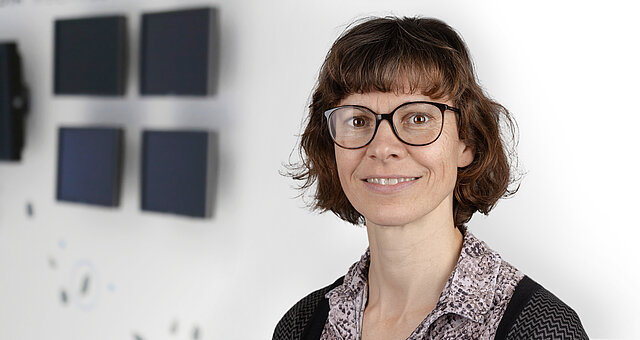
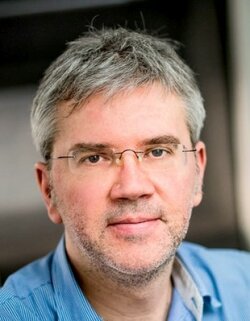
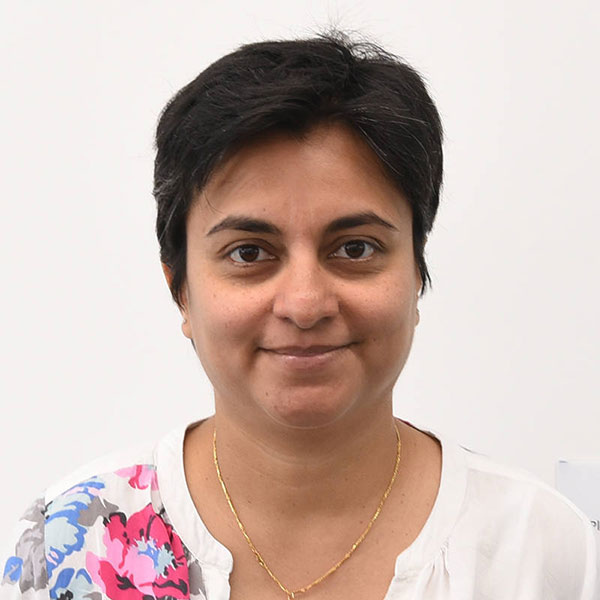
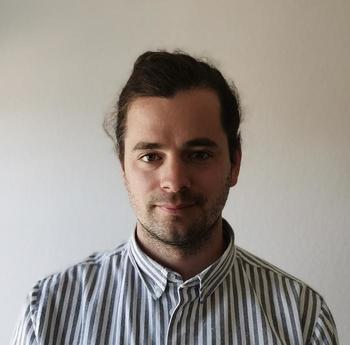
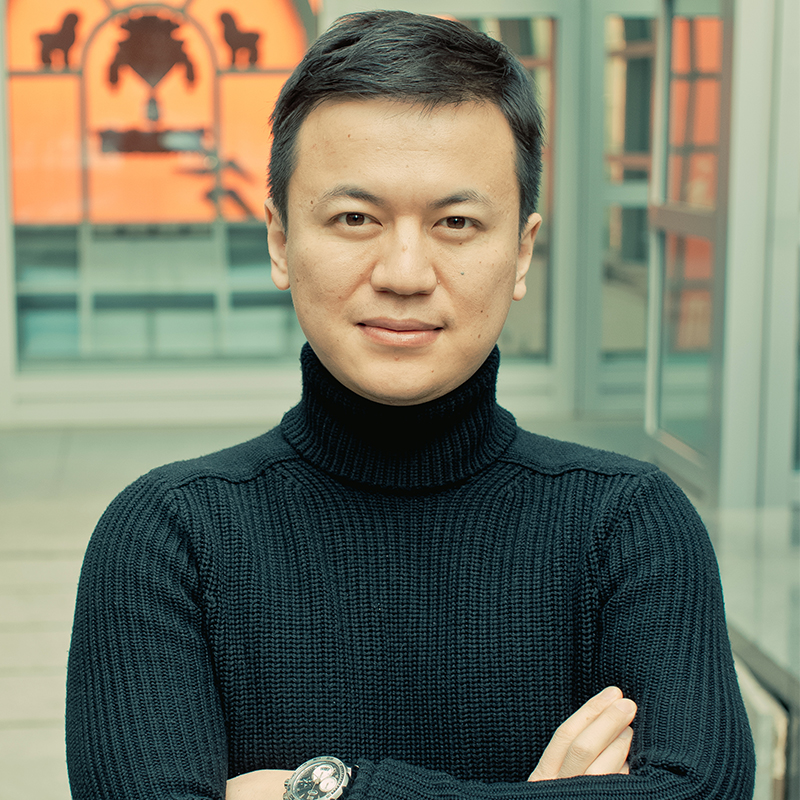
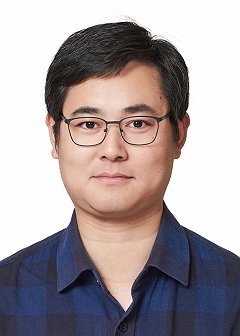
Dr. Thomas Schierl is the Head of the Video Communication and Applications Department at Fraunhofer Heinrich Hertz Institute (HHI) in Berlin. Since 2010, he has led research groups in multimedia communications and video coding, co-developing key video coding standards such as H.264 SVC and HEVC. He currently heads the Video Coding & Analytics department since 2015, focusing on video compression, wireless transmission, and standardization. Education: Diplom-Ingenieur (Computer Engineering) from Berlin University of Technology, 2003 Dr.-Ing. in Electrical Engineering and Computer Science, Berlin University of Technology, 2010 Research interests span video over wireless networks, system integration of video codecs, and cellular network protocols. He contributed to MPEG-2 Transport Stream standards and co-authored IETF RFCs for video payload formats. In 2014, he received the Emmy Award for MPEG-2 Transport Stream development. Active in standardization bodies: JCT-VC, MPEG, IETF, 3GPP, and DVB. His work includes high-level syntax for HEVC parallelism and V2X resource pooling for 5G NR. Labs/Teams: Leads the Video Coding & Analytics team at HHI, specializing in cutting-edge video compression and communication technologies.
Birgit Nierula is a Researcher at the Fraunhofer HHI within the Interactive & Cognitive Systems Group , part of the Vision and Imaging Technologies department. Her work focuses on human-computer interaction, emotion recognition, electrophysiology, and brain-machine interfaces. She explores non-invasive electrophysiological methods to study spinal cord activity, somatosensory processing, and neural dynamics across the central nervous system. Her research also delves into the psychological and physiological aspects of agency, responsibility, and pain perception in virtual environments and neurorehabilitation contexts. Her research interests include: Development of brain-computer interface (BCI) paradigms for movement control and neurorehabilitation Analysis of somatosensory and cardiac signals through electrophysiological techniques Investigation of body ownership and agency in immersive virtual reality (VR) environments Impact of expectation and sensory modulation on pain perception and neural responses Her publications emphasize methodological advancements in artifact removal for spinal-cord electrophysiology and interdisciplinary research at the intersection of neuroscience, biomedical engineering, and human-computer interaction. Current projects address the ethical and perceptual implications of BCI technologies and the translation of neurophysiological insights into clinical applications.
Xiaojun Zhang is a Professor actively contributing to cloud computing, blockchain technology, data security, and educational technology. His work spans cybersecurity, signal processing, and wireless systems. Key Research Areas: Privacy-preserving data aggregation, machine learning for biomedical imaging, blockchain-based integrity auditing, and educational metacognition studies. Recent Article Trends (2022–2025): Focus on secure federated learning, data denoising algorithms, and blockchain applications in smart grids, healthcare, and education. Collaborations include institutions in China and international researchers.
Christian Herglotz is a researcher affiliated with the University of Erlangen-Nuremberg , Germany. His work focuses on energy efficiency in video coding and decoding systems, with a particular emphasis on HEVC and VVC standards. He has published extensively in IEEE journals and conferences like ICIP, ICASSP, and QoMEX, often collaborating with André Kaup and Matthias Kränzler. Key research themes: energy-aware video compression, decoding power optimization, rate-energy-distortion modeling. Co-edited special sections on deep learning-based video coding. Recent Publications (2022-2025): Explored power reduction in HDR video encoding, motion prediction for 360-degree video, and heterogeneous quantization for DNN accelerators. His studies integrate machine learning with traditional codec design to improve energy efficiency. Technical Contributions: Developed models for decoding energy estimation, analyzed carbon impact of streaming devices, and proposed methods for viewport-adaptive motion compensation. Collaborative work spans thermal imaging for power analysis and reliability-aware DNN hardware optimization.
Walter Cañedo Riedel serves as a Visiting scientist within the Department of Computational Neuroscience at the Max Planck Institute for Biological Cybernetics in Tübingen, Germany, contributing to cutting-edge research in neural computation and biological modeling. His research spans Computational Neuroscience with specialized focus on neural network dynamics , machine learning algorithms for brain modeling , and cognitive systems analysis . This interdisciplinary work bridges theoretical neuroscience with artificial intelligence methodologies to decode complex neural processes. He operates within the renowned Peter Dayan research group , which pioneers theoretical frameworks for understanding perception, learning, and decision-making through computational approaches.
Weihong Zhong is an active researcher with dual expertise in Computer Science (particularly large language models and controllable text generation) and Environmental Science (focusing on biodegradation of industrial pollutants like phthalate esters and plastic waste). Their work includes methodological innovations in ACL and EMNLP venues, as well as biochemical studies in Applied and Environmental Microbiology and Synthetic and Systems Biotechnology . Key collaborators include Xiaocheng Feng , Lei Huang , and Bing Qin , with whom they co-author multiple papers across NLP and environmental research. Weihong Zhong’s computational research addresses LLM hallucinations (via frameworks like RHIO, Seal, and FRONT), context window extension (through positional encoding optimization), and controllable generation (using latent space probability density estimation). In environmental science, their work focuses on degrading phthalate esters (PAEs) and plastic pollutants using bacterial consortia and enzymatic engineering. Papers like the 2024 GroundBench study and 2023 MMHalSnowball framework highlight their contributions to multimodal hallucination mitigation. Scientific awards or honors are not explicitly documented in the provided materials. Their interdisciplinary approach bridges technical innovation in AI/ML with applied biological solutions for environmental remediation, as evidenced by publications in both top-tier computational conferences and environmental journals .
Prof. Dr. Christian Klaes leads the KlaesLab at the Ruhr-University Bochum 's Department of Neurotechnology , focusing on advanced neuroprostheses and assistive devices for paralysis rehabilitation. His work integrates neuroscience , machine learning , and virtual reality to decode brain signals for controlling exoskeletons and BCI systems . Key research areas: Brain-Computer Interfaces , Neural Implants , VR-based Neurorehabilitation , and AI-driven Medical Diagnostics Collaborations with Caltech , German Primate Center , and University of Madeira expand his interdisciplinary impact. Recent publications highlight advancements in EEG decoding accuracy , spike sorting algorithms , and somatosensory feedback systems , demonstrating his lab's contributions to neural signal processing and embedded AI platforms for future implants. Current projects include developing smart upper-limb exoskeletons , exploring terahertz brain imaging , and pioneering phantom touch illusions for sensory augmentation in VR environments.
Dr. Moritz Herrmann is a postdoc researcher and Reproducibility & Open Science Transfer Coordinator at the Munich Center for Machine Learning (MCML). He is affiliated with the Biometry in Molecular Medicine working group led by Prof. Anne-Laure Boulesteix at Ludwig-Maximilians-Universität München, and contributes to initiatives like the LMU Open Science Center , Open Science Initiative in Statistics (OSIS) , and Open Science Initiative in Medicine (OSIM) . Ph.D. in Statistics from LMU (2022), M.Sc. in Statistics (2018), and B.Sc. in Mathematics/Sports Science (2014) His research focuses on Empirical Machine Learning , Manifold Learning , and Metascience , with emphasis on epistemological foundations and reliability in ML research. He advocates for open science practices and data literacy, as outlined in his ICML 2024 position paper on rethinking empirical ML research. As a member of the Empirical Machine Learning research focus group and the Statistical Learning and Data Science Chair , Herrmann bridges statistical methodology with biomedical applications. His work spans outlier detection, cluster analysis, and reproducibility frameworks, reflected in his recent publications in journals like Biometrical Journal and Data Mining and Knowledge Discovery .
Marc Adrat is an Honorary Professor at RWTH Aachen University and Head of the Software Defined Radio research group at Fraunhofer Institute for Communication, Information Processing and Ergonomics (FKIE). His dual role combines academic teaching with cutting-edge industrial research in communications engineering. Education: Diplom-Ingenieur in Electrical Engineering (1997), RWTH Aachen University Dr.-Ing. (PhD) in 2003 from Institute of Communication Systems and Data Processing (IND), RWTH Aachen Research Focus: Prof. Adrat specializes in channel coding , modulation techniques , and iterative decoding with particular emphasis on polar codes , BICM-ID systems , and EXIT chart analysis . His work bridges theoretical foundations with practical implementations in software-defined radio systems. His recent research directions include applying machine learning techniques (particularly genetic algorithms) to optimize communication systems, developing autoencoder-based signal enhancement methods, and advancing spectrum monitoring technologies for cognitive radio applications. Awards & Recognition: Best Paper Award at ICMCIS 2022 for work on spectrum monitoring techniques Appointed Honorary Professor by RWTH Aachen University in June 2024 Teaching & Supervision: Since 2009, he has taught courses on Modern Channel Coding for Wireless Communications and Advanced Coding and Modulation at RWTH Aachen. His teaching covers both theoretical foundations and practical implementations of modern communication systems. Laboratories & Teams: At Fraunhofer FKIE, he leads the Software Defined Radio research group, focusing on developing flexible, reconfigurable radio systems for military and civilian applications. The group works extensively on real-time implementations of advanced coding and modulation schemes.
Professor Muzlifah Haniffa holds dual appointments as Professor of Dermatology and Immunology at Newcastle University and Senior Group Leader/Head of Cellular Genetics at the Wellcome Sanger Institute. She serves as Biological Network Co-Coordinator for the Human Cell Atlas and Deputy lead PI for Newcastle's Immunology and Inflammation theme, pioneering single-cell genomics applications to decode immune system development and disease pathogenesis. Her academic foundation includes: Medical Degree: Cardiff University Postgraduate Clinical Training: Cambridge and Newcastle PhD: Newcastle University Post-doctoral Fellowship: Singapore Research focuses on single-cell resolution mapping of human tissue ecosystems, with core themes: Human Cell Atlas development for embryonic and tissue-specific immunity Immune dysfunction mechanisms in otitis media and cutaneous diseases Multi-omics profiling of COVID-19 responses iPSC-derived skin organoid models for developmental studies Her lab champions "Strength through diversity" and reproducible science with public data sharing. Analysis of 2024-2025 publications reveals dominant trends in spatiotemporal immune mapping across skin, meninges, and prenatal tissues. Key methodological advances include MintFlow microenvironment modeling, scTRAM trajectory benchmarking, and multi-omics integration for disease classification, spanning immunology, dermatology, and cancer biology. Major recognitions: Fellow of the Academy of Medical Sciences (FMedSci) Wellcome Senior Research Fellowship Lister Institute Prize Fellowship 2019 Foulkes Foundation Medal for immunology contributions As a dedicated mentor, she supervises six PhD students including Antony Rose (hepatocellular carcinoma microenvironment) and Jacqueline Boccacino (cancer genomics). Current grants include Wellcome Trust support for her senior fellowship and Human Cell Atlas leadership, alongside UK-CIC consortium funding for pandemic response research. The Haniffa Lab operates across Sanger Institute and Newcastle's Biosciences Institute with 25+ members including clinicians, computational biologists, and wet-lab scientists. Their "Inclusion and Innovation" ethos drives collaborative projects on skin wound healing atlases, macrophage heterogeneity in graft-versus-host disease, and spatial transcriptomics of inflammatory skin conditions.
Laurin Luttmann, M.Sc., is a Research Associate at the Institute for Business Information Systems (IIS) at Leuphana University Lüneburg, specializing in Data Science and Artificial Intelligence. He works within the Professorship for Business Informatics, focusing on combinatorial optimization and warehouse logistics applications. University: Leuphana University Lüneburg Department: Business Informatics, especially Data Science Role: Research Associate Research Interests span: Reinforcement Learning and Multi-Agent Systems Combinatorial Optimization Algorithms Warehouse Logistics Automation Neural Network Applications Graph-based AI Solutions Publication Trends show expertise in: Developing parallel autoregressive models for multi-agent optimization Applying neural networks to heterogeneous graph problems Advancing warehouse routing and order batching algorithms Comparative studies on neural network training methods
Adrien Doerig is a Visiting Professor in the Department of Education and Psychology at Freie Universität Berlin, where he leads research in the Cognitive Computational Neuroscience Lab. He is also affiliated with the Bernstein Center for Computational Neuroscience. His work bridges cognitive science, computational modeling, and neural mechanisms of perception. Doerig's research focuses on the intersection of computational neuroscience and artificial intelligence, with particular emphasis on visual perception, consciousness, and the development of biologically plausible neural network models. His work explores how the brain processes visual information, with special attention to phenomena like crowding, feature integration, and the temporal dynamics of perception. He has made significant contributions to understanding the limitations of convolutional neural networks for modeling human vision and has pioneered work on topographic neural networks that better capture cortical organization. A key trend in Doerig's recent publications is the exploration of connections between language models and visual processing in the brain. His groundbreaking 2025 Nature Machine Intelligence paper demonstrated that large language model representations align closely with visual representations in the human brain, opening new avenues for using language-based AI in modeling biological visual processing. His work consistently challenges existing paradigms while developing more biologically plausible computational frameworks. Doerig teaches a wide range of courses including Master's in Cognitive Neuroscience, Probability and statistical modeling (both theoretical and practical with focus on ANNs and neuroimaging), Introduction to programming, Applied computational cognitive neuroscience, and specialized courses on vision, language, affective & social neuroscience, and consciousness. He also supervises graduate students through the Cognitive Computational Neuroscience Lab, which includes postdocs, predocs, master's students, and interns working on cutting-edge research questions at the intersection of cognitive science and machine learning.
Anahita Samih is a research staff member in the Bioinformatics group led by Prof. Dr. Zoran Nikoloski at the Institute of Biology and Biochemistry (IBB) of the University of Potsdam. Her position centers on interdisciplinary computational research within biological sciences. Her primary research domains include: Bioinformatics Computational Biology Systems Biology These fields focus on developing algorithmic frameworks for analyzing complex biological networks, genomic data integration, and modeling metabolic pathways through computational approaches. Her work bridges theoretical computer science with experimental biology to decode molecular mechanisms. As an active research member, she contributes to the group's collaborative projects within the Institute of Biology and Biochemistry, though specific leadership roles or advising responsibilities are not documented in available materials.
Yang Li serves as Associate Professor of Marketing and Associate Dean for the MBA Program at Cheung Kong Graduate School of Business (CKGSB). Holding a PhD in Marketing from Columbia Business School alongside dual master's and bachelor's degrees from Columbia and Peking University respectively, he bridges advanced statistical methodologies with practical business applications. His research centers on statistical machine learning and Bayesian nonparametrics applied to consumer behavior analysis, with specialization in online personalization, text mining, and choice modeling. Recent work demonstrates significant focus on fragmented attention economies, ethical AI frameworks, and NFT network dynamics, reflecting contemporary digital market challenges. Management Science Marketing Science Journal of Marketing Research Journal of Consumer Research Harvard Business Review Professor Li's publications reveal evolving expertise from foundational pricing elasticity studies toward cutting-edge AI applications in consumer contexts. His work increasingly integrates generative models and graph neural networks to decode complex consumer collection behaviors and digital ecosystem dynamics. Scientific recognition includes being a Finalist for the 2021 Paul E. Green Best Paper Award. Industry impact is demonstrated through executive education programs and strategic consultancies with Tencent, Haier, and Tmall. As Associate Dean for MBA Programs, he oversees curriculum development while maintaining active corporate governance roles on boards of publicly traded companies across China and Hong Kong, directly applying his research insights to strategic decision-making in digital transformation initiatives.
Jie Liu is a Researcher at the Institute of Software, Chinese Academy of Sciences and a Professor and Doctoral Supervisor at University of Chinese Academy of Sciences. He is also a Member of the Youth Innovation Promotion Association of the Chinese Academy of Sciences and an Executive Committee Member of the System Software Committee of the CCF Computer Society. His research is conducted within the Software Engineering Technology R&D Center. Dr. Liu received his Ph.D. from the University of Science and Technology of China in 2011 and his B.A. from the same institution in 2004. He has progressed through the ranks at the Institute of Software, CAS, starting as an Assistant Research Fellow (2011-2014), then Associate Research Fellow (2014-2024), and currently as a Researcher (since 2024). His research spans Big Data Intelligent Analysis Models and Systems at the intersection of AI, Software Engineering, and System Software. Specifically, his work covers three main areas: Big Data and Machine Learning Systems (statistics and AI algorithm model libraries, data quantitative analysis tools, LLM reasoning optimization, Earth Big Data); Intelligent Software Engineering (code model constraint decoding, data science agents, system log analysis agents); and Knowledge-Enhanced Intelligent Model Construction (knowledge extraction, knowledge graphs, domain AI model design). His research has resulted in innovative approaches to handling complex data analysis challenges across multiple domains. Dr. Liu's research has produced significant outcomes including EarthDataMiner, which supports SDG indicator calculations and won the 2024 Beijing Municipal Science and Technology Progress First Prize. His work on RISC-V software migration technology has been integrated into the Ruiqian tool (https://rvpt.top/), demonstrating practical applications of his research in emerging computing architectures. Beijing Science and Technology Progress Award, First Prize, 2024 2023 Surveying and Mapping Science and Technology Award, Special Prize, 2023 DASFAA Best Paper Runner-up, Second Prize, 2013 Dr. Liu has successfully guided numerous graduate students who have secured positions at major technology companies including Alibaba, ByteDance, Southern Power Grid, and Agricultural Bank of China. He has secured funding through multiple National Natural Science Foundation projects, National Key R&D Program projects, and over ten other research initiatives. His research collaborations span industry leaders like Huawei, JD.com, and TravelSky, as well as academic institutions within the Chinese Academy of Sciences. He teaches graduate courses such as 'Machine Learning Systems' and 'Cloud Computing and Big Data Technology' at University of Chinese Academy of Sciences, and has established a research group focused on developing innovative solutions at the intersection of AI and software engineering with real-world applications in earth sciences, healthcare, and intelligent systems.