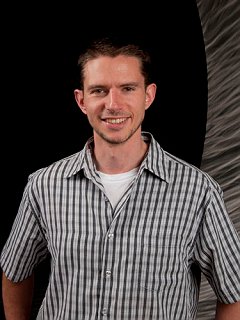
Tiark Rompf is an Assistant Professor at Purdue University , with research spanning programming languages, compilers, and systems. His work bridges domains including architecture, databases, machine learning, and AI through projects like Reachability Types and Rhyme. Co-director of the Purdue Center for Programming Principles and Software Systems (PurPL) Scientific Advisor at SambaNova Systems Previously a member of the Scala team at EPFL His research focuses on: Runtime code generation and advanced compiler technology Expressive data-centric query languages (Rhyme, Datalog) Reachability type systems for memory safety and effect handling Metaprogramming and logical relations for formal verification Recent publications highlight contributions to Datalog compilation (Flan), nested data structures (Rhyme), and polymorphic reachability types. He leads projects exploring: Compiler optimizations for emerging architectures (GPU, TPU, FPGA) ML-driven compiler improvements Secure multi-party computation via metaprogramming Scientific awards include: NSF CAREER Award (2016) Google Faculty Research Awards (2017, 2018) DOE Early Career Research Award (2017) ACM SIGPLAN PL Software Award (2019) GPCE Test of Time Award (2020) Students and alumni from his group have joined institutions like Databricks, DeepMind, Galois, and Meta. He teaches advanced compiler courses including: CS 590 - Advanced Topics in Compilers CS 352 - Compilers CS 502 - Graduate Compilers
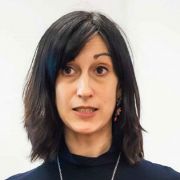
Dr. Adriana Laura Massidda is a Lecturer in Architectural Humanities at the School of Architecture and Landscape , University of Sheffield. Her research bridges architectural history, urban studies, and environmental humanities, focusing on informal settlements and their socio-political implications. Research Interests: Shantytown history and urban informality Critical environmental analyses of waste, flooding, and infrastructure Social housing and co-design methodologies Urban rivers and landscape design Phytoremediation in marginalized contexts Scientific Awards: Declared asset of cultural significance (Bien de Interés para la Comunicación Social) by the Buenos Aires Legislature (2023) for collaborative work on shantytown histories Publications & Impact: Massidda's research focuses on urban transformations in Argentina and the UK, particularly examining sewage farm repurposing in London/Leicester housing projects. Her work combines historical analysis with design-led interventions, emphasizing marginalized communities' agency. Teaching & Supervision: She teaches architectural humanities and supervises research on urban design, landscape, and socio-environmental challenges in informal settlements.
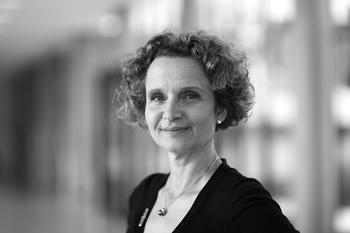
Professor Dr. Jessica Gienow-Hecht is a leading academic in the field of international and global history, with a specific focus on North America and its transatlantic relations. She holds the Chair of History Department at the John F. Kennedy Institute for North American Studies at Freie Universität Berlin. Additionally, she is a principal investigator for the Cluster of Excellence "Contestations of the Liberal Script" (SCRIPTS) , leading the research unit BORDERS and the project "Gender, Borders, Memory" .
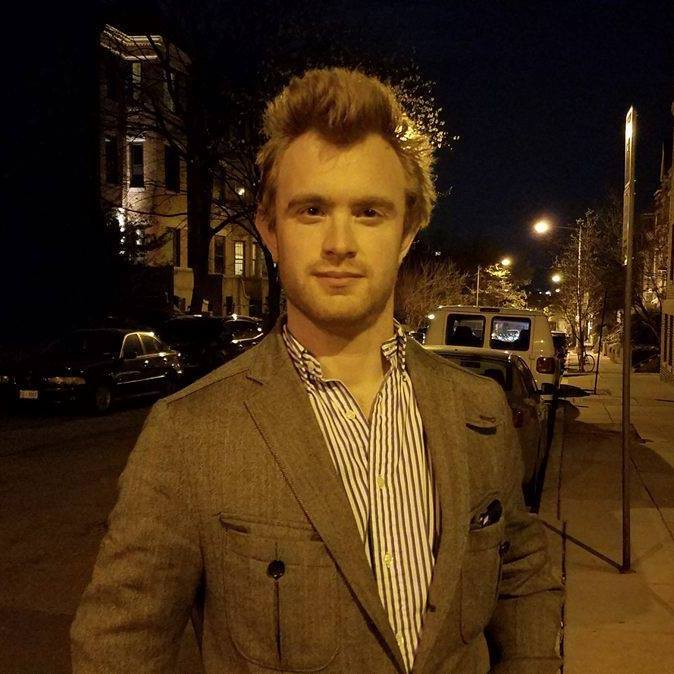
Kristopher Micinski is an Assistant Professor in the Electrical Engineering and Computer Science Department at Syracuse University. His research focuses on scalable program analysis, static analysis, and formal methods applied to computer security and privacy. He holds a PhD in Computer Science from the University of Maryland and a BS in Computer Engineering from Michigan State University. Education: PhD, Computer Science, University of Maryland at College Park BS, Computer Engineering, Michigan State University Research Interests: His work bridges theory and application of program analyses, emphasizing scalable static analysis frameworks, Datalog optimization for distributed systems, and security applications. Recent efforts include GPU-accelerated Datalog engines and large-scale malware analysis pipelines like Assemblage. Grants & Projects: NSF PPoSS Large: $1M grant for declarative analytics DARPA V-SPELLS: $400K for legacy software optimization Assemblage: $350K DoD grant for malware classification Teaching: He teaches undergraduate and graduate courses on programming languages (CIS352) and formal methods (CIS700), with materials publicly available on YouTube.
Professor Michael Penman is a historian specializing in medieval and early modern Scottish history, affiliated with the University of Stirling's Department of History. He holds a First Class MA from the University of St Andrews (1995) and a PhD on David II of Scotland (1999). His research spans medieval lay piety, saints' cults, royal burials, and World War I history. He has led projects on Dunfermline Abbey's royal tombs (using ground-penetrating radar) and Patrick Geddes' civic planning in Dunfermline. Academic roles include Deputy Head of History & Politics and Director of Research for the Division of History, Heritage, and Politics. Awards include the Saltire Society Prize (2005). He advises on heritage projects like the Dunfermline Heritage Partnership and has authored/co-edited over 80 publications, including monographs on David II and Robert the Bruce. Research interests emphasize cross-cultural comparisons with England, Ireland, and Europe. Public engagement includes lectures on topics like the Declaration of Arbroath and medieval monuments. He supervises postgraduates on themes like medieval dynasties and royal cults. Professional memberships include the Royal Historical Society and Scottish History Society.
Professor Henry Laurens (b. 1954) holds the Chair of Contemporary History of the Arab World at Collège de France since 2003. His research focuses on Arab-East-West relations, national trajectories in Egypt, Syria, and Palestine, and the impact of international diplomacy on Middle Eastern societies. He employs global Mediterranean history and Arab memorial literature to analyze power dynamics and political cultures. Education: Agrégation in History (1980), DEA (1979), and Arabic diploma from Inalco (1981). Research: Explores the Eastern Crises series, Arab nationalism failures, Ottoman provincial evolution, and French comics' depiction of the Arab world. Teaching: Courses since 2019 analyze international relations shaping Middle Eastern societies, with 2025 lectures on the 1970 Eastern Crisis and post-2001 Palestine. Collaborations: Partnerships with CAREP (Paris) and Saint Joseph University (Beirut) for fieldwork and seminars.
Elena Zucca is an Associate Professor in the Department of Computer Science, Bioengineering, Robotics and Systems Engineering (DIBRIS) at the University of Genoa, Italy. She has a strong research focus on programming languages, particularly in the areas of type systems, formal semantics, and coinduction. Her work bridges theoretical foundations with practical implementations, as evidenced by her publications on topics like Featherweight Java, corecursion, and soundness proofs for programming language features. Her research interests span the theoretical and practical aspects of programming languages. She investigates the formal semantics of programming constructs, particularly focusing on the boundaries between finite and infinite computations. Her work on coinduction and corecursion explores how to safely handle infinite data structures and computations. She has made significant contributions to understanding soundness in programming language features, especially in relation to resource-aware semantics. Her research often combines theoretical foundations with practical implementations, as seen in her work on Featherweight Java extensions and effect systems. Analysis of her recent publications reveals a consistent focus on advanced type systems and semantics. Her work explores the theoretical boundaries of programming language features while maintaining practical relevance. A recurring theme is the relationship between finite and infinite computations, with particular attention to soundness guarantees. Her research has evolved from foundational work on lambda calculus and object-oriented programming toward more specialized topics like graded types, coeffects, and resource-aware semantics. Elena Zucca has been actively involved in the programming languages research community, serving on program committees for major conferences including SPLASH, ECOOP, and POPL. She has mentored students through doctoral courses on Declarative Programming and (Co)Induction. Her research has been supported through participation in various academic programs, including the SEPL research program mentioned in her course materials. She teaches a diverse range of courses at the University of Genoa, from undergraduate to doctoral levels. Her teaching portfolio includes Automata Theory and Computability, Algorithms Analysis and Design, Principles and Paradigms of Programming Languages, and specialized doctoral courses on Declarative Programming and (Co)Induction. Her courses often reflect her research interests, covering theoretical foundations of programming languages, formal methods, and advanced programming paradigms.
Michael Raskin is a Lecturer (maître de conferences) at LaBRI, University of Bordeaux, where he conducts research in theoretical computer science with a focus on distributed systems and formal methods. His work bridges theoretical foundations with practical implementations, particularly in population protocols, temporal graphs, and Petri nets. His research interests span Theoretical Computer Science , Distributed Systems , Algorithms , and Formal Methods , with specific expertise in population protocols, temporal graph analysis, vector addition systems, and verification techniques for parameterized systems. His publications demonstrate a consistent focus on computational complexity, state complexity, and threshold phenomena in distributed models. Recent publication trends show a strong emphasis on temporal graph theory (with multiple papers on random temporal graphs and giant components), population protocol analysis (including modular protocols and leaderless rendez-vous systems), and verification techniques for parameterized systems. His work often combines mathematical rigor with practical implementation insights. Raskin has developed significant software projects including: Agnostic Lizard - A portable code walker for Common Lisp QueryFS - A filesystem defined through compiled queries His technical contributions span both theoretical advances and practical systems implementation, with a recurring theme of applying programming language techniques to systems problems. His work on Common Lisp tools demonstrates a commitment to practical language implementation alongside theoretical research.
Lars-Henrik Eriksson is a Senior Lecturer in the Department of Computer Science at Uppsala University, part of the Department of Information Technology. He holds a PhD and is recognized as an Excellent Teacher and educational mentor. He currently serves as the program director for the Master's program in Computer Science and has previously held leadership roles, including Head of the Department of Computer Science from 2004 to 2018. PhD in Computer Science Excellent Teacher Award Pedagogical Mentor at Uppsala University His research focuses on the applications of logic in computer science, particularly formal methods for software development. His work spans formal specification, verification, and synthesis, with strong emphasis on logic programming, interactive theorem proving, and logical frameworks. He has made significant contributions to the use of formal methods in safety-critical domains such as railway signaling. His current research includes modeling application domains within formal methods and formalizing concurrency theory using the Isabelle proof assistant. The recent publications reflect a sustained focus on modal logics for nominal transition systems, formal verification tools (e.g., GTO), and domain-specific applications of formal methods. These works demonstrate deep integration of theoretical logic and practical software engineering, especially in distributed and safety-critical systems. The recurring themes include concurrency, verification, and the use of domain models to enhance formal reasoning. Scientific Awards and Recognitions: Excellent Teacher Pedagogical Mentor Lars-Henrik Eriksson has advised numerous students through project supervision, thesis reviews, and course mentorship, though no formal list of advisees is provided. He has been involved in significant research management, including leading the department and directing a master’s program. He has also collaborated with industry, particularly in railway signaling, contributing to safety analysis and formal verification projects with Trafikverket and through companies he co-founded. He is a board member of Formal Methods Europe and served as program committee chair for the FME Symposium 2002 (part of FLoC’02). His work bridges academia and industry, especially in the application of formal methods to real-world engineering challenges.
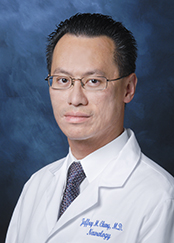
Jeffrey M. Chung, MD, FAAN is an Associate Professor of Neurology at Cedars-Sinai Medical Center. He serves as Director of both the Epilepsy Program and the Neurophysiology Laboratory since 2013. His clinical practice focuses on epilepsy and neurophysiology, with 26 years of experience in neurology and clinical neurophysiology. Northwestern University Medical School (1999) - MD Evanston Hospital (2000) - Internship UCLA (2003) - Residency UCLA (2005) - Fellowship Dr. Chung's research explores epilepsy mechanisms, neural signal processing , multi-modal probabilistic mapping for surgical outcomes, and device-oriented therapies . His recent publications focus on theta phase precession in memory , single-neuron correlates of seizures , and neuroimaging in post-stroke conditions . He leads clinical trials on novel anti-seizure agents and neuromodulation techniques. Circle of Friends – Grateful Patient Donation Honoree (Cedars-Sinai) Southern California Super Doctors (Los Angeles Magazine) Falks Medical Scholar (Arthritis Foundation) Golden Apple Teaching Award (Cedars-Sinai) Dr. Chung directs the Epilepsy Program and Neurophysiology Laboratory at Cedars-Sinai, while also mentoring through journal clubs and clinical teaching. He has received multiple industry grants from companies like Marinus Pharmaceuticals and Vertex Pharmaceuticals for trials on treatment-resistant epilepsy. His work bridges clinical care with neurophysiological research and advanced neural signal processing .
Lingjia Tang is an Assistant Professor in Computer Science with expertise in artificial intelligence, machine learning, big data, and no-code automation. Her research focuses on developing machine learning algorithms for medical data analysis and advancing no-code automation tools to democratize technology access. Research Interests Artificial Intelligence & Machine Learning Big Data Analytics & Graph-Based Retrieval No-Code Automation & User-Centric Systems Data Quality & Ethical AI Considerations Scientific Contributions With over 20 publications in prestigious journals, Dr. Tang's recent work explores: Graph-based retrieval frameworks (GraphRunner, TOBUGraph) LLM calibration and evaluation (SLMEval) Memory subsystem optimization in datacenters Meaning-typed programming paradigms Multi-agent conversational AI systems Awards 2023 Award for contribution to machine learning technologies Teaching Dr. Tang teaches courses in artificial intelligence, algorithms, and computational theory with a dynamic interactive approach. Current Projects Machine learning algorithms for medical diagnosis No-code automation tools for non-technical users
Erin J. Wamsley is an Associate Professor of Psychology at Furman University, where she directs the Furman Sleep Lab. She holds a PhD from City University of New York and completed postdoctoral training at Harvard Medical School. Her research focuses on cognitive neuroscience of sleep, memory consolidation, and dream experiences. Her work investigates how offline brain states during sleep and rest facilitate memory processing, with specific interests in EEG dynamics and neural mechanisms of dream generation. Research spans sleep-dependent memory enhancement, neural replay during rest, and cognitive processing in transitional sleep states. Publications demonstrate interdisciplinary approaches combining neuroimaging with behavioral studies. Recent work explores ultra-short offline states' impact on memory and meta-analytic relationships between dream content and memory systems. Awards & Grants: Secured over $1 million in research funding Research Team: Leads undergraduate researchers in the Furman Sleep Lab, fostering hands-on training in neuroscience methodologies.
Heidi Lyn, Ph.D., is an Associate Professor and Joan M. Sinnott Chair of Psychology at the University of South Alabama. She holds a Ph.D. in Psychology (Comparative Animal Communication and Cognition) from Georgia State University (2001), an M.A. in Psychology from Georgia State University (1998), and dual B.A./B.S. degrees in Linguistics and Computer Science Engineering from the University of Pennsylvania (1992). Her research focuses on nonhuman animal cognition and communication, including studies of intelligence in animals, neural-behavioral correlates in primates, and communication in dolphins, sea mammals, and primates. Notable contributions include over 25 articles on topics such as cognitive differences in dogs, environmental influences on ape social behavior, and cross-species symbolic development. Her work has been featured in Scientific American , Science , and media outlets like the Today show. Dr. Lyn has held positions at UCLA, the New York Aquarium, St. Andrews University, and the University of Southern Mississippi. She actively advises graduate students and contributes to marine mammal welfare research. Her lab explores cognitive mechanisms in sea turtles, enrichment programs for bottlenose dolphins, and comparative studies of animal communication across species. Recent projects include investigations into spatial memory in dogs, vocal communication in dolphins, and the role of socio-communicative environments on ape cognition. She has presented at major conferences such as the Evolution of Language and the Comparative Cognition Conference, and her edited works include The Evolution of Language: Proceedings of EVOLANG10 . Labs/Teams: Her research involves collaborations with institutions like the Gulf Coast Research Laboratory and the Institute for Marine Mammal Studies, focusing on marine and terrestrial animal cognition.
Christine Rizkallah is a Senior Lecturer in the School of Computing and Information Systems at the University of Melbourne, Australia. She joined the university in December 2021 after serving as a Lecturer at the University of New South Wales (UNSW) from April 2018 to December 2021. Her research focuses on interactive theorem proving, formal verification, programming languages, and systems, with an emphasis on building practical tools for high-assurance software development. She leads a research group working on the Cogent and Dargent languages, aiming to reduce the burden of formal verification in systems programming. Education: PhD in Computer Science, Universität des Saarlandes and Max-Planck-Institut für Informatik, Germany (2015), thesis: Verification of Program Computations , supervised by Prof. Dr. Kurt Mehlhorn. MSc in Computer Science, Universität des Saarlandes, Germany (2009), thesis: Proof Representations for Higher Order Logic , supervised by Prof. Dr. Gert Smolka and Dr. Chad E. Brown. BSc in Computer Science, German University in Cairo, Egypt (2007), thesis: X2-Planner: A Hierarchical Task Network Planner for Real Time Gaming Applications , supervised by Prof. Dr. Slim Abdennadher and Dr. Thorsten Maier. Her research interests lie at the intersection of programming languages and formal methods. She develops domain-specific languages with strong type systems and verified compilers to enable trustworthy software systems. Her work spans algorithms, logic, security, and social choice theory, reflecting a strong interdisciplinary approach. She has published extensively in top venues such as POPL, ICFP, ASPLOS, JAR, and PACMPL, with a focus on certifying compilation, refinement verification, and mechanized reasoning. Her recent publications reveal a consistent focus on formal verification of systems software, particularly through the Cogent language and its ecosystem. Key themes include verified data layout refinement (Dargent), property-based testing, termination analysis, cost modeling, and integration with foreign functions. Her work combines theoretical rigor with practical implementation, often involving mechanized proofs in Isabelle/HOL and Coq. Scientific Awards and Recognition: Distinguished Artefact Award at SLE'22 (awarded to Zilin Chen for work under her supervision). First Prize, SPLASH'22 Student Research Competition (undergraduate), won by Raphael Douglas Giles. Second Prize, ACM-wide Student Research Competition (undergraduate, 2023), won by Raphael Douglas Giles. She has supervised numerous PhD, Masters, and Honours students, many of whom have continued in academia or industry research roles. She has received research funding through institutional support and collaborative grants, though specific grants are not detailed in the provided text. She is actively involved in the programming languages community, serving on program committees for POPL, ICFP, CPP, PLDI, and others, and holding leadership roles such as Program Chair for FUNARCH'25 and Diversity and Inclusion Co-Chair for PLDI'25. She teaches core courses including Declarative Programming and Models of Computation at the University of Melbourne. She leads a vibrant research team and collaborates widely across institutions including UNSW, University of Pennsylvania, and international partners. Her lab focuses on building verified systems using functional programming and formal methods, with strong ties to the DeepSpec project and the Isabelle/HOL community.
Amine Mhedhbi is an Assistant Professor at Polytechnique Montréal in the Department of Computer Engineering and Software Engineering. He is affiliated with the Institute for Data Valorization (IVADO) and the Software Engineering for Machine Learning Applications (SEMLA) group. His research focuses on data management systems, particularly graph-structured databases, multimodal data engineering, and AI-driven query optimization. Ph.D. in Computer Science from University of Waterloo Former technical advisor to enterprise companies Prior applied research leadership at Distyl AI and internships at Microsoft Research His recent work explores integrating large language models (LLMs) into database systems, optimizing SQL generation, and advancing graph database architectures. Key projects include GraphflowDB and FlockMTL , addressing scalability and declarative semantic applications. Scientific awards include: NSERC Discovery Grant with Discovery Launch Supplement (2025) Cheriton School Distinguished Dissertation Award (2024) Microsoft Research Ph.D. Fellowship (2020) VLDB Best Paper Award (2018) He supervises graduate students in database systems and machine learning applications and serves on program committees for top-tier conferences like VLDB and SIGMOD.