Elnaz Bajoori is Senior Lecturer in Economics at University of Bath, specializing in game theory, auction design, and decision-making under uncertainty. Joined Bath in 2013 after PhD from Maastricht University. Leads econometric research group supporting graduate students. Research develops theoretical frameworks for auction mechanisms including security-bid auctions with risk-averse bidders and delegated search problems. Experimental work examines bidder behavior under cash-equity tradeoffs. Current projects include mathematical modeling of renewable energy auctions for efficient allocation systems. Secured funding for social housing quality research during cost-of-living crisis. Coordinates academic workshops on auction mechanisms through SWDTP grant.
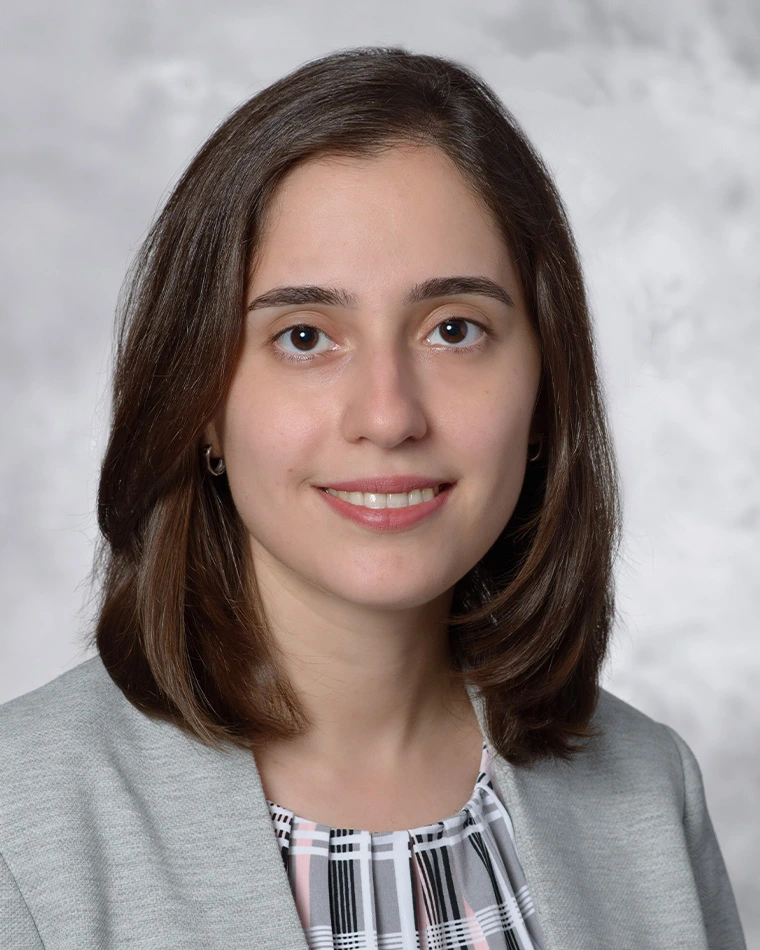
Afrooz Jalilzadeh is an Assistant Professor in the Department of Systems and Industrial Engineering at the University of Arizona, part of the College of Engineering. She is also a member of the Applied Mathematics and Statistics Graduate Interdisciplinary Programs (GIDP), highlighting her strong cross-disciplinary research profile. She leads the Optimization and Mathematical Analysis (OPTIMA) Lab, which focuses on algorithmic innovation for stochastic optimization and variational problems. PhD in Industrial Engineering and Operations Research, The Pennsylvania State University BS in Mathematics, University of Tehran, Iran Her research lies at the intersection of stochastic optimization , variational inequalities , and machine learning , with applications in game theory, healthcare, and power systems. She develops and analyzes algorithms such as stochastic approximation, primal-dual methods, and variance-reduced schemes to solve complex minimax and equilibrium problems. Her work emphasizes theoretical convergence guarantees and computational efficiency. The recent publications show a strong trend in nonconvex-concave saddle-point problems , stochastic Nash games , and projection-free optimization . These are central to modern machine learning and adversarial training. Keywords across her work include stochastic approximation, accelerated methods, risk aversion, and distributed computing, indicating a deep engagement with both theoretical and applied aspects of optimization. Her scientific recognition includes: Teacher of the Year, College of Engineering, University of Arizona (Spring 2022) Gerald J. Swanson Prize for Teaching Excellence NSF Grant: Generalized Stochastic Nash Equilibrium Framework James E. Marley Graduate Fellowship Max and Joan Schlienger Graduate Scholarship Third Place in INFORMS Poster Competition (2018) University Graduate Fellowship, Penn State (2015) H. Marcus Dean’s Chair Scholarship, Penn State (2015) She actively advises students and researchers in her OPTIMA Lab, with multiple publications co-authored with graduate students. She has secured competitive grants, including an NSF award, supporting her research group. Her lab seeks students with strong mathematical and coding skills (MATLAB/Python) for PhD-level research in optimization and mathematical analysis. The OPTIMA Lab conducts cutting-edge research in algorithm design for stochastic variational inequalities , Nash equilibrium computation , and minimax optimization . The lab emphasizes theoretical rigor and practical implementation, with applications spanning machine learning, healthcare, and energy systems. It has published in top venues such as NeurIPS, ACM TOMACS, and Mathematical Programming.
Prof. Dr. Stefan Felder is a full Professor of Health Economics at the Faculty of Business and Economics, University of Basel, holding the Interpharma Foundation Professorship. He is based at the WWZ (Wirtschaftswissenschaftliche Fakultät) in Basel, Switzerland, and leads the Research Group Health Economics, affiliated with the Basel Center for Health Economics (BCHE). His work bridges economic theory and healthcare policy, focusing on regulation, prioritization, and decision-making under uncertainty. PhD and Habilitation, University of Bern Research stay, University of Western Ontario, Canada Professor, Otto-von-Guericke University Magdeburg (1997–2008) Professor, University of Duisburg-Essen (2008–2011) Professor of Health Economics, University of Basel (since 2011) Stefan Felder’s research centers on health economics , particularly competition and regulation in health insurance, prioritization of medical services, and economic aspects of medical decision-making under uncertainty. His work integrates microeconomic theory with empirical analysis to inform healthcare policy and resource allocation. He investigates how health, wealth, and mortality risk influence treatment choices and evaluates the cost-effectiveness of diagnostic procedures such as cardiac MRI. His recent publications reflect a strong focus on policy-relevant health economics. Themes include pandemic restrictions and their societal burden, ethical and economic challenges in medical markets (e.g., kickbacks), and methodological rigor in public health modeling. He critically engages with controversial topics, such as lockdown policies, emphasizing evidence-based analysis. His work spans journals like Journal of Health Economics , European Journal of Health Economics , and The Economists’ Voice , indicating interdisciplinary reach and policy impact. His notable scientific recognition includes: Gérard Gäfgen-Medaille für Verdienste für die Gesundheitsökonomie (2019) Prof. Felder actively contributes to the academic community through editorial roles as Coeditor of Applied Economic Perspectives and Policy and The Economists’ Voice , and as a board member of the Round Table Antibiotics. He serves on the Swiss Medical Board Expert Council and leads the Swiss Society of Health Economics. He mentors through doctoral programs in health economics and is affiliated with the Distance University Switzerland. Though no direct students are listed, his leadership in research groups and editorial boards suggests a strong advisory and collaborative presence. He has not received mention of external grants, but his foundation professorship implies sustained institutional and donor support. He is a core member of the Research Group Health Economics and the Basel Center for Health Economics (BCHE) , which serve as hubs for interdisciplinary research on healthcare financing, policy evaluation, and economic modeling in medicine. These platforms support collaboration across economics, medicine, and public health, reinforcing Basel’s role in European health economics research.
Thomas Rice is a Distinguished Professor of Health Policy and Management and Public Policy at the University of California, Los Angeles (UCLA). He holds dual affiliations with the UCLA Fielding School of Public Health and the Luskin School of Public Affairs. His career includes leadership roles such as Vice Chancellor for Academic Personnel (2006–2011), Interim Dean of Public Health (2012), and Chair of the Department of Health Services (1996–2000 and 2003–2004). Dr. Rice earned his Ph.D. in Economics from UC Berkeley (1982), alongside an M.A. in Economics and B.A. in Economics/Geography from UC Berkeley and UNC Chapel Hill, respectively. His research focuses on healthcare financing equity, Medicare policy, and international health systems comparisons. Notable works include co-authoring The Economics of Health Reconsidered (2015) and leading a European Observatory report on the US healthcare system (2013). He has served as editor of Medical Care Research and Review (1994–2000) and holds National Academy of Medicine membership since 2006. Dr. Rice’s scholarship emphasizes reducing healthcare financing regressive impacts, private equity’s role in healthcare markets, and improving decision-making in insurance marketplaces through behavioral economics principles. His recent work analyzes Japan’s aging population healthcare challenges and U.S. reforms under Biden’s presidency. Education: Ph.D. in Economics, UC Berkeley (1982) M.A. in Economics, UC Berkeley B.A. in Economics & Geography, UNC Chapel Hill Awards: 2006: Elected to National Academy of Medicine 2005–2006: AcademyHealth Board Chair AcademyHealth Article of the Year & Young Investigator Awards Advising & Grants: No specific grant details provided in text, but his leadership roles suggest extensive institutional funding involvement. His interdisciplinary work bridges economics and public health, influencing policy debates on universal coverage, Medicare reforms, and health system equity. Dr. Rice collaborates with global institutions and has authored over 150 peer-reviewed publications.
Dr. Nate Nibbelink is a Professor in Spatial Ecology and Geographic Information Science at the University of Georgia (UGA), serving as Associate Vice President for Strategic Research Growth in UGA's Office of Research. He holds a Ph.D. in Zoology & Physiology (University of Wyoming, 2002), an M.S. in Oceanography & Limnology (University of Wisconsin, 1996), and a B.A. in Biology (Lawrence University, 1991). His research focuses on applying GIS tools to ecological and management challenges, particularly in fisheries, wildlife ecology, and natural resource decision-making. He leads the Dr. Nibbelink Spatial Analysis Lab , collaborating with researchers like Cody Cox and Alec Nelson. Key research areas include spatial patterns in fish and wildlife populations, habitat suitability modeling, and biodiversity conservation under climate change. His work spans diverse ecosystems—from Alaskan river otters to Colombian Andean bears—and integrates socio-ecological systems analysis. Publications highlight interdisciplinary approaches to infrastructure design, conservation policy, and species prioritization. Dr. Nibbelink's lab supports graduate training in coupled human-natural systems research and has contributed to tools like the 'Boundary Convexity' analysis for habitat selection studies. His research emphasizes practical applications for conservation, such as decision-support systems for live oak forests and spatial planning for nature-based solutions. Professional contributions include editorial roles, conference organization (e.g., Southern Forestry and Natural Resources GIS Conferences), and advisory roles in conservation initiatives. His work bridges academic research with real-world management, addressing complex environmental challenges through geospatial innovation.
Jeffrey B. Schmidt is an Associate Professor of Marketing & Supply Chain at the Michael F. Price College of Business, University of Oklahoma. He joined OU in 2005 and also holds adjunct professor roles at the Drucker School of Claremont Graduate University and Oakland University. His research focuses on new product development, marketing strategy, leadership, and work-life interface. He has received numerous teaching awards, including the Alumni Teaching Award (2008, 2009) and the Weinstein Excellence Award (2002). Education Ph.D. in Business Administration, Eli Broad Graduate School of Management, Michigan State University M.B.A., Oakland University B.S. in Packaging (with Honors), Michigan State University Research Interests Dr. Schmidt specializes in new product development processes, marketing strategy, and the psychological dynamics of decision-making in business contexts. His work explores proactive behaviors, leadership, and the balance between work and personal life. Key themes include regret anticipation in project management and cross-functional team collaboration. Awards & Recognition Sheth Foundation Best Paper Award (2002) AMA Best Paper Awards (2003, 2006, 1994) Commerce Council Outstanding Teaching Award (2002) Multiple Delta Sigma Pi awards for teaching impact Advising & Grants While no formal student advisees are listed, his impactful teaching and research contributions reflect extensive mentorship. His work has been supported by grants leading to publications in top-tier journals like Journal of Product Innovation Management and Journal of the Academy of Marketing Science . Labs & Teams He collaborates with interdisciplinary teams in new product development and marketing strategy, though specific lab affiliations are not detailed.
Christian Gollier is a Professor and the Executive Director of the Toulouse School of Economics (TSE), which he co-founded with Jean Tirole in 2007. He is affiliated with Université Toulouse 1 Capitole and is a leading figure in environmental economics and the economics of uncertainty. His research focuses on climate change economics , carbon pricing , public policy design , and decision-making under uncertainty . He advocates for the polluter-pays principle and the implementation of a universal carbon price equal to marginal climate damage. His work bridges academic theory and real-world policy, influencing global climate governance. Christian Gollier has published over a hundred articles in top-tier journals and authored the award-winning book The Climate After the End of the Month (2019). He contributed to the 4th and 5th IPCC reports and frequently publishes in the public press to disseminate economic insights on climate action. Awards for 'The Climate After the End of the Month' (2019) As a dedicated educator and advisor, Professor Gollier has extensive teaching experience worldwide. He plays a central role in leading TSE as a premier research institution in economic sciences. He has presented at major forums such as the ISC Summer School 2021, where he discussed economic solutions to global climate challenges.
Peter Bils is an Assistant Professor of Political Science and Economics at Vanderbilt University. His research focuses on lobbying, bureaucratic politics, electoral accountability, and international conflict. He holds a joint appointment in both the political science and economics departments. His work explores intersections between institutional design, policy-making processes, and strategic behavior in domestic and international settings. Key themes include: How ideological divides affect conflict dynamics Electorate responses to party platform shifts Executive branch decision-making under judicial constraints Lobbying strategies in polarized political environments Recent publications (2020-2025) reveal a focus on: Secret alliance formation mechanisms Revolving door effects in regulatory systems Status quo conflicts in international relations Amicus curiae strategies in high-court cases Bils has developed innovative frameworks for understanding: Policy extremism in repeated electoral cycles Multi-agency coordination failures Slow learning dynamics in military conflicts
Benedetta Catanzariti is a British Academy Postdoctoral Fellow at the University of Edinburgh's School of Social and Political Science, with dual affiliation as a PostDoctoral Affiliate at the Centre for Technomoral Futures within the Edinburgh Futures Institute. She actively contributes to the AI Ethics & Society network, focusing on the social, historical, and political dimensions of data-driven technologies through qualitative STS (Science and Technology Studies) methodologies. Her work critically examines machine learning data practices, classification systems in algorithmic decision-making, and engineering cultures across industry, research, and educational contexts. Education: PhD in Science, Technology and Innovation Studies, University of Edinburgh (2023) MScRes in Science and Technology Studies, University of Edinburgh (2019) Master in Philosophy, University of Turin (2016) Her research investigates how data objectivity claims emerge within specific cultural imaginaries, with current emphasis on translating medical uncertainty into diagnostic AI outputs. Recent projects analyze facial expression recognition in healthcare, generative AI threats to parliamentary democracy, and ethical integration in computer science curricula. She develops reflexive tools to address algorithmic harm while documenting global labor practices in AI development and anti-surveillance resistance tactics. Article trends reveal escalating focus on AI's societal crises: 2025 works dissect objectivity construction in data annotation and AI governance metaphors, while 2024 outputs target democratic vulnerabilities (Chamberfakes), CS curriculum politics, and translational ethics teaching. Medical AI and emotion recognition studies (2020-2023) establish foundations for current work on medical imaging uncertainty. All publications consistently apply STS lenses to expose hidden power structures in data systems. Scientific Awards: SPS Outstanding Dissertation Award (2023) for 'Seeing affect: knowledge infrastructures in facial expression recognition systems' AsSIST-UK Andrew Webster PhD Prize (2024) She supervises Oksana Dorofeeva (visiting PhD, Aarhus University) and four CDT project students (Jacqueline Rowe, Amanda Horzyka, Osman Batur Ince, Cyndie Demeocq), previously guiding Sandra Wheeler's MSc in Data Science for Health and Social Care. Funded by a British Academy Postdoctoral Fellowship (2023-2026) for 'Technology in Translation: Investigating Organizational Contexts of AI Development', she also secured DCMS Policy Fellowship support under AHRC's BRAID programme. Current teaching includes Data and AI Ethics as Practice (2025) and Data Ethics in Health and Social Care (2024). Operates within the Centre for Technomoral Futures and AI Ethics & Society network, collaborating with Scottish Centre for Crime & Justice Research on parliamentary democracy threats. Organizes key events like the 2024 'AI as the Broken Machine' conference and 2022 'Ethics of Care and Community in AI Practice' workshop, while developing conceptual tools for medical AI practitioners through her active British Academy project.
Wulf Gaertner is a Professor of Economic Theory at the School of Business Administration and Economics, University of Osnabrück. He leads the microeconomics subject group and is actively engaged in teaching and research in theoretical and experimental economics. University: University of Osnabrück School: School of Business Administration and Economics Department: Economic Theory Academic Rank: Professor His research interests lie at the intersection of economics, philosophy, and psychology, with a focus on social choice theory, distributive justice, behavioral and experimental economics, and decision-making under risk. He investigates how psychological insights inform economic behavior and whether normative principles like fairness and equity are upheld in real-world choices. The body of recent publications reveals a strong trend toward integrating empirical methods—particularly questionnaire-based experiments—with classical social choice and welfare economics. His work spans theoretical developments and cross-cultural empirical investigations, examining perceptions of equity, burden sharing, and moral uncertainty. Themes such as procedural justice, capability theory, and the application of Arrow’s impossibility theorem across disciplines recur throughout his scholarship. Notable academic contributions include delivering lectures at institutions like the London School of Economics and Humboldt Universität, authoring the widely used textbook A Primer in Social Choice Theory , and contributing authoritative entries on Amartya Sen and John Rawls. He has also honored leading scholars through laudations for honorary doctorates awarded to Amartya Sen and Reinhard Selten. While no formal list of students is provided, Gaertner has collaborated extensively with researchers such as Yongsheng Xu, F. Cowell, L. Schwettmann, and J. Jungeilges. His research has been supported through academic affiliations and publications, though specific grant details are not mentioned. He is affiliated with the Institute of Empirical Economic Research (IEW) and contributes to the LaER Economic Research Seminar. He has no listed email, awards, or part-time status, and there is no indication of retirement or emeritus status. All evidence points to an active, full-time faculty member at the peak of his academic career.
Dr. Steven A. Brieger is an Associate Professor in International Business (Strategy and Marketing) at the University of Sussex Business School, where he also serves as Research Director and Co-Director of the Responsible Business Research Group. His academic journey began at Leuphana University of Lüneburg, where he earned a PhD (summa cum laude) in Management & Entrepreneurship, following a Master’s and Bachelor’s in related fields. He has held academic positions at the University of Sussex since 2018, progressing from Assistant to Associate Professor, and will join NEOMA Business School as Full Professor in 2025. Education: PhD in Management & Entrepreneurship, Leuphana University of Lüneburg (2018) MA in Management & Entrepreneurship, Leuphana University of Lüneburg (2014) BS in Economics & Political Science, Leuphana University of Lüneburg (2011) His research centers on the intersection of business and society, particularly how cultural, institutional, and economic contexts shape corporate responsibility, sustainability, and entrepreneurship. He investigates how firms and entrepreneurs respond to societal challenges such as inequality, environmental degradation, and public health crises. His work integrates quantitative and qualitative methods, using large-scale datasets to analyze job quality, working conditions, and diverse forms of entrepreneurship, especially social, environmental, and female-led ventures. Dr. Brieger’s recent publications span top journals including the Journal of Management , Entrepreneurship Theory and Practice , Journal of Business Ethics , and Strategic Entrepreneurship Journal . His work shows a strong trend toward understanding the socio-political dimensions of business—how work influences political engagement, how inequality affects sustainable consumption, and how geopolitical events like the Ukraine war reshape corporate social responsibility. A recurring theme is the role of institutional support and cultural norms in shaping entrepreneurial behavior and well-being. Scientific Awards: Top Reviewer 2023, Journal of Business Ethics Top Reviewer 2022, Journal of Business Ethics Research Excellence Award, University of Sussex (2022) PhD Award, Leuphana University of Lüneburg (2019) Student Led Teaching Award, University of Sussex (2018) Award for Outstanding Publications, Leuphana (2016) Science Award of Lower Saxony (2013) Dr. Brieger has supervised multiple PhD students and secured research funding, including a British Academy/Leverhulme grant on organizational social mobility. He actively contributes to academic service as an editor for Small Business Economics and editorial board member for Journal of Business Ethics . He collaborates with the OECD on policy research related to job quality and working conditions in Europe. Labs and Research Groups: Co-Director, Responsible Business Research Group, University of Sussex Collaborator with OECD on SME and entrepreneurship policy Liaison Lecturer, Hans Böckler Foundation
Joseph Siev is a postdoctoral fellow in Consumer Behavior at the Darden School of Business, University of Virginia. He holds a Ph.D. in Social Psychology from Ohio State University, where he was affiliated with the Attitudes & Persuasion Lab. His research explores intersections between political ideology, consumer behavior, and brand psychology. Education: Ph.D. in Social Psychology, Ohio State University Joe's work investigates how political identities shape consumer decisions, brand perceptions, and marketplace dynamics. He examines concepts like ambivalent attitudes, attitudinal extremity, and moral decoupling in political contexts. Recent research trends show his focus on brand political ideology, consumer judgment under uncertainty, and psychological mechanisms behind extreme actions. His work appears in journals like Science Advances , Psychological Science , and Journal of Consumer Psychology , often addressing polarization in marketing and public health domains.
Burhaneddin Sandikci is an Associate Professor of Operations Management at the Booth School of Business, University of Chicago . His research focuses on decision-making under uncertainty in medical decision-making and healthcare operations , using advanced methodologies such as Markov decision processes , stochastic programming , and simulation . His recent work includes: Equilibrium analysis of marginal organ transplantation to address shortages. Modeling breast cancer screening with supplemental tests for high-risk patients. Developing parallel bounding methods for multistage stochastic programs . His publications appear in top-tier journals like Operations Research , Management Science , and Hepatology . He has received prestigious awards including the IIE Pritsker Doctoral Dissertation Award and INFORMS Bonder Scholarship . His research bridges operations management with healthcare policy , impacting organ allocation, transplant outcomes, and hospital capacity optimization.
Francisco Castro is an Assistant Professor at the UCLA Anderson School of Management since 2020. His research bridges operations management and market design , focusing on spatial and incentive dynamics in digital marketplaces. Prior to UCLA, he served as a Postdoctoral Research Scientist at Uber , where he developed models for ride-hailing platforms and supply chain resilience during crises. Ph.D., Decision, Risk and Operations (2020, Columbia Business School) M.S., Mathematical Engineering (2014, University of Chile) B.S., Engineering Sciences (2013, University of Chile) Castro’s research explores optimal pricing policies and incentive-compatible contracts in platforms like Uber. His work on surge pricing frameworks (Management Science, 2021) and spatial capacity planning (Operations Research, 2021) has implications for ride-hailing, delivery logistics, and high-dimensional market design challenges. Recent projects address autonomous vehicle integration and spatial inequality risks in platform economies. His publications span journals like Operations Research , Games and Economic Behavior , and Management Science , with working papers examining matching queues , two-sided marketplace dynamics , and AI-driven market design . Castro emphasizes translating these insights into MBA curriculum , preparing students for post-pandemic economic shifts through creative problem-solving and data-driven decision frameworks .
Margarida Lima Rego is a Full Professor and Director at the NOVA School of Law , Universidade Nova de Lisboa, where she has taught since 2005. She is the scientific coordinator of the Doctorate in Law and previously co-founded and coordinated the Master’s in Law and Financial Markets (2015–2022). Her roles include teaching Law of Obligations , Hard Cases , and a Jean Monnet Module on EU Insurance Law, alongside leading Private Law seminars. PhD in Private Law, Universidade Nova de Lisboa (2009) MPhil in Contract Law, University of Oxford (2001) MJur in European and Comparative Law, University of Oxford (2000) Degree in Law, University of Lisbon (1999) Her research focuses on Private Law , with emphasis on Contract Law , Insurance Law , and intersections with Human Rights , Gender Equality , and Data-Driven Law . She explores legal theory, judicial decision-making under uncertainty, and technological innovation in financial markets. Her publications span topics like third-party contracts, statistical discrimination in insurance, and compensatory principles. At CEDIS, NOVA School of Law’s R&D unit, she founded the NOVA Knowledge Centre for Data-Driven Law , integrating empirical analysis into legal scholarship. She contributes to EU insurance law challenges in the SDG era and addresses modernization in financial markets through a legal lens. Her work bridges doctrinal rigor with interdisciplinary methodologies.