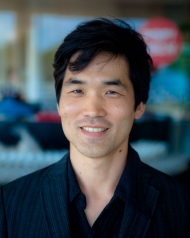
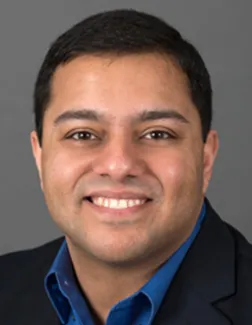
Jeremy J. Michalek is a Professor of Mechanical Engineering and Engineering and Public Policy at Carnegie Mellon University. He serves as Director of the Design Decisions Laboratory and co-Director of the Vehicle Electrification Group, with affiliations in multiple sustainability-focused institutes including the Center for Climate and Energy Decision-Making. Education: Ph.D. in Mechanical Engineering (University of Michigan, 2005) Research spans vehicle electrification , life cycle analysis , consumer behavior , and green design . His recent publications focus on battery economics, charging infrastructure impacts, and equity considerations in transportation technologies. Key awards include the NSF CAREER Award , ASME Best Paper Award , and George Tallman Ladd Research Award . Michalek's work has been featured in major media outlets including The New York Times , The Atlantic , and BBC , with policy briefings presented on Capitol Hill. Current research explores EV supply chains, climate resilience, and transportation equity.
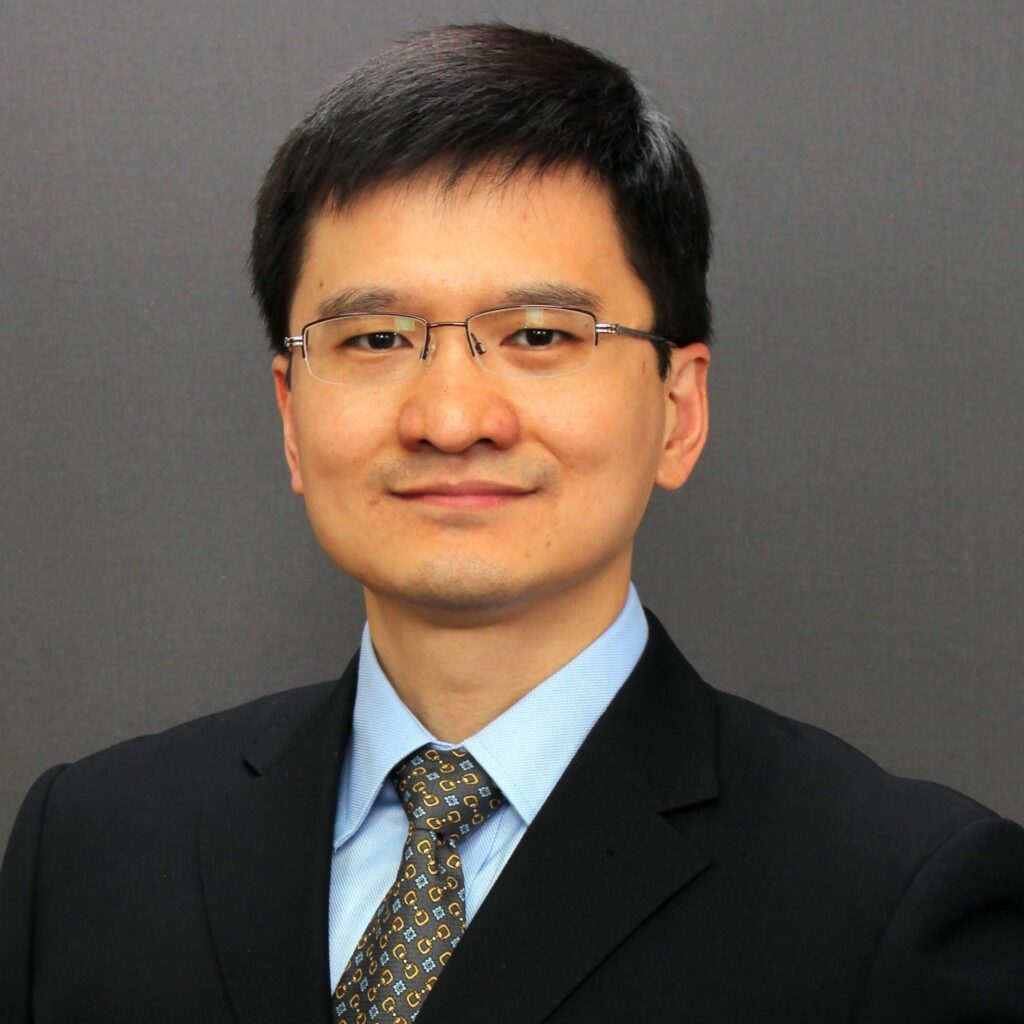
Abolfazl Asudeh is an Associate Professor in the Department of Computer Science at the University of Illinois Chicago and director of the Innovative Data Exploration Laboratory (InDeX Lab) . He is a Senior Member of ACM and IEEE , serving as Associate Editor for IEEE Transactions on Knowledge and Data Engineering , VLDB Ambassador , and VLDB Endowment Liaison to NSF . His research focuses on Algorithm Design for Data and AI problems , emphasizing efficient, accurate, and responsible solutions through Approximation Algorithms , Randomized Methods , and Computational Geometry . Recent work explores LLM optimization ( Needle ), fair data structures ( FairHash ), and responsible AI frameworks ( Chameleon ). Scientific awards include Communications of the ACM Research Highlight Google Research Scholar Award SIGMOD 2019 Research Highlight Best of VLDB 2020 SIGMOD 2017 Reproducibility Award Grants: NSF IIS-2348919 (2024-2027): Fairness-aware Data Structures NSF IIS-2107290 (2021-2024): Collaborative Fairness Research The InDeX Lab develops systems like Needle (image retrieval) and RSR (matrix multiplication). His work integrates fairness , reliability , and computational efficiency across data structures , LLMs , and responsible AI implementations.
Sebastian Seung is a Professor at Princeton University , affiliated with both the Department of Computer Science and the Princeton Neuroscience Institute . His career spans Harvard University (Ph.D., 1990), Bell Laboratories, and Massachusetts Institute of Technology before joining Princeton in 2014. An External Member of the Max Planck Society and 2008 Ho-Am Prize recipient, Seung merges machine learning with neuroscience . Research Focus : Pioneering connectomics , Seung developed technologies for reconstructing neural circuits from high-resolution brain images, including FlyWire for collaborative brain mapping. His work explores brain function, development, and plasticity , drawing parallels between fly visual systems and convolutional networks . Awards & Affiliations : 2008 Ho-Am Prize in Engineering External Member, Max Planck Society Technical Contributions : Led breakthroughs in 3D connected component labeling and high-throughput EM imaging for mammalian brains, partnering with NIH’s BRAIN Initiative to scale connectomics to whole mouse brains. Seung’s team has shifted from EM analysis to interpreting connectomes , focusing on neural circuit function and biological mechanisms in flies and mice. His lab alumni network spans institutions, advancing AI and neuroscience globally.
Friederike Mengel is a Professor of Economics at the University of Essex and holds a Visiting Professorship at Erasmus University Rotterdam. She is also a Fellow of the Academy of Social Sciences (UK). Her research focuses on Behavioural Economics , integrating Game Theory , Evolutionary Dynamics , and Social Network Analysis . Key research themes include social influence in networks , opinion dynamics , emergence of social norms , and links between social identity, bounded rationality, and discrimination . Recent work explores Covid-19 impacts on productivity and innovation in hybrid work environments . Her scientific awards include the Best Paper Award from Quantitative Economics (2018) and recognition as an Academy of Social Sciences Fellow. Her publications span topics like cooperation in viscous populations , strategic behavior in repeated games , and gender bias in opinion aggregation , with media coverage in outlets like The Economist and Financial Times .
Qi Long is a Professor at the University of Pennsylvania, holding joint appointments in the Department of Biostatistics, Epidemiology and Informatics (Perelman School of Medicine), Department of Computer and Information Science (School of Engineering and Applied Science), and Department of Statistics and Data Science (The Wharton School). He serves as Founding Director of the Center for Cancer Data Science, Associate Director of the Penn Institute for Biomedical Informatics, and Associate Director for Quantitative Data Science at the Abramson Cancer Center. His research bridges statistical and machine learning (ML/AI) method development with biomedical applications, focusing on precision medicine and population health. Education : Ph.D. (2005) and M.S. (2003) in Biostatistics from University of Michigan; B.S. (1998) in Computer Science from University of Science and Technology of China. Research interests include: Robust statistical and ML/AI methods for big health data (-omics, EHRs, imaging, mHealth) Multimodal data integration and subgroup heterogeneity analysis Missing data, causal inference, Bayesian methods, and clinical trials Data privacy, algorithmic fairness, and responsible AI in healthcare Foundation models and agentic AI for biomedicine His publications focus on privacy-preserving AI, fairness-aware ML, and integrative models for multi-omics and EHRs. Recent work explores LLMs and watermark detection in hybrid human-AI settings. Scientific Awards : Elected fellow: AAAS, ASA, IMS, ISI, AMIA He leads large NIH- and ARPA-H-funded initiatives, directing statistical coordinating centers for national clinical trials. His lab trains numerous PhD/Master’s students and postdocs, many of whom hold prestigious academic or industry positions.
Dr. Jonnie Penn is an Associate Teaching Professor of AI Ethics and Society at the University of Cambridge, where he teaches in the Department of History and Philosophy of Science. He holds multiple prestigious affiliations including as a Faculty Associate at Harvard's Berkman Klein Center, Senior Research Fellow at the Leverhulme Centre for the Future of Intelligence, and Research Fellow at St. Edmund's College. His educational background includes First Class Honours from the University of Cambridge and degrees from McGill University. His research explores the deep historical relationships between notions of efficiency and authority in computer science, artificial intelligence, and management science, with particular focus on systems theory, complex science, and technocracy within AI Ethics. Penn's scholarly work reveals consistent themes across decades of research: the historical genealogy of power in AI systems, critical examinations of algorithmic governance, and the social implications of digital technologies. His publications span from technical analyses of data ecologies to broader societal critiques of corporate influence on AI development. #1 New York Times Bestselling Author FRSA (Fellow of the Royal Society for Arts) MIT Media Lab Assembly Fellow Google Technology Policy Fellow Fellow of the British National Academy of Writing As Project Development Lead of the 'Histories of AI' initiative at the Leverhulme Centre for the Future of Intelligence, Penn connects a global network of scholars examining the social, political, and economic ramifications of intelligent systems. He has co-chaired workshops at leading academic conferences including HSS, SHOT, NeurIPS, ICML, and ICLR, and has presented research to the United Nations, European Parliament, and UK House of Lords. His current work focuses on 'decomputerisation' as a critical framework for understanding our relationship with technology.
Gaurav Jetley is an Assistant Professor in the Department of Computer Information Systems at Colorado State University. Education: PhD in Business Administration (Information Systems) from Muma College of Business, University of South Florida Research Interests: Focuses on healthcare technology, including health IT, healthcare analytics, and healthcare operations management. Employs data-driven methodologies, machine learning, and econometric techniques to solve complex problems in health information systems. Scientific Contributions: Recent publications highlight his work in EHR quality, racial bias in ICU pain measurement, and health IT workflow optimization, demonstrating interdisciplinary applications of business analytics in healthcare. Teaching: Instructs graduate and undergraduate courses in data mining and analytics.
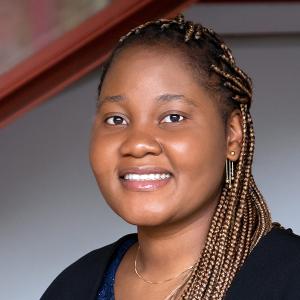
Omobolanle Ogunseiju is an Assistant Professor in the School of Building Construction at Georgia Institute of Technology . She holds a Ph.D. in Environmental Design and Planning from the Department of Building Construction at Virginia Tech. Education: Ph.D. in Environmental Design and Planning, Virginia Tech Current Role: Assistant Professor, Georgia Tech School of Building Construction Her research focuses on integrating wearable robotics and Artificial Intelligence (via digital twin , cyber-physical systems , and data sensing ) to improve construction workforce safety, health, and well-being . She explores ethical implications of automation in construction, particularly in human-technological dynamics. Key research trends include: Advancing smart communities through robotics and AI Exoskeleton evaluation for ergonomic risk reduction Mixed reality environments for construction education Data analytics for cognitive and physical risk assessment Professional identity development in construction engineering students Industry-academia alignment for sensing technology integration Scientific awards: Outstanding Doctoral Candidate, Myers-Lawson School of Construction Outstanding Doctoral Student, College of Architecture and Urban Studies at Virginia Tech Teaching philosophy emphasizes experiential learning , engagement techniques , and hierarchical assessments . She developed the Construction Cost Management course at Georgia Tech and will lead Construction Technology courses. Previously, she taught Smart Construction , Building Systems Technology , and Wireless Sensing in Construction Management at Virginia Tech.
Professor Ruurd Jaarsma serves as Clinical and Academic Director of Orthopaedics and Trauma Surgery for the Southern Adelaide Local Health Network, practicing at Flinders Medical Centre and Flinders Private Hospital. He holds full membership in Flinders University's College of Medicine and Public Health, Flinders Health and Medical Research Institute, and Medical Device Research Institute within the College of Science and Engineering, bridging clinical practice and academic research since relocating from the Netherlands in 2004. His educational credentials include: MD from University of Groningen, Netherlands (1994) Orthopaedic Surgeon certification from Dutch College of Orthopaedic Surgeons (2003) PhD from University of Nijmegen, Netherlands (2004) FRACS (Orth) from Royal Australasian College of Surgeons (2009) FA(Orth)A from Australian Orthopaedic Association (2012) Research centers on orthopaedic trauma, paediatric orthopaedics, and biomechanical engineering of implants, with specialized focus on rotational malalignment after long bone nailing. His work directly supports UN Sustainable Development Goal 3 (Good Health and Well-being) through trauma care innovation and surgical education. Current investigations integrate machine learning with fracture diagnostics to improve clinical decision-making. Recent publications demonstrate strong AI integration in orthopaedic trauma, featuring machine learning algorithms for scaphoid fracture probability estimation, deep learning classification of tibial plateau fractures, and open-source neural networks for distal radius fracture detection. Concurrent clinical trials address compartment syndrome diagnosis while biomechanical studies examine acetabular fracture outcomes, reflecting his dual focus on computational innovation and clinical validation. His scientific recognition includes: 2006 Burns Alpers Award for excellence in teaching from Flinders University As Director of Orthopaedic Training, he supervises Australian Orthopaedic Association accredited fellowships with registered interests in orthopaedic surgery, biomechanical engineering, and musculoskeletal medicine. His supervisory framework emphasizes translational research connecting biomechanical principles with surgical practice. External engagement includes active participation in SA State Trauma Committees, driving statewide improvements in trauma systems and surgical protocols. Professor Jaarsma maintains clinical-academic synergy through Flinders Medical Centre's orthopaedic department, where he leads trauma service development while directing research initiatives in the Medical Device Research Institute. His current projects focus on AI-driven fracture assessment tools and biomechanical optimization of implant systems, with ongoing collaborations across the Machine Learning Consortium and international orthopaedic networks.
Eldan Cohen serves as an Assistant Professor of Industrial Engineering within the Department of Mechanical & Industrial Engineering at the University of Toronto's Faculty of Applied Science and Engineering. His academic journey includes a PhD from the same department followed by a postdoctoral fellowship in Computer Science at the University of Toronto and the Vector Institute for Artificial Intelligence. His educational background is detailed as follows: PhD in Mechanical & Industrial Engineering, University of Toronto Postdoctoral Fellowship in Computer Science, University of Toronto and Vector Institute for Artificial Intelligence Dr. Cohen's research centers on machine learning, deep learning, heuristic search, and optimization with strong emphasis on interpretable and human-compatible AI systems. His work bridges theoretical advancements with practical applications in healthcare (e.g., patient-physician interaction analysis, surgical safety diagnostics), automated planning, natural language processing, and software engineering. Recent projects develop interpretable clustering methods for medical data and optimization techniques for constrained sequence generation. Analysis of his 2023-2025 publications reveals a concentrated focus on healthcare AI applications, particularly using large language models for clinical text analysis and diagnostic support systems. Significant work also addresses interpretable machine learning for medical imaging, diverse plan selection in optimization, and constrained sequence generation in domains like vehicle routing. No major scientific awards or fellowships are documented in the available information. As an academic advisor, Dr. Cohen mentors graduate students in mechanical and industrial engineering, guiding research in optimization and machine learning. His OptiMaL research group fosters collaboration between computer science and industrial engineering to solve real-world decision-making challenges through human-centered AI approaches. The Optimization and Machine Learning (OptiMaL) research group, led by Dr. Cohen, serves as the primary hub for developing scalable, interpretable AI solutions for complex healthcare, planning, and engineering problems, with active projects in medical diagnostics and automated planning systems.
Rachel Hess, MD, MS is Professor of Population Health Sciences and Internal Medicine and Associate Vice President for Research-Health Sciences at the University of Utah Schools of the Health Sciences. She co-directs the Utah Clinical and Translational Science Institute and was founding Chief of the Division of Health System Innovation and Research (2014-2022). A board-certified General Internist and internationally recognized health-services researcher, she focuses on translating evidence into practice through health-information technology and patient-centered outcomes. Education & Training MD – University of New Mexico School of Medicine MS Clinical Research – University of Pittsburgh Fellowship – General Internal Medicine & Women’s Health, University of Pittsburgh / VA Pittsburgh Medical Center Chief Residency – Internal Medicine, Western Pennsylvania Hospital Residency – Internal Medicine, Temple University Hospital BA Mathematics – Washington University in St. Louis Research Focus Dr Hess’s program is dedicated to improving patient-centered outcomes by leveraging implementation science, health-information technology, and patient-reported measures. Her work spans: Design and nationwide deployment of EHR-integrated clinical decision support for cancer genetics, lung-cancer screening, heart-failure management, and antibiotic stewardship. Large multi-site pragmatic trials (ADAPTABLE, RECOVER, BRIDGE, MAINTAIN) examining effectiveness, equity, and scalability of digital-health interventions. Women’s health across the lifespan, including studies on menopause, sexual function, and post-COVID sequelae. Advanced analytics linking patient-reported outcomes (PROs) with healthcare utilization and cost. Scientific Awards & Recognition Board Certification, American Board of Internal Medicine (Internal Medicine) Leadership of NIH RECOVER Consortium adult cohort—one of the largest studies of Long COVID worldwide Principal investigator on >$50 million in federal and foundation funding (PCORI, NHLBI, NCI, AHRQ, CDC) Leadership & Service As Associate Vice President for Research she sets strategic priorities for the Schools of Medicine, Nursing, Pharmacy, Dentistry, and Health. She co-chairs the Utah Clinical and Translational Science Institute, oversees campus-wide clinical-trials infrastructure, and mentors interdisciplinary teams spanning informatics, behavioral science, epidemiology, and clinical medicine. Laboratories & Teams Dr Hess leads the Health System Innovation and Research (HSIR) group—an interdisciplinary unit of data scientists, implementation researchers, clinicians, and patient partners—dedicated to rapid-cycle testing and national scale-up of digital-health solutions.
Christos G. Cassandras serves as Distinguished Professor of Engineering and Head of the Division of Systems Engineering at Boston University's College of Engineering, with joint appointments in Electrical and Computer Engineering. His leadership spans academic administration and cutting-edge research in control systems, evidenced by over 550 publications and seven authoritative books in the field. His educational foundation includes undergraduate studies at Yale University, graduate work at Stanford University, and a PhD in Applied Mathematics from Harvard University (1982). This multidisciplinary background underpins his research approach. Dr. Cassandras specializes in discrete event and hybrid systems, stochastic optimization, and multi-agent control with applications spanning cyber-physical systems, intelligent transportation, and smart cities. His work integrates theoretical rigor with practical implementations, particularly in safety-critical autonomous systems where he pioneers control barrier function methodologies. Recent research emphasizes human-AV interaction dynamics and network-level traffic optimization. Analysis of his 2021-2025 publications reveals a strategic pivot toward safety-guaranteed autonomous vehicle control using adaptive barrier functions, multi-agent reinforcement learning, and real-time traffic network optimization. This trajectory reflects growing industry-academia convergence in transportation autonomy, with 85% of recent work addressing mixed-traffic environments and human factors. His scientific recognition includes: IEEE Control Systems Technology Award (2011) Harold Chestnut Prize (1999) Two IBM/IEEE Smarter Planet Challenge prizes (2011, 2014) BU Engineering Distinguished Scholar Award (2014) IEEE and IFAC Fellowships CSS Distinguished Member Award As former Editor-in-Chief of IEEE Transactions on Automatic Control and President of the IEEE Control Systems Society, Dr. Cassandras has shaped global research directions. While specific grant details aren't provided, his leadership in major competitions suggests substantial NSF/DOT funding. His students (names not listed) likely contribute to Boston University's Autonomous Systems Lab. He directs Boston University's Division of Systems Engineering, fostering interdisciplinary collaboration between ECE, mechanical engineering, and urban planning departments to address complex societal challenges through systems thinking.
Florian Brandl is an Argelander Professor (associate professor with tenure) at the University of Bonn, holding positions in both the Department of Economics and the Hausdorff Center for Mathematics. Previously, he was a postdoctoral research scholar at Princeton University and Stanford University. His academic career demonstrates a strong foundation in mathematical economics and game theory, with affiliations spanning multiple prestigious institutions. Brandl earned his Doctoral degree in Mathematics (summa cum laude) from the Technical University of Munich in 2018, following a Master's degree (2013) and Bachelor's degree (2011) from the same institution. His doctoral work focused on "Zero-Sum Games in Social Choice and Game Theory" under the supervision of Felix Brandt, establishing the foundation for his research trajectory. Prof. Brandl's research spans microeconomic theory with a focus on social choice theory, decision theory, and game theory. He is particularly interested in decision-making under uncertainty, connections between social choice and game theory, and dynamic processes converging to equilibrium. His work employs mathematical tools to analyze interactions of multiple entities in economic contexts, often incorporating algorithmic approaches and methods from theoretical computer science. He has made significant contributions to fair division, mechanism design, and probabilistic social choice. His publication record shows consistent contributions across multiple subfields, with recent work focusing on patience effects in fair division, social learning barriers, and axiomatic characterizations of equilibrium concepts. Brandl's research demonstrates strong interdisciplinary connections between economics, mathematics, and computer science, with publications in top journals across all three disciplines. Best Student Paper Award at WINE 2021 for "Funding Public Projects: A Case for the Nash Product Rule" Associate Editor for Theoretical Economics Co-organizer of the COMSOC Video Seminar Prof. Brandl actively contributes to academic service and community building. He co-organizes the COMSOC Video Seminar and will host a Trimester Program on "Advances in Mechanism Design" in Bonn in summer 2026. He serves on program committees for major conferences including COMSOC 2023 and EC 2023. His research has been supported through his position as a Bonn Junior Fellow at the Hausdorff Center for Mathematics since 2021. Based at the Institute for Microeconomics and affiliated with the Hausdorff Center for Mathematics, Brandl collaborates with a broad network of researchers across economics and computer science. His work often involves interdisciplinary collaboration, as evidenced by his numerous co-authored publications with researchers from various institutions worldwide. He maintains strong connections with the University of Oxford's Global Priorities Institute as a Research Affiliate.
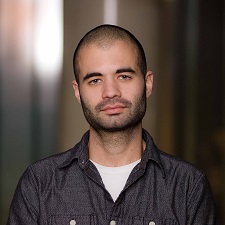
Arjun (Raj) Manrai is an Assistant Professor at Harvard Medical School and a faculty member in the Computational Health Informatics Program (CHIP) at Boston Children’s Hospital. He earned an A.B. in Physics (Harvard, Highest Honors) and a Ph.D. in Bioinformatics and Integrative Genomics from Harvard-MIT. His research focuses on improving medical decision-making through computational approaches in clinical genomics, algorithmic bias mitigation, and healthcare AI ethics. Key projects include race-free kidney function equations, genetic variant classification, and semi-supervised learning for medical imaging. Education: B.A. in Physics, Harvard University (Highest Honors) Ph.D. in Bioinformatics and Integrative Genomics, Harvard-MIT Division of Health Sciences and Technology Research interests span AI-driven diagnostics, health equity, and reproducibility in biomedical studies. His work has been featured in New England Journal of Medicine , JAMA , and highlighted by the New York Times and NPR. Notable contributions include advancing race-free diagnostic algorithms, addressing biases in clinical genomics, and advocating for transparent AI systems in healthcare. The Manrai Lab collaborates widely to translate computational methods into clinical practice.
Giacomo Calzolari is a Full-time Professor of Economics at the European University Institute (EUI) in Florence, Italy, and serves as Provost for Research and External Relations. He holds a Ph.D. from the University of Toulouse. His research focuses on Industrial Organization, Competition Policy, Artificial Intelligence, and Banking Regulation, with notable contributions to understanding algorithmic pricing, collusion, and regulatory frameworks. Education: Ph.D. in Economics from the University of Toulouse. Research Interests: Artificial Intelligence and Market Dynamics Competition Policy and Antitrust Economics Algorithmic Pricing and Collusion Banking Regulation and Supervision Behavioral and Experimental Economics Publications: Recent work includes studies on AI-driven markets, algorithmic collusion, and regulatory policy. His research emphasizes the intersection of technology and competition, with over 50 publications in top-tier journals like the American Economic Review and International Journal of Industrial Organization. Awards: Recognized with the 'Best Paper Award' from the Association of Competition Economics (2013) and the 'Young Economist Award' (2005). Advisory Roles: Advises the European Commission on competition policy and the European Parliament on AI in financial markets. Serves as Editor of the International Journal of Industrial Organization and European Economy - Banks and Regulation. Research Groups: Leads projects on digital transformations, technological change, and AI's impact on competition. Supervises numerous graduate students and collaborates with institutions like the Centre for Economic Policy Research (CEPR).