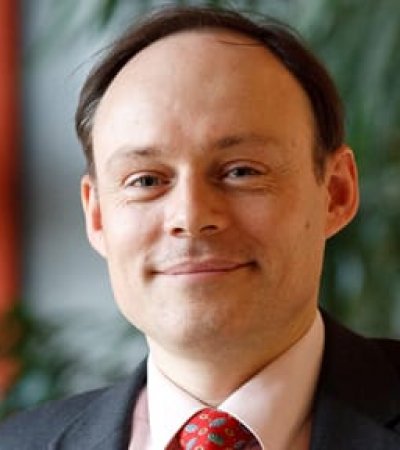
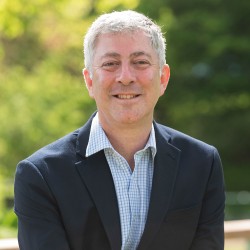
Professor Simon Godsill MA PhD FIET FIEEE is a University Professor of Statistical Signal Processing in the Department of Engineering at the University of Cambridge. He heads a research team specializing in statistical signal processing, digital audio restoration, and Bayesian inference. His work addresses the processing and analysis of digital speech, audio, tracking systems, and financial datasets, with a focus on probabilistic modeling and computational methods. Research interests include statistical signal processing , degraded signal restoration , and Bayesian computational methods . Recent publications emphasize Gaussian processes, variational inference, and multi-object tracking for applications in audio enhancement and financial data analysis. He co-founded the audio remastering company CEDAR Audio Ltd in 1988. Scientific awards: Fellow of the Institution of Engineering and Technology (FIET) Fellow of the Institute of Electrical and Electronics Engineers (FIEEE) Outside academia, he enjoys singing, cricket, piano/organ playing, and running. His team at Cambridge's Engineering department focuses on robust tracking algorithms and signal enhancement techniques.
Dr. Reuben Binns is an Associate Professor of Human Centred Computing at the University of Oxford , where he investigates intersections between computer science, law, and philosophy. His research focuses on data protection , machine learning ethics , and regulation of technology .
Professor Michael Pollitt is a faculty member at the University of Cambridge , holding the title of Professor of Business Economics . He serves as Director of the MPhil in Technology Policy Programme and is affiliated with the Centre for Business Research (CBR) . Additionally, he holds advisory roles on Ofwat's Water 2020 board and the National Infrastructure Commission's Regulatory Challenge Panel , and is a Joint Academic Director at CERRE Centre on Regulation in Europe . His research focuses on industrial economics , privatisation and regulation of utilities (particularly electricity), productive efficiency measurement , and the intersection of Christian ethics with business practices . He has advised numerous governmental and international bodies, including the UK Competition Commission , World Bank , and European Commission , and has consulted for major energy firms like National Grid and Eneco . His publications address critical energy and regulatory issues, with recent work exploring electricity market design , carbon pricing , net zero transitions , and infrastructure productivity . He contributes to academic governance as a member of editorial boards for journals such as The Energy Journal and Utilities Policy , and leads the Association of Christian Economists, UK .
Simone Ferlin is an Adjunct Senior Lecturer at Karlstad University working with 5G and Internet evolution. She completed her PhD in computer science in 2017 at the Simula Research Lab and Universitetet i Oslo under the supervision of Dr. Ozgu Alay and Prof. Michael Welzl. Her PhD dissertation focused on increasing robustness in multipath transport with MPTCP. Dr. Ferlin's educational background includes a PhD in Computer Science from the Simula Research Lab and Universitetet i Oslo (2017). Her doctoral research centered on enhancing robustness in multipath transport protocols, specifically focusing on MPTCP (Multipath TCP). She also completed undergraduate work that contributed to a book project with Prof. Friedrich Oehme on electronics and circuit technology. Dr. Ferlin's research spans multiple domains at the intersection of networking, systems, and performance engineering. Her primary interests include network and system measurements, performance analysis, security, and congestion control. She investigates how networks like the Internet evolve, examining technology development, adoption patterns, and their impacts on various entities. Additionally, she explores ways to harmonize security and privacy while making them more usable and assessable. Her work particularly focuses on transport layer and multipath transport protocols, examining their performance and security aspects. She also investigates application and transport layer performance, automation, and monitoring. Her research extends to network programming in both Linux kernel and user space, mobile broadband networks from 2G to 5G, and their intersection with the Internet. She is deeply engaged in observability, distributed and system performance monitoring, and automation. Analysis of Dr. Ferlin's recent publications reveals a strong focus on next-generation networking technologies. Her work spans multiple domains including 5G/6G networks, transport protocols (particularly QUIC and MPTCP), network virtualization, container orchestration, and the application of machine learning to networking problems. She has increasingly incorporated large language models into network configuration and automation research. Her publications demonstrate a consistent emphasis on performance measurement, optimization, and security across diverse networking environments from the edge to the cloud. Dr. Ferlin has received notable recognition for her research contributions: Best paper award at IEEE ICIN'21 for 'Learning-based Incast Performance Inference in Software-Defined Data Centers' Applied Networking Research Prize (ANRP)'25 winner for 'NetConfEval: Can LLMs Facilitate Network Configuration?' Dr. Ferlin is actively involved in mentoring the next generation of networking researchers. She has co-supervised numerous Master's and PhD students across multiple institutions including Karlstad University, KTH, TU Berlin, University of Oslo, and universities in Brazil. Her students have worked on diverse topics including NAT64 performance comparison, system tracing visualization, network observability, ML applications to multipath transport, FEC integration with QUIC, high-performance networking for 5G, congestion control, shared bottleneck detection, multipath IoT applications, and container runtime performance. She is also involved in several significant research projects including Vinnova's SEMLA (Securing Enterprises via Machine-Learning-based Automation), Horizon Europe's CODECO (Cognitive Decentralised Edge Cloud Orchestration), and the Knowledge Foundation of Sweden's DRIVE (Data-driven Latency-Sensitive Mobile Services for a Digitized Society). Dr. Ferlin serves as Workshop Chair for ACM SIGCOMM '25, is a member of the ACM/IRTF Applied Networking Research Workshop (ANRW) steering committee, and co-chairs the Internet Congestion Control Research Group (ICCRG) at the IRTF. She previously served as Associate Technical Editor for IEEE Communications Magazine and has been active on numerous program committees for major networking conferences including SIGCOMM, CoNEXT, IMC, and PAM.
Professor Emma Mawdsley is a leading scholar in Human Geography at the University of Cambridge, where she contributes to the Geographies of Knowledge Research Group . As a Fellow of Newnham College and Director of the Margaret Anstee Centre for Global Studies , her work bridges academic rigor with practical engagement in global development politics. BA in Geography (St. John’s College, Cambridge, 1989-1992) PhD in Geography (St. John’s College, Cambridge, 1992-1996) Academic trajectory: Lecturer (1996-2003), Senior Lecturer (2009-2014), Reader (2014-2022), Professor (2022-present) Her research interrogates the politics of global development , focusing on South-South Cooperation (especially India-Africa dynamics), financialisation of aid, and the UK’s shifting development agendas. She leads the ESRC-funded project ‘Development Consultants and Contractors’ , analyzing private-sector roles in ‘Aidland’. Recent publications highlight trends in South-South partnerships , innovative finance, and decolonial approaches. Awards include the Leverhulme Research Fellowship and recognition as a Royal Geographical Society medalist. She supervises PhD students on topics like Sino-Indian development cooperation and postcolonial governance. As Director of the Margaret Anstee Centre, she fosters interdisciplinary global studies, connecting academia to policy through initiatives like the India-UK Development Partnership Forum .
Professor Christopher Chow is a faculty member at UniSA STEM (University of South Australia), where he serves as a Professor of Water Science and Engineering . His research spans sustainable infrastructure, water treatment technologies, and mechanical fault diagnostics, with a focus on practical applications in wastewater management and industrial systems. Key Affiliations: Sustainable Infrastructure and Resource Management (SIRM), School of Natural and Built Environments (2017-2019), SA Water Corporation collaborator His research interests include water quality monitoring , alkali-activated materials for corrosion resistance, and digital twin platforms integrating BIM and IoT for asset management. He has developed smart control systems for wastewater pump scheduling and dynamic fault diagnostic models for rotating machinery, both leveraging machine learning techniques. Recent work highlights ozone nanobubble technology combined with floating wetlands for decentralized wastewater treatment, achieving significant reductions in total nitrogen (>70%), BOD (>43%), and E. coli (100%). He also investigates microbiologically influenced corrosion in sewage infrastructure using sustainable cement alternatives. Grants from the Local Government Association of South Australia and Northern & Yorke LGA support his 2025 ozone nanobubble research. As a Research Degree Supervisor , he contributes to postgraduate training in engineering and environmental science.
Grzegorz Krawczyk, PhD, is an Assistant Professor at the John Paul II Catholic University of Lublin, employed in the Department of Social and Humanistic Foundations of Landscape Architecture, Institute of Mathematics, Informatics and Landscape Architecture, Faculty of Natural and Technical Sciences. His research focuses on regional socio-economic development, local public finance, demographic change, FDI, innovation and academic entrepreneurship. Research interests revolve around measuring and explaining patterns of development at municipal and regional level, with particular emphasis on: local public budgets and fiscal capacity socio-economic mapping and typologies of communes demographic ageing and its fiscal consequences foreign-direct-investment determinants and local spill-overs academic entrepreneurship and university-industry knowledge transfer evaluation of cohesion-policy instruments Empirical coverage is dominated by the Lublin Voivodeship and Eastern Poland, but comparative studies (e.g. Poland-Spain FDI) are also present. Methodologically the work combines descriptive statistics, comparative case studies and policy-oriented evaluation. Scientific output comprises over 40 items, including peer-reviewed articles, chapters and conference papers published between 2003 and 2023; no research grants or supervised doctoral candidates are listed in the source material.
Dimitris Zissis is a Lecturer in Operations Management at Norwich Business School, University of East Anglia. He holds a Ph.D. from Athens University of Economics and Business (AUEB) and has prior affiliations with the University of Bath, University of Liverpool, and Cranfield University. His research focuses on mathematical modelling (especially game theory), optimization, and their applications in supply chain and operations management. Education: Bachelor's in Mathematics, University of Athens M.Sc. in Statistics and Operations Research, University of Athens Ph.D. in Management Science and Technology, AUEB Research Interests: Game Theory applications in supply chains Optimization techniques for operational efficiency Digitalization impacts on supply chain coordination Sustainable energy market policies His recent work explores topics like review rating prediction via machine learning, energy market spillover effects, omnichannel strategies in gambling, and collaborative logistics under disruptions. Articles frequently blend theoretical models with practical industry applications. Awards: University of Athens scholarship for master’s excellence AUEB fellowship for Ph.D. studies Advising/Grants: While no students are listed, he participated in Greek, EU, and industry-funded projects. His work often involves cross-institutional collaborations highlighted in his research network. Labs/Teams: Engaged in interdisciplinary teams at Norwich Business School focusing on innovation and operations management challenges.
Thanassis Tiropanis is a Professor at the University of Southampton's School of Electronics and Computer Science (ECS), specifically within the Web and Internet Science Group. He serves as enterprise champion for ECS and impact champion for computer science. His academic affiliations extend to the Institute for Life Sciences and the Southampton Marine and Maritime Institute, reflecting his interdisciplinary research approach. Professor Tiropanis specializes in decentralised information systems and infrastructures, with research interests spanning decentralised information retrieval, data and web observatories, bias in datasets, inaccessible algorithms, and IoT analytics. His work focuses on the technical and socio-technical aspects of the Web and Internet as evolving socio-technical artifacts, particularly examining how individuals can maintain control over their personal data through decentralised architectures. His recent publications reveal a strong research trajectory in decentralised search technologies, particularly through the ESPRESSO framework for personal online datastores. The publications demonstrate expertise in federated learning, privacy-preserving techniques, and bias detection in machine learning systems. His work bridges theoretical computer science with practical applications in health data, cybersecurity, and social linked data environments. Fellow of BCS Chartered IT professional with BCS Senior member of IEEE Fellow of the Higher Education academy in the UK Member of ACM Member of the Technical Chamber of Greece Professor Tiropanis currently supervises PhD students including Engin Kocak and Wenxuan Huang, while leading active research projects such as ESPRESSO (EPSRC-funded) focused on efficient search over personal repositories. His completed projects include significant EU-funded initiatives like NoBIAS (Artificial Intelligence without Bias) and IoT Lab. He is affiliated with multiple research centers including the Centre for Internet of Things and Pervasive Systems, Centre for Machine Intelligence, and Centre for Digital Finance.
Professor Steve Schneider is a Professor and Director of the Computer Science Research Centre at the University of Surrey, leading the Surrey Centre for Cyber Security (SCCS) and the Nature Inspired Computing and Engineering (NICE) Research Group. He has held roles including Head of the Department of Computer Science (2004-2010) and Associate Dean for Research and Innovation in the Faculty of Engineering and Physical Sciences (2015-2019). His research focuses on Secure Electronic Voting, Distributed Ledger Technologies, Rail and Automotive Security, and Formal Modeling Verification. Key projects include the Prêt à Voter system used in the 2014 Victorian State Election and work on privacy in transportation systems. Research interests span formal methods for security protocols, blockchain applications in voting and identity systems, and privacy-preserving technologies. He teaches Advanced Algorithms and supervises undergraduate and MSc projects, contributing to the university’s academic and pedagogical mission. His work bridges theoretical foundations with practical applications, emphasizing real-world implementation in critical systems like voting infrastructure and rail networks. Recent publications highlight advancements in privacy-preserving systems, formal verification of blockchain protocols, and adversarial machine learning defenses. Collaborations include the Decentralised Digital Economy (DECaDE) research center and international symposiums like ESORICS. He actively engages in policy discussions on UK cyber security strategy and the integration of formal methods into industrial systems. His contributions to cyber security education are reflected in initiatives like the Cyber Security Body of Knowledge (CyBOK), promoting standardized curricula and industry-relevant research. Current projects explore decentralized identity systems and resilient voting technologies, positioning him as a leader in both academic and applied security domains.
Dr Michael Short is an Associate Professor of Process Systems Engineering at the University of Surrey , affiliated with the School of Chemistry and Chemical Engineering and the Surrey Institute for Sustainability . His research focuses on mathematical optimisation tools for sustainable process design, bioenergy systems, renewable energy integration, and pandemic risk modelling. Current projects include AI-driven biogas production optimisation and carbon-negative chemical synthesis. EPSRC-funded £1.7M project on AI for biogas production Co-I in £5M Supergen Bioenergy Impact Hub Developed open-source DECO2 software for ASEAN decarbonisation His team applies mixed-integer nonlinear programming (MINLP) and machine learning to industrial challenges in pharmaceuticals, aquaculture, and microbreweries. Collaborations span Eli Lilly, Pfizer, and universities in Japan, Malaysia, and Brazil. Supervised projects address grid-scale energy storage, CO2 utilisation, and rural electrification. Scientific Awards : 2021 EPSRC Impact Acceleration Account Commercialisation Fellow Best Speaker Award at 2020 Sustainable Process Integration Lab Conference Editorial Board Member of Journal of Water Process Engineering Recent publications examine direct air capture integration, waste-to-energy brewing processes, and whole-system energy models. Supervises students in distributed energy systems, catalytic processes, and sustainable design.
Fengxiang He is a Lecturer in AI Driven Business Informatics and Financial Computing at the School of Informatics, University of Edinburgh, where he is affiliated with the Artificial Intelligence and its Applications Institute. He also holds fellowships and affiliations with the Generative AI Laboratory, Institute for Adaptive and Neural Computation, Edinburgh Future Institute, and the Edinburgh Centre for Financial Innovations. Prior to Edinburgh, he was the Founding Lead of the Trustworthy AI project at JD.com, Inc. His research centers on trustworthy AI, with core interests in deep learning theory, decentralised learning, privacy and fairness in machine learning, symmetry in machine learning, and algorithmic game theory, with applications in economics and finance. He leads the Edinburgh Ventures for Intelligence and Economics and is actively involved in shaping ethical and robust AI systems. The recent publications highlight a strong trend in theoretical and applied machine learning, particularly in decentralised learning, trustworthy AI, game theory, and financial modeling. His work bridges deep learning theory with real-world applications, focusing on safety, privacy, fairness, and robustness. The articles span top venues including ICML, NeurIPS, ICLR, IEEE TPAMI, and ACM, reflecting high impact and interdisciplinary reach. Area Chair, ICML Area Chair, NeurIPS Area Chair, UAI Area Chair, AISTATS Area Chair, ECAI Area Chair, ACML Associate Editor, IEEE Transactions on Technology and Society Fengxiang He supervises multiple PhD and MScR students and is currently recruiting for postdoctoral researchers and fully funded PhD studentships through Centres for Doctoral Training in Machine Learning Systems, Designing Responsible NLP, and AI for Biomedical Innovation. He welcomes visitors and collaborators. His team includes PhD students Johnny MyungWon Lee, Kejiang Brian Qian, Saimun Habib, Qian Zuo, and MScR student Ye Wang, along with several interns and visiting researchers. He leads the Edinburgh Ventures for Intelligence and Economics and is a key member of the Generative AI Laboratory and other interdisciplinary research centers, fostering collaboration across AI, finance, and societal impact domains.
Dr. Laith Alzubaidi is a postdoctoral researcher at the School of Mechanical, Medical and Process Engineering , Queensland University of Technology (QUT) , Australia. He earned his Ph.D. in 2022 in medical imaging analysis with deep learning from QUT and a master’s degree in computer science from the University of Missouri (2016), USA. His research interests span medical imaging analysis , deep learning , artificial intelligence , and computational mechanics . He has contributed to advancements in bone fracture detection , skin cancer classification , IoT security frameworks , and physics-informed neural networks , with a focus on data fusion , adversarial attack detection , and real-time diagnostic systems . Dr. Alzubaidi has published over 53 refereed papers, garnered more than 3,700 citations, and led two special issues in reputed journals. His work involves global collaborations and grants for deep learning in medical applications . He reviews for 53+ journals, including IEEE Transactions on Medical Imaging and Information Fusion . Scientific Awards : Scholarship during master’s degree (University of Missouri) QUT scholarship for Ph.D. His recent publications highlight trends in AI-driven medical imaging , secure IoT networks , and physics-informed computational models . He has also explored trustworthy AI , reinforcement learning in healthcare , and explainable machine learning frameworks .
Richard Gallagher is a Lecturer in the School of Business and Law at the University of Brighton. His academic work centers on industrial relations, trade unionism, and workplace representation, with a particular focus on the aviation sector. He holds a PhD in Human Resource Management and Industrial Relations from Keele University. PhD, Human Resource Management and Industrial Relations, Keele University (2023) Master, Industrial Relations, Keele University (2015) Richard's research explores key themes such as trade union strategies, worker mobilisation, industrial disputes, union recruitment, and workplace learning. His current work examines the 2016–2017 British Airways 'Mixed Fleet' cabin crew dispute, offering insights into labour dynamics in the aviation industry. He also investigates broader trends in industrial action, legal frameworks, and union political engagement. His recent publications reveal a strong focus on labour relations in the aviation sector, legal aspects of strikes, union organising, and the impact of austerity. The body of work demonstrates a consistent engagement with both theoretical and practical dimensions of trade unionism and employee representation. Richard Gallagher has not been listed as receiving any formal scientific awards. There is no public information available regarding student supervision, grants, or research funding. Similarly, no details are provided about labs or research teams he may lead or participate in.
Professor Glenn Parry is a Professor of Digital Transformation and Associate Dean (Research) at the University of Surrey's Faculty of Arts, Business & Social Sciences. He leads the DECaDE: EPSRC Centre for the Decentralised Digital Economy , a £4M UKRI/EPSRC initiative. His research focuses on digital economy dynamics, blockchain applications in supply chains, and transdisciplinary engineering solutions. He holds a PhD (Cantab), MSc, BSc, and Dipl. Psychotherapy, with expertise in organizational value creation and ethical business practices. Education: PhD (Cantab) MSc BSc Postgraduate Certificate in Education (PGCertEd) Research Interests: Blockchain adoption and decentralized systems Supply chain resilience and innovation Transdisciplinary engineering frameworks Value measurement and ethical business models Healthcare manufacturing and microfactories His work bridges theory and practice, partnering with governments and industries to address real-world challenges like post-Brexit border digitization and sustainable supply chains. Key Projects: EPSRC DECaDE: Decentralized Digital Economy research EPSRC OMMS: On-body manufacturing for leukemia therapeutics RAMONA: Resilient 3D-printing supply chains Trans-Disciplinary Design-Engineers project Publications: Over 50 peer-reviewed articles and books, including studies on blockchain success factors, servitization, and digital trade reform. Recent work emphasizes blockchain’s role in sustainability, healthcare, and supply chain visibility. Labs/Teams: Co-directs DECaDE, leading a multidisciplinary team of researchers and industry partners.