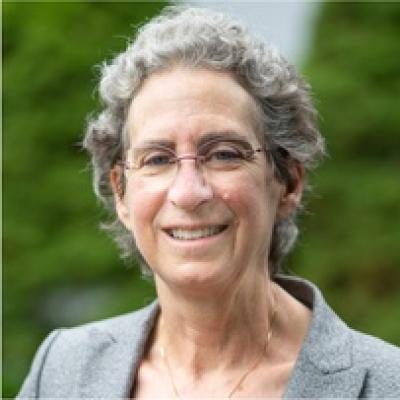
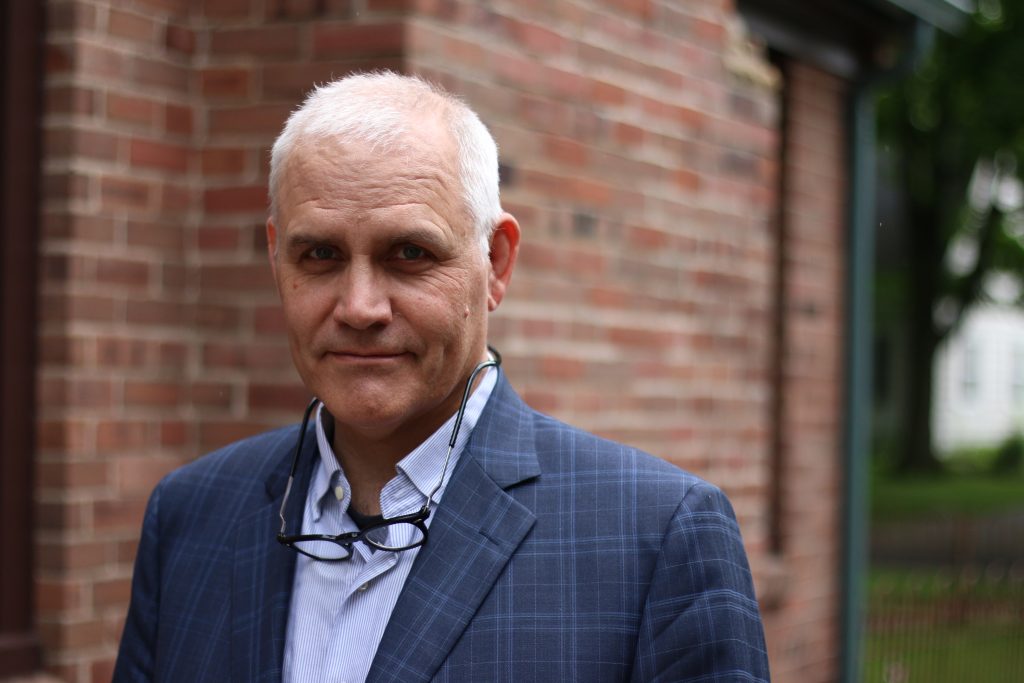
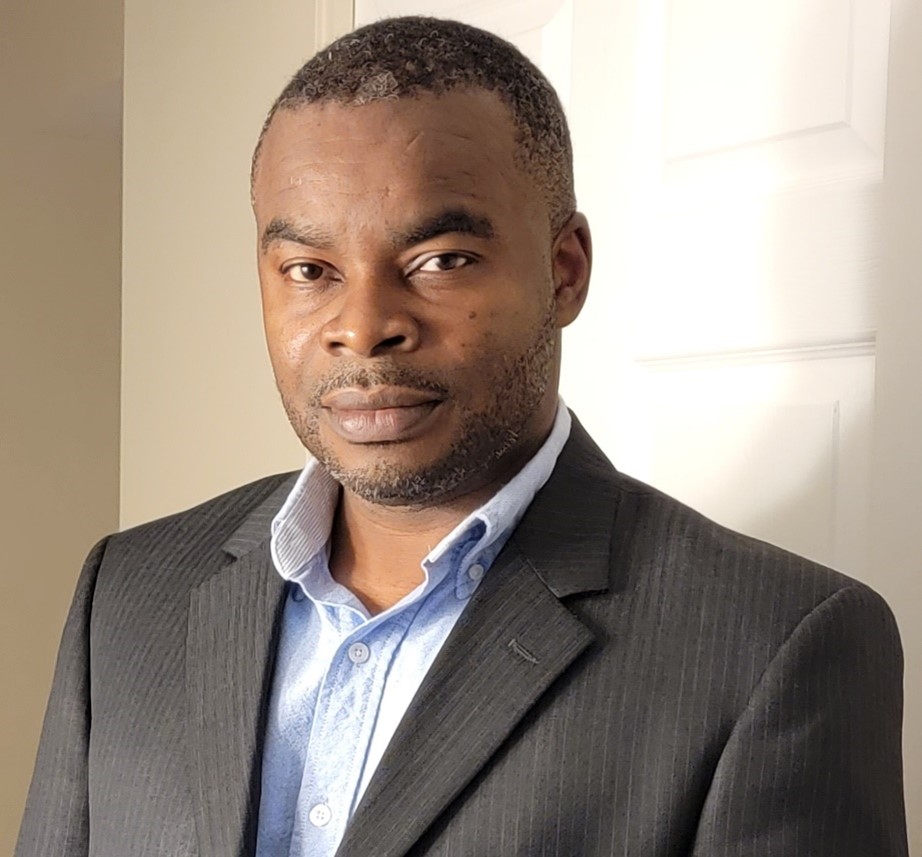
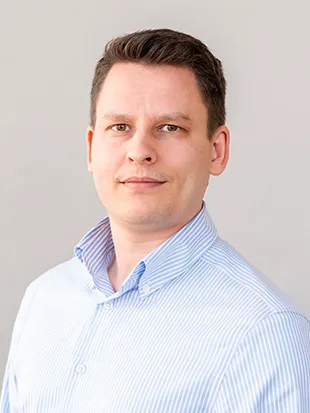
CH Cho serves as a part-time Associate Professor in the Department of Information Engineering, with research expertise spanning critical areas of modern information systems. The institutional affiliation (university/school) remains unspecified in the source documentation. His technical focus integrates spatial computing and data infrastructure, with primary research domains including: Location Based Services for real-time positioning applications Geographical Information Systems (GIS) for spatial data analysis Database Design principles for efficient data structuring Advanced Data Mining techniques for pattern discovery Distributed Databases architecture for scalable systems No scientific awards, student advisement records, or grant activities are documented in the available profile. Laboratory affiliations and collaborative research teams are not mentioned within the provided institutional context.
Dr. Andriy Miranskyy is an Associate Professor in the Department of Computer Science at Toronto Metropolitan University. His research focuses on applied machine learning, quantum computing, cloud computing, and software engineering, with notable contributions to anomaly detection in cloud systems and quantum software engineering. He leads the AMiR Lab, exploring risk mitigation and software development challenges in emerging technologies. Education: Ph.D. in Computer Science from The University of Western Ontario (2011). Research Interests: He investigates quantum software engineering methodologies, cloud-native systems governance, and big data applications. His work bridges theoretical advancements with industrial-scale implementations, such as IBM Db2 quantum safety case studies and cloud monitoring tools like CloudHeatMap. He emphasizes practical solutions for flakiness detection in quantum programs and sustainable software development practices. Awards: Recognitions include the Rogers Cybersecure Catalyst Fellowship (2023-2024), IBM CAS Best Project (2021), and a Guinness World Record for pioneering a 3Pb data warehouse (IBM DB2 team). Teaching: Teaches courses like CPS 840 (Quantum Computing), CPS 847 (Software Tools for Startups), and CPS 731 (Software Engineering). Labs/Teams: Directs the AMiR Lab, focusing on risk-aware software engineering in quantum and cloud domains.
Aldo H. Romero is the Eberly Family Distinguished Professor of Physics and Astronomy at West Virginia University, where he serves as Director of Research Computing . His research integrates computational materials science, artificial intelligence, and high-performance computing to advance understanding of condensed matter systems, including strongly correlated materials, 2D materials, and magnetic compounds. Education : Ph.D. in Physics and Chemistry from University of California, San Diego (1998) Awards : Eberly Family Distinguished Professorship Romero’s group specializes in Density Functional Theory (DFT) , Dynamical Mean Field Theory (DMFT) , and machine learning for materials discovery. They develop open-source tools like PyProcar , MechElastic , and ABINIT , focusing on properties such as electronic structure, elastic behavior, and magnetic interactions. Recent work explores chiral materials , AI-driven optimization , and high-throughput computational methods for material design. Key trends in publications include studies on chiral symmetry in kagome lattices, machine learning for material properties, symmetry-based structure prediction, and DFT+DMFT analysis of correlated systems. Collaborations span Germany, France, China, Spain, and Italy, with applications in energy storage, quantum technologies, and spintronics. Scientific contributions encompass: Development of Fireball and ABINIT codes Machine learning for Hubbard U parameter optimization Chiral material discovery via symmetry arguments Pioneering work on 2D Rashba systems Labs and teams include: AI WVU Discussion Group (founded by Romero) West Virginia University Computational Materials Group Collaborative efforts with international institutions Grants and proposals highlight initiatives like the NSF & NVIDIA Open Multimodal AI Infrastructure (OMAI) program and Spencer Foundation support for AI in education. The group works with over 20 graduate students and 4 postdoctoral researchers, emphasizing interdisciplinary training and global collaboration.
Univ.-Prof. Dr.-Ing. Lutz Eckstein is the Head of the Institute of Automotive Engineering (ika) at RWTH Aachen University and a leading expert in automotive engineering. He concurrently serves as President of the VDI Association of German Engineers, President of the VDI Scientific Advisory Board for the Federal Ministry of Digital and Transport (BMDV), and Scientific Director of the NRW Competence Network for Automated and Connected Mobility. His professional background includes senior roles at BMW and DaimlerChrysler, focusing on vehicle safety, driver assistance systems, and ergonomics. Eckstein holds a Doctorate from the University of Stuttgart (2000) and received the Artur Fischer Prize (1995) for academic excellence. His research interests span automated driving systems, human-machine interfaces, scenario-based testing, and mobility infrastructure. He leads high-profile projects like UNICARagil and coordinates the Mobility and Transport profile at RWTH Aachen. Over 80 patents and publications reflect his contributions to automotive innovation, including advancements in sensor fusion, digital twins, and cooperative intelligent transport systems (C-ITS). His recent work emphasizes safety assurance for automated vehicles, scenario databases, and scalable simulation frameworks. Eckstein's interdisciplinary approach bridges academia and industry, driving transformative solutions for future mobility challenges.
Laura Haas serves as the Donna M and Robert J Manning Dean at the University of Massachusetts Amherst's College of Information and Computer Sciences. Prior to this, she spent 36 years at IBM, where she rose to the level of IBM Fellow and held leadership roles such as Director of the Accelerated Discovery Lab and Director of Computer Science at IBM's Almaden Research Center. Her research focuses on data integration, database systems, and accelerating discovery through data-driven approaches. She pioneered systems like Starburst, Garlic, and Clio, and founded IBM's Accelerated Discovery Lab to enhance data analysis tools for domain experts. Haas holds a PhD from the University of Texas at Austin (1981) and an AB from Harvard University (1978). She has held sabbaticals at the University of Wisconsin-Madison and ETH Zurich. Her contributions earned her awards like the ACM SIGMOD Codd Innovation Award and Anita Borg Institute Technical Leadership Award. She is a Fellow of the ACM and member of the National Academy of Engineering. Her research spans federated data systems, schema mapping, and big data challenges. She advocates for data science education reforms and chairs key initiatives like the National Academies Computer Science and Telecommunications Board. The DREAM Lab under her leadership explores data systems for exploration and analytics. Education: PhD, University of Texas at Austin, 1981 AB, Harvard University, 1978 Awards: ACM SIGMOD Codd Innovation Award Anita Borg Institute Technical Leadership Award IBM Fellow Member, National Academy of Engineering Labs/Teams: DREAM Lab (Data systems Research for Exploration, Analytics, and Modeling) Her work bridges theoretical foundations and practical systems, emphasizing tools that empower domain experts over technical complexities. Current initiatives focus on democratizing data science through education and tooling advancements.
Prof. Detlef Urhahne is a Professor of Educational Psychology at the University of Passau. He previously served as a research assistant at the Chair of Biology Education at Ludwig Maximilian University (LMU) Munich from 2002 to 2008. His research focuses on technology-enhanced learning, science education, and motivational factors in educational contexts. Key areas include the design of effective learning environments using computer simulations, hypertext systems, and biodiversity databases, as well as the role of epistemological beliefs and self-concept in student learning. His work emphasizes empirical evaluations of instructional methods, such as comparing linear vs. hypermedia learning structures, and exploring how digital tools support conceptual understanding in chemistry and biology. He has contributed to understanding motivation in teacher training, particularly among biology educators, and developed validated questionnaires to measure interest in biodiversity topics. His studies often intersect cognitive psychology, educational technology, and didactic principles in science disciplines. Urhahne’s research also addresses interdisciplinary challenges like the 'right amount of instruction' in museum settings and the impact of animations on neurobiology learning. He collaborates internationally, evidenced by co-authored works in journals like the International Journal of Science Education and Psychological Review . While no awards are explicitly listed, his extensive publication record highlights sustained contributions to educational psychology and science pedagogy. His advising and grant activities remain unspecified in the provided texts. He has been involved in developing projects such as the EU-funded TREBIS initiative for biodiversity education, reflecting his commitment to bridging formal and informal learning environments through technology.
Dean Rehberger is an Associate Professor in the Department of History at Michigan State University (MSU) and Director of MATRIX, MSU's digital humanities center. His research focuses on developing digital technologies for research and teaching, including semantic web, big data, digital libraries, and geospatial knowledge graphs. He leads interdisciplinary projects such as the KnowWhereGraph and the Enslaved.org hub knowledge graph, emphasizing ethical sustainability and disaster risk management frameworks. Education details are not explicitly stated in the provided text. Research interests include digital history, public history, and the application of computational methods to cultural heritage and emergency management. His work bridges geospatial analysis, ontology engineering, and humanities applications through projects like HIP Ontology and the S2 Discrete Global Grid System. Recent articles highlight advancements in knowledge graph architectures, geospatial data integration, and ethical frameworks for digital projects. Notable projects include the $1.5M Mellon Grant for the Enslaved.org database and collaboration with GLAM institutions (galleries, libraries, archives, museums). Grants: Mellon Foundation Grant (2023) for slave trade database Labs/Teams: MATRIX (digital humanities center at MSU)
Dr. Wei Jiang is a Research Associate in Mid-Infrared Lasers and Detectors at the School of Electrical and Electronic Engineering, University of Sheffield. His work focuses on advancing population-based structural health monitoring (SHM) techniques, particularly for wind energy systems. He specializes in integrating spatial autoregressive models, sensor networks, and environmental data analysis to optimize wind farm performance and detect structural anomalies. Research interests include: Development of advanced SHM frameworks for large-scale infrastructure Data-driven approaches for wind farm wake field prediction and optimization Environmental mapping using Eov fields for infrastructure longevity Integration of machine learning in structural anomaly detection Recent publications emphasize automated structure selection, spatial modeling for turbine performance, and database systems for SHM networks. His work bridges electrical engineering principles with renewable energy systems, contributing to sustainable energy infrastructure advancements. No scientific awards or grants are explicitly listed in the provided information. Dr. Jiang collaborates on interdisciplinary projects involving sensor technology, environmental engineering, and data science applications.
Cecilia Testart is an Assistant Professor at Georgia Institute of Technology, holding joint appointments in the School of Cybersecurity and Privacy and the School of Computer Science. Her research focuses on internet protocols, network security, and policy, emphasizing data-driven approaches to improve security and societal alignment. She earned a Ph.D. in Computer Science from MIT, alongside a master’s in Technology and Policy, and holds engineering degrees from Universidad de Chile and École Centrale Paris. Her research explores how internet protocols evolve and interact with societal expectations. Notable contributions include work on RPKI adoption and routing security, recognized with a Distinguished Paper Award at ACM IMC 2019. She co-organized workshops on routing security and policy-relevant internet measurement, and serves on program committees for SIGCOMM and IMC. She leads the Internet and Society Lab and is part of the Internet Intelligence Lab. Her awards include the PAM 2023 Best Community Artifact Award for work on sibling ASes. She advises students, including Deepak Gouda, and has affiliations with Inria, .CL, Akamai, MSR, and the OECD. Her work bridges technical and policy challenges to enhance internet reliability and security.
Philipp Pattberg is a Full Professor at Vrije Universiteit Amsterdam's Faculty of Science and director of the Amsterdam Sustainability Institute (ASI). He leads the Department of Environmental Policy Analysis (IVM), a leading European group in environmental governance research. His work bridges academia and policy as co-chair of UN SDSN (Netherlands), senior fellow of the Earth System Governance Project, and incoming George Soros Visiting Chair at Central European University (2025–2026). PhD in Political Science, Freie Universität Berlin Co-editor, Routledge Research Series in Global Environmental Governance On editorial boards of GAIA and International Environmental Agreements His research develops complexity-informed global governance frameworks, analyzing institutional architectures like multi-stakeholder partnerships, certification schemes, and transnational city networks. Key databases track International Cooperative Initiatives (ICIs) and SDG implementation mechanisms, addressing institutional fragmentation and policy coordination challenges. Recent publications examine China's climate policy evolution, biodiversity governance in Latin America, carbon pricing systems, and the financialization of river ecosystems through CDM hydropower projects. His work emphasizes actionable insights for policy design and cross-sectoral synergies. Scientific Awards : Science Prize, German Political Science Association (2009) VIDI grant, Dutch Research Council (NWO) Fellowships at international institutions As an educator, he teaches MSc/PhD programs in political science, environmental studies, and earth sciences in Amsterdam and Vienna. He leads projects like SALAD (saline agriculture adaptation) and research on post-2020 biodiversity frameworks.
Associate Professor Tracy Heng is an academic at Monash University, leading research on overcoming immunological barriers in stem cell therapies. She holds a PhD from Monash University and completed postdoctoral training at Harvard Medical School. Her roles include Laboratory Head in the Department of Anatomy & Developmental Biology and Deputy Head of the Immunity Program at the Monash Biomedicine Discovery Institute. Education: PhD, Monash University (strategies to improve immune function in ageing) Postdoctoral training with Professors Harald von Boehmer, Christophe Benoist, and Diane Mathis (Harvard Medical School, Immunological Genome Project) Research Interests: Understanding immune responses to stem cell transplantation, optimizing cell therapies, and addressing immunological challenges. Key areas include mesenchymal stromal cell apoptosis, lymphoid organ roles in therapy, and macrophage biology. Recent Articles: Focus on apoptosis-driven therapeutic mechanisms, stromal cell interactions with lymph nodes, and cytokine effects on cell survival. Recent work highlights the critical role of apoptosis in therapeutic efficacy and the importance of secondary lymphoid organs in cell therapy. Awards: 2015 Young Tall Poppy Science Award 2016 Metcalf Prize for Stem Cell Research 2016 NHMRC R.D. Wright Fellowship 2011 ARC Postdoctoral (Industry) Fellowship Projects: Leading projects such as 'The mesenchymal stromal cell paradox' (2022–2025) and 'Surface coatings for directed differentiation of iPSCs to T-cells' (2023–2026). Collaborates on initiatives like the ARC Training Centre for Cell and Tissue Engineering Technologies. Labs/Teams: Leads a research group focused on immunological barriers in stem cell therapies within the Monash Biomedicine Discovery Institute.
Benjamin Eze is a part-time and adjunct professor at the School of Engineering Design and Teaching Innovation within the University of Ottawa . He holds a PhD in Digital Transformation and Innovation, an MSc in Electronic Business Technologies, and a BSc in Computer Engineering. Professionally, he serves as Lead Architect at Next Pathway Inc. and Business Intelligence Partner with Champlain Ontario Health at Home. Education: PhD – Digital Transformation and Innovation (University of Ottawa) MSc – Electronic Business Technologies (University of Ottawa) BSc – Computer Engineering Benjamin specializes in Big Data Analytics , Healthcare Data Privacy , Cloud Computing , and AI in Software Engineering . His work bridges technology and healthcare, focusing on secure data integration and digital transformation. Scientific Awards: Holds two patents in Canada and the United States Benjamin's research spans healthcare data governance, cloud infrastructure (DevOps, DevSecOps), and privacy-preserving technologies. His publications emphasize systematic approaches to data anonymization, cloud-based healthcare monitoring, and ethical AI frameworks. He teaches in upskilling programs at the University of Ottawa’s Professional Development Institute, FxInnovation, and CENGN CloudCampus DevOps programs, while collaborating with organizations like Cisco, Montfort Hospital, and Accreditation Canada.
Theresa Windus is a Distinguished Professor and Department Chair at Iowa State University's Department of Chemistry. She leads the Windus Group, which develops computational models to solve environmental and energy challenges, with research focusing on high-performance computing, software interoperability, heavy metal systems, and quantum chemistry methods. Her group specializes in massively parallel algorithms for state-of-the-art computational resources. Her research spans multiple disciplines including: Scalable ab initio Monte Carlo methods GPU implementations of quantum integrals Exascale computing development (NWChemEx project) Rare earth element extraction Aerosol nucleation modeling Her recent publications explore computational chemistry software sustainability, GPU-accelerated quantum chemistry, nanopore modeling, and rare earth element extraction. She has mentored numerous graduate students including Alex, Erin, Daniel Turley, and Zach who received prestigious scholarships.
Prof. Georg Neugebauer is a Professor at RWTH Aachen University, specializing in cybersecurity, privacy-preserving protocols, and secure multi-party computation. His research focuses on developing frameworks for secure data reconciliation, enhancing information security management systems, and addressing cybersecurity challenges in AI, industrial systems, and smart environments. Research Interests: Secure Multi-Party Computation (MPC) Privacy-Preserving Systems Cybersecurity Education & Training Artificial Intelligence in Security Management Industrial IoT and Operational Technology (OT) Security Digital Forensics and Incident Response Recent work highlights a shift towards cybersecurity education initiatives (e.g., CampusQuest ), AI-driven security solutions, and addressing vulnerabilities in public AI tools. His frameworks like SMC-MuSe have advanced MPC applications for multi-set operations. His publications span conferences such as ARES, ICISSP, and AHFE, addressing topics from smart building protocol security to forensic triage tools. Collaboration with researchers like Schuba, Höner, and Meyer marks his interdisciplinary approach to solving real-world security challenges.
Daniel Albert is an Assistant Professor of Management at Drexel University's LeBow College of Business. He serves on the Drexel University Standing Committee on Artificial Intelligence and is a Senior Fellow at The Wharton School’s Mack Institute of Technology Management. Previously, he held a tenure-track position at the University of Wisconsin-Milwaukee. His academic journey includes a Ph.D. from the University of St. Gallen, Switzerland, and research scholar roles at the Wharton School, University of Pennsylvania. Dr. Albert's research explores strategic management, organizational design, and innovation through computational modeling and empirical analysis. His work integrates psychology and neuroscience principles to study cognition and complex decision-making, with applications in financial services and healthcare industries. Current investigations focus on generative AI in strategic contexts, organizational structure optimization, and behavioral strategy experiments using large language models. Thematic analysis of his publications reveals three dominant clusters: computational approaches to organizational design (43%), cognitive and behavioral strategy frameworks (36%), and AI applications in management/education (21%). His work exhibits increasing methodological sophistication, with recent publications leveraging large-scale data analytics and AI simulation techniques to examine strategic decision-making patterns. Notable Scientific Recognition: Sumantra Goshal Award for Research & Practice (2021) Distinguished Paper Award from Academy of Management (2022) Research Methods Paper Prize from Strategic Management Society (2024) Freddie Reisman Award for scholarly impact (2022) Innovation in Teaching Award for AI integration (2022) Dr. Albert teaches strategy and competitive advantage courses across MBA and Executive MBA programs, incorporating generative AI tools for experiential learning. He provides editorial leadership for the Journal of Organization Design and has served on review boards for Long Range Planning and Organization Science . His research collaborations involve interdisciplinary teams from Wharton's Mack Institute and Drexel's AI initiative, focusing on technology-driven organizational innovation.