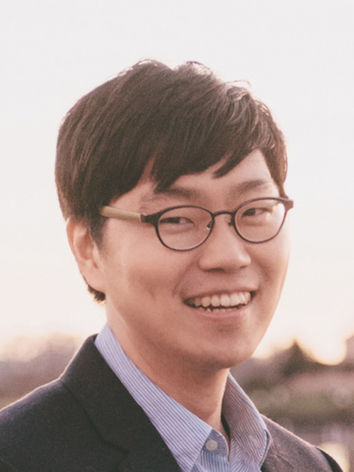
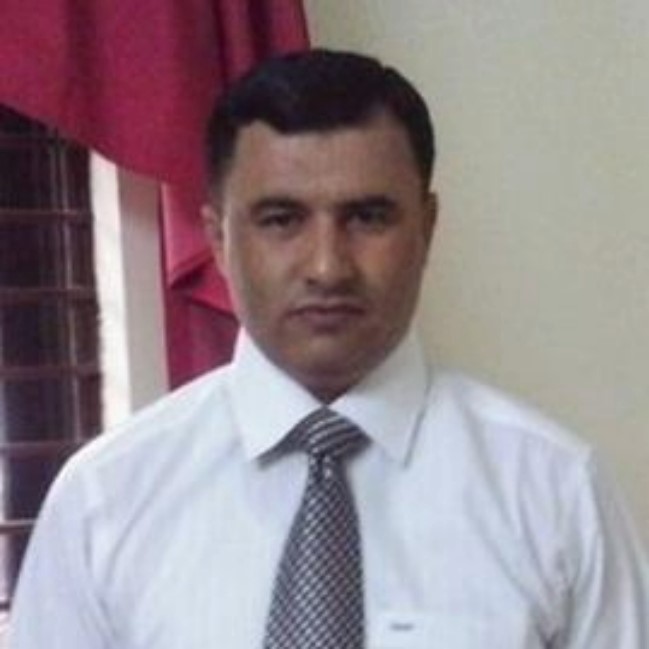
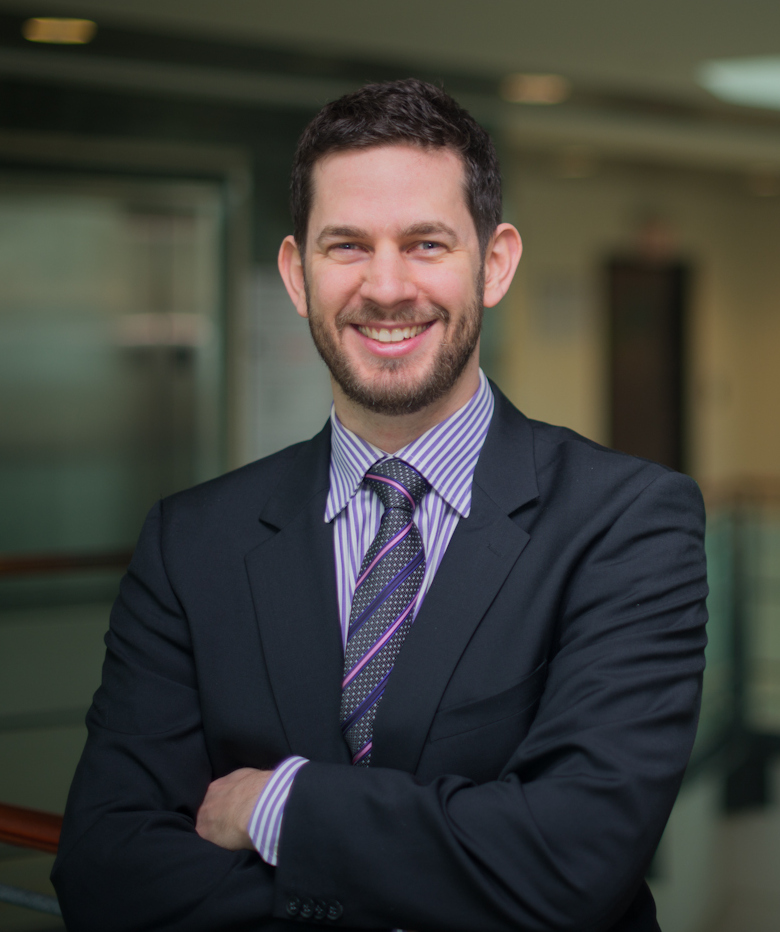
Douglas A. Talbert is a Professor of Computer Science at Tennessee Tech University. He holds a Ph.D. and M.S. in Computer Science from Vanderbilt University, and a B.S. in Mathematics from Tennessee Tech University. His research focuses on machine learning, human-AI interaction, uncertainty quantification, and healthcare informatics, with applications in clinical decision support systems. He has also contributed to software engineering and human-computer interaction in teaching. His research interests include developing explainable AI models, mitigating bias in machine learning systems, and applying AI to environmental monitoring and biomedical datasets. He has explored topics such as subgroup discovery in sequential databases, scalable reinforcement learning, and anomaly detection in industrial systems. His recent publications highlight advancements in uncertainty quantification for medical models, bias analysis in trauma triage, and semantic segmentation using multispectral satellite imagery. Notable collaborations include work on counterfactual explanations, drug repurposing for rare diseases, and trust-building techniques in biomedical machine learning. Talbert has co-authored numerous papers in conferences like FLAIRS and IEEE, often focusing on practical AI applications. His work bridges theoretical machine learning with real-world challenges in healthcare, cybersecurity, and environmental science.
Juho Kim is an Associate Professor in the School of Computing at KAIST, where he directs KIXLAB (the KAIST Interaction Lab). He is also affiliated faculty in the Kim Jaechul Graduate School of AI at KAIST. His academic journey includes a Ph.D. from MIT, M.S. from Stanford University, and B.S. from Seoul National University. From 2015-2016, he served as a Visiting Assistant Professor and Brown Fellow at Stanford University. His educational background includes: Ph.D. in EECS from MIT M.S. in Computer Science from Stanford University B.S. in Computer Science and Engineering from Seoul National University Professor Kim's research in human-computer interaction and human-AI interaction focuses on building interactive and intelligent systems that support interaction at scale, aiming to improve the ways people learn, collaborate, discuss, make decisions, and take action online. His work spans several key areas including educational technology, online collaboration platforms, AI-powered learning systems, and tools for human-AI collaboration. He is particularly interested in how interactive systems can scale to support large numbers of users while maintaining quality interactions. His recent publications show a strong trend toward human-AI interaction, with particular emphasis on educational applications, collaborative systems, and addressing challenges in AI reliability and user experience. His work often combines technical innovation with rigorous user studies to evaluate real-world impact. Professor Kim has received numerous scientific awards including a KIISE/IEEE-CS Young Computer Researcher Award, KAIST's Songam Distinguished Research Award, Grand Prize in Creative Teaching, Q-Day Creative Education Award, and Excellence in Teaching Award. He has also received nearly 20 paper awards from top conferences including ACM CHI, ACM CSCW, ACM Learning at Scale, ACM IUI, ACM DIS, and AAAI HCOMP. KIISE/IEEE-CS Young Computer Researcher Award KAIST's Songam Distinguished Research Award Grand Prize in Creative Teaching Q-Day Creative Education Award Excellence in Teaching Award Nearly 20 paper awards from ACM CHI, ACM CSCW, ACM Learning at Scale, ACM IUI, ACM DIS, and AAAI HCOMP KAIST Global Research Cooperation Award Outstanding Ethics Professor Award from KAIST Graduate Student Association Professor Kim actively mentors students at all levels, with a substantial roster of Ph.D. and M.S. students. His recent sabbatical year was spent as a chief scientist at Ringle Inc. to transfer his research on AI-powered analysis and diagnosis of English learners' proficiency into real products. He is also an Educational Innovation Advisor at KAIST, with the mission to promote AI-applied teaching and learning in the university. Professor Kim directs KIXLAB (the KAIST Interaction Lab), which focuses on human-AI interaction research. The lab brings together students and researchers from diverse backgrounds to work on projects that bridge interactive systems and artificial intelligence. KIXLAB has established collaborations with industry partners and regularly contributes to top-tier conferences in HCI and AI.
Derek Hoiem is a Professor in the Department of Computer Science at the University of Illinois Urbana-Champaign (UIUC), affiliated with the Siebel School for Computing and Data Science since 2009. He holds a PhD in Robotics from Carnegie Mellon University (2007) and completed a Beckman Postdoctoral Fellowship (2008). As co-founder and Chief Science Officer of Reconstruct, he develops AI-driven tools for construction progress monitoring. His research focuses on computer vision, object recognition, scene understanding, and graphics. Key honors include IEEE Fellow (2022), University Scholar (2022), and the Sloan Research Fellowship (2013). He has received NSF CAREER and Intel Early Career awards, alongside best paper awards at CVPR (2006) and WACV (2015). His teaching excellence is reflected in numerous 'List of Teachers Ranked as Excellent' accolades across multiple semesters. Research interests span 3D reconstruction, neural networks, and multimodal models. His work addresses challenges in visual program generation, neural radiance fields, and construction monitoring through photogrammetry. He leads projects in continual learning, efficient AI systems, and explainable multimodal interactions. Professional contributions include grants from NSF and industry partnerships. He advises on cutting-edge AI applications in construction, graphics, and vision-language integration. His lab’s innovations bridge theoretical advancements with real-world systems like Reconstruct’s Visual Command Center.
Jochen Teizer is a Professor at the Technical University of Denmark (DTU), affiliated with the Department of Civil and Mechanical Engineering, specializing in Digital Building Technologies. His research focuses on enhancing construction safety, sustainability, and efficiency through Digital Twins, Building Information Modeling (BIM), and Extended Reality (XR). He supervises multiple PhD projects addressing topics like occupational health, resource efficiency, and predictive site monitoring. Teizer leads significant research initiatives such as the BEEYONDERS project on European construction sovereignty and the Femern Belt Tunnel Lighthouse Project. He serves on the editorial board of the Automation in Construction journal and contributes to international organizations like the International Association on Automation and Robotics in Construction. His awards include the 2023 and 2024 CIBW099/W123 Best Paper Awards and the 2024 CONVR Best Presentation Award. His work aligns with UN Sustainable Development Goals, emphasizing safe and productive construction practices. Teizer’s lab develops innovative solutions for real-time site monitoring, virtual safety training, and emissions reduction, leveraging AI and IoT technologies. He actively engages in educating future engineers through digital twin frameworks and personalized learning environments.
Joon-Ho Choi is an Associate Professor at the University of Southern California's School of Architecture, specializing in environmental design and building science. His work focuses on integrating human physiological responses with architectural design to enhance energy efficiency and occupant comfort. He leads research in adaptive thermal comfort principles, AI-driven building controls, and data-driven environmental assessment tools. His interdisciplinary approach bridges architecture, engineering, and human factors, addressing challenges in sustainable building design and smart technology integration. Research interests include: Thermal comfort modeling using physiological signals (e.g., skin temperature, eye pupil size) Development of self-navigating sensors (Eco-scout) for indoor environmental quality Machine learning applications in building automation and energy optimization Cross-cultural studies on thermal perception and scale interpretation His publications emphasize practical solutions for commercial and residential environments, such as optimizing natural ventilation, improving energy performance through facade design, and enhancing occupant well-being via biophilic interventions. He has contributed to international guidelines like IEA EBC Annex 69, advancing adaptive thermal comfort standards. Choi’s work also explores virtual environments for occupant behavior studies and the impact of daylight on healthcare facilities. His methodologies prioritize user-centered design and evidence-based decision-making for sustainable architecture.
Yidan Zhang is a Research Fellow at Monash University's Department of Human Centred Computing, specializing in spatial-temporal data analysis within immersive environments. She holds a PhD from Monash (2024), MSc in Information Technology (2019), and a BA in Arts from Jinan University (2016). Her work focuses on embodied interaction, immersive analytics, and energy visualisation, contributing to UN SDGs in education and sustainable energy. Research Interests : Spatio-Temporal Data Sensemaking Immersive Analytics Embodied Provenance Eye Tracking in Immersive Systems Energy Efficiency Visualisation Recent Research Trends : Her publications emphasize embodied interaction design, immersive data exploration tools, and energy-aware visualisation systems. Notable contributions include frameworks for tracking user interactions in immersive environments and improving user engagement in energy management. Lab/Teams : Member of the Embodied Visualisation research group, collaborating on multidisciplinary projects involving immersive technology and human-computer interaction.
Prof. Roy Smith is a Professor at ETH Zurich specializing in control systems, with a focus on model predictive control (MPC), system identification, and robust control. His research spans energy systems, aerospace applications, and data-driven methods. He collaborates with leading institutions like the Swiss Federal Institute of Technology (ETH Zurich) and has co-authored numerous high-impact papers in top journals like IEEE Transactions on Automatic Control and Automatica. Key research interests include: distributed control of interconnected systems, kernel-based system identification, and real-time optimization for energy networks. His work bridges theoretical advancements with practical applications in buildings, renewable energy, and aerospace. Recent publications highlight contributions to MPC design under uncertainty, closed-loop identification techniques, and stochastic control systems. He has pioneered methods for energy hub networks and developed tools for data-driven predictive control in smart buildings. Academic collaborations include projects with Prof. John Lygeros (ETH Zurich) and Prof. Florian Dörfler (ETH Zurich), focusing on multi-agent coordination and energy systems. His research also extends to aerospace applications such as autonomous kite power systems and spacecraft pose estimation.
Gilbert Michaud, PhD, is an Assistant Professor of Environmental Policy at Loyola University Chicago’s School of Environmental Sustainability, where he coordinates the “Climate & Energy” Focus Area. He holds adjunct roles as Faculty Affiliate at the Gerald R. Ford School of Public Policy (University of Michigan) and Senior Research Fellow at Global Law Initiatives for Sustainable Development (gLAWcal). His research focuses on renewable energy policy, electricity markets, and sustainable economic development, with emphasis on energy transition impacts like workforce dynamics, tax implications, and pollution mitigation. Michaud earned his PhD in Public Policy and Administration from Virginia Commonwealth University and a Data Analytics certificate from Cornell University. He leads the Michaud Energy Policy Research Group at Loyola and has secured major grants, including a U.S. Department of Energy Solar Energy Technologies Office (SETO) grant studying community acceptance of large-scale solar projects. His work spans over 90 technical reports and peer-reviewed articles in journals such as Journal of Environmental Planning and Management and Renewable Energy Focus . He chairs the national policy division of the American Solar Energy Society (ASES) and serves as associate editor of Frontiers in Sustainable Energy Policy . Notable awards include the 2023 VCU 10 Under 10 Award and 2022 Midwest Energy Innovator of the Year. His research collaborations involve organizations like the Natural Resources Defense Council, The Nature Conservancy, and utility-scale solar coalitions. Michaud teaches courses on energy law, policy design, and sustainable systems at Loyola. Current projects include analyzing solar energy’s community impacts, policy barriers to equitable clean energy transitions, and workforce development strategies for energy sector shifts. His interdisciplinary approach combines policy analysis with quantitative methods like machine learning and GIS modeling.
Dr. Muhammad Aslam Jarwar is a Senior Lecturer in Smart Computing at the Department of Computing, Sheffield Hallam University. He holds senior roles in academia and industry, including Editorial Board membership at Intelligent Automation & Soft Computing and Managing Guest Editor at Sustainable Energy Technologies and Assessments . His research focuses on IoT security, cybersecurity modeling, AI-driven IoT systems, and digital twin applications. He leads the Secure Ontologies for IoT Systems (SOfIoTS) project, aimed at enhancing IIoT security through ontology integration and edge computing. Education includes a Ph.D. from Hankuk University of Foreign Studies (South Korea), MS from Quaid-i-Azam University (Pakistan), and BCS (Hons) from University of Sindh. He has extensive industry experience, including a Postdoctoral Researcher role at University of Manchester and UCL. Research interests span IoT-enabled healthcare systems, trustworthy IoT, industrial IoT, and federated learning. Key projects include RiverSense (river pollution monitoring) and collaboration with AquaSensor. His work emphasizes practical applications of AI and IoT in healthcare, energy, and smart cities. He has supervised multiple Ph.D. and Master’s students in IoT and cybersecurity. Awards include travel grants and research networking awards. His recent publications address IoT middleware, blockchain integration, and AI-empowered healthcare solutions.
Dr. Samantha Rarrick is a Senior Lecturer at Griffith University's School of Humanities, Languages and Social Science, affiliated with the Griffith Centre for Social and Cultural Research. Her research focuses on documenting endangered languages, particularly signed and spoken languages of the Pacific, including Kere and Sinasina Sign Language in Papua New Guinea, and Hawai‘i Sign Language. She emphasizes community-driven approaches to linguistic research, ensuring local stakeholders participate in decision-making. Dr. Rarrick holds a PhD in Linguistics from the University of Hawaii at Mānoa (2017), and has conducted postdoctoral research funded by the National Science Foundation (2017–2019). Her teaching interests include language endangerment, documentation, Pacific languages, and sign languages. She supervises doctoral and master's students on topics ranging from climate-related semantics in Danish dialects to phonological variation in Hawai‘i Sign Language. Dr. Rarrick has received the 2021 Student Experience of Teaching Commendation and actively contributes to professional organizations like the Australian Linguistic Society and the Foundation for Endangered Languages. Her work bridges signed and spoken language documentation, addressing methodological challenges in corpus design and cross-modal linguistic analysis. Key research projects include documenting Sinasina Sign Language, analyzing language ideologies in Papua New Guinea, and developing multimedia resources for Central Queensland Aboriginal languages. Dr. Rarrick's interdisciplinary approach integrates ethnography, typology, and computational methods to preserve linguistic diversity while fostering global awareness of endangered languages.
Dr. Eva Maleviti is an Assistant Professor and Program Coordinator for the Master of Science in Aviation & Aerospace Sustainability at Embry-Riddle Aeronautical University's College of Aviation. She holds a Ph.D. in Environment and Sustainability from the University of Surrey and has over 14 years of experience in higher education across the UK, USA, and Greece. Her expertise includes sustainable aviation systems, emissions auditing, and corporate sustainability strategies. She has served as an academic coordinator at the Hellenic Aerospace Industry and as a technical expert for ICAO's CORSIA scheme. Her research focuses on sustainable aviation infrastructure, environmental management in aerospace facilities, and organizational change for net-zero goals. Education: Ph.D. in Environment and Sustainability, University of Surrey M.S. in Sustainable Development, University of Surrey Graduate Certificate in Aviation Maintenance, Embry-Riddle Aeronautical University Bachelor in Physics, University of Patras Research Interests: Dr. Maleviti's work emphasizes sustainable aviation practices, emissions reduction, and organizational sustainability frameworks. She explores topics such as: Aviation Training Organizations' (ATO) net-zero strategies Employee perspectives on environmental management Energy optimization in buildings and aviation facilities Sustainable aviation fuels and lifecycle analysis Awards: Adjunct Faculty of the Academic Year 2020-2021 Emerging Faculty of the Academic Year 2022-2023 Teaching and Advising: Dr. Maleviti currently teaches courses such as Sustainable Aviation Organizations, Aviation Sustainability Policy, and Sustainable Aviation Technologies. She has advised students in capstone projects and sustainability-related coursework. Certifications and Memberships: Private Pilot License (PPL-A) Lead Auditor for ISO 9001 and AS 9100D Member of the Royal Aeronautical Society (MRAeS)
Dawid Hanak is a Professor at Teesside University, focusing on decarbonization technologies within the Net Zero Industry Innovation Centre. His research emphasizes carbon capture, utilization, and storage (CCUS), particularly using calcium looping and thermochemical processes. He explores strategies to transform fossil fuel-based systems into low-carbon or negative-emission technologies, with applications in power generation, industrial clusters, and renewable energy integration. Key research areas include CO2 capture via calcium looping, biomass utilization for negative emissions, and techno-economic feasibility of renewable energy systems. He has published extensively on topics like solar photovoltaic systems, energy efficiency optimization, and machine learning for anomaly detection in industrial settings. His work bridges experimental analysis, computational modeling, and policy-related stakeholder engagement. Recent studies highlight his focus on hybrid energy systems, demand response strategies, and decarbonization pathways for industrial sectors. His publications often address real-world implementation challenges, such as cost-benefit analyses and scalability of CCUS technologies. Hanak is actively involved in guiding PhD students and collaborates across disciplines to advance net-zero solutions.
Ethan Pancer is an Associate Professor and Sobey Professor in Marketing at the Sobey School of Business, Saint Mary’s University. He specializes in impression formation, digital innovations, and social media’s impact on consumer behavior. His work has been published in journals like the Journal of Consumer Psychology and Journal of Business Ethics , and he has secured multiple SSHRC grants. Pancer is recognized for excellence in teaching, receiving the Stewart Medal, and was named one of the '40 Most Outstanding B-School Profs Under 40' by Poets & Quants (2017). He earned B.Com., M.Sc., and Ph.D. degrees in Marketing from Queen’s University’s Smith School of Business. His teaching focuses on Marketing Management, Consumer Behavior, and Entrepreneurship. Pancer advises early-stage companies and collaborates with organizations like IBM and Rogers Communications. His research explores automation in restaurants, crowdfunding success predictors, and viral social media dynamics, emphasizing ethical and psychological dimensions of modern marketing practices. Education: Ph.D., M.Sc., B.Com. in Marketing, Queen’s University Awards: Stewart Medal (2017), Poets & Quants Recognition (2017) Grants: Multiple SSHRC grants Pancer’s work bridges academic rigor and industry relevance, addressing how digital tools and social media shape modern consumer behavior. His lab focuses on topics like algorithmic engagement prediction and ethical marketing strategies in automated systems.
Dr. Philipp Ackermann is a researcher and academic leader at ZHAW Zurich University of Applied Sciences, School of Engineering. His roles include Deputy Head of the Human-Centered Computing Research Group, Head of the Visual Computing Lab, Deputy Programme Director for Medical Informatics, and Delegate for Entrepreneurship in the School of Engineering. His research focuses on Visual Computing (especially Augmented Reality), Medical Informatics , and Digital Health . He leads projects like AR Patterns (design patterns for AR experiences) and Automated Recognition of Modular Product Structures in AR , which explore circular economy applications. His work bridges technical innovation with practical implementation, emphasizing collaboration in immersive technologies and data-driven solutions. Key research trends in his articles include: Advancements in XR technologies (e.g., 3D inference pipelines, physically-based rendering) Collaborative systems in AR/VR environments Applications of AR in healthcare and industrial settings Systematic reviews of collaboration in virtual spaces He has contributed to projects as both leader and team member, addressing topics from surgical proficiency training to intelligent viticulture. His work often emphasizes real-world impact through partnerships between academia and industry. Philipp leads the Visual Computing Lab , fostering interdisciplinary innovation in computer graphics and immersive technologies. His educational contributions include teaching the CAS Advanced Statistical Data Analysis course.
Dr. Biju Issac is an Associate Professor and Head of Subject (Networks and Cyber Security) at Northumbria University's Computer and Information Sciences Department. He directs the Academic Centre of Excellence in Cyber Security Research (ACE-CSR) and leads the CyberNets Research Group. With a PhD in Networking and Mobile Communication, he holds a Chartered Engineer (CEng) certification and is a Senior Fellow of the Higher Education Academy (HEA). Affiliations: Editor-in-Chief of the International Journal of Information and Computer Security, Alan Turing Institute collaborator, and former Programme Leader for BSc (Computer Networks and Cyber Security) and BSc (Computer and Digital Forensics). Education: PhD (Networking & Mobile Communication), MCA (First Class), BE in Electronics and Communication Engineering. Research Interests: Cybersecurity (malware/botnets), AI/ML applications, IoT security, satellite/drone networks, secure routing protocols, Android security, and cloud computing optimizations. His Northumbria Cyber Clinic partners with law enforcement (NEBRC) to train students as ethical hackers and protect local businesses. Notable awards include the 'Innovator of the Year' (Dynamites 2020) and finalist for Excellence in Cybersecurity (IET 2020). Key Projects: Funded projects with Lockheed Martin Space (vulnerability detection tool) and the Alan Turing Institute (AI security for defense). Supervises PhD students in AI-driven cybersecurity, ransomware detection, and federated learning applications. Professional Activities: Editorial roles in journals like IEEE Access, peer-reviewer for multiple publications, and advisor to the EPSRC Peer Review College.