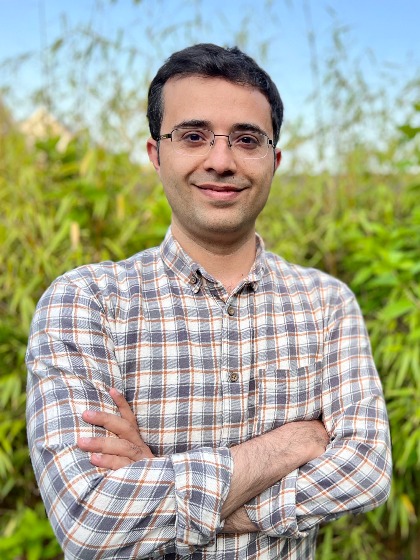
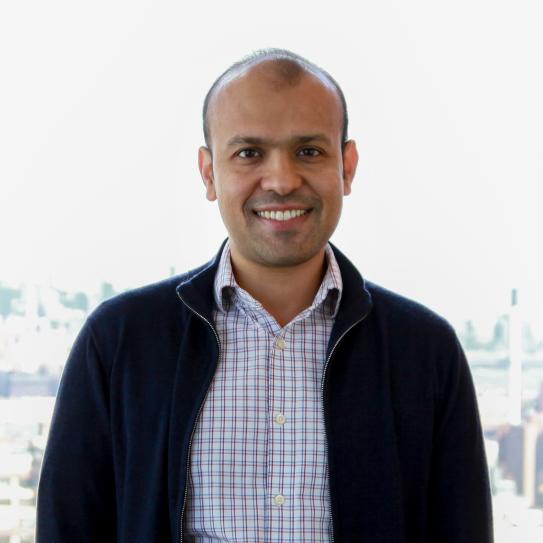
Dr Sudip Mittal is an Assistant Professor in Computer Science & Engineering at Mississippi State University and Associate Research Director of the PATENT Lab. His research spans cybersecurity, artificial intelligence, and cyber-physical systems, with a focus on building self-protecting systems and predictive security for unmanned vehicles. He leads the SECRETS Lab and has published over 70 papers in top venues, with work featured in The LA Times and WIRED. Research interests include: Autonomous intrusion response systems AI-driven threat detection in IoT/CPS Adversarial machine learning His publications (2019-2025) show a strong emphasis on AI security applications, particularly in malware detection, healthcare compliance, and anomaly detection using large language models. Recent articles explore MLOps security, adaptive cyber defense, and synthetic data generation for critical systems.
Professor Jean-Francois Hennart holds the position of Professor of International Management at Tilburg University's TS Economics and Management school, specializing in the Strategy & Entrepreneurship department. His career spans over four decades, including roles at leading institutions like the University of Illinois at Urbana-Champaign, Wharton School (University of Pennsylvania), and Copenhagen Business School. He has also held positions with the United Nations and Maryland’s Department of Economic and Community Development. His research focuses on applying transaction cost theory to multinational enterprises, particularly exploring foreign market entry strategies, equity joint ventures, and the governance of international business operations. Key areas of study include mergers and acquisitions, strategic management, and firm-specific advantages in global contexts. Notable contributions include over 126 research outputs, with recent works addressing born global enterprises, transaction cost theory applications, and data-driven challenges in international business research. He has secured seven research projects funded by various institutions. Academic recognition includes the Gold Medal for JIBS publications (2019), Booz&Co Eminent Scholar award (2014), and multiple best paper awards. His work bridges theoretical frameworks with practical implications for global corporate strategy.
John Wihbey is an Associate Professor of Media Innovation & Technology at Northeastern University, jointly affiliated with the College of Social Sciences and Humanities and the College of Arts, Media and Design. He directs the AI-Media Strategies Lab and co-founded the Internet Democracy Initiative. His research explores social media, misinformation, and computational journalism. Education includes an Ed.D. from Northeastern University, M.S. from Columbia Journalism School, and M.A. from Middlebury. Research focuses on digital democracy, AI governance, and media literacy. Awards recognize contributions to journalism research and digital communication. Articles frequently address evolving intersections of technology and democracy, with recent emphasis on AI-driven misinformation and platform regulation.
Paul Rohmeyer is an Adjunct Professor at Stevens Institute of Technology's School of Business, holding roles such as Associate Teaching Professor (2015-Present) and former Program Director for the MSIS program (2017-2019). He holds a PhD in Information Management from Stevens (2006) and has extensive industry experience in IT governance, risk management, and leadership roles across AXA Financial, SAIC/Bellcore, and American Home Products. His research focuses on Information Security Management, Risk Assessment, Project Management, and Business Intelligence. Notable work includes his 2018 book on Financial Cybersecurity Risk Management and studies on network dynamics impacting company profitability (2015), cloud computing risks (2015), and cybersecurity policy frameworks (2012). Rohmeyer is a Ponemon Institute Fellow and actively contributes to professional organizations like ISACA and PMI. He teaches advanced courses in cybersecurity, data management, and project management at both graduate and undergraduate levels, including MIS 646 Information Security Management and FIN 545 Risk Management for Financial Cybersecurity. His career spans academic leadership and executive IT roles, with a strong emphasis on bridging theoretical research and practical applications in organizational security and technological innovation.
Tae Eun Kim is an Associate Professor in Maritime Safety Management at UiT The Arctic University of Norway, working within the Department of Technology and Security. Her research, teaching, and industrial collaboration focus on maritime safety and human factors, with particular expertise in maritime safety management, accident analysis, Maritime Autonomous Surface Ships (MASS), and human factors in maritime operations. Dr. Kim's research spans four interconnected domains: maritime safety management and leadership, maritime accident and casualty analysis, Maritime Autonomous Surface Ships (MASS), and human factors in maritime operations. She has developed assessment instruments like the Safety Leadership Self-Efficacy Scale (SLSES) and conducted STAMP-based causal analyses of maritime accidents. Her work on MASS addresses safety challenges in mixed navigational environments and examines leadership competencies for autonomous shipping operations. Her human factors research explores how technological advancements impact navigators' performance, crew dynamics, and safety outcomes, including gender parity issues in the maritime industry. Dr. Kim's publication record reveals a strong focus on the intersection of maritime safety, technology, and human performance. Her recent work increasingly addresses autonomous shipping technologies, with numerous publications on AI decision transparency, learning analytics in maritime simulator training, and multi-modal data analysis for nautical skill development. She has conducted systematic reviews on simulator training approaches and scenario design, contributing significantly to methodology development in maritime education and training. Her research demonstrates a clear trajectory toward integrating emerging technologies with traditional maritime safety practices as the industry transitions toward greater automation. Dr. Kim is actively involved in several significant research projects, including the i-MASTER EU Horizon Europe Research and Innovation Project, the REFRAME project, and the SPRICE project (Multidisciplinary approach for spray icing modelling). She is a member of both the Advanced Maritime Ship Operations research group and the Maritime Safety Science (MARSCI) Research Group, demonstrating her commitment to collaborative research in maritime safety science. Dr. Kim teaches several specialized courses at UiT, including SVF-3206 Safety Management and Accident Investigation, TEK-3014 Navigation Technology, MFA-2100 Maritime Digitalization, MFA-8010 Maritime HTO (Human-Technology-Organisation) and Innovation, and MFA-2018 Maritime Administration and Leadership. Her teaching portfolio reflects the interdisciplinary nature of her expertise, bridging engineering, safety science, and organizational behavior in maritime contexts.
Abdulrahman Takiddin is an Assistant Professor in the Department of Electrical & Computer Engineering at the Florida A&M University–Florida State University College of Engineering. He holds a Ph.D. in Electrical Engineering from Texas A&M University (2023), an M.S. in Data Analytics from Hamad Bin Khalifa University (2020), and a B.Sc. in Information Systems from Carnegie Mellon University (2014). His research focuses on cybersecurity in smart grids and cyber-physical systems, leveraging machine learning and graph neural networks to detect adversarial attacks such as false data injection and electricity theft. Key areas include resilient power systems, adversarial evasion attack mitigation, and spatio-temporal analysis of power distribution networks. Recent work emphasizes graph-based approaches for enhancing cyber resilience, including eigenvector centrality-enhanced networks and transfer learning solutions for small data scenarios. His publications address both foundational cybersecurity challenges and applied solutions for electrified transportation systems and smart grid infrastructure. Notable trends in his articles include advancements in unsupervised learning for voltage stability protection and recurrent graph networks for replay attack detection. His research also intersects with bioinformatics and artificial intelligence applications in healthcare, though the majority of his work centers on energy systems and cybersecurity.
Yang Cheng is an Associate Professor at the Department of Materials and Production, Aalborg University, Denmark. He holds a PhD in Mechanical Engineering from the same institution (2011), focusing on manufacturing strategy and network dynamics. His research spans supply chain management, sustainability, and global operations, with a focus on integrating technology and environmental policies into manufacturing systems. He leads or participates in high-impact projects like MAASive (2024–2026) and the Sino-Danish Center Research Project (2011–present), addressing resilience in value networks and global operations innovation. Research Interests: Supply Chain Management & Integration Sustainability & Green Technologies Manufacturing Strategy & Networks Technology Policy & Digitalization Global Operations & Cross-Border Collaboration Recent Work Trends: Prof. Cheng's 2025 articles emphasize blockchain in sustainable supply chains, green technology investments under carbon policies, and digitalization's ethical implications. His 2024 research explores smart factories, EU battery regulations, and robotization in manufacturing. These studies blend quantitative models with case-based analysis to address real-world challenges. Awards: 2024 Emerald Literati Awards – Outstanding Reviewer Advising & Grants: As PI for multiple Global Operations Management PhD programs (2019–2025), he guides research on digital transformation and university-industry collaboration. His projects receive funding from Danish and international grants, focusing on innovation and resilience in manufacturing networks. Labs/Teams: Collaborates with the Center for Industrial Production at Aalborg University and engages in international partnerships through the Sino-Danish Center. Active editorial roles include Production Planning & Control and Journal of Manufacturing Technology Management .
Professor Marius Portmann is the UQ-Cisco Chair of Network Security at the School of Electrical Engineering and Computer Science (EECS), University of Queensland. His expertise spans Cybersecurity, IoT, and Applied AI. He holds a PhD from ETH Zurich (2003) and has led research in Software Defined Networking (SDN), blockchain, and energy-harvesting IoT systems. Education: PhD in Electrical Engineering from Swiss Federal Institute of Technology (ETH Zurich), 2003. Research focuses on securing IoT networks, AI-driven intrusion detection, and sustainable sensor systems. He has pioneered self-powered IoT systems using energy harvesters and developed frameworks like FlowTransformer for network analysis. His work bridges theoretical advancements with practical applications in smart tourism, energy efficiency, and edge computing. Recent publications highlight innovations in DDoS detection (P4-Secure), sensor-based environmental monitoring (EcoShower), and graph-based anomaly detection (XG-BoT). His datasets (e.g., NF-ToN-IoT-v3) are widely used in ML-based cybersecurity research. Collaborations include industry partners like Cisco and institutions like RMIT. Grants and leadership roles in interdisciplinary projects underscore his impact. He advises on IoT security standards and contributes to open-source tools for network research. Current projects explore edge-AI integration and sustainable sensor networks.
Professor Damien Field is a leading academic in global soil security and soil education at the University of Sydney, serving as Director of the Sydney Institute of Agriculture and Chair of Division 4 in the International Union of Soil Science. He holds roles in the School of Life and Environmental Sciences and chairs the Sydney Southeast Asia Centre's Executive Research Training committee. His career includes research fellowships, academic leadership roles, and a Master of Education (Higher Education). Education: Bachelor of Science in Soil Science PhD in Soil Structure (Cotton Production) Master of Education (Higher Education) Research Interests: Integrating soil security with global sustainability, soil modeling, and education. His work spans soil functionality, agroecosystems, and community-driven research in Laos and Papua New Guinea. He advocates linking research with teaching, emphasizing real-world problem-solving through innovative curricula and field schools. Publications & Grants: Over 100 peer-reviewed articles, including books on global soil security and chapters on soil sensing. Key projects include soil mapping in Laos and cocoa sustainability in PNG, funded by ACIAR and GRDC. Collaborates with universities in Cambodia, Laos, Vietnam, and the USA. Awards: Vice Chancellor’s Award for Outstanding Mentorship (2016) Fellow of Soil Science Australia (2020) Principal Fellow Higher Education Academy (2020) Roles & Lab: Leads the Sydney Institute of Agriculture and coordinates international field schools with the National University of Laos. Advises postgraduate training and chairs soil education committees internationally.
Annie Antón is a Professor in the School of Interactive Computing at Georgia Institute of Technology. Former Chair of her school, she specializes in privacy, security, software engineering, and public policy. Dr. Antón advises national defense and intelligence entities, including roles in the IDA/DARPA Defense Science Study Group (2005-2006) and the Obama-appointed 2016 Commission on Enhancing Cybersecurity for the Nation. She serves on numerous boards, including NIST Information Security & Privacy Advisory Board, Future of Privacy Forum, and former roles in U.S. DHS Data Privacy Committee and NSF Advisory Council. Her research focuses on aligning software systems with federal privacy/security regulations, emphasizing legal compliance, secure development practices, and IoT privacy challenges. Notable projects include UCON_LEGAL for HIPAA compliance and frameworks for analyzing regulatory requirements. She has contributed to policy implementations via empirical studies on user privacy perceptions and legal text mining. Dr. Antón's work bridges technical and policy domains, addressing ethical AI education, cross-border data governance, and cybersecurity preparedness. Her leadership spans academia, government, and industry through advisory roles at Intel, Microsoft Research, and the Georgia Tech Alumni Board.
Prof. Farzad Saidi is a Professor in the Department of Economics at the University of Bonn. He is affiliated with the Institute for Macroeconomics and Econometrics, ECONtribute, and the CRC TR 224 EPoS research centers. His work focuses on financial intermediation, monetary policy, corporate finance, and labor markets. He has contributed extensively to understanding bank behavior under negative interest rates, the effects of financial regulation, and the interplay between social preferences and economic outcomes during crises. Research highlights include analyzing strategic communication among banks, the impact of regulatory changes on insurance industries, and the role of social preferences in pandemic responses. His awards include the Jensen Prize for outstanding corporate finance research. Current projects explore credit supply dynamics, data-driven business cycles, and the macroeconomic implications of financial sanctions. Prof. Saidi's work spans theoretical and empirical domains, addressing topics such as banking structure, liquidity management, and the transmission of monetary policy. His affiliations with interdisciplinary centers reflect a commitment to collaborative, policy-relevant research.
Dr. Andrew Curtis is a Professor in the Department of Population and Quantitative Health Sciences at Case Western Reserve University's School of Medicine. He also holds a joint appointment in the Department of Anthropology, College of Arts and Sciences. His research focuses on spatial epidemiology, context-driven spatial data collection, and spatial confidentiality, with methodological expertise in geospatial data collection and analysis. He previously directed the WHO Collaborating Center for Remote Sensing and Public Health and has advised numerous public health agencies internationally. His work addresses health disparities at neighborhood scales, disaster response, and spatial syndromic surveillance. Dr. Curtis has mentored 10 PhD graduates now working in academia and public health sectors globally. Education includes a PhD in Geography from SUNY Buffalo (1995), MA in Geography from SUNY Buffalo (1991), and a BA from Portsmouth Polytechnic (1987). He has taught courses in GIS for health, medical geography, and global health. His advisory roles include collaborations with the CDC, Red Cross, and public health departments in Ohio and internationally. His research has been applied to cholera outbreaks, opioid overdose patterns, and pandemic response strategies. He co-edited a special issue on health geography and serves on the editorial board of the Annals of the Association of American Geographers. Dr. Curtis' spatial video methodologies have enabled fine-scale mapping in informal settlements, disaster zones, and conflict-affected areas. His recent work includes geospatial support for Ohio hospitals during the pandemic and energy vulnerability analysis. He emphasizes participatory research and context-enriched data collection to bridge gaps between health research and actionable policy.
Amiya Nayak is a Professor at the School of Electrical Engineering and Computer Science of the University of Ottawa. His research focuses on Fault-Tolerant Computing , Distributed Systems , and Ad hoc and Sensor Networks . He specializes in cybersecurity, IoT security, blockchain integration, and machine learning applications in healthcare and vehicular networks. His work addresses challenges in secure communication protocols, distributed learning frameworks, and energy-efficient network designs. Notable research areas include: IoT Security : Developing frameworks for threat detection, privacy-preserving systems, and blockchain-empowered IoT defenses. Federated Learning : Enhancing healthcare predictions and IoT management through decentralized, privacy-aware machine learning. Vehicular Networks : Securing Vehicle-to-Everything (V2X) communication and optimizing QoS in cooperative internet of vehicles (IoV). Network Optimization : Leveraging deep reinforcement learning and graph neural networks for WDM network restoration and edge computing. His publications (2020–2025) highlight contributions to: Secure authentication protocols in medical sensor networks. AI-driven metaverse security solutions. Decentralized energy trading using NFTs. Energy-efficient sleep scheduling in wireless body area networks (WBANs). Nayak holds a Ph.D. and is a P.Eng. (Professional Engineer). His work bridges theoretical computer science with practical applications in telecommunications and healthcare systems.
Nima Monshizadeh Naini is a Professor in the Faculty of Science and Engineering at the University of Groningen. He holds the position of Chair of the IEM Program Committee and serves on the boards of ENTEG and YSEN. His academic journey includes a PhD in Control Systems from the University of Groningen (2013, Cum Laude), followed by postdoctoral research at the University of Cambridge (2016-2017) and the University of Groningen (2014). He has been an Assistant Professor since 2018 and was awarded the NWO Open Competition Grant in 2021. His research focuses on Cyber-Physical Human Systems (CPHS) , addressing two core areas: (1) Coordination of self-interested users in power systems and traffic networks using dynamic information design and game-theoretic mechanisms; and (2) Privacy-aware control and optimization with tailored encryption methods for dynamic systems. Applications include energy markets, microgrids, and smart grids. He has published extensively in top venues like IEEE CDC and Automatica, with key topics including privacy-preserving algorithms, distributed control, and optimal intervention design. His work contributes to UN Sustainable Development Goals related to affordable energy and responsible consumption. Education: PhD in Control Systems, University of Groningen (2013) Research Associate, University of Cambridge (2016-2017) Postdoctoral Researcher, University of Groningen (2014) Awards: Cum Laude distinction for PhD thesis (2013) NWO Open Competition Grant (2021) Advising & Grants: Supervised 5 PhD students Editorial roles in IEEE journals and conference proceedings Labs/Teams: Leading the Cyber-physical systems group within the Smart Manufacturing Systems institute.
Siddharth Garg is the Institute Associate Professor of Electrical and Computer Engineering at NYU Tandon School of Engineering, leading the EnSuRe Research Group. He holds a Ph.D. from Carnegie Mellon University (2009) and a B.Tech. from IIT Madras. His research focuses on secure and energy-efficient computing systems, integrating machine learning, cybersecurity, and hardware design. He previously held roles as Assistant Professor at NYU Tandon (2014-2020) and the University of Waterloo (2010-2014). Key affiliations include NYU Center for Cybersecurity (CCS), NYU Wireless, and the Center for Advanced Technology in Telecommunications. His work has been recognized with prestigious awards like the NSF CAREER Award (2015) and inclusion in Popular Science’s 'Brilliant 10' (2016). Notable research includes private inference optimization, secure hardware IP protection, and adversarial machine learning defenses. Publications highlight advancements in zero-knowledge proofs, AI-driven chip design, and mitigating backdoor attacks in neural networks. His grants include funding from NYU Wireless and NSF initiatives like the Chips4All project. The EnSuRe group emphasizes bridging software and hardware design gaps using AI and fostering cybersecurity education.