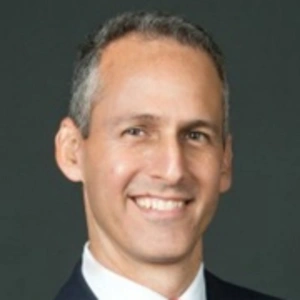
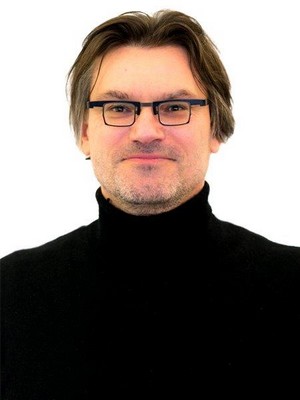
William A Pasmore is a Professor of Practice in the Social-Organizational Psychology Department at Teachers College, Columbia University. With a unique background spanning academia and consulting, he focuses on complex organizational change, digital transformation, and leadership development. His work bridges theoretical rigor with practical application through roles at the Center for Creative Leadership, Oliver Wyman Delta consulting, and his own firm, Pasmore Advisors. Education: Ph.D. in Administrative Sciences (Purdue University, 1976), B.S. in Aeronautical Engineering/Industrial Management (Purdue University, 1973) His research spans organizational change, digital transformation, and future organizational models, with recent publications emphasizing networked organizations and continuous change frameworks. Collaborative action research and board effectiveness are recurring themes in his work with global corporations. Scientific Awards: European HRM association's HR Influential Thinker recognition Academy of Management co-recipient of collaborative research award Pasmore co-founded STARLabs - a consortium with Google, Microsoft, Shell, and other Fortune 500 companies studying digital transformation. He previously served as tenured professor at Case Western Reserve University (1976-1997) and visiting professor at INSEAD and Stanford.
Olli Seppänen serves as Associate Professor in Civil Engineering at Aalto University's School of Engineering, specializing in operations management for construction productivity improvement. He coordinates the Vision 2030 consortium—comprising 13 Finnish construction and design firms—to develop industrialized building methods for 2030, while leading multiple Business Finland-funded research initiatives focused on digital construction workflows and real-time monitoring. His research centers on lean construction principles, location-based management systems, and digital transformation through IoT, AI, and robotic vision. Key focus areas include prefabrication optimization, construction logistics, and shifting work off-site to industrialize processes. He aims to solve industry-wide productivity challenges by creating real-time situational awareness and implementing takt production systems for workflow stability. Recent publications (2024-2025) reveal strong emphasis on digital twin frameworks, semantic modeling for quality assurance, and AI applications in risk management. His work bridges theoretical lean construction concepts with practical implementations, particularly in real-time resource tracking, waste reduction in MEP work, and cross-sector learning from high-performing teams. Seppänen has received significant recognition including: School of Engineering doctoral dissertation award (2024) Best paper at IEEE Wireless Sensors Conference (2019) Nordic Conference best paper award for PhD research (2019) DSc dissertation award (2010) As principal investigator, he manages: Vision 2030 consortium projects (2-3 annually; PI for two current projects) iCONS: Real-time resource flow monitoring via indoor positioning RECAP: Deep learning analysis of progress/quality from images/point clouds DiCtion: Integrated data systems for real-time stakeholder situation pictures He actively contributes to the "Performance in Building Design and Construction" research group and leverages the Vision 2030 consortium as a collaborative platform for industry transformation, driving adoption of digitalized, industrialized construction methods through academic-industry partnerships.
Associate Professor Aditi Dey holds a conjoint appointment at the Sydney Medical School within the University of Sydney , and serves as Manager of Surveillance at the National Centre for Immunisation Research and Surveillance (NCIRS) . Her work focuses on immunization program evaluation, vaccine coverage analysis, and surveillance of vaccine-preventable diseases and adverse events. She has extensive experience in public health research, spanning roles in Thailand and India prior to her current positions in Australia. Dr Dey completed an MBBS, followed by postgraduate qualifications including a DTM&H (Tropical Medicine & Hygiene), Grad Dip Applied Science (Health Information Management), MPH, and a PhD from the University of Sydney. Her research integrates epidemiological analysis with public health policy implementation, particularly addressing health disparities in vaccination access and outcomes among Indigenous populations and other underserved groups. Her research interests prominently feature vaccine safety , epidemiological trends of infectious diseases, and the impact of vaccination policies such as Australia’s “No Jab, No Pay” initiative. She also investigates the effectiveness of vaccination programs for diseases like rotavirus, HPV, and varicella-zoster virus, often analyzing large-scale national health datasets. Notable contributions include evaluations of Australia’s HPV vaccination program, analysis of rotavirus vaccine efficacy, and assessments of adverse events following immunization. Her work emphasizes improving immunization coverage through better data systems and healthcare provider education, particularly for at-risk populations. Dr Dey actively contributes to public health efforts through teaching and course coordination at the University of Sydney, and collaborates with institutions like the Sydney Infectious Diseases Institute . Her expertise bridges clinical practice, research, and policy, driving evidence-based improvements in Australia’s immunization landscape.
Jennifer Gray, Ph.D., is the Dean of the College of Sciences and Education at Oklahoma Christian University (OC) and holds the rank of Professor of Nursing. She has over four decades of experience in nursing, research, and education, with a focus on global health, HIV/AIDS care, and evidence-based practice. Her career includes roles as Associate Dean at the University of Texas at Arlington (UTA), where she developed courses and led international outreach programs in Uganda. She is a Fellow of the American Academy of Nursing (2013) and a Professor Emeritus of the UTA System (2015). Her research spans nursing education, healthcare disparities, and international collaboration, with notable work in Africa. She co-authors influential nursing research textbooks, including Burns & Grove’s The Practice of Nursing Research . Education: BSN from the University of Central Oklahoma (1977), Master’s and Ph.D. from UTA (1989–1993). She has pioneered nurse-led interventions in hypertension, HIV/AIDS, and maternal health in Uganda, Rwanda, and Tanzania. Her leadership emphasizes innovation in education and maintaining OC’s mission-driven values. She also advocates for healthcare workforce development and healthy work environments in acute care settings. Awards include her American Academy of Nursing Fellowship and recognition for her textbook contributions. She has supervised numerous research initiatives and serves in her church community. Her work bridges academic rigor with practical, community-focused healthcare solutions.
Dr. Joshua Jeong is an Assistant Professor in the Hubert Department of Global Health at Emory University's Rollins School of Public Health. He serves as the principal investigator for three cluster randomized controlled trials assessing community-based parenting interventions in Tanzania and Kenya. His work focuses on father-inclusive strategies to improve early childhood development (ECD) in resource-limited settings. Dr. Jeong holds affiliate editorship at the Journal of Child Psychology and Psychiatry and collaborates with NGOs, governments, and international agencies to inform scalable ECD programs. His research integrates mixed-methods approaches for intervention development and evaluation, emphasizing gender equality and couples' relationships. Dr. Jeong earned his ScD and ScM in Global Health and Population from Harvard University (with FLAS Swahili fellowship and Harvard Center on the Developing Child award), and a BS in Human Development from Cornell University. His educational background includes advanced training in implementation science and intervention design. Research interests center on parent-child relationships , particularly father engagement in low-resource contexts. He explores how caregiver mental health, economic empowerment, and family dynamics impact ECD outcomes. Current projects address parenting program scalability through existing community networks and faith-based organizations. Findings aim to improve program fidelity, gender equity, and holistic child development support. His team's work has been recognized with awards from NIH, Society for Research in Child Development, and the Jacobs Foundation. Ongoing projects include evaluations of father-inclusive parenting programs and studies on maternal decision-making power's influence on child care-seeking behaviors. Lab activities involve graduate and undergraduate research assistants analyzing qualitative and quantitative data from fieldwork in Tanzania and Kenya. Weekly lab meetings are project-specific, with Spring 2025 sessions held at the Rollins Building. Collaborations with local implementing partners like Anglican Development Services and ChildFund Kenya drive applied research initiatives.
Marco Tomietto is a Professor at Northumbria University's Nursing Midwifery and Health Department. He also holds a Professorship at the University of Oulu. His expertise spans clinical learning environments, mentorship, newcomer organizational socialization, and VR in healthcare. He earned a PhD in Work and Organizational Psychology from the University of Verona, a Master's in Nursing Science from the University of Udine, and a Nursing degree from the University of Udine. His research focuses on nursing workforce sustainability, vaccine hesitancy, VR applications, and healthcare organizational dynamics. He has published over 80 articles and secured grants like the MONARCH project for veteran healthcare needs analysis. Awards include the 2010 Editor’s Award in Nursing Science and the 2022 Sigma Global Nursing Research Award. Key projects include developing mentoring frameworks, analyzing vaccine hesitancy among nurses, and leveraging VR for clinical training. He advises PhD students on topics like healthcare workforce retention and VR implementation. Education: PhD in Work and Organizational Psychology (2014), MSc Nursing Science (2008), BSc Nursing (2001) Grants: Partnership for Workforce Sustainability, MONARCH, and RAF Families Federation initiatives Labs/Teams: Collaborates with international networks on healthcare policy, public health, and nursing education
Rachel Lara Cohen is a Professor in Sociology, Work and Employment at City, University of London , where she joined in 2013 after prior roles at the University of Surrey, University of Warwick, and St Petersburg State University. Her research focuses on the sociology of work, particularly non-standard employment forms like self-employment, mobile work, and homeworking, with a strong emphasis on work-life boundaries, body work, and gendered labor dynamics in occupations such as hairdressing, car mechanics, and accountancy. A mixed-methods researcher, she co-edited special issues on body work and everyday self-employment and led the City Q-Step Centre to enhance data literacy in social science students. Established : 2022-2025 ESRC-funded project ‘L-Earning: Rethinking young women's working lives’ Education : PhD in Sociology (UCLA), BA in Politics and Modern History (University of Manchester) Her research spans gender disparities in student employment, feminist methodologies, and quantitative literacy. She has served as Associate Editor of Work in the Global Economy and former Editor of Radical Statistics , with leadership roles including Head of Department of Sociology (2017-2020) and Elected Senator at City. Notable awards include the British Academy Postdoctoral Research Fellowship (2007-2010) and Senior Fellow of the Higher Education Academy (2021). Students supervised include topics on care sector workers, student employment in service work, ethnic identity negotiation, gender in higher education administration, and statistical studies of diversity. Her work has been published in journals such as The British Journal of Sociology , Sociology , and Gender, Work & Organization , covering themes like precarity, gendered labor patterns, and methodological innovation.
Dr. Rhiannon Firth is a Lecturer in Sociology of Education in the Department of Education, Practice and Society at the Institute of Education, University College London (UCL). She also serves as the Programme Leader for the MA in Sociology of Education. Her academic career spans interdisciplinary research at the intersection of Sociology, Education, and Politics, with a focus on utopian ideals and pedagogical practices of social and ecological movements. Dr. Firth's educational background includes: First Class BA (Hons) in Combined Studies (Politics, English Literature and Economic and Social History) from the University of Leicester ESRC-funded MA in Political Science (Distinction) from the University of Nottingham PhD in Political Sociology from the University of Nottingham Her research focuses on how grassroots social movements create knowledge and mobilize social change around global "wicked" problems including inequality, climate change, technological developments, and pandemics. She has conducted funded research with self-managed sustainable communities in the UK and USA, grassroots disaster relief movements including Occupy Sandy New York and COVID-19 Mutual Aid London, and organizations using automation technology in experimental ways. Dr. Firth's recent publications reflect her ongoing exploration of utopian and dystopian themes across multiple domains. Her work spans analyses of pandemic responses, ecological breakdown, industrial technology, and community organizing. A strong thread throughout her scholarship examines how prefigurative politics and mutual aid practices offer alternatives to mainstream approaches to social organization, particularly in times of crisis. Her research increasingly focuses on the intersection of technology, labor, and utopian thinking, particularly examining how automation and cybernetics might be reimagined through radical social movements. Among her significant recognitions: Senior Fellow of the Higher Education Academy (SFHEA), earned in 2017 ESRC funding for her MA studies Dr. Firth has secured research funding from multiple sources including ESRC, ISRF, EPSRC, HEFCE, local councils, and UCL Grand Challenges. She supervises MA dissertations annually and currently mentors one PhD student. Her professional activities include media engagement (such as appearing on BBC Radio 4's The Moral Maze), conference presentations, and serving as ECR Representative for the Utopian Studies Society of Europe. She is actively involved with research groups and networks focused on utopian studies, social movements, and critical pedagogy, contributing to the vibrant intellectual community around alternative futures and radical educational practices.
Rosemary Morgan, PhD, MSc, is a Research Professor at Johns Hopkins Bloomberg School of Public Health in the Department of International Health. She holds primary affiliations with the International Health Department and is associated with the Johns Hopkins Center for Global Women's Health and Gender Equity and the Johns Hopkins Center for Women's Health, Sex, and Gender Research. Dr. Morgan's educational background includes a PhD from the University of Leeds (2012), an MSc from the University of Edinburgh (2007), and a BA from the University of British Columbia (2006). Prior to joining Johns Hopkins, she served as a Lecturer in Global Health Policy at the University of Edinburgh's Global Public Health Unit and as a Research and Teaching Fellow at the Nuffield Centre for International Health and Development at the University of Leeds. Her research focuses on gender inequities in health systems, women's health and wellbeing, and the impact of gender on public health interventions. Dr. Morgan specializes in qualitative research methods and has conducted extensive work on gender analysis in health systems, reproductive health, and the gendered effects of pandemics. Her work often examines how gender norms and power relations affect health outcomes and system performance, particularly in low- and middle-income countries. Dr. Morgan's publication record shows consistent scholarly output from 2014 through 2025, with a notable increase in productivity in recent years. Her research spans multiple domains including gender-responsive monitoring and evaluation, moral distress among healthcare workers, vaccine hesitancy (particularly among pregnant individuals), and the intersection of gender with various health conditions. She has developed methodologies for gender analysis in health systems research and has contributed significantly to understanding how gender influences health outcomes across diverse contexts. Faculty Advisor of the 2023-2024 academic year award from the Global Health: Policy and Evaluation DrPH Program Concentration, JHSPH Excellence in Teaching, Johns Hopkins Bloomberg School of Public Health Excellence in International COVID-19 Public Health Practice, 2021 Nominated for Canadian Women Leaders in Global Health, 2018 and 2020 Selected for 300 Women Leaders in Global Health, 2014 Dr. Morgan serves as co-Editor in Chief of the journal SSM - Health Systems and is a current board member of Health Systems Global. She has advised numerous major research projects including those funded by the Bill & Melinda Gates Foundation, CIHR, USAID, and TDR. Her current leadership roles include being Principal Investigator on the Monitoring for Action and Learning (MAGE) project supporting the Global Financing Facility for reproductive, maternal, newborn, child and adolescent health initiatives. She also leads the Gender and Health Certificate program at JHSPH and co-directs the Gender and Health Summer Institute. Dr. Morgan teaches courses on Gender Analysis in Health Research and Interventions, Foundations in Gender and Health, and Health Systems in Low- and Middle-Income Countries. Her teaching reflects her research expertise, emphasizing practical applications of gender analysis in global health settings.
Lotty Hooft is a Full Professor at Utrecht University, affiliated with the University Medical Center Utrecht (UMC Utrecht), where she contributes to strategic research programs in Child Health and Methodology development. She holds key external roles as a member of the independent advisory committee for the Advenzo funding scheme at Zorginstituut and the Cochrane Council and Methods Groups for Prognosis, Screening, and Diagnostic Tests. Her research focuses on Evidence-Based Medicine, specializing in Systematic Reviews and Diagnostic Test Accuracy, with clinical applications in Paediatric and Perinatal Medicine. She investigates methodological challenges such as bias in diagnostic studies using expert panels, stakeholder engagement in paediatric trial reporting, and neonatal outcomes in preterm infants. Her work bridges rigorous methodology with real-world clinical impact across diverse medical domains. Analysis of her 2025 publications reveals a cohesive trajectory in advancing diagnostic methodology—particularly in reference standard development and bias mitigation—while expanding into patient-centered paediatric research and neonatal care. Her contributions to sleep medicine diagnostics and workforce well-being further demonstrate cross-disciplinary relevance in improving healthcare systems and clinical practice. No scientific awards were documented in the provided materials. Professor Hooft actively shapes research funding through her Advenzo committee role, evaluating project proposals and subsidy applications, though specific grant awards or student mentorship details remain unreported. Her Cochrane involvement underscores leadership in global evidence synthesis standards, yet no laboratory or dedicated research team structure is specified in the current data.
Patrick J. Curran is a Professor in the Department of Psychology at the University of North Carolina, affiliated with the L.L. Thurstone Psychometric Laboratory and the Quantitude initiative. His research focuses on quantitative methodologies, particularly longitudinal data analysis and structural equation modeling, applied to developmental psychopathology and adolescent substance use. He collaborates on statistical education through YouTube tutorials, a blog (Help Desk), and workshops, alongside a podcast with Greg Hancock. His work bridges methodological innovation with substantive research in psychology and public health. Key contributions include advancing latent curve models with structured residuals, integrative data analysis techniques, and the dissemination of statistical tools. His research spans disciplines such as developmental psychology, clinical psychology, and epidemiology, addressing topics like alcohol use trajectories, chronic depression mechanisms, and pandemic-related disparities in healthcare workers’ mental health. Lab Affiliations: L.L. Thurstone Psychometric Lab, Quantitude Collaborations: Dan Bauer (statistical education), Greg Hancock (podcast), and interdisciplinary teams in public health and clinical research His publications emphasize methodological rigor and practical application, often addressing gaps in longitudinal data analysis and measurement equivalence. Notable work includes the latent curve model with structured residuals (LCM-SR) and integrative data harmonization strategies for prevention science.
Gad Allon is the Jeffrey A. Keswin Professor and Professor of Operations, Information and Decisions at the University of Pennsylvania’s Wharton School. He directs the Management and Technology Program and teaches in the Education Entrepreneurship program. His research focuses on operations strategy, service systems, gig economy dynamics, and education technology. A co-founder of ForClass, a platform enhancing classroom engagement, he advises firms on service and operations strategy. Allon holds a Ph.D. from Columbia Business School and degrees from the Israeli Institute of Technology. Recognized as one of the ‘World’s Top 40 B-School professors under 40,’ he has pioneered work on behavioral drivers in service systems and gig economies. His recent research explores multihoming in gig work, machine learning in causal inference, and agile product development. Academic contributions span over 50 publications in top journals, emphasizing real-world applications of operations management theories. Education: Ph.D. in Management Science, Columbia Business School (New York) Bachelor’s and Master’s Degrees, Israeli Institute of Technology Research Interests: Professor Allon’s work bridges theoretical operations research with practical challenges in service systems, digital platforms, and educational technology. Key themes include optimizing customer service through behavioral insights, analyzing labor dynamics in gig economies, and leveraging machine learning for causal inference in business decisions. Notable Contributions: Co-founder of ForClass, addressing classroom engagement Leading studies on worker behavior in gig economies Groundbreaking work on call center retrials and service quality trade-offs Labs/Initiatives: Active in educational technology innovation through ForClass and advises on large-scale service marketplace design through Wharton’s Management and Technology Program.
Prof. Dr. Michael Gerfin is a Professor of Public Economics at the University of Bern, affiliated with the Center for Regional Economic Development (CRED). His research focuses on health economics, labor economics, and tax-benefit models. He holds an office at A315 and can be reached via email. His work examines topics such as healthcare demand, physician incentives, and policy design, with recent contributions analyzing drug pricing, pandemic response strategies, and educational interventions in developing countries. Key themes in his publications include understanding how financial mechanisms influence provider behavior and designing effective social policies. Gerfin's research spans empirical studies on healthcare utilization, wage dynamics, and household decision-making. His analysis often integrates microsimulation techniques to evaluate policy impacts, such as in-work benefits and active labor market policies. Collaborations with Swiss statistical agencies highlight his engagement with real-world data, such as studies on adverse healthcare events and nursing staff ratios. His work bridges theoretical economic models with practical policy applications, emphasizing evidence-based solutions for public welfare challenges. Labs/Teams: Core member of the Center for Regional Economic Development (CRED), contributing to interdisciplinary projects on regional economic trends and public policy evaluation.
Connie M. Koski is an Assistant Professor in the Department of Criminal Justice at North Dakota State University. She earned her PhD from the University of Nebraska Omaha in 2013, an MS from Wayne State University, and a BS from Ferris State University. A retired police officer from Michigan, Koski brings practical experience to her academic work. Her research examines police-citizen perceptions, crime geography, formal/informal social control mechanisms, and officer wellness. Koski's interdisciplinary research spans police-community relations, historical marketplaces, disability access in archaeology, and gender barriers in leadership. Recent publications analyze millennial retention in hospitality sectors, heritage accessibility, and qualitative research challenges in developing nations. She has developed inclusive pedagogical tools like Inclusivity Knowledge Cards and led student consultancy projects with organizations including Lincoln City Football Club. At NDSU, she teaches Introduction to Policing (CJ 210) and Criminal Law and Procedure (CJ 330). Her professional background includes prior teaching positions at Longwood University and Oglala Lakota College.
Thorsten Busch is a Senior Lecturer at the ZHAW School of Management and Law, affiliated with the Zurich Center for Sustainability Leadership. His academic career includes roles as Visiting Assistant Professor at the University of Konstanz (DE), Postdoctoral Fellow at Concordia University (CA), and Senior Research Fellow at the University of St. Gallen (CH). He holds an M.A. in political science, economics, and management from the University of Oldenburg (DE), and a Ph.D. in organizational studies and cultural theory from the University of St. Gallen (CH). His research focuses on digital business ethics, AI ethics, and sustainability in digital industries. Notable projects include leading the ethical business model development for the Play Science citizen science platform. His work has been published in outlets like Journal of Business Ethics and presented at MIT, Oxford, and McGill University. Education: M.A.: University of Oldenburg (Political Science, Economics, Management) Ph.D.: University of St. Gallen (Organizational Studies & Cultural Theory) Advanced training: Oxford Internet Institute, Harvard Berkman Klein Center Research interests bridge digital ethics and sustainability, addressing topics like algorithmic HR challenges, CSR in sports organizations, and environmental impacts of the games industry. He actively engages in global academic discussions through conferences like EGOS and ACM Ethical Games. Current projects emphasize actionable solutions for ethical business models in digital sectors.