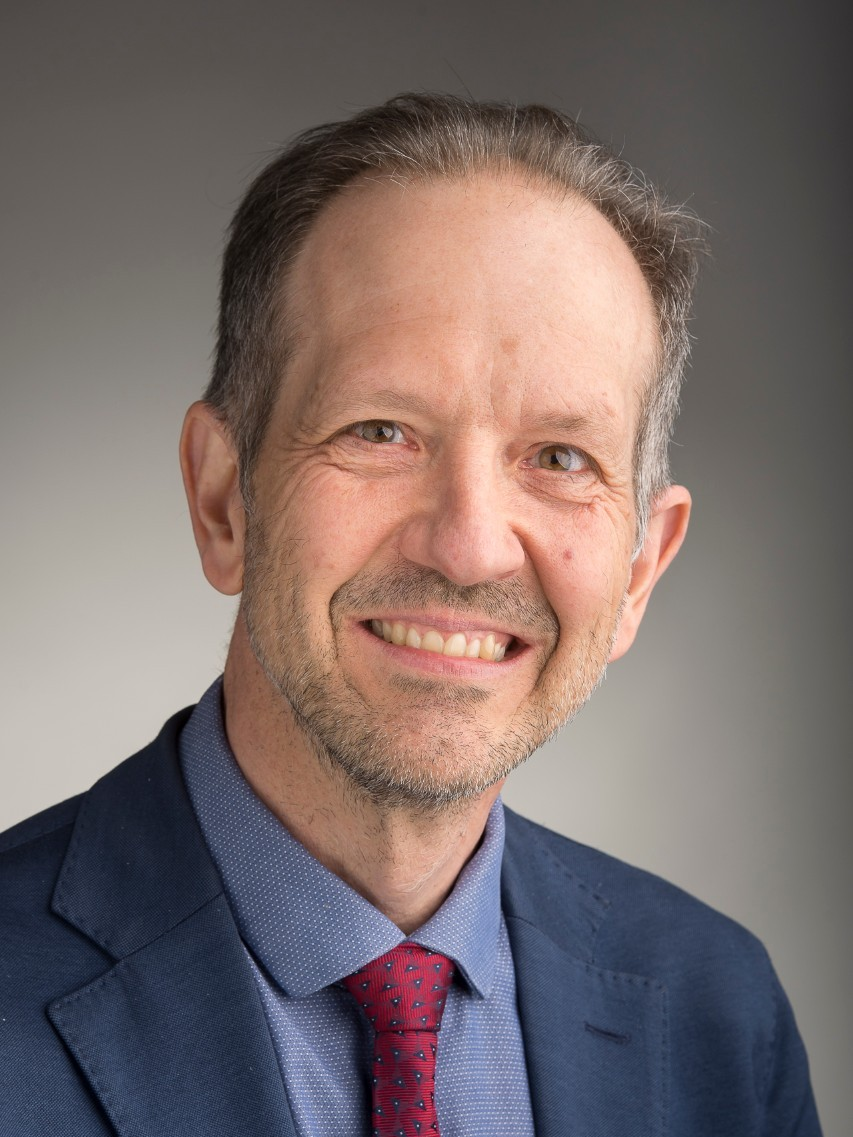
Professor Andy Charlwood is a faculty member at the University of Leeds, affiliated with Leeds University Business School's Department of Management and Organisations. His primary research focuses on HR analytics, algorithmic management in HR, and healthcare workforce dynamics, with particular emphasis on how digital technologies transform HRM practices and worker experiences. He leads interdisciplinary research combining sociology, psychology, and economics approaches. His research interests include people analytics adoption, AI in human resources, healthcare workforce optimization, and digital transformation impacts on employment relations. Current projects examine relationships between workforce factors and care quality using machine learning methods. Professor Charlwood teaches HRM, strategic HRM, people analytics, and organizational studies at undergraduate and postgraduate levels. He has supervised numerous PhD students in areas including people analytics adoption, AI in HR, and healthcare workforce studies. Notable grants include funding from the UK National Institute for Health Research and collaborations with the HR Analytics Think Tank. He serves as Associate Editor for the International Journal of Human Resource Management and holds leadership positions in the British Academy of Management. His work has contributed significantly to understanding digital transformation in HR and labor relations in healthcare contexts.
Gaël Richard is a Professor at Télécom Paris specializing in machine learning and audio signal processing. He leads the Hi! Paris center, focusing on AI and data science applications. His research emphasizes hybrid interpretable AI for sound analysis, including projects like Hi-Audio funded by a €2.5M ERC Advanced Grant (2022). Key areas include machine listening, music source separation, and speech processing. Applications span autonomous vehicle acoustics and music technology. Notable contributions include neural audio compression (QINCODEC), diffusion models for music synthesis (Diff-TONE), and source separation techniques (Inverse Drum Machine). Research & Awards Recipient of the 2022 ERC Advanced Grant for the Hi-Audio project exploring hybrid AI models that integrate domain knowledge with neural networks. This approach reduces data requirements and enhances model interpretability. Active in audio-visual scene analysis and weakly-supervised learning systems. Affiliations & Labs Executive Director of Hi! Paris, a multidisciplinary lab advancing AI and data science for societal impact. Collaborates on projects like the HI-AUDIO online platform for distributed music data collection and the MAD-EEG EEG dataset for auditory attention decoding.
Dr. Ngoc Nha Vi Tran is an Associate Professor of Computer Science at UiT The Arctic University of Norway. She holds a PhD from UiT and was a visiting scholar at Rutgers University, USA. Her research focuses on high-performance and energy-efficient computing, machine learning, and bioinformatics. She is a member of the NORA.startup Steering Group and leads the Arctic Green Computing Group. Education: PhD in Computer Science (UiT), M.Sc. in Software Engineering via Erasmus Mundus (Blekinge Institute of Technology, Sweden & Technical University of Kaiserslautern, Germany). Research interests include energy-efficient algorithms, bioinformatics tools (e.g., vCOMBAT), and applications of machine learning in healthcare and robotics. She teaches courses such as INF-2200 Computer Architecture, INF-2900 Software Engineering, and INF-2202 Concurrent Programming. Her work spans computational models for antibiotic target-binding, runtime energy optimization (REOH framework), and power models for embedded systems (RTHpower/ICE). She contributed to the EXCESS project on energy-efficient computing systems. Labs/Teams: Arctic Green Computing Group, EXCESS consortium.
Sean C. Rife is Professor of Psychology at Murray State University, co-founder of scite.ai, and Head of Academic Relations at Research Solutions, Inc. His work focuses on moral/political psychology, metascience, and AI's role in research evaluation. PhD in Psychology (Kent State University, 2014) MA in Sociology (East Tennessee State University, 2009) MA in Experimental Psychology (East Tennessee State University, 2008) BS in Psychology (North Georgia College and State University, 2005) His research explores ideology-personality connections, social media's influence on moral expression, and AI-driven tools to quantify scientific progress. He advocates for open science practices and has led large-scale replication efforts across multiple countries. Key projects include scite (AI-enhanced citation analysis), statcheck implementation, and TAPAS text similarity analysis. He has developed tools like psyLex and liwcR for linguistic analysis and research evaluation. Recent publications focus on terror-management theory validation, political orientation's impact on pandemic perception, and AI applications for citation classification. His work intersects psychology, data science, and academic technology development. Contact: Office: 209 Wells Hall, Murray State University Email: srife1@murraystate.edu, srife@researchsolutions.com Phone: 270-809-4404
Dr Himashi Peiris is a Research Fellow in the Department of Data Science & AI at Monash University's Faculty of Information Technology in Australia. She holds a PhD in Biomedical Engineering from Monash University (2024) and a Bachelor's in Information Technology from the University of Moratuwa, Sri Lanka. Her work focuses on semi-supervised learning, medical image analysis, and AI-driven healthcare solutions. She has over three years of industry experience in software engineering. Research interests include developing machine learning algorithms for medical imaging challenges, particularly in scenarios with limited labeled data. Her innovations span neural networks, transformer architectures, and uncertainty-guided segmentation techniques applied to MRI, CT scans, and biomedical datasets. Her publications in Nature Machine Intelligence and MICCAI conference highlight contributions to semi-supervised segmentation and AI-driven diagnostic tools. Notable collaborations include the development of PINGU for perivascular space identification and adversarial networks for construction waste recognition. Awards include the 2023 Victorian Biomedical Imaging Capability Early Career Award and 2023 IEEE ACS Student Writing Award. Her work has been featured in media outlets and Mendeley platforms, emphasizing AI's role in medical decision-making.
Alexandre Mercat is an Assistant Professor in the Department of Computer Engineering at Tampere University, within the Faculty of Information Technology and Communication Sciences. His research focuses on video coding, energy-efficient encoding, and real-time multimedia systems. He leads projects on open-source video encoders and standards, including contributions to HEVC, VVC, and V-PCC technologies. His work emphasizes machine learning integration, low-power hardware optimizations, and scalable distributed encoding frameworks. Key technical interests include improving video compression efficiency through algorithmic innovations, developing open-source tools like the UVG dataset and Kvazaar encoder, and addressing challenges in volumetric video communication and 3D point cloud encoding. His research spans theoretical algorithm design to practical implementations, with applications in virtual reality, live streaming, and edge computing. Recent projects include real-time saliency-guided video coding frameworks, energy reduction techniques for HDR streaming, and multi-layer VVC coding schemes for hybrid machine-human consumption. He also explores FPGA acceleration and parallelization strategies for distributed video encoding systems. No scientific awards are explicitly mentioned in the provided texts. While no formal advisees are listed, his research group likely involves students through open-source development and collaborative projects. His work integrates closely with industry standards bodies and open-source communities, emphasizing reproducible evaluation frameworks and end-to-end software tools.
Jack Zhang is an Assistant Professor in the Department of Molecular Biophysics and Biochemistry at Yale School of Medicine. His research focuses on developing advanced cryo-electron microscopy/tomography (cryo-EM/ET) methods to investigate dynamic molecular machines in cellular contexts, particularly mechanisms of cell motility and energy metabolism. PhD in Biophysics from Institute of Biophysics (CAS) Postdoctoral work at MRC Laboratory of Molecular Biology Joined Yale faculty in 2019 Research interests include: Mechanistic analysis of dynein motor proteins Structural studies of mitochondrial respiratory supercomplexes Cytoskeletal repair mechanisms via Abl2-tubulin interactions Environmental signal response in mastigoneme assembly Allostery in microtubule transport activation Recent publications demonstrate expertise in: High-resolution in situ structural biology Tomographic analysis of cellular machines Mechanochemical cycle mapping Male infertility structural pathology Contact: jack.zhang@yale.edu
Professor Simon Lewis is a Consultant Neurologist and Professor of Cognitive Neuroscience at the University of Sydney's Brain and Mind Centre within the Faculty of Medicine and Health. He serves as Clinical Director of the Ageing Brain Clinic and Director of the Parkinson's Disease Research Clinic, while also heading the NSW Movement Disorders Brain Donor program. With over 200 peer-reviewed publications, 2 books, and 8 book chapters to his name, Professor Lewis has secured more than $10 million in research funding from prestigious sources including the NHMRC, ARC, and Michael J Fox Foundation. Professor Lewis's research primarily focuses on dementia and Parkinson's disease, with particular expertise in cognitive neuroscience, movement disorders, and REM sleep behavior disorder. His work spans from basic neuroimaging studies to clinical trials investigating novel interventions for neurodegenerative conditions. He has pioneered research on freezing of gait in Parkinson's disease, visual hallucinations in Lewy body disorders, and the relationship between circadian rhythms and neurodegeneration. His laboratory employs a multidisciplinary approach combining clinical assessment, neuroimaging (structural and functional MRI), neurophysiological measurements, and innovative computational methods to understand disease mechanisms. The trajectory of Professor Lewis's recent publications reveals a growing emphasis on biomarker discovery for early diagnosis and disease progression, with increasing integration of artificial intelligence and machine learning approaches to analyze complex movement and sleep data. His work increasingly bridges basic neuroscience with clinical applications, particularly in developing targeted interventions for non-motor symptoms of Parkinson's disease. The collaborative nature of his research is evident in the international authorship patterns across his publications. Among his notable accolades is the Leonard Cox Award (2014) from ANZAN recognizing his significant contributions to neuroscience as an early career neurologist. Professor Lewis serves on multiple editorial boards including Movement Disorders, Translational Neurodegeneration, and Journal of Neurology, Parkinson's and Related Disorders. He actively contributes to international committees such as the Movement Disorders Society Asian Oceanian Section Executive Committee and the International REM Sleep Behaviour Study Group. Professor Lewis leads the world-leading Parkinson's and Related Diseases Research Group at the Brain and Mind Centre, which attracts PhD students interested in understanding disease mechanisms, developing biomarkers, and creating novel treatment modalities for Lewy body-related diseases. His international collaborations span institutions in the Netherlands (Radboud UMC), United Kingdom (King's College London, Cambridge, Newcastle), and other global centers of excellence in Parkinson's research. His work exemplifies a translational approach from bench to bedside, with particular focus on improving quality of life for patients with neurodegenerative conditions.
Garett Sansom, DrPH, is an Assistant Professor in the Department of Environmental and Occupational Health at Texas A&M University’s School of Public Health. He specializes in environmental health policy, disaster resilience planning, and community health assessment. His work focuses on addressing environmental justice issues in urban communities, particularly in Houston, Texas, through participatory research methods and interdisciplinary collaboration. Education: DrPH in Epidemiology and Environmental Health (Texas A&M University), MPH in Epidemiology (Texas A&M School of Public Health), BA in Philosophy (St. Edwards University). Additional training includes Harvard University’s Continuing Education in Health Careers. Research emphasizes the intersection of environmental exposures and health outcomes, including studies on heavy metal contamination, flood resilience, and the impacts of industrial pollutants. He develops innovative tools like MyEcoReporter, an AI-facilitated pollution reporting system, and advocates for policy solutions such as multi-hazard property buyouts to mitigate risks in vulnerable communities. Publications highlight themes of environmental justice, disaster preparedness, and sustainable urban planning. Recent work includes evaluating arsenic exposure risks, spatial analysis of cancer clusters, and bioremediation strategies using model organisms. His research consistently integrates community engagement to ensure equitable health interventions. Teaching interests include environmental health policy, sustainable development frameworks, and field research methodologies. He emphasizes participatory approaches to build community capacity in hazard resilience and environmental health advocacy.
Hans Moen is a Research Fellow in the Department of Computer Science at Aalto University, affiliated with the Professorships of Marttinen P. and Kaski Samuel. His research focuses on natural language processing (NLP) applications in healthcare, including clinical documentation analysis, stigmatizing language detection in medical records, and transformer-based deep learning for health trajectory modeling. Moen has contributed to interdisciplinary projects involving nursing informatics, healthcare disparities, and predictive modeling in clinical settings. Research Interests: His work bridges computer science and healthcare, emphasizing: NLP techniques for clinical text analysis Health equity through language bias detection Machine learning for longitudinal health data Automated clinical documentation systems Prominent contributions include identifying racial/ethnic disparities in birth clinical notes (2025) and developing self-supervised summarization methods for nursing records (2024). His 2023 Aalto SCI award recognized excellence in teaching assistantship. Collaborations span healthcare institutions and interdisciplinary teams, addressing challenges in electronic health records, patient risk prediction, and clinical decision support systems.
Dr. Stacey Pitsillides is an Associate Professor at Northumbria University's School of Design Arts and Creative Industries, actively researching intersections between technology, design, and death studies. Her work contributes to UN Sustainable Development Goal 4 (Quality Education) through innovative approaches to death literacy. Active PhD researcher in digital death practices Recipient of 2017 award (specific name not stated) Over 380 citations in Scopus Engaged in public outreach with hospices and at major festivals Research focuses on: Social design approaches for sensitive contexts Technological reframing of death and bereavement Digital ethics in legacy creation Curatorial practices as knowledge production Materiality of digital heritage Posthumanist memorialization Recent publications examine thanobotics, digital twins, and feminist immortality frameworks, with a strong emphasis on participatory design methods and death-positive initiatives. Collaborations include academic and artistic partnerships in UK and European contexts. 2017 Award recipient Actively supervises PhD students while maintaining public engagement through media appearances, exhibitions, and festival participation.
Fred Popowich is a Professor in the School of Computing Science at Simon Fraser University (SFU), Canada. He holds adjunct positions at Dalhousie University's Faculty of Graduate Studies and is an Associate Member of SFU's Department of Linguistics and Cognitive Science Program. His academic career began post-PhD (Cognitive Science/Artificial Intelligence, University of Edinburgh, 1989) and has spanned over three decades at SFU. Education: PhD in Cognitive Science/Artificial Intelligence (University of Edinburgh, 1989); M.Sc. and B.Sc. in Computing Science (Simon Fraser University and University of Alberta, 1985/1982). Research focuses on natural language processing (NLP), machine translation, intelligent systems, and big data applications. He directs SFU’s Big Data Initiative and leads the Natural Language Laboratory, supervising MSc/PhD students in computing science. His work includes developing systems for smart homes, toxic language detection in social media, and energy grid analysis. Industry roles include co-founding Axonwave Software (as CTO/President) and contributing to technology commercialization. Current projects address EV charging impacts, personalized learning systems, and real-time load monitoring. Publications span machine translation, sentiment analysis, and NLP applications in education and energy systems. His work bridges theoretical computer science with practical applications in healthcare, smart cities, and education.
Ankur Agrawal is the Chair and Professor of Computer Science at St. Edward's University, School of Natural Sciences. His research focuses on Biomedical Informatics with an emphasis on ontology engineering and quality assurance of healthcare terminologies like SNOMED CT. Dr. Agrawal also serves as CAC Commissioner and Team Chair at ABET, demonstrating leadership in accreditation and educational standards. His work centers on improving healthcare data systems through machine learning applications, lexical analysis, and structural consistency checks in biomedical ontologies. Key contributions include developing tools for crowd-sourced ontology curation and visualizing SNOMED CT hierarchies. Publications from 2013-2024 consistently address quality assurance challenges in healthcare terminologies, leveraging both algorithmic and contextual methods. No scholarly awards are explicitly mentioned in the provided texts. Advising and grants: No specific student advisees or grant details provided in the text. His professional roles extend beyond academia to ABET, where he contributes to accreditation processes for engineering and technology programs. Labs/teams: Involved with ABET's accreditation committees and maintains a research focus through BioPortal and SNOMED CT initiatives.
Ricardo F. Ramos is an Adjunct Professor at the Oliveira do Hospital School of Technology and Management, Polytechnic Institute of Coimbra (ESTGOH-IPC), and at the Information Management School, NOVA University Lisbon (NOVA-IMS). He serves as an Associate Researcher at ISTAR-Iscte - Research Center in Information Sciences, Technologies and Architecture, focusing on Information Systems. His educational background includes: PhD in Management with specialization in Marketing from ISCTE (2015-2018) Master's degree in Sports Management from University of Lisbon Faculty of Human Kinetics (2012-2015) Bachelor's degree in Sport from Polytechnic Institute of Setúbal Higher School of Education (2009-2012) Ricardo's research spans diverse areas within marketing, with particular focus on consumer behavior in tourism and hospitality, sports marketing, and text mining applications. His methodology often involves analyzing textual data to uncover consumer insights, as demonstrated in publications examining social media, mobile applications, and online reviews. His work frequently explores the intersection of technology and consumer behavior, investigating how digital platforms influence purchasing decisions and service experiences. His recent research trends show a growing interest in sustainability within business contexts, virtual and augmented reality applications in tourism, artificial intelligence in marketing, and the evolving dynamics of digital consumer behavior across various industries including hospitality, aviation, and retail. Ricardo has received significant recognition for his scholarly work, with publications in high-impact journals such as the International Journal of Hospitality Management, Journal of Air Transport Management, and Journal of Hospitality and Tourism Technology. His research on topics like social media's impact on retail websites, airline sustainability, and customer satisfaction in tourism contexts has accumulated hundreds of citations across multiple databases. His academic contributions extend to collaborating with researchers across various institutions, with a methodological approach that frequently employs text mining and data analytics to extract meaningful consumer insights from large datasets.
Zhuomin Huang is a Senior Lecturer in Intercultural Education at the University of Manchester's Manchester Institute of Education (MIE). She holds a PhD in Education (2019) alongside an MBA and teaching qualifications. Her research focuses on intercultural education, creative research methods, and epistemic justice in knowledge production. She leads the MA International Education program's EDUC70621 course unit on intercultural communication and co-designs creative methods training for university staff. Key research areas include intercultural mindfulness, student belonging, and the ethical dimensions of intercultural research. She actively contributes to global networks like the International Association for Languages and Intercultural Communication and Cultnet. Huang supervises PhD candidates exploring themes like international student narratives and intercultural identities. Her work addresses UN Sustainable Development Goal 4 (Quality Education) through advocating inclusive pedagogies and linguistic diversity. Recent research explores musicking as intercultural practice, linguistic resourcefulness, and methodologies that disrupt epistemic hierarchies. She has co-organized impactful workshops like 'Simulating International Students' Experience' to enhance staff awareness of student needs. Huang's creative methods emphasize visual arts, narrative portraits, and participatory approaches. She co-edits journals like Language and Intercultural Communication and serves as a PhD examiner for Leeds University. Her 28+ publications span intercultural education, arts-based research, and multilingual praxis, with emphasis on 2023-2025 outputs.